
Eccentric quad exercises focus on the controlled lowering phase where the quadriceps lengthen under load, helping build strength, improve movement control, and support knee resilience. Understanding and using eccentric quad training matters because the quadriceps play a central role in knee stability, deceleration, and everyday movements like walking downstairs, squatting, and landing. When programmed correctly, eccentric loading can support muscle development while reducing unnecessary joint stress.
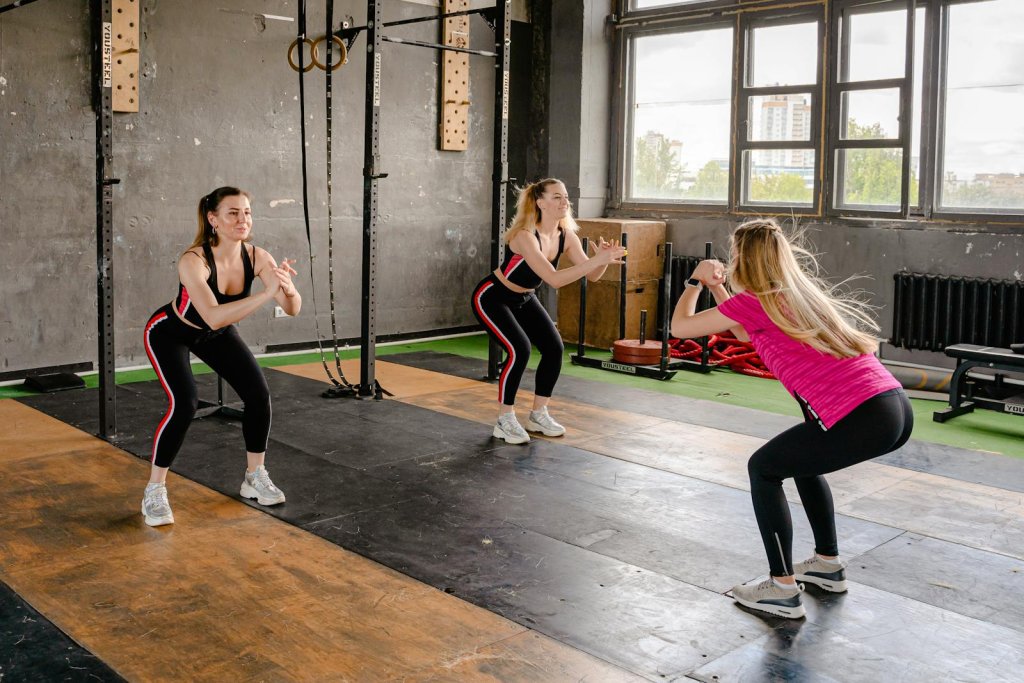
This guide explains what eccentric quad exercises are, why they matter, and how to use them safely. You’ll also find the 10 best evidence-aligned exercises, programming tips, and answers to common questions—all written for safe, practical use.
What Are Eccentric Quad Exercises?
Eccentric quad exercises emphasize the phase where the quadriceps muscles lengthen while resisting force. This typically occurs during the lowering or deceleration portion of a movement.
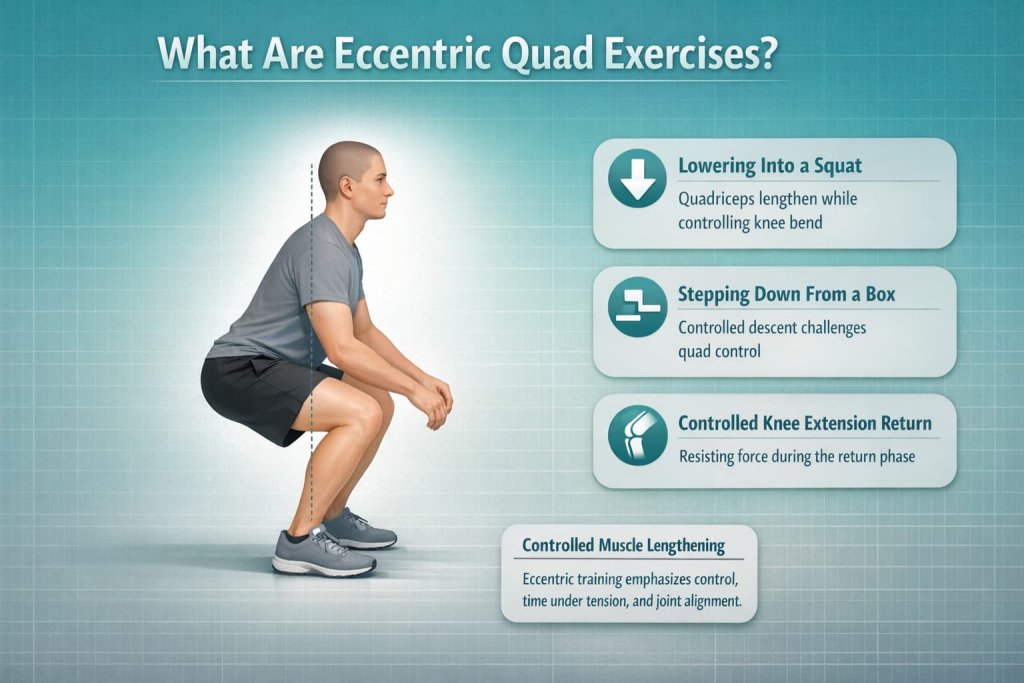
Common examples include:
- Lowering into a squat
- Stepping down from a box
- Slowly straightening the knee against resistance and controlling the return
Unlike fast or bouncing movements, eccentric training prioritizes control, time under tension, and joint alignment.
Why Eccentric Quad Exercises Matter for Knee and Leg Strength
Eccentric quad exercises may help support:
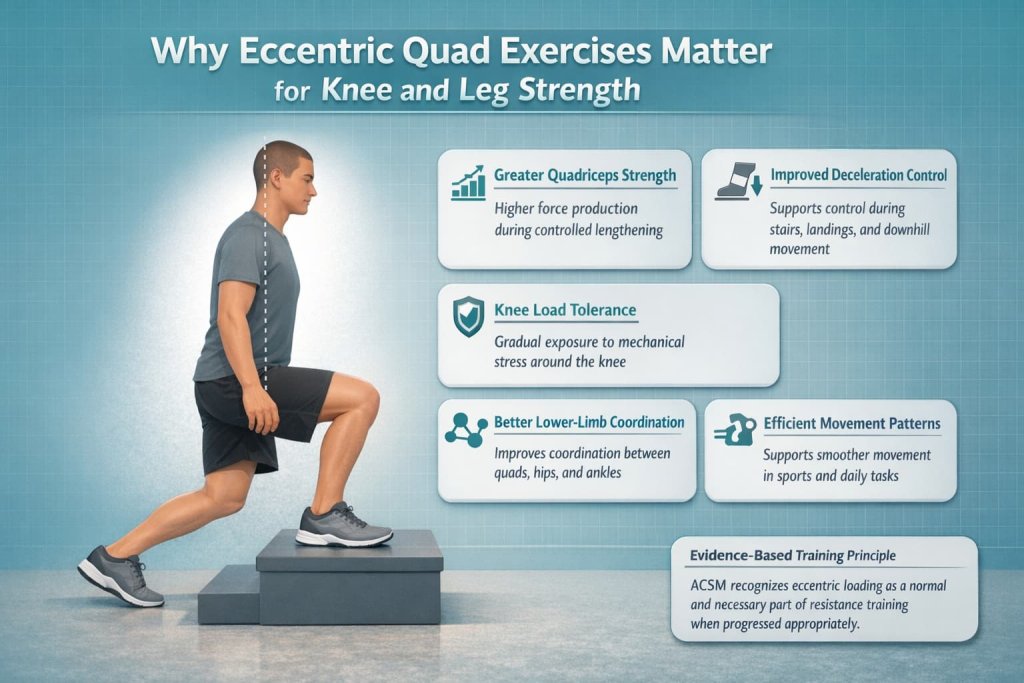
- Greater quadriceps strength due to higher force production during lengthening
- Improved control during deceleration tasks (stairs, downhill walking, landings)
- Better tolerance to mechanical loading around the knee
- Enhanced coordination between the quads, hips, and ankles
- More efficient movement patterns in sports and daily activities
Strength and conditioning guidelines from organizations such as the American College of Sports Medicine (ACSM) recognize eccentric loading as a normal and necessary part of resistance training when progressed appropriately.
10 Best Eccentric Quad Exercises
Eccentric quad exercises focus on slow, controlled knee bending to increase quadriceps loading during the lowering phase. These movements emphasize strength, control, and tolerance to mechanical stress without relying on heavy weights.
1. Eccentric Step-Down
A foundational movement for knee control and quad strength.
Why it works
The eccentric step-down trains the quadriceps to control knee flexion during descent, which is a key demand in daily activities like stairs and downhill walking. The slow lowering phase increases time under tension and reinforces proper knee tracking without requiring heavy external load.
Muscles worked
This exercise primarily targets the quadriceps, especially the vastus medialis and vastus lateralis. The gluteus medius and gluteus maximus assist with hip stability, while the calves and foot stabilizers support balance.
How to do it
- Stand on a low box or step with one foot
- Shift weight onto the standing leg
- Slowly lower the opposite foot toward the floor over 3–5 seconds
- Lightly tap the heel to the ground
- Push through the working leg to return to the start position
Trainer Tip
Start with a very low step height and increase slowly. If the knee collapses inward, reduce range of motion or use hand support until control improves.
2. Slow Eccentric Squat
A classic squat with controlled lowering emphasis.
Why it works
By slowing down the descent, the quadriceps are forced to absorb more load without increasing weight. This improves strength, control, and tissue tolerance while minimizing joint stress compared to faster squatting patterns.
Muscles worked
The quadriceps are the primary movers, with assistance from the gluteus maximus, adductors, and core stabilizers. The calves help maintain balance throughout the movement.
How to do it
- Stand with feet shoulder-width apart
- Brace your core and keep chest tall
- Lower into a squat over 4–5 seconds
- Pause briefly at the bottom if comfortable
- Stand back up under control
Trainer Tip
If depth causes knee discomfort, reduce how low you squat and focus on perfect tempo and alignment rather than range.
3. Heel-Elevated Eccentric Squat
Adds greater knee flexion demand.
Why it works
Elevating the heels increases forward knee travel, which shifts more load onto the quadriceps. The slow eccentric phase further increases quad activation while allowing better torso positioning for many lifters.
Muscles worked
The quadriceps are heavily emphasized, particularly the rectus femoris. Glutes and core muscles provide support, while the calves assist with ankle stability.
How to do it
- Place heels on small plates or a wedge
- Stand with feet hip- to shoulder-width apart
- Lower slowly into a squat over 4–5 seconds
- Keep torso upright and knees tracking forward
- Push through the midfoot to stand up
Trainer Tip
This variation can feel intense quickly. Start with shallow depth and short sets to manage soreness.
4. Eccentric Split Squat
A unilateral option that improves side-to-side control.
Why it works
The split squat challenges each leg independently, exposing strength and control differences. The eccentric lowering phase increases quad loading while also demanding hip and trunk stability.
Muscles worked
The front leg quadriceps are the primary focus, supported by the glutes, hamstrings, and core. The rear leg assists with balance and light loading.
How to do it
- Step into a split stance with feet staggered
- Keep torso upright and core braced
- Slowly lower the back knee toward the floor over 3–5 seconds
- Maintain knee alignment over the toes
- Push through the front foot to return up
Trainer Tip
If balance is limiting, lightly hold onto a wall or rail so the quads—not stability—remain the main challenge.
5. Bulgarian Split Squat (Eccentric Focus)
An advanced progression with higher quad demand.
Why it works
Elevating the rear foot increases load on the front leg, making the quadriceps work harder to control knee and hip flexion during the eccentric phase. This creates a strong stimulus with relatively moderate weights.
Muscles worked
The front leg quadriceps take most of the load, assisted by the glutes and adductors. Core muscles help maintain upright posture and balance.
How to do it
- Place the rear foot on a bench or elevated surface
- Set the front foot far enough forward for comfort
- Lower slowly over 4–5 seconds
- Keep hips square and knee tracking forward
- Drive through the front foot to stand
Trainer Tip
Use a shorter range of motion at first. Depth can be increased gradually as strength and control improve.
6. Decline Squat (Eccentric Emphasis)
Commonly used in quad-dominant loading programs.
Why it works
Standing on a decline increases knee flexion torque, placing greater eccentric demand on the quadriceps. The slow lowering reinforces controlled loading through the knee joint.
Muscles worked
This movement strongly targets the quadriceps, with secondary involvement from the glutes and core stabilizers.
How to do it
- Stand on a decline board with heels lower than toes
- Keep torso upright and core engaged
- Lower slowly into a squat over 3–5 seconds
- Keep heels down and knees forward
- Return to standing under control
Trainer Tip
Only use pain-free ranges. Decline squats should feel challenging but not sharp or irritating at the knee.
7. Leg Extension Negatives
Machine-based eccentric control.
Why it works
Leg extension negatives allow precise eccentric loading of the quadriceps without balance demands. This makes them useful for controlled strength work when free-weight movements are limited.
Muscles worked
The quadriceps are isolated, particularly the rectus femoris and vastus muscles, with minimal involvement from other muscle groups.
How to do it
- Use both legs to lift the weight into extension
- Remove one leg if appropriate
- Slowly lower the weight over 4–6 seconds
- Keep movement smooth and controlled
- Reset and repeat
Trainer Tip
Avoid locking out aggressively at the top. Control matters more than load with eccentric work.
8. Peterson Step-Up (Slow Lowering)
Targets terminal knee extension control.
Why it works
This exercise emphasizes the final portion of knee extension, where quad control is often weakest. The slow eccentric descent reinforces strength and stability near full extension.
Muscles worked
The quadriceps—especially the vastus medialis—are the primary focus. The calves and hip stabilizers assist with balance.
How to do it
- Stand on a low step with the heel of the working foot elevated
- Slowly lower the opposite foot toward the floor
- Keep the knee traveling forward in line with the toes
- Control the descent fully
- Push through the working leg to return up
Trainer Tip
Keep the movement small and controlled. This is about precision, not depth.
9. Reverse Nordic Curl (Eccentric Range)
A long-length quad exercise.
Why it works
The reverse Nordic places the quadriceps under load while they lengthen across both the hip and knee. The slow backward lean increases eccentric stress without knee movement.
Muscles worked
The quadriceps are the primary muscles involved, particularly the rectus femoris. The glutes and core help maintain a straight body line.
How to do it
- Kneel upright with hips fully extended
- Brace the core and keep a straight line from knees to head
- Slowly lean backward over 4–6 seconds
- Go only as far as control allows
- Return to upright using assistance if needed
Trainer Tip
This is a demanding movement. Use a limited range and support from hands or bands if necessary.
10. Wall Slide Eccentric
A low-impact option suitable for beginners.
Why it works
The wall provides external support, reducing balance demands while still allowing controlled eccentric loading of the quadriceps. This makes it ideal for learning tempo and alignment.
Muscles worked
The quadriceps are the main focus, with light assistance from the glutes and core to maintain posture.
How to do it
- Stand with your back flat against a wall
- Walk feet slightly forward
- Slowly slide down into knee flexion over 3–5 seconds
- Pause briefly if comfortable
- Slide back up under control
Trainer Tip
Focus on smooth motion rather than depth. Staying shallow but controlled is more effective than dropping too low.
How to Program Eccentric Quad Exercises
For most people:
- 2–3 sessions per week
- 2–4 sets per exercise
- 5–8 controlled reps
- 3–5 second lowering phase
Start conservatively and increase volume or difficulty gradually. Recovery matters with eccentric training.
How to Use Eccentric Quad Exercises Safely
Before adding eccentric quad exercises, keep these safety principles in mind:
- Use slow, controlled lowering tempos (typically 3–5 seconds)
- Stay within a pain-free or tolerable range of motion
- Prioritize knee alignment over depth
- Start with bodyweight or light resistance
- Expect some muscle soreness, especially when new—progress gradually
If you have persistent knee pain or a history of injury, consult a qualified professional before increasing eccentric loading.
Who Should Modify or Avoid Eccentric Quad Exercises?
You may need modifications if you:
- Are new to resistance training
- Experience sharp or worsening knee pain
- Have had recent knee surgery or acute injury
- Struggle with balance or joint control
Reducing range of motion, slowing tempo further, or using assistance can make exercises safer and more accessible.
Frequently Asked Questions
Are eccentric quad exercises good for knee pain?
They may help support strength and control, but they should be introduced gradually and kept within a tolerable range.
Do eccentric exercises build more muscle?
Eccentric loading can support muscle growth due to high mechanical tension, but overall training volume and recovery still matter.
How slow should the eccentric phase be?
Most programs use a 3–5 second lowering phase for controlled strength development.
Can beginners do eccentric quad exercises?
Yes, when starting with low-load options like wall slides or assisted step-downs.
Are machines or bodyweight better?
Both can be effective. Machines offer control, while bodyweight improves coordination.
How sore should I expect to feel?
Mild to moderate soreness is common, especially early on. Severe soreness suggests too much volume or load.
Conclusion
Eccentric quad exercises are a powerful, often overlooked tool for building leg strength, improving control, and supporting knee resilience. When performed with proper technique and gradual progression, they fit well into strength training, athletic conditioning, and general fitness routines.
If your goal is stronger, more controlled legs with smarter joint loading, eccentric quad training is worth including in your program.
References
- Progression Models in Resistance Training for Healthy Adults (ACSM Position Stand) – Kraemer & Ratamess, 2009
- Effects of Eccentric vs Concentric Resistance Training on Strength and Muscle Mass (Systematic Review + Meta-Analysis) – Roig et al., 2009
- Chronic Adaptations to Eccentric Training (Systematic Review) – Douglas et al., 2017
- Eccentric Muscle Contractions: Risks and Benefits (Review) – Hody et al., 2019
- Patellofemoral Pain Clinical Practice Guideline (JOSPT) – Willy et al., 2019
- Best Practice Guide for Patellofemoral Pain (BJSM) – Neal et al., 2024
- Eccentric Decline Squat vs Heavy Slow Resistance for Patellar Tendinopathy (RCT) – Kongsgaard et al., 2009
- Eccentric Exercise, DOMS, and Neuromuscular Adjustments – Vila-Chã et al., 2011