
Stretching exercises for women are simple movements designed to improve flexibility, support joint range of motion, and reduce everyday muscle tension. They are important because women commonly experience stiffness from prolonged sitting, repetitive tasks, workouts, stress, and life stages such as pregnancy or menopause. A well-balanced stretching routine can help you move more comfortably, support posture, and feel better during daily activities and exercise.
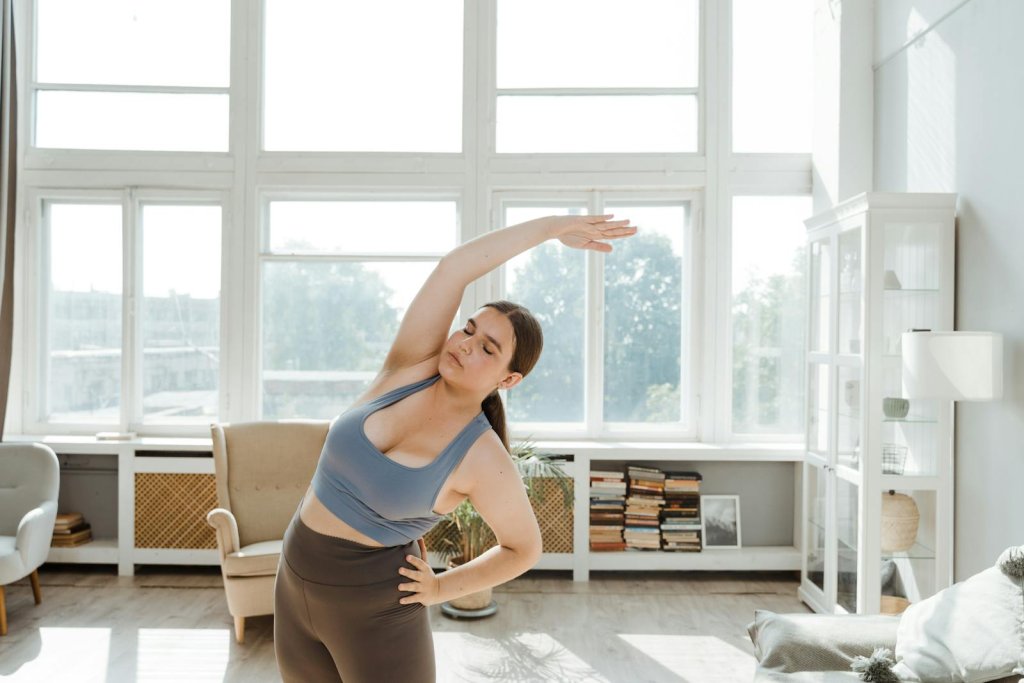
Health organizations such as the Centers for Disease Control and Prevention and the World Health Organization encourage regular movement and flexibility work as part of a well-rounded physical activity routine. The stretches below are gentle, accessible, and suitable for most fitness levels.
12 Best Stretching Exercises for Women
These 12 stretching exercises for women are designed to improve flexibility, reduce body tension, and support comfortable daily movement. They target key areas such as the neck, shoulders, spine, hips, and legs to help you move better and feel more relaxed.
1. Neck Side Stretch
Why it works:
This stretch gently lengthens the muscles on the sides of the neck that often tighten due to prolonged screen time, poor posture, and stress. It helps improve neck mobility and may reduce stiffness associated with desk work or daily tension.
Muscles worked:
Upper trapezius, levator scapulae, sternocleidomastoid (side of the neck)
How to do it:
- Sit or stand tall with shoulders relaxed
- Slowly tilt your head toward one shoulder
- Keep both shoulders down and relaxed
- Hold briefly, then return to center and switch sides
Trainer Tip:
Avoid pulling on your head. Let gravity and gentle positioning create the stretch.
2. Upper Trapezius Stretch
Why it works:
This stretch targets the upper shoulder muscles that commonly hold stress. It helps relieve tension from prolonged sitting, phone use, and shoulder shrugging habits.
Muscles worked:
Upper trapezius, levator scapulae
How to do it:
- Sit upright with a neutral spine
- Gently pull your head toward one shoulder using your hand
- Keep the opposite shoulder relaxed and down
- Hold, then switch sides
Trainer Tip:
Apply only light pressure with your hand—this stretch should feel relieving, not intense.
3. Chest Opener Stretch
Why it works:
Opening the chest counteracts rounded shoulders and forward-head posture caused by sitting and device use. It supports better upper-body alignment and breathing mechanics.
Muscles worked:
Pectoralis major and minor, anterior deltoids
How to do it:
- Clasp your hands behind your back
- Gently lift your arms while opening your chest
- Keep your spine tall and ribs down
- Hold while breathing steadily
Trainer Tip:
Focus on lifting the chest forward rather than forcing the arms higher.
4. Overhead Triceps Stretch
Why it works:
This stretch improves shoulder and elbow mobility while lengthening the triceps, which can tighten from repetitive arm use or strength training.
Muscles worked:
Triceps brachii, shoulder stabilizers
How to do it:
- Raise one arm overhead
- Bend the elbow so your hand reaches down your back
- Gently press the elbow with the opposite hand
- Switch arms after holding
Trainer Tip:
Keep your core engaged to avoid arching your lower back.
5. Standing Side Bend Stretch
Why it works:
Side bending stretches the torso and hips, improving lateral flexibility and supporting smoother movement during walking, bending, and daily tasks.
Muscles worked:
Obliques, quadratus lumborum, latissimus dorsi
How to do it:
- Stand with feet hip-width apart
- Raise one arm overhead
- Gently bend sideways without twisting
- Return to center and switch sides
Trainer Tip:
Think of creating length through your side body rather than collapsing into the bend.
6. Cat–Cow Stretch
Why it works:
This movement improves spinal mobility by taking the spine through controlled flexion and extension. It may help reduce stiffness and increase body awareness.
Muscles worked:
Erector spinae, deep spinal stabilizers, abdominal muscles
How to do it:
- Start on hands and knees
- Inhale and gently arch your back
- Exhale and round your spine
- Move slowly with your breath
Trainer Tip:
Let your breath guide the movement—avoid rushing through the positions.
7. Seated Forward Fold
Why it works:
This stretch lengthens the back of the body and may help reduce tightness caused by prolonged sitting or limited hip mobility.
Muscles worked:
Hamstrings, lower back muscles, gluteals
How to do it:
- Sit with legs extended
- Hinge forward from the hips
- Reach toward your shins or ankles
- Keep your spine long
Trainer Tip:
Bend your knees slightly if you feel strain in your lower back.
8. Hip Flexor Stretch
Why it works:
Tight hip flexors are common in women who sit frequently. Stretching them supports hip mobility and may reduce strain on the lower back.
Muscles worked:
Iliopsoas, rectus femoris
How to do it:
- Step one foot forward into a split stance
- Gently lower the back knee or keep it lifted
- Shift weight forward slightly
- Keep your torso upright
Trainer Tip:
Squeeze the glutes on the back leg to enhance the stretch safely.
9. Figure-4 Glute Stretch
Why it works:
This stretch targets the hips and glutes, which play a key role in posture, walking, and lower-body comfort.
Muscles worked:
Gluteus maximus and medius, deep hip rotators
How to do it:
- Sit or lie down
- Cross one ankle over the opposite knee
- Gently draw the legs closer
- Switch sides after holding
Trainer Tip:
If knee discomfort occurs, reduce the depth of the stretch.
10. Inner Thigh Stretch
Why it works:
Stretching the inner thighs supports hip mobility and balance, especially for movements like squatting and lateral stepping.
Muscles worked:
Hip adductors (inner thighs)
How to do it:
- Sit with soles of feet together
- Let knees drop toward the floor
- Sit tall without rounding the back
- Breathe calmly
Trainer Tip:
Do not push your knees down—allow them to relax naturally.
11. Standing Hamstring Stretch
Why it works:
This stretch improves flexibility in the back of the legs, supporting walking, bending, and overall lower-body movement.
Muscles worked:
Hamstrings, calves (secondary)
How to do it:
- Place one heel forward with toes lifted
- Hinge slightly at the hips
- Keep your back straight
- Switch legs after holding
Trainer Tip:
Focus on hinging at the hips rather than rounding the spine.
12. Calf Stretch
Why it works:
Flexible calves support ankle mobility and help with walking, stair climbing, and exercise performance.
Muscles worked:
Gastrocnemius, soleus
How to do it:
- Step one foot back
- Press the heel toward the floor
- Keep the back leg straight or slightly bent
- Switch sides
Trainer Tip:
Adjust knee bend to target different calf muscles.
How Often Should Women Stretch?
General, evidence-based guidance suggests:
- Frequency: at least 2–3 days per week; daily stretching can be beneficial
- Hold time: 10–30 seconds per stretch
- Repetitions: 2–4 times per muscle group
- Intensity: mild tension, never sharp pain
The Mayo Clinic advises warming up first and avoiding bouncing or forced positions.
Benefits of Stretching Exercises for Women
Stretching exercises for women help support flexibility, comfort, and smooth movement in daily life and exercise. When done regularly, stretching may help:
- Improve joint range of motion
- Reduce muscle tightness from sitting or activity
- Support better posture and movement control
- Promote relaxation and body awareness
- Complement strength and aerobic exercise routines
Stretching Safety Tips for Women
To stretch safely:
- Warm up with light movement first
- Stretch slowly and with control
- Breathe normally throughout
- Avoid bouncing or forcing range
- Stop if you feel sharp pain or numbness
Women who are pregnant or postpartum should follow guidance from the American College of Obstetricians and Gynecologists and adjust positions as needed.
Can Stretching Help With Stress and Relaxation?
Stretching is often associated with relaxation because slow movement and controlled breathing can help reduce muscle tension and promote body awareness. Many women include gentle stretching as part of a wind-down routine in the evening or after workouts.
Frequently Asked Questions
Are stretching exercises for women different from men’s?
The basic principles are the same, but women may focus more on areas like hips, lower back, and shoulders due to common movement patterns and lifestyle demands.
Can beginners do these stretches?
Yes. All stretches can be modified and performed at a comfortable range.
Is it better to stretch in the morning or at night?
Both can be beneficial. Morning stretching may help reduce stiffness, while evening stretching can support relaxation.
How long should a stretching session last?
Most sessions last 5–15 minutes, depending on how many muscle groups you target.
Should stretching cause soreness?
Mild sensations are normal, but stretching should not cause pain or lingering soreness.
Can stretching replace strength training?
No. Stretching supports flexibility but works best alongside strength and aerobic exercise.
Conclusion
Stretching exercises for women are a simple, effective way to support flexibility, comfort, and movement quality at any age or fitness level. When practiced regularly and gently, they can help you move more freely and feel better throughout the day. Start with a few stretches, stay consistent, and build a routine that fits your lifestyle.
References
- Physical Activity Guidelines for Americans, 2nd edition (HHS PDF)
- PubMed – Optimising the Dose of Static Stretching to Improve Flexibility (Ingram et al.)
- ScienceDirect – Practical Recommendations on Stretching Exercise (Delphi consensus, 2025)
- ACOG – Physical Activity and Exercise During Pregnancy and the Postpartum Period