
Thigh exercises are targeted strength movements that train the front, inner, and back of the thigh to build strength, muscle tone, and lower-body stability. Training your thighs matters because these muscles play a central role in walking, stair climbing, lifting, balance, and athletic performance. A well-designed thigh workout supports knee health, improves daily movement efficiency, and helps create balanced, sculpted legs.
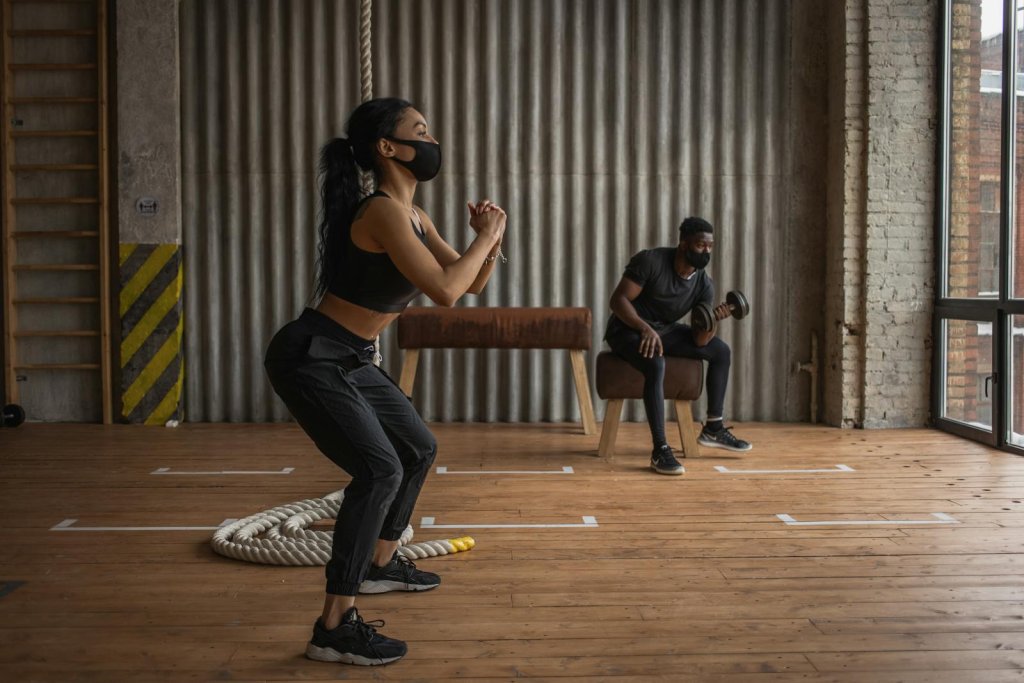
This guide explains what thigh exercises are, why they matter, and how to perform the 12 best thigh exercises safely and effectively—whether you train at home or in the gym.
What Are Thigh Exercises?
Thigh exercises are lower-body movements that primarily target the muscles of the upper leg. These exercises typically involve knee bending, hip hinging, or lateral leg movement.
The main thigh muscle groups include:
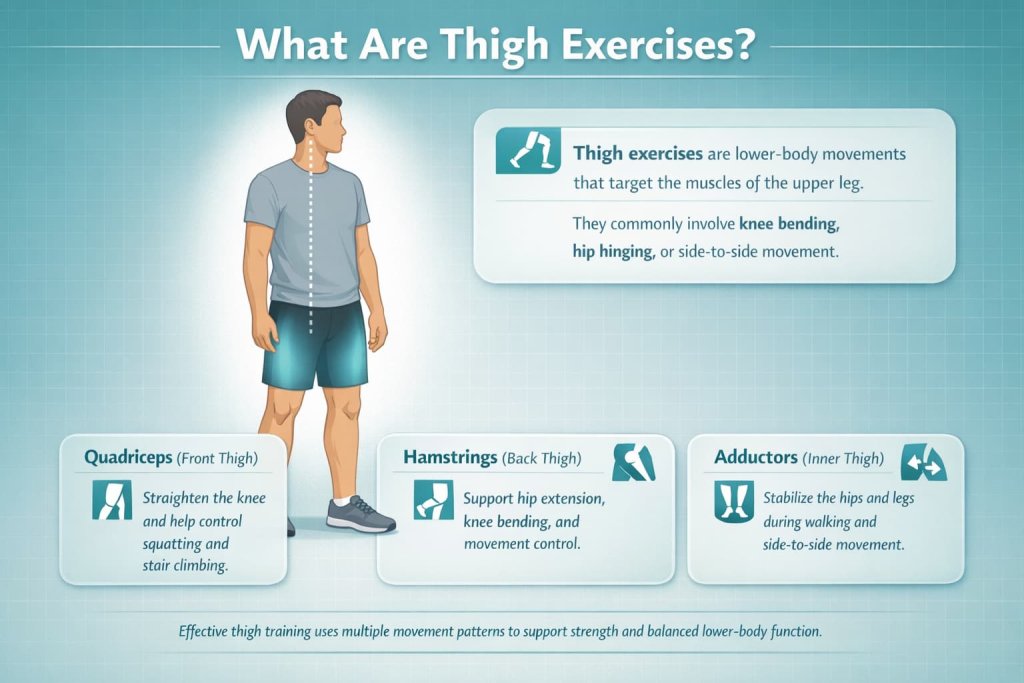
- Quadriceps (front thigh): straighten the knee and help control squatting and stair climbing
- Hamstrings (back thigh): assist with hip extension, knee bending, and deceleration
- Adductors (inner thigh): help stabilize the hips and legs during walking, running, and side-to-side movement
According to guidance commonly referenced by American College of Sports Medicine, effective lower-body training should involve multiple exercises that work muscles through different movement patterns.
12 Best Thigh Exercises for Strong, Sculpted Legs
These thigh exercises target the quadriceps, hamstrings, and inner thighs to build strength, improve stability, and enhance leg shape. They combine compound and focused movements suitable for all fitness levels.
1. Squats
Why it works:
Squats are a foundational lower-body exercise that place a significant load on the quadriceps while also recruiting the hamstrings, glutes, and inner thighs. This multi-joint movement builds overall thigh strength and supports functional tasks like sitting, lifting, and stair climbing.
Muscles worked:
Quadriceps, hamstrings, adductors, glutes
How to do it:
- Stand with feet about shoulder-width apart, toes slightly turned out
- Brace your core and keep your chest tall
- Push hips back and bend the knees to lower into a squat
- Descend until thighs are at least parallel, if comfortable
- Drive through your heels to return to standing
Trainer Tip:
Slow, controlled lowering increases muscle tension and reduces joint stress.
2. Lunges
Why it works:
Lunges train each leg independently, helping correct strength imbalances between sides. They place a strong demand on the quadriceps while also engaging stabilizing muscles that support balance and coordination.
Muscles worked:
Quadriceps, hamstrings, adductors, glutes
How to do it:
- Stand upright with feet hip-width apart
- Step forward with one leg
- Lower the back knee toward the floor while keeping torso upright
- Push through the front heel to return to standing
- Alternate sides
Trainer Tip:
Taking a slightly longer step increases thigh and glute engagement.
3. Step-Ups
Why it works:
Step-ups replicate everyday movements like climbing stairs. They place high demand on the front thigh of the working leg while improving single-leg strength and balance.
Muscles worked:
Quadriceps, hamstrings, glutes
How to do it:
- Stand facing a sturdy step or bench
- Place one foot fully on the step
- Press through the heel to stand up
- Slowly lower back down under control
- Switch sides
Trainer Tip:
Choose a step height that allows smooth, pain-free movement.
4. Bulgarian Split Squats
Why it works:
By elevating the rear foot, Bulgarian split squats shift more load onto the front leg, increasing quadriceps activation and overall thigh challenge without needing heavy weights.
Muscles worked:
Quadriceps, hamstrings, glutes
How to do it:
- Stand a few feet in front of a bench
- Place the top of your rear foot on the bench
- Lower into a split squat by bending the front knee
- Push through the front heel to stand
Trainer Tip:
Maintain an upright torso to emphasize the quadriceps.
5. Wall Sits
Why it works:
Wall sits create an isometric contraction in the quadriceps, increasing time under tension. This builds muscular endurance and strength without joint movement.
Muscles worked:
Quadriceps
How to do it:
- Stand with your back against a wall
- Slide down until knees are bent about 90 degrees
- Keep feet flat and core engaged
- Hold the position while breathing steadily
Trainer Tip:
End the hold if knee discomfort appears.
6. Romanian Deadlifts
Why it works:
Romanian deadlifts strengthen the hamstrings through a hip-hinge pattern, balancing quad-dominant movements and supporting knee and hip stability.
Muscles worked:
Hamstrings, adductors, glutes
How to do it:
- Stand holding weights in front of thighs
- Soften the knees slightly
- Hinge at the hips while keeping spine neutral
- Lower until you feel hamstring tension
- Return to standing by driving hips forward
Trainer Tip:
Think “hips back” rather than “weights down.”
7. Lateral Lunges
Why it works:
Lateral lunges introduce side-to-side movement, effectively targeting the inner thighs while improving hip mobility and frontal-plane strength.
Muscles worked:
Adductors, quadriceps
How to do it:
- Stand with feet together
- Step wide to one side
- Sit hips back over the stepping leg
- Keep the opposite leg straight
- Push back to the starting position
Trainer Tip:
Keep your chest lifted to maintain proper alignment.
8. Copenhagen Adductor Exercise
Why it works:
This exercise directly targets the inner thighs using bodyweight leverage, making it one of the most effective adductor-strengthening movements.
Muscles worked:
Adductors
How to do it:
- Position yourself in a side plank
- Place the top leg on a bench or chair
- Lift hips off the floor
- Hold the position with controlled breathing
Trainer Tip:
Begin with bent-knee variations if full holds are too challenging.
9. Leg Press
Why it works:
The leg press allows heavy loading of the thighs in a controlled environment, making it effective for muscle growth while minimizing balance demands.
Muscles worked:
Quadriceps, hamstrings
How to do it:
- Sit in the machine with feet shoulder-width on platform
- Lower the sled until knees bend comfortably
- Press the platform away without locking knees
- Control the return
Trainer Tip:
Foot placement higher or wider can shift muscle emphasis.
10. Hamstring Curls
Why it works:
Hamstring curls isolate the muscles at the back of the thigh, helping create balanced thigh development and supporting knee stability.
Muscles worked:
Hamstrings
How to do it:
- Lie or sit on the machine
- Curl heels toward glutes
- Pause briefly at the top
- Lower slowly
Trainer Tip:
The slow lowering phase increases muscle control.
11. Goblet Squats
Why it works:
Holding a weight at the chest encourages an upright torso, improving squat mechanics while strongly engaging the quadriceps and inner thighs.
Muscles worked:
Quadriceps, adductors
How to do it:
- Hold a dumbbell or kettlebell at chest height
- Stand with feet shoulder-width apart
- Lower into a squat while keeping chest upright
- Push through heels to stand
Trainer Tip:
Use this variation to safely learn proper squat depth.
12. Reverse Lunges
Why it works:
Stepping backward reduces forward knee stress while still effectively loading the quadriceps and hamstrings.
Muscles worked:
Quadriceps, hamstrings
How to do it:
- Stand tall with feet hip-width apart
- Step one leg backward into a lunge
- Lower until both knees bend comfortably
- Push through the front heel to return
Trainer Tip:
A tall torso keeps emphasis on the front thigh.
How to Program Thigh Exercises for Best Results
Effective thigh training focuses on consistency, gradual progression, and adequate recovery.
General programming guidelines:
- Frequency: 2–3 sessions per week
- Exercises per workout: 4–6 thigh-focused movements
- Sets: 1–3 sets per exercise
- Reps: 8–15 controlled repetitions (or 20–45 seconds for holds like wall sits)
- Rest: 48 hours between challenging lower-body sessions
Start with bodyweight exercises, then gradually increase resistance, reps, or difficulty as strength improves. Prioritize proper form over heavier loads to support long-term progress.
Why Thigh Exercises Matter for Strength and Stability
Well-programmed thigh exercises may help support:
- Stronger knees and hips during daily activities
- Better balance and coordination
- Improved athletic performance and power
- Reduced muscle imbalances between the front and back of the legs
- Greater independence as you age
Public health recommendations from Centers for Disease Control and Prevention and World Health Organization consistently encourage adults to perform muscle-strengthening activities for major muscle groups at least two days per week.
Who Should Be Careful With Thigh Exercises?
You should proceed cautiously if you:
- Have knee, hip, or lower-back pain
- Are recovering from surgery or injury
- Experience sharp pain during exercise
Organizations such as American Academy of Orthopaedic Surgeons advise stopping exercises that cause pain and consulting a qualified professional when discomfort persists.
Thigh Muscles Worked (Quadriceps, Hamstrings, Adductors)
Thigh exercises primarily train three major muscle groups that work together to produce strength, control, and balanced leg development.
- Quadriceps (front thigh): Responsible for straightening the knee and controlling movements like squatting, standing up, and stair climbing. Strong quads support knee stability and everyday function.
- Hamstrings (back thigh): Assist with knee bending and hip extension. They help slow down movements, protect the knee joint, and balance quad strength.
- Adductors (inner thigh): Pull the legs toward the midline and stabilize the pelvis during walking, running, and lateral movements. They are especially active during lunges, squats, and side-to-side exercises.
Training all three muscle groups helps reduce imbalances and supports safer, more efficient lower-body movement.
Common Mistakes to Avoid During Thigh Exercises
Avoiding common errors can improve results and reduce injury risk.
- Letting knees collapse inward during squats or lunges
- Rushing through repetitions instead of using controlled tempo
- Using weights that compromise posture or balance
- Ignoring pain signals or sharp discomfort
- Skipping warm-up or mobility work before training
Focus on controlled movement, proper alignment, and steady breathing to get the most benefit from thigh exercises.
Frequently Asked Questions
Are thigh exercises good for knee health?
When performed with proper form and pain-free range of motion, thigh strengthening may help support knee stability.
Can I do thigh exercises at home?
Yes. Squats, lunges, wall sits, and step-ups require minimal equipment.
Which exercises target inner thighs best?
Lateral lunges and Copenhagen adductor exercises are highly effective.
Are squats or lunges better for thighs?
Both are effective. Squats allow heavier loading, while lunges improve single-leg control.
How long before I see results?
Many people notice strength improvements within 3–4 weeks with consistent training.
Should seniors do thigh exercises?
Yes, with appropriate modifications and professional guidance.
Conclusion
Thigh exercises are essential for building strong, sculpted legs and supporting daily movement, balance, and long-term joint health. By combining quad-focused, hamstring-focused, and inner-thigh movements, you can train your legs safely and effectively at any fitness level.
Start with bodyweight movements, progress gradually, and prioritize proper form for lasting results.
References
- WHO — 2020 Guidelines on Physical Activity and Sedentary Behaviour (BJSM)
- AAOS OrthoInfo — Safe Exercise (Stop if Pain, Progress Gradually)
- Squat Range of Motion Study — Muscle Activation in Different Squat Depths (PMC)
- Forward Lunge Step Length Study — Muscle Activity Changes With Longer Steps (PMC)
- Loaded Step-Up Variations — EMG Analysis (Marquette University)
- Copenhagen Adductor Exercise — Systematic Review (International Journal of Sports Physical Therapy)