
Hip mobility exercises help improve joint range of motion, reduce stiffness, and support smoother, pain-free movement in daily life. When your hips move well, walking, sitting, standing, squatting, and exercise all feel easier and more controlled. Understanding how to train hip mobility correctly can help you move with confidence while reducing unnecessary strain on the lower back and knees.
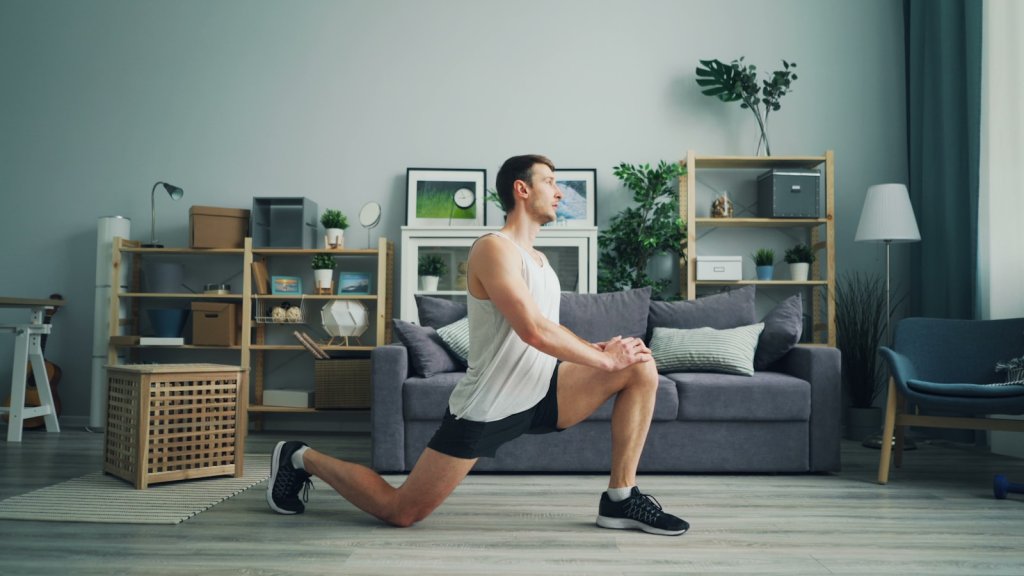
Hip mobility exercises typically combine gentle stretching, controlled strength, and coordinated movement.
What Are Hip Mobility Exercises?
Hip mobility exercises are controlled movements designed to help the hip joint move through a comfortable, usable range of motion. Unlike passive stretching alone, mobility exercises also engage the muscles that stabilize the hip, such as the glutes and deep rotators.
Most hip mobility routines aim to:
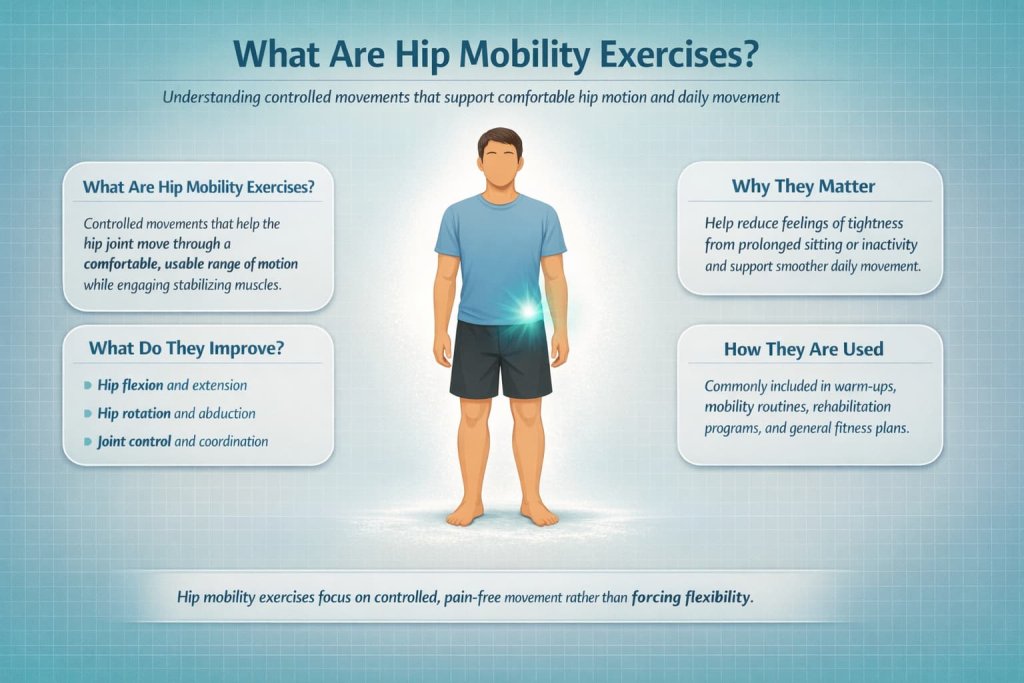
- Improve hip flexion, extension, rotation, and abduction
- Support joint control and coordination
- Reduce feelings of tightness from prolonged sitting or inactivity
- Improve movement quality during daily tasks and workouts
12 Best Hip Mobility Exercises
Below are commonly used, joint-friendly hip mobility exercises that appear frequently in rehabilitation and fitness programs. Perform all movements slowly and within a pain-free range.
1. Hip Circles
How to do it:
- Stand tall holding a wall or chair for balance
- Lift one knee slightly in front of you
- Slowly draw a circle with the knee, keeping the torso still
- Perform circles in both directions before switching sides
Why it works:
Hip circles gently explore the hip joint’s available range of motion. This helps lubricate the joint and improve neuromuscular awareness without placing the hip under load.
Trainer Tip:
Keep the movement slow and controlled—small circles are often more effective than forcing large ones.
2. Standing Hip Flexor Stretch
How to do it:
- Step one foot forward into a split stance
- Gently bend the front knee while keeping the torso upright
- Lightly squeeze the glute of the back leg
- Hold the stretch without bouncing, then switch sides
Why it works:
This stretch targets the hip flexors, which commonly shorten with prolonged sitting. Improving hip flexor length supports better posture and hip extension during walking.
Trainer Tip:
If you feel the stretch in your lower back instead of the hip, reduce depth and focus on glute engagement.
3. Glute Bridge
How to do it:
- Lie on your back with knees bent and feet flat on the floor
- Press through your heels and lift your hips upward
- Pause briefly at the top while squeezing the glutes
- Lower slowly and repeat
Why it works:
Glute bridges improve hip extension strength while reinforcing proper hip-driven movement, which is essential for mobility and joint support.
Trainer Tip:
Avoid arching the lower back—think about lifting the hips by squeezing the glutes, not pushing with the spine.
4. Seated Internal and External Hip Rotation
How to do it:
- Sit tall on a chair with feet flat on the floor
- Slowly rotate one leg inward, then outward
- Keep the thigh relaxed and movement controlled
- Switch sides after several repetitions
Why it works:
Hip rotation is critical for walking, turning, and balance. This exercise restores rotational control without weight-bearing stress.
Trainer Tip:
Move only through a comfortable range—rotation often improves gradually with consistency.
5. Cat-Cow (Hip–Spine Coordination)
How to do it:
- Start on hands and knees with a neutral spine
- Inhale and gently arch the back while tipping the pelvis
- Exhale and round the spine while tucking the pelvis
- Move slowly with your breath
Why it works:
Cat-cow encourages coordinated movement between the hips, pelvis, and spine, which supports smoother full-body mobility.
Trainer Tip:
Focus on slow breathing—mobility improves when movement and breath are synced.
6. Lateral Leg Raises
How to do it:
- Lie on your side with legs straight and stacked
- Lift the top leg slightly upward without rolling the hips
- Lower with control and repeat before switching sides
Why it works:
This exercise strengthens the muscles that stabilize the pelvis, which is essential for controlled hip movement and balance.
Trainer Tip:
Keep the toes pointing forward—turning the foot upward reduces hip muscle engagement.
7. Figure-4 Stretch
How to do it:
- Lie on your back with knees bent
- Place one ankle across the opposite knee
- Gently pull the supporting leg toward your chest
- Hold comfortably, then switch sides
Why it works:
The figure-4 stretch targets the outer hip and glute region, areas often associated with hip stiffness and limited rotation.
Trainer Tip:
If lying down is uncomfortable, this stretch can also be performed seated.
8. Controlled Leg Swings
How to do it:
- Hold onto a wall or support
- Swing one leg forward and backward slowly
- Keep the torso upright and movement smooth
- Switch legs after completing repetitions
Why it works:
Controlled leg swings gently introduce dynamic movement, preparing the hips for walking and functional activity.
Trainer Tip:
Avoid using momentum—control improves mobility more effectively than speed.
9. Kneeling Hip Flexor Mobility Drill
How to do it:
- Kneel on one knee with the other foot forward
- Gently shift hips forward while keeping the torso upright
- Lightly squeeze the glute on the kneeling side
- Return to start and repeat
Why it works:
This drill blends stretching with active muscle engagement, helping improve hip extension control rather than flexibility alone.
Trainer Tip:
Think “tall posture” rather than leaning forward to keep the stretch focused on the hip.
10. Squat-to-Stand Mobility
How to do it:
- Stand with feet shoulder-width apart
- Lower into a comfortable squat position
- Hold briefly, then return to standing
- Move slowly through the transition
Why it works:
This movement links hip mobility with functional patterns used in daily life, such as sitting and standing.
Trainer Tip:
Use a chair or support if balance or depth is limited.
11. Standing Hip Abduction with Support
How to do it:
- Stand holding a wall or chair
- Lift one leg out to the side without leaning
- Lower slowly and repeat before switching sides
Why it works:
This exercise strengthens the lateral hip muscles that help control pelvic position during walking and standing.
Trainer Tip:
Quality matters more than height—small, controlled lifts are ideal.
12. Pelvic Tilts
How to do it:
- Lie on your back with knees bent
- Gently tilt the pelvis to flatten the lower back
- Slowly release back to neutral
- Repeat in a controlled rhythm
Why it works:
Pelvic tilts restore awareness and control of pelvic positioning, which directly influences hip movement quality.
Trainer Tip:
Move gently—this exercise is about control, not force.
How Often Should You Do Hip Mobility Exercises?
Most evidence-based guidance suggests:
- 2–3 days per week for mobility and strengthening work
- Daily gentle mobility for people with stiffness from prolonged sitting
- Rest days between higher-effort strength sessions
The American College of Sports Medicine recommends combining mobility work with muscle-strengthening activities for overall joint health.
Why Hip Mobility Exercises Important
Limited hip mobility can increase stress on nearby joints, particularly the knees and lower back. Improving hip movement may help support:
- Easier walking and stair climbing
- Better sitting and standing mechanics
- Improved balance and posture
- More efficient movement during exercise
Public-health guidance from the Centers for Disease Control and Prevention and the World Health Organization encourages regular movement that includes strength, flexibility, and balance to support long-term joint function.
Common Causes of Hip Stiffness
Hip stiffness often develops gradually and is commonly linked to everyday habits and movement patterns. Understanding the underlying causes helps you choose appropriate hip mobility exercises and set realistic expectations.
Common contributors include:
- Prolonged sitting, which can reduce hip flexor length and limit hip extension
- Low overall physical activity, leading to reduced joint movement and muscle engagement
- Age-related changes, as joint range of motion and muscle elasticity naturally decline over time
- Repetitive movement patterns, such as walking or training without varied hip motion
- Poor movement coordination, where surrounding muscles do not support the hip joint effectively
Public-health guidance from the Centers for Disease Control and Prevention highlights regular movement and muscle-strengthening activity as key factors in maintaining joint mobility and functional independence.
Are Hip Mobility Exercises Safe?
For most people, hip mobility exercises are considered safe when performed slowly, with control, and within a comfortable range of motion. These exercises are widely used in fitness and rehabilitation settings to support joint function and movement quality.
General safety principles include:
- Staying within pain-free or pain-tolerant ranges
- Avoiding forced or aggressive end positions
- Progressing gradually over time
- Prioritizing controlled movement over depth or intensity
Orthopedic guidance from the American Academy of Orthopaedic Surgeons consistently emphasizes proper form, warm-up, and gradual progression to reduce unnecessary joint stress.
Common Mistakes to Avoid During Hip Mobility Exercises
Even well-chosen exercises can be less effective—or uncomfortable—if performed incorrectly. Avoiding common mistakes helps ensure mobility work remains joint-friendly and productive.
Frequent errors include:
- Moving too fast or using momentum instead of control
- Forcing deeper ranges of motion too quickly
- Ignoring posture and pelvic alignment
- Skipping warm-up before mobility work
- Practicing inconsistently or only when stiffness feels severe
Mobility improvements are often gradual. Consistent, moderate practice is typically more effective than infrequent, intense sessions.
Who Should Be Cautious With Hip Mobility Exercises?
While hip mobility exercises are suitable for many people, certain individuals should take extra care and consider professional guidance before starting or progressing a routine.
Extra caution is recommended for:
- People with a recent hip, lower-back, or pelvic injury
- Those recovering from hip or spinal surgery
- Individuals experiencing persistent or worsening hip pain
- Anyone with diagnosed joint or bone conditions that limit movement
The National Institute on Aging encourages older adults to remain active while emphasizing exercises that are appropriately matched to individual ability and health status.
Safety Tips for Pain-Free Hip Mobility
- Stay within a comfortable range of motion
- Avoid forcing deep stretches
- Move slowly and with control
- Stop if sharp pain occurs
- Progress gradually over time
If you have a recent injury or persistent hip pain, consult a qualified healthcare or rehabilitation professional.
Frequently Asked Questions
Do hip mobility exercises help with stiffness from sitting?
Yes. Regular hip mobility exercises may help reduce stiffness associated with prolonged sitting by encouraging joint movement and muscle activation.
Are hip mobility exercises the same as stretching?
No. Mobility exercises combine stretching with strength and control, while stretching alone is passive.
Can beginners do hip mobility exercises?
Yes. Most hip mobility exercises can be modified and are commonly recommended for beginners.
How long does it take to see improvement?
Many people notice small changes in comfort and movement within a few weeks when exercises are performed consistently.
Should older adults do hip mobility exercises?
Yes. Organizations like the National Institute on Aging support mobility and strength training for maintaining independence.
Can hip mobility exercises support better exercise performance?
Improved hip mobility may help with movement efficiency during activities such as walking, squatting, and strength training.
Conclusion
Hip mobility exercises are a simple yet powerful way to support joint comfort, movement quality, and everyday function. By practicing controlled, consistent mobility work, you can help your hips move more freely and support pain-free movement over time. Start slowly, stay consistent, and focus on quality over intensity.
References
- Older Adult Physical Activity Guidelines – Centers for Disease Control and Prevention (CDC)
- WHO Guidelines on Physical Activity and Sedentary Behaviour (At a Glance) – World Health Organization (WHO)
- Physical Activity Recommendations – World Health Organization (WHO) Be Healthy Initiative
- Chronic Flexibility Improvements After a 12-Week Stretching Program (PubMed)