
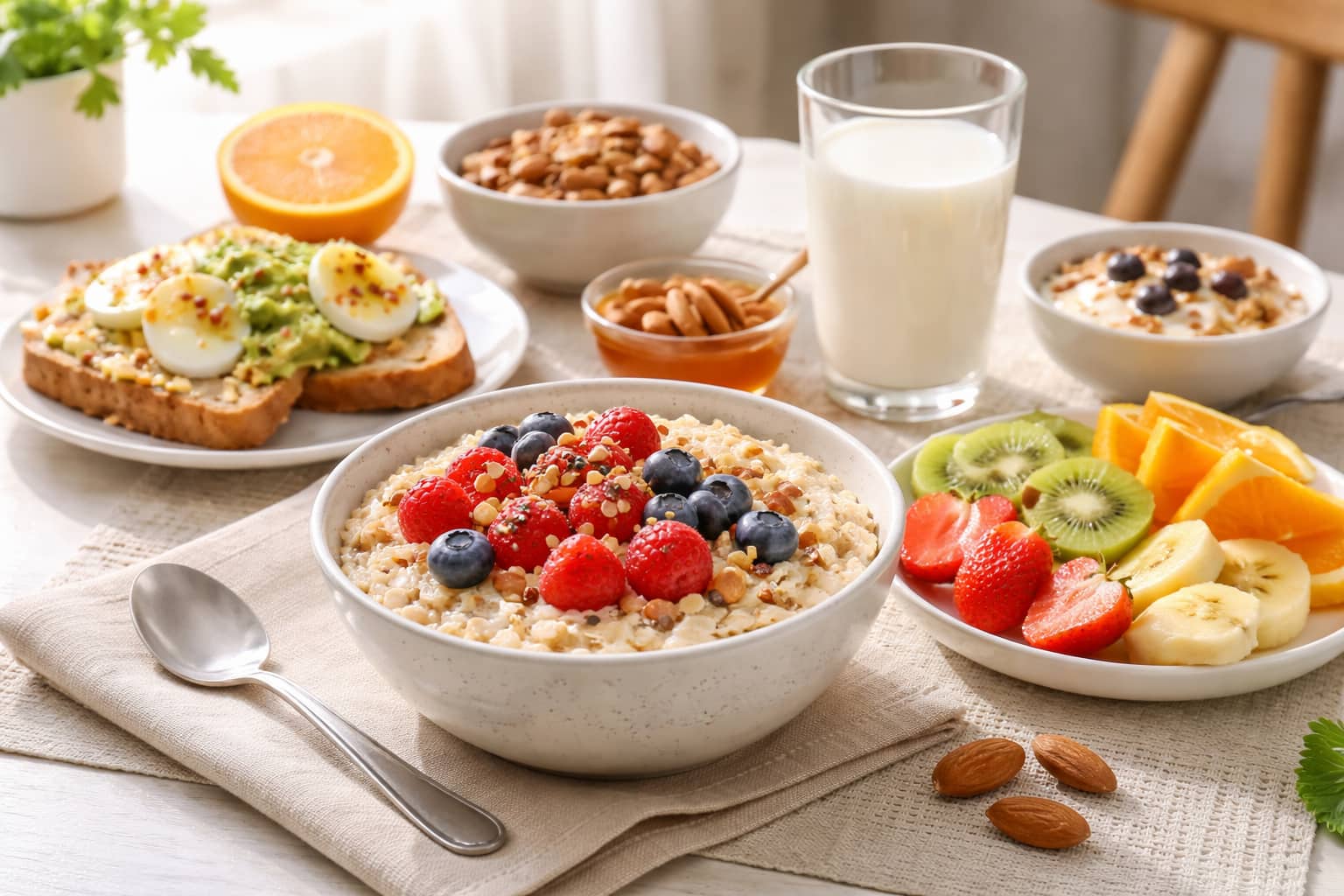
Healthy foods to eat for breakfast are whole, minimally processed foods that combine fiber-rich carbohydrates, quality protein, and nutrient-dense fruits or vegetables. This balanced pattern may help support steady energy, fullness, and overall wellness throughout the morning without relying on restrictive rules or exaggerated health claims.
The guidance below is based only on authoritative nutrition sources and reflects widely accepted public-health recommendations in the United States.
What counts as a healthy breakfast according to nutrition guidance
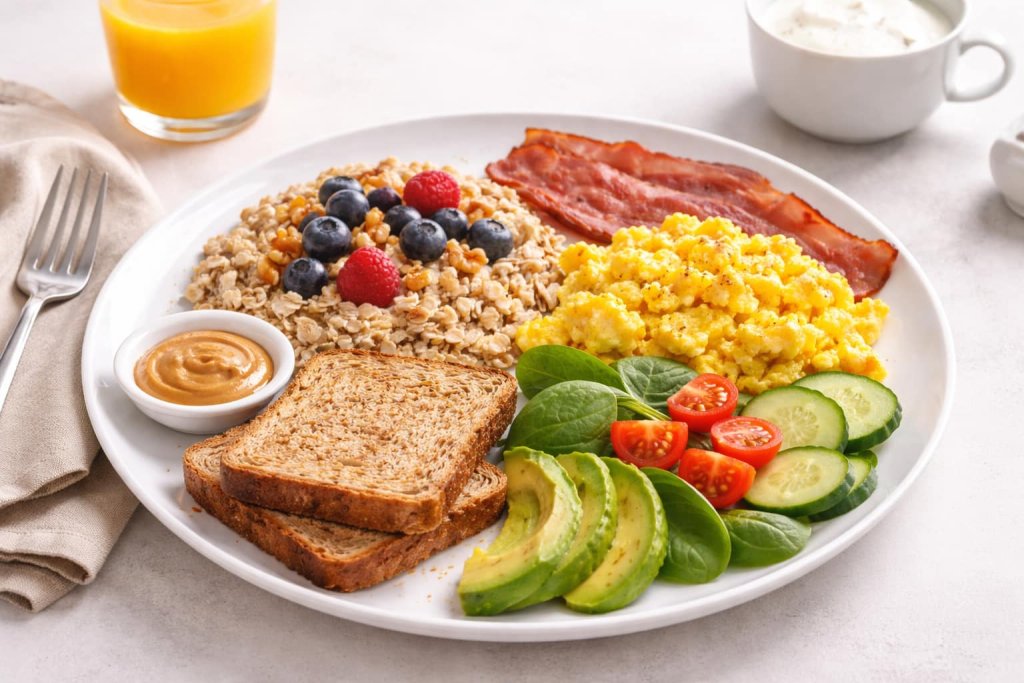
A healthy breakfast follows a pattern, not a product. The latest guidance from the Dietary Guidelines for Americans emphasizes eating more whole foods, limiting added sugars, and building meals from multiple food groups. A similar meal-building approach is presented by MyPlate, which encourages including fruits, vegetables, grains (often whole), protein foods, and dairy or fortified alternatives.
The balanced breakfast building blocks
Most nutritious breakfasts include two to four of the following components:
- Fiber-rich carbohydrates
- Protein foods
- Fruits and/or vegetables
- Dairy or fortified soy alternatives
- Unsaturated fats (in modest portions)
This structure supports overall diet quality rather than focusing on a single “healthy” food.
The real-life breakfast formula
A practical way to use healthy foods to eat for breakfast is to build your meal from 2–4 breakfast building blocks. This keeps breakfast balanced and flexible, even when you are short on time. This approach matches the meal-pattern ideas promoted by the Dietary Guidelines for Americans and MyPlate.
Step 1: Choose your base (fiber-rich carbohydrate)
Pick one of these as your foundation:
- Oats or overnight oats
- Whole-grain toast, English muffin, or tortilla
- Unsweetened whole-grain cereal
- Beans or lentils (savory bowls)
- Fruit (banana, berries, apple) when you need something quick
Why it works: fiber-rich carbs support fullness and help you reach daily fiber goals, as emphasized in healthy eating guidance from the Centers for Disease Control and Prevention.
Step 2: Add protein (for balance and satiety)
Add one protein food:
- Eggs
- Plain yogurt or cottage cheese
- Tofu scramble
- Beans or lentils
- Nut butter, nuts, or seeds (also provide healthy fats)
Why it works: protein foods help create a more balanced meal pattern and may help you feel satisfied longer.
Step 3: Add a fruit or vegetable (for nutrient density)
Choose at least one:
- Fruit: berries, banana, apple, orange, pear
- Vegetables: spinach, tomatoes, mushrooms, peppers, onions
Real-life tip: frozen fruits and vegetables can be just as useful as fresh because they are easy to store and quick to use.
Step 4: Add healthy fats (optional but helpful)
Add a small portion when it fits:
Why it works: unsaturated fats can support meal satisfaction and help absorb fat-soluble nutrients as part of a balanced eating pattern described by the Dietary Guidelines for Americans.
Simple “plug-and-play” breakfast combinations
Use these formulas to build a meal without overthinking:
Formula A: Whole grain + protein + fruit
- Oatmeal + plain yogurt + berries
- Whole-grain toast + peanut butter + banana
Formula B: Protein + vegetables + whole grain
- Eggs + spinach + whole-grain toast
- Tofu scramble + peppers + whole-grain tortilla
Formula C: Dairy/soy + fruit + healthy fats
- Plain yogurt + apple + walnuts
- Fortified soy yogurt + berries + chia
Formula D: High-fiber savory bowl
- Beans + eggs (or tofu) + tomatoes + avocado
- Lentils + sautéed greens + olive oil
The easiest way to make it consistent
If you want breakfast to happen automatically:
- Pick two “default breakfasts” you enjoy
- Stock 5–7 staple ingredients (oats, eggs/tofu, plain yogurt/soy milk, fruit, greens, nuts/seeds)
- Rotate small changes (switch fruit, switch nuts, switch veggies) to keep it interesting
This method keeps breakfast nutritious, realistic, and repeatable—without needing strict rules.
Healthy foods to eat for breakfast
Fiber-rich whole grains
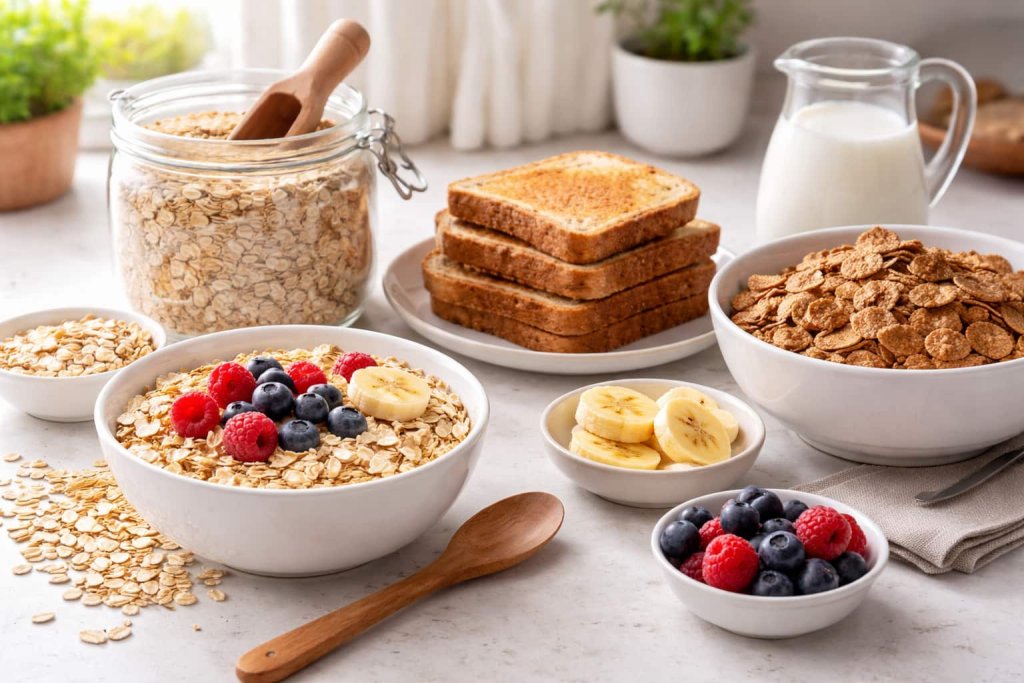
Whole grains are rich in dietary fiber and commonly recommended in healthy eating patterns:
- Oatmeal or overnight oats
- 100% whole-wheat toast or English muffins
- Unsweetened whole-grain cereal
- Whole-grain tortillas
According to the Centers for Disease Control and Prevention, whole grains are a practical way to increase fiber intake across meals.
Protein foods
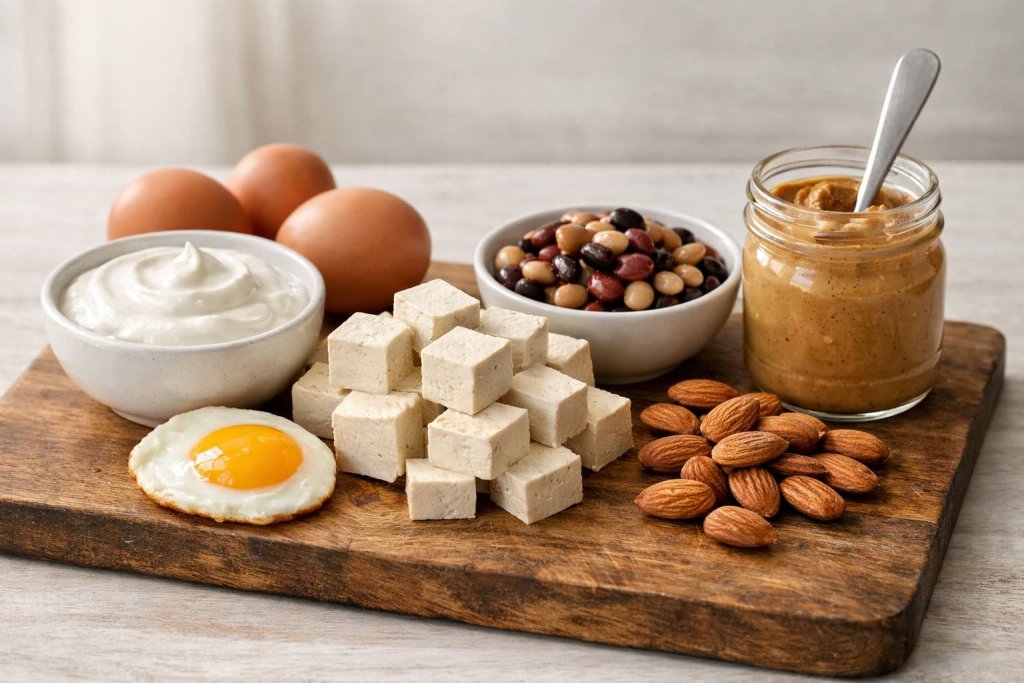
Protein foods help balance breakfast and may support satiety when paired with fiber-rich foods:
- Eggs
- Plain Greek yogurt or cottage cheese
- Tofu or tempeh
- Beans and lentils
- Nuts, seeds, or nut butters
Both animal-based and plant-based protein options fit within balanced eating patterns described by the Dietary Guidelines for Americans.
Fruits and vegetables
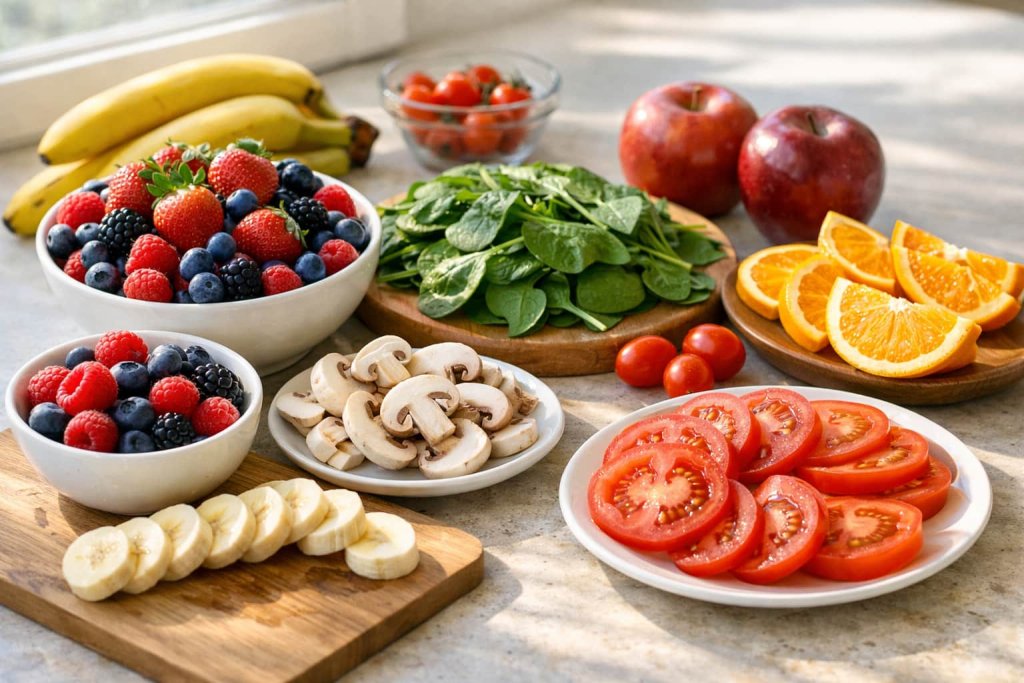
Fruits and vegetables add fiber, potassium, and a wide range of micronutrients:
- Fruits: berries, bananas, apples, oranges, pears
- Vegetables: spinach, tomatoes, peppers, mushrooms, onions
Fresh, frozen, and no-sugar-added canned options can all be used to build a healthy breakfast, as noted by the Centers for Disease Control and Prevention.
Dairy and fortified soy alternatives
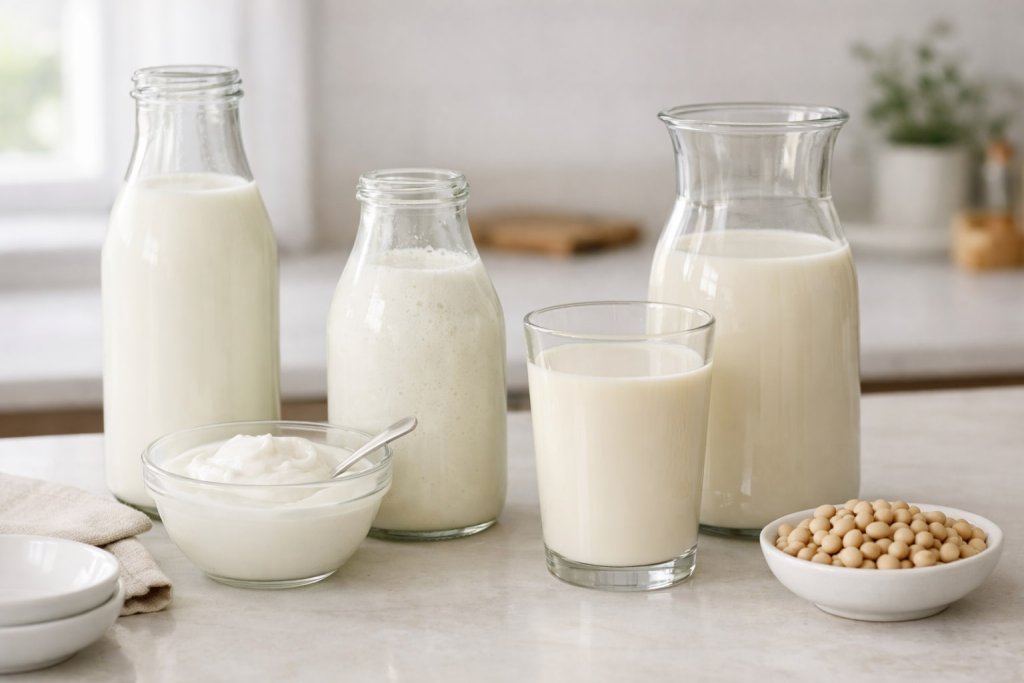
Common breakfast-friendly choices include:
- Milk or lactose-free milk
- Plain yogurt or kefir
- Fortified soy milk or soy yogurt
These foods contribute nutrients such as calcium and vitamin D, which many adults are encouraged to consume in adequate amounts according to MyPlate guidance.
Nuts, seeds, and other unsaturated fats
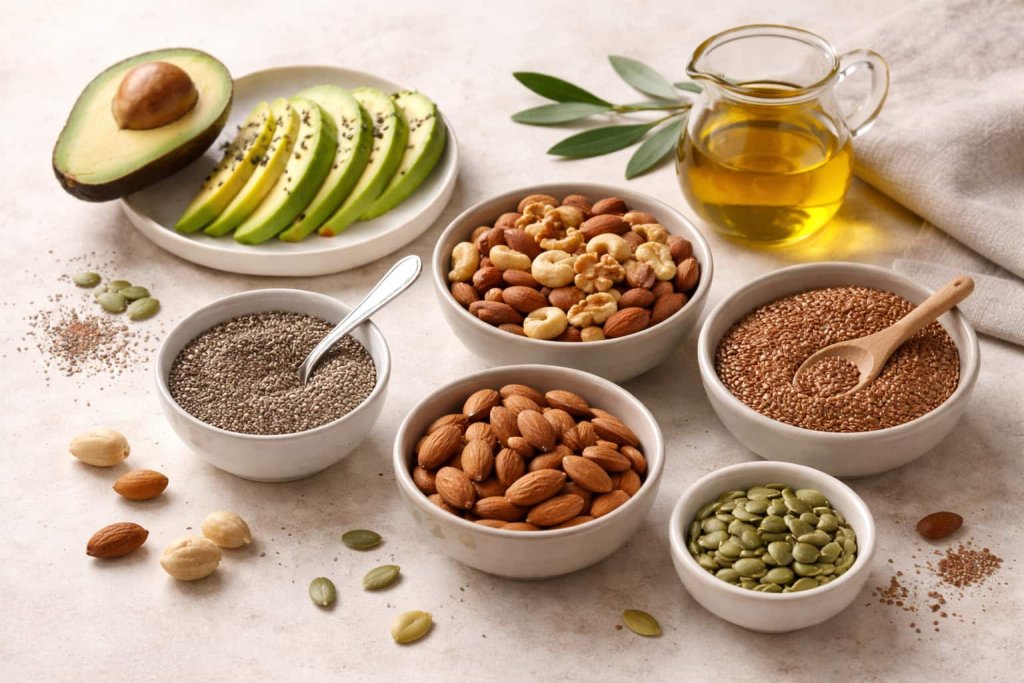
Used in sensible portions, these foods may support meal satisfaction:
The Dietary Guidelines for Americans encourage choosing unsaturated fats from whole-food sources as part of a balanced diet.
Healthy breakfast foods table (quick reference)
The table below expands on the core food groups commonly recommended in evidence-based nutrition guidance. These groups reflect patterns emphasized by the Dietary Guidelines for Americans and the meal-building framework from MyPlate, both of which focus on overall diet quality rather than individual “superfoods.”
| Food group | Examples | Why they are included |
|---|---|---|
| Whole grains | Oats, whole-wheat toast, whole-grain cereal | Whole grains are rich in dietary fiber and naturally occurring nutrients. Choosing whole grains at breakfast may help support fullness and contribute to daily fiber goals, which many adults do not meet, according to the Centers for Disease Control and Prevention. |
| Protein foods | Eggs, yogurt, tofu, beans, nut butter | Protein foods help balance meals and may support satiety when combined with fiber-rich carbohydrates. Both animal and plant-based proteins fit within healthy eating patterns described in the Dietary Guidelines for Americans. |
| Fruits | Berries, bananas, apples, oranges | Fruits provide fiber, potassium, and natural carbohydrates. Including fruit at breakfast supports fruit intake across the day, which is often lower than recommended, as noted by the Centers for Disease Control and Prevention. |
| Vegetables | Spinach, tomatoes, peppers, mushrooms | Vegetables add fiber and micronutrients with minimal added sugars. Incorporating vegetables at breakfast (for example, in eggs or savory bowls) may help increase total daily vegetable intake, a key focus of MyPlate guidance. |
| Dairy / soy alternatives | Milk, plain yogurt, fortified soy milk | These foods contribute nutrients such as calcium, protein, and vitamin D. The Dietary Guidelines for Americans recognize both dairy foods and fortified soy alternatives as part of healthy dietary patterns. |
| Healthy fats | Nuts, seeds, avocado | Nuts, seeds, and avocados provide unsaturated fats and are often included in small amounts to support meal satisfaction and nutrient absorption. The Dietary Guidelines for Americans encourage choosing unsaturated fats from whole-food sources. |
How to use this table in real life
You do not need every food group at every breakfast. A practical approach is to combine two to four groups most mornings. For example:
- Whole grains + protein + fruit
- Protein + vegetables + healthy fats
- Whole grains + dairy/soy alternative + fruit
This flexible pattern supports consistency and overall wellness without requiring complex planning or restrictive rules.
How to choose a healthy breakfast using the Nutrition Facts label
Packaged breakfast foods vary widely in added sugars, sodium, and fiber. The U.S. Food and Drug Administration explains how to use the Nutrition Facts label to compare foods accurately.
Key label numbers to know
On a 2,000-calorie diet, commonly referenced Daily Values include:
- Added sugars: 50 g per day (a nutrient to limit)
- Fiber: 28 g per day (a nutrient to get enough of)
- Sodium: 2,300 mg per day (an upper limit)
These values are defined by the U.S. Food and Drug Administration.
Added sugars
- Choose cereals and yogurts with little or no added sugar when possible.
- Add fruit for sweetness instead of relying on flavored products.
Fiber
- Whole grains, legumes, fruits, and seeds help raise fiber intake.
- Higher-fiber breakfasts may help support longer-lasting fullness.
Sodium
- Breakfast sandwiches and processed meats can be high in sodium.
- Balance packaged foods with fresh or minimally processed items.
Healthy breakfast ideas you can mix and match
Quick no-cook breakfasts
- Plain yogurt with berries and chia seeds
- Overnight oats with milk or fortified soy milk and fruit
- Whole-grain toast with nut butter and sliced fruit
Hot breakfasts in 10 minutes
- Oatmeal with walnuts and frozen berries
- Scrambled eggs with spinach and whole-grain toast
- Tofu scramble with vegetables and salsa
Make-ahead breakfasts
- Egg and vegetable muffins
- Chia pudding made with milk or soy milk
- Pre-portioned oats with nuts and frozen fruit
The American Heart Association notes that planning ahead may help make balanced breakfasts easier on busy mornings.
Healthy breakfast foods for common dietary preferences
Vegetarian options
- Eggs with vegetables and whole-grain toast
- Yogurt with fruit and nuts
- Beans with avocado on whole-grain bread
Vegan options
- Tofu scramble with vegetables
- Overnight oats with fortified soy milk and seeds
- Bean-based breakfast bowls with greens
Gluten-free options
- Gluten-free oats with fruit and nut butter
- Eggs or tofu with vegetables
- Yogurt with fruit and seeds
Dairy-free options
- Fortified soy milk or soy yogurt
- Eggs with vegetables and whole grains
- Nut butter with fruit and whole-grain toast
Common breakfast foods to limit and smarter swaps
This is about frequency, not elimination:
- Sugary pastries → oatmeal with fruit and nuts
- Sweetened cereals → unsweetened whole-grain cereal with fruit
- Processed breakfast meats → eggs, beans, or tofu
- Bottled smoothies → homemade smoothies with whole ingredients
Practical tips to build a consistent breakfast routine
Planning and staples
Keep reliable items on hand: oats, eggs or tofu, frozen fruit, leafy greens, yogurt or soy milk, nuts, and seeds.
Budget-friendly choices
Oats, bananas, eggs, beans, and frozen vegetables are widely available and often cost-effective, according to MyPlate food planning resources.
Time-saving strategies
Prep ingredients once or twice per week and rotate a few “default” breakfasts to reduce decision fatigue.
Frequently asked questions
What are the healthiest foods to eat for breakfast every day?
Whole grains, protein foods, fruits or vegetables, and small amounts of healthy fats form a reliable daily pattern.
Is oatmeal a healthy breakfast choice?
Oatmeal is a whole-grain option that pairs well with fruit, nuts, seeds, and protein for balance.
Are eggs a healthy breakfast food?
Eggs can fit into a balanced breakfast when combined with fiber-rich foods like vegetables and whole grains.
What if I prefer savory breakfasts?
Savory breakfasts such as eggs or tofu with vegetables, beans, and whole grains align well with healthy eating patterns.
Can smoothies be a healthy breakfast?
Smoothies may support balanced intake when made with whole fruit, plain yogurt or fortified soy milk, and limited added sugars.
Are healthy breakfasts expensive?
Many nutritious breakfast foods—such as oats, eggs, beans, and frozen fruit—are budget-friendly and widely available.
Key takeaway
Healthy breakfasts are built from simple, repeatable patterns: whole grains, protein foods, fruits or vegetables, and modest amounts of healthy fats. Consistency matters more than perfection, and small, realistic changes may support overall wellness over time.
This content is for informational purposes only and not medical advice.