
Rotator cuff tendonitis exercises can reduce shoulder pain and improve shoulder strength and mobility. These targeted movements help rebuild the tendons and muscles that support the shoulder joint, easing pain and preventing future strain. Understanding the right sequence—from gentle mobility to progressive strengthening—is essential for safe, effective recovery.
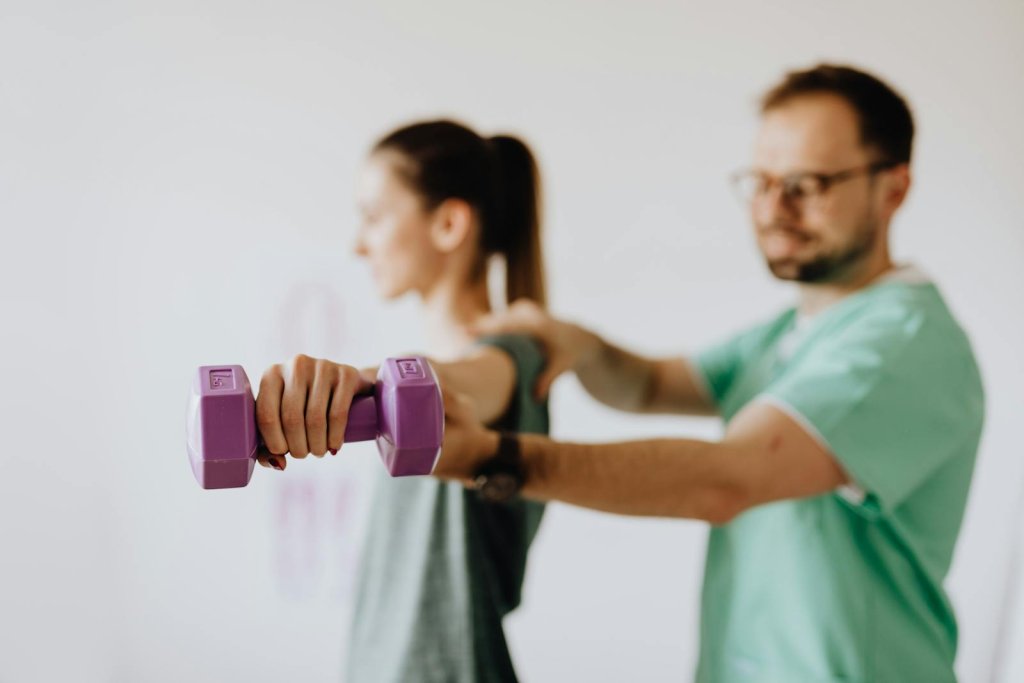
This article outlines the 10 best exercises you can use to manage rotator cuff tendonitis at home or as part of a rehab plan. You’ll get clear instructions, progression tips, safety guidance, and research-informed recommendations so you can feel confident doing each movement. These exercises are grounded in clinical rehabilitation principles and widely used by physical therapists.
What Are Rotator Cuff Tendonitis Exercises?
Rotator cuff tendonitis exercises are controlled shoulder movements that support tendon load tolerance, strength, and coordination.
These exercises typically aim to:
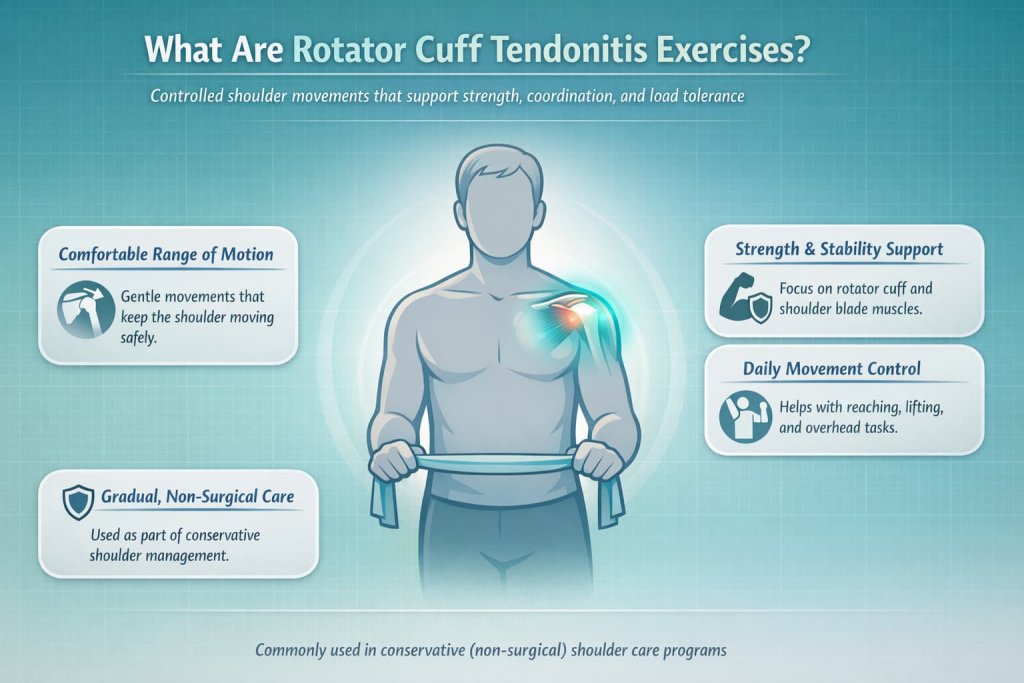
- Improve comfortable shoulder range of motion
- Support rotator cuff and shoulder blade strength
- Encourage better shoulder control during daily tasks
- Gradually restore function without overloading the tendon
They are commonly used as part of conservative (non-surgical) shoulder care.
10 Best Rotator Cuff Tendonitis Exercises
These movements focus on gentle range of motion first, then gradual strengthening to help reduce pain and improve daily shoulder function.
1. Pendulum Swings
How to do it:
- Lean forward from the hips, supporting your non-affected arm on a table or chair
- Let the affected arm hang completely relaxed toward the floor
- Gently swing the arm forward and backward
- Swing side-to-side
- Make small, controlled circles in both directions
- Perform about 1 minute for each movement direction
Why it works:
Pendulum swings promote gentle shoulder movement without active muscle contraction. This helps reduce joint stiffness, improves fluid circulation in the shoulder, and may ease pain during early or sensitive stages of rotator cuff tendonitis.
Trainer Tip:
Keep the movement relaxed—your body motion should create the swing, not your shoulder muscles. If you feel muscle effort, reduce the swing size.
2. Passive Assisted Shoulder Flexion
How to do it:
- Lie on your back on a flat surface
- Hold a cane, stick, or towel with both hands
- Keep your elbows straight and relaxed
- Use your non-affected arm to gently lift both arms overhead
- Stop at the first point of discomfort
- Hold briefly, then return slowly
Why it works:
This exercise improves shoulder range of motion while minimizing strain on the injured rotator cuff. Assistance from the non-affected arm allows controlled movement without overloading sensitive tissues.
Trainer Tip:
Move slowly and smoothly. The goal is comfortable motion, not forcing the arm higher.
3. Wall Slides
How to do it:
- Stand facing a wall
- Place your forearm against the wall at shoulder height
- Keep your elbow bent and shoulder relaxed
- Slowly slide your forearm upward along the wall
- Stop before pain increases
- Slide back down with control
Why it works:
Wall slides encourage coordinated movement between the shoulder joint and shoulder blade. This coordination supports better shoulder mechanics and reduces excessive stress on the rotator cuff.
Trainer Tip:
Maintain gentle pressure into the wall and avoid shrugging your shoulder as your arm moves upward.
4. Isometric Shoulder External Rotation
How to do it:
- Stand with your elbow bent to 90 degrees and tucked into your side
- Position the back of your hand against a wall or door frame
- Gently press your hand into the wall without moving your arm
- Hold the contraction
- Relax and repeat
Why it works:
Isometric exercises strengthen the rotator cuff without joint movement, making them useful when motion is uncomfortable. They help maintain muscle activation while limiting tendon irritation.
Trainer Tip:
Use about 30–50% effort. Stronger pressure is not better and may increase irritation.
5. Band External Rotation
How to do it:
- Attach a resistance band at waist height
- Stand sideways to the anchor point
- Hold the band with the affected arm, elbow bent at 90 degrees
- Keep your elbow close to your side
- Rotate your forearm outward slowly
- Return to the start position with control
Why it works:
This exercise strengthens the external rotators of the shoulder, which play a key role in stabilizing the shoulder during lifting and reaching activities.
Trainer Tip:
Avoid leaning or twisting your torso. The movement should come only from the shoulder.
6. Band Internal Rotation
How to do it:
- Attach a resistance band at waist height
- Face the anchor point
- Hold the band with the affected arm, elbow bent at 90 degrees
- Keep the elbow close to your side
- Pull the band inward across your body
- Return slowly to the starting position
Why it works:
Internal rotation strengthens muscles that balance the shoulder joint, supporting smoother movement and reducing uneven stress on the rotator cuff.
Trainer Tip:
Control the return phase—slow resistance is more beneficial than fast repetitions.
7. Scapular Retraction (Seated Band Row)
How to do it:
- Sit or stand upright with the band anchored in front of you
- Hold the band with both hands
- Pull the band toward your torso
- Gently squeeze your shoulder blades together
- Pause briefly, then return slowly
Why it works:
Strong shoulder blade muscles help position the shoulder correctly during arm movement, reducing unnecessary strain on the rotator cuff tendons.
Trainer Tip:
Think “chest tall, shoulders down” to avoid excessive upper-trap activation.
8. Prone Y-T-W Raises
How to do it:
- Lie face down on a bench or bed
- Let your arms hang toward the floor
- Raise your arms into a Y shape
- Lower, then raise into a T shape
- Lower, then bend elbows and raise into a W shape
- Move slowly and with control
Why it works:
These patterns improve shoulder blade control and endurance, which supports efficient shoulder motion and reduces overload on the rotator cuff.
Trainer Tip:
Use no weight or very light resistance at first—quality of movement matters more than load.
9. Shoulder External Rotation at 90 Degrees
How to do it:
- Raise your arm to shoulder height with elbow bent at 90 degrees
- Hold a light band or very light weight
- Rotate your forearm upward
- Lower slowly back to the starting position
Why it works:
This exercise strengthens the rotator cuff in a more functional overhead position, helping prepare the shoulder for daily and athletic tasks.
Trainer Tip:
Only perform this exercise when lower-level rotations are comfortable and pain-free.
10. Side-Lying External Rotation
How to do it:
- Lie on your side with the affected arm on top
- Bend your elbow to 90 degrees and keep it against your side
- Hold a light dumbbell or band
- Rotate your forearm upward toward the ceiling
- Lower slowly with control
Why it works:
Side-lying external rotation isolates the rotator cuff while minimizing compensation from larger muscles, making it a highly effective rehab exercise.
Trainer Tip:
Keep your elbow gently pressed into your side—placing a small towel under the arm can help maintain proper alignment.
Why Exercise Matters for Rotator Cuff Tendonitis
Exercise plays an important role in long-term shoulder recovery by helping the tendon adapt to everyday demands.
Appropriately selected exercises may help:
- Improve shoulder and scapular coordination
- Reduce excessive strain during reaching and lifting
- Support gradual tendon loading and tolerance
- Maintain strength and movement confidence
Most clinical guidelines favor active rehabilitation over prolonged rest when symptoms allow.
How Often to Do These Exercises
Aim for these exercises 3–5 days per week. Start with lower sets/reps and increase gradually. Pain should be mild and not linger more than a few hours after exercising. If pain increases sharply or limit of motion worsens, reduce volume and consult a clinician.
Who Can Safely Do Rotator Cuff Tendonitis Exercises?
These exercises are generally appropriate for many adults with shoulder discomfort related to rotator cuff tendonitis.
They may be suitable for:
- People with mild to moderate shoulder pain
- Individuals managing symptoms without surgery
- Those able to move the shoulder without sharp pain
- Adults seeking to improve shoulder strength and stability
Exercises should be modified or delayed if pain is severe, rapidly worsening, or associated with significant weakness or loss of movement.
How to Warm Up Before Rotator Cuff Tendonitis Exercises
A good warm-up increases blood flow and prepares the shoulder for movement without irritation.
- Shoulder Rolls: 10 forward and 10 backward, slow and controlled.
- Arm Circles: Small circles for 30 seconds, then larger circles for 30 seconds.
- Scapular Squeeze: Sit or stand tall, squeeze shoulder blades together for 5 seconds; repeat 10 times.
Warm-ups help reduce stiffness and improve shoulder mechanics before strengthening work begins.
Common Mistakes to Avoid
- Increasing resistance too quickly.
- Performing movements that cause sharp pain.
- Neglecting scapular (shoulder blade) strength and posture.
- Skipping warm-up or cool-down activities.
When to Seek Professional Guidance
Seek physical therapy or medical evaluation if:
- Pain persists beyond 6 weeks despite consistent exercise.
- You experience weakness, numbness, or significant range-of-motion loss.
- Pain increases with basic daily activities (e.g., reaching overhead, dressing).
FAQs
Q: Can rotator cuff tendonitis be fully healed with exercises alone?
A: Many people improve significantly with a structured exercise program that includes mobility, strength, and scapular control. Severe cases may require additional medical care.
Q: How soon can I start strengthening after shoulder pain begins?
A: Start with gentle motion exercises (like pendulums) early. Strengthening typically begins once pain is mild and you can move without sharp discomfort. A clinician can tailor timing.
Q: Should I use weights or resistance bands?
A: Bands and very light weights are preferred early on to control load and avoid irritation. Progress resistance slowly.
Q: What if an exercise increases my pain?
A: Stop or reduce intensity. Focus on gentle motions and consult a clinician if pain persists.
Q: Do these exercises help prevent rotator cuff issues?
A: Yes, balanced shoulder strength and good movement patterns support tendon health and can reduce future strain.
Conclusion
Rotator cuff tendonitis exercises can help support shoulder mobility, strength, and daily comfort when performed with proper technique and gradual progression. Consistency and pain-aware movement are key to reducing strain and improving function over time.
This content is for informational purposes only and not medical advice.
References
- Rotator Cuff Tendinopathy Clinical Practice Guideline (JOSPT, 2025)
- APTA Clinical Practice Guideline: Rotator Cuff Tendinopathy (2025)
- AAOS OrthoInfo: Rotator Cuff and Shoulder Conditioning Program
- AAOS PDF: Rotator Cuff and Shoulder Conditioning Program
- Exercise Therapy for Rotator Cuff–Related Shoulder Pain (Systematic Review, JOSPT, 2024)
- GRASP Trial: Progressive Exercise vs Best-Practice Advice for Rotator Cuff Disorders (The Lancet, 2021)