
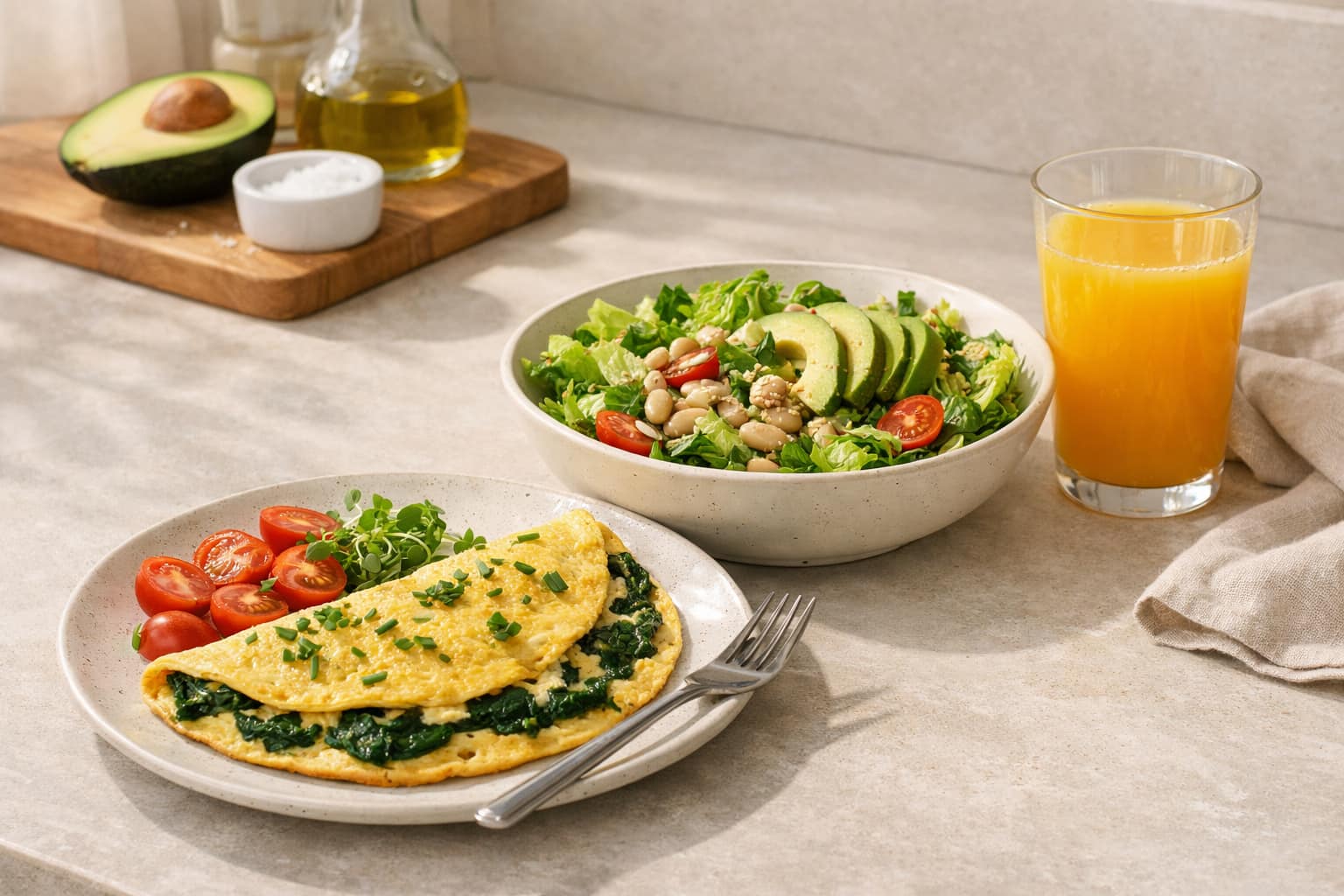
The best folate-rich foods include leafy greens, beans and peas, asparagus, avocado, and folic-acid–fortified grains and cereals. Getting enough vitamin B9 supports everyday nutrition by helping your body make DNA and RNA and metabolize amino acids—processes your cells rely on for normal growth and repair. According to the NIH Office of Dietary Supplements, folate plays key roles in these foundational functions.
What folate is and why it matters for overall wellness
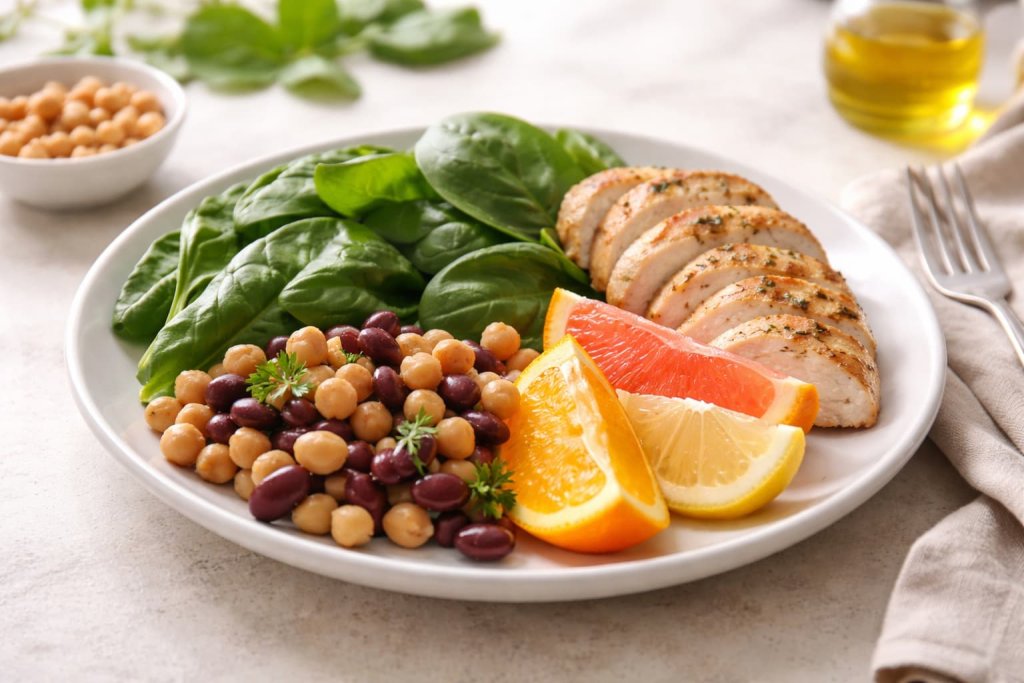
Folate (vitamin B9) is a water-soluble B vitamin your body uses in core “cell-building” jobs—especially making DNA/RNA and supporting normal cell division. That’s one reason folate needs matter across life stages, from teens to older adults. According to the NIH Office of Dietary Supplements, folate also plays key roles in amino acid metabolism and other one-carbon transfer reactions your body uses every day.
Folate deficiency and common signs

Low folate intake can happen if your diet is consistently low in folate-rich foods, if absorption is reduced (for example, with certain gastrointestinal conditions), or if needs are higher during specific life stages. According to the NIH Office of Dietary Supplements, folate deficiency is more likely in certain higher-risk groups and can be identified with appropriate clinical testing.
Possible signs that can occur with low folate status may include:
- Fatigue or low energy
- Weakness
- Mouth sores
- Poor appetite
These signs can also have many other causes, so if you’re concerned, it’s best to talk with a clinician who can evaluate your diet and order the right tests.
Folate vs folic acid and what DFE means
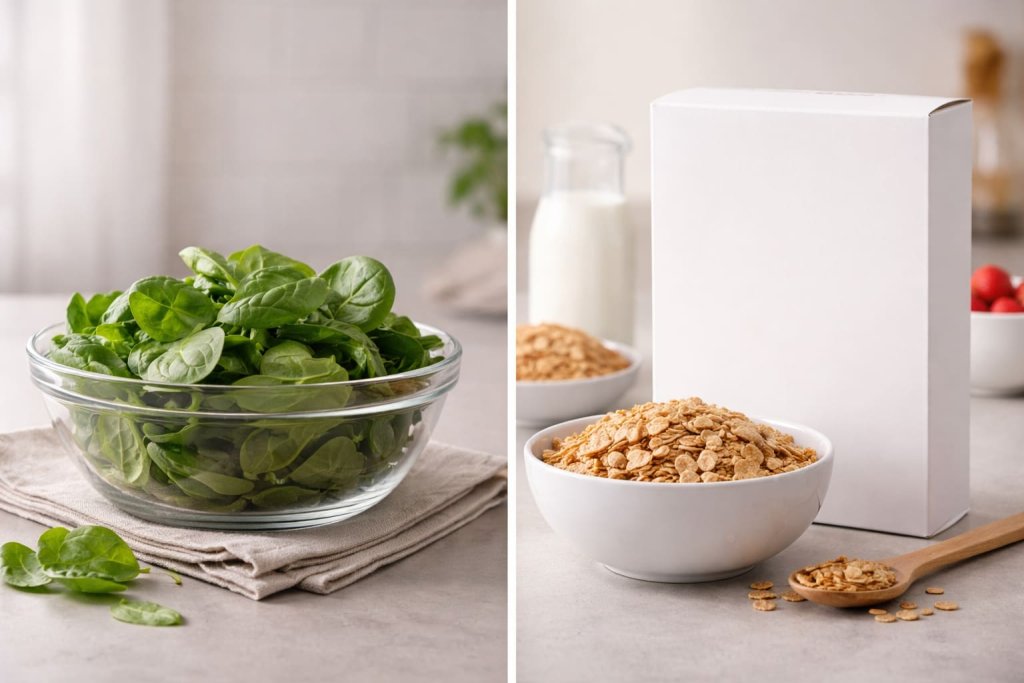
You’ll see two related terms:
- Folate: the naturally occurring form in foods.
- Folic acid: the form added to many fortified foods and used in most supplements.
According to the NIH Office of Dietary Supplements, recommendations often use Dietary Folate Equivalents (DFE) because the body absorbs folic acid differently than food folate.
Helpful DFE conversions (from the NIH Office of Dietary Supplements):
- 1 mcg DFE = 1 mcg food folate
- 1 mcg DFE = 0.6 mcg folic acid from fortified foods/supplements with food
- 1 mcg DFE = 0.5 mcg folic acid from supplements on an empty stomach
How to read labels for folate and folic acid
When comparing packaged foods, the Nutrition Facts label can help you spot meaningful folate sources quickly.
- Look for Folate listed as mcg DFE and check the %DV to compare products.
- If folic acid has been added (fortified), it may appear in parentheses on the label.
For the official label definitions and how folate is displayed on Nutrition Facts panels, see the Food and Drug Administration.
How much folate do you need per day
Here are the most-used daily targets (mcg DFE/day) from the NIH Office of Dietary Supplements:
| Life stage | Daily target |
|---|---|
| Teens 14–18 | 400 mcg DFE |
| Adults 19+ | 400 mcg DFE |
| Pregnancy | 600 mcg DFE |
| Lactation | 500 mcg DFE |
On food labels, the Daily Value (DV) for folate is 400 mcg DFE for adults and kids 4+. According to the Food and Drug Administration, labels list folate in mcg DFE per serving, and if folic acid is added, the label may also list folic acid (in mcg) in parentheses.
Folate-rich foods list (Folic Acid): Top sources of vitamin B9
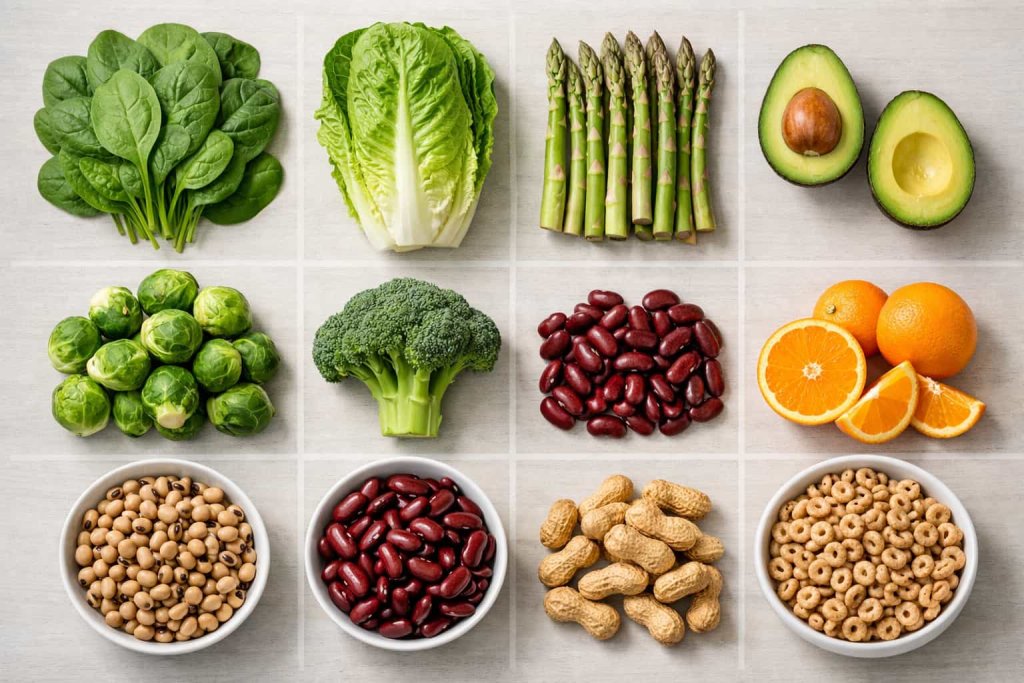
This table uses commonly referenced folate values (mcg DFE per serving) from the NIH Office of Dietary Supplements.
Best folate-rich foods by category
Use this quick guide to pick a few “go-to” foods from each category, then rotate them through meals.
| Category | Best folate-rich picks |
|---|---|
| Leafy greens | Spinach (raw or cooked), romaine lettuce, mustard greens |
| Legumes | Black-eyed peas, kidney beans, green peas |
| Vegetables | Asparagus, Brussels sprouts, broccoli |
| Fortified grains and cereals (folic acid) | Fortified breakfast cereal, enriched rice, enriched pasta, enriched bread |
| Fruit and nuts | Avocado, orange/orange juice, peanuts, papaya, banana |
| Food (serving) | Folate (mcg DFE) | %DV |
|---|---|---|
| Beef liver, braised (3 oz) | 215 | 54% |
| Spinach, boiled (1/2 cup) | 131 | 33% |
| Black-eyed peas (cowpeas), boiled (1/2 cup) | 105 | 26% |
| Breakfast cereals, fortified with 25% of the DV | 100 | 25% |
| Rice, white, medium grain, cooked (1/2 cup) | 90 | 22% |
| Asparagus, boiled (4 spears) | 89 | 22% |
| Brussels sprouts, frozen, boiled (1/2 cup) | 78 | 20% |
| Spaghetti, cooked, enriched (1/2 cup) | 74 | 19% |
| Lettuce, romaine, shredded (1 cup) | 64 | 16% |
| Avocado, raw, sliced (1/2 cup) | 59 | 15% |
| Spinach, raw (1 cup) | 58 | 15% |
| Broccoli, chopped, frozen, cooked (1/2 cup) | 52 | 13% |
| Mustard greens, chopped, frozen, boiled (1/2 cup) | 52 | 13% |
| Bread, white (1 slice) | 50 | 13% |
| Green peas, frozen, boiled (1/2 cup) | 47 | 12% |
| Kidney beans, canned (1/2 cup) | 46 | 12% |
| Wheat germ (2 tbsp) | 40 | 10% |
| Tomato juice, canned (3/4 cup) | 36 | 9% |
| Crab, Dungeness (3 oz) | 36 | 9% |
| Orange juice (3/4 cup) | 35 | 9% |
| Turnip greens, frozen, boiled (1/2 cup) | 32 | 8% |
| Orange, fresh (1 small) | 29 | 7% |
| Peanuts, dry roasted (1 oz) | 27 | 7% |
| Papaya, raw, cubed (1/2 cup) | 27 | 7% |
| Banana (1 medium) | 24 | 6% |
| Yeast, baker’s (1/4 tsp) | 23 | 6% |
| Egg, whole, hard-boiled (1 large) | 22 | 6% |
| Cantaloupe, raw, cubed (1/2 cup) | 17 | 4% |
| Vegetarian baked beans, canned (1/2 cup) | 15 | 4% |
| Fish, halibut, cooked (3 oz) | 12 | 3% |
| Milk, 1% fat (1 cup) | 12 | 3% |
| Ground beef, 85% lean, cooked (3 oz) | 7 | 2% |
| Chicken breast, roasted (3 oz) | 3 | 1% |
If you want to look up specific foods and brands, the USDA FoodData Central database is a reliable public nutrition lookup tool.
Fortified foods that contain folic acid
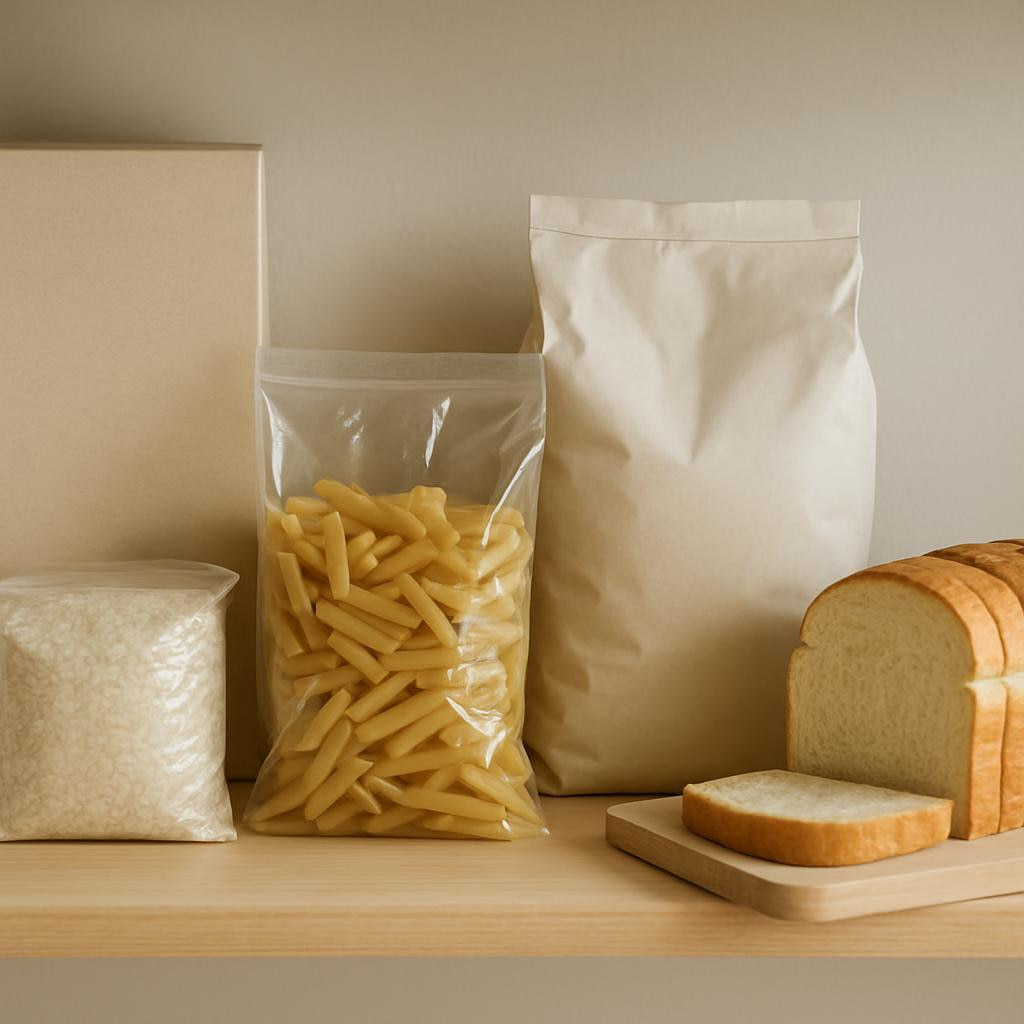
Fortified foods can be an efficient way to raise vitamin B9 intake—especially if you eat grains regularly.
According to the Food and Drug Administration, folic acid can be added during manufacturing to foods like enriched breads, flours, pastas, rice, cornmeal, and certain breakfast cereals.
The NIH Office of Dietary Supplements notes that U.S. fortification rules began in 1998 and require folic acid addition to many enriched grain products to help reduce neural tube defect risk.
If you’re trying to confirm folic acid on packaged foods, the NIH Office of Dietary Supplements explains that labels list folate in mcg DFE, and if folic acid is added, the amount may also appear in parentheses.
Optional video (helpful background on fortification):
Easy ways to build a folate-supporting plate
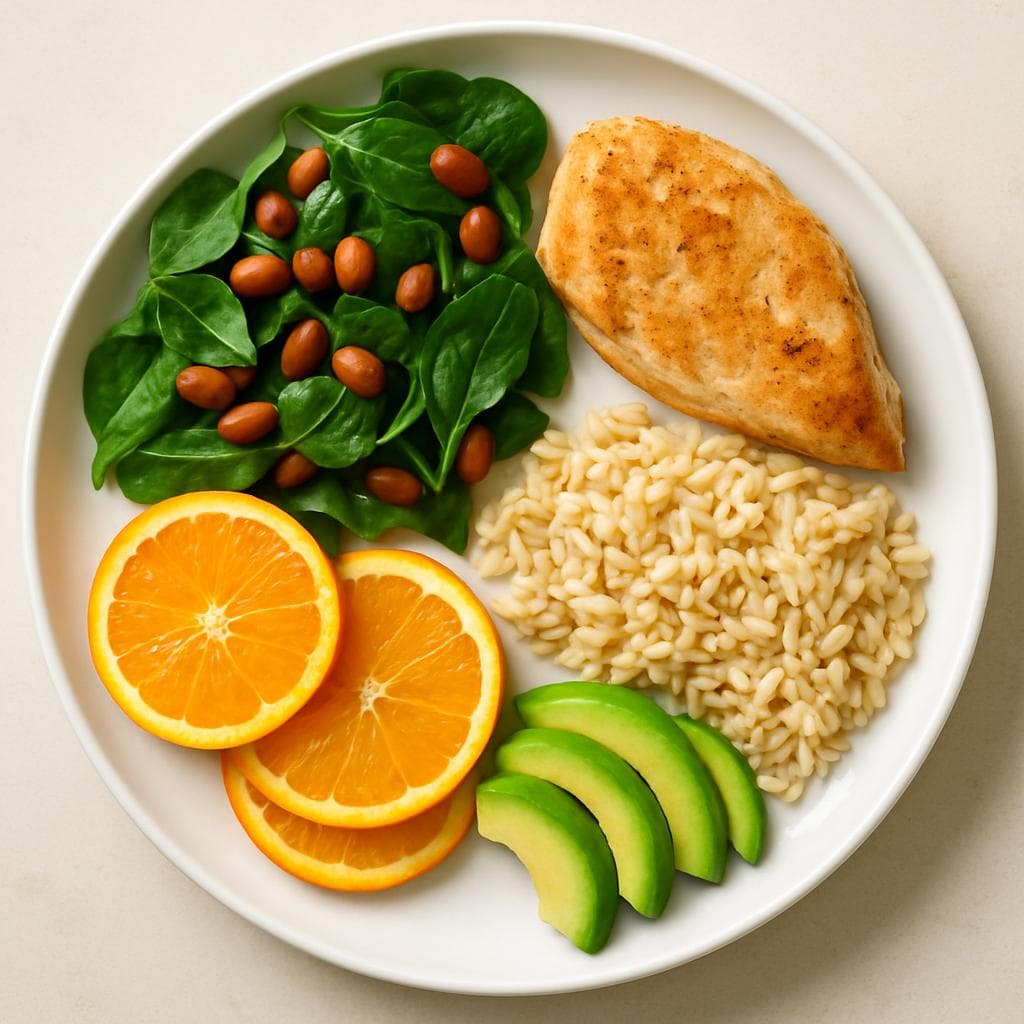
A practical, repeatable approach that fits overall wellness (and works with many eating styles):
- Start with a folate anchor
- Beans/peas/lentils, leafy greens, asparagus, avocado, or a fortified grain serving.
- Add protein for staying power
- Eggs, seafood, poultry, tofu/tempeh, yogurt, or beans (which also add folate).
- Round it out with colorful produce
- Mix raw and cooked vegetables and fruit to keep meals varied.
For a simple “balanced plate” method, the USDA MyPlate approach is an easy visual: build meals around fruits/vegetables, grains, and protein foods in realistic portions.
One-day sample menu hitting folate targets
This simple day uses common folate-rich foods from the table and shows how folate can add up across meals.
- Breakfast: Spinach-and-egg omelet (spinach + eggs) with 1 slice enriched bread
- Lunch: Romaine salad bowl with black-eyed peas (or kidney beans) + avocado + tomatoes
- Dinner: Roasted asparagus with enriched pasta or enriched rice + your preferred protein
- Snack: Orange or orange juice, plus a small handful of peanuts (optional)
Tip: If your goal is to increase folate steadily, aim to include at least one leafy green or legume plus one fortified/enriched grain most days.
Simple meal ideas using folate-rich foods
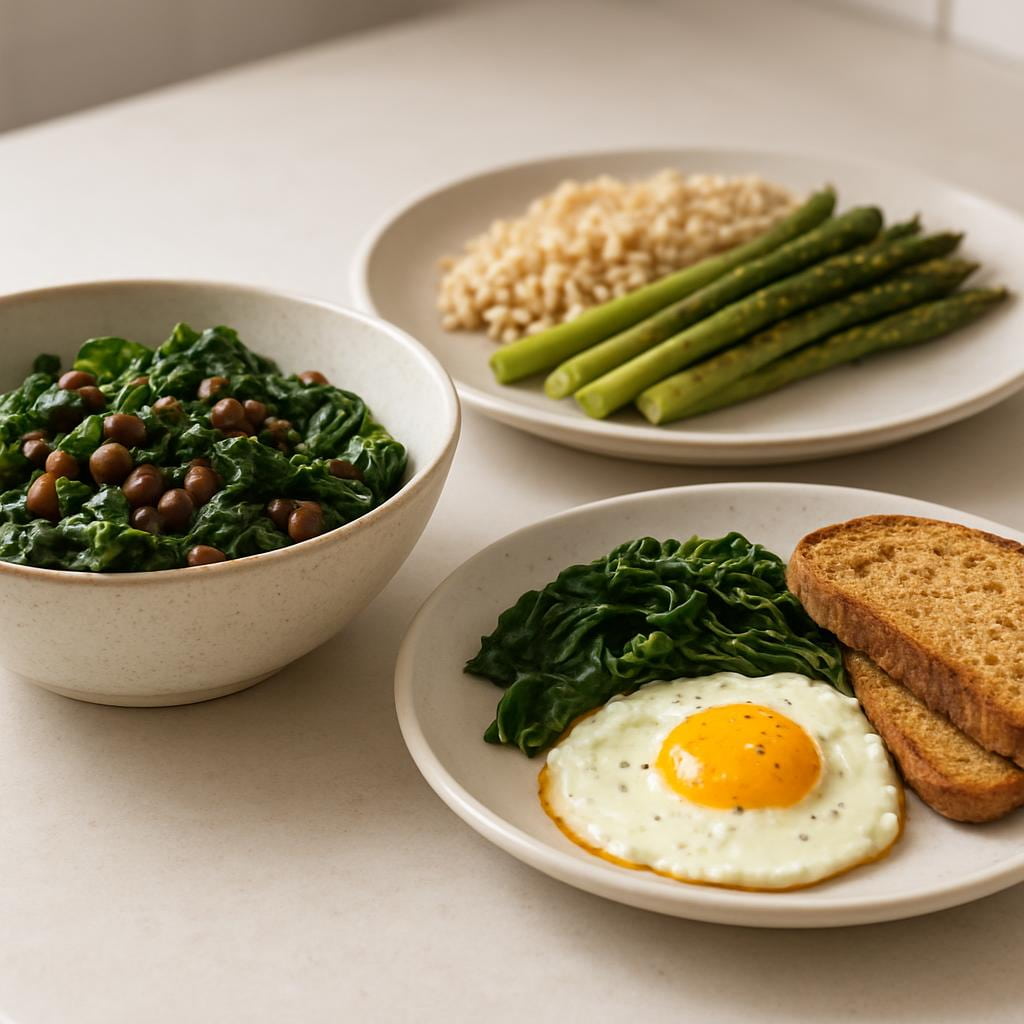
- Bean-and-greens bowl: canned kidney beans + chopped romaine + avocado + tomatoes + olive oil and lemon
- Egg and spinach breakfast: omelet with spinach + whole-grain toast (often enriched/fortified)
- Asparagus dinner plate: roasted asparagus + rice or pasta + salmon or tofu
- Quick lunch salad: romaine + black-eyed peas + hard-boiled egg + citrus on the side
Cooking and storage tips to preserve folate
Folate is water-soluble, so cooking methods and storage choices can influence how much ends up on your plate.
- Prefer steaming, microwaving, roasting, or quick sautéing over long boiling when possible.
- If you do boil vegetables, use the cooking liquid in soups, stews, or sauces instead of discarding it.
- Keep frozen vegetables on hand for convenience; they’re often processed quickly and can make it easier to eat folate-rich veggies consistently.
- Store leafy greens properly (dry, cold, sealed) and use them within a few days for best quality.
Who may need extra attention to folate intake
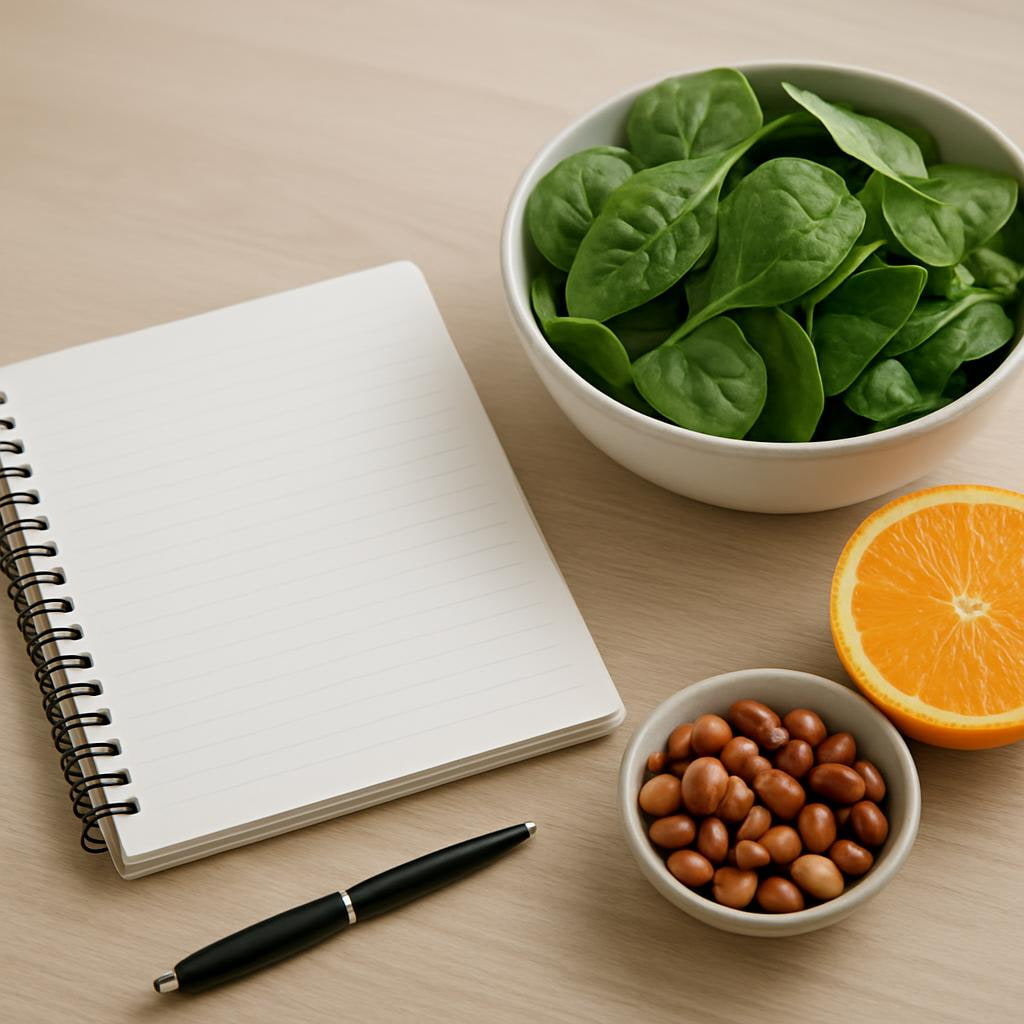
Folate needs and risk of low intake can differ based on life stage and health context. The NIH Office of Dietary Supplements highlights higher-risk groups such as:
- Women who could become pregnant (because early pregnancy needs are time-sensitive)
- Pregnant people (higher daily requirement)
- People with alcohol use disorder (alcohol can interfere with folate status)
- People with malabsorptive disorders (such as celiac disease or inflammatory bowel disease)
- People taking certain medications (examples discussed include methotrexate, some anti-seizure medicines, and sulfasalazine)
If pregnancy is possible, the Centers for Disease Control and Prevention recommends 400 mcg of folic acid daily for women capable of becoming pregnant. If you have personal medical questions (including supplement choices), it’s safest to ask a clinician.
Medication interactions and special forms
Some medications can affect folate metabolism or folate status, so it’s important not to start, stop, or change supplements without professional guidance. According to the NIH Office of Dietary Supplements, certain medications (including some used for seizures or inflammatory conditions) may interact with folate.
In some cases, clinicians may recommend specific folate forms (such as methylfolate) based on individual needs. If you’re considering a supplement form change, it’s safest to discuss it with a clinician or pharmacist.
Can you get too much (Upper limit for folic acid)
Food folate (naturally occurring folate in foods) is not the usual concern for excess. The key caution is high intakes of folic acid from supplements and fortified foods.
The NIH Office of Dietary Supplements explains that the adult upper limit is 1,000 mcg/day of folic acid (synthetic folate), and one reason for caution is that high folic acid intake can mask vitamin B12 deficiency-related anemia while neurological issues may still progress.
Food-first vs supplement guidance
Most people can meet folate needs with a consistent mix of folate-rich whole foods (greens, beans, vegetables) plus fortified/enriched foods when they’re part of your diet. The NIH Office of Dietary Supplements is a helpful reference for DFE targets, food sources, and safety limits.
Some groups may be advised to take folic acid, especially if pregnancy is possible. The Centers for Disease Control and Prevention recommends 400 mcg of folic acid daily for women capable of becoming pregnant. If you’re unsure what’s appropriate for you, ask a qualified health professional for personalized guidance.
Frequently asked questions
What are the highest folate foods?
Among common foods, top picks include beef liver, spinach, black-eyed peas, asparagus, and fortified cereals, based on the NIH Office of Dietary Supplements food table.
Is folate the same as folic acid?
They’re related but not identical. Folate occurs naturally in foods, while folic acid is the form added to fortified foods and used in most supplements, as explained by the NIH Office of Dietary Supplements.
How can I get 400 mcg DFE from food?
Many people can get close by combining:
- 1/2 cup cooked spinach (131 mcg DFE) + 1/2 cup beans (around 46–105 mcg DFE depending on type) + a fortified grain serving (often 50–100 mcg DFE). Use the NIH Office of Dietary Supplements table as a guide.
Which vegetables are richest in folate?
Dark leafy greens are standouts. The Food and Drug Administration highlights asparagus, Brussels sprouts, and dark green leafy vegetables (like spinach and mustard greens) as natural folate sources.
Do fortified foods count as folate?
Yes. Fortified foods contain folic acid, a form of folate added during manufacturing. The Food and Drug Administration lists enriched grains and certain cereals among common fortified sources.
Who should consider folic acid specifically?
If pregnancy is possible, the Centers for Disease Control and Prevention recommends 400 mcg folic acid daily for women capable of becoming pregnant because early intake is important for neural tube development.
What’s the safest way to choose a folate supplement?
Check the label for the form and amount, and keep the upper limit for folic acid in mind unless you’re under medical supervision. The NIH Office of Dietary Supplements is a detailed public reference for folate amounts, DFE, and safety limits.
Conclusion
To eat more vitamin B9 for nutrition and overall wellness, focus on leafy greens, beans and peas, asparagus, avocado, and fortified grains/cereals, then build meals using a simple balanced-plate routine. If pregnancy is possible or you’re taking medications that affect folate status, it’s smart to review your approach with a qualified health professional.
This content is for informational purposes only and not medical advice.