
Bodyweight shoulder exercises are an effective way to build shoulder strength, improve stability, and enhance muscle definition using only your body as resistance. They rely on controlled pushing, holding, and stabilizing movements rather than dumbbells or machines.
Understanding bodyweight shoulder exercises matters because strong, stable shoulders support daily activities, posture, and long-term joint health. When performed with proper form and progression, these exercises can help you train the deltoids and supporting muscles safely at home or while traveling.
12 Best Bodyweight Shoulder Exercises
These bodyweight shoulder exercises focus on building strength, stability, and control using only your body weight.
They are suitable for home workouts and can be scaled from beginner-friendly movements to advanced progressions without equipment.
1. Pike Push-Up
How to do it
- Start in a pike position with hips high and arms straight
- Hands shoulder-width apart, heels slightly off the floor
- Bend elbows to lower your head toward the floor
- Press through your palms to return to the start
Why it works
The pike push-up shifts bodyweight vertically over the shoulders, increasing deltoid involvement compared to standard push-ups while keeping the movement controlled and joint-friendly.
Trainer Tip
Think “head forward, not down” to keep tension on the shoulders rather than dumping stress into the neck.
2. Elevated Pike Push-Up
How to do it
- Place feet on a bench, box, or step
- Hands on the floor slightly wider than shoulders
- Keep hips high and spine neutral
- Lower head toward the floor and press back up
Why it works
Elevating the feet increases the percentage of bodyweight loaded onto the shoulders, making this a strong progression toward handstand work.
Trainer Tip
Use a height that allows full control—higher isn’t better if form breaks down.
3. Wall-Supported Handstand Hold
How to do it
- Face the wall and kick up into a handstand
- Hands shoulder-width, fingers spread
- Lightly rest heels against the wall
- Hold while maintaining a stacked shoulder position
Why it works
Isometric loading builds shoulder stability, endurance, and joint awareness without dynamic movement, making it ideal for strength foundations.
Trainer Tip
Actively push the floor away to avoid collapsing into the shoulders.
4. Handstand Push-Up (Wall-Assisted)
How to do it
- Kick up into a wall-supported handstand
- Bend elbows to lower head toward the floor
- Keep elbows slightly forward, not flared
- Press back to full arm extension
Why it works
This movement closely replicates overhead pressing mechanics using bodyweight, making it one of the most demanding shoulder exercises available without equipment.
Trainer Tip
Use partial range reps or stacked mats under the head if full depth is too challenging.
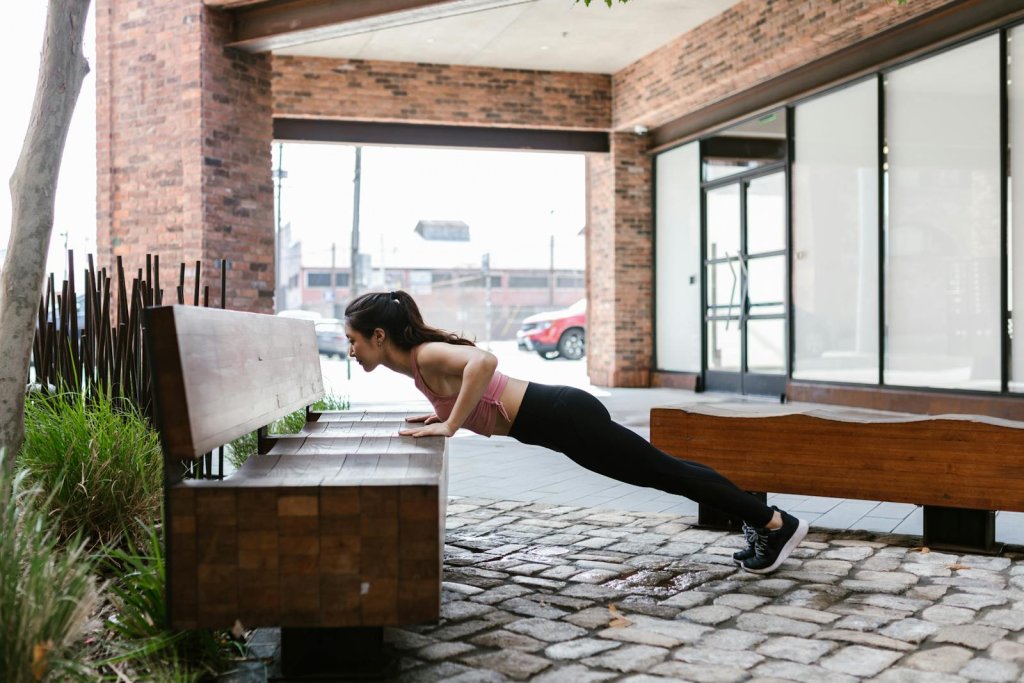
5. Incline Push-Up
How to do it
- Place hands on a bench, wall, or sturdy surface
- Body in a straight line from head to heels
- Lower chest toward hands with elbows controlled
- Press back to the start
Why it works
Incline push-ups reduce total body load while reinforcing shoulder control, making them ideal for beginners or recovery-focused training.
Trainer Tip
The higher the surface, the easier the movement—adjust incline based on strength.
6. Push-Up Plus
How to do it
- Start at the top of a push-up position
- Keep arms straight and push shoulder blades forward
- Protract fully, then return to neutral
- Repeat without bending the elbows
Why it works
This exercise emphasizes scapular movement, which is essential for shoulder health, stability, and efficient overhead mechanics.
Trainer Tip
Move slowly—this is about control, not speed or reps.
7. Shoulder Taps
How to do it
- Begin in a high plank position
- Lift one hand to tap the opposite shoulder
- Alternate sides while keeping hips stable
- Maintain a strong plank throughout
Why it works
Shoulder taps challenge anti-rotation strength, forcing each shoulder to stabilize the body under shifting load.
Trainer Tip
Widen your feet slightly to reduce hip sway if needed.
8. Bear Plank Hold
How to do it
- Start on hands and knees
- Lift knees slightly off the floor
- Keep back flat and shoulders stacked over hands
- Hold while breathing steadily
Why it works
This position builds shoulder endurance while reinforcing scapular stability and core control.
Trainer Tip
Imagine balancing a glass of water on your back to maintain alignment.
9. Bear Crawl
How to do it
- Start in a bear plank position
- Move opposite hand and foot forward together
- Keep knees low and back flat
- Crawl slowly and under control
Why it works
Dynamic weight shifting increases shoulder load while improving coordination and stability.
Trainer Tip
Small, controlled steps are more effective than fast crawling.
10. Plank to Downward Dog
How to do it
- Begin in a high plank
- Push hips back and up into downward dog
- Press through shoulders and lengthen spine
- Return smoothly to plank
Why it works
This movement combines shoulder loading with mobility, reinforcing strength through a controlled range of motion.
Trainer Tip
Focus on shoulder push rather than just lifting hips.
11. Wall Walks
How to do it
- Start in a push-up position with feet near a wall
- Walk feet up the wall while hands move closer
- Stop before losing control
- Reverse back to start
Why it works
Wall walks progressively increase shoulder loading and build confidence in inverted positions.
Trainer Tip
Quality reps matter more than height—control every step.
12. Crab Hold
How to do it
- Sit on the floor with hands behind you
- Press hips upward into a tabletop position
- Keep chest open and shoulders extended
- Hold while breathing steadily
Why it works
Crab holds strengthen the posterior shoulder while counterbalancing forward-dominant pushing patterns.
Trainer Tip
Actively squeeze shoulder blades together for better engagement.
How to Program Bodyweight Shoulder Exercises
For general strength and stability:
- Train shoulders 2–3 times per week
- Choose 4–6 exercises per session
- Perform 2–4 sets of 6–15 reps or 20–40-second holds
- Progress by increasing range of motion, tempo control, or leverage
Rest at least 48 hours between intense shoulder sessions.
Common Mistakes to Avoid
Avoiding common form and programming errors helps protect your shoulders and ensures bodyweight shoulder exercises remain effective.
One frequent mistake is allowing the shoulders to shrug up toward the ears during pushing or holding positions. This reduces deltoid engagement and increases unnecessary neck tension. Another issue is collapsing into the shoulder joints at the bottom of movements, especially during planks, pike push-ups, or wall-supported holds.
Rushing into advanced exercises too early is also common. Movements like wall walks and handstand push-ups require strong shoulder stability and core control. Skipping foundational progressions can limit strength gains and increase strain.
Other mistakes to watch for include:
- Moving too fast and sacrificing control
- Locking the elbows aggressively at the top of reps
- Losing core engagement, leading to excessive lower-back arching
- Holding the breath during isometric positions
Maintaining controlled tempo, proper alignment, and gradual progression helps reduce risk and improve results.
Muscles Worked in Bodyweight Shoulder Exercises
Most bodyweight shoulder exercises involve multiple muscles working together, including:
- Anterior, lateral, and posterior deltoids
- Serratus anterior
- Upper trapezius
- Rotator cuff stabilizers
- Core muscles for trunk control
This multi-muscle involvement makes bodyweight movements especially effective for functional strength.
When to Stop or Modify an Exercise
Bodyweight shoulder exercises should feel challenging but controlled. You should stop or modify an exercise if you experience sharp, sudden, or worsening discomfort in the shoulder, neck, or upper arm.
Loss of shoulder control—such as shaking that cannot be stabilized, collapsing posture, or inability to maintain alignment—is a sign to reduce difficulty. This may mean shortening the hold time, lowering the incline, or switching to a simpler variation.
Other reasons to stop or modify include:
- Inability to maintain a neutral spine or shoulder position
- Pain that increases with each repetition or hold
- Excessive fatigue that affects form
If discomfort persists despite rest or modification, it is reasonable to seek guidance from a qualified fitness or healthcare professional, as recommended by organizations such as the American Academy of Orthopaedic Surgeons.
Safety Guidelines and Common Mistakes
Follow these guidelines to reduce injury risk:
- Maintain a neutral spine and controlled tempo
- Avoid collapsing into the shoulders during holds
- Stop if you feel sharp pain or joint discomfort
- Progress gradually rather than rushing advanced movements
The American Academy of Orthopaedic Surgeons advises seeking professional evaluation if shoulder pain is severe, sudden, or limits arm movement.
Frequently Asked Questions
Can bodyweight shoulder exercises build muscle without weights?
Yes. By manipulating leverage, tempo, volume, and progression, bodyweight exercises can provide sufficient stimulus for muscle development.
Are bodyweight shoulder exercises good for beginners?
Many variations, such as incline push-ups and wall-supported holds, are suitable for beginners when performed with proper form.
How often should I train shoulders with bodyweight exercises?
Most adults benefit from shoulder training 2–3 times per week, aligned with general strength guidelines.
Do bodyweight shoulder exercises improve posture?
They may help support better posture by strengthening shoulder stabilizers and upper-back muscles.
Are handstand exercises safe for everyone?
Handstands are advanced movements. Beginners should start with wall-supported or incline variations and progress gradually.
Can bodyweight shoulder exercises replace gym workouts?
They can effectively maintain and improve shoulder strength, especially when equipment access is limited.
Conclusion
Bodyweight shoulder exercises offer a practical, equipment-free way to build strength, stability, and definition. By choosing the right progressions and focusing on proper technique, you can train your shoulders effectively at home or anywhere you choose.
Start with controlled movements, progress gradually, and stay consistent to see long-term benefits.
References
- CDC – Adult Physical Activity Guidelines (Adults need 2+ days/week of muscle-strengthening)
- Physical Activity Guidelines for Americans, 2nd Edition (Official PDF – strength training 2+ days/week)
- WHO – Guidelines on Physical Activity and Sedentary Behaviour (Publication page)
- Kowalski et al. (2021/2022) – Shoulder EMG activity during push-up variations (Scoping review – full text)
- Kang et al. (2019) – Push-up plus variants and serratus anterior/upper trapezius EMG (Systematic review & meta-analysis)
- Arghadeh et al. (2023) – Scapular stabilizer EMG during push-ups (Systematic review & meta-analysis – full text)
- Mayo Clinic – Shoulder pain: When to see a doctor (red flags for stopping/seeking care)