
Stretch band exercises can improve flexibility by helping you move through a comfortable range of motion with light resistance and controlled tension. They’re useful because stiffness often comes from spending too much time in one position, skipping warm-ups, or losing “active mobility” (the ability to control range, not just reach it).
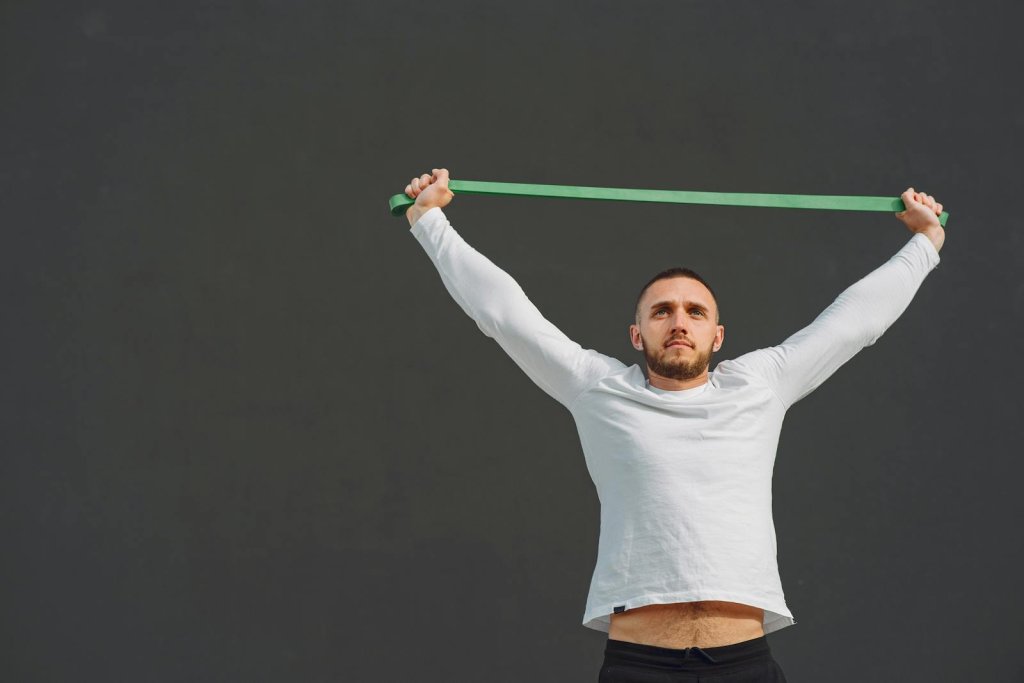
Stretching and flexibility work are recognized as effective for improving flexibility in national physical activity guidance from the Physical Activity Guidelines for Americans, and they fit well alongside a weekly routine that also includes aerobic activity and strength training.
What Are Stretch Band Exercises?
Stretch band exercises are mobility and flexibility movements that use an elastic band to provide gentle assistance (to help you reach a position) or light resistance (to help you control the position).
They can be done as:
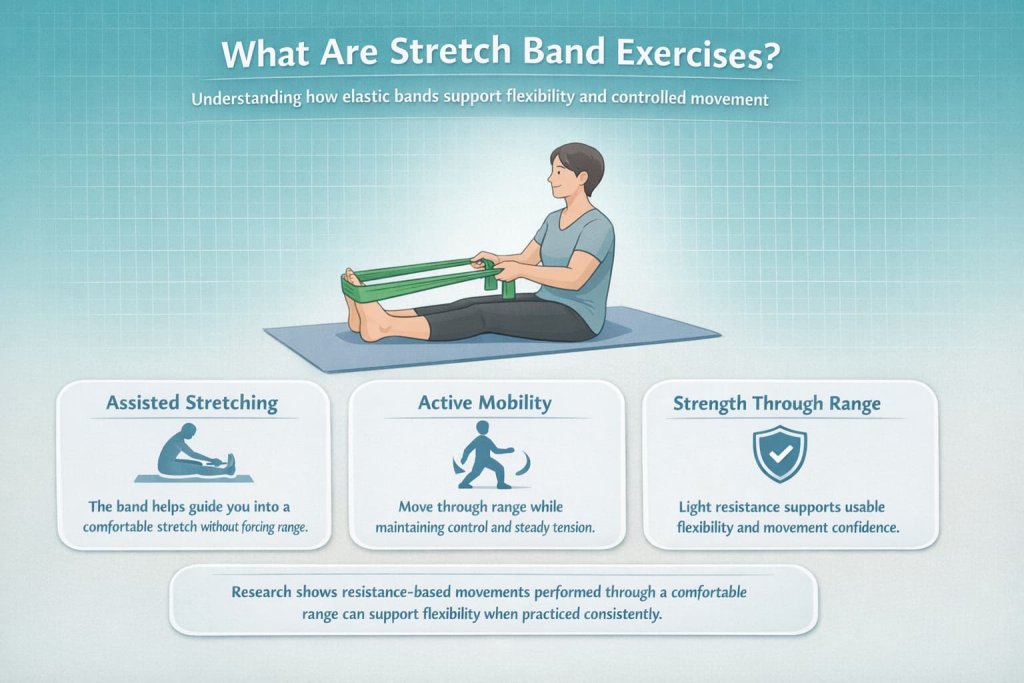
- Assisted stretches where the band helps you reach a position
- Active mobility drills where you move and control the range
- Light strength-through-range movements that support usable flexibility
Systematic reviews summarized in PubMed Central support the idea that resistance-based movements performed through a full, comfortable range of motion can improve flexibility, helping explain why band-based mobility work is effective when done consistently.
8 Best Stretch Band Exercises
Use a light band at first and move slowly. Maintain good posture and avoid compensating with your lower back or shoulders. Perform 1–2 sets of 20–40 seconds per side or 6–10 controlled repetitions.
1) Band-Assisted Hamstring Stretch
Why it works:
This stretch uses the band to assist leg elevation, allowing you to gradually explore hamstring length without pulling aggressively. The assistance helps reduce guarding and makes it easier to relax into the stretch.
Muscles worked:
Hamstrings, calves, glutes (supporting).
How to do it:
- Lie on your back with one leg extended on the floor
- Loop the band around the arch of the opposite foot
- Keep a slight bend in the raised knee if full extension feels too intense
- Slowly lift the leg until you feel a gentle stretch along the back of the thigh
- Hold the position while breathing calmly, then switch sides
Trainer Tip:
If your lower back arches off the floor, lower the leg slightly and focus on keeping the pelvis neutral.
2) Band-Assisted Figure-4 Glute Stretch
Why it works:
This position targets the deep glute and hip rotator muscles, which often feel stiff after long periods of sitting. The band allows controlled assistance without forcing the knee or hip.
Muscles worked:
Glutes, deep hip rotators.
How to do it:
- Lie on your back with one ankle crossed over the opposite knee
- Loop the band behind the thigh of the bottom leg
- Gently pull the thigh toward your chest until a mild stretch is felt
- Keep your head and shoulders relaxed
- Hold, then switch sides
Trainer Tip:
If knee discomfort appears, reduce the pull or adjust the crossing angle to a more comfortable position.
3) Band Hip Flexor Stretch (Half-Kneeling)
Why it works:
This stretch encourages controlled hip extension while reinforcing pelvic positioning, which is helpful for reducing stiffness associated with prolonged sitting.
Muscles worked:
Hip flexors, quadriceps.
How to do it:
- Start in a half-kneeling position with one knee down and one foot forward
- Hold the band lightly for balance or support
- Gently tuck the pelvis by engaging the lower abdominals
- Shift your body forward slightly until you feel a stretch at the front of the hip
- Hold, then switch sides
Trainer Tip:
Avoid arching the lower back to increase range; the stretch should come from the hip, not the spine.
4) Band-Assisted Calf Stretch
Why it works:
This stretch improves ankle flexibility, which supports smoother walking mechanics and better comfort during daily activities like stairs or squatting.
Muscles worked:
Calves.
How to do it:
- Sit with one leg extended in front of you
- Loop the band around the ball of the foot
- Gently pull the toes toward you while keeping the heel relaxed
- Hold, then switch sides
Trainer Tip:
Bending the knee slightly shifts the stretch toward the deeper calf muscles.
5) Band Shoulder Flexion Mobility
Why it works:
This movement builds controlled overhead range, helping improve shoulder mobility without relying on passive stretching alone.
Muscles worked:
Shoulders, upper back stabilizers.
How to do it:
- Stand tall holding the band with both hands
- Keep ribs stacked over the pelvis and neck relaxed
- Slowly raise your arms overhead within a comfortable range
- Lower the arms with control and repeat
Trainer Tip:
If the ribs flare upward, reduce the range or widen your hand position on the band.
6) Band Chest Opener
Why it works:
This stretch counteracts rounded posture by gently opening the chest and encouraging better shoulder positioning.
Muscles worked:
Chest, front shoulders.
How to do it:
- Hold the band behind your back with both hands
- Straighten the elbows gently without locking them
- Lift the hands slightly away from the body
- Hold the stretch while breathing comfortably
Trainer Tip:
Think of broadening the collarbones rather than forcing the arms upward.
7) Band Lat Stretch
Why it works:
This stretch targets the side body and lat muscles, which often limit overhead reach and contribute to stiffness in the upper torso.
Muscles worked:
Lats, side trunk tissues.
How to do it:
- Hold the band overhead or anchor it above shoulder height
- Step back to create light tension
- Lean gently to one side while keeping the hips relatively steady
- Hold, then switch sides
Trainer Tip:
Aim for a long, open feeling rather than pushing into a deep side bend.
8) Band-Assisted Thoracic Rotation
Why it works:
This movement improves upper-back rotation, which supports everyday actions like reaching, turning, and maintaining upright posture.
Muscles worked:
Upper back rotators.
How to do it:
- Lie on your side with knees bent and stacked
- Hold the band lightly with the top hand
- Rotate the chest open while allowing the arm to follow
- Return slowly and repeat
Trainer Tip:
Let the ribcage initiate the movement instead of pulling aggressively with the arm.
How Often Should You Do Stretch Band Exercises?
A practical starting approach:
- 3–5 days per week for flexibility-focused sessions
- 5–10 minutes as a warm-up using dynamic band mobility
- 10–15 minutes as a cool-down using slower band-assisted stretches
For overall health, mobility work pairs well with weekly activity targets outlined by the Centers for Disease Control and Prevention.
Who Can Benefit From Stretch Band Exercises?
Stretch band exercises are suitable for a wide range of people because they allow controlled, adjustable movement rather than forcing end ranges.
They may be especially helpful for:
- People experiencing stiffness from prolonged sitting or repetitive daily postures
- Beginners who need assisted flexibility rather than aggressive stretching
- Active adults looking to improve mobility alongside strength training
- Older adults who want gentle range-of-motion work with added control
- Individuals returning to movement after a period of inactivity (with appropriate caution)
Because band tension is adjustable, these exercises can be scaled to match comfort, ability, and experience level.
Quick Safety Guidelines Before You Start
Stretching should feel like a mild pull, not sharp pain. Keep movements slow and controlled, breathe normally, and avoid forcing range. Stop if you feel sharp or worsening discomfort.
For additional safety considerations, flexibility guidance from the Mayo Clinic recommends warming up first and staying within pain-free limits.
Who Should Be Careful With Stretch Band Exercises?
Use extra caution and consider professional guidance first if you have:
- A recent surgery, fracture, or new injury
- Severe or worsening pain, numbness, tingling, or weakness
- Joint instability or conditions with restricted movement ranges
Also be mindful if you tend to hold your breath during stretching. Relaxed breathing helps prevent unnecessary tension.
Common Mistakes to Avoid With Stretch Band Exercises
Avoiding these common errors helps keep stretch band exercises effective and safe:
- Using too much band tension, which turns stretching into a strength struggle
- Forcing range of motion by arching the lower back or shrugging the shoulders
- Moving too quickly or bouncing instead of using slow, controlled motion
- Holding the breath, which increases tension and reduces relaxation
- Stretching into sharp or joint-focused pain rather than a mild muscle stretch
Focusing on control, posture, and relaxed breathing is more important than achieving maximum range.
When to Stop or Seek Professional Guidance
Stop and seek guidance if you notice sharp pain, increasing symptoms, numbness, tingling, or joint instability. Orthopedic safety education from the American Academy of Orthopaedic Surgeons emphasizes controlled movement and proper warm-up.
FAQs
Are stretch band exercises the same as resistance band exercises?
They overlap. Stretch band exercises focus more on mobility and flexibility, while resistance band exercises often emphasize strength.
Should I stretch with a band before or after a workout?
Both work. Use dynamic band movements before activity and slower stretches afterward.
How long should I hold a band-assisted stretch?
Common practice is 10–30 seconds within a comfortable range.
Can stretch band exercises help stiffness from sitting?
They may help improve movement comfort by restoring range and control.
What band should I use?
Start with a light band you can control without shaking or breath-holding.
How soon will flexibility improve?
Some people notice comfort improvements within a few weeks with consistent practice.
Conclusion
Stretch band exercises offer a simple, accessible way to improve flexibility and active mobility. Move slowly, stay within comfortable ranges, and practice consistently. Combine mobility work with regular aerobic activity and strength training for best results.
This content is for informational purposes only and not medical advice.