
Flexibility exercises for beginners are simple, low-risk stretches designed to gently improve joint range of motion and reduce muscle stiffness. When done correctly, they help your body move more comfortably, support posture, and make everyday activities feel easier.
If you’re new to stretching, learning the right way matters. Proper flexibility training helps you move safely without pain, reduces the risk of strain, and supports long-term mobility. This guide covers beginner-friendly exercises, how to do them safely, and how to build a simple routine you can stick with.
What Are Flexibility Exercises for Beginners?
Flexibility exercises for beginners are gentle movements that lengthen muscles and allow joints to move through a comfortable range of motion. They are designed to be slow, controlled, and pain-free.
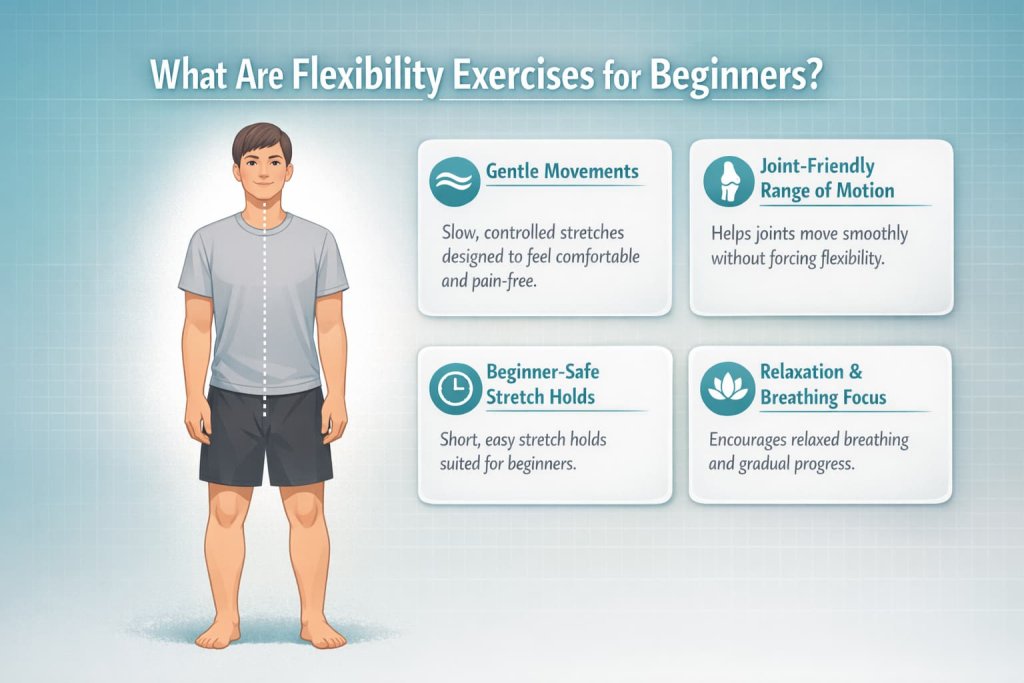
Unlike advanced stretching routines, beginner flexibility exercises focus on:
- Easy positions that don’t overload joints
- Short, comfortable stretch holds
- Controlled breathing and relaxation
- Gradual progress instead of forcing range
Why Flexibility Exercises for Beginners Matter
Regular flexibility training may help support:
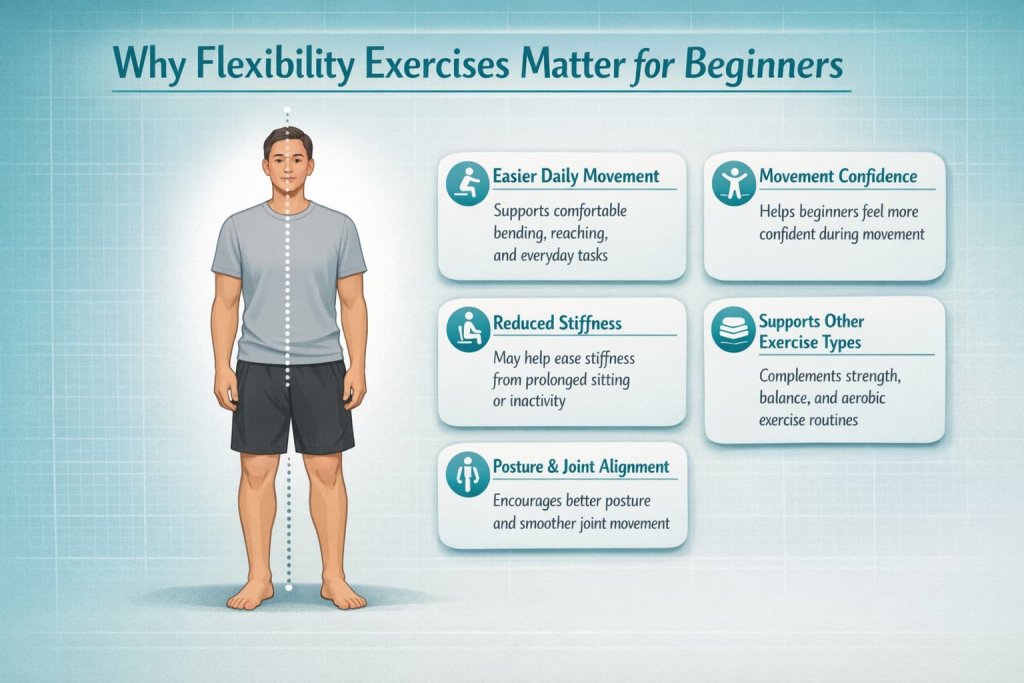
- Easier movement during daily tasks like bending and reaching
- Reduced stiffness from prolonged sitting
- Better posture and joint alignment
- Improved movement confidence, especially for beginners
- Smoother transitions into strength or balance exercises
Flexibility work is often recommended alongside aerobic and strength training as part of a well-rounded activity routine.
15 Best Flexibility Exercises for Beginners
Improve mobility and reduce stiffness with these beginner-friendly flexibility exercises designed to be safe, simple, and easy to follow. Each movement focuses on gentle stretching to help your body move more comfortably in everyday life.
1. Neck Side Bend
Gently tilt your head toward one shoulder, then switch sides.
Why it works:
This stretch helps reduce tension in the sides of the neck caused by prolonged screen use, poor posture, or stress. It encourages gentle cervical mobility and may help make head movements feel smoother and more comfortable during daily activities.
Muscles worked:
Upper trapezius, levator scapulae, lateral neck flexors.
How to do it:
- Sit or stand tall with your spine upright
- Relax your shoulders away from your ears
- Slowly tilt your head toward one shoulder
- Hold the stretch briefly without forcing
- Return to center and repeat on the other side
Trainer Tip:
Imagine lengthening the side of your neck rather than collapsing into the stretch.
2. Neck Rotation
Slowly turn your head left and right.
Why it works:
Neck rotation supports everyday movements like checking blind spots or turning your head while walking. This exercise promotes controlled mobility without placing stress on the cervical joints.
Muscles worked:
Cervical rotators, sternocleidomastoid.
How to do it:
- Sit upright with your chin level
- Slowly turn your head to one side
- Pause briefly at a comfortable range
- Return to center and rotate to the other side
Trainer Tip:
Keep the movement slow and smooth—avoid jerking or pushing into end range.
3. Shoulder Rolls
Roll shoulders forward and backward in slow circles.
Why it works:
Shoulder rolls help release upper-body tension and improve circulation around the shoulder joints. They are especially useful for beginners who spend long hours sitting or working at a desk.
Muscles worked:
Deltoids, upper trapezius, shoulder stabilizers.
How to do it:
- Lift your shoulders gently toward your ears
- Roll them backward and downward in a circle
- Repeat for several reps
- Reverse the direction
Trainer Tip:
Let your breath guide the movement to keep it relaxed and controlled.
4. Cross-Body Shoulder Stretch
Bring one arm across your chest and gently hold.
Why it works:
This stretch supports shoulder flexibility and may help ease tightness from repetitive arm movements. It also promotes balanced shoulder mobility for daily tasks.
Muscles worked:
Rear deltoids, upper back muscles.
How to do it:
- Bring one arm across your chest
- Use the opposite hand to gently hold the arm
- Keep shoulders relaxed
- Hold briefly, then switch sides
Trainer Tip:
Avoid pulling the arm aggressively—gentle pressure is enough.
5. Overhead Triceps Stretch
Reach one arm overhead and bend the elbow.
Why it works:
This movement supports comfortable overhead reaching and helps maintain flexibility in the upper arms, which is useful for dressing and lifting tasks.
Muscles worked:
Triceps brachii, shoulder stabilizers.
How to do it:
- Raise one arm overhead
- Bend the elbow so the hand reaches down your back
- Use the opposite hand to assist gently
- Switch arms after holding
Trainer Tip:
Keep your ribs down and avoid arching your lower back.
6. Chest Opener Stretch
Clasp hands behind your back and lift arms gently.
Why it works:
This stretch counters rounded posture caused by sitting and screen use. It helps open the front of the body and encourages an upright chest position.
Muscles worked:
Pectoral muscles, anterior deltoids.
How to do it:
- Stand tall with feet grounded
- Clasp hands behind your back
- Gently lift arms while opening your chest
- Keep your neck relaxed
Trainer Tip:
Focus on chest expansion, not arm height.
7. Cat–Cow Stretch
Alternate between rounding and gently arching your spine.
Why it works:
Cat–Cow promotes spinal mobility and body awareness. It gently moves the spine through flexion and extension, which may help reduce stiffness.
Muscles worked:
Spinal extensors, abdominal muscles.
How to do it:
- Start on hands and knees
- Slowly round your spine
- Gently arch your back in the opposite direction
- Move with steady breathing
Trainer Tip:
Let your spine move naturally—avoid forcing range.
8. Seated Forward Fold
Gently hinge forward from the hips while seated.
Why it works:
This stretch supports flexibility in the lower back and back of the legs while keeping balance demands low for beginners.
Muscles worked:
Hamstrings, lower back muscles.
How to do it:
- Sit tall with legs extended
- Hinge forward from the hips
- Keep your spine long
- Stop at mild tension
Trainer Tip:
Bend your knees slightly if your hamstrings feel tight.
9. Standing Hamstring Stretch
Place one heel forward and hinge slightly.
Why it works:
Hamstring flexibility supports walking, bending, and posture. This standing version allows beginners to control depth easily.
Muscles worked:
Hamstrings.
How to do it:
- Step one heel forward
- Keep toes pointed upward
- Bend the back knee slightly
- Lean forward with a straight spine
Trainer Tip:
Think “hips back,” not “head down.”
10. Calf Stretch
Press heel gently toward the floor.
Why it works:
Calf flexibility supports ankle mobility, balance, and comfortable walking patterns.
Muscles worked:
Gastrocnemius, soleus.
How to do it:
- Step one foot back
- Keep heel on the floor
- Gently press heel downward
- Switch sides
Trainer Tip:
Keep your back heel grounded without forcing it.
11. Hip Flexor Stretch
Step one foot forward into a short lunge.
Why it works:
This stretch helps counter hip tightness from prolonged sitting and supports comfortable upright posture.
Muscles worked:
Hip flexors (iliopsoas).
How to do it:
- Step one foot forward
- Shift weight slightly forward
- Keep torso upright
- Switch sides
Trainer Tip:
Avoid leaning forward—upright posture improves the stretch.
12. Figure-Four Stretch
Cross one ankle over the opposite thigh.
Why it works:
This stretch supports hip rotation and may help ease tension in the hips and glutes.
Muscles worked:
Glute muscles, deep hip rotators.
How to do it:
- Sit tall in a chair
- Cross one ankle over the opposite thigh
- Gently press the knee downward
- Switch sides
Trainer Tip:
Stop immediately if you feel knee discomfort.
13. Side Body Stretch
Reach one arm overhead and lean slightly.
Why it works:
This stretch improves side-body mobility, supporting reaching and overhead movements.
Muscles worked:
Obliques, latissimus dorsi.
How to do it:
- Raise one arm overhead
- Lean gently to the opposite side
- Keep chest facing forward
- Switch sides
Trainer Tip:
Move sideways, not forward.
14. Standing Quad Stretch
Hold ankle behind you and gently pull.
Why it works:
Quadriceps flexibility supports knee comfort and smoother walking mechanics.
Muscles worked:
Quadriceps.
How to do it:
- Stand tall
- Bend one knee and hold the ankle
- Keep knees close together
- Switch legs
Trainer Tip:
Hold a wall or chair for balance if needed.
15. Child’s Pose
Sit back on heels and reach arms forward.
Why it works:
Child’s Pose promotes relaxation and gentle spinal stretching. It is often used as a calming position between exercises.
Muscles worked:
Back muscles, hips, shoulders.
How to do it:
- Kneel comfortably on the floor
- Sit back toward your heels
- Reach arms forward
- Breathe slowly and deeply
Trainer Tip:
Use cushions or blocks for added comfort and support.
How Often Should Beginners Do Flexibility Exercises?
For beginners:
- Stretch 2–3 days per week minimum
- Daily gentle stretching is acceptable
- Hold each stretch 10–30 seconds
- Repeat 1–3 times per side
Consistency matters more than intensity.
Common Stretching Mistakes Beginners Should Avoid
Avoiding common mistakes helps keep flexibility exercises safe and effective, especially when you are just starting.
Mistakes to watch for:
- Stretching without a warm-up
- Forcing a stretch beyond mild tension
- Holding your breath during stretches
- Bouncing or jerking into positions
- Rushing through stretches instead of moving slowly
- Ignoring pain, tingling, or numbness signals
Flexibility improves gradually. Consistency and comfort are more important than how far you stretch.
Warm-Up Before Flexibility Exercises
Warming up before flexibility exercises helps increase blood flow to muscles and prepares joints for movement. Stretching cold muscles may increase discomfort or strain, especially for beginners.
A warm-up does not need to be intense. The goal is simply to raise body temperature slightly and loosen stiff areas.
Simple 3–5 Minute Warm-Up Options:
- Easy walking or marching in place
- Arm swings and shoulder rolls
- Gentle neck movements
- Hip circles
- Deep, relaxed breathing
After warming up, stretches often feel smoother and more comfortable, allowing you to move within a safe range of motion.
Safety Guidelines Before You Start
Before doing any flexibility exercises for beginners, keep these safety basics in mind:
- Warm up with 5–10 minutes of light movement (walking, marching in place)
- Stretch only to mild tension, never pain
- Move slowly and avoid bouncing
- Breathe normally and relax into the stretch
- Stop if you feel sharp pain, numbness, or dizziness
If you have a medical condition, joint injury, or chronic pain, consult a qualified professional before starting a new exercise routine.
Who Should Be Careful or Modify These Exercises
Most flexibility exercises for beginners are gentle and low risk, but some individuals should proceed with extra caution or adjust movements as needed.
You should be careful or seek professional guidance if you:
- Have a recent injury to the neck, back, hips, or joints
- Experience chronic pain or joint instability
- Have balance concerns or frequent dizziness
- Are recovering from surgery
- Feel sharp pain, numbness, or tingling during movement
Modifications such as reduced range of motion, seated positions, or additional support (chairs, cushions, walls) can help make stretches more comfortable and accessible.
FAQs About Flexibility Exercises for Beginners
Are flexibility exercises safe for beginners?
Yes, when done gently and within a pain-free range.
How long before I see results?
Many beginners notice easier movement within a few weeks of consistent practice.
Should beginners stretch every day?
Gentle daily stretching is fine, especially for stiff areas.
Is stretching better before or after workouts?
Light dynamic movement before, gentle static stretching after.
Do I need equipment?
No. Most beginner flexibility exercises use bodyweight only.
Can flexibility exercises reduce stiffness?
They may help reduce stiffness when practiced regularly.
Conclusion
Flexibility exercises for beginners are a safe, effective way to move better, feel looser, and support long-term mobility. Start slow, stay consistent, and focus on comfort—not how far you can stretch. With regular practice, flexibility becomes a natural part of healthy movement.
If you’re ready, begin with just 5–10 minutes a day and build from there.