
Hip flexor stretches are simple movements that lengthen the muscles at the front of your hips, which may help reduce tightness and improve hip mobility over time. If you sit a lot, train legs often, or feel stiffness when standing tall or taking longer steps, understanding how to stretch the hip flexors safely can make daily movement feel smoother.
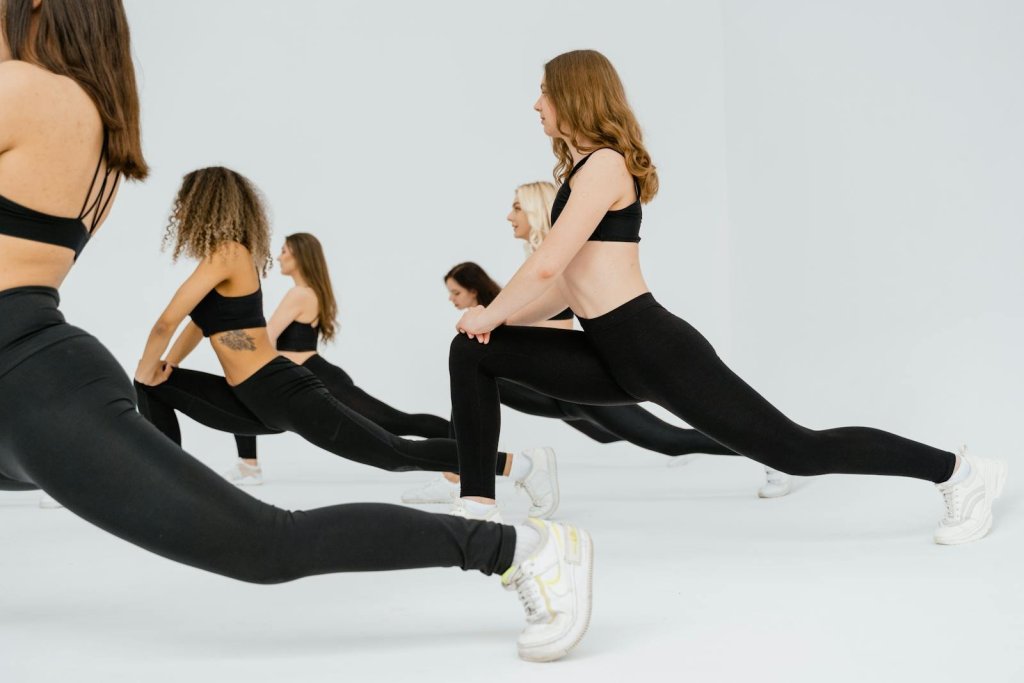
Clinical-style stretching guidance emphasizes gentle holds (often around 30 seconds), no bouncing, steady breathing, and staying out of pain. Guidance from the Mayo Clinic supports holding stretches and avoiding pain or bouncing.
What Are Hip Flexor Stretches?
Hip flexor stretches target muscles that lift your thigh and help you walk, climb stairs, and stand upright. The group commonly includes the iliopsoas (iliacus + psoas) and rectus femoris (one of the quadriceps), among others.
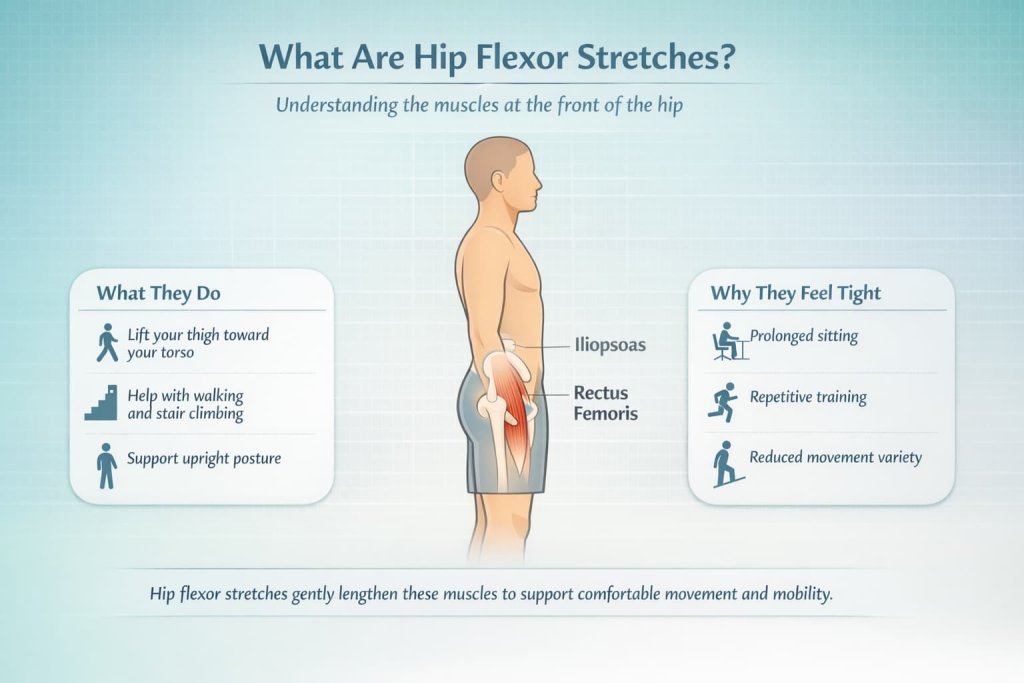
Many people feel “tight hips” at the front of the hip after long sitting or heavy training. The Cleveland Clinic explains the psoas as an important hip flexor involved in hip movement and trunk stability, and discusses stretching and movement strategies to help address tightness.
Why Do Hip Flexors Get Tight?
Hip flexors can feel tighter when they spend a lot of time in a shortened position, such as sitting. They may also feel overworked if glutes and core aren’t contributing well during walking, running, or lifting.
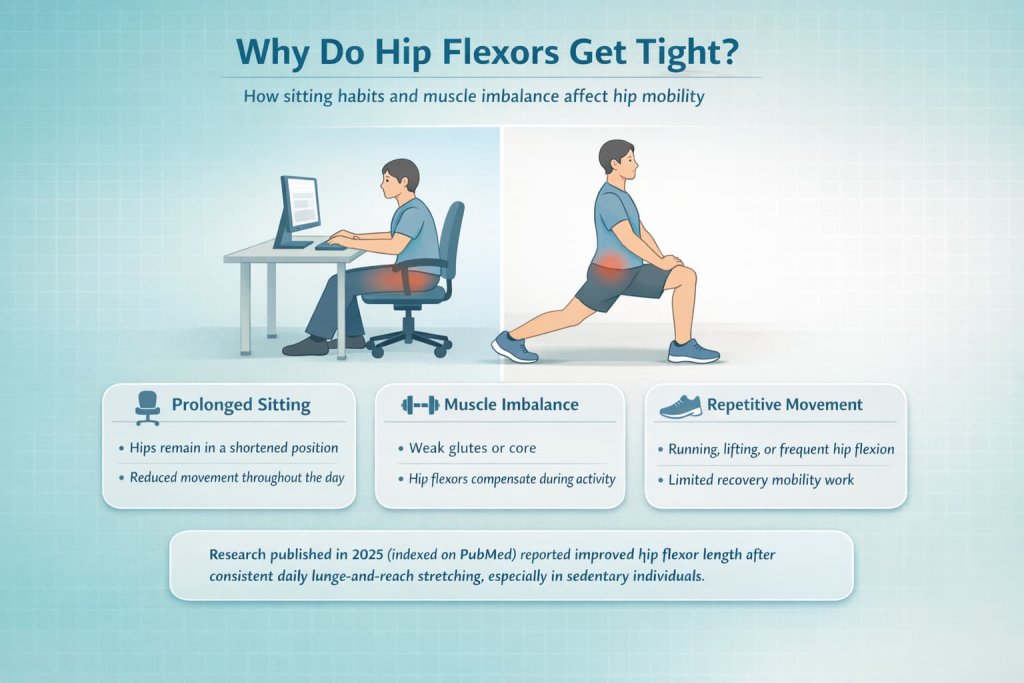
A 2025 study published on PubMed examined a daily lunge-and-reach stretching program and reported improvements in hip flexor length following consistent practice, particularly in individuals with sedentary lifestyles.
10 Best Hip Flexor Stretches
Improve flexibility and reduce front-of-hip tightness with these 10 best hip flexor stretches designed for better mobility and posture. Simple, step-by-step movements you can do at home to move more comfortably every day.
1) Half-Kneeling Hip Flexor Stretch
How to do it:
- Kneel with one knee down and the other foot forward in a 90/90 position.
- Keep your torso tall and gently tuck your pelvis (think “belt buckle slightly up”).
- Shift your hips forward slowly until you feel a stretch at the front of the back hip.
- Hold for 20–30 seconds, then switch sides.
Why it works:
This classic position places the hip into controlled extension while maintaining pelvic alignment, helping lengthen the primary hip flexors without overloading the lower back.
Muscles worked:
Iliopsoas, rectus femoris.
Trainer Tip:
Avoid arching your lower back. Stay tall through your spine and keep your ribs stacked over your hips.
2) Half-Kneeling Stretch With Overhead Reach
How to do it:
- Start in a half-kneeling position.
- Reach the arm on the kneeling side overhead.
- Add a gentle side bend away from the back leg.
- Hold, breathe steadily, then switch sides.
Why it works:
Adding the overhead reach increases the stretch through the front of the hip while also engaging the side body for a more integrated mobility effect.
Muscles worked:
Iliopsoas, hip flexor fascia line, obliques (light involvement).
Trainer Tip:
Keep your ribs down and avoid leaning backward as you reach.
3) Couch Stretch
How to do it:
- Place your back shin against a wall or couch.
- Step the other foot forward into a lunge position.
- Gently tuck your pelvis and bring your torso upright.
- Hold comfortably before switching sides.
Why it works:
This variation strongly targets the rectus femoris, a quadriceps muscle that also functions as a hip flexor.
Muscles worked:
Rectus femoris, quadriceps, iliopsoas (secondary).
Trainer Tip:
Place padding under your knee and start with a shallow range to avoid excessive pressure.
4) Standing Split-Stance Stretch
How to do it:
- Stand in a split stance with one foot forward and one back.
- Slightly bend the back knee.
- Shift your body forward gently while keeping your torso upright.
- Hold, then switch sides.
Why it works:
This upright option allows hip extension without kneeling, making it accessible for those who prefer standing stretches.
Muscles worked:
Iliopsoas, front-of-hip tissues.
Trainer Tip:
Maintain a neutral spine and avoid leaning forward excessively.
5) Low Lunge Stretch
How to do it:
- Step into a long lunge.
- Lower your back knee to the floor.
- Gently tuck your pelvis and shift forward slightly.
- Hold, then switch sides.
Why it works:
Encourages controlled hip extension while minimizing strain on the lower back through proper pelvic positioning.
Muscles worked:
Hip flexors, quadriceps.
Trainer Tip:
If you feel pinching in the front of the hip, shorten your stance and reduce the depth.
6) Prone Press-Up Opener
How to do it:
- Lie face down on the floor.
- Place hands under shoulders and gently press your chest upward.
- Keep hips in contact with the floor.
- Hold briefly, then relax.
Why it works:
Opens the front of the body and may reduce stiffness after prolonged sitting.
Muscles worked:
Front-body tissues, hip flexors (indirect).
Trainer Tip:
Keep the movement mild and stop if it causes back discomfort.
7) Thomas Stretch
How to do it:
- Sit at the edge of a bed or sturdy surface.
- Lie back while hugging one knee toward your chest.
- Let the opposite leg hang down naturally.
- Hold, then switch sides.
Why it works:
This position helps isolate the hip flexors and can reveal side-to-side mobility differences.
Muscles worked:
Iliopsoas, rectus femoris.
Trainer Tip:
Keep your pelvis level and avoid excessive arching of the lower back.
8) Side-Lying Psoas Stretch
How to do it:
- Lie on your side near the edge of a bed or bench.
- Allow the bottom leg to drift slightly backward into gentle extension.
- Keep the top leg bent for support.
- Hold gently, then switch sides.
Why it works:
The Cleveland Clinic describes side-lying options as a lower-intensity way to reduce psoas tension without deep lunging.
Muscles worked:
Psoas/iliopsoas.
Trainer Tip:
Keep the stretch subtle and controlled rather than deep.
9) Lunge-and-Reach Stretch
How to do it:
- Step into a forward lunge.
- Reach your arms forward and slightly upward.
- Keep your torso tall.
- Hold, then switch sides.
Why it works:
A 2025 study indexed on PubMed reported improved hip flexor flexibility following a daily lunge-and-reach routine.
Muscles worked:
Hip flexors, glutes (supporting role).
Trainer Tip:
Move gradually into the reach and avoid flaring your ribs.
10) Dynamic Reverse Lunge With Knee Drive
How to do it:
- Step back into a small reverse lunge.
- Return to standing and lift your knee in a controlled march.
- Repeat 6–10 reps per side.
Why it works:
Provides gentle dynamic mobility that prepares the hips for activity without prolonged static holding.
Muscles worked:
Hip flexors, glutes, quadriceps.
Trainer Tip:
Hold a wall lightly if balance is limited, and keep movements smooth rather than rushed.
How Long to Hold Hip Flexor Stretches
A practical starting structure:
- Hold: 20–30 seconds
- Sets: 2–4 per side
- Frequency: 2–3+ days per week
The Mayo Clinic notes that holding stretches about 30 seconds is typical, with longer holds sometimes appropriate for particularly tight areas.
Simple Weekly Plan
| Goal | What to Do | When |
|---|---|---|
| General mobility | 3–4 stretches, 2 sets each side | After workouts or evenings |
| Tight from sitting | 2–3 stretches, 2–3 sets each side | Daily, gentle intensity |
| Athletes | Dynamic mobility before + static after | Around training sessions |
How to Build a Simple Hip Flexor Stretch Routine
You don’t need a long program to improve mobility. Consistency and proper form matter more than intensity. Aim for 3–5 stretches per session, focusing on controlled movement and steady breathing.
Quick Daily Routine (5 Minutes)
- Half-Kneeling Hip Flexor Stretch — 30 seconds per side
- Standing Split-Stance Stretch — 30 seconds per side
- Lunge-and-Reach Stretch — 30 seconds per side
Repeat once if time allows.
Post-Workout Option
- Low Lunge Stretch — 30–45 seconds per side
- Couch Stretch — 30 seconds per side
- Thomas Stretch — 30 seconds per side
Perform 1–2 rounds after training.
Frequency Guidelines
- 2–3 days per week minimum
- Daily if tightness is persistent (gentle intensity)
- Hold each stretch about 20–30 seconds
The Mayo Clinic recommends holding stretches around 30 seconds and avoiding bouncing.
Progress gradually, avoid pain, and combine stretching with glute and core strengthening for balanced mobility.
Benefits of Hip Flexor Stretches
When done consistently and comfortably, hip flexor stretches may help:
- Support longer, more comfortable strides while walking
- Reduce the “front-of-hip” tight feeling after sitting
- Improve hip extension range of motion
- Complement glute and core strengthening work
Safety Guidelines Before You Start
Follow these practical safety tips:
- Warm up first (5–10 minutes of easy walking or light movement).
- Stretch to a gentle pull, not pain.
- Avoid bouncing.
- Breathe steadily.
- Stop if sharp discomfort occurs.
The Mayo Clinic emphasizes controlled movement and avoiding overstretching.
Common Mistakes
- Overarching the lower back
- Bouncing
- Forcing depth
- Stretching without strengthening
When to Seek Professional Guidance
Consult a healthcare professional if you experience:
- Sharp groin pain
- Persistent hip pain
- Walking changes
- Numbness or weakness
The Cleveland Clinic outlines symptoms of hip flexor strain that may require medical evaluation.
FAQ
How often should I do hip flexor stretches?
2–3 times per week is a common starting point. Daily gentle stretching can also be appropriate.
How long before I see results?
Some people notice temporary relief immediately, but lasting flexibility improvements usually require several weeks of consistent practice.
Should I stretch before or after workouts?
Dynamic stretches often work well before training, while longer static holds may fit better after.
Why do I feel pinching?
Reduce depth and adjust pelvic position. Avoid pushing into discomfort.
Are hip flexor stretches good for posture?
They may support more comfortable hip extension, which contributes to upright standing and smoother walking.
Can runners benefit?
Yes, especially when combined with glute strengthening and balanced training.
Conclusion
Hip flexor stretches are simple, accessible movements that may support mobility, posture, and everyday comfort—especially for people who sit frequently. Choose a few stretches, stay consistent, and focus on controlled technique rather than intensity.