
A standing hip flexor stretch is a quick, no-floor stretch that lengthens the muscles at the front of your hip to help you feel less “stuck” after sitting and move more comfortably. If your hips feel tight when you stand up, walk, or climb stairs, learning this one simple stretch can be a practical daily reset you can do anywhere.
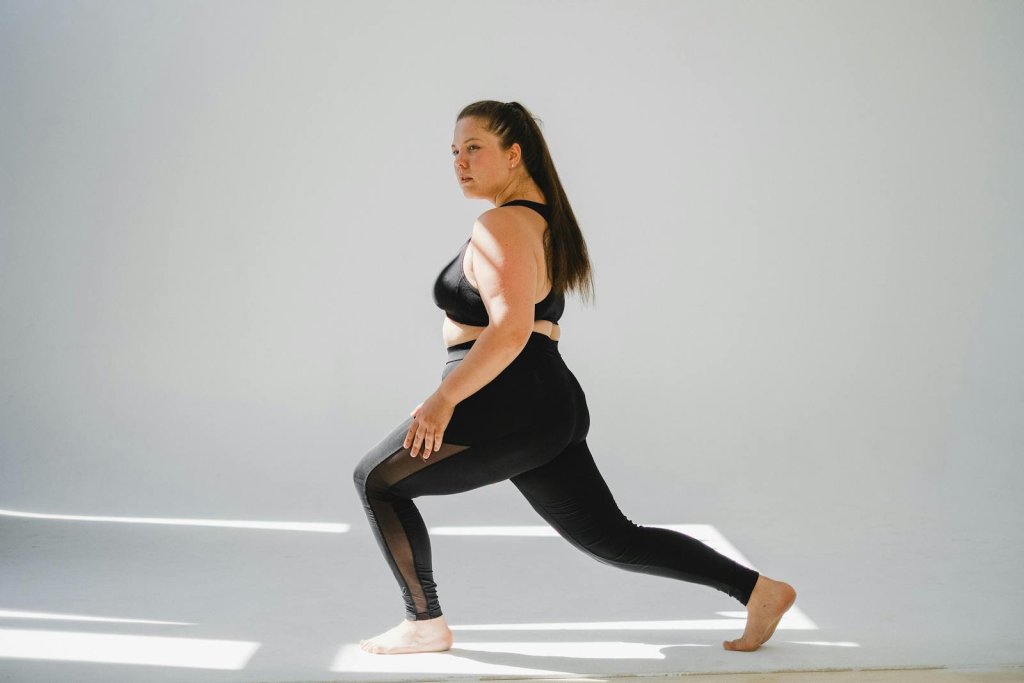
To keep it safe and effective, focus on a tall posture, a gentle forward hip shift (not a big back arch), and a steady hold instead of bouncing. Basic stretching safety guidelines like “hold, don’t bounce, and avoid pain” are also emphasized by the Mayo Clinic.
What Is the Standing Hip Flexor Stretch?
The standing hip flexor stretch is a lunge-based position done on your feet (often with a wall or chair nearby for balance) to stretch the hip flexors—mainly the iliopsoas and rectus femoris—by bringing your back hip into gentle extension.
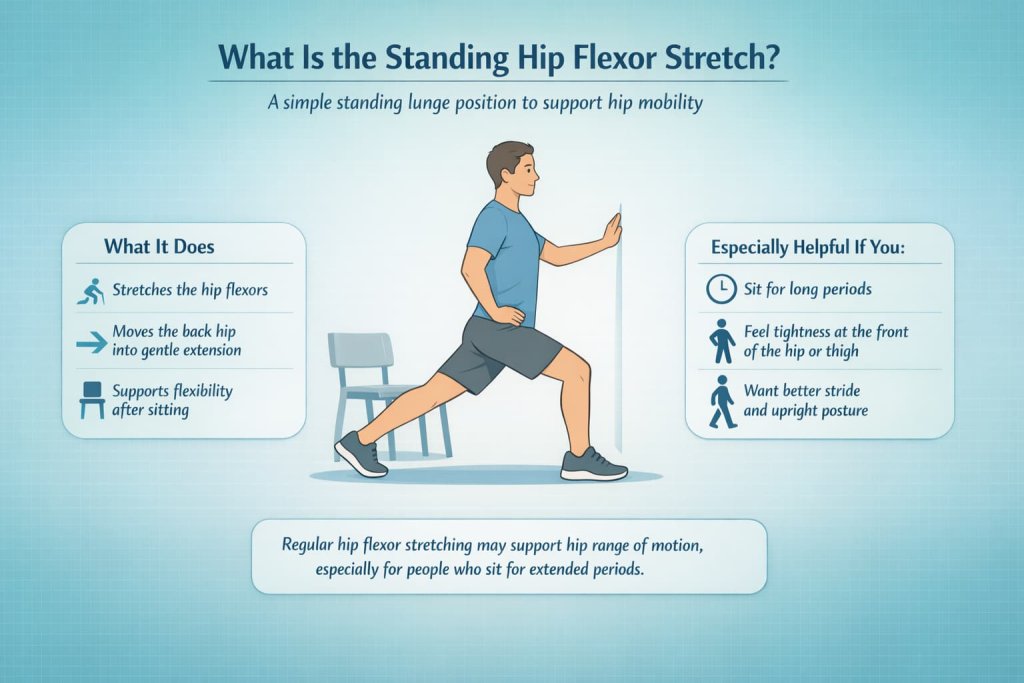
It’s especially useful if you:
- Sit for long periods
- Feel tightness at the front of your hip or upper thigh
- Notice your hips won’t “open up” when you walk, run, or stand tall
According to Harvard Health, regular hip flexor stretching can help relieve tightness and support hip range of motion—especially for people who spend much of the day sitting.
How to Do the Standing Hip Flexor Stretch
How to do it:
- Stand tall next to a wall or chair for light balance support.
- Step your right foot forward into a comfortable lunge stance.
- Keep your left leg back with the heel lifted and the knee straight or softly bent.
- Square your hips forward.
- Gently tuck your pelvis (think “tailbone down”) to avoid arching your low back.
- Shift your hips forward slightly until you feel a stretch in the front of the left hip.
- Keep your chest tall and breathe slowly.
- Hold, then switch sides.
Trainer Tip:
If you feel the stretch mostly in your low back, reduce the lunge depth and repeat the gentle pelvic tuck. You should feel a controlled pull at the front of the back hip—not sharp pain or pinching.
Form cues for lunge-based hip opening stretches, including upright torso positioning and knee alignment, are commonly emphasized in guidance from the Cleveland Clinic.
Standing Hip Flexor Stretch Variations and Modifications
These standing hip flexor stretch variations help adjust intensity, improve balance, and target slightly different areas of the front hip and thigh. Choose the option that feels controlled, stable, and comfortable for your mobility level.
1) Bent-Back-Knee Option
Why it works:
Slightly bending the back knee increases the stretch through the rectus femoris, which crosses both the hip and knee. This variation shifts more sensation into the front thigh while maintaining hip extension.
Muscles worked:
Rectus femoris (primary emphasis), iliopsoas, supporting glute and core stabilizers.
How to do it:
- Step into your standard standing lunge stance.
- Keep your torso upright and hips square.
- Slightly bend the back knee while keeping the heel lifted.
- Gently tuck the pelvis and shift forward a few inches.
- Hold steady tension without bouncing.
- Repeat on the other side.
Trainer Tip:
If you feel knee discomfort, reduce the bend in the back knee and shorten your stance.
2) Add an Overhead Reach
Why it works:
Reaching the arm overhead on the back-leg side increases stretch intensity by adding a mild fascial and trunk extension component. It can enhance the overall stretch sensation along the front of the hip and torso.
Muscles worked:
Hip flexors, rectus femoris, latissimus dorsi (with overhead reach), core stabilizers.
How to do it:
- Step into your standing hip flexor stretch position.
- Tuck the pelvis gently and shift forward into the stretch.
- Raise the arm on the same side as the back leg overhead.
- Keep ribs stacked over hips (avoid flaring).
- Breathe slowly and hold.
- Switch sides.
Trainer Tip:
If your lower back arches or ribs flare upward, lower the arm and return to the basic version. Control matters more than intensity.
Standing Hip Flexor Stretch Benefits
A consistent standing hip flexor stretch routine may help you:
- Feel less stiffness after sitting
- Stand taller with less front-hip pulling
- Move more freely into hip extension
- Pair mobility work with posture awareness
Flexibility research summaries that reflect recommendations from organizations like the American College of Sports Medicine are available through PubMed Central, noting that short, repeated holds are generally more practical than forcing one long stretch.
How Long to Hold and How Often
A practical flexibility approach:
- Hold 15–30 seconds
- Repeat 2–4 times per side
- Perform 2–3 days per week
Guidance summarized in research available on PubMed Central reflects common recommendations of holding static stretches for about 15–30 seconds and repeating multiple times per muscle group. The Mayo Clinic also advises holding stretches steadily without bouncing.
Common Mistakes to Avoid
- Overarching your low back
- Letting the front knee drift too far forward
- Turning your hips outward
- Bouncing into the stretch
The Mayo Clinic specifically advises avoiding bouncing and stretching only to the point of tension, not pain.
Who Should Avoid or Modify This Stretch
Modify or seek individualized advice if you have:
- Sharp pain or pinching at the front of the hip
- Recent hip, pelvis, or low-back injury
- Significant balance limitations
- Numbness or tingling symptoms
A safe rule: you should feel muscle tension—not joint pain. If symptoms persist, consult a licensed healthcare professional.
How to Build a Simple Routine Using the Standing Hip Flexor Stretch
Try this short reset routine:
- Standing hip flexor stretch: 2–4 holds per side
- Gentle standing glute squeezes: 8–10 reps
- Short walking break: 2–5 minutes
As noted by Harvard Health, regular hip flexor stretching can be especially helpful for people who sit for extended periods.
FAQ
1) What should I feel during a standing hip flexor stretch?
A mild-to-moderate pulling sensation at the front of the back hip or upper thigh—not sharp or stabbing pain.
2) How long until hip tightness improves?
Some people feel looser immediately, but lasting improvements usually require consistent practice over several weeks.
3) Should I stretch before or after a workout?
Stretching is generally recommended after you’re warmed up, according to general flexibility guidance from the Mayo Clinic.
4) What if I can’t balance well?
Use a wall or chair for support. Shorten your stance to stay stable.
5) Can stretching alone fix tight hips from sitting?
Stretching helps, but combining mobility work with strengthening and regular movement breaks typically supports better long-term results.
6) How do I avoid over-stretching?
Stop at gentle tension, breathe steadily, and avoid bouncing.
Conclusion
The standing hip flexor stretch is one of the simplest ways to counter daily sitting posture. Keep your torso tall, gently tuck your pelvis, and hold with control. When paired with brief walk breaks and light hip strengthening, it can support better mobility and more comfortable movement over time.