
Rebounder exercises for seniors are low-impact, balance-friendly movements performed on a mini trampoline to improve strength, stability, and cardiovascular health while minimizing joint stress. These exercises are especially useful for older adults who want to stay active without the pounding associated with traditional cardio.
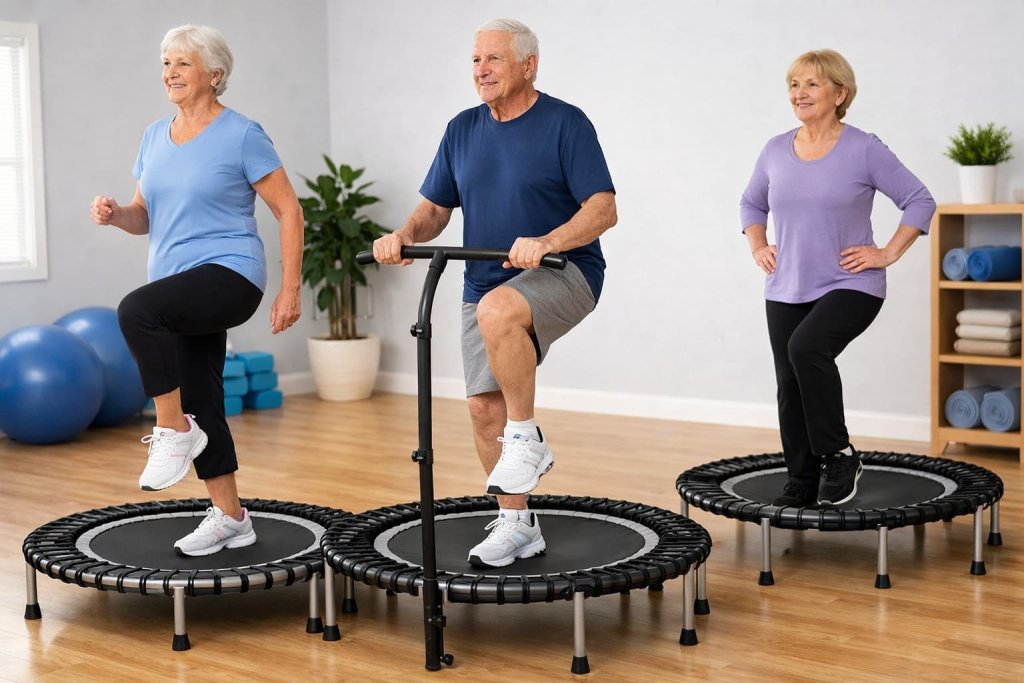
Understanding how to use a rebounder safely matters because balance, leg strength, and regular movement are closely linked to fall prevention, independence, and overall quality of life as we age. When done correctly, rebounder training can fit neatly into public health recommendations for older adults that emphasize aerobic activity, muscle strengthening, and balance work.
What Are Rebounder Exercises for Seniors?
Rebounder exercises for seniors use a mini trampoline (also called a rebounder) to perform gentle bouncing, marching, stepping, or balance-focused movements. Unlike high jumps, senior-friendly rebounder workouts emphasize controlled contact with the mat and upright posture.
These exercises typically aim to:
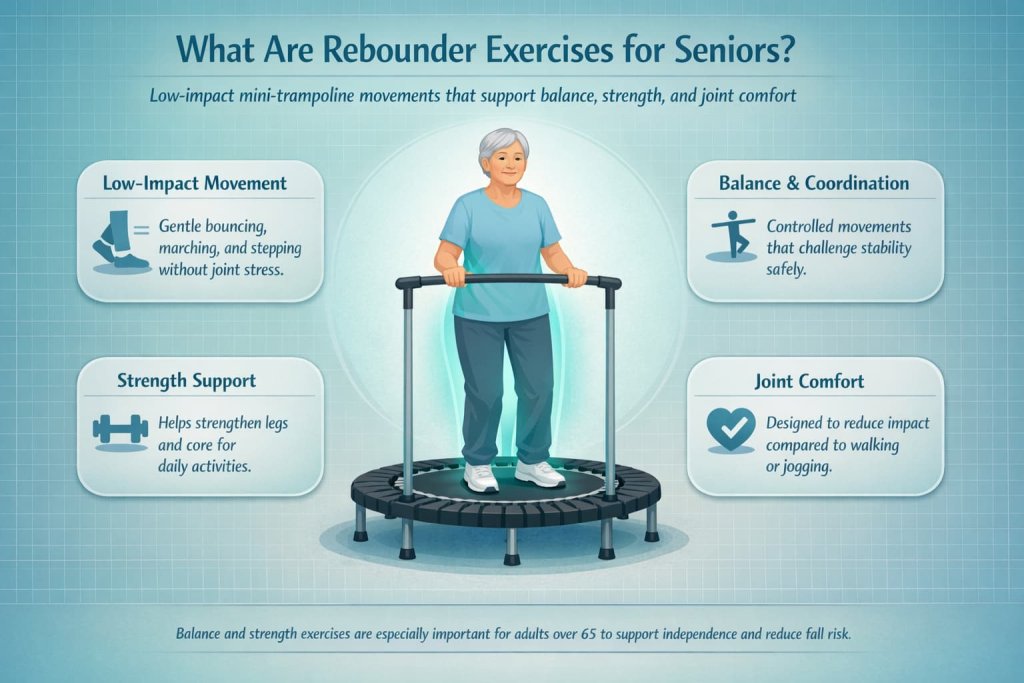
- Provide low-impact cardiovascular activity
- Improve balance and coordination
- Strengthen the legs and core
- Support joint comfort during movement
Organizations such as National Institute on Aging note that balance and strength exercises are especially important for adults over 65 to help reduce fall risk and maintain independence.
10 Best Rebounder Exercises for Seniors
Rebounder exercises for seniors focus on low-impact, controlled movements that support balance, strength, and circulation without stressing the joints. The exercises below are safe, easy to follow, and suitable for at-home routines, especially when performed with proper support and pacing.
1. Basic Health Bounce
How to do it:
- Stand tall on the rebounder with feet hip-width apart
- Keep both feet in contact with the mat at all times
- Gently press down through the balls of the feet and heels
- Allow the mat to rebound upward without leaving the surface
- Maintain relaxed shoulders and steady breathing
Why it works:
This movement introduces the body to the rebounder without impact. The gentle compression and release stimulate circulation while allowing joints and connective tissue to adapt safely.
Muscles worked:
Calves, quadriceps, hamstrings, glutes, core stabilizers
Trainer Tip:
Think “soft and quiet.” If the mat makes noise or your heels lift high, slow down and reduce pressure.
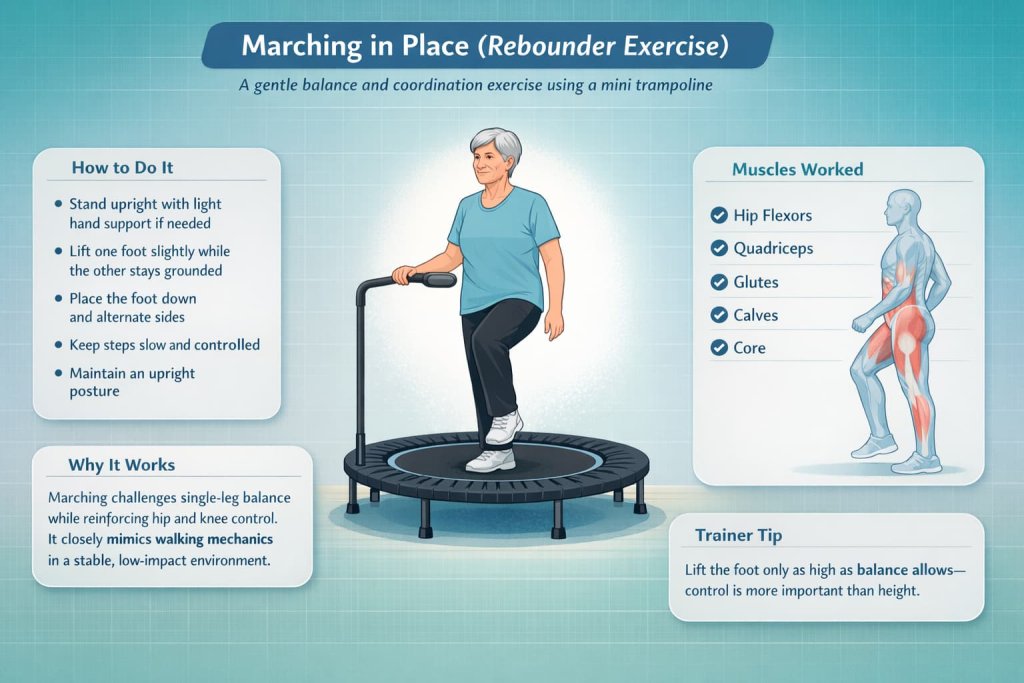
2. Marching in Place
How to do it:
- Stand upright with light hand support if needed
- Lift one foot slightly while keeping the other grounded
- Place the foot back down and alternate sides
- Keep steps slow and controlled
- Maintain an upright posture throughout
Why it works:
Marching challenges single-leg balance while reinforcing hip and knee control. It mimics walking mechanics in a stable, low-impact environment.
Muscles worked:
Hip flexors, quadriceps, glutes, calves, core
Trainer Tip:
Lift the foot only as high as balance allows—height is less important than control.
3. Heel Raises
How to do it:
- Stand with feet hip-width apart on the rebounder
- Hold a handle or wall for support
- Slowly lift both heels off the mat
- Pause briefly at the top
- Lower heels back down with control
Why it works:
Heel raises strengthen the calf muscles and improve ankle stability, both of which are essential for walking confidence and fall prevention.
Muscles worked:
Gastrocnemius, soleus, intrinsic foot muscles
Trainer Tip:
Move slowly—avoid bouncing. The lowering phase is just as important as the lift.
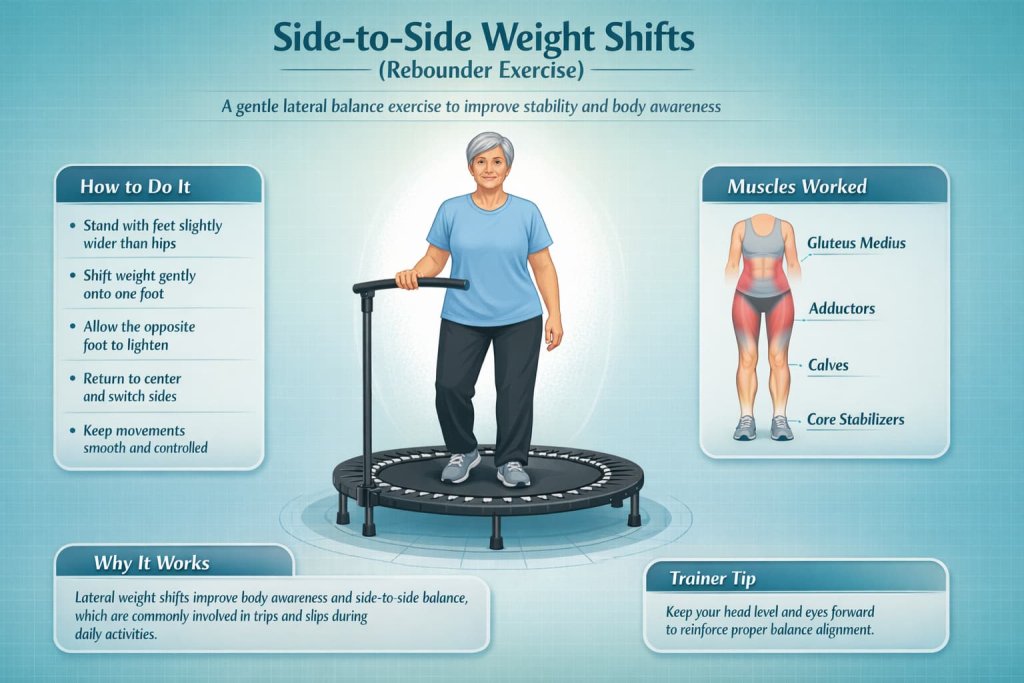
4. Side-to-Side Weight Shifts
How to do it:
- Stand with feet slightly wider than hips
- Shift weight gently onto one foot
- Allow the opposite foot to lighten
- Return to center and switch sides
- Keep movements smooth and controlled
Why it works:
Lateral weight shifts improve body awareness and side-to-side balance, which are often involved in trips and slips during daily life.
Muscles worked:
Gluteus medius, adductors, calves, core stabilizers
Trainer Tip:
Keep your head level and eyes forward to reinforce good balance alignment.
5. Gentle Squat Bounce
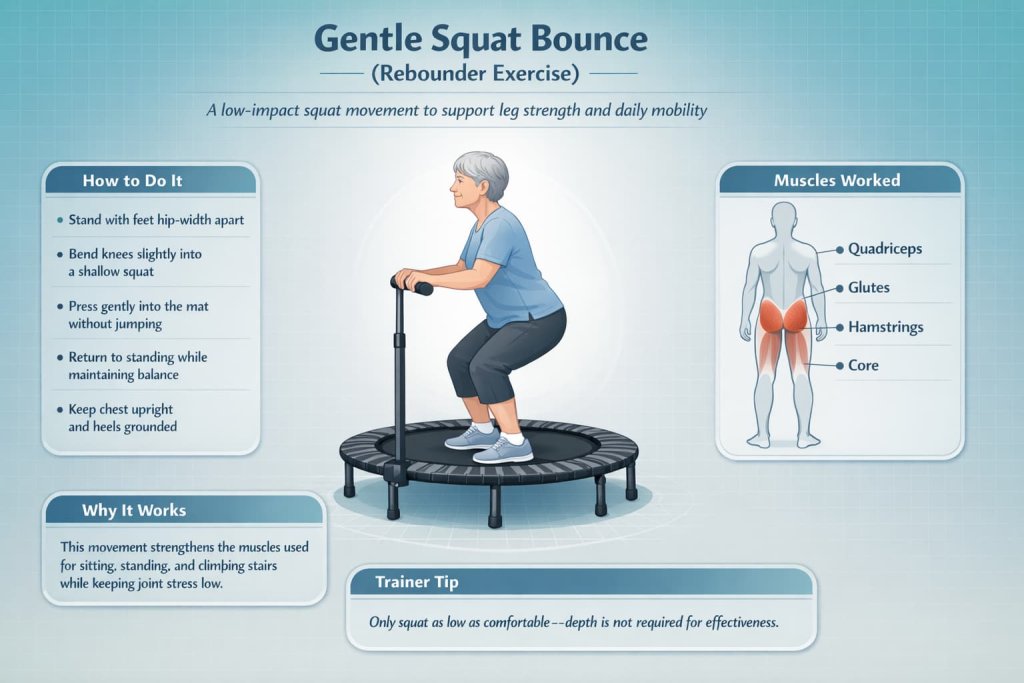
How to do it:
- Stand with feet hip-width apart
- Bend knees slightly into a shallow squat
- Press gently into the mat without jumping
- Return to standing while maintaining balance
- Keep chest upright and heels grounded
Why it works:
This movement strengthens the muscles used for sitting, standing, and climbing stairs while keeping joint stress low.
Muscles worked:
Quadriceps, glutes, hamstrings, core
Trainer Tip:
Only squat as low as comfortable—depth is not required for effectiveness.
6. Alternating Toe Taps
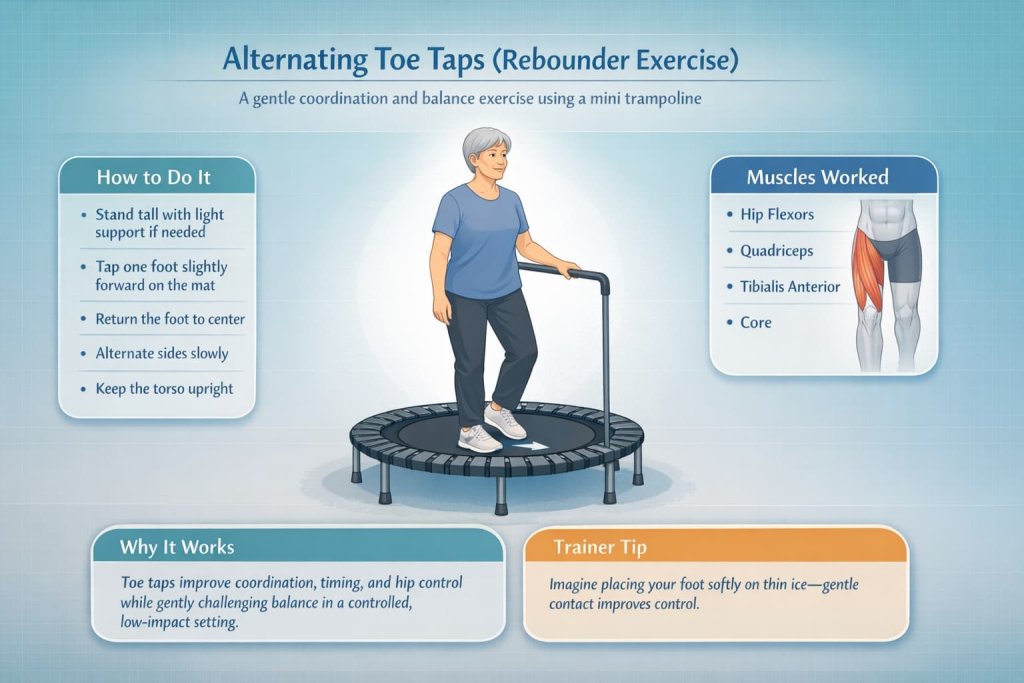
How to do it:
- Stand tall with light support if needed
- Tap one foot slightly forward on the mat
- Return the foot to center
- Alternate sides slowly
- Keep the torso upright
Why it works:
Toe taps improve coordination, timing, and hip control while gently challenging balance.
Muscles worked:
Hip flexors, quadriceps, tibialis anterior, core
Trainer Tip:
Imagine placing your foot softly on thin ice—gentle contact improves control.
7. Standing Balance Hold
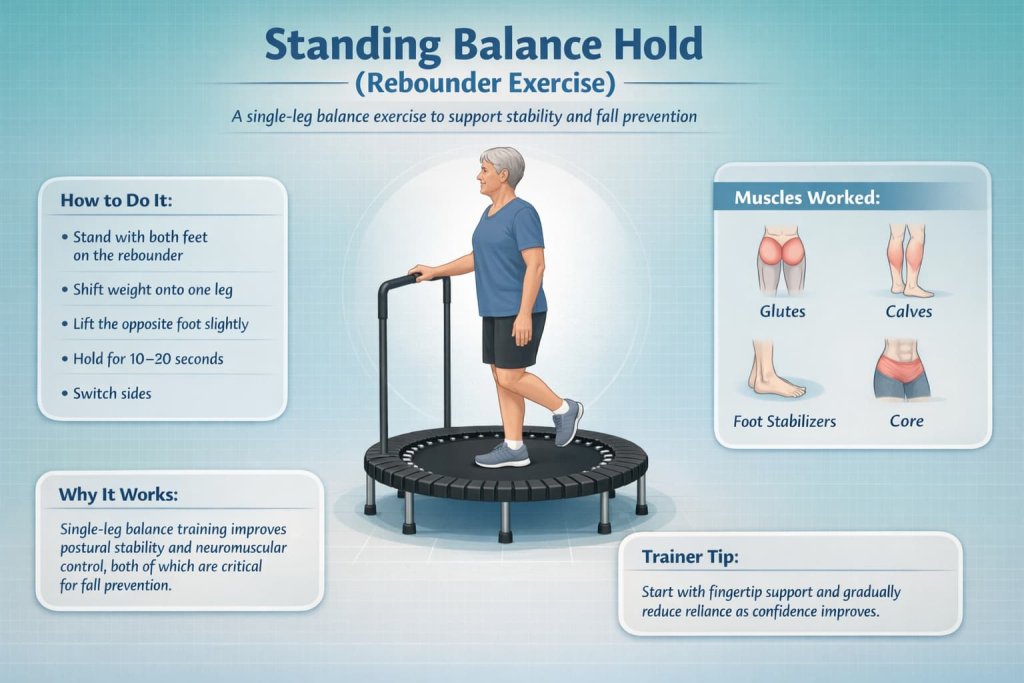
How to do it:
- Stand with both feet on the rebounder
- Shift weight onto one leg
- Lift the opposite foot slightly
- Hold for 10–30 seconds
- Switch sides
Why it works:
Single-leg balance training improves postural stability and neuromuscular control, both critical for fall prevention.
Muscles worked:
Glutes, calves, foot stabilizers, core
Trainer Tip:
Start with fingertip support and gradually reduce reliance as confidence improves.
8. Seated Bounce
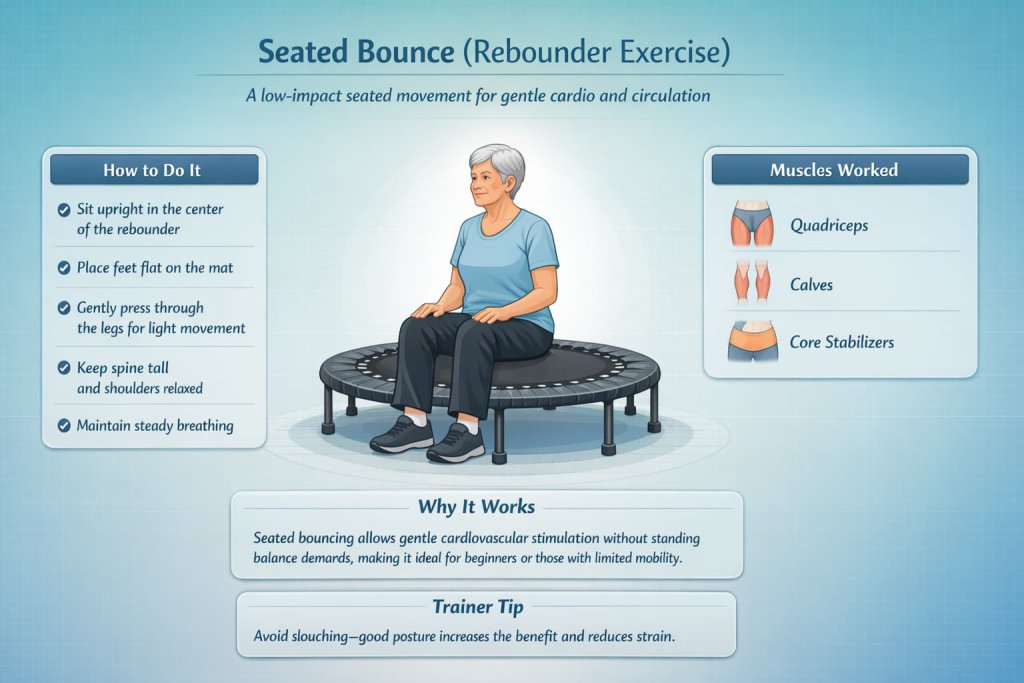
How to do it:
- Sit upright in the center of the rebounder
- Place feet flat on the mat
- Gently press through the legs to create light movement
- Keep spine tall and shoulders relaxed
- Maintain steady breathing
Why it works:
Seated bouncing allows cardiovascular stimulation without standing balance demands, making it ideal for beginners or limited mobility.
Muscles worked:
Quadriceps, calves, core stabilizers
Trainer Tip:
Avoid slouching—good posture increases the benefit and reduces strain.
9. Arm Swings with Gentle Bounce
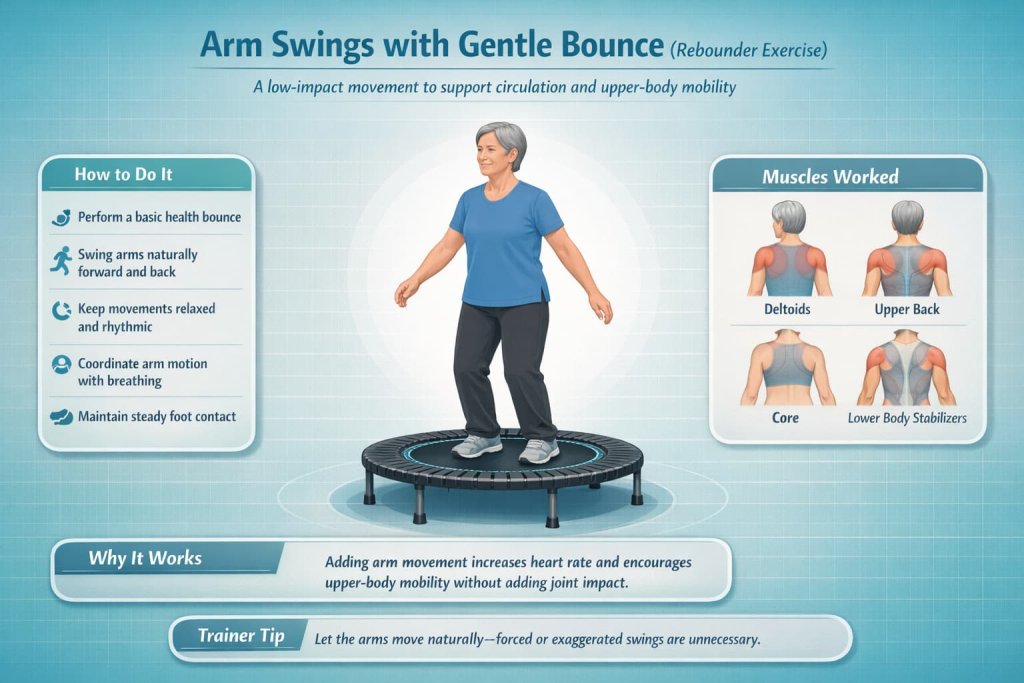
How to do it:
- Perform a basic health bounce
- Swing arms naturally forward and back
- Keep movements relaxed and rhythmic
- Coordinate arm motion with breathing
- Maintain steady foot contact
Why it works:
Adding arm movement increases heart rate and encourages upper-body mobility without additional joint impact.
Muscles worked:
Deltoids, upper back, core, lower body stabilizers
Trainer Tip:
Let the arms move naturally—forced or exaggerated swings are unnecessary.
10. Step-On, Step-Off Drill
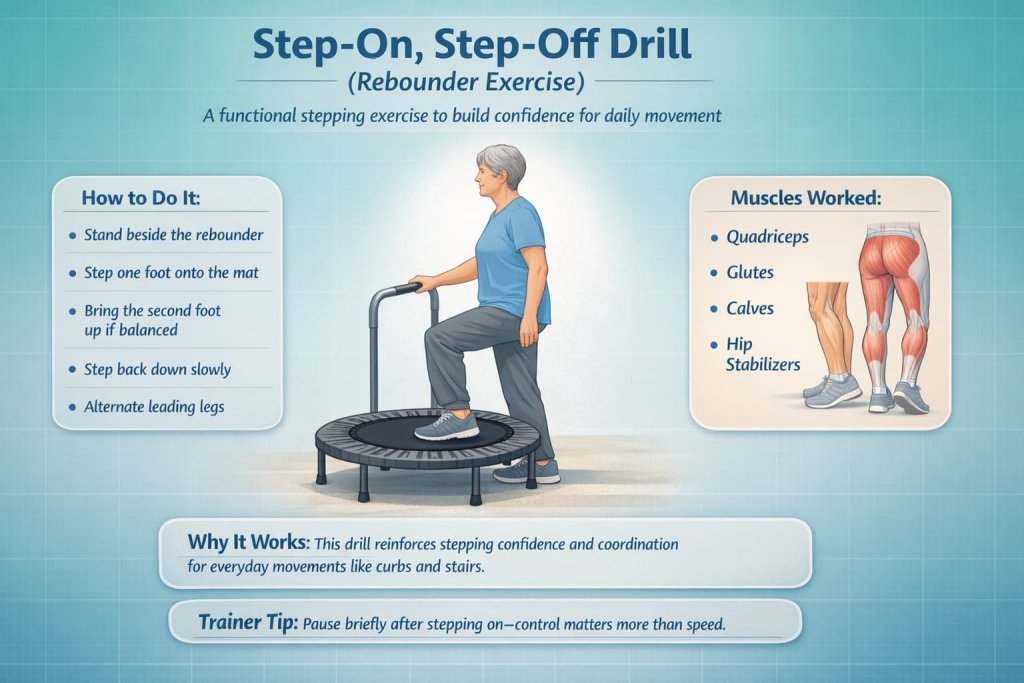
How to do it:
- Stand beside the rebounder
- Step one foot onto the mat
- Bring the second foot up if balanced
- Step back down slowly
- Alternate leading legs
Why it works:
This drill reinforces stepping confidence and coordination for everyday movements like curbs and stairs.
Muscles worked:
Quadriceps, glutes, calves, hip stabilizers
Trainer Tip:
Pause briefly after stepping on—control matters more than speed.
How Often Should Seniors Do Rebounder Exercises?
Public health guidelines from the Centers for Disease Control and Prevention recommend that older adults aim for:
- At least 150 minutes of moderate aerobic activity per week
- Muscle-strengthening activities on 2 or more days per week
- Regular balance exercises
For rebounder training, many seniors do well with 10–20 minutes, 3–5 days per week, depending on comfort and fitness level.
Safety Guidelines Before Starting Rebounder Exercises for Seniors
Before beginning any rebounder routine, basic safety principles are essential.
- Use a rebounder with a stability handle or nearby support if balance is a concern
- Place the rebounder on a flat, non-slip surface
- Wear supportive athletic shoes unless advised otherwise
- Keep movements slow, controlled, and pain-free
- Start with short sessions (5–10 minutes) and build gradually
If you have osteoporosis, joint replacements, heart conditions, or unexplained dizziness, consult a qualified healthcare professional before starting. Guidance from organizations like the National Health Service supports medical clearance when health conditions are present.
Who Can Safely Do Rebounder Exercises?
Rebounder exercises are generally suitable for older adults who can perform gentle, supported movement and have no restrictions on light physical activity.
These exercises may be appropriate for seniors who:
- Can stand and step independently or with light support
- Prefer low-impact exercise that is easier on the joints
- Want to improve balance, coordination, or leg strength
- Have been cleared for light to moderate exercise
Guidance from the National Institute on Aging supports balance and strength activities for many adults over 65 when done safely.
How to Get Started Safely
Starting slowly helps reduce fall risk and builds confidence on the rebounder.
Begin with these simple guidelines:
- Start with 5–10 minutes per session
- Use a handle, wall, or chair for support
- Keep movements slow and controlled
- Keep both feet in contact with the mat at first
- Stop if you feel pain, dizziness, or instability
According to the Centers for Disease Control and Prevention, gradual progression and regular practice are key for safe physical activity in older adults.
Common Mistakes to Avoid
- Bouncing too high or too fast
- Locking the knees during movement
- Looking down instead of keeping the head upright
- Skipping warm-up and cool-down periods
Slow, controlled motion is more effective and safer than intensity.
Who Should Be Cautious with Rebounder Exercises?
Rebounder exercises may not be appropriate without supervision for individuals with:
- Severe balance disorders
- Recent fractures or surgery
- Advanced osteoporosis
- Uncontrolled cardiovascular conditions
In these cases, a physical therapist or healthcare provider can help determine safe alternatives.
Frequently Asked Questions (FAQs)
Are rebounder exercises safe for seniors?
When done correctly with support and controlled movements, rebounder exercises are generally considered low-impact and senior-friendly.
Do rebounder exercises help with balance?
Yes. Many rebounder movements challenge balance gently, which can support stability over time.
Can seniors do rebounder exercises at home?
Yes. Mini trampolines are commonly used at home, provided there is adequate space and a stable setup.
How long should a senior bounce on a rebounder?
Beginners often start with 5–10 minutes and gradually build to 15–20 minutes as tolerated.
Is a handlebar necessary for seniors?
While not required for everyone, a handlebar or nearby support is strongly recommended for safety.
Can rebounder exercises replace walking?
They can complement walking, but variety in activity is generally recommended for overall health.
Conclusion
Rebounder exercises for seniors offer a safe, low-impact way to stay active, improve balance, and support healthy aging. With the right setup and a gradual approach, these movements can fit easily into an at-home routine. Start slow, focus on control, and choose exercises that feel comfortable and confidence-building.
References
- CDC: What Counts as Physical Activity for Older Adults
- CDC: Facts About Falls (Adults 65+)
- NHS: Physical Activity Guidelines for Older Adults
- MedlinePlus (U.S. National Library of Medicine): Exercise for Older Adults
- PubMed: Mini-Trampoline Training Program and Balance/Functional Mobility in Older Women (Study Abstract)
- WHO: Physical Activity Recommendations (Includes Older Adults)