
The kneeling hip flexor stretch is a half-kneeling stretch that targets the front of the hip (hip flexors) to improve hip extension mobility and reduce the “tight hip” feeling that often builds up from prolonged sitting. Done with the right pelvic position, it’s one of the most effective, beginner-friendly ways to open the front of the hips without forcing the low back.

Understanding proper form matters because many people accidentally turn this into a low-back arch instead of a true hip flexor stretch. In this guide, you’ll learn the exact setup, the key cue that makes it work, how long to hold it, common mistakes, and safe modifications.
What Is the Kneeling Hip Flexor Stretch?
The kneeling hip flexor stretch (often called a half-kneeling hip flexor stretch) is performed in a lunge-like position with one knee on the floor and the opposite foot forward. The stretch is felt along the front of the hip on the kneeling side, and sometimes into the front thigh (especially if the rectus femoris is involved).
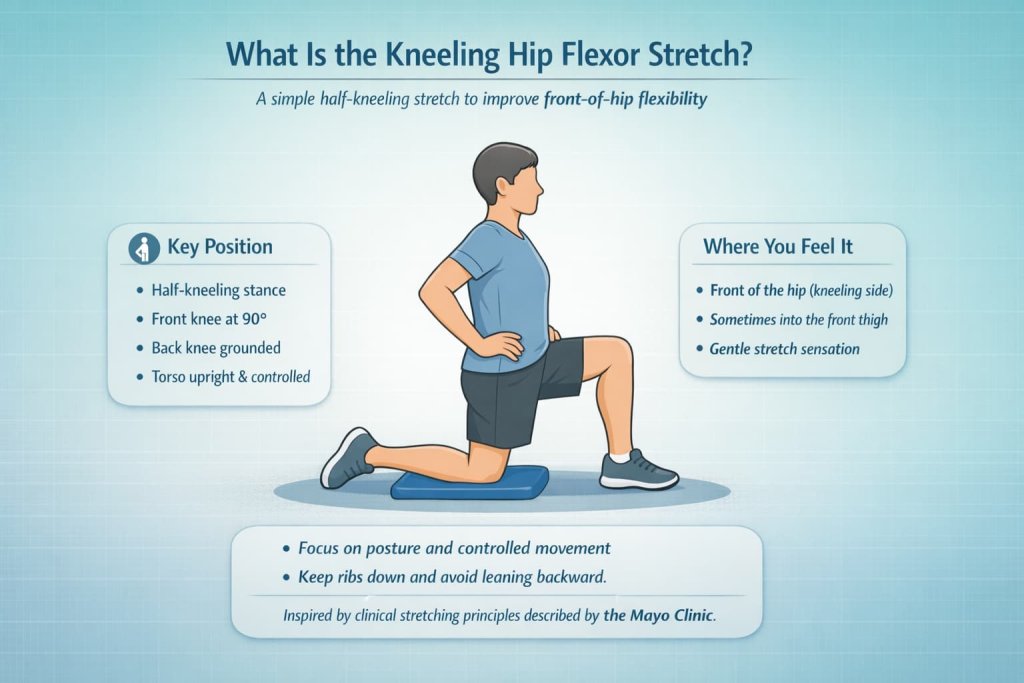
A well-known version is the hip flexor stretch described by the Mayo Clinic, which emphasizes a tall torso and controlled forward shift.
How to Do the Kneeling Hip Flexor Stretch Correctly
The biggest difference between an “okay” stretch and a great one is pelvic position. You want the stretch to come from the hip, not a low-back arch.
Step-by-step form cues
- Start in a half-kneeling position: one knee down, other foot forward.
- Stack your front knee over your front ankle (avoid your knee drifting far forward).
- Keep your torso tall and ribs gently “down” (no flaring).
- Tuck your pelvis slightly (posterior pelvic tilt) and squeeze the glute on the kneeling side.
- Shift forward slowly until you feel a stretch in the front of the hip on the kneeling side.
- Breathe slowly and keep the glute engaged so the stretch stays in the hip.
Why Tight Hip Flexors Are So Common
Hip flexors can feel tight for several reasons, but the most common modern contributor is long sitting time. When you sit for hours, the hips stay flexed (bent), and your body gets used to that position. Over time, you may notice:
- A “pinchy” or tight feeling at the front of the hips when standing tall
- Shorter stride length while walking or running
- Compensations like low-back arching during movement
- Difficulty fully extending the hip during lunges, stairs, or sprinting
A consistent flexibility routine can help improve range of motion over time when combined with strengthening and good movement habits.
Kneeling Hip Flexor Stretch Benefits
When performed with good pelvic control, the kneeling hip flexor stretch may help:
- Improve hip extension mobility (standing taller, smoother stride)
- Reduce the “tight front-of-hip” sensation after sitting
- Support better lunge and squat positions by allowing the hips to open
- Improve comfort during walking, running, and stair climbing
Stretching is commonly recommended as part of a well-rounded fitness routine. A review published in the National Library of Medicine (PMC) discussing stretching principles aligned with ACSM guidance explains that static stretching is often performed after an active warm-up, held for about 15–30 seconds, and repeated multiple times per muscle group.
How Long to Hold the Kneeling Hip Flexor Stretch
A practical, evidence-based starting point for static stretching (general fitness) is:
- Hold: 15–30 seconds
- Reps: 2–4 rounds per side
- Frequency: at least 2–3 days per week (more often if flexibility is a priority)
These ranges are consistent with flexibility recommendations summarized by the National Library of Medicine (PMC). In addition, guidance from Harvard Health Publishing suggests aiming for about 60 seconds total time per stretch, which can be divided into multiple shorter holds.
Quick programming table
| Goal | Hold | Sets (per side) | When to do it |
|---|---|---|---|
| General hip mobility | 15–30 sec | 2–4 | After warm-up or after workout |
| Desk-tight hips | 20–30 sec | 2–4 | Most days if tolerated |
| Post-workout cooldown | 20–30 sec | 2–3 | After training |
Common Mistakes That Reduce Results
These errors usually shift the sensation away from the hip flexors and into the low back or the front knee.
Overarching the lower back
If you “lean back” and flare the ribs, you’ll feel less stretch in the hip and more compression in the low back. Fix it by keeping ribs down and pelvis gently tucked.
Losing the glute squeeze
If the glute on the kneeling side relaxes, the pelvis often tips forward and the stretch becomes less targeted. Keep the glute lightly engaged the entire time.
Letting the front knee cave inward
Keep the front knee tracking over the middle toes. If it collapses inward, you may feel instability rather than a clean stretch.
Forcing range of motion
You should feel a firm stretch, not sharp pain. Move in slowly and stop at a tolerable end range.
Best Modifications If Kneeling Is Uncomfortable
If kneeling bothers your knee or it’s hard to get up and down, you still have options.
Make it knee-friendly
- Use a thick pad or folded towel under the kneeling knee.
- Reduce the forward shift and prioritize posture and glute squeeze.
Switch to a standing hip flexor stretch
A standing split stance with the same “tuck + glute squeeze” cue can target the hip flexors without kneeling.
Add a quad focus (only if it feels good)
If you want more front-thigh stretch, you can reach the arm overhead on the kneeling side and stay tall. Avoid pulling the foot to the glute unless you have the balance and knee comfort for it.
When to Be Careful or Get Professional Guidance
Stop and reassess if you notice:
- Sharp hip pain or pinching that worsens
- Low-back pain during the stretch
- Numbness, tingling, or radiating symptoms
If you have a recent hip, knee, or low-back injury, or you’re unsure what you’re feeling, consider checking in with a qualified clinician or physical therapist for individualized guidance.
People Also Ask About the Kneeling Hip Flexor Stretch
Is the kneeling hip flexor stretch good for tight hips?
It can be, especially if you focus on pelvic tuck and glute engagement so the stretch stays in the front of the hip rather than the low back.
Should you do this stretch every day?
Many people tolerate it well most days, but consistency matters more than intensity. Start 2–3 days per week and increase if it feels good and helps.
FAQs
How do I know I’m stretching the right side?
You should feel the stretch on the front of the hip on the side with the knee down. If you feel it mostly in your low back, reset your ribs and tuck your pelvis.
Why do I feel it in my quad instead of my hip?
That can happen if your rectus femoris (a quad muscle that crosses the hip) is tight too. Keep the glute engaged and torso tall, and don’t force the lunge deeper.
What’s the single best cue for this stretch?
A gentle “tuck the pelvis” plus a light glute squeeze on the kneeling side. This usually makes the stretch feel more direct and effective.
Should my back leg be straight or bent?
In the kneeling version, the back leg is bent because the knee is down. Focus on a tall posture rather than trying to straighten anything.
Can I do this before a workout?
Yes, but keep it light and controlled after a brief warm-up. If you’re doing intense training, use dynamic movements before exercise and save longer holds for after.
How long does it take to improve hip flexibility?
It varies, but small improvements often show up in a few weeks with consistent practice. Progress comes from repeated, comfortable stretching—never forcing pain.
Conclusion
The kneeling hip flexor stretch is simple, but the details matter. Keep your torso tall, gently tuck your pelvis, squeeze the glute on the kneeling side, and hold a comfortable stretch for 15–30 seconds. Do it consistently, and you’ll build better hip mobility that supports smoother movement in everyday life and training.
References
- ChoosePT (American Physical Therapy Association) — 30-minute home stretching program
- Hospital for Special Surgery (HSS) — Hip flexor stretches to relieve tightness
- Cambridge University Hospitals (NHS) — Stretches for the hip
- ChoosePT (APTA) — Physical therapy guide to hip impingement (when to seek guidance)