
The cable crunch exercise is a weighted crunch pattern that trains your abs by curling your ribcage toward your pelvis (spinal flexion), not by bending at the hips. When you do it with controlled form, it’s one of the simplest ways to progressively overload the rectus abdominis (your “six-pack” muscle) without turning the set into a hip-flexor or low-back workout.
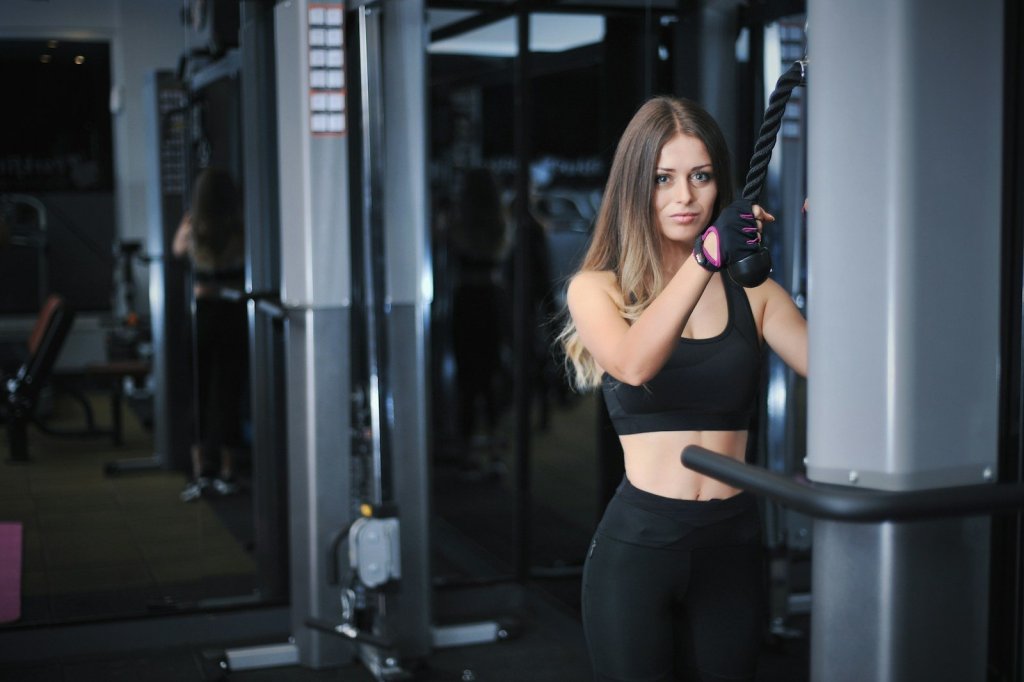
Understanding the setup and the “ribs-to-pelvis” cue matters because small technique errors (especially hinging at the hips) are the main reason people feel cable crunches everywhere except their abs. This guide walks you through correct form, common mistakes, smart programming, and easy variations, so you can build a stronger core safely and consistently.
What Is the Cable Crunch Exercise?
The cable crunch exercise is a kneeling or standing cable movement that uses a rope attachment to add resistance to a crunch. Your goal is to shorten the distance between your ribs and pelvis by rounding through your upper spine in a controlled way—then returning with control.
A helpful way to think about it: your arms hold the rope in position, but your abs move your torso.
If you prefer a standing version (often easier to learn for some people), the ACE Fitness exercise library teaches the same core cue: keep your ribs tucked and roll against the cable resistance.
How to Do the Cable Crunch Exercise Correctly
Cable Crunch Setup Checklist
- Set the cable pulley high (above head level)
- Attach a rope handle
- Kneel a comfortable distance away so the cable stays angled down toward you
- Hold the rope near your temples/ears (hands stay “parked”)
- Start tall with your torso upright, then lightly brace your core
Cable Crunch Form Cues (The Ones That Make It Work)
- Think “ribs down toward pelvis” (not “pull elbows to knees”)
- Keep your hips relatively still (no big hip hinge)
- Crunch down in a small-to-moderate range you can control
- Pause briefly at the bottom, then return slowly
- If you can’t keep tension in your abs, the load is too heavy
Cable Crunch Exercise Muscles Worked
The cable crunch primarily trains:
- Rectus abdominis (main crunch muscle)
- External obliques (assist with trunk flexion and control, especially if you add slight rotation)
- Deep core stabilizers (help brace and control the movement)
Research on loaded crunching patterns supports that adding load can meaningfully recruit abdominal muscles when the movement remains a true crunch (spinal flexion), as described in a study indexed on PubMed.
Cable Crunch Variations
If kneeling cable crunches bother your knees, these variations help you keep the same ribs-to-pelvis ab focus with better comfort and control. Use the pause and slight rotation options to increase tension and oblique involvement without relying on momentum.
1. Standing Cable Crunch
Why it works:
This variation keeps the same cable crunch goal—bringing your ribcage down toward your pelvis—while removing the kneeling position. That makes it a strong option if kneeling irritates your knees or if you feel more stable standing. Because the cable stays loaded through the rep, you can maintain steady ab tension and build strength with clean, repeatable form, using technique cues similar to the standing crunch guidance from ACE Fitness.
Muscles worked:
Rectus abdominis (primary), external obliques (assist), transverse abdominis and deep core stabilizers (bracing), hip flexors (minor involvement if you hinge).
How to do it:
- Set the pulley high and attach a rope handle.
- Stand facing away from the stack and hold the rope near your temples/ears.
- Step forward slightly to create tension and brace your core with ribs “down.”
- Keep hips stacked under your torso (no big hinge).
- Crunch by curling your ribcage toward your pelvis, keeping hands parked and elbows moving with your torso.
- Pause briefly at the bottom, then return slowly without letting the cable pull you upright.
Trainer Tip:
If you feel this mostly in your hip flexors, you’re likely hinging. Reduce the load, shorten the range, and think “sternum down” instead of “elbows to knees.”
2. Rope Cable Crunch With Pause
Why it works:
The pause is a simple way to make cable crunches more effective without adding weight. By holding the bottom position for 1–2 seconds, you remove momentum and force your abs to stay engaged where people often cheat. It also improves control and makes it easier to feel whether the rep is driven by spinal flexion (abs) rather than a hip hinge.
Muscles worked:
Rectus abdominis (primary), external obliques (assist), transverse abdominis/deep stabilizers (bracing during the hold), spinal stabilizers (postural control).
How to do it:
- Set up for a normal cable crunch (kneeling or standing) with the rope near your temples.
- Crunch down slowly into your strongest clean range while keeping hips steady.
- Hold the bottom position for 1–2 seconds with abs tight and ribs tucked.
- Return to the start under control, resisting the cable as you rise.
- Repeat with the same tempo each rep—no bouncing.
Trainer Tip:
Pause with purpose: gently exhale, keep your ribs down, and “lock in” the abs like you’re trying to shorten the front of your torso. If you can’t hold the pause, the weight is too heavy.
3. Slight Rotational Cable Crunch (Advanced)
Why it works:
Adding a small rotation can increase oblique involvement while still training the core’s primary job: controlling your trunk under load. The key is keeping the rotation subtle so the movement stays ab-driven. When done well, it helps build strength and control through diagonal core patterns without turning the rep into a full twist or a shoulder yank.
Muscles worked:
Rectus abdominis (primary), external obliques (more emphasis), internal obliques (assist), transverse abdominis and deep stabilizers (anti-rotation control).
How to do it:
- Set up for a standard cable crunch with the rope near your temples/ears.
- Crunch down first in a straight line (ribs toward pelvis) with full control.
- At the bottom, rotate slightly so one elbow moves a little toward the opposite thigh (small range only).
- Return to center as you come back up, keeping the motion smooth.
- Alternate sides each rep or complete one side per set.
Trainer Tip:
Keep your hips square and the rotation small. If your hips shift, your shoulders twist hard, or you lose ab tension, lighten the load and go back to strict cable crunch reps first.
The Big Mistake Most People Make With Cable Crunches
Mistake: Turning It Into a Hip Hinge
This is the “most people do wrong” problem: instead of curling the spine, you fold at the hips and let your bodyweight and hip flexors do the work. It usually looks like your butt moves back, your hips travel, and the rep becomes a mini “bow.”
How you’ll know it’s happening:
- You feel it more in hip flexors than abs
- Your lower back gets tired faster than your core
- The rope moves a lot, but your abs don’t feel like they’re “shortening”
Fix it fast:
- Reduce the weight
- Shorten the range of motion
- Keep your hips stacked and think “curl the sternum down”
Cable Crunch Benefits
1) Easy progressive overload for abs
Unlike many floor ab moves that stall out, cable crunches let you increase resistance gradually and track progress.
2) Consistent tension throughout the rep
The cable provides steady resistance, especially if you control the eccentric (the return).
3) Flexible variations for different goals
You can keep it strict for ab growth, add pauses for control, or use a standing version to reduce kneeling discomfort.
How Many Reps for Cable Crunches?
A practical approach depends on your goal:
- Ab size and strength: 8–15 controlled reps
- Core control and endurance: 12–20 controlled reps
- Finisher sets: 15–25 lighter reps (still strict)
Form rule: choose a rep range where you can keep the movement slow and crunch-driven. If you have to swing, you went too heavy.
Cable Crunch Exercise Programming Tips
Where it fits in your workout
- After your main lifts (squats, deadlifts, presses) as a core accessory
- At the end of a session as a targeted ab finisher
- 2–4 times per week depending on recovery
Sets that work well for most people
- 2–4 sets total
- 60–90 seconds rest
- Add load only when you can keep hips steady and the crunch clean
Common Cable Crunch Mistakes and Quick Fixes
- Pulling with arms: Keep hands near your head; let your torso move, not your biceps.
- Too much weight: If you can’t pause at the bottom, drop the load.
- Fast reps: Slow down the lowering phase to keep constant tension.
- Over-bending the hips: Keep hips “quiet” and make the spine do the work.
People Also Ask About the Cable Crunch Exercise
Is cable crunch better than regular crunches?
Cable crunches can be better for progressive overload because you can add resistance in small jumps. Regular crunches can still work, but they often become too easy over time unless you add load or tempo control.
Should I feel cable crunches in my hip flexors?
You might feel some hip flexor involvement, but the dominant feeling should be in your abs. If hip flexors take over, reduce load and focus on a smaller, cleaner spinal curl.
Are cable crunches safe for your back?
For most healthy lifters, controlled spinal flexion with appropriate load and tempo is typically well-tolerated. If you have ongoing back pain or symptoms, use a safer alternative (like dead-bug or plank variations) and consider getting individualized guidance.
FAQ: Cable Crunch Exercise
1) What attachment is best for cable crunches?
A rope attachment is the most common because it’s comfortable near the head and allows natural elbow positioning.
2) Where should I place my hands?
Near your temples or ears, with elbows angled slightly forward. Your hands “hold position,” and your abs create the motion.
3) How heavy should cable crunches be?
Heavy enough to challenge you while still allowing a strict crunch and a controlled return. If your hips move a lot, it’s too heavy.
4) How often should I do cable crunches?
Many people do well with 2–3 sessions per week, adjusting based on soreness and total training volume.
5) Can beginners do cable crunches?
Yes—beginners often do best starting with lighter weight, shorter range, and a pause at the bottom to learn control.
6) What’s a good alternative if I don’t have a cable machine?
Try weighted crunches (holding a plate), stability-ball crunches, or anti-extension moves like dead bugs and planks.
7) Why don’t I feel cable crunches in my abs?
Most often it’s because of hip hinging, too much weight, or rushing reps. Lower the load, brace, and focus on ribs-to-pelvis.
Conclusion
Cable crunches work best when you treat them like a strict, weighted spinal curl—not a hip hinge and not an arm pull-down. Keep your hips steady, move slowly, and progress the load only when your abs are clearly doing the work.
References
- ACE Fitness Exercise Library: Crunch
- NCBI (PMC): Evaluation and Comparison of Electromyographic Activity in Abdominal Exercises (Muyor et al., 2019)
- ACSM’s Health & Fitness Journal: Core Training—Separating Fact From Fiction
- NSCA: Choosing Exercises—The Crunch
- Mayo Clinic: Exercises to Improve Your Core Strength
- Mayo Clinic: Why You Should Strengthen Your Core Muscles