
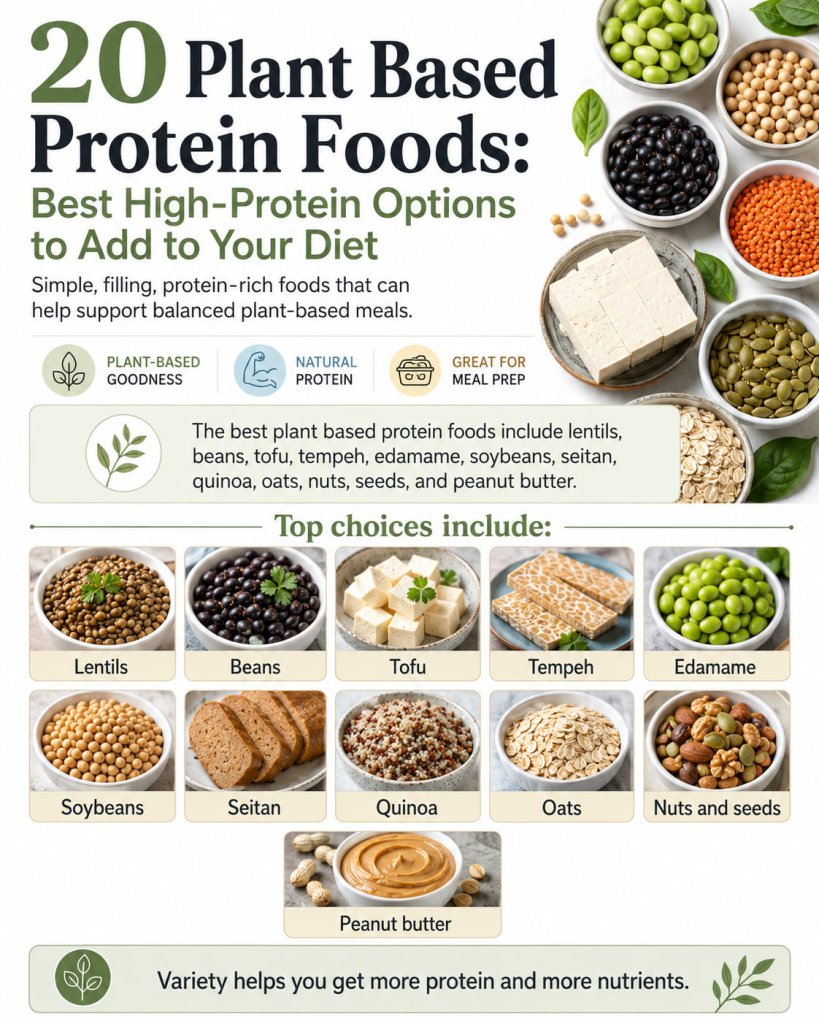
The best plant based protein foods include lentils, beans, tofu, tempeh, edamame, soybeans, seitan, quinoa, oats, nuts, seeds, and peanut butter. These foods can help you build filling meals, support muscle maintenance, and meet daily protein needs without relying only on animal foods.
A healthy plant-based eating pattern works best when it includes variety. The Dietary Guidelines for Americans, 2025–2030 recommend eating a variety of protein foods, including plant-sourced options such as beans, peas, lentils, legumes, nuts, seeds, and soy.
What Counts as Plant Based Protein Foods?
Plant based protein foods are foods from plants that provide meaningful protein. Many also provide fiber, minerals, and slow-digesting carbohydrates.
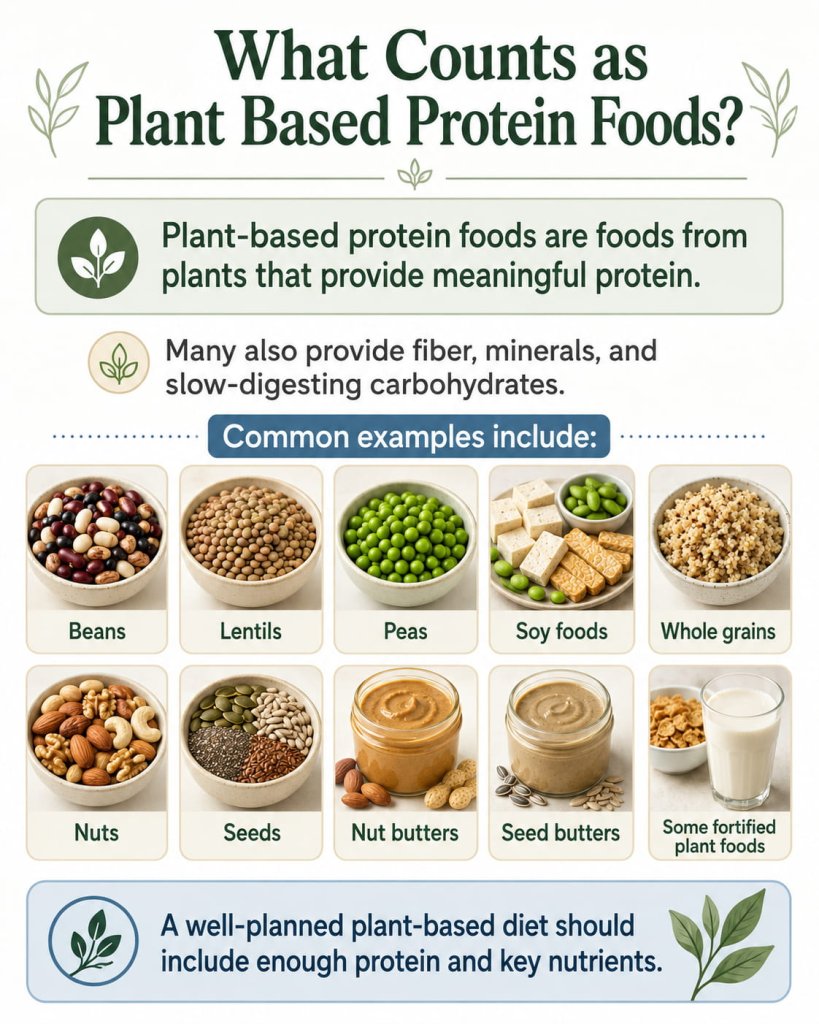
Common examples include:
- Beans
- Lentils
- Peas
- Soy foods
- Whole grains
- Nuts
- Seeds
- Nut butters
- Seed butters
- Some fortified plant foods
The Academy of Nutrition and Dietetics states that well-planned vegetarian and vegan dietary patterns can be nutritionally adequate for adults and may offer long-term health benefits. The key phrase is “well-planned,” because plant-based eaters still need enough protein, calories, vitamin B12, iron, zinc, calcium, vitamin D, and iodine.
20 Plant Based Protein Foods With Protein Per Serving
Protein amounts below are approximate because values can change by brand, cooking method, moisture level, and serving size. Also, compare foods using the same form whenever possible. Cooked beans, lentils, peas, pasta, oats, and quinoa contain more water than dry versions, so dry and cooked weights should not be compared directly.
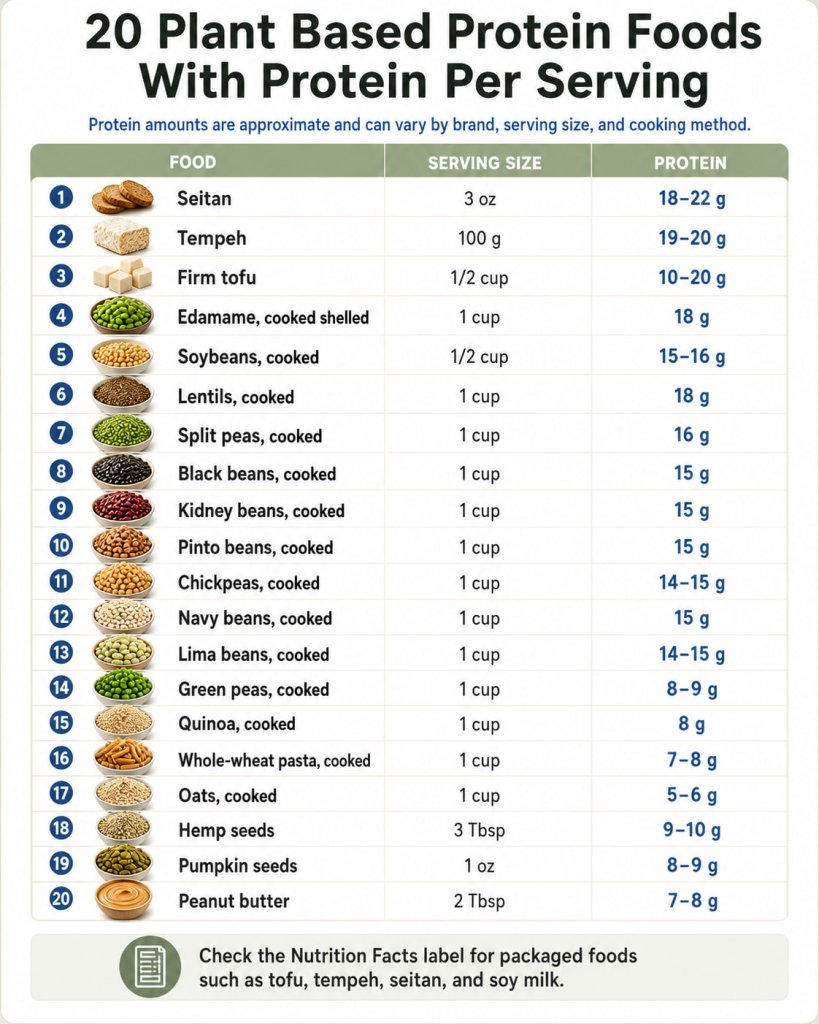
For packaged foods such as tofu, tempeh, seitan, soy milk, and meat alternatives, the Nutrition Facts label is the best source because formulas vary by brand. Use labels for packaged foods and USDA FoodData Central for detailed food composition data.
| # | Plant based protein food | Serving size | Approx. protein |
|---|---|---|---|
| 1 | Seitan | 3 oz | 18–22 g |
| 2 | Tempeh | 100 g | 19–20 g |
| 3 | Firm tofu | 1/2 cup | 10–20 g |
| 4 | Edamame, cooked shelled | 1 cup | 18 g |
| 5 | Soybeans, cooked | 1/2 cup | 15–16 g |
| 6 | Lentils, cooked | 1 cup | 18 g |
| 7 | Split peas, cooked | 1 cup | 16 g |
| 8 | Black beans, cooked | 1 cup | 15 g |
| 9 | Kidney beans, cooked | 1 cup | 15 g |
| 10 | Pinto beans, cooked | 1 cup | 15 g |
| 11 | Chickpeas, cooked | 1 cup | 14–15 g |
| 12 | Navy beans, cooked | 1 cup | 15 g |
| 13 | Lima beans, cooked | 1 cup | 14–15 g |
| 14 | Green peas, cooked | 1 cup | 8–9 g |
| 15 | Quinoa, cooked | 1 cup | 8 g |
| 16 | Whole-wheat pasta, cooked | 1 cup | 7–8 g |
| 17 | Oats, cooked | 1 cup | 5–6 g |
| 18 | Hemp seeds | 3 Tbsp | 9–10 g |
| 19 | Pumpkin seeds | 1 oz | 8–9 g |
| 20 | Peanut butter | 2 Tbsp | 7–8 g |
Best High-Protein Plant Based Protein Foods
1. Seitan
Seitan is one of the highest-protein plant foods. It is made from wheat gluten and has a chewy, meat-like texture.
It works well in stir-fries, sandwiches, wraps, grain bowls, and skewers.
Be careful: Seitan is not gluten-free. Avoid it if you have celiac disease, a wheat allergy, or a medically required gluten-free diet.
2. Tempeh
Tempeh is a fermented soy food with a firm texture and nutty flavor. It usually provides about 19–20 grams of protein per 100 grams.
Use it in stir-fries, tacos, salads, sandwiches, and meal-prep bowls. Because it is firm, it also works well baked, grilled, or pan-seared.
3. Firm Tofu
Tofu is made from soybeans and comes in several textures. Firm and extra-firm tofu are usually better for high-protein meals than silken tofu.
Try tofu in scrambles, curry, noodle bowls, soups, air-fryer cubes, or sheet-pan meals. Pressing tofu before cooking helps remove extra water and improves texture.
4. Edamame
Edamame are young soybeans. One cup of cooked shelled edamame provides about 18 grams of protein.
They are easy to add to salads, rice bowls, soups, or snack plates. Frozen edamame is especially convenient because it cooks quickly.
5. Cooked Soybeans
Mature soybeans are protein-rich and filling. A half-cup serving can provide around 15–16 grams of protein.
Use cooked soybeans in chili, stews, grain bowls, or salads. They can also be blended into spreads or dips.
6. Lentils
Lentils are one of the most practical plant based protein foods because they cook faster than many beans and do not require soaking.
One cup of cooked lentils provides about 18 grams of protein. Lentils also add fiber, iron, folate, and potassium.
Use them in soups, curries, pasta sauce, veggie burgers, tacos, and salads.
7. Split Peas
Split peas are budget-friendly and protein-rich. One cup cooked provides about 16 grams of protein.
They are best known for split pea soup, but they also work in thick stews, dal-style dishes, and savory purees.
8. Black Beans
Black beans provide about 15 grams of protein per cooked cup. They are also rich in fiber, which helps make meals more filling.
Use black beans in burritos, tacos, rice bowls, soups, salads, and veggie burgers.
9. Kidney Beans
Kidney beans are hearty and work well in chili, stews, and salads. One cup cooked provides about 15 grams of protein.
Food safety note: Dried kidney beans must be cooked properly. Do not slow-cook raw or undercooked kidney beans without boiling them first, because raw kidney beans contain a natural toxin that is reduced by proper boiling.
For dried red kidney beans, the FDA recommends soaking beans for at least 5 hours, discarding the soaking water, and boiling them in fresh water for at least 30 minutes to reduce the natural toxin. Canned kidney beans are already cooked, so they are generally ready to heat and eat.
10. Pinto Beans
Pinto beans are creamy, mild, and easy to use in everyday meals. One cooked cup provides about 15 grams of protein.
Try them in burritos, bean bowls, soups, or mashed as a spread for toast and wraps.
11. Chickpeas
Chickpeas, also called garbanzo beans, provide about 14–15 grams of protein per cooked cup.
They are very versatile. Use them in hummus, curry, salads, roasted snacks, soups, grain bowls, or chickpea “tuna” salad.
12. Navy Beans
Navy beans are small white beans with a mild flavor. One cooked cup provides about 15 grams of protein.
They work well in soups, baked bean dishes, casseroles, and creamy blended sauces.
13. Lima Beans
Lima beans provide about 14–15 grams of protein per cooked cup. They also offer fiber and minerals.
Use them in stews, succotash, salads, or simple side dishes with herbs and olive oil.
14. Green Peas
Green peas are lower in protein than lentils or beans, but they still contribute about 8–9 grams per cooked cup.
They are easy to add to pasta, rice dishes, soups, casseroles, and mixed vegetables.
15. Quinoa
Quinoa is often used like a grain, but it is technically a seed. One cooked cup provides about 8 grams of protein.
Quinoa is useful because it pairs well with beans, tofu, tempeh, vegetables, and sauces. It is also naturally gluten-free.
16. Whole-Wheat Pasta
Whole-wheat pasta can provide about 7–8 grams of protein per cooked cup. It is not as protein-dense as soy or beans, but it can help raise the total protein in a meal.
For a higher-protein plate, pair it with lentil sauce, chickpeas, tofu, tempeh, or white beans.
17. Oats
Cooked oats provide around 5–6 grams of protein per cup. They are not a “high-protein” food by themselves, but they can become part of a protein-rich breakfast.
Add soy milk, peanut butter, hemp seeds, pumpkin seeds, or a fortified plant-based yogurt to increase protein.
18. Hemp Seeds
Hemp seeds are small but protein-dense. Three tablespoons provide about 9–10 grams of protein.
Sprinkle them on oatmeal, smoothies, yogurt bowls, salads, soups, or grain bowls.
19. Pumpkin Seeds
Pumpkin seeds provide about 8–9 grams of protein per ounce. They also add crunch, minerals, and healthy fats.
Use them as a snack or add them to salads, oats, trail mix, soups, or roasted vegetables.
20. Peanut Butter
Peanut butter provides about 7–8 grams of protein per 2 tablespoons. It is convenient, affordable, and easy to use.
Spread it on whole-grain toast, add it to oatmeal, blend it into smoothies, or use it in sauces. Because peanut butter is calorie-dense, measure portions if your goal is weight management.
Quick Ranking: Highest-Protein Plant Based Protein Foods
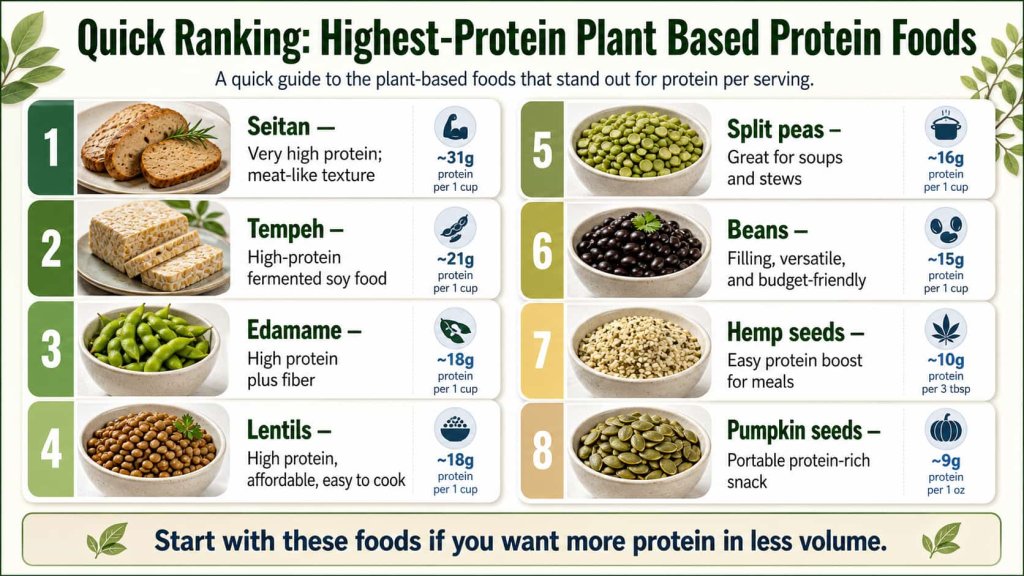
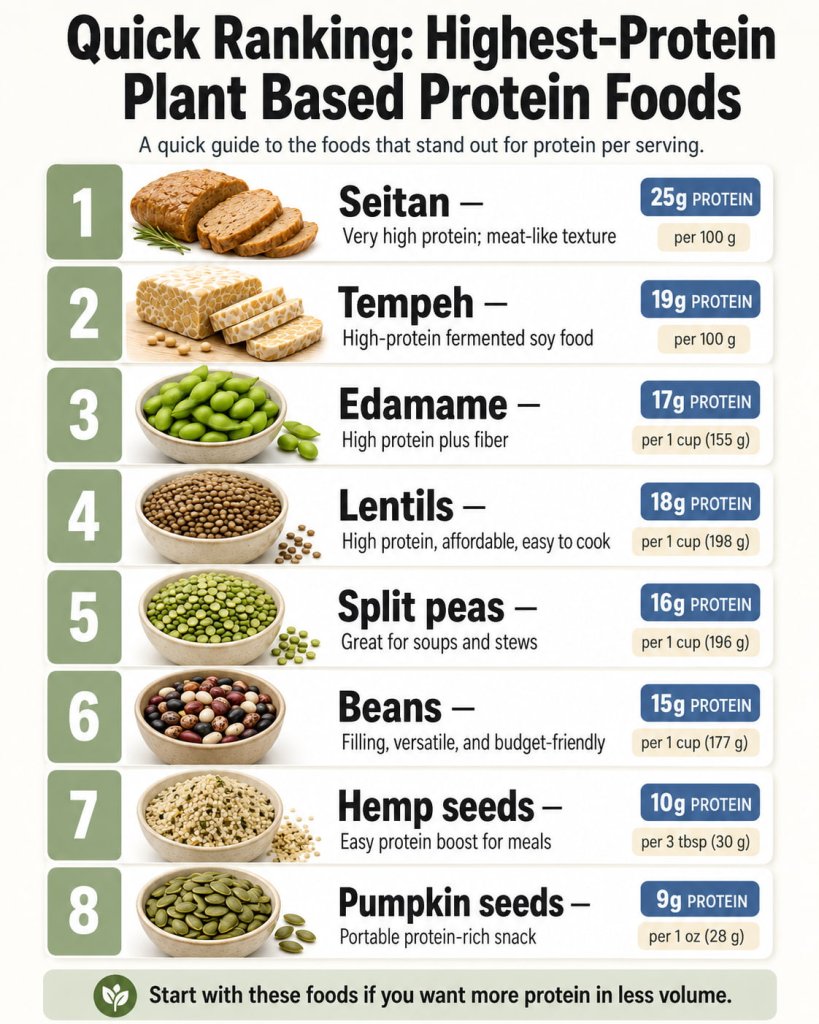
For the most protein per serving, start with these:
| Food | Why it stands out |
|---|---|
| Seitan | Very high protein; meat-like texture |
| Tempeh | High-protein fermented soy food |
| Edamame | High protein plus fiber |
| Lentils | High protein, affordable, easy to cook |
| Split peas | Great for soups and stews |
| Beans | Filling, versatile, and budget-friendly |
| Hemp seeds | Easy protein boost for meals |
| Pumpkin seeds | Portable protein-rich snack |
Complete vs. Incomplete Plant Protein
Protein is made from amino acids. Some foods are called “complete proteins” because they contain all essential amino acids in useful amounts. Soy foods and quinoa are common plant-based examples.
Many plant foods are lower in one or more essential amino acids, but that does not mean they are bad protein sources. You do not need to perfectly combine foods at every meal. The Harvard T.H. Chan School of Public Health explains that eating a variety of protein-containing foods helps cover amino acid needs over the day.
Good combinations include:
- Beans with rice
- Lentils with whole-grain bread
- Hummus with whole-wheat pita
- Peanut butter on whole-grain toast
- Tofu with quinoa
- Chickpeas with whole-wheat pasta
- Black beans with corn tortillas
Plant proteins can be very effective, but some are less concentrated than animal proteins. That means active adults, older adults, and people trying to build muscle may need to be more intentional with portions. Soy foods, seitan, lentils, beans, peas, and protein-rich seeds are usually more useful for meeting higher protein goals than relying mostly on vegetables, fruit, or low-protein grains.
How Much Plant-Based Protein Do You Need?
Protein needs vary by body size, age, activity level, health status, and goals.
For label-reading context, the FDA lists the Daily Value for protein as 50 grams per day based on a 2,000-calorie diet. This is a general label reference, not a personalized target.
The Dietary Guidelines for Americans, 2025–2030 list protein serving goals of 1.2–1.6 grams per kilogram of body weight per day, adjusted for individual calorie needs.
A practical way to use this:
| Body weight | 1.2 g/kg | 1.6 g/kg |
|---|---|---|
| 120 lb | about 65 g/day | about 87 g/day |
| 150 lb | about 82 g/day | about 109 g/day |
| 180 lb | about 98 g/day | about 131 g/day |
| 200 lb | about 109 g/day | about 145 g/day |
People who are older, very active, strength training, pregnant, breastfeeding, recovering from illness, or managing a medical condition may need individualized guidance.
How to Build a High-Protein Plant-Based Meal
A balanced plant-based meal is easier when you use a simple formula:
Protein food + fiber-rich carb + vegetables or fruit + healthy fat + flavor
Easy meal examples
| Meal | High-protein plant-based idea |
|---|---|
| Breakfast | Oats cooked with soy milk, topped with hemp seeds and peanut butter |
| Lunch | Lentil soup with whole-grain bread and salad |
| Dinner | Tofu stir-fry with quinoa and vegetables |
| Snack | Edamame with fruit |
| Meal prep | Black bean burrito bowls with brown rice, salsa, greens, and avocado |
| Quick meal | Whole-wheat pasta with chickpeas and tomato sauce |
| High-protein bowl | Tempeh, roasted vegetables, quinoa, pumpkin seeds, and tahini sauce |
Simple 25-Gram Plant-Based Protein Meal Ideas
If you are trying to build a more protein-focused meal, use combinations instead of relying on one food.
| Meal idea | Approx. protein |
|---|---|
| 1 cup lentils + 1 cup cooked quinoa | about 26 g |
| 1 cup edamame + 1 cup cooked brown rice | about 23–25 g |
| 1/2 block firm tofu + vegetables + 1 cup whole-wheat pasta | about 25–35 g, depending on the tofu |
| 3 oz seitan + vegetables + potatoes or rice | about 20–25 g |
| Oats made with soy milk + 3 Tbsp hemp seeds + peanut butter | about 20–30 g |
These examples are flexible. The easiest method is to choose one main protein, then add a smaller protein booster such as hemp seeds, pumpkin seeds, soy milk, chickpeas, or peanut butter.
Plant-Based Protein for Muscle Building
Plant based protein foods can support muscle building when total protein, total calories, and resistance training are consistent.
Focus on:
- Eating protein at each meal
- Including higher-protein foods like tofu, tempeh, edamame, lentils, beans, and seitan
- Getting enough total calories
- Strength training consistently
- Spreading protein across the day
- Sleeping enough for recovery
For example, a plant-based muscle-supporting day might include tofu scramble at breakfast, lentil soup at lunch, edamame as a snack, and tempeh with quinoa at dinner.
Plant-Based Protein for Weight Loss
Plant based protein foods can also support weight loss because many options contain both protein and fiber. Beans, lentils, peas, and whole grains can make meals more filling without requiring extreme restriction.
Good options for weight-conscious meals include:
- Lentils
- Black beans
- Chickpeas
- Edamame
- Tofu
- Tempeh
- Green peas
- Quinoa
- Oats
- Pumpkin seeds in measured portions
Nuts, seeds, peanut butter, tahini, and other spreads are nutritious, but they are calorie-dense. Use them as measured add-ons rather than the main protein source if your main goal is reducing calories.
Nutrients to Watch on a Plant-Based Diet
A plant-based diet can be healthy, but it should not rely only on vegetables and grains. It needs enough protein and key micronutrients.
Vitamin B12
Vitamin B12 deserves special attention on vegan diets. The NIH Office of Dietary Supplements states that vitamin B12 is not naturally present in plant foods, though some foods such as fortified breakfast cereals and nutritional yeast may contain added B12.
If you eat fully vegan, use reliable B12-fortified foods or ask a healthcare professional about supplementation.
Iron
Beans, lentils, tofu, seeds, nuts, and some grains provide nonheme iron. The NIH Office of Dietary Supplements explains that heme iron has higher bioavailability than nonheme iron, and that vitamin C can affect nonheme iron absorption.
To support iron absorption, pair plant iron foods with vitamin C-rich foods such as:
- Bell peppers
- Citrus
- Strawberries
- Tomatoes
- Broccoli
- Kiwi
- Potatoes
Calcium, Vitamin D, Zinc, and Iodine
Vegetarian and vegan eaters may also need to pay attention to calcium, vitamin D, zinc, iodine, and choline. The Dietary Guidelines specifically note that vegetarian and vegan diets can have nutrient gaps and recommend monitoring nutrient status when needed.
Fortified soy milk, calcium-set tofu, legumes, nuts, seeds, whole grains, iodized salt, and appropriate supplements can help depending on the person’s diet.
Omega-3 Fats
Plant-based eaters should also think about omega-3 fats. Chia seeds, ground flaxseed, hemp seeds, walnuts, and canola oil provide ALA, a plant form of omega-3. However, the body converts ALA into EPA and DHA only in limited amounts, so some vegan eaters choose algae-based EPA or DHA supplements.
If you are pregnant, breastfeeding, taking blood-thinning medicine, or managing a medical condition, ask a healthcare professional before using omega-3 supplements. The NIH Office of Dietary Supplements provides detailed guidance on omega-3 sources, forms, and safety.
Who Should Be Careful With Plant Based Protein Foods?
Most healthy adults can include plant based protein foods safely. Still, some people should be more careful.
Talk with a healthcare professional or registered dietitian if you:
- Have kidney disease or a medically restricted protein intake
- Are pregnant or breastfeeding
- Are feeding a fully vegan diet to a child
- Have a history of iron, B12, vitamin D, or calcium deficiency
- Have celiac disease or need a gluten-free diet
- Have soy, peanut, tree nut, or seed allergies
- Have digestive conditions that make high-fiber foods difficult
- Are making a major diet change while managing diabetes or another chronic condition
The Dietary Guidelines advise people with chronic disease to work with a healthcare professional to adapt nutrition guidance to their personal needs.
Tips to Eat More Plant Based Protein Foods
Start with one protein anchor per meal
Choose one main protein food first, then build the rest of the meal around it.
Examples:
- Lentils
- Tofu
- Tempeh
- Beans
- Edamame
- Chickpeas
- Seitan
- Soybeans
Use canned and frozen foods
Canned beans, canned chickpeas, frozen edamame, frozen peas, and shelf-stable tofu can make plant-based protein easier.
Choose no-salt-added or lower-sodium canned beans when possible. Rinsing canned beans can also reduce sodium.
Add small protein boosters
Small additions can raise the total protein in a meal.
Try:
- Hemp seeds on oats
- Pumpkin seeds on salads
- Peanut butter in smoothies
- Soy milk in oatmeal
- Chickpeas in pasta
- Edamame in rice bowls
- White beans blended into soup
Mix protein sources across the day
A day of plant-based eating may look like this:
- Breakfast: Oats with soy milk, hemp seeds, and berries
- Lunch: Lentil soup with whole-grain bread
- Snack: Edamame or hummus with vegetables
- Dinner: Tofu stir-fry with quinoa
- Optional snack: Peanut butter on whole-grain toast
That variety helps cover protein, fiber, amino acids, and micronutrients.
FAQs About Plant Based Protein Foods
What plant-based food has the most protein?
Seitan is one of the highest-protein plant-based foods, often providing about 18–22 grams per 3-ounce serving. Soy foods such as tempeh, tofu, edamame, and soybeans are also among the strongest options.
Can you get enough protein without eating meat?
Yes. You can get enough protein without meat by eating enough legumes, soy foods, whole grains, nuts, seeds, and other protein-containing plant foods. A well-planned vegetarian or vegan diet can be nutritionally adequate for adults.
Are beans a good source of protein?
Yes. Beans usually provide about 14–15 grams of protein per cooked cup, depending on the type. They also provide fiber, carbohydrates, iron, potassium, and other nutrients.
Is tofu or tempeh higher in protein?
Tempeh is usually higher in protein than tofu by weight because it is denser and less watery. However, protein in tofu varies widely by firmness and brand, so check the label.
Do plant proteins build muscle?
Yes, plant proteins can support muscle growth when you eat enough total protein and calories and follow a progressive strength-training plan. Soy foods, lentils, beans, seitan, and higher-protein grains can all contribute.
Do I need to combine rice and beans at every meal?
No. You do not need to combine specific plant proteins at every meal. Eating a variety of protein-containing plant foods across the day can help cover essential amino acids.
Is peanut butter a high-protein food?
Peanut butter contains protein, but it is also high in fat and calories. It is best used as a protein-supporting food, not the only protein source in a meal.
What is the best plant-based protein for beginners?
Lentils, black beans, chickpeas, tofu, edamame, and peanut butter are beginner-friendly because they are easy to find and simple to use.
Do you need plant-based protein powder?
No, most people do not need plant-based protein powder if they can meet their needs with foods such as tofu, tempeh, lentils, beans, edamame, soy milk, nuts, and seeds.
Protein powder can be convenient for athletes, busy schedules, or people with higher protein goals, but it should not replace a balanced diet. Choose products with simple ingredients, check for added sugar, and look for third-party testing if you use supplements regularly.
Conclusion
Plant based protein foods can be simple, affordable, filling, and nutritious. Start with the highest-protein staples like tofu, tempeh, lentils, beans, edamame, seitan, hemp seeds, and pumpkin seeds. Then build balanced meals with whole grains, vegetables, fruit, and healthy fats.
For the best results, focus on variety instead of one “perfect” food. A well-planned plant-based diet can help you meet protein needs while also adding fiber, minerals, and satisfying meals to your day.
References
- USDA FoodData Central — FoodData Central
- Academy of Nutrition and Dietetics — Vegetarian Dietary Patterns for Adults
- Harvard T.H. Chan School of Public Health — Protein
- NIH Office of Dietary Supplements — Iron Fact Sheet for Health Professionals
- NIH Office of Dietary Supplements — Omega-3 Fatty Acids Fact Sheet for Health Professionals