
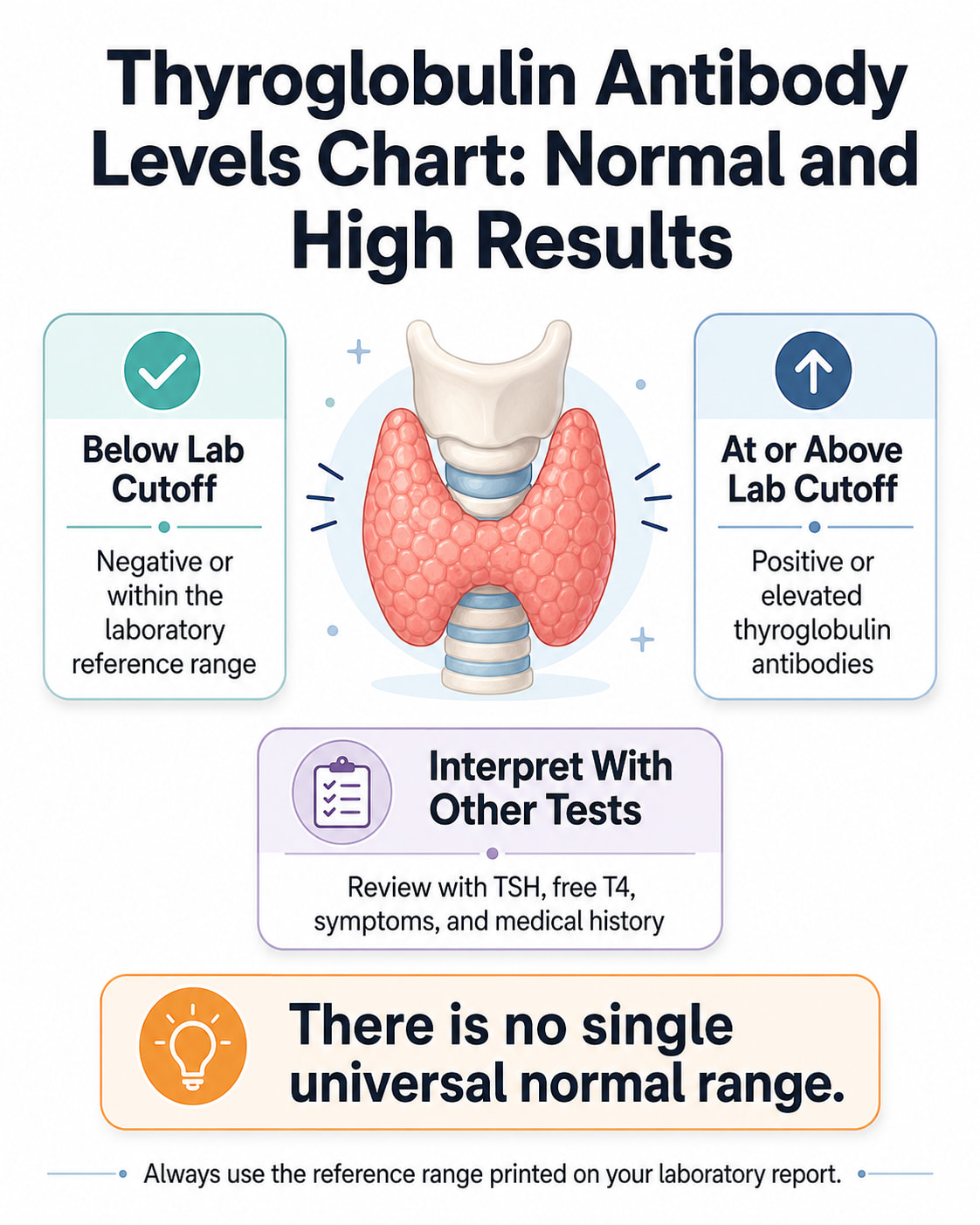
A normal thyroglobulin antibody level is a result below the cutoff shown on your laboratory report, while a high result is at or above that cutoff. There is no universal normal range because laboratories use different testing methods. Common U.S. cutoffs include 2 IU/mL or lower and less than 4 IU/mL.
A high thyroglobulin antibody result may support an autoimmune thyroid condition such as Hashimoto’s thyroiditis. However, it does not show whether your thyroid is currently underactive or overactive. Your TSH, free T4, symptoms, medical history, and other test results provide that information.
Thyroglobulin Antibody Levels Chart
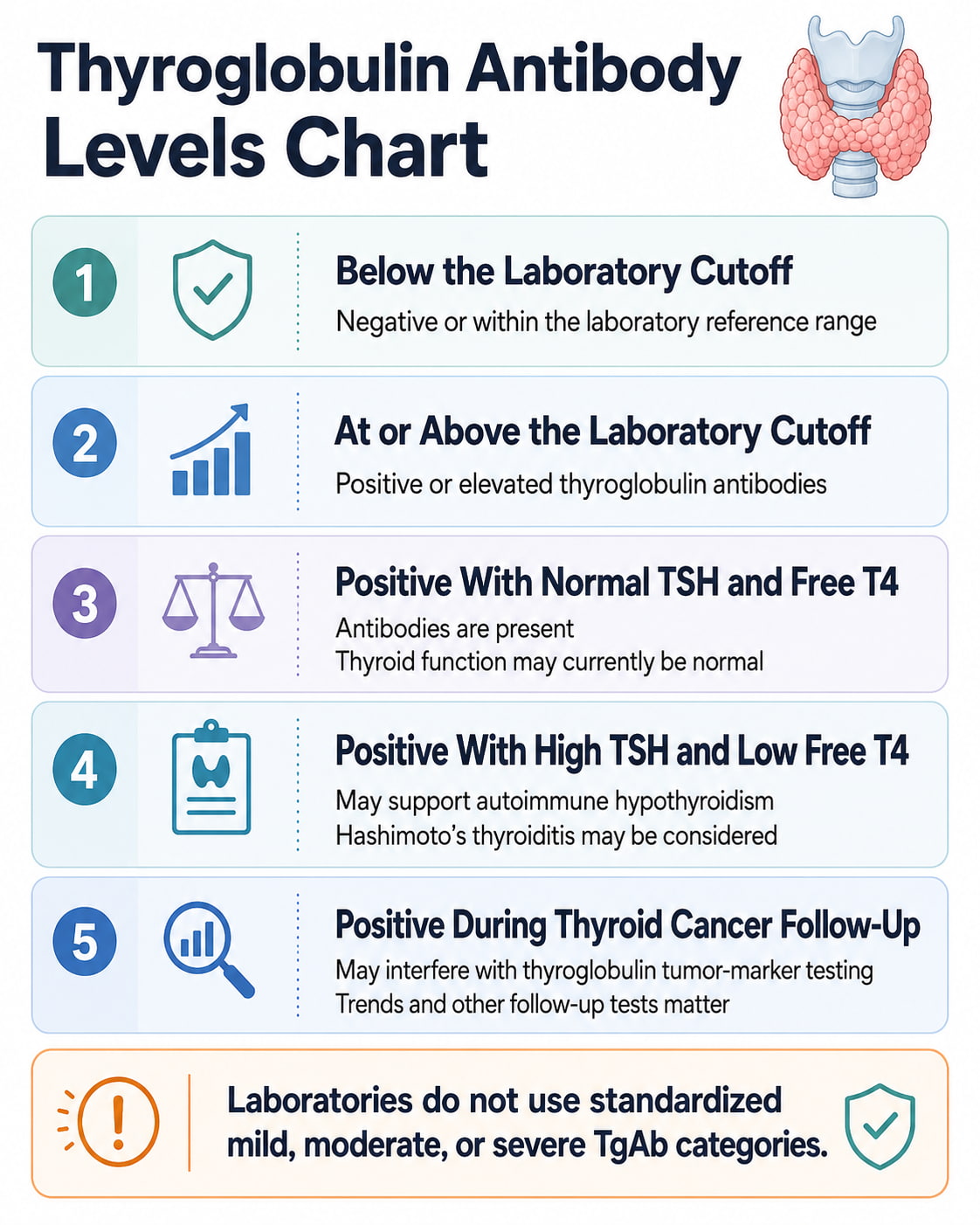
The following chart provides a practical way to understand thyroglobulin antibody results. Always compare your number with the reference range printed beside it on your own laboratory report.
| TgAb result | General interpretation |
|---|---|
| Below the laboratory cutoff | Negative or within the laboratory reference range |
| At or above the laboratory cutoff | Positive or elevated thyroglobulin antibodies |
| Positive with normal TSH and free T4 | Antibodies are present, but thyroid function may currently be normal |
| Positive with high TSH and low free T4 | May support autoimmune hypothyroidism, commonly Hashimoto’s thyroiditis |
| Positive during thyroid cancer follow-up | May interfere with thyroglobulin tumor-marker testing |
| Rising or falling results over time | Must be interpreted using the same laboratory method and the clinical reason for testing |
Laboratories do not use standardized “mild,” “moderate,” or “severe” TgAb categories. A result should usually be described as negative or positive according to the reporting laboratory’s cutoff.
Common Thyroglobulin Antibody Reference Ranges
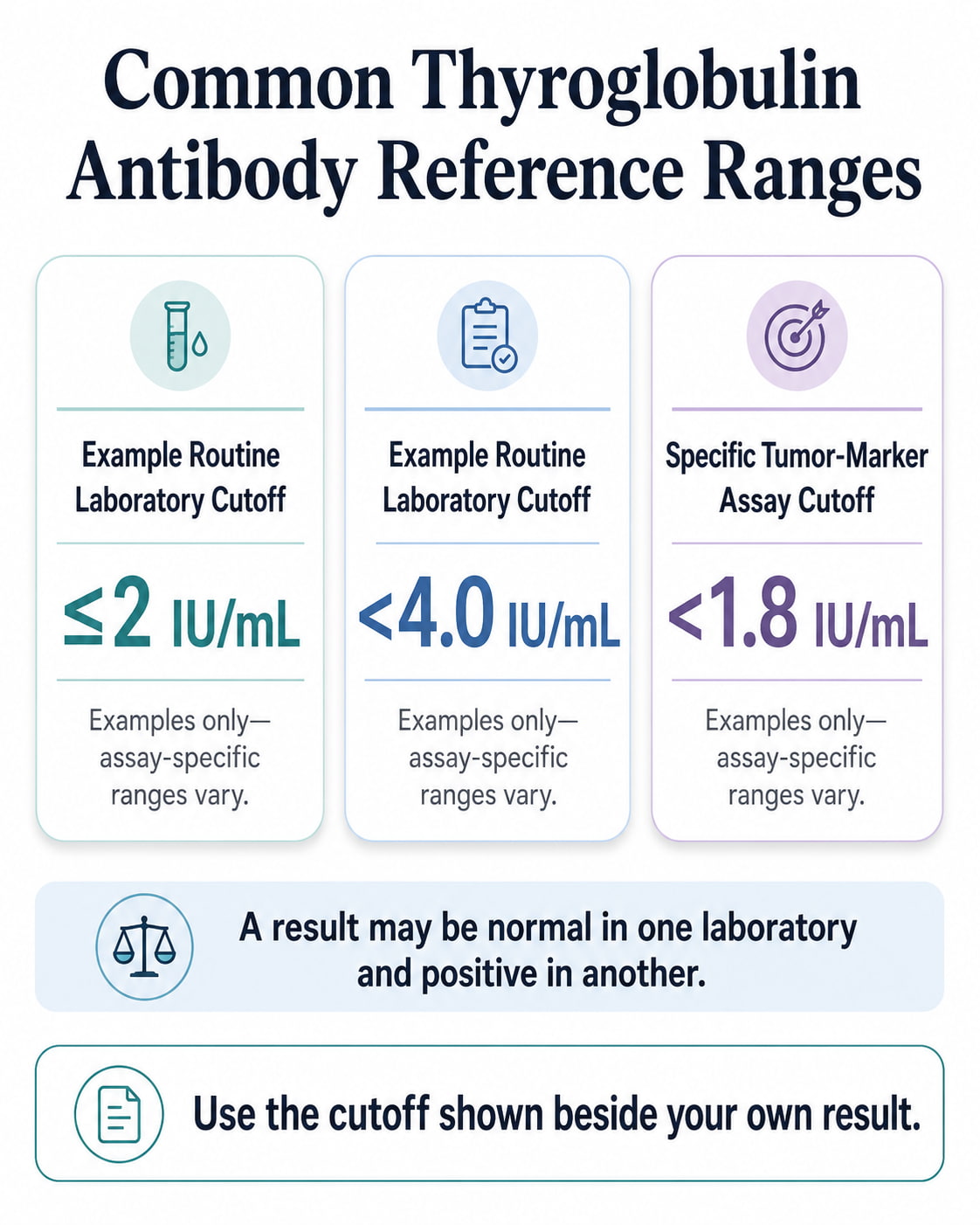
Different laboratories may report different normal ranges even when results use the same IU/mL unit.
| Laboratory or testing context | Reference value |
|---|---|
| Quest Diagnostics thyroglobulin antibody test | ≤2 IU/mL |
| Mayo Clinic Laboratories stand-alone TgAb test | <4.0 IU/mL |
| Labcorp adult reference population | Upper reference limit reported below 4 IU/mL |
| Mayo thyroglobulin tumor-marker assay | <1.8 IU/mL considered unlikely to cause significant assay interference |
The 1.8 IU/mL cutoff is used for a specific thyroglobulin tumor-marker testing method. It should not automatically replace the normal range shown on a routine autoimmune thyroid antibody test. Quest Diagnostics also advises patients and clinicians to use the range printed on the individual laboratory report.
What Are Thyroglobulin Antibodies?
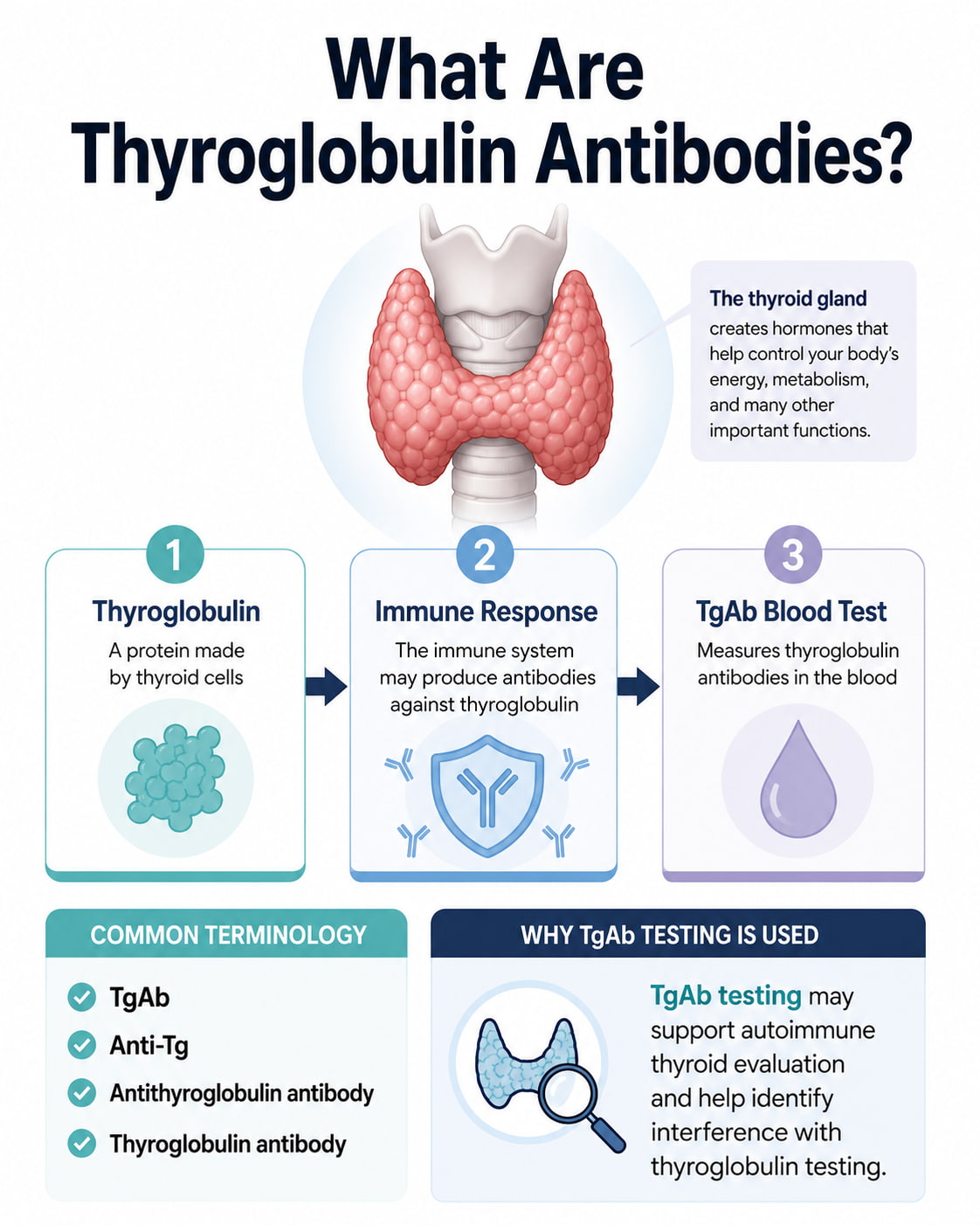
Thyroglobulin is a protein made by thyroid cells and used in the production and storage of thyroid hormones. Thyroglobulin antibodies, abbreviated TgAb, are immune proteins that react against thyroglobulin.
The test may also appear on a laboratory report as:
- Anti-thyroglobulin antibody
- Antithyroglobulin antibody
- Anti-Tg
- Tg antibody
- TgAb
TgAb is primarily used to help evaluate autoimmune thyroid disease. It is also measured alongside thyroglobulin when monitoring certain people who have been treated for differentiated thyroid cancer.
What Is a Normal Thyroglobulin Antibody Level?
A normal thyroglobulin antibody level is one that falls below the laboratory’s positive cutoff.
For example:
- A result of 1 IU/mL would be within the Quest Diagnostics reference range of 2 IU/mL or lower.
- A result of 3 IU/mL would be within Mayo Clinic Laboratories’ stand-alone reference range of less than 4 IU/mL.
- A result of 3 IU/mL could still be considered positive in a laboratory using a cutoff below 2 IU/mL.
This is why interpreting TgAb using a range copied from another laboratory can be misleading. The assay name, testing method, reference interval, and reason for ordering the test all matter.
What Does a High Thyroglobulin Antibody Result Mean?
A high or positive TgAb result means your immune system has produced antibodies that recognize thyroglobulin. The result may support an autoimmune thyroid condition, but it is not a diagnosis by itself.
Conditions associated with positive thyroglobulin antibodies may include:
- Hashimoto’s thyroiditis
- Graves’ disease
- Postpartum thyroiditis
- Subacute thyroiditis
- Other forms of thyroid inflammation
- Certain non-thyroid autoimmune conditions
- Previous or current differentiated thyroid cancer monitoring
Some people can have detectable thyroid antibodies without symptoms or abnormal thyroid hormone levels. Results therefore need to be considered with thyroid function tests and clinical findings.
Does High TgAb Always Mean Hashimoto’s Disease?
No. Hashimoto’s thyroiditis is one of the most common reasons for positive thyroid antibodies, but TgAb can occur in other conditions.
Hashimoto’s becomes more likely when a positive antibody result appears with findings such as:
- Elevated TSH
- Low free T4
- Symptoms of hypothyroidism
- An enlarged or firm thyroid
- Positive thyroid peroxidase antibodies
- Ultrasound findings consistent with autoimmune thyroiditis
The American Thyroid Association’s Hashimoto’s thyroiditis guidance explains that thyroid antibodies may be present before thyroid hormone levels become abnormal.
How to Interpret TgAb With TSH and Free T4
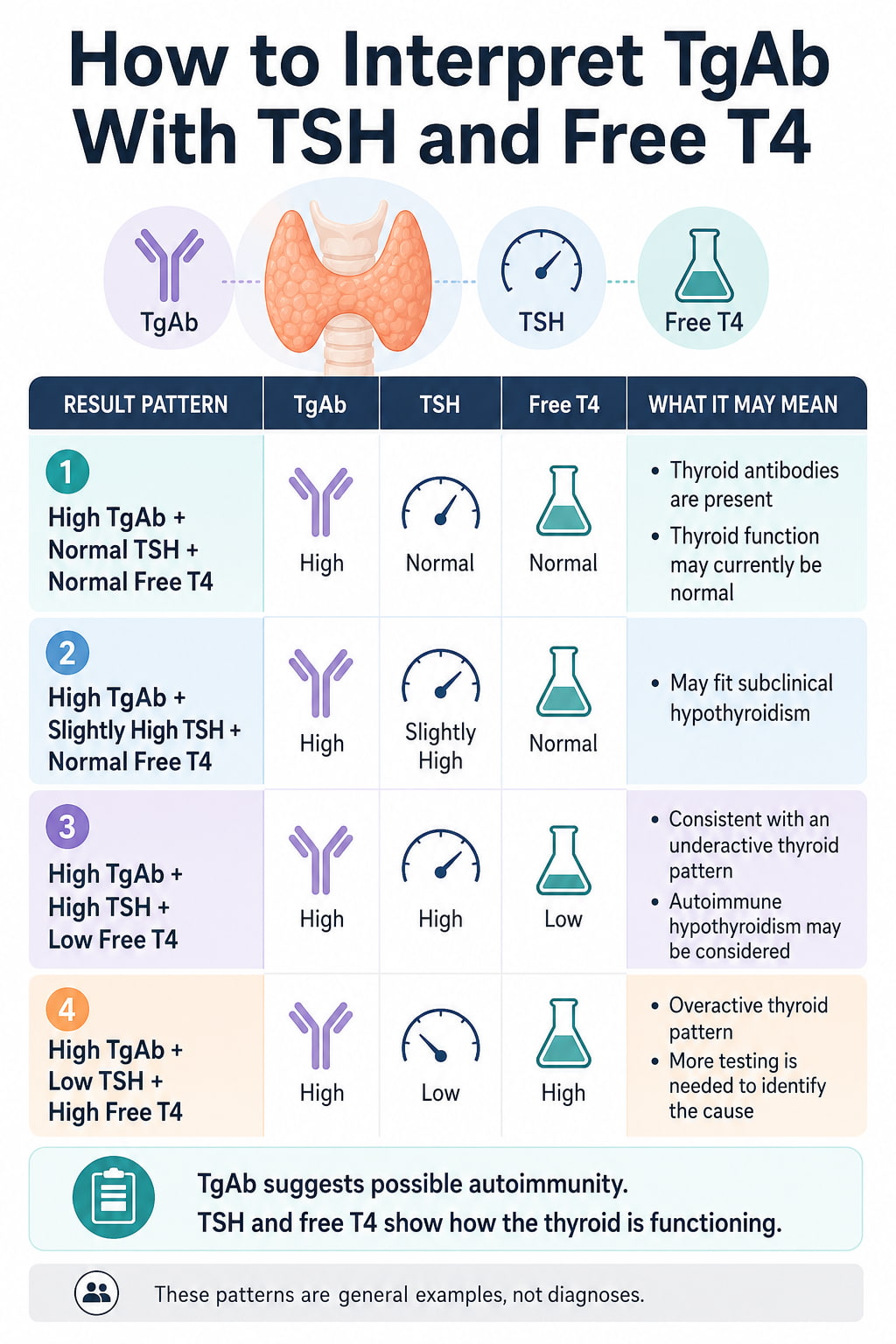
A thyroglobulin antibody test identifies possible autoimmunity. It does not directly measure thyroid hormone production.
The American Thyroid Association’s thyroid function guide identifies TSH as the preferred initial test for evaluating thyroid function. Free T4 helps determine whether the thyroid is producing an appropriate amount of hormone.
| TgAb | TSH | Free T4 | Possible interpretation |
|---|---|---|---|
| High | Normal | Normal | Thyroid antibodies are present, but thyroid function is currently within range |
| High | Slightly high | Normal | May fit subclinical hypothyroidism |
| High | High | Low | Consistent with overt primary hypothyroidism; Hashimoto’s may be the cause |
| High | Low | High | Hyperthyroid pattern; further testing is needed to identify the cause |
| High | Low | Normal | May fit subclinical hyperthyroidism or another cause of low TSH |
These patterns are general examples, not diagnoses. Pregnancy, medicines, acute illness, pituitary disorders, laboratory interference, and individual reference ranges can affect interpretation.
High TgAb With Normal TSH
High TgAb with normal TSH and free T4 means thyroid antibodies are detectable, but the thyroid may still be producing a normal amount of hormone.
Thyroid hormone medication is generally not prescribed solely to lower an antibody number when thyroid function is normal. The American Thyroid Association advises monitoring thyroid function—particularly TSH—rather than repeatedly measuring antibody levels in routine Hashimoto’s follow-up.
High TgAb With High TSH
A high TSH usually indicates that the thyroid is not producing enough hormone. If free T4 is also low, the pattern supports overt primary hypothyroidism.
Positive TgAb may suggest an autoimmune cause, but TPO antibodies are generally more sensitive for Hashimoto’s thyroiditis. A clinician may also consider symptoms, examination findings, family history, medicines, and previous thyroid results.
High TgAb With Low TSH
A low TSH may occur when thyroid hormone levels are too high. TgAb can be present in Graves’ disease or thyroiditis, but it cannot reliably distinguish between them.
Thyrotropin receptor antibodies or thyroid-stimulating immunoglobulin are more specific tests when Graves’ disease is suspected.
Does a Higher TgAb Number Mean More Severe Thyroid Disease?
Not necessarily. A higher TgAb result does not directly tell you:
- How severe your symptoms should be
- How much thyroid damage has occurred
- Whether your thyroid is underactive
- Whether medication is needed
- How quickly the condition may progress
A person with a very high antibody result may have normal TSH and free T4, while someone with a lower positive result may have hypothyroidism. Thyroid function tests are more useful than the antibody number for determining how well the gland is currently working.
Assay differences are another reason not to compare the size of TgAb results too closely. Mayo Clinic Laboratories notes that results from different methods can vary significantly, and a person may test positive with one method but negative with another.
TgAb Versus TPO Antibodies
TgAb and TPOAb are both thyroid autoantibodies, but they target different proteins.
| Test | Full name | Main use |
|---|---|---|
| TgAb | Thyroglobulin antibody | Supports evaluation of autoimmune thyroid disease and detects possible interference with thyroglobulin testing |
| TPOAb | Thyroid peroxidase antibody | Commonly used to support the diagnosis of Hashimoto’s thyroiditis |
| TRAb | TSH receptor antibody | Helps evaluate Graves’ disease |
| TSI | Thyroid-stimulating immunoglobulin | Detects stimulating antibodies associated with Graves’ disease |
TPO antibodies have higher sensitivity than TgAb for autoimmune thyroid disease. According to Mayo Clinic Laboratories, TgAb testing may be most useful when TPO antibodies are negative but clinical suspicion remains high.
The ARUP Consult autoimmune thyroiditis guide also emphasizes that antibody tests identify the likely cause of thyroid disease. They are not normally used to monitor treatment response or disease progression.
Thyroglobulin Antibodies and Thyroid Cancer Monitoring
A positive TgAb result does not mean you have thyroid cancer.
TgAb is important during follow-up after treatment for papillary or follicular thyroid cancer because the antibodies can interfere with the separate thyroglobulin test. In some immunoassays, TgAb may make thyroglobulin appear lower than it actually is.
Thyroglobulin and Thyroglobulin Antibody Are Different Tests
- Thyroglobulin: A protein produced by normal thyroid tissue and many differentiated thyroid cancer cells.
- Thyroglobulin antibody: An antibody that may bind to thyroglobulin and interfere with its measurement.
The MedlinePlus thyroglobulin guide explains that thyroglobulin is mainly used as a tumor marker after thyroid cancer treatment. It is not used alone to diagnose thyroid cancer.
Why Trends Matter After Thyroid Cancer Treatment
During thyroid cancer follow-up, clinicians may evaluate:
- Thyroglobulin levels
- TgAb levels and their direction over time
- TSH levels
- Neck ultrasound findings
- Previous surgery and radioactive iodine treatment
- Other imaging or testing when appropriate
A falling or stable antibody trend may be more reassuring than a consistently rising trend, but antibodies alone cannot confirm whether cancer is present or absent. The result must be interpreted by the treating specialist with the rest of the follow-up information.
Whenever possible, repeat testing should use the same laboratory and method. Changing assays may create an apparent increase or decrease that reflects a testing difference rather than a true biological change.
Can Thyroglobulin Antibody Levels Change Over Time?
Yes. TgAb levels may rise, fall, remain stable, or become undetectable.
In routine autoimmune thyroid disease, repeatedly checking TgAb usually does not provide enough useful information to guide treatment. TSH and free T4 are more important for determining whether thyroid function has changed.
Repeated TgAb testing has a more specific role during thyroid cancer follow-up because antibody trends may help clinicians interpret thyroglobulin results.
How to Prepare for a TgAb Blood Test
A TgAb test requires a blood sample. Fasting is not usually required unless other tests ordered at the same time require it.
Biotin supplements can interfere with certain laboratory assays. Instructions vary:
- Mayo Clinic Laboratories advises avoiding biotin-containing supplements for 12 hours before its stand-alone TgAb test.
- Labcorp advises stopping high-dose biotin at least 72 hours before collection for its thyroid antibody panel.
- Quest lists no specific preparation for its stand-alone TgAb assay.
Follow the instructions from your own laboratory or healthcare professional. Tell them about multivitamins, hair and nail supplements, medicines, and other products you take. Do not stop prescribed medication unless the prescribing clinician tells you to do so.
When to Discuss the Result With a Doctor
Discuss the result with a healthcare professional when:
- TgAb is above your laboratory’s reference range
- TSH or free T4 is also abnormal
- You have persistent symptoms of an underactive or overactive thyroid
- You are pregnant or planning pregnancy
- You notice neck swelling, pressure, or difficulty swallowing
- The result is part of thyroid cancer follow-up
- Your TgAb result changed after switching laboratories
- The result does not fit your symptoms or other thyroid tests
Seek urgent medical care for severe symptoms such as chest pain, fainting, significant breathing difficulty, confusion, or a very rapid or irregular heartbeat.
Frequently Asked Questions
What is considered a normal thyroglobulin antibody level?
A normal result is below the cutoff printed on your report. Common cutoffs include 2 IU/mL or lower and less than 4 IU/mL, but the correct range depends on the laboratory method.
Is a thyroglobulin antibody result above 4 IU/mL high?
It would be considered elevated by a laboratory using less than 4 IU/mL as its reference range. However, another laboratory may use a lower cutoff. Always use the range shown on the report.
Can thyroglobulin antibodies be high when TSH is normal?
Yes. Thyroid antibodies may appear before thyroid hormone production becomes abnormal. When TSH and free T4 are normal, thyroid hormone treatment is generally not required solely because the antibody test is positive.
Does high TgAb always mean Hashimoto’s thyroiditis?
No. High TgAb may occur with Hashimoto’s thyroiditis, Graves’ disease, postpartum thyroiditis, subacute thyroiditis, and some other conditions. Diagnosis requires the complete clinical picture.
Do high thyroglobulin antibodies mean thyroid cancer?
No. TgAb is not a thyroid cancer diagnosis. Its main importance in cancer care is that it may interfere with the thyroglobulin tumor-marker test.
Should thyroglobulin antibodies be checked regularly?
Routine repeated testing is usually unnecessary for Hashimoto’s thyroiditis because antibody levels do not reliably measure thyroid function or treatment response. Regular TgAb testing may be appropriate during differentiated thyroid cancer follow-up.
Can biotin affect a thyroglobulin antibody test?
Yes, biotin may interfere with some assay methods. Follow the preparation instructions provided by the laboratory or clinician because recommended waiting periods differ.
Conclusion
A thyroglobulin antibody levels chart can help you identify whether your result is below or above the reporting laboratory’s cutoff. However, the antibody number cannot show thyroid function, disease severity, or the need for treatment by itself.
Focus on the reference range printed on your report and review TgAb together with TSH, free T4, symptoms, and medical history. For thyroid cancer follow-up, use the same laboratory method whenever possible and have antibody trends interpreted by your endocrinologist.
This content is for informational purposes only and not medical advice.