
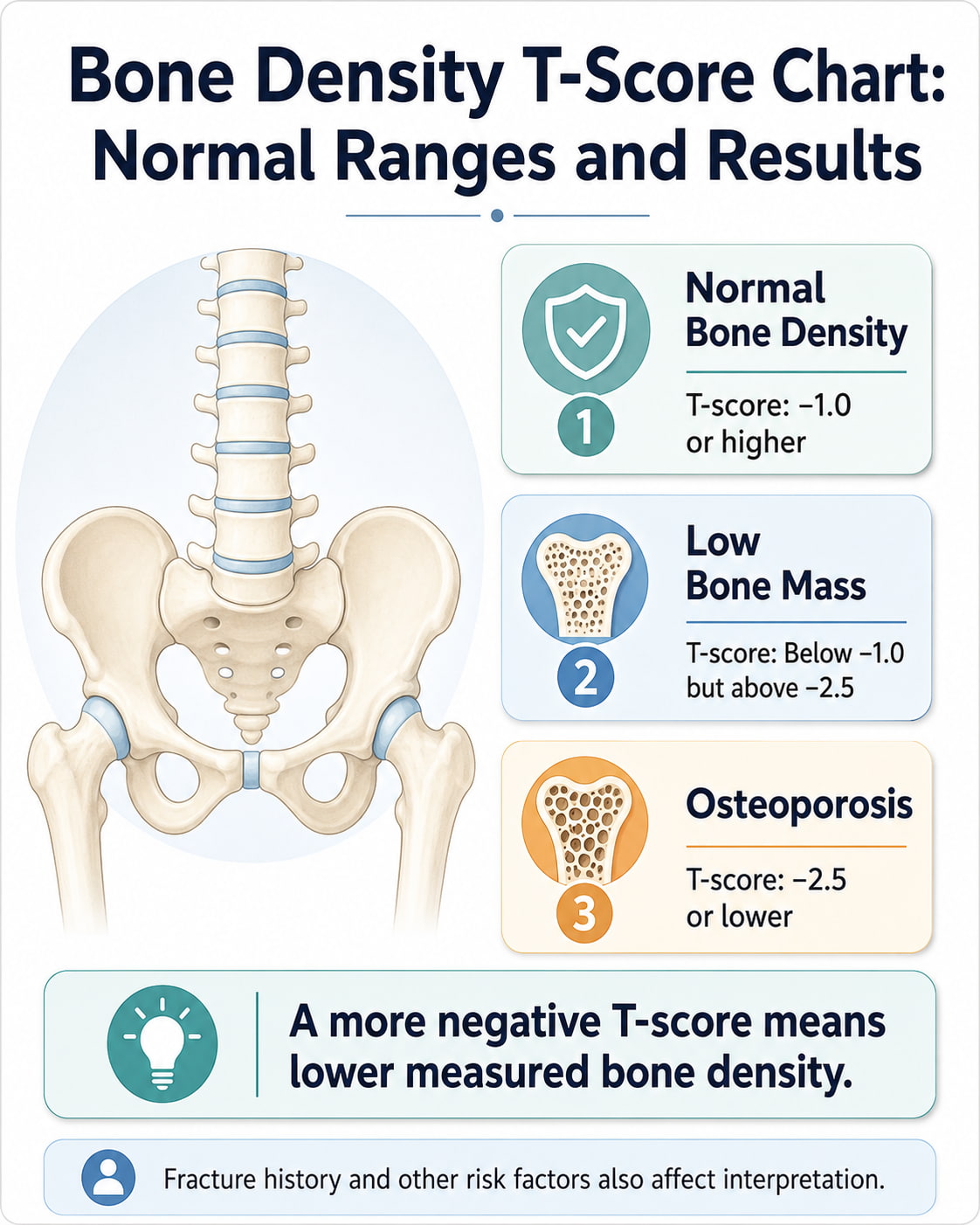
A normal bone density T-score is −1.0 or higher, a score below −1.0 but above −2.5 indicates low bone mass, and a score of −2.5 or lower is in the osteoporosis range. However, your T-score is only one part of the result. Age, fracture history, medications, fall risk, and the bone measured can all affect what your result means.
This bone density T-score chart explains the standard ranges, how to read a DXA scan, when a Z-score is more appropriate, and what questions to discuss with your healthcare provider.
Bone Density T-Score Chart
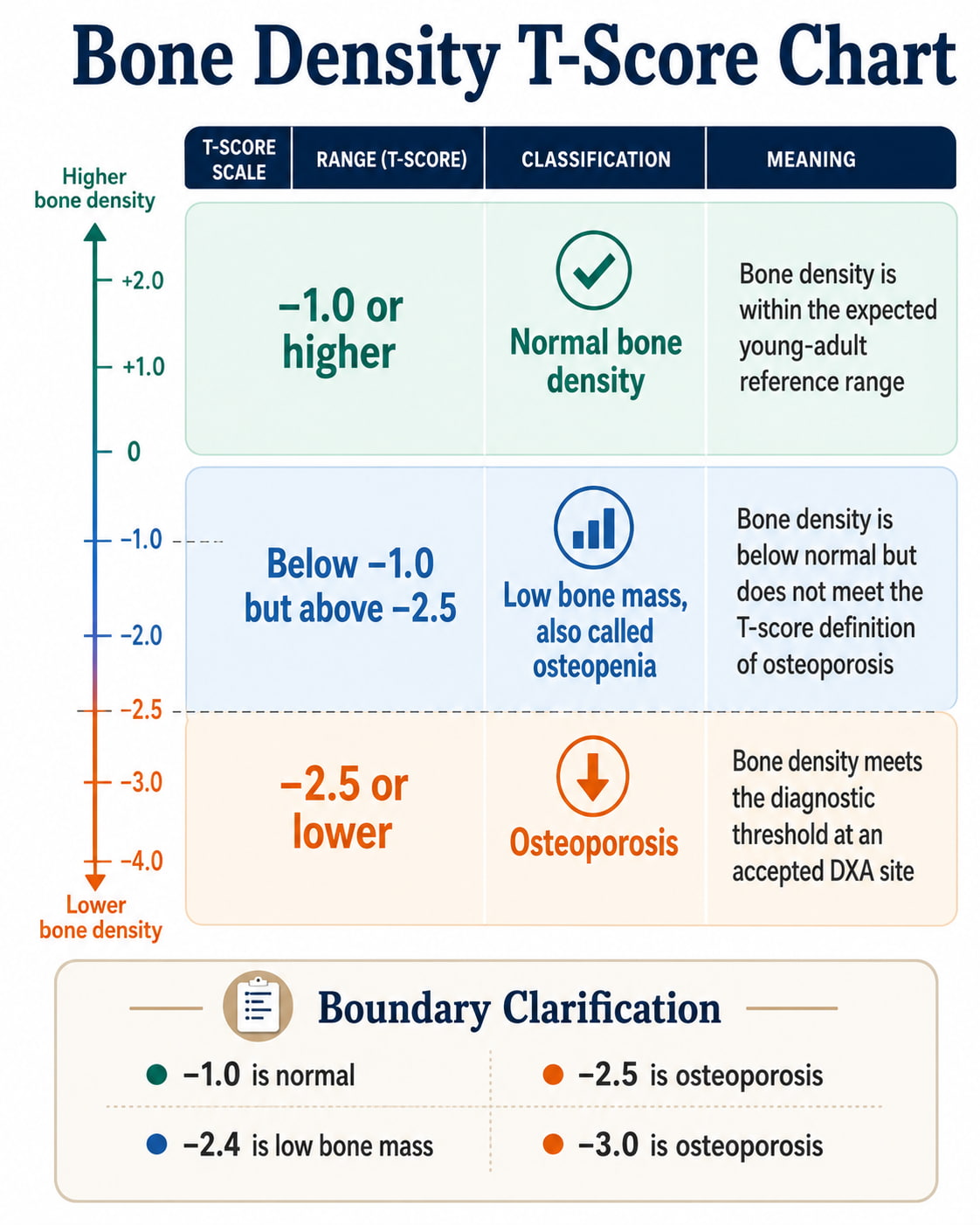
| T-score range | Classification | What it generally means |
|---|---|---|
| −1.0 or higher | Normal bone density | Bone density is within the expected young-adult reference range |
| Below −1.0 but above −2.5 | Low bone mass, also called osteopenia | Bone density is below normal but does not meet the T-score definition of osteoporosis |
| −2.5 or lower | Osteoporosis | Bone density meets the diagnostic threshold for osteoporosis at an accepted DXA site |
The boundaries matter:
- −1.0 is considered normal.
- −2.5 is considered osteoporosis.
- A score such as −1.1, −1.8, or −2.4 indicates low bone mass.
- A score such as −2.5, −2.8, or −3.0 is in the osteoporosis range.
These classifications are primarily used for postmenopausal women and men aged 50 or older. The National Institute of Arthritis and Musculoskeletal and Skin Diseases uses the same standard T-score ranges in its patient guidance, last reviewed in February 2025.
What Is a Bone Density T-Score?
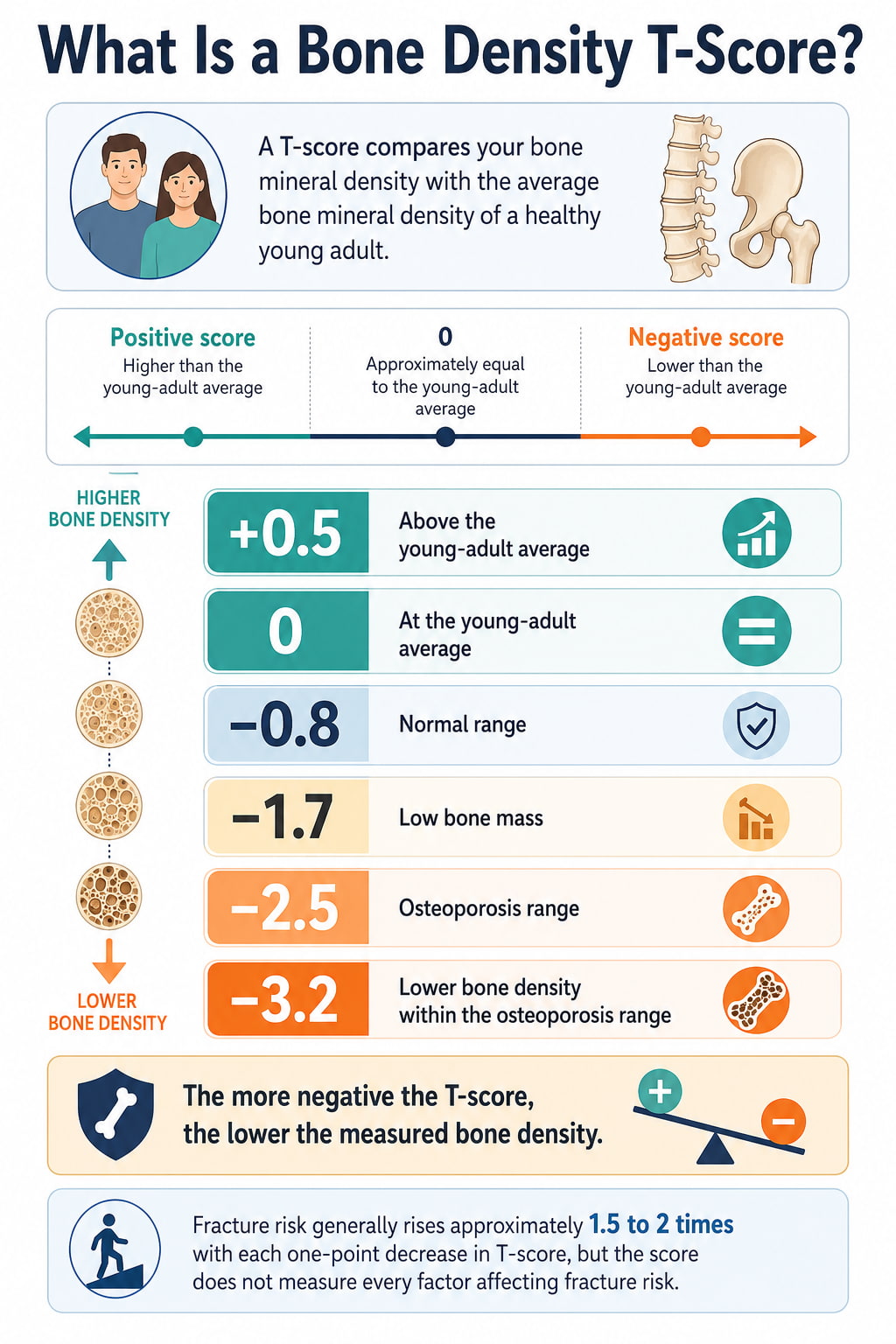
A T-score compares your bone mineral density with the average bone mineral density of a healthy young adult.
A score of 0 means your measured bone density is approximately equal to the young-adult average. Positive scores indicate higher bone density, while negative scores indicate lower bone density.
Examples include:
- +0.5: Above the young-adult average
- 0: At the young-adult average
- −0.8: Normal range
- −1.7: Low bone mass
- −2.5: Osteoporosis range
- −3.2: Lower bone density within the osteoporosis range
The more negative the number, the lower the measured bone density. NIAMS reports that fracture risk generally rises approximately 1.5 to 2 times with each one-point decrease in T-score, although the score cannot measure every factor affecting fracture risk.
How Is a T-Score Measured?
A T-score is usually obtained through a central dual-energy X-ray absorptiometry scan, commonly called a DXA or DEXA scan.
A central DXA scan commonly measures bone mineral density at the:
- Lumbar spine
- Femoral neck
- Total hip
- Forearm in certain circumstances
The test is noninvasive and uses a low amount of radiation. The hip and spine are normally measured because fractures in these areas can have serious consequences.
Peripheral tests that measure the heel, wrist, or finger may help estimate fracture risk, but their results are not always interchangeable with a central DXA scan. A peripheral result should not automatically be interpreted using the same diagnostic rules unless the device and measurement site have been validated for that purpose.
How to Read Bone Density Test Results
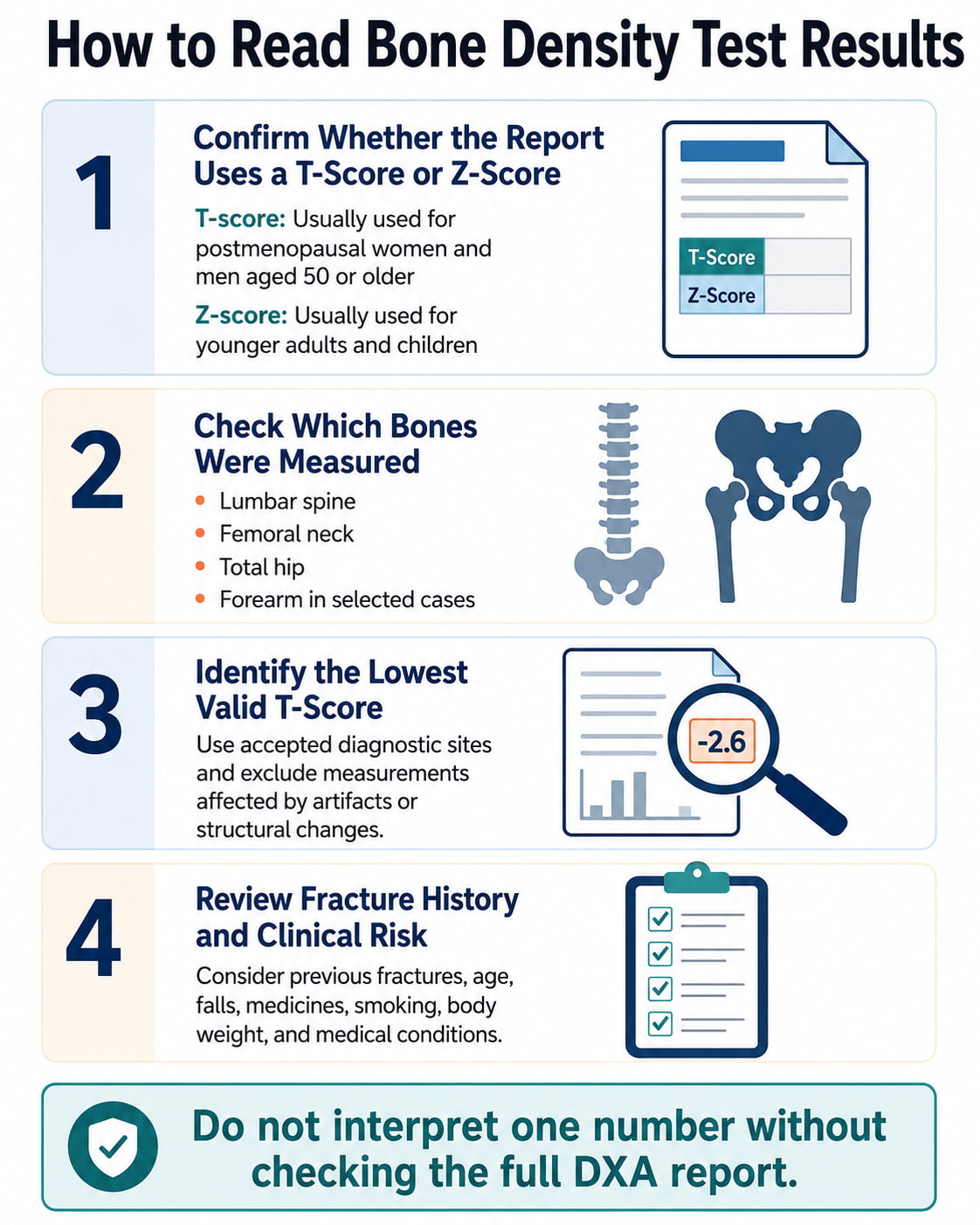
A DXA report may contain several numbers. Use the following steps to understand it.
1. Confirm Whether the Report Uses a T-Score or Z-Score
T-scores are generally preferred for:
- Postmenopausal women
- Men aged 50 or older
- Some women during the menopausal transition
Z-scores are generally preferred for:
- Premenopausal women
- Men younger than 50
- Children and adolescents
Using the correct score matters because the standard T-score chart should not be applied to everyone.
2. Check Which Bones Were Measured
Most central DXA reports include results for the lumbar spine and one or both hips. Some reports also include the one-third radius in the forearm.
Do not assume that every number on the report has equal diagnostic value. Some measurements may be affected by arthritis, previous surgery, fractures, spinal abnormalities, implants, or positioning problems.
3. Identify the Lowest Valid T-Score
In postmenopausal women and men aged 50 or older, osteoporosis may be diagnosed when a valid T-score is −2.5 or lower at the:
- Lumbar spine
- Total hip
- Femoral neck
- One-third radius in selected circumstances
At the hip, the lower result from the total hip or femoral neck is generally used for diagnostic classification. The International Society for Clinical Densitometry advises against using areas such as Ward’s region or the greater trochanter to diagnose osteoporosis.
4. Review Fracture History and Clinical Risk
The lowest valid T-score is important, but it does not tell the entire story. Your healthcare provider may also consider:
- Previous fractures
- Age
- History of falls
- Low body weight
- Family history of hip fracture
- Smoking
- Alcohol intake
- Long-term glucocorticoid use
- Medical conditions associated with bone loss
- Medicines that may affect bone strength
A person can have significant fracture risk even when the T-score is above −2.5.
What a Normal Bone Density T-Score Means
A T-score of −1.0 or higher is classified as normal bone density.
Examples include:
- +1.0
- +0.3
- 0
- −0.5
- −1.0
A normal result is reassuring, but it does not guarantee that a fracture cannot occur. Bone density is only one part of bone strength, and fractures can also be influenced by falls, balance, vision, muscle weakness, medications, and other medical conditions.
Someone with a normal T-score may still need further evaluation after a low-trauma fracture or when significant bone-loss risk factors are present.
What Low Bone Mass or Osteopenia Means
A T-score below −1.0 but above −2.5 indicates low bone mass, often called osteopenia.
Examples include:
- −1.1
- −1.5
- −2.0
- −2.4
Low bone mass means the measured bone density is below the young-adult average, but it does not automatically mean that osteoporosis medication is necessary.
Some people with low bone mass have a relatively low chance of fracture. Others may have a high risk because of their age, previous fractures, steroid use, fall history, or other risk factors.
The International Society for Clinical Densitometry prefers the term low bone mass or low bone density because the classification does not determine fracture risk by itself.
What an Osteoporosis T-Score Means
A valid T-score of −2.5 or lower is in the osteoporosis range for postmenopausal women and men aged 50 or older.
Examples include:
- −2.5
- −2.7
- −3.0
- −3.8
A lower number generally indicates lower measured bone density, but there is no separate basic diagnostic category for every additional decrease. For example, both −2.6 and −3.4 are classified as osteoporosis based on the standard chart.
A result in this range usually requires a broader clinical evaluation. A healthcare provider may review:
- Whether the scan was technically accurate
- Whether a previous fracture has occurred
- Possible medical causes of bone loss
- Current medications
- Calcium and vitamin D intake
- Kidney, thyroid, or parathyroid health
- Fall risk
- Whether osteoporosis medication may be appropriate
The result should not be used to start, stop, or change treatment without professional guidance.
Can You Have Osteoporosis With a T-Score Above −2.5?
Yes. A T-score is not the only way osteoporosis may be identified.
A hip or vertebral fracture caused by relatively minor trauma may support an osteoporosis diagnosis or the need for treatment regardless of the T-score. Certain fractures involving the wrist, upper arm, ribs, or pelvis may also signal fragile bones and require further evaluation.
The Bone Health and Osteoporosis Foundation explains that a hip or spinal fracture in an adult older than 50 may indicate osteoporosis regardless of bone mineral density.
This is why a person with a T-score of −1.8 and a previous hip fracture may need more intensive management than someone with the same score and no other major risk factors.
Bone Density T-Score vs. Z-Score
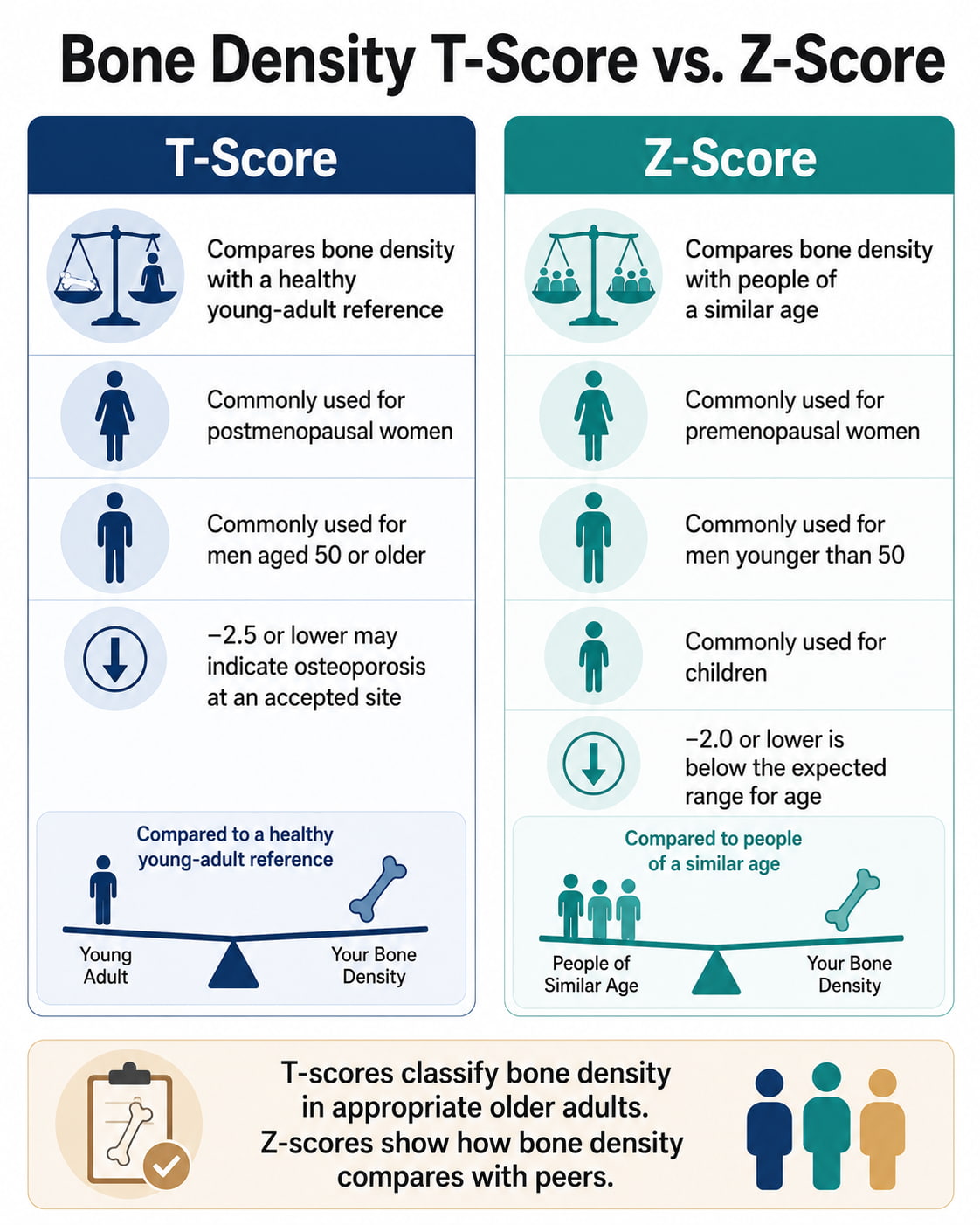
T-scores and Z-scores compare bone density with different reference groups.
| Feature | T-score | Z-score |
|---|---|---|
| Comparison group | Healthy young-adult reference | People of a similar age and demographic reference group |
| Commonly used for | Postmenopausal women and men aged 50 or older | Premenopausal women, men younger than 50, and children |
| Main purpose | Diagnostic classification in appropriate adults | Identifying bone density that is unusually low for age |
| Important cutoff | −2.5 or lower may indicate osteoporosis | −2.0 or lower is below the expected range for age |
A Z-score of −2.0 or lower is described as “below the expected range for age.” A score above −2.0 is considered “within the expected range for age.”
A low Z-score may prompt an evaluation for medical conditions, nutritional problems, hormonal disorders, or medications contributing to bone loss. In men younger than 50, osteoporosis should not be diagnosed from bone mineral density alone.
Which T-Score Matters Most: Spine or Hip?
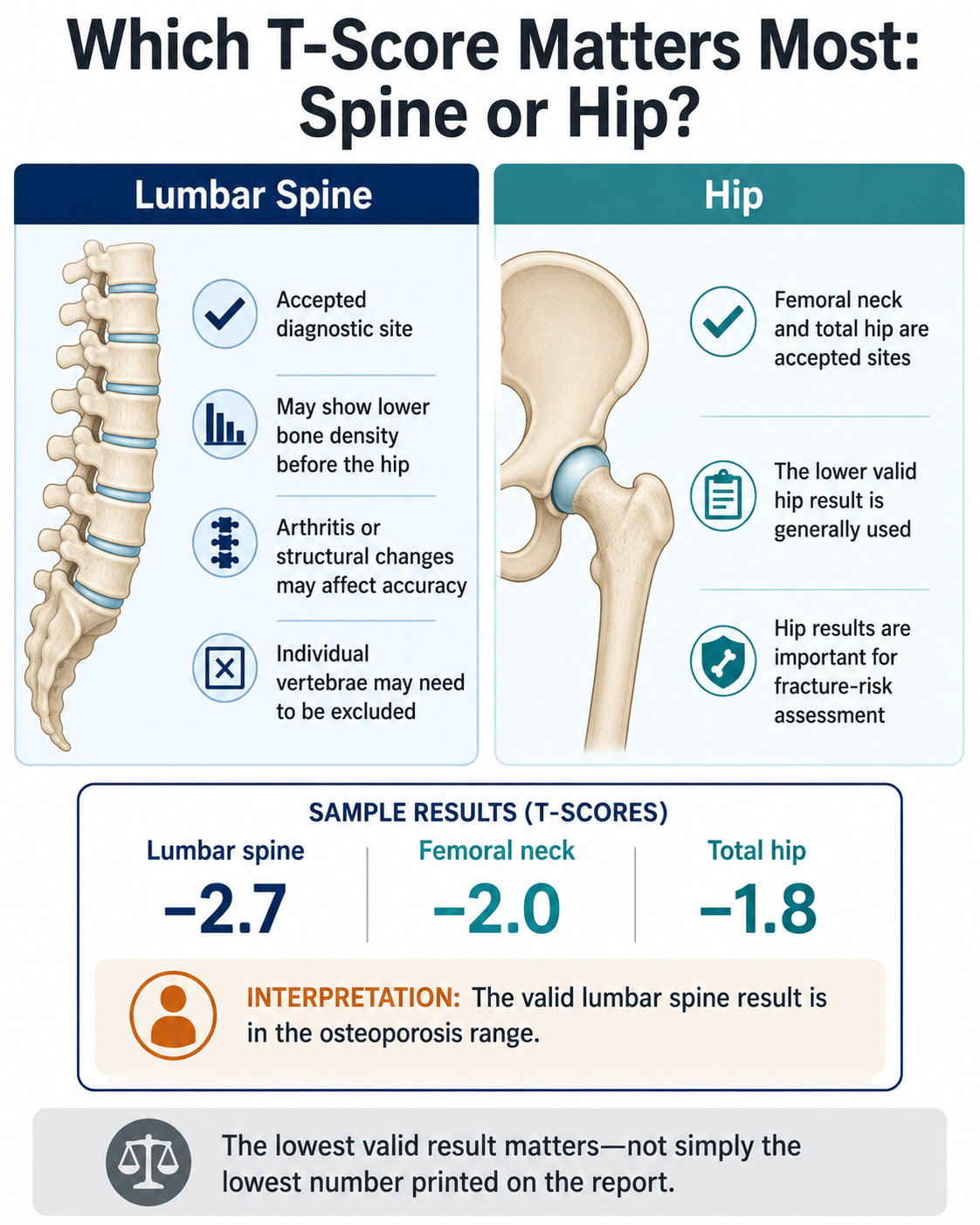
The answer depends on whether each measurement is technically valid.
For diagnostic classification, accepted sites include the lumbar spine, total hip, femoral neck, and sometimes the one-third radius. A person may meet the osteoporosis threshold at one site even when other sites are in the normal or low-bone-mass range.
For example:
| DXA site | T-score |
|---|---|
| Lumbar spine | −2.7 |
| Femoral neck | −2.0 |
| Total hip | −1.8 |
In this example, the valid lumbar spine result is in the osteoporosis range even though the hip results show low bone mass.
However, spinal arthritis, bone spurs, compression changes, and other structural abnormalities can sometimes make spinal bone density appear artificially high. A trained clinician should review whether individual vertebrae need to be excluded.
At the hip, the lower valid score from the femoral neck or total hip is generally used. If both hips are scanned, the lowest valid hip T-score may be used for diagnostic classification.
How FRAX Affects Bone Density Results
FRAX is a fracture-risk assessment tool. It estimates the probability of:
- A hip fracture within the next 10 years
- A major osteoporotic fracture within the next 10 years
Major osteoporotic fractures generally include fractures of the hip, clinical spine, forearm, or shoulder.
FRAX considers factors such as age, sex, weight, height, previous fractures, smoking, glucocorticoid use, certain medical conditions, alcohol intake, and femoral-neck bone density when available.
In U.S. guidance, medication is commonly considered for postmenopausal women and men aged 50 or older who have low bone mass and either:
- A 3% or greater 10-year probability of hip fracture, or
- A 20% or greater 10-year probability of a major osteoporotic fracture
These percentages are treatment-consideration thresholds rather than new T-score categories. They do not replace individualized medical judgment.
Who Should Get a Bone Density Test?
The January 2025 recommendation from the U.S. Preventive Services Task Force recommends osteoporosis screening for:
- Women aged 65 or older
- Postmenopausal women younger than 65 who have one or more risk factors and are found to have increased fracture risk through a clinical assessment tool
For men, the USPSTF states that current evidence is insufficient to determine the overall balance of benefits and harms of routine population screening. This does not mean men should never be tested. Clinicians are advised to use individual judgment.
Specialty guidance also supports testing for:
- Men aged 70 or older
- Younger men with significant risk factors
- Adults who have had a fragility fracture
- People taking medications associated with bone loss
- People with diseases associated with osteoporosis
- People being considered for osteoporosis medication
- People being monitored during osteoporosis treatment
Risk factors may include low body weight, previous fractures, prolonged glucocorticoid use, early menopause, certain endocrine disorders, and other conditions associated with bone loss.
What to Do After Receiving Your T-Score
Your next step depends on the result and your other risk factors.
| Result | Practical next steps |
|---|---|
| Normal | Maintain bone-supporting nutrition and activity, reduce fall risks, and ask whether future screening is needed |
| Low bone mass | Review FRAX risk, fracture history, medications, and possible causes of bone loss with a healthcare provider |
| Osteoporosis | Arrange a clinical evaluation to discuss fracture prevention, possible testing for underlying causes, and treatment options |
| Any score plus a low-trauma fracture | Seek a thorough bone-health assessment rather than relying on the T-score alone |
General bone-supporting measures may include:
- Weight-bearing physical activity
- Resistance or strength exercises
- Balance training when appropriate
- Adequate dietary calcium
- Adequate vitamin D
- Avoiding smoking
- Limiting excessive alcohol
- Reviewing medicines that cause dizziness or bone loss
- Reducing trip and fall hazards at home
The right exercise type and intensity may need to be modified for people with osteoporosis, vertebral fractures, balance problems, or other health conditions. Supplements should also be discussed with a healthcare professional because unnecessary or excessive doses may cause harm.
Can a Bone Density T-Score Improve?
A T-score can improve, decline, or remain stable over time because it is calculated from measured bone mineral density.
However, small differences between two reports may result from:
- Normal measurement variation
- Different scanning machines
- Different patient positioning
- Different reference databases
- Changes in the bones included in the spinal analysis
- Testing at different facilities
When monitoring changes, clinicians normally examine the actual bone mineral density value, commonly reported in grams per square centimeter, rather than relying only on the T-score.
A change should also exceed the testing facility’s least significant change, which is the minimum difference needed to show that a real biological change has probably occurred. Bone-density measurements from different devices cannot always be compared directly.
How Often Should a DXA Scan Be Repeated?
There is no single repeat-testing schedule for everyone.
The timing may depend on:
- Initial bone density
- Age
- Fracture history
- Rate of expected bone loss
- Osteoporosis treatment
- Long-term medication use
- New medical conditions
- Whether the result would change management
The ISCD recommends individualizing repeat testing according to the person’s baseline result, age, treatment, and risk factors. A new fracture or newly developed risk factor may justify earlier reassessment, but testing should not delay necessary fracture care.
Whenever possible, repeat scans should be performed at the same facility using the same properly calibrated machine.
When to Discuss Your Result Promptly
Contact a healthcare professional promptly when you have:
- A T-score of −2.5 or lower
- A fracture after a minor fall or ordinary movement
- Sudden back pain with loss of height or a curved posture
- Multiple fractures
- Long-term glucocorticoid use
- A medical condition associated with rapid bone loss
- A significant decline between comparable DXA scans
- A low Z-score at a younger age
- Uncertainty about conflicting spine and hip results
A clinician may need to check for secondary causes of bone loss rather than assuming that age alone explains the result.
Frequently Asked Questions
What is a normal bone density T-score?
A T-score of −1.0 or higher is considered normal. This includes positive numbers, zero, and negative results down to exactly −1.0.
Is a T-score of −2.5 considered osteoporosis?
Yes. A valid T-score of exactly −2.5 is in the osteoporosis range for postmenopausal women and men aged 50 or older when measured at an accepted diagnostic site.
Which is worse, a T-score of −2.5 or −3.0?
A T-score of −3.0 indicates lower measured bone density than −2.5. Both scores are in the osteoporosis range. Actual fracture risk also depends on age, previous fractures, falls, medications, and other health factors.
Is osteopenia the same as osteoporosis?
No. Osteopenia, more accurately called low bone mass, describes a T-score below −1.0 but above −2.5. Osteoporosis begins at −2.5 or lower in people for whom the standard T-score criteria apply.
Can you have osteoporosis with a normal or osteopenic T-score?
It is possible. A hip or vertebral fragility fracture may indicate osteoporosis regardless of the T-score. Other fractures or a high calculated fracture risk may also affect diagnosis and treatment decisions.
Should I use my T-score or Z-score?
Postmenopausal women and men aged 50 or older generally use T-scores for diagnostic classification. Premenopausal women, younger men, and children generally use Z-scores.
How much can a T-score change in one year?
There is no standard expected change. Small differences may reflect measurement variation rather than true bone gain or loss. The actual bone mineral density value and the facility’s least significant change are more useful for comparing scans.
Conclusion
A bone density T-score chart provides a quick way to classify DXA results: −1.0 or higher is normal, below −1.0 but above −2.5 is low bone mass, and −2.5 or lower is osteoporosis.
The number should not be interpreted alone. The measured bone, scan quality, previous fractures, age, medications, fall risk, and FRAX estimate can all change what the result means. Review your full DXA report with a qualified healthcare professional and ask what practical steps are appropriate for your individual fracture risk.
This content is for informational purposes only and not medical advice.
References
- National Institute of Arthritis and Musculoskeletal and Skin Diseases — Bone Mineral Density Tests: What the Numbers Mean
- International Society for Clinical Densitometry — 2023 Adult Official Positions
- U.S. Preventive Services Task Force — Osteoporosis Screening Recommendation, January 2025
- Bone Health and Osteoporosis Foundation — Bone Density Testing
- Bone Health and Osteoporosis Foundation — Clinician’s Guide to Prevention and Treatment of Osteoporosis