
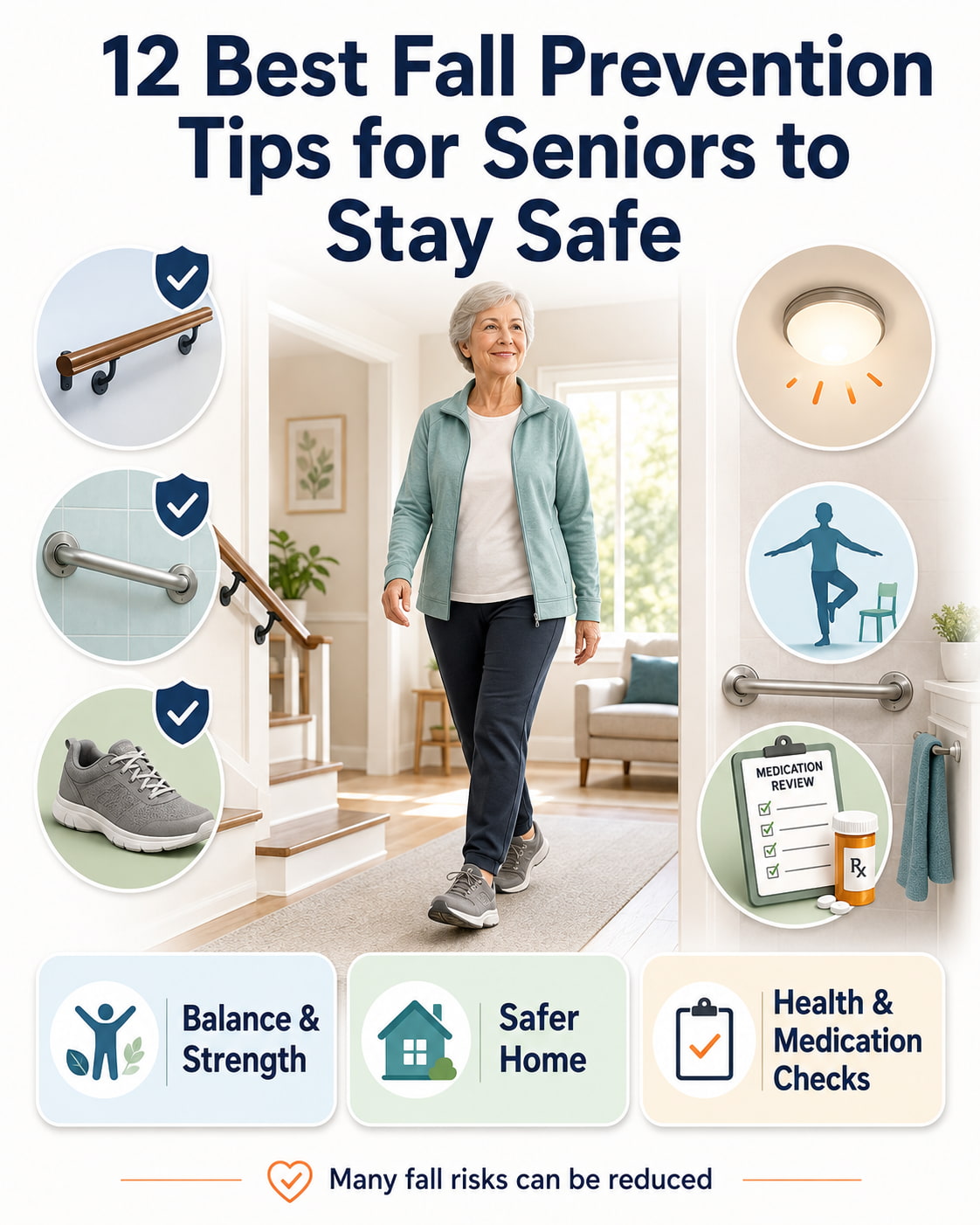
The best fall prevention tips for seniors combine regular balance and strength exercise with medication reviews, safer footwear, health checks, and practical changes around the home. These steps can reduce preventable risks while helping older adults remain active, confident, and independent.
According to the Centers for Disease Control and Prevention, more than 14 million U.S. adults age 65 and older—about 1 in 4—report falling each year. About 37% of those who fall report an injury that requires medical care or restricts their activity for at least one day. However, falls are not an unavoidable part of aging, and many risk factors can be reduced.
Why Fall Prevention Is Important for Seniors
A fall can cause a fracture, head injury, hospitalization, or loss of independence. Even a fall without a physical injury may create fear that causes someone to move less. Reduced activity can weaken the legs and further increase fall risk.
Most falls do not have a single cause. Lower-body weakness, balance problems, medications, poor vision, foot pain, unsafe footwear, dizziness, and home hazards may all contribute. The more risk factors a person has, the greater their likelihood of falling. Falling once also doubles the chance of falling again.
The problem is becoming more serious. CDC data released in February 2026 show that the age-adjusted fall death rate among adults 65 and older increased 21%, from 64.7 deaths per 100,000 in 2018 to 78.4 per 100,000 in 2024.
The following fall prevention tips address the most common medical, physical, and environmental risks.
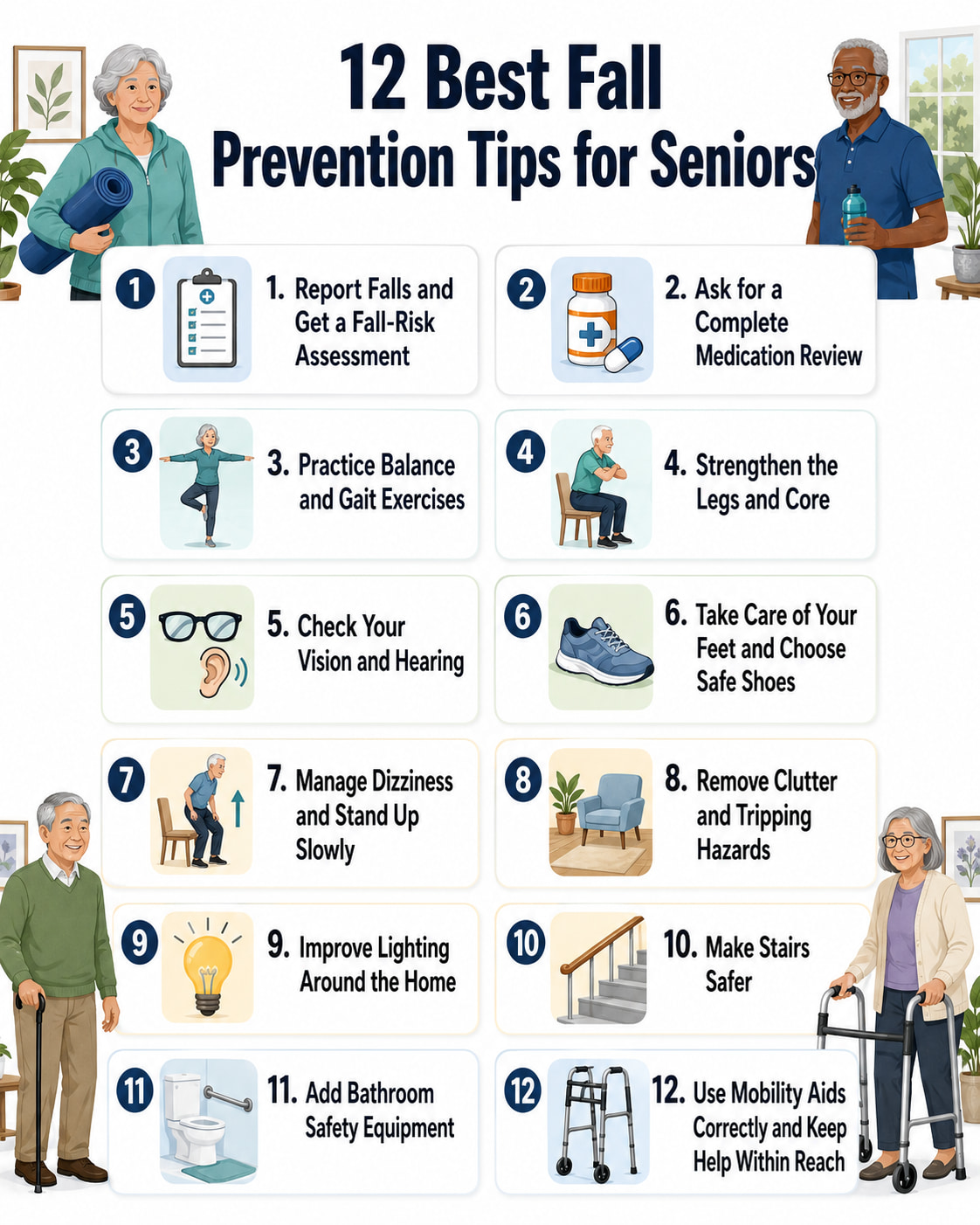
12 Best Fall Prevention Tips for Seniors
1. Report Falls and Get a Fall-Risk Assessment
Tell a healthcare professional about every fall, near-fall, balance problem, or new fear of falling. Do not wait until a serious injury occurs.
Before the appointment, write down:
- When and where the fall happened
- What you were doing immediately beforehand
- Whether you felt dizzy, weak, confused, or lightheaded
- Which shoes or mobility aid you were using
- Whether you had recently taken medicine, eaten, or stood up
- Whether you hit your head or lost consciousness
A fall-risk assessment may examine walking, balance, leg strength, vision, postural blood pressure, medications, footwear, home hazards, memory, and fear of falling. A doctor may also recommend physical therapy, occupational therapy, an eye examination, or another evaluation based on the risks found.
The CDC STEADI patient and caregiver resources include fall-risk information, home-safety checklists, footwear guidance, and educational materials for older adults and families. Previous falls and problems with mobility or physical function are also important signs that someone may be at increased risk.
2. Ask for a Complete Medication Review
Prescription medicines are not the only products that can affect balance. Over-the-counter medicines, sleep aids, allergy products, herbal products, and supplements should also be included in a medication review.
Some medicines may contribute to:
- Dizziness or lightheadedness
- Sleepiness
- Confusion
- Blurred vision
- Low blood pressure
- Slower reactions
- Muscle weakness or poor coordination
Sedatives, tranquilizers, antidepressants, and certain other medicines may increase fall risk in some people. The effect may become stronger when several medicines are taken together.
Bring all medicine containers or a complete list to a doctor or pharmacist. Ask whether any products are unnecessary, duplicated, interacting, or contributing to unsteadiness.
Never stop, reduce, or change the timing of a prescribed medicine without speaking with the prescribing clinician. The safer approach is to review the complete medication plan and make supervised changes when appropriate.
3. Practice Balance and Gait Exercises
Exercise has the strongest evidence among commonly studied fall-prevention interventions.
The U.S. Preventive Services Task Force recommends exercise interventions for adults 65 and older who live in community settings and have an increased risk of falling.
In a pooled analysis of 29 trials, exercise programs were associated with approximately:
- A 15% reduction in the rate of falls
- An 8% reduction in the number of people experiencing at least one fall
- A 16% reduction in injurious falls
The programs most often combined gait, balance, and functional training. Many also included strength or resistance exercises.
Depending on ability, balance activities may include:
- Standing with the feet close together
- Supported single-leg standing
- Heel-to-toe walking
- Side stepping
- Marching in place
- Controlled weight shifting
- Tai chi
- Exercises prescribed by a physical therapist
Practice near a stable counter, securely mounted rail, or another reliable support. Do not use a rolling chair, lightweight table, or unstable piece of furniture for balance.
Someone who has recently fallen, feels very unsteady, or cannot stand safely without help should begin with professional supervision.
4. Strengthen the Legs and Core
Strong leg and trunk muscles help with standing, walking, climbing stairs, and recovering from a small loss of balance.
Useful strengthening activities may include:
- Chair rises
- Supported mini squats
- Heel raises
- Toe raises
- Low step-ups
- Seated knee extensions
- Resistance-band exercises
- Exercises prescribed for the hips and core
Use a firm chair that will not slide. Move slowly and maintain control instead of rushing through repetitions.
Federal Office of Disease Prevention and Health Promotion guidance recommends muscle-strengthening activity at least two days per week and encourages older adults to include activities that improve balance. People who cannot meet the full recommendation should start slowly and do what their health and abilities allow.
Walking supports general health and mobility, but walking alone may not address every fall risk. Combine it with balance, functional movement, and strengthening exercises when possible.
5. Check Your Vision and Hearing
Vision changes can make it harder to see step edges, floor-level objects, uneven surfaces, and changes in lighting. Hearing problems may reduce awareness of approaching people, pets, vehicles, or other environmental cues. Some inner-ear conditions can also affect balance.
Helpful steps include:
- Schedule vision and hearing checks as recommended
- Wear the correct prescription glasses
- Keep glasses and hearing aids clean and in good condition
- Allow time to adjust to new lenses
- Turn on lights before walking into a dark room
- Use extra care on stairs when wearing multifocal lenses
- Report sudden vision, hearing, or balance changes promptly
Do not assume that worsening balance is simply caused by age. New or rapidly changing symptoms may need medical evaluation. The National Institute on Aging includes regular vision and hearing checks among its primary fall-prevention recommendations.
6. Take Care of Your Feet and Choose Safe Shoes
Foot pain, numbness, weakness, poor shoe fit, and worn soles can change the way a person walks.
Choose shoes that:
- Fit securely without pinching
- Have a closed or supportive back
- Have a low, broad heel
- Provide good traction
- Stay firmly on the foot
- Do not have excessively thick or slippery soles
Avoid walking on smooth floors in socks. Loose backless slippers, shoes with worn tread, and footwear that slides on the foot can make movement less stable.
Check the feet regularly for pain, swelling, sores, numbness, or nail problems. A clinician or foot-care professional can assess persistent symptoms, especially for someone with diabetes, circulation problems, or reduced sensation.
Foot pain and poor footwear are recognized modifiable fall-risk factors, and fall-prevention guidance includes foot care and safer footwear as part of reducing risk.
7. Manage Dizziness and Stand Up Slowly
A quick change from lying or sitting to standing may cause a temporary drop in blood pressure. This can lead to dimmed vision, lightheadedness, weakness, or loss of balance.
Use this slower sequence:
- Sit up and pause.
- Place both feet firmly on the floor.
- Hold a stable surface if needed.
- Stand slowly.
- Wait until you feel steady before walking.
Do not continue walking while dizzy. Sit down safely and ask for help.
Recurring dizziness, fainting, palpitations, new weakness, or frequent lightheadedness should be evaluated. A clinician may check blood pressure while lying and standing, review medications, and look for heart, neurological, blood-sugar, hydration, or inner-ear problems.
Drink enough fluid for your individual needs, but follow professional guidance if you have heart failure, kidney disease, or another condition that requires fluid limits. Standing slowly and pausing before walking can give blood pressure time to adjust.
8. Remove Clutter and Tripping Hazards
Walk through the home as though you were seeing it for the first time. Look for anything that could catch a foot, block a mobility aid, or require an unsafe step.
Common hazards include:
- Loose throw rugs
- Electrical cords across walkways
- Pet toys and food bowls
- Shoes, bags, or boxes on the floor
- Low tables and footstools
- Unstable furniture
- Damaged flooring
- Raised thresholds
- Cluttered hallways
- Uneven outdoor paths
Remove unnecessary rugs or secure them with effective nonslip backing. Move cords against walls. Arrange furniture so there is a clear route between frequently used areas.
Keep everyday objects within comfortable reach. Do not stand on a chair, box, or unstable stool to reach a high shelf.
Room-by-room home safety guidance recommends addressing loose rugs, clutter, unsafe floors, and other household hazards that may increase fall risk.
9. Improve Lighting Around the Home
Poor lighting can hide floor-level objects, changes in elevation, and the edges of stairs.
Improve visibility by:
- Placing light switches near room entrances
- Using nightlights between the bedroom and bathroom
- Adding lighting at the top and bottom of stairs
- Replacing burned-out bulbs promptly
- Using motion-activated lights where appropriate
- Keeping a flashlight near the bed
- Reducing glare from exposed bulbs
- Increasing contrast between steps, floors, and walls
- Providing adequate lighting at entrances and outdoor walkways
A bedside lamp should be easy to reach without leaning or getting out of bed in the dark. Keep the route to the bathroom free of furniture, cords, and loose rugs.
10. Make Stairs Safer
Stairs require adequate strength, vision, balance, and attention. A small defect can become a serious hazard.
For safer stairs:
- Install secure handrails, ideally on both sides
- Keep every step clear
- Repair loose boards, carpet, or coverings
- Use nonslip surfaces where needed
- Make step edges easier to see
- Provide consistent lighting
- Keep one hand available for the rail
- Avoid carrying objects that block your view of the steps
Do not leave books, laundry, shoes, or decorative items on stairs. If climbing stairs has become difficult, discuss safer alternatives or home modifications with a physical or occupational therapist.
11. Add Bathroom Safety Equipment
Bathrooms are especially risky because water, smooth surfaces, and transfers in and out of a tub can reduce stability.
Helpful modifications include:
- Properly anchored grab bars near the toilet and bathing area
- Nonslip strips or surfaces in the tub and shower
- A stable shower chair or transfer bench
- A handheld showerhead
- Adequate lighting
- A toilet-height adjustment when professionally recommended
- A clear, dry floor
- Secure bath mats or removal of loose mats
Do not rely on a towel rack for body-weight support. Grab bars should be designed for that purpose and installed securely.
Home-safety recommendations for older adults include grab bars near toilets and in tubs or showers, along with nonslip surfaces in areas that may become wet.
12. Use Mobility Aids Correctly and Keep Help Within Reach
A cane or walker can improve stability only when it fits properly and is used consistently.
A physical or occupational therapist can:
- Select the appropriate device
- Adjust it to the correct height
- Teach safe turning and stair techniques
- Check walking posture
- Recommend home modifications
- Explain how to use the device outdoors
Regularly inspect rubber tips, wheels, handgrips, and brakes. Do not use a damaged mobility aid or hold onto furniture instead of using the recommended device.
Prepare for emergencies by keeping a charged phone within reach. Someone who lives alone may also consider a wearable alert device, voice-activated calling system, or scheduled family check-ins. Fall-prevention guidance for older adults recommends preparing for a possible fall by keeping a charged phone or emergency response method accessible.
Quick Home Fall Prevention Checklist
| Area | Safety check |
|---|---|
| Floors and hallways | Remove clutter, cords, loose rugs, pet toys, and unstable furniture |
| Bedroom | Keep a phone, light, glasses, and mobility aid within reach |
| Bathroom | Install fixed grab bars, nonslip surfaces, and a shower chair if needed |
| Stairs | Add secure rails, good lighting, visible edges, and clear steps |
| Kitchen | Store frequently used items within easy reach and clean spills promptly |
| Entrances | Repair uneven surfaces and provide secure railings and lighting |
| Outdoor paths | Remove leaves, debris, water, ice, and other slipping hazards |
| Mobility equipment | Check cane tips, walker wheels, brakes, and height adjustments |
Make changes based on the person’s actual routines. A home may appear generally safe while still containing hazards near the bed, favorite chair, bathroom, or frequently used entrance.
What Should a Senior Do After a Fall?
Do not rush to stand immediately after falling.
First, stay calm and check for:
- Severe pain
- Bleeding
- Possible head impact
- Dizziness or confusion
- Difficulty moving an arm or leg
- An unusual position or possible fracture
If you are injured or cannot get up safely, call 911 or use an emergency alert device. If you are alone, move into a comfortable position only if doing so does not worsen pain, and wait for help.
When there is no apparent injury and you feel capable of getting up, use a get-up technique previously practiced with a physical therapist or another qualified professional. Do not pull on lightweight furniture that may tip.
Report the fall to a healthcare professional even when no major injury is obvious. The cause may involve medication, blood pressure, vision, balance, infection, blood sugar, or another problem that needs attention.
An older adult who hits their head should seek prompt medical evaluation. This is especially important for anyone taking an anticoagulant or antiplatelet medicine because these products can increase the risk of bleeding in the brain after a head injury.
When to Call 911 After a Fall
Call 911 immediately if the person:
- Is unconscious or difficult to wake
- Cannot move or get up safely
- Has severe or uncontrolled bleeding
- Has severe head, neck, back, or hip pain
- Has an obvious deformity or cannot bear weight
- Develops a seizure
- Has repeated vomiting
- Becomes newly confused or unusually drowsy
- Has slurred speech, facial drooping, weakness, or numbness
- Has chest pain or difficulty breathing
- Fainted before the fall
- Has rapidly worsening symptoms
Do not move someone with a suspected neck, back, or serious hip injury unless the location presents an immediate danger. A possible traumatic brain injury should be evaluated by a healthcare professional, particularly in an older adult or someone taking blood-thinning medication.
Frequently Asked Questions
What is the most effective way to prevent falls in seniors?
Exercise that improves balance, gait, functional movement, and strength has the strongest consistent evidence. The best plan also addresses personal risks such as medications, dizziness, vision problems, unsafe footwear, and home hazards.
What exercises help seniors avoid falls?
Tai chi, supported balance practice, controlled stepping, chair rises, heel raises, resistance exercises, and physical-therapy programs may help. The right exercises depend on the person’s mobility, health conditions, and previous falls.
Anyone who cannot stand safely without assistance should begin with professional supervision rather than trying unsupported balance exercises.
Is walking enough to prevent falls?
Walking supports endurance, mobility, and general health, but it may not be enough by itself. Effective fall-prevention programs commonly combine walking or gait activities with balance, functional, and strength training.
Which medications can increase fall risk?
Sedatives, tranquilizers, antidepressants, sleep medicines, and other products that cause dizziness, confusion, sleepiness, poor coordination, or low blood pressure may contribute. Some over-the-counter medicines can also affect balance.
The risk depends on the person, dosage, combinations, and medical conditions. Ask a doctor or pharmacist for a complete review rather than stopping medicine independently.
Does vitamin D prevent falls in seniors?
Vitamin D should not be treated as a universal fall-prevention solution. The USPSTF’s 2024 final fall-prevention recommendation did not include vitamin D, and its separate vitamin D and fall-prevention update remained listed as in progress as of August 2026.
People with diagnosed vitamin D deficiency, osteoporosis, malabsorption, or another medical reason for supplementation need individualized guidance. Do not begin high-dose vitamin D solely to prevent falls without speaking with a healthcare professional.
Should a senior see a doctor after a fall without an obvious injury?
The fall should still be reported, particularly if it was unexplained, happened more than once, caused a near loss of consciousness, or was followed by dizziness or confusion.
A head impact requires prompt medical advice, especially if the person takes a blood thinner. Some head-injury symptoms may not be immediately obvious.
How can caregivers begin fall-proofing a home?
Start with the areas the older adult uses most often. Clear the route between the bed and bathroom, improve lighting, remove loose rugs and cords, inspect stairs, and add properly installed bathroom grab bars.
Then schedule a medication and fall-risk review and help the person find an appropriate balance and strength program. A personalized plan is usually more useful than making unrelated changes throughout the entire home.
Conclusion
Fall prevention does not mean avoiding movement or giving up independence. It means reducing unnecessary hazards while building the strength, balance, and confidence needed for daily life.
Begin with three practical actions: schedule a fall-risk and medication review, clear the main walking routes at home, and start an appropriate balance and strengthening program. Small, targeted changes can make everyday movement safer and help seniors remain active in their own homes.
This content is for informational purposes only and not medical advice.
References
- Centers for Disease Control and Prevention (CDC) — Older Adult Falls Data
- Centers for Disease Control and Prevention (CDC) — Facts About Falls
- Centers for Disease Control and Prevention (CDC) — STEADI Patient & Caregiver Resources
- U.S. Preventive Services Task Force — Falls Prevention in Community-Dwelling Older Adults: Interventions
- National Institute on Aging — Falls and Fractures in Older Adults: Causes and Prevention
- National Institute on Aging — Preventing Falls at Home: Room by Room
- National Institute on Aging — Home Safety Tips for Older Adults
- Office of Disease Prevention and Health Promotion — Move Your Way
- Centers for Disease Control and Prevention (CDC) — Facts About Traumatic Brain Injury