
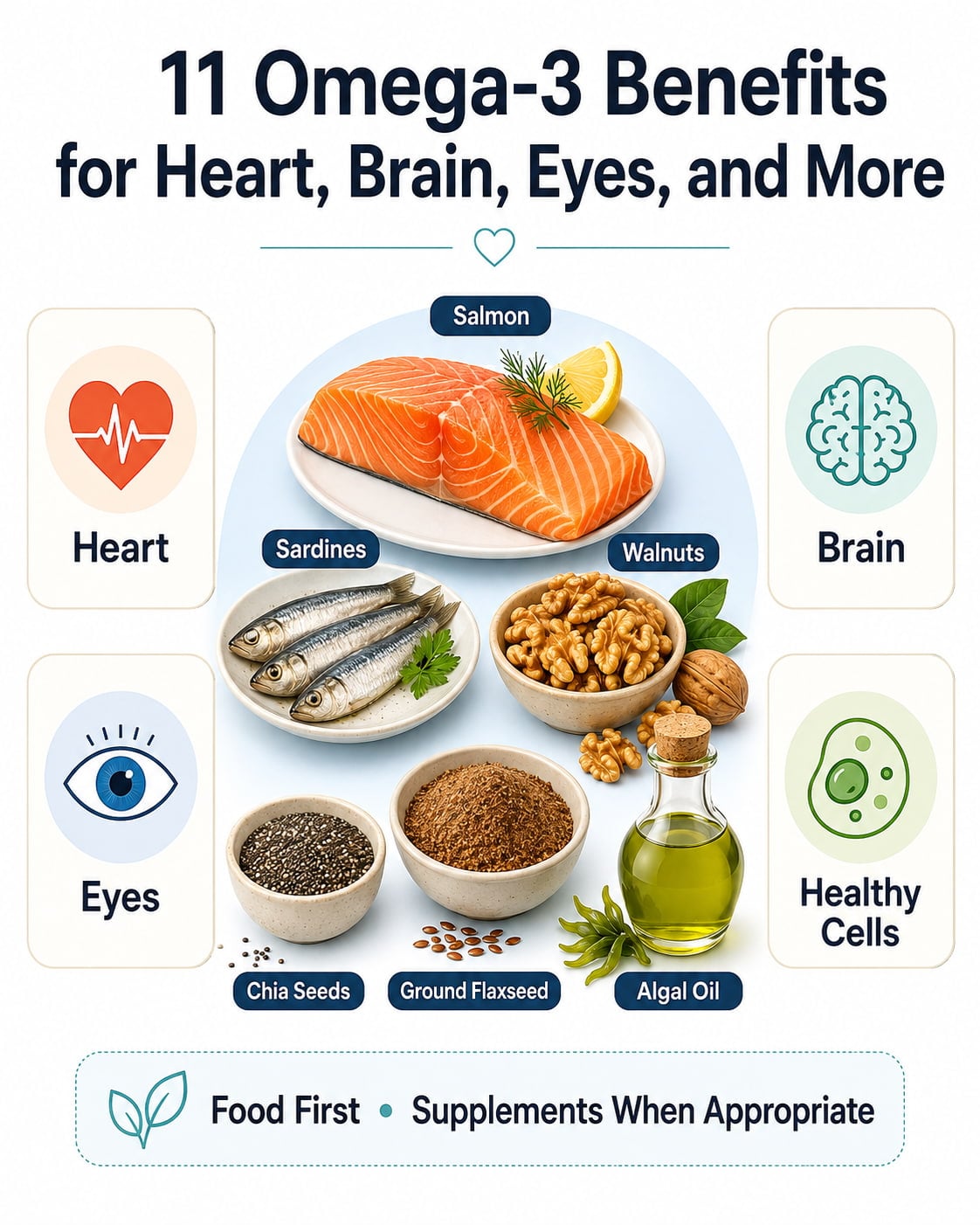
Omega-3 fatty acids support normal cell function, brain and eye development, and cardiovascular health; their clearest clinical benefit is helping lower elevated triglycerides. However, the strength of evidence varies. Eating omega-3-rich seafood, taking an over-the-counter fish-oil supplement, and using a prescription omega-3 medication do not necessarily produce the same results.
Understanding omega 3 benefits can help you choose appropriate foods or supplements without relying on exaggerated health claims. The NIH Office of Dietary Supplements omega-3 fact sheet provides detailed guidance on omega-3 sources, biological functions, potential benefits, and safety.
What Are Omega-3 Fatty Acids?
Omega-3 fatty acids are a family of polyunsaturated fats. The three main forms are:
| Omega-3 type | Main sources | Primary role |
|---|---|---|
| ALA — alpha-linolenic acid | Flaxseed, chia seeds, walnuts, soybean oil, and canola oil | An essential fatty acid used for energy and as a starting material for other omega-3s |
| EPA — eicosapentaenoic acid | Fatty fish, seafood, fish oil, and some algal oils | Helps form signaling compounds and is used in certain cardiovascular products |
| DHA — docosahexaenoic acid | Fatty fish, seafood, fish oil, and algal oil | An important structural component of the brain, retina, and cell membranes |
ALA is considered essential because the body cannot make it. Your body can convert some ALA into EPA and DHA, but this conversion is limited. For that reason, fish, seafood, and algae-derived products are more direct sources of EPA and DHA.
11 Omega-3 Benefits Supported by Current Evidence
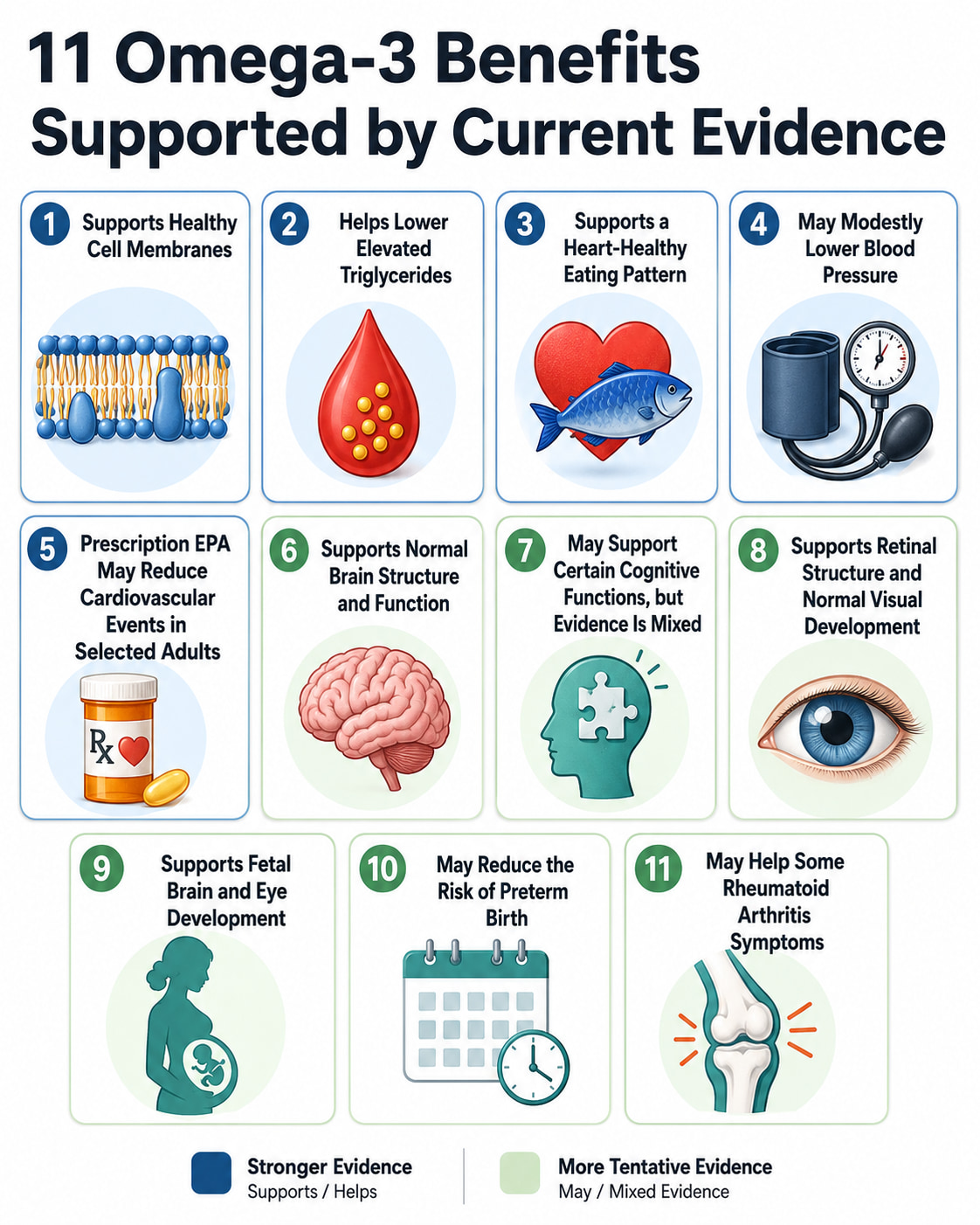
The following benefits do not all have the same level of evidence. Some describe established biological functions, while others are possible clinical benefits that depend on the dose, product, and individual.
1. Supports Healthy Cell Membranes
EPA and DHA are incorporated into the membranes surrounding cells. These membranes help control how nutrients, waste products, and signals move into and out of cells.
Omega-3 fatty acids also provide starting materials for compounds involved in cardiovascular, immune, endocrine, and cellular signaling. This is a well-established biological role, although it does not mean that taking extra omega-3 will improve every health condition.
Evidence level: Established physiological function.
2. Helps Lower Elevated Triglycerides
Lowering high triglycerides is one of the best-supported clinical uses of omega-3 fatty acids.
Prescription omega-3 products providing approximately 4 grams of EPA, DHA, or a combination each day can reduce triglyceride levels by roughly 20% to 30% in many people with elevated levels. The response may differ according to the starting triglyceride level and the specific prescription product.
This evidence applies primarily to standardized prescription products—not ordinary fish-oil capsules. Anyone with very high triglycerides should receive medical evaluation because elevated levels can be associated with pancreatitis and increased cardiovascular risk.
Evidence level: Strong for prescription-strength omega-3.
3. Supports a Heart-Healthy Eating Pattern
People who regularly eat fish and seafood tend to have a lower risk of cardiovascular disease than people who rarely eat them. Fatty fish provide EPA and DHA along with protein, vitamins, minerals, and other nutrients.
The American Heart Association’s fish and omega-3 guidance recommends eating two servings of fish per week, particularly fatty fish. One serving is approximately 3 ounces of cooked fish.
Part of the benefit may come from replacing foods that are higher in saturated fat, sodium, or refined carbohydrates. This is one reason evidence for eating fish is more consistent than evidence for routinely taking over-the-counter fish-oil supplements.
Evidence level: Strongest for omega-3-rich seafood as part of an overall healthy diet.
4. May Modestly Lower Blood Pressure
Omega-3 supplementation may produce a small reduction in blood pressure, particularly among older adults and people who already have hypertension or high cholesterol.
A meta-analysis of 71 randomized trials found that consuming approximately 2 to 3 grams of combined EPA and DHA daily was associated with an average reduction of roughly:
- 2 to 3 mm Hg in systolic blood pressure
- 1 to 2 mm Hg in diastolic blood pressure
These are average results, and individual responses vary. Omega-3 supplements should not replace prescribed blood-pressure medication, physical activity, sodium management, or other treatments recommended by a healthcare professional.
Evidence level: Moderate, with generally modest effects.
5. Prescription EPA May Reduce Cardiovascular Events in Selected Adults
In the REDUCE-IT trial, a prescription EPA product called icosapent ethyl reduced major ischemic cardiovascular events by approximately 25% relative to placebo. The study involved high-risk, statin-treated adults who had elevated triglycerides despite receiving standard medical care.
This finding does not mean that any fish-oil supplement will prevent a heart attack. Another large trial using a high-dose EPA-and-DHA formulation did not find the same cardiovascular benefit and identified an increased atrial-fibrillation signal.
Prescription EPA is therefore appropriate only for selected patients after a clinician reviews their cardiovascular risk, triglycerides, medications, and medical history.
Evidence level: Strong for a specific prescription product in a specific high-risk population.
6. Supports Normal Brain Structure and Function
DHA is highly concentrated in the brain and is an important structural component of neuronal cell membranes. It helps maintain membrane fluidity and supports normal communication between brain cells.
This role is especially important during pregnancy, infancy, and childhood, when the brain is growing rapidly. DHA remains a significant component of the adult brain, but its structural role does not prove that high-dose supplementation will improve memory or intelligence.
Evidence level: Established structural and developmental role.
7. May Support Certain Cognitive Functions, but Evidence Is Mixed
Some studies have reported small improvements in attention, processing speed, or immediate recall among people with mild cognitive impairment or low omega-3 intake. However, results have not been consistent across trials.
A 2026 randomized trial followed 365 adults ages 55 to 80 who had low fish intake and an elevated risk of Alzheimer’s disease. Taking 2,000 milligrams of DHA daily for two years raised DHA levels in the body and cerebrospinal fluid but did not significantly improve memory, cognition, or hippocampal volume.
Current evidence does not support presenting omega-3 supplements as a proven way to prevent Alzheimer’s disease or reverse cognitive decline.
Evidence level: Limited and inconsistent for cognitive improvement.
8. Supports Retinal Structure and Normal Visual Development
DHA is concentrated in the retina, the light-sensitive tissue at the back of the eye. It has an established role in retinal structure and normal visual development.
Observational studies have associated higher fish or dietary omega-3 intake with a lower risk of age-related macular degeneration. However, this does not prove that supplements prevent the condition.
In the large AREDS2 study, adding EPA and DHA to the standard supplement formula did not slow progression to advanced age-related macular degeneration. More recent reviews have also found no consistently effective omega-3 formulation for dry-eye disease.
Evidence level: Established structural role; mixed or negative evidence for treating eye conditions with supplements.
9. Supports Fetal Brain and Eye Development
DHA accumulates rapidly in the fetal brain and retina, especially during the final trimester of pregnancy. Adequate maternal intake therefore helps provide the structural fats needed for normal fetal development.
Studies generally associate appropriate seafood consumption during pregnancy with favorable developmental outcomes, although supplement trials have produced less consistent results for later cognition and vision. Eating lower-mercury fish during pregnancy also supplies protein, iodine, vitamin D, selenium, vitamin B12, and other nutrients.
Evidence level: Established developmental role, with food providing multiple relevant nutrients.
10. May Reduce the Risk of Preterm Birth
Omega-3 intake during pregnancy—particularly DHA—may reduce the likelihood of preterm and early preterm birth. The benefit appears most relevant to pregnant people who begin with low dietary DHA intake or low DHA status.
The NIH pregnancy guidance summarizes expert recommendations of at least 250 milligrams of EPA plus DHA daily for women of childbearing age, with an additional 100 to 200 milligrams of DHA during pregnancy. Higher-dose supplementation may be considered for pregnant people with low DHA intake, but it should be coordinated with a qualified healthcare professional.
Pregnant readers should not use a general fish-oil supplement without checking the product’s ingredients, dose, purity, vitamin A content, and suitability for pregnancy.
Evidence level: Moderate to strong, particularly among people with low baseline DHA intake.
11. May Help Some Rheumatoid Arthritis Symptoms
Omega-3 supplements may help reduce certain symptoms when used alongside standard rheumatoid arthritis care. Some people may experience fewer tender joints or require less anti-inflammatory pain medication.
A 2024 meta-analysis found an improvement in tender-joint counts but did not find consistent improvements in overall disease activity, C-reactive protein, erythrocyte sedimentation rate, or several other outcomes.
Omega-3 does not replace disease-modifying antirheumatic medication. Anyone with rheumatoid arthritis should discuss supplements with a rheumatologist because delaying effective treatment can allow permanent joint damage.
Evidence level: Limited to moderate as an adjunct to standard care.
Omega-3 Foods vs Supplements: Which Is Better?
For most people, food should be the starting point. Food provides omega-3 fatty acids together with other nutrients and is supported by stronger cardiovascular evidence.
| Source | What it provides | Best use |
|---|---|---|
| Fatty fish and seafood | EPA, DHA, protein, vitamins, and minerals | Preferred source for most people |
| Flaxseed, chia, walnuts, soy, and canola oil | Primarily ALA | Useful for everyone, including vegetarian and vegan diets |
| Algal oil | DHA and, in some products, EPA | Direct plant-based alternative to fish oil |
| Over-the-counter fish oil | Variable amounts of EPA and DHA | May fill a dietary gap when an appropriate dose is chosen |
| Prescription omega-3 | Standardized, concentrated EPA or EPA plus DHA | Used for specific medical indications under professional supervision |
ALA-rich foods are nutritious, but ALA is not metabolically identical to EPA and DHA because only a limited amount is converted. People who avoid seafood can combine ALA-rich foods with an algae-derived EPA or DHA product when supplementation is appropriate.
How Much Omega-3 Do You Need?
There is no established US Recommended Dietary Allowance for EPA or DHA. Official intake targets are available only for ALA.
Daily ALA Adequate Intake
| Group | ALA intake |
|---|---|
| Adult men | 1.6 grams |
| Adult women | 1.1 grams |
| Pregnancy | 1.4 grams |
| Breastfeeding | 1.3 grams |
These amounts refer to ALA—not fish oil, total omega-3, or combined EPA and DHA.
Practical Food Target for Adults
A practical goal for most adults is two servings of fish per week, emphasizing fatty fish such as salmon, sardines, trout, herring, or Atlantic mackerel. People with cardiovascular disease, very high triglycerides, pregnancy-related needs, or highly restricted diets may require more individualized guidance.
Omega-3 During Pregnancy
The FDA’s current fish-consumption advice recommends 8 to 12 ounces—about two to three servings—of lower-mercury seafood per week during pregnancy and breastfeeding. Appropriate choices include salmon, sardines, trout, herring, oysters, shrimp, pollock, and canned light tuna.
High-mercury species such as shark, swordfish, king mackerel, marlin, bigeye tuna, orange roughy, and Gulf of Mexico tilefish should be avoided during pregnancy.
Best Food Sources of Omega-3
EPA- and DHA-Rich Foods
Good seafood sources include:
- Salmon
- Sardines
- Herring
- Rainbow trout
- Atlantic or Pacific chub mackerel
- Anchovies
- Oysters
- Mussels
- Canned light tuna
Omega-3 content varies according to species, habitat, farming practices, diet, and preparation method.
Do not confuse Atlantic or Pacific chub mackerel with king mackerel, which is a high-mercury fish that should be avoided during pregnancy.
ALA-Rich Plant Foods
Plant-based sources include:
- Ground flaxseed
- Flaxseed oil
- Chia seeds
- Walnuts
- Hemp seeds
- Soybeans and tofu
- Soybean oil
- Canola oil
Ground flaxseed is generally easier to incorporate into oatmeal, yogurt, smoothies, and baked foods than whole flaxseed.
Plant-Based Sources of DHA and EPA
Algae-derived oil provides DHA directly, and some formulations also contain EPA. It can be a practical option for vegans, vegetarians, people with fish allergies, or anyone who dislikes fish.
Check the label because the amount of EPA and DHA can vary significantly between products.
How to Choose an Omega-3 Supplement
A supplement should have a clear purpose. Taking an unspecified amount simply because fish oil is considered “healthy” may offer little benefit and can expose you to unnecessary cost or side effects.
Check the Actual EPA and DHA Amounts
Do not judge a product only by the large number printed on the front.
A capsule labeled “1,000 mg fish oil” may provide only about 300 milligrams of combined EPA and DHA. The remaining weight consists of other fats. Read the Supplement Facts panel and add the separate EPA and DHA amounts.
Match the Product to Your Needs
Consider whether you need:
- ALA from food
- EPA and DHA from fish or seafood
- Plant-based DHA or EPA from algae
- A general dietary supplement
- A prescription product for medically diagnosed high triglycerides
An over-the-counter product should not be substituted for prescription omega-3 medication.
Look for Independent Testing
Independent quality verification can help confirm that a product contains the labeled ingredients and has been tested for certain contaminants. However, a quality seal does not prove that the supplement will improve your health or that its dose is appropriate for you.
Review the Full Ingredient List
Check for:
- Added vitamins, especially vitamins A and D
- Fish or shellfish allergens
- Gelatin or other animal-derived ingredients
- Flavorings and sweeteners
- The number of capsules needed to reach the labeled dose
- Expiration and storage instructions
Pregnant people should be especially cautious with cod liver oil and other products containing preformed vitamin A, because excessive intake can be harmful during pregnancy.
Omega-3 Side Effects and Safety
Typical omega-3 supplement doses are generally well tolerated. Possible side effects include:
- Fishy taste or aftertaste
- Bad breath
- Heartburn
- Nausea
- Stomach discomfort
- Loose stools or diarrhea
- Headache
- Changes in sweat odor
The FDA has concluded that combined EPA and DHA intakes of up to approximately 5 grams per day from supplements appear safe when used as directed. This is a safety ceiling, not a recommended daily target. High-dose use should be medically supervised.
High Doses and Atrial Fibrillation
A 2026 meta-analysis found that the increased atrial-fibrillation signal was concentrated mainly among high-cardiovascular-risk patients taking more than 1,500 milligrams of EPA and DHA per day. The estimated absolute increase was approximately 0.8 percentage points. Doses below 1,500 milligrams were not associated with a statistically significant increase in that analysis.
This does not mean all omega-3 supplements cause atrial fibrillation. It does mean that high-dose therapy should be chosen for a clear medical reason and monitored appropriately.
Ask a Healthcare Professional Before Supplementing If You:
- Take warfarin or another anticoagulant
- Take antiplatelet medication
- Have atrial fibrillation or another heart-rhythm disorder
- Have a bleeding disorder
- Are preparing for surgery or a medical procedure
- Are pregnant or breastfeeding
- Have a fish or shellfish allergy
- Have very high triglycerides
- Take several medications
- Have a chronic cardiovascular, liver, kidney, or metabolic condition
Do not stop a prescribed medication or supplement before surgery unless the clinician managing your care tells you to do so.
What Omega-3 Supplements Are Not Proven to Do
Current research does not establish that ordinary fish-oil supplements will:
- Prevent heart attacks or strokes in every adult
- Prevent or reverse Alzheimer’s disease
- Reliably improve memory in healthy people
- Stop age-related macular degeneration from progressing
- Consistently prevent or relieve dry-eye disease
- Replace blood-pressure or cholesterol medication
- Replace rheumatoid arthritis treatment
- Produce the same effects as prescription icosapent ethyl
A supplement can correct a dietary shortfall or serve a specific clinical purpose without being a universal preventive product.
Frequently Asked Questions
Is It Good to Take Omega-3 Every Day?
Omega-3-rich foods can be eaten regularly as part of a balanced diet. Whether a daily supplement is helpful depends on your seafood intake, dietary restrictions, pregnancy status, triglycerides, medications, and health goals.
A daily capsule is not necessary for everyone. The dose should be based on its EPA and DHA content rather than the total amount of fish oil.
How Much Omega-3 Should an Adult Get Each Day?
US intake standards recommend 1.6 grams of ALA daily for adult men and 1.1 grams for adult women. There is no universal US daily requirement for EPA and DHA.
For a food-based approach, aim for approximately two servings of fish per week, emphasizing fatty, lower-mercury choices.
Is Fish Oil the Same as Omega-3?
No. Fish oil is one source of omega-3 fatty acids, usually EPA and DHA.
Omega-3s also come from seafood, plant foods, fortified foods, algal oil, and prescription medications. Plant foods mainly supply ALA, while fish and algae directly supply EPA or DHA.
Which Is Better: EPA or DHA?
Neither is universally better.
DHA is especially important in the brain and retina and during fetal development. EPA is widely used in cardiovascular research and is the active ingredient in prescription icosapent ethyl. Many foods and supplements contain both, and the best balance depends on the intended use.
Can Vegans Get Enough Omega-3?
Yes. Vegans can obtain ALA from flaxseed, chia seeds, walnuts, soy foods, hemp seeds, and canola oil.
Because conversion from ALA to EPA and DHA is limited, an algae-derived DHA or EPA-and-DHA supplement may be useful for some people, especially during pregnancy or when dietary intake is low.
Does Omega-3 Help With Memory?
DHA is an important component of the brain, but supplements have not consistently improved memory in healthy adults or prevented dementia.
People with low intake or mild cognitive impairment may respond differently, but current evidence does not support using fish oil as a proven memory enhancer.
Who Should Not Take High-Dose Fish Oil Without Medical Advice?
People using anticoagulants, those with atrial fibrillation, pregnant or breastfeeding individuals, anyone preparing for surgery, and people with chronic health conditions should seek professional guidance before taking high doses.
Medical advice is also important when omega-3 is being considered for very high triglycerides or cardiovascular risk reduction.
Conclusion
Omega-3 fatty acids have several important roles, but their benefits depend on the source and purpose. The most reliable approach for most people is to eat fatty, lower-mercury fish approximately twice per week while including ALA-rich plant foods such as flaxseed, chia seeds, walnuts, and soy.
Consider an algae-based or fish-oil supplement only when it fills a genuine dietary need. Prescription-strength products should be used only for a diagnosed condition under medical supervision. Check the EPA and DHA amounts carefully, review possible interactions, and choose a dose that matches your individual needs rather than assuming more is better.
This content is for informational purposes only and not medical advice.
References
- NIH Office of Dietary Supplements: Omega-3 Fatty Acids — Health Professional Fact Sheet
- NIH Office of Dietary Supplements: Omega-3 Fatty Acids — Consumer Fact Sheet
- American Heart Association: Fish and Omega-3 Fatty Acids
- US Food and Drug Administration: Advice About Eating Fish
- Journal of the American Heart Association: Omega-3 Intake and Blood Pressure Meta-Analysis
- JAMA: High-Dose Omega-3 Fatty Acids and Cardiovascular Outcomes in the STRENGTH Trial
- PubMed: Omega-3 Supplementation in Rheumatoid Arthritis Meta-Analysis
- PubMed: Omega-3 Fatty Acids and Atrial Fibrillation Meta-Analysis