
Tai Chi walking can support weight loss by helping you move more, but it is unlikely to produce substantial weight loss on its own. It works best when combined with a manageable calorie deficit, enough weekly aerobic activity, and regular strength training.
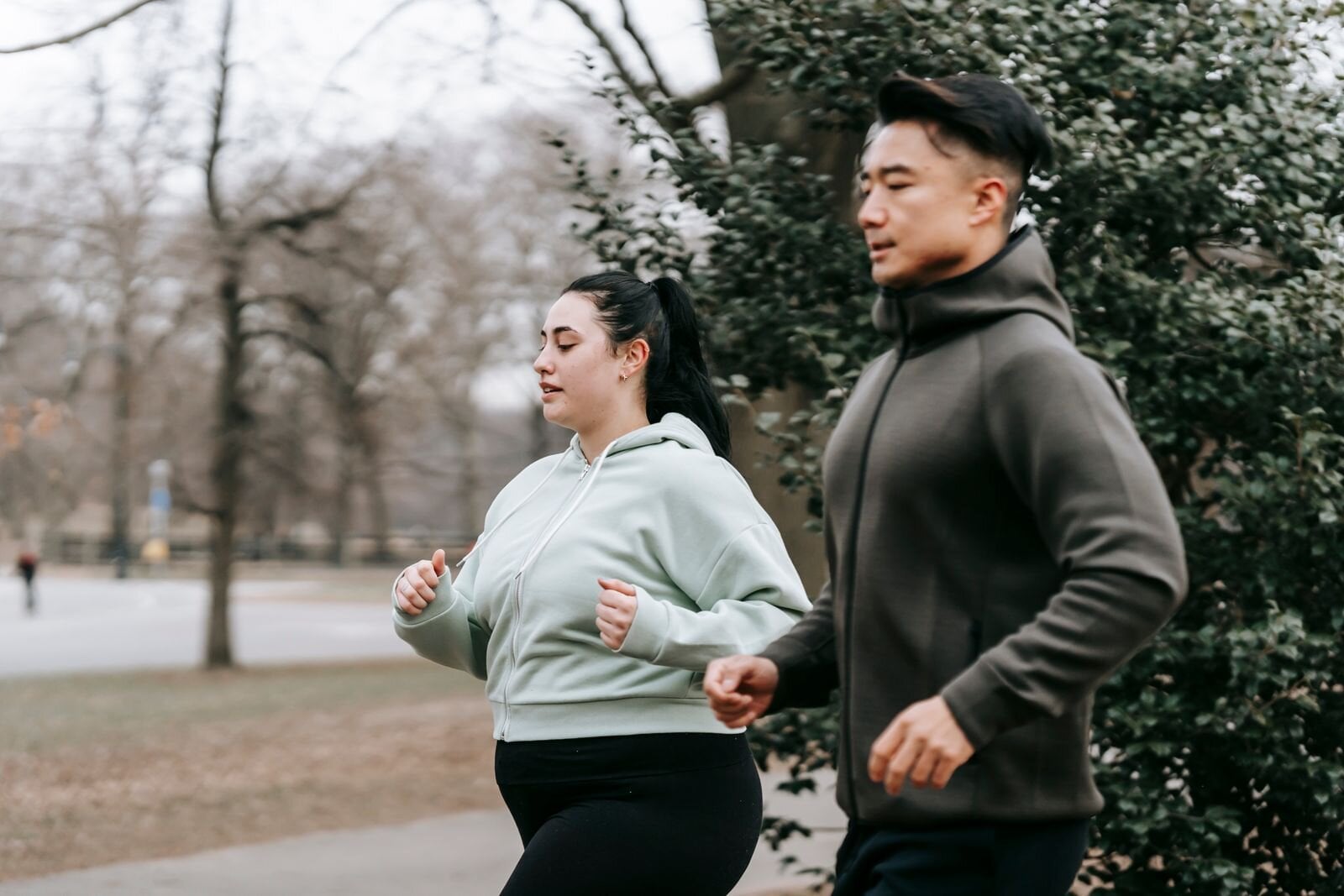
Tai Chi walking uses slow steps, deliberate weight shifts, controlled posture, and relaxed breathing. This makes it an approachable option for beginners, older adults, and people who prefer gentle, low-impact movement.
Research findings are mixed. Some individual Tai Chi trials have reported modest reductions in body weight or waist circumference. However, a 2026 meta-analysis found no statistically significant overall reduction in body weight or BMI. Most studies also evaluated complete Tai Chi forms rather than a standardized Tai Chi walking routine, so expectations should remain realistic.
| Quick overview | Practical target |
|---|---|
| Beginner starting point | 15–20 minutes, 3 days per week |
| Progression | 25–30 minutes, 4–5 days per week |
| Main weight-loss role | Adds movement and modest calorie expenditure |
| Equipment | A clear, level space; supportive shoes if needed |
| Best combined with | Reduced-calorie eating and 2 weekly strength sessions |
Does Tai Chi Walking for Weight Loss Really Work?
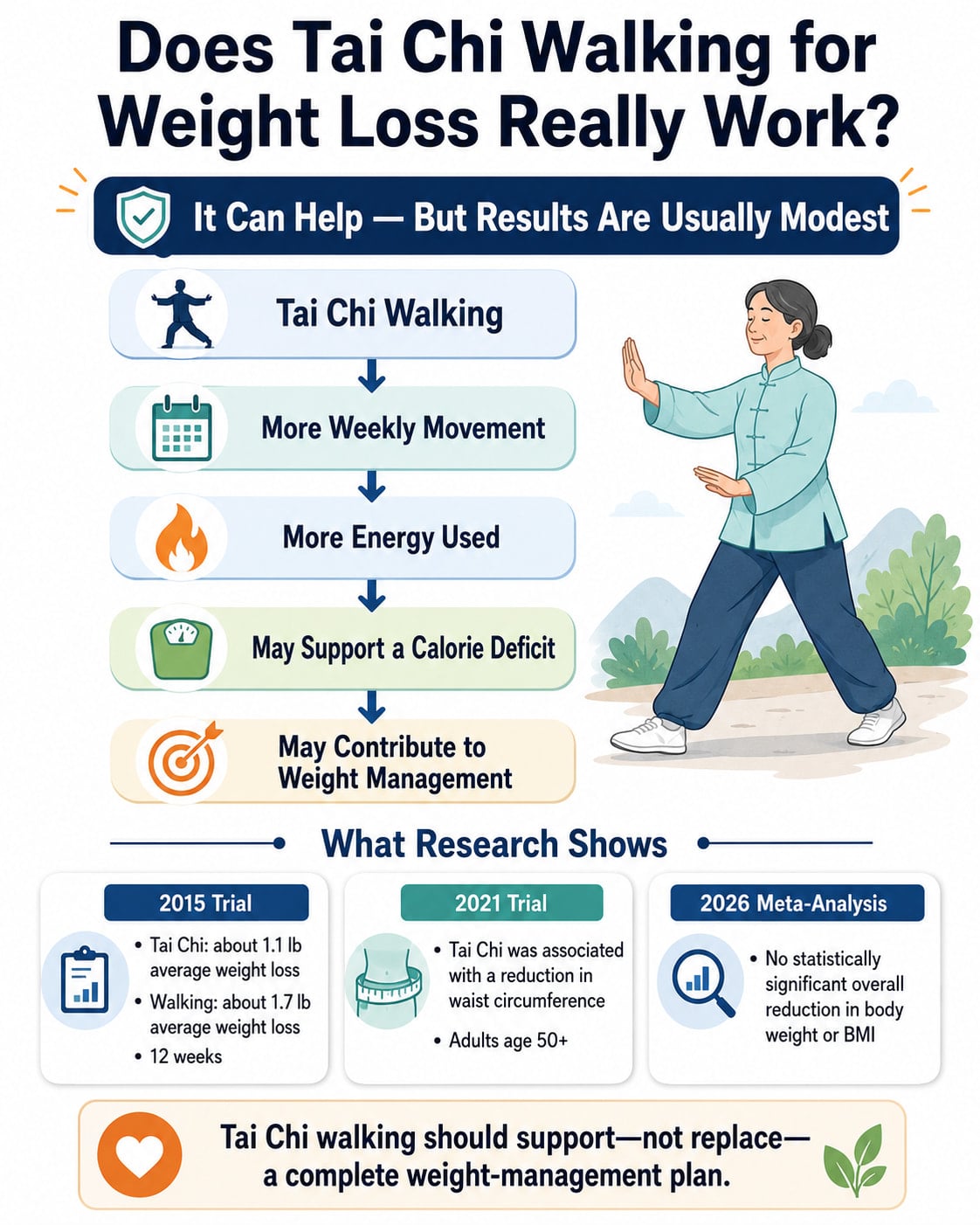
Tai Chi walking contributes to weight management in the same basic way as other physical activities: it uses energy and increases your total weekly movement.
However, weight loss generally requires a sustained calorie deficit. A gentle movement practice may contribute to that deficit, but it usually does not burn enough calories to overcome a consistently high-calorie eating pattern.
There is also an important research limitation: most weight-loss studies have investigated complete Tai Chi forms. They have not tested one universally standardized “Tai Chi walking for weight loss” program.
A 2015 Trial Found Modest Weight Changes
A 2015 cluster-randomized trial included 374 middle-aged adults. Participants completed either Tai Chi, self-paced walking, or no structured exercise. The exercise groups trained for 45 minutes a day, five days per week, for 12 weeks.
On average:
- The Tai Chi group lost approximately 0.50 kilograms, or 1.1 pounds.
- The walking group lost approximately 0.76 kilograms, or 1.7 pounds.
- Fat mass decreased by 0.47 kilograms with Tai Chi and 0.59 kilograms with walking.
- Waist circumference improved in both exercise groups compared with the control group.
These results suggest that frequent Tai Chi practice can contribute to modest changes, but it should not be presented as a rapid weight-loss method.
A 2021 Trial Reported a Smaller Waist Measurement
A 2021 randomized controlled trial studied 543 adults aged 50 or older who had central obesity. Participants completed Tai Chi, conventional aerobic and strength exercise, or no exercise intervention.
Both exercise programs involved three one-hour sessions per week for 12 weeks. Compared with the control group, the Tai Chi group had an adjusted waist-circumference reduction of 1.8 centimeters. Body-weight changes also favored the two exercise groups.
The study did not include a major dietary intervention and had considerable participant dropout, so the results should be interpreted within those limitations.
The Latest Pooled Evidence Is Less Conclusive
A 2026 systematic review and meta-analysis reported:
- A pooled body-weight difference of −0.21 kilograms across seven studies
- A pooled BMI difference of −0.22 across 15 studies
- A pooled waist-circumference difference of −1.15 centimeters across six studies
None of these pooled results reached statistical significance. Individual studies sometimes found improvements, but the total evidence did not demonstrate a consistent direct effect on scale weight or BMI.
What These Results Mean for You
Tai Chi walking may help when it:
- Replaces sedentary time
- Adds to your weekly activity total
- Is practiced long enough and frequently enough
- Helps you become comfortable with more movement
- Is combined with appropriate eating habits
- Leads to additional activities such as brisk walking or strength training
It should not be expected to “melt belly fat,” target one body area, or cause large weight changes without other lifestyle adjustments.
How Many Calories Does Tai Chi Walking Burn?
There is no separate metabolic-equivalent value for Tai Chi walking in the 2024 Adult Compendium of Physical Activities. The Compendium lists general Tai Chi at 3.3 METs, moderate level walking at 3.8 METs, and brisk level walking at 4.8 METs.
Using those activities as reference points, estimated 30-minute calorie expenditure for a 155-pound adult would be:
| Reference activity | MET value | Estimated calories in 30 minutes |
|---|---|---|
| General Tai Chi | 3.3 | About 122 calories |
| Moderate walking at 2.8–3.4 mph | 3.8 | About 140 calories |
| Brisk walking at 3.5–3.9 mph | 4.8 | About 177 calories |
A continuous Tai Chi walking session may expend roughly 120–140 calories in 30 minutes for a 155-pound adult when its intensity resembles general Tai Chi or moderate walking. This is a planning estimate, not a direct measurement.
Actual calorie expenditure depends on:
- Your body weight
- How continuously you move
- Step speed and length
- Stance depth
- Fitness level
- Session duration
- Time spent stopping to learn movements
A slow session with frequent pauses may burn less. Brisk walking will generally burn more calories per minute than gentle Tai Chi walking.
Benefits of Tai Chi Walking for Weight Loss
It Provides an Approachable Way to Move More
Running, jumping, and fast-paced workouts are not comfortable or appropriate for everyone. Tai Chi walking allows you to begin with short steps, an upright position, and a manageable pace.
You can practice in a hallway, living room, yard, or other small space. No machines or weights are required.
It May Improve Balance and Stepping Control
Tai Chi repeatedly challenges you to transfer your weight while maintaining control over your center of gravity. NCCIH reports that Tai Chi may improve balance and help reduce falls in some older adults. Research has also examined improvements in gait and posture control, although results vary by population and program.
Better balance does not directly cause fat loss. However, feeling steadier may make it easier to remain active and participate in other forms of exercise.
It Adds Modest Calorie Expenditure
Tai Chi walking does not need to burn hundreds of calories per session to be useful. Three 20-minute sessions add an hour of movement to your week. Progressing to five 30-minute sessions adds 150 minutes.
The value comes from accumulating activity consistently rather than trying to make every session exhausting.
It May Support Waist and Body-Composition Changes
Some controlled trials have found modest reductions in waist circumference, fat mass, or body weight after structured Tai Chi programs. Pooled evidence remains inconclusive, so these changes should be viewed as possible rather than guaranteed.
It Can Complement Regular Walking
Tai Chi walking and regular walking do not have to compete with each other. Tai Chi walking can be used for balance, movement control, and a gentle warm-up. Regular walking can then provide a stronger cardiovascular stimulus and greater calorie expenditure.
20-Minute Tai Chi Walking Routine for Weight Loss
This routine is a practical beginner template. It has not been clinically proven to produce a specific amount of weight loss.
Use a clear, level surface. Keep a sturdy chair or counter nearby when you are unsure of your balance.
1. Posture and Breathing Warm-Up — 3 Minutes
Stand with your feet about hip-width apart.
- Keep your spine comfortably tall.
- Relax your jaw and shoulders.
- Let your arms hang naturally.
- Soften your knees.
- Look forward rather than down at your feet.
- Breathe naturally without forcing a special rhythm.
Slowly shift your weight forward, backward, and side to side without lifting your feet.
2. Side-to-Side Weight Shifts — 3 Minutes
- Shift your weight gradually toward your left leg.
- Pause when the right foot feels light. Return to the center and shift toward the right leg.
- Keep both feet on the floor at first. Avoid allowing either knee to collapse inward.
- As your balance improves, lightly lift the heel of the unweighted foot before returning it to the floor.
3. Single-Step Practice — 4 Minutes
Begin with your weight over your left leg.
- Lighten your right foot.
- Move it a short distance forward.
- Touch the heel down gently.
- Lower the rest of the foot.
- Transfer your weight forward slowly.
- Return to the starting position.
Repeat on the other side.
Use short steps. A long stride can pull your body off balance and place unnecessary stress on your knees.
4. Continuous Tai Chi Walking — 7 Minutes
Connect the single steps into continuous walking.
- Shift fully enough for the moving foot to feel light.
- Place the heel quietly.
- Transfer your weight smoothly.
- Keep your torso centered rather than leaning forward.
- Let your arms move naturally or hold them in a comfortable rounded position.
- Maintain an easy, steady breathing rhythm.
Take four to eight steps, stop under control, and turn with several small steps. Avoid twisting sharply on a planted foot.
Limited space is not a problem. You can alternate one step forward and one step backward while holding a counter, or practice slow stepping in place.
5. Cooldown — 3 Minutes
Gradually shorten your steps and return to stationary weight shifts.
Finish with:
- Gentle ankle movements
- Small shoulder rolls
- Relaxed breathing
- A slow walk around the room
You should finish feeling worked but stable, not dizzy or exhausted.
How Often Should You Practice?
Start below your maximum ability and add time gradually.
| Week | Session length | Weekly frequency | Approximate total |
|---|---|---|---|
| Week 1 | 15 minutes | 3 days | 45 minutes |
| Week 2 | 20 minutes | 3 days | 60 minutes |
| Week 3 | 25 minutes | 4 days | 100 minutes |
| Week 4 | 30 minutes | 4 days | 120 minutes |
| Week 5 and beyond | 30 minutes | 5 days | 150 minutes |
The CDC’s current adult activity guidance recommends at least 150 minutes of moderate-intensity aerobic activity plus muscle-strengthening activity on two days each week. Older adults should also include activities that challenge balance.
Tai Chi walking may not reach moderate intensity for every person. When your breathing remains almost unchanged, count the session as valuable movement but include brisk walking, cycling, swimming, or another suitable moderate activity during the week.
Tips to Get Better Weight-Loss Results from Tai Chi Walking
Build Total Time Before Making the Movements Harder
Add five minutes to a session before attempting deeper stances or longer steps. This increases your activity without unnecessarily compromising form.
Keep Moving Continuously
Learning requires pauses, but a weight-management session should gradually become more continuous. Practice individual steps first and then connect them into longer sequences.
Combine Tai Chi Walking With Regular Walking
A practical 30-minute combination is:
- 5 minutes of Tai Chi weight shifts
- 10 minutes of continuous Tai Chi walking
- 10 minutes of moderate regular walking
- 5 minutes of slow Tai Chi walking and cooldown
This preserves the balance-focused component while increasing cardiovascular activity.
Use a Manageable Calorie Deficit
Exercise cannot reliably compensate for consistently consuming more energy than your body needs.
NIDDK’s guidance on safe, successful weight-loss programs recommends combining a reduced-calorie eating plan with physical activity, behavior support, and a maintenance strategy. NIDDK also notes that increased activity may not produce large weight loss by itself, even though it offers important health benefits.
Build meals around appropriate portions of vegetables, fruit, protein foods, beans, whole grains, and other nutrient-dense choices. Liquid calories, frequent restaurant meals, large snacks, and calorie-dense sauces can make maintaining a deficit more difficult.
Include Strength Training
Perform muscle-strengthening activities at least twice per week when medically appropriate. Options include chair squats, wall push-ups, resistance-band rows, step-ups, and exercises recommended by a qualified professional.
Strength training supports muscular function and provides benefits that gentle walking alone may not fully provide. The CDC includes two weekly strength days in its adult activity recommendations.
Track More Than One Outcome
Useful measures include:
- Average weekly body weight
- Waist circumference
- Minutes of activity
- Number of completed sessions
- Walking comfort
- Balance and confidence
- Strength-training progress
Daily body weight can fluctuate because of food, fluids, sodium, digestion, and other factors. Look at the trend over several weeks rather than reacting to one measurement.
Keep Expectations Realistic
NIDDK describes losing approximately 5%–10% of starting body weight within six months as a common initial goal in comprehensive weight-loss programs. This is not a promise of what Tai Chi walking alone will produce.
Tai Chi Walking vs. Regular Walking for Weight Loss
| Feature | Tai Chi walking | Regular brisk walking |
|---|---|---|
| Primary focus | Weight transfer, balance, posture, and control | Distance, pace, and cardiovascular activity |
| Typical speed | Very slow to slow | Moderate to brisk |
| Calorie expenditure | Usually lower at a gentle pace | Usually higher at a brisk pace |
| Balance challenge | High because of deliberate single-leg support | Moderate |
| Space needed | Can be practiced in a small indoor area | Easier with a longer route or treadmill |
| Best use | Gentle activity, movement practice, and balance | Aerobic fitness and greater calorie expenditure |
For maximizing calorie expenditure in a limited amount of time, brisk walking usually has an advantage. The Adult Compendium assigns moderate walking a higher MET value than general Tai Chi, with an even larger difference for brisk walking.
Tai Chi walking may be the better starting point when balance, coordination, confidence, or exercise tolerance is the immediate priority. A combination of both often provides a more complete routine.
Common Tai Chi Walking Mistakes
Taking Steps That Are Too Long
Overstriding makes smooth weight transfer more difficult. Shorten the step until you can place the foot without leaning or falling forward.
Bending the Knees Too Deeply
A deep stance is not required for weight loss. Use a comfortable knee bend and remain tall enough to move without pain.
Moving the Foot Before Shifting Your Weight
The stepping foot should feel light before it moves. Rushing this sequence often creates shuffling or unstable steps.
Allowing the Knees to Collapse Inward
Keep each knee generally aligned with its foot. Reduce your stance depth when you cannot maintain that alignment.
Looking Down Continuously
Looking straight at the floor may pull your posture forward. Choose a point ahead of you and use brief glances down only when necessary.
Holding Your Breath
Breathe naturally. Do not force long breath holds or try to match a complicated breathing pattern while learning the steps.
Depending on Tai Chi Walking Alone
Tai Chi walking is one activity option. Sustainable weight management usually requires attention to eating patterns, total aerobic activity, strength, sleep, and long-term consistency.
Safety Tips and Who Should Use Caution
Tai Chi appears to have a favorable safety profile. An NCCIH summary of 24 studies found similar adverse-event rates among Tai Chi, other active interventions, and control groups. Events linked to exercise were generally minor, such as temporary musculoskeletal aches or pain.
Practice more safely by following these precautions:
- Use a level, uncluttered, nonslip surface.
- Keep a sturdy chair, wall, or counter within reach.
- Begin with short steps and shallow knee bends.
- Avoid fast turns or twisting on a planted foot.
- Wear supportive footwear when practicing barefoot feels unstable.
- Stop if a movement causes sharp, increasing, or persistent pain.
- Learn from an experienced instructor when possible.
Moderate activity is safe for most people, but the CDC advises people with chronic health conditions such as heart disease, arthritis, or diabetes to discuss appropriate types and amounts of activity with a healthcare professional.
Get personalized guidance before starting when you have recently had surgery, experience frequent falls, have a condition that significantly affects mobility, or use medication that can cause dizziness or low blood pressure. Pregnant readers should speak with a healthcare professional before beginning Tai Chi because NCCIH notes direct pregnancy-specific safety research is limited.
Stop exercising and seek prompt medical care for fainting, chest pain, or severe and unusual shortness of breath. The American Heart Association notes sudden chest discomfort with shortness of breath, sweating, nausea, or lightheadedness may require emergency care.
Frequently Asked Questions
Does Tai Chi walking really help you lose weight?
Tai Chi walking can contribute to weight loss by increasing activity and calorie expenditure. However, current research does not show that Tai Chi consistently produces substantial scale-weight loss on its own. It is most effective as one part of a broader weight-management plan.
How many calories does 30 minutes of Tai Chi walking burn?
A reasonable reference estimate is approximately 120–140 calories in 30 minutes for a 155-pound adult, depending on how continuously and energetically the person moves. There is no official MET value specifically for Tai Chi walking, so this estimate is based on general Tai Chi and moderate walking values.
How long should I do Tai Chi walking for weight loss?
Begin with 15–20 minutes, three days per week. Gradually progress toward 25–30 minutes on four or five days. Include other moderate aerobic activity when your Tai Chi walking remains very light.
Is Tai Chi walking better than regular walking?
It depends on your goal. Brisk regular walking will usually burn more calories and provide a stronger cardiovascular workout. Tai Chi walking places greater emphasis on balance, posture, controlled stepping, and body awareness.
Can Tai Chi walking reduce belly fat?
Tai Chi walking cannot selectively burn fat from the abdomen. Some Tai Chi studies have reported reductions in waist circumference, but pooled findings remain inconclusive. Overall fat loss depends on your long-term energy balance, activity, genetics, and other individual factors.
Can beginners practice Tai Chi walking at home?
Yes. Beginners can practice in a clear hallway, living room, or outdoor area. Start beside a wall or sturdy counter, use short steps, and avoid complicated turns until you feel stable.
Is Tai Chi walking safe for seniors or people with knee pain?
It may be appropriate because the movements can be slow and modified. Tai Chi has been studied for balance and knee osteoarthritis, but individual needs vary. Use shallow stances, avoid painful ranges, and get professional advice when knee pain, instability, or another health condition affects your ability to exercise.
Conclusion
Tai Chi walking can be a useful part of a weight-loss routine, especially when you need a gentle, controlled way to become more active. Its greatest strengths are accessibility, balance practice, and the ability to accumulate movement without running or jumping.
Start with 15 minutes three times this week. Focus on smooth weight transfers and short, stable steps. As your comfort improves, add time, include moderate walking, perform strength exercises twice weekly, and support your activity with an eating pattern you can maintain.
This content is for informational purposes only and not medical advice.
References
- National Center for Complementary and Integrative Health: Tai Chi—What You Need To Know
- Centers for Disease Control and Prevention: Adding Physical Activity as an Adult
- National Institute of Diabetes and Digestive and Kidney Diseases: Choosing a Safe and Successful Weight-Loss Program
- 2024 Adult Compendium of Physical Activities: Sports and Tai Chi MET Values
- Hui et al., 2015: Effects of Tai Chi and Walking Exercises on Weight Loss
- Siu et al., 2021: Effects of Tai Chi or Conventional Exercise on Central Obesity
- Liu et al., 2026: Systematic Review and Meta-Analysis of Tai Chi Outcomes