
The 15-3-25 Walk Method involves walking on a treadmill at a 15% incline and 3 mph for 25 minutes. It can provide a challenging cardio session, but the full settings may be too demanding for beginners.
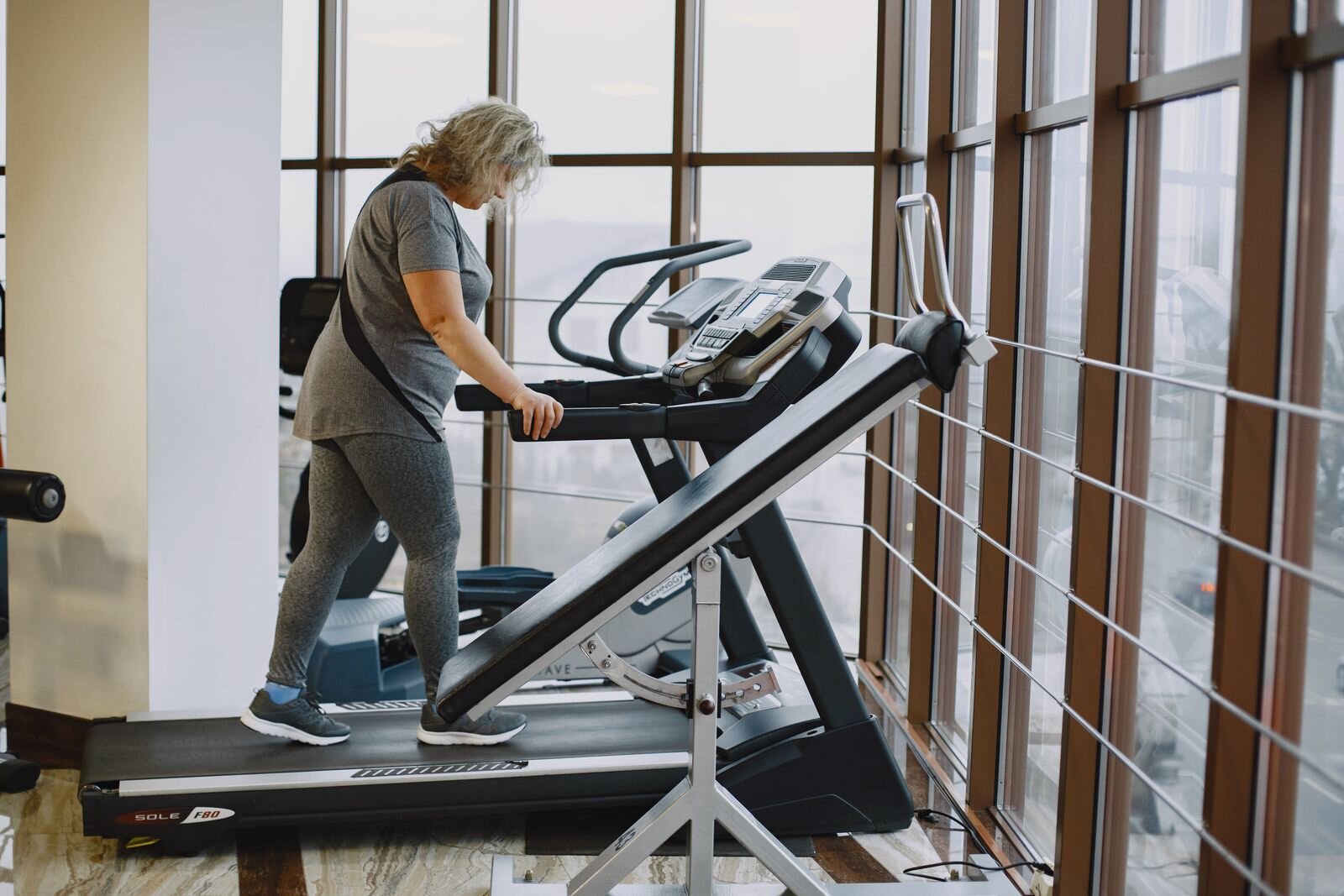
Understanding the incline matters because uphill walking can feel very different from walking at the same speed on flat ground. You can start with a gentler slope, a slower pace, or a shorter session and adjust as your fitness improves. Reaching 15% is optional.
What Is the 15-3-25 Walk Method?
The name describes three treadmill settings:
| Number | Meaning | What to check |
|---|---|---|
| 15 | 15% incline | The display should show percentage grade, not degrees or an unrelated resistance level. |
| 3 | 3 miles per hour | This equals approximately 4.8 kilometers per hour. |
| 25 | 25 minutes of walking | Allow additional time to warm up and cool down. |
A 15% grade means a rise of 15 units for every 100 units of horizontal distance. It is a substantial uphill slope. If your treadmill uses kilometers per hour, setting the speed to 3.0 produces a slower workout than 3 mph.
The method is an informal workout name. Online descriptions vary, and the exact combination has limited direct research. Most relevant evidence concerns incline walking generally or the related 12-3-30 workout.
Potential Benefits of the 15-3-25 Walk Method
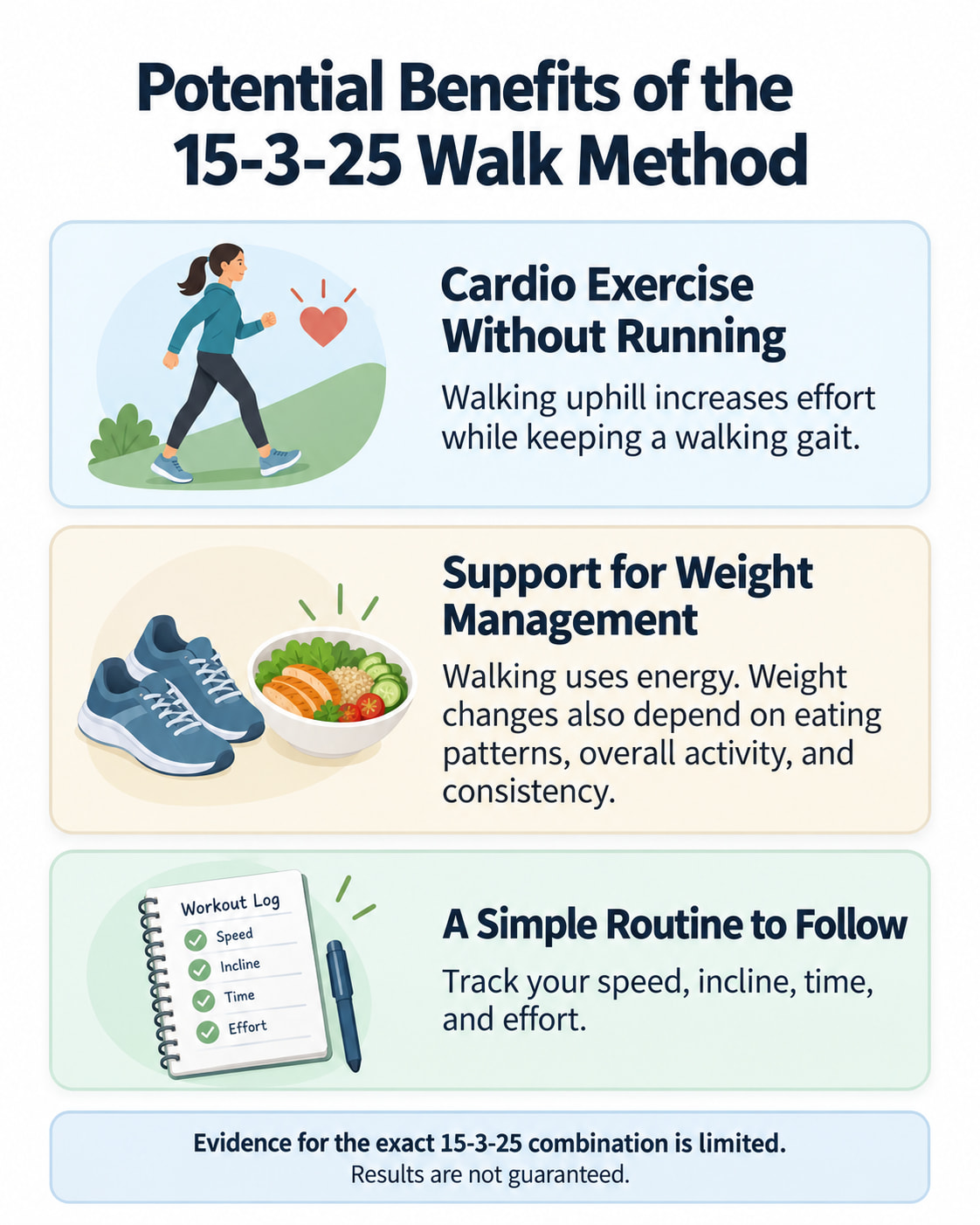
Cardio Exercise Without Running
Walking uphill increases the effort needed to move at a given pace. This lets you challenge your heart and lungs while keeping a walking gait.
That can appeal to people who prefer walking to running. However, a walking workout can still be strenuous, and a steep incline may be uncomfortable for some people.
Support for Weight Management
Walking uses energy and can contribute to a calorie deficit. Whether your weight changes also depends on your eating patterns, overall activity, and consistency. There is no reliable promise of losing a particular amount of weight from this routine alone.
A 2025 study found that the related 12-3-30 workout used fewer calories per minute than self-paced running, while a larger percentage of its energy came from fat. The study involved 16 participants and compared laboratory sessions matched for total energy expenditure.
It did not test 15-3-25 or measure long-term weight loss. A higher percentage of energy coming from fat during exercise does not establish greater body-fat loss over time.
A Simple Routine to Follow
Fixed settings can make a workout easier to remember. You can also record your actual speed, incline, time, and effort to track progress.
For example, completing the same comfortable session with steadier breathing can be useful progress even before you increase the incline. The routine is most useful when its structure helps you exercise consistently.
Risks and Who Should Be Cautious
The Incline May Exceed Your Current Fitness
Starting immediately at 15% can leave you struggling to keep pace or maintain comfortable form. Reduce the settings if you are overreaching, hanging back from the handrails, or feeling unable to control your steps.
The numbers are adjustable. Finishing all 25 minutes is not a reason to continue through pain or warning symptoms.
Existing Achilles or Joint Problems May Need Adjustments
People with ongoing heel, ankle, knee, hip, or back problems may need a different incline or another activity.
Cleveland Clinic notes that Achilles tendinitis discomfort can increase when going uphill. Its guidance, reviewed March, 2024, advises people with the condition to avoid steep inclines.
This does not mean incline walking inevitably damages healthy tendons. It means an existing painful condition deserves attention before adding a demanding hill workout.
Know When to Stop and Seek Help
NIDDK advises choosing activity that matches your abilities and building up gradually. Seek guidance before a demanding workout if you have balance difficulties, a relevant chronic condition, or bone and joint problems that activity could worsen.
Stop exercising and seek prompt help for:
- Chest pain, tightness, or pressure.
- Extreme or unusual shortness of breath.
- Dizziness, faintness, or feeling suddenly unwell.
Call emergency services for chest pressure or severe breathing difficulty, particularly when accompanied by faintness or other concerning symptoms. Persistent pain in your feet, ankles, legs, or joints also warrants professional advice.
How to Start the 15-3-25 Walk Method
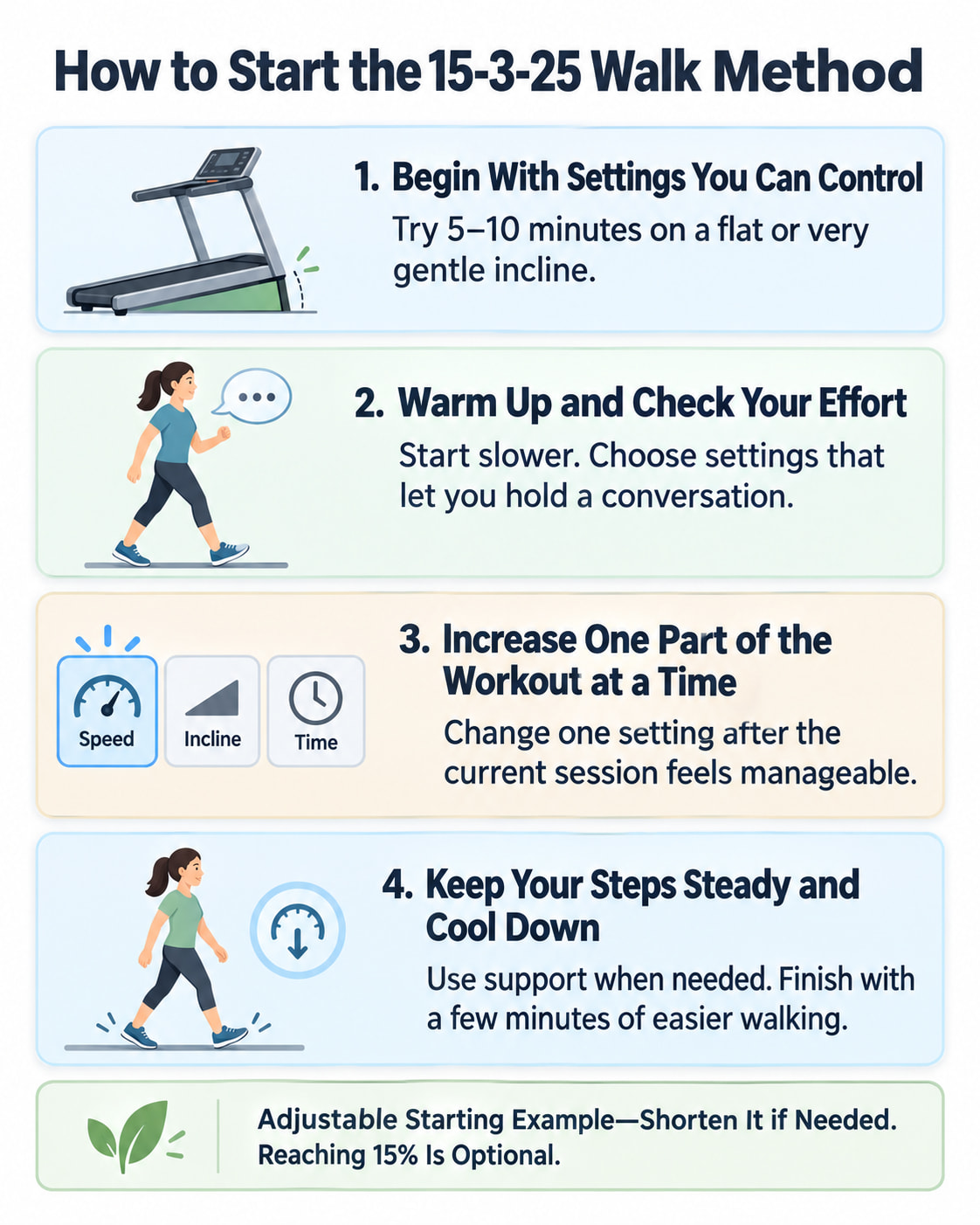
1. Begin With Settings You Can Control
First, get familiar with the treadmill’s controls and emergency stop. Wear comfortable walking shoes and follow the equipment’s safety instructions.
An adjustable starting example is 5–10 minutes of comfortable walking on a flat or very gentle incline, with slower walking before and after. Shorten the session further if necessary.
This is a practical starting option, not a tested 15-3-25 progression schedule. Your initial speed does not have to be 3 mph.
2. Warm Up and Check Your Effort
Begin with a few minutes of slower walking. Increase the workload gradually instead of stepping straight into the full settings.
The CDC explains how to use the talk test:
| Effort level | What speaking feels like |
|---|---|
| Moderate | You can hold a conversation, but singing is difficult. |
| Vigorous | You can say only a few words before needing a breath. |
For your first sessions, choose settings that let you maintain a conversation and steady steps. The full routine may feel vigorous even though you are walking.
3. Increase One Part of the Workout at a Time
Make small adjustments after your current session feels manageable and does not leave you with persistent discomfort.
| Your current situation | A possible next step |
|---|---|
| Short, flat walks still feel challenging | Repeat the same session or shorten it. |
| Short, flat walks feel comfortable | Add a few minutes while keeping the pace and incline steady. |
| Longer walks feel comfortable | Try a small incline increase for part of the session. |
| An incline increase disrupts your form | Return to the previous settings. |
You might eventually reach 25 minutes at a comfortable incline before considering steeper walking. There is no required weekly timetable, and you can continue benefiting from a lower setting indefinitely.
4. Keep Your Steps Steady and Cool Down
Look ahead, keep your shoulders relaxed, and use comfortable steps. Avoid trying to maintain the displayed numbers by leaning far backward or supporting much of your weight through your arms.
Use the handrails when needed for safety. If you cannot walk steadily without substantial support, reduce the workload; do not release the rails while unsteady.
Finish with a few minutes of slower walking at an easier incline. Allow recovery time between demanding sessions, especially while getting used to uphill walking.
How Often Should You Do the 15-3-25 Walk Method?
There is no established ideal frequency for this exact routine. Your schedule should reflect your fitness, recovery, and other exercise.
The CDC recommends at least 150 minutes of moderate-intensity activity, 75 minutes of vigorous activity, or an equivalent combination each week. Adults also need muscle-strengthening activity on at least two days. Its guidance was updated April, 2026.
Five 25-minute sessions total 125 minutes. If those sessions are moderate, they fall short of the 150-minute target by themselves. Vigorous minutes contribute differently to the weekly recommendation.
These totals are not a prescription to begin with several steep sessions. Combine manageable walking with easier activity and strength training, and build gradually toward an appropriate weekly amount.
15-3-25 vs. 12-3-30: What Is the Difference?
| Feature | 15-3-25 | 12-3-30 |
|---|---|---|
| Incline | 15% | 12% |
| Speed | 3 mph | 3 mph |
| Main walking time | 25 minutes | 30 minutes |
| Main distinction | Steeper, shorter session | Less steep, longer session |
The 15-3-25 version increases the incline while reducing the duration. Neither combination is established as universally better for fitness, weight loss, or joint comfort.
Choose settings you can manage consistently. You do not need to follow either formula exactly to get a useful walking workout.
Frequently Asked Questions
How Many Calories Does the 15-3-25 Walk Method Burn?
There is no single accurate number for everyone. Energy use varies with body weight, actual speed and grade, duration, and how much support you use. Treat treadmill and wearable calorie readings as estimates rather than precise measurements.
Does the 15-3-25 Walk Method Burn Belly Fat?
It can contribute to overall energy expenditure, but it cannot determine where your body loses fat. Changes in waist size depend on overall body-fat changes and individual factors, not a special effect of these treadmill settings.
Can You Do the 15-3-25 Walk Method Every Day?
Daily walking may suit some people, but daily walking at a steep incline is not necessary. If a session leaves you unusually fatigued or uncomfortable, choose easier activity or recovery time before another demanding workout.
Can You Hold the Handrails?
Yes, when needed for safety. If you must hang back or support substantial body weight to keep up, lower the speed or incline. Maintaining balance takes priority over following the numbers.
Is the 15-3-25 Walk Method a Zone 2 Workout?
Not automatically. Heart-rate responses depend on fitness and other individual factors. A 15% incline at 3 mph may push some people well beyond an easy aerobic effort, so the settings alone cannot identify your training zone.
Can You Do It Without a Treadmill?
Outdoor hill walking can provide uphill exercise, but it will not precisely reproduce a steady treadmill grade and speed. Choose a safe route and adjust your pace to the terrain and your abilities. Flat walking is also a useful option.
Conclusion
The 15-3-25 Walk Method offers a straightforward way to organize incline walking, but its full settings are demanding. Start with a comfortable pace and slope, increase gradually, and include strength training in your routine. For your next walk, choose settings that let you move steadily and finish feeling capable of returning.
References
- Wong, M. W. H., Davis, D. W., Perez, O. R., et al. (2025). An Exploratory Study Comparing the Metabolic Responses between the 12-3-30 Treadmill Workout and Self-Paced Treadmill Running. International Journal of Exercise Science, 18(6), 56–64. DOI: 10.70252/UBIX5911.
- Centers for Disease Control and Prevention.. How to Measure Physical Activity Intensity.
- Centers for Disease Control and Prevention. Physical Activity and Your Weight and Health.
- National Institute of Diabetes and Digestive and Kidney Diseases. Staying Active at Any Size.
- Cleveland Clinic. Achilles Tendinitis. Medically reviewed patient guidance.