
The most common allulose side effects are diarrhea, loose stools, bloating, abdominal cramps, and nausea, especially when you consume a large amount at once. These symptoms are usually mild and temporary, but some people have digestive discomfort at much lower amounts than others.

Allulose appears reasonably well tolerated when used in modest amounts. However, there is no official FDA daily intake limit, and the available human studies are still relatively small. The safest practical approach is to start with a small serving, avoid combining several allulose-containing products, and reduce your intake if digestive symptoms appear.
What Is Allulose?
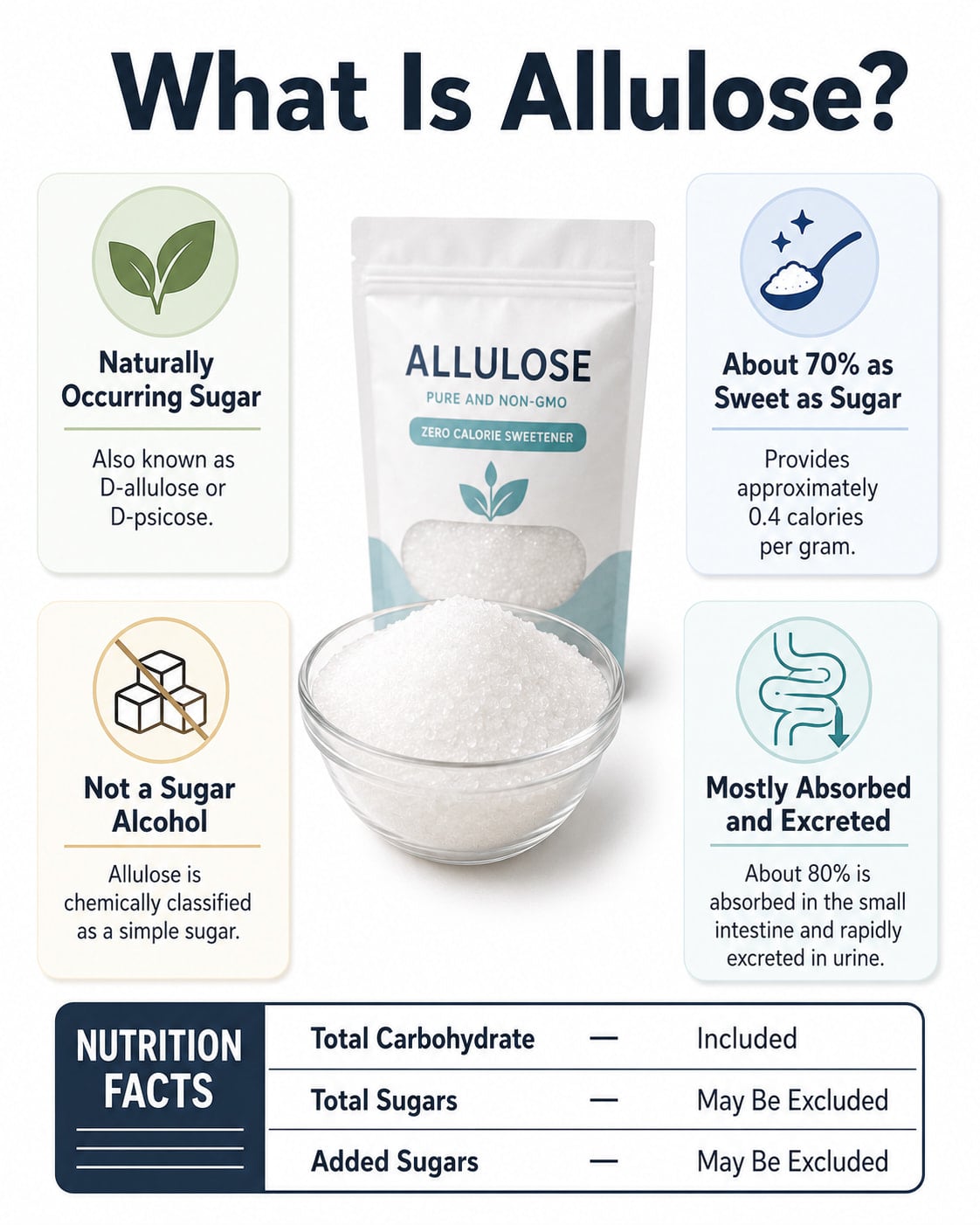
Allulose, also called D-allulose or D-psicose, is a naturally occurring monosaccharide—a type of simple sugar. Small amounts occur naturally in certain foods, but the allulose used in commercial products is generally manufactured by converting fructose through an enzymatic process.
Allulose is approximately 70% as sweet as table sugar. Unlike traditional sugar, it contributes very little usable energy because most of it is absorbed and then excreted without being substantially metabolized. Food Standards Australia New Zealand, or FSANZ, estimates that about 80% of an oral dose is absorbed in the small intestine and rapidly excreted in urine.
Allulose is not a sugar alcohol. Erythritol, sorbitol, xylitol, and maltitol are sugar alcohols, while allulose is chemically classified as a sugar. Even so, large amounts of allulose and certain sugar alcohols can produce similar gastrointestinal symptoms.
Under the FDA’s October 2020 allulose labeling guidance, manufacturers may exclude allulose from the “Total Sugars” and “Added Sugars” lines on Nutrition Facts labels. It must still be included in total carbohydrate, and manufacturers may use 0.4 calories per gram when calculating calories.
Common Allulose Side Effects

Digestive symptoms are the primary side effects documented in human allulose studies. They become more likely as the amount consumed increases, particularly when a large dose is taken during one eating occasion.
| Possible side effect | What it may feel like | What to do first |
|---|---|---|
| Diarrhea or loose stools | Watery or unusually loose bowel movements | Stop or reduce allulose and replace lost fluids |
| Bloating or abdominal distention | Fullness, pressure, or visible swelling in the abdomen | Reduce the serving and check for other sweeteners |
| Abdominal cramps or pain | Aching, cramping, or intestinal discomfort | Stop the product until symptoms resolve |
| Nausea | Queasiness or an unsettled stomach | Avoid another serving and sip fluids |
| Gas or intestinal rumbling | Increased movement, pressure, or flatulence | Try a smaller amount at a later time |
| Headache | Head discomfort reported in some higher-dose studies | Consider dehydration or other ingredients as possible contributors |
| Reduced appetite or unusual fullness | Feeling full longer or having less interest in food | Reduce intake if the effect is uncomfortable or persistent |
Headache, reduced appetite, and increased fullness have been reported in some high-dose research, but the evidence does not establish them as common allulose side effects. Digestive symptoms such as diarrhea and abdominal discomfort are much more consistently documented.
Diarrhea and Loose Stools
Diarrhea is the best-documented allulose side effect.
A 2018 gastrointestinal tolerance study found that symptoms increased sharply when healthy adults consumed 0.5 grams of allulose per kilogram of body weight as a single dose. At that amount, 13 of 29 participants—approximately 44.8%—reported diarrhea, and four participants experienced severe diarrhea.
The researchers did not observe severe diarrhea at or below 0.4 grams per kilogram in the single-dose portion of the study. Based on these findings, they proposed 0.4 grams per kilogram as a maximum single dose for occasional consumption.
That number should not be treated as a recommended serving. Some people may experience loose stools at considerably lower amounts, especially when allulose is taken on an empty stomach or combined with other ingredients that affect digestion.
Bloating and Abdominal Distention
Allulose that remains in the digestive tract can increase the amount of water in the intestines. This may create a feeling of fullness, pressure, or abdominal swelling.
Bloating may be more noticeable when an allulose product also contains ingredients such as:
- Erythritol, sorbitol, maltitol, or another sugar alcohol
- Inulin or chicory root fiber
- Large amounts of soluble fiber
- Milk ingredients in someone who does not tolerate lactose
- High-fat ingredients that slow stomach emptying
Because commercial sweeteners frequently use blends, allulose may not always be the only cause of the symptoms.
Abdominal Cramps or Pain
Abdominal cramping can accompany increased intestinal water, loose stools, or rapid bowel movement. Mild cramping that begins after a large serving and resolves when allulose is discontinued is consistent with dose-related intolerance.
Severe, persistent, or localized pain should not automatically be blamed on allulose. It may indicate another digestive problem that requires medical evaluation.
Nausea
Nausea has been reported after higher total daily intakes. In the 2018 tolerance study, repeated consumption reaching 1 gram per kilogram in one day was associated with severe symptoms in some participants, including nausea, abdominal pain, headache, reduced appetite, and diarrhea.
Nausea may also be related to another ingredient, the food containing the sweetener, or consuming a concentrated product too quickly.
Why Does Allulose Cause Digestive Symptoms?
The digestive effects of allulose are primarily related to osmotic laxation.
Most allulose is absorbed in the small intestine and later excreted in urine. The portion that is not absorbed continues into the large intestine. Because sugar molecules in the intestinal tract attract water, a sufficiently large amount can increase the water content of the stool and produce loose stools or diarrhea.
Some allulose may also interact with intestinal microorganisms, although FSANZ concluded that most of the allulose reaching the large intestine appears to leave the body unchanged.
This explains why the reaction is dose-dependent:
- A small serving may be tolerated without symptoms.
- A larger serving leaves more allulose available in the digestive tract.
- More water is drawn into the intestines.
- Bloating, cramping, or diarrhea may develop.
Individual digestive sensitivity, meal composition, other sweeteners, and the speed of consumption may influence where that threshold falls.
How Much Allulose Is Too Much?
There is no official FDA acceptable daily intake or tolerable upper-intake level specifically for allulose. The numbers commonly presented online come from gastrointestinal tolerance studies, not from an FDA recommendation.
The FDA’s current sweetener information states that the agency has evaluated GRAS notices for D-allulose and has no questions about the companies’ safety conclusions under the intended conditions of use. This is more precise than simply saying allulose is “FDA approved.” GRAS substances do not follow the same premarket approval pathway as conventional food additives.
Research-Based Intake Reference Points
Two older values are widely cited:
- Maximum single-serving reference: 0.4 grams per kilogram of body weight
- Older maximum daily reference: 0.9 grams per kilogram of body weight per day
These values were proposed by the authors of the 2018 tolerance study and were later used in the August 2024 FSANZ technical and risk assessment to reduce the likelihood of laxative effects.
FSANZ assigned allulose a toxicological acceptable daily intake of “not specified.” That does not mean unlimited amounts can be consumed without symptoms. It means FSANZ did not consider a numerical toxicological ADI necessary under the evaluated conditions, while still recognizing that excessive intake can cause osmotic diarrhea.
Newer, More Conservative Research
A 2026 randomized 30-day study reported on 50 healthy Chinese adults assigned to either 24 grams per day, approximately 0.4 grams per kilogram, or 36 grams per day, approximately 0.6 grams per kilogram.
Overall, 48% of participants reported at least one gastrointestinal symptom. Symptoms were generally mild, temporary, and most common during the first three days. There was no statistically significant difference in overall symptom incidence between the two dose groups.
The researchers proposed a provisional daily level of 0.4 grams per kilogram for healthy Chinese adults. However, they emphasized that the suggestion requires confirmation in larger, longer studies. It is not an FDA limit or a universal recommendation.
Allulose Intake by Body Weight
| Body weight | 0.4 g/kg reference | Older 0.9 g/kg daily reference |
|---|---|---|
| 120 lb | About 22 g | About 49 g |
| 150 lb | About 27 g | About 61 g |
| 180 lb | About 33 g | About 73 g |
| 200 lb | About 36 g | About 82 g |
The 0.4-gram-per-kilogram column represents the older single-serving tolerance threshold and the more conservative provisional daily level suggested by the 2026 study. The 0.9-gram-per-kilogram figure is an older proposed maximum daily intake—not a serving recommendation.
Practical rule: Treat 0.4 grams per kilogram as a boundary to remain below, not an amount to work toward. Your comfortable intake may be much lower.
How to Use Allulose With Fewer Side Effects
1. Begin With a Small Amount
Do not begin near the maximum amounts used in tolerance studies. Start with the smallest practical portion listed on the product and see how your digestive system responds.
When trying pure granulated allulose, use an accurate kitchen scale when possible. Spoon measurements can vary between products and may make it difficult to know how many grams you consumed.
2. Try It With Food
A small amount consumed as part of a meal may be easier to evaluate than a concentrated dose taken alone. Avoid taking a large amount in a drink and consuming it quickly, particularly when your stomach is empty.
Eating allulose with food is not guaranteed to prevent symptoms. The amount consumed remains the most important factor.
3. Increase Gradually
Use the same small amount several times before increasing it. Increasing slowly makes it easier to identify your individual tolerance.
Do not assume that the absence of symptoms after one serving means a much larger serving will also be comfortable.
4. Count All Sources During the Day
Allulose can appear in:
- Low-sugar protein bars
- Keto-friendly snacks
- Sugar-free syrups
- Ice cream and frozen desserts
- Baked goods
- Flavored drinks
- Tabletop sweetener blends
- Protein powders and meal-replacement products
Two or three modest servings from different foods can produce a high total daily intake. The Nutrition Facts panel may not list allulose on a separate line, so check the ingredient list and any product-specific allulose statement.
5. Examine the Entire Ingredient List
A product labeled “allulose sweetener” may also contain erythritol, monk fruit, stevia, soluble corn fiber, inulin, or chicory root fiber.
When a blended product causes bloating or diarrhea, the reaction cannot automatically be attributed to allulose. Try only one new product at a time so that you can identify the likely trigger.
6. Reduce or Stop Intake When Symptoms Develop
Do not continue increasing the amount in an attempt to force your digestive system to adapt.
For mild symptoms:
- Stop consuming allulose for the rest of the day.
- Drink enough fluid to replace losses from diarrhea.
- Resume only after symptoms have resolved.
- Use a substantially smaller serving next time.
- Choose another sweetener if symptoms repeatedly return.
Is Allulose Safe to Consume Every Day?
Available evidence suggests that modest daily quantities can be tolerated by many healthy adults, but long-term research remains limited.
The 2024 FSANZ assessment reviewed human studies using approximately 5 to 15 grams per day for periods ranging from 8 to 48 weeks. These studies did not identify major treatment-related adverse effects in the selected participants. However, many trials excluded people who were pregnant, breastfeeding, diabetic, or living with significant kidney or liver disorders.
The 2026 study tested much larger daily amounts—24 or 36 grams—for 30 days. In addition to mild digestive symptoms, researchers observed several statistically significant changes in blood and biochemical measurements. Those measurements generally stayed within normal clinical ranges and were considered clinically insignificant by the study authors.
A bone-mineral-density T-score change was also reported in a small subgroup of participants aged 35 and older receiving the higher dose. A 30-day study involving a small subgroup cannot establish that allulose damages bone. The finding requires replication and may reflect measurement variability, but it supports taking a cautious approach to consistently high intake.
Based on current evidence, it is more reasonable to use allulose as one tool for reducing added sugar than to consume large concentrated quantities every day.
Who Should Be Extra Cautious With Allulose?
People With IBS or Sensitive Digestion
Someone with irritable bowel syndrome, chronic diarrhea, inflammatory bowel symptoms, or a history of reacting to poorly absorbed carbohydrates may experience symptoms at lower amounts.
Allulose is not a sugar alcohol, but it can still increase intestinal water. A product advertised as low-FODMAP or digestive-friendly is not guaranteed to be well tolerated by every person with IBS.
Start with a very small amount during a period when symptoms are stable. Avoid testing it during an active digestive flare.
Pregnant or Breastfeeding People
Human evidence on routine concentrated allulose intake during pregnancy and breastfeeding is limited. These groups were frequently excluded from longer human studies reviewed by FSANZ.
Occasional exposure from a food is different from deliberately consuming large amounts of concentrated sweetener. Discuss frequent use with a qualified healthcare professional, particularly when nausea, diarrhea, gestational diabetes, or another medical concern is present.
Children
A 2024 randomized crossover study examined single doses of approximately 2.5 and 4.3 grams in healthy children ages 6 to 8. The doses were generally well tolerated, and no serious adverse events occurred. However, this was an acute study and did not establish a safe daily intake for children.
Children should not be given adult-sized portions based solely on the fact that a product is labeled sugar-free or keto-friendly.
People Taking Diabetes Medication
Allulose generally produces a much smaller glycemic response than traditional sugar, and replacing sugar with it may change after-meal glucose readings. However, allulose is not a medication and should not replace a prescribed diabetes treatment.
People taking insulin or glucose-lowering drugs should monitor their usual glucose measures when making substantial dietary changes and discuss frequent high-dose use with their healthcare professional.
People With Kidney or Liver Disease
Current evidence has not established that normal dietary allulose intake damages healthy kidneys or the liver. Most absorbed allulose is excreted through urine, but people with significant kidney or liver disorders have not been adequately represented in the available trials reviewed by FSANZ.
Do not assume that research in healthy adults applies to advanced kidney disease, liver disease, or medically restricted diets.
Is Allulose Safer Than Erythritol?
Allulose and erythritol are different ingredients:
| Allulose | Erythritol |
|---|---|
| A monosaccharide, or simple sugar | A sugar alcohol, or polyol |
| About 70% as sweet as sugar | Approximately 60%–80% as sweet as sugar |
| FDA labeling factor of 0.4 calories per gram | Provides very few calories |
| Can cause osmotic diarrhea at high intake | Can cause bloating, gas, or diarrhea at high intake |
| Included in total carbohydrate but may be excluded from total and added sugars | Generally listed as a sugar alcohol when voluntarily declared |
Neither ingredient is automatically better for every person. Someone may tolerate a small amount of allulose but not erythritol, or the reverse.
Many commercial products contain both. When a blended product causes symptoms, test individual ingredients separately rather than assuming which one is responsible.
How Long Do Allulose Side Effects Last?
There is no fixed duration. Acute digestive effects may begin within several hours after a large serving and often improve after the body passes the sweetener and no additional allulose is consumed.
In the 2026 daily-intake study, symptoms were most common during the first three days and were generally mild and temporary. That does not mean everyone develops tolerance or should continue consuming a product that repeatedly causes diarrhea.
Symptoms may last longer when:
- A very large amount was consumed
- Several allulose-containing foods were eaten
- Other poorly tolerated sweeteners were present
- Diarrhea caused dehydration
- The symptoms have another cause unrelated to allulose
When to Stop Using Allulose and Seek Medical Help
Stop the suspected product when you develop repeated diarrhea, significant nausea, vomiting, or painful abdominal cramps.
According to the National Institute of Diabetes and Digestive and Kidney Diseases, diarrhea requires prompt medical attention when it is accompanied by dehydration, frequent vomiting, severe abdominal or rectal pain, confusion or reduced energy, or stools containing blood, pus, or a black tar-like appearance.
Seek medical care when:
- Diarrhea is severe, worsening, or lasts longer than two days in an adult
- You cannot keep fluids down
- You urinate much less than usual
- You feel faint, unusually weak, or confused
- There is severe or localized abdominal pain
- Your stool contains blood or appears black and tarry
- A child develops persistent diarrhea
- You experience facial swelling, hives, wheezing, or difficulty breathing after eating a product
These symptoms should not be assumed to be a normal reaction to a sugar substitute.
Frequently Asked Questions
What are the most common allulose side effects?
The most common side effects are diarrhea, loose stools, bloating, abdominal distention, cramping, pain, and nausea. They are most likely after a high single serving or a rapid increase in total intake.
Does allulose cause diarrhea?
Allulose can cause diarrhea when enough remains in the intestines to draw in additional water. In one adult study, diarrhea became substantially more common at a single dose of 0.5 grams per kilogram of body weight. Lower amounts may still cause symptoms in sensitive individuals.
How much allulose is safe per day?
The FDA has not established an official numerical daily limit. An older study proposed no more than 0.9 grams per kilogram per day, while a small 2026 study proposed a more conservative provisional level of 0.4 grams per kilogram per day for healthy Chinese adults. Neither amount should be treated as a daily intake goal.
Is allulose safe to eat every day?
Many healthy adults appear to tolerate modest daily servings. Some studies using 5 to 15 grams per day lasted several months without identifying major treatment-related adverse effects. Evidence on years of regular use and on medically sensitive populations remains limited.
Is allulose safe for IBS?
There is not enough direct clinical evidence to establish one allulose dose that is safe for everyone with IBS. Because allulose can draw water into the intestine, people with IBS—especially diarrhea-predominant IBS—may react at relatively low amounts.
Is allulose a sugar alcohol?
No. Allulose is a monosaccharide structurally related to fructose. Erythritol, sorbitol, xylitol, and maltitol are sugar alcohols.
Is allulose bad for the kidneys?
Current research has not shown that normal dietary intake causes kidney damage in healthy people. However, most absorbed allulose is excreted in urine, and evidence in people with significant kidney disease is limited. Anyone with impaired kidney function should discuss concentrated regular intake with a healthcare professional.
Conclusion
Allulose can be a useful substitute for reducing traditional added sugar, but low calorie does not mean free of side effects. Diarrhea, bloating, cramping, and nausea become more likely as the serving size increases.
There is no universal amount that guarantees symptom-free use. Start with a small portion, calculate your total intake from all foods and drinks, and avoid treating research-based maximums as targets. When symptoms repeatedly return, reduce the amount or choose a different sweetener rather than trying to push through the discomfort.
This content is for informational purposes only and not medical advice.
References
- FDA: Aspartame and Other Sweeteners in Food
- FDA: Declaration of Allulose and Calories From Allulose on Nutrition and Supplement Facts Labels
- Food Standards Australia New Zealand: D-Allulose Technical and Risk Assessment
- Han et al., 2018: Gastrointestinal Tolerance of D-Allulose in Healthy and Young Adults
- Qi et al., 2026: 30-Day Study of Gastrointestinal Tolerance and Systemic Safety
- Risso et al., 2024: Gastrointestinal Tolerance of D-Allulose in Children
- NIDDK: Symptoms and Causes of Diarrhea