
For most adults, 1–2 tablespoons of ground flaxseed per day—about 7–14 grams—is a practical food amount. If you are new to flaxseed, start with a smaller portion, such as 1 teaspoon, and increase gradually as your digestion adjusts.

Knowing how much flaxseed per day fits your diet helps you add fiber and plant omega-3 fats without overdoing it. Preparation matters, too: follow package instructions, drink adequate fluids, and check with a healthcare professional if you take medicines or have a condition that affects your diet.
How Much Flaxseed Per Day Is a Reasonable Amount?
Mayo Clinic Health System’s flaxseed guidance, describes 1–2 tablespoons daily as a healthy amount. There is no official daily requirement for flaxseed itself, and you do not need to reach two tablespoons to benefit from adding it to food.
The following estimates use Mayo Clinic’s reference serving of 7 grams per tablespoon of ground flaxseed:
| Ground flaxseed portion | Approximate weight | Calories | Dietary fiber |
|---|---|---|---|
| 1 tablespoon | 7 g | 37 | 2 g |
| 2 tablespoons | 14 g | 74 | 4 g |
The two-tablespoon values are calculated by doubling the reference serving. Actual weights and nutrition vary by product, so check the label. A tablespoon of whole seeds may weigh more than a tablespoon of ground flaxseed.
Count your total across the day. For example, flaxseed in breakfast and a homemade muffin both contribute to your daily amount.
Ground Flaxseed, Whole Seeds, or Flaxseed Oil?
The form you choose affects what you get from it.
| Form | What it provides | Main consideration |
|---|---|---|
| Ground or milled flaxseed | Fiber, ALA omega-3 fats, and lignans | Grinding makes the seed’s nutrients more accessible |
| Whole flaxseed | The same seed components | Some seeds may pass through your digestive system intact |
| Flaxseed oil | Concentrated fats, including ALA | It lacks fiber and is not a nutritional substitute for ground seed |
Ground flaxseed is often sold as flaxseed meal. Standard flaxseed oil also lacks the seed’s lignans, although some products have lignans added back.
ALA stands for alpha-linolenic acid. It is an essential plant omega-3 fat. Your body converts only a limited amount into EPA and DHA, the omega-3 forms found in fish and algae. Flaxseed therefore adds a useful nutrient without providing an identical replacement for those foods.
Potential Benefits of Eating Flaxseed
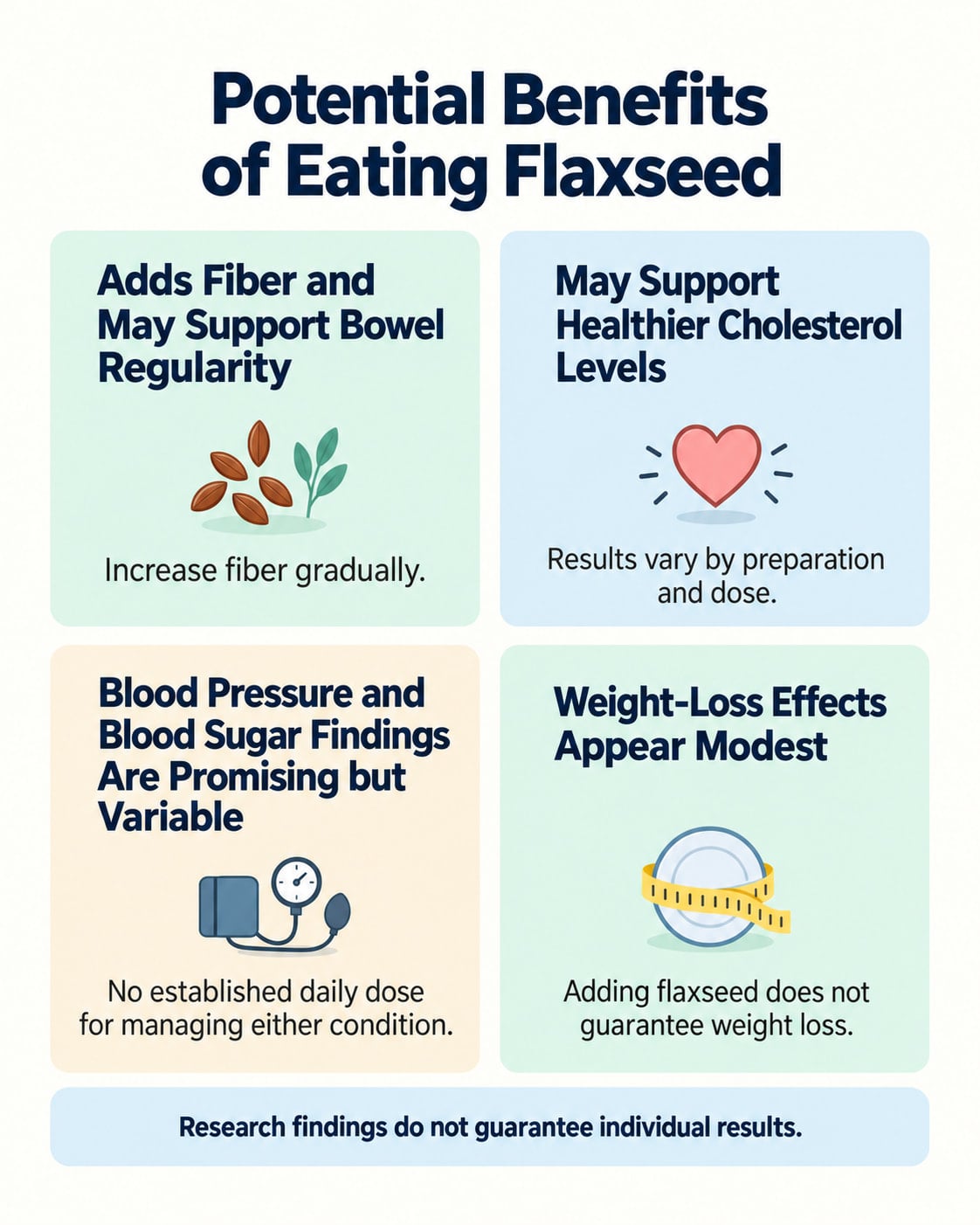
Adds Fiber and May Support Bowel Regularity
Flaxseed contains soluble and insoluble fiber. These contribute to stool consistency and bowel function, although the effect depends on your overall diet, fluid intake, and digestive health.
A small 2018 trial involving adults with type 2 diabetes and constipation found improvements in constipation symptoms when flaxseed was included in baked cookies. The study supports a possible benefit, but its findings do not establish a universal amount for constipation.
Increase fiber gradually. Adding a large portion immediately can leave you feeling more bloated.
May Support Healthier Cholesterol Levels
In 2021, a systematic review of 31 randomized trials examined flaxseed products in 1,698 adults with abnormal blood lipids or related conditions. Seed-based interventions lowered LDL cholesterol by about 10.5 mg/dL on average. Flaxseed oil did not show the same cholesterol benefit.
Results varied across studies, and their seed preparations and doses differed. That average does not predict what one tablespoon will do for you. Flaxseed can be part of a balanced eating pattern, but it should not replace prescribed cholesterol medication.
Blood Pressure and Blood Sugar Findings Are Promising but Variable
Research reviews have reported improvements in blood pressure with some flaxseed interventions. Some studies also suggest better blood sugar measures, particularly with seed preparations, but findings are mixed.
These studies do not establish a daily flaxseed dose for managing either condition. If you take blood pressure or diabetes medication, discuss substantial dietary changes or flaxseed supplements with your healthcare professional.
Weight-Loss Effects Appear Modest
Flaxseed’s fiber can contribute to fullness, but adding it does not guarantee weight loss.
In 2024, an updated systematic review of trials using different flaxseed preparations reported an average weight difference of approximately 0.63 kilograms, or 1.4 pounds, favoring flaxseed interventions. Results varied considerably.
There is no established flaxseed amount for losing belly fat. A measured portion can fit your meals, while your overall food intake and activity remain central to weight management.
How to Add Flaxseed to Your Diet
- Start small. Try 1 teaspoon daily before increasing toward 1 tablespoon. Consider a second tablespoon only if it suits your diet and digestion.
- Follow preparation instructions. Cook or bake products that require heating. You can incorporate flaxseed into bread, muffins, or other cooked dishes, following the product’s directions.
- Include fluids. Fiber needs fluid to work well. Drink water or another suitable beverage with your meal. If you have a prescribed fluid restriction, follow your care team’s advice.
- Store it properly. Keep ground flaxseed in an airtight, opaque container in the refrigerator, following any additional storage instructions on the package.
Use a measuring spoon rather than estimating a large scoop. If bloating or loose stools develop, reduce the portion or stop and reassess.
How Much Flaxseed Per Day Is Too Much?
More flaxseed does not necessarily produce greater benefits. Your tolerance, the product, and its preparation all matter.
On June, 2026, Germany’s Federal Institute for Risk Assessment published an updated assessment of cyanogenic compounds and cadmium in flaxseed. It states that:
- Up to 15–20 grams of raw, ground flaxseed daily is not expected to cause adverse toxicological effects in adults; larger raw amounts should be avoided.
- Adults should consume no more than 20 grams of flaxseed daily overall to limit cadmium exposure.
- Cooking and baking reduce the risk from compounds that can release cyanide. Products labeled for cooking or baking must be prepared accordingly.
These are BfR recommendations, rather than a US dietary requirement. The usual 1–2 tablespoon range is below 20 grams when using the 7-gram reference tablespoon, but product labels may give different weights.
Higher doses used in clinical trials should not automatically become everyday food targets.
Flaxseed Side Effects and Who Should Check First
Large amounts can cause gas, bloating, fullness, or diarrhea. Allergic reactions are also possible.
The National Center for Complementary and Integrative Health’s flaxseed safety guidance, updated February 2025, advises against eating raw or unripe flaxseed. This is more cautious than BfR’s assessment of limited raw amounts. For a cautious approach consistent with NCCIH, use flaxseed in cooked or baked foods and follow package preparation instructions.
Ask a healthcare professional before starting flaxseed supplements or substantially increasing your intake if you:
- Are pregnant or breastfeeding: Safety evidence is limited or inconclusive, and the general adult serving guidance should not be assumed to apply.
- Take blood thinners, blood pressure medicines, or diabetes medicines: Possible interactions warrant review; do not change your medication yourself.
- Have swallowing difficulties, bowel narrowing, or a history of bowel obstruction: Get advice before adding a concentrated source of fiber.
- Have surgery scheduled: Tell your healthcare team about supplements, including flaxseed oil.
Flaxseed should not be taken at the same time as oral medications. Ask your pharmacist about an appropriate interval for your specific medicine; one spacing rule does not suit every prescription.
When to Seek Medical Help
Seek emergency care for trouble breathing or swelling of the tongue or throat after eating flaxseed.
Abdominal pain with an inability to pass stool or gas, especially with vomiting, needs emergency assessment. Severe or worsening abdominal pain and marked swelling also need urgent care. Do not respond by adding more fiber.
Persistent constipation, ongoing diarrhea, or blood in your stool also deserves medical advice rather than repeated changes to your flaxseed amount.
Frequently Asked Questions
Can You Eat Flaxseed Every Day?
Many adults can include a modest amount in their daily diet if they tolerate it and follow preparation guidance. Flaxseed is optional; a varied diet can provide its nutrients through other foods.
Is One Tablespoon of Flaxseed a Day Enough?
One tablespoon contributes about 2 grams of fiber along with plant omega-3 fats. There is no required minimum flaxseed intake, so you do not need to increase a comfortable portion simply to reach two tablespoons.
Is It Better to Eat Flaxseed in the Morning or at Night?
There is no established best time for general nutrition. Choose a meal that makes it easy to measure your portion, include fluids, and follow any medication-spacing instructions.
Do You Need to Soak Ground Flaxseed?
Follow the package directions. Soaking changes the texture, but it should not replace cooking or baking when the product requires heating. Avoid swallowing spoonfuls of dry flaxseed powder.
Does Flaxseed Water Provide the Same Benefits as Ground Flaxseed?
It depends on the preparation. If you strain out and discard the seeds, you cannot assume the drink contains the fiber, fats, and other nutrients of the measured seed portion.
Can Children Have the Same Daily Amount as Adults?
Do not apply adult amounts automatically to children. Ask their pediatrician about suitable portions and preparation. BfR specifically advises against giving raw, ground flaxseed to young children.
Conclusion
For most adults, 1–2 tablespoons of ground flaxseed daily is a useful food portion. Start smaller if needed, measure your servings, and follow preparation instructions. Choose an amount that fits comfortably into varied meals, and check medication or health concerns before increasing it.
This content is for informational purposes only and not medical advice.
References
- Mayo Clinic Health System. What Makes Tiny Flaxseed a Nutritional Powerhouse?
- Mayo Clinic. Flaxseed: Is Ground Better Than Whole?
- NIH Office of Dietary Supplements. Omega-3 Fatty Acids: Health Professional Fact Sheet
- Gloucestershire Hospitals NHS Foundation Trust. Improving Bowel Function and Control
- Yang and colleagues. 2021. Systematic Review Comparing Flaxseed Products and Blood Lipid Outcomes
- Li and colleagues. 2023. Systematic Review and Meta-Analysis of Flaxseed Supplementation and Blood Pressure
- German Federal Institute for Risk Assessment. Hydrocyanic Acid and Cadmium in Linseeds