
Calluses on hands usually develop from repeated friction or pressure. Safe care focuses on reducing that stress, moisturizing, and avoiding aggressive skin removal. Most are not serious, but painful or damaged skin needs more attention.
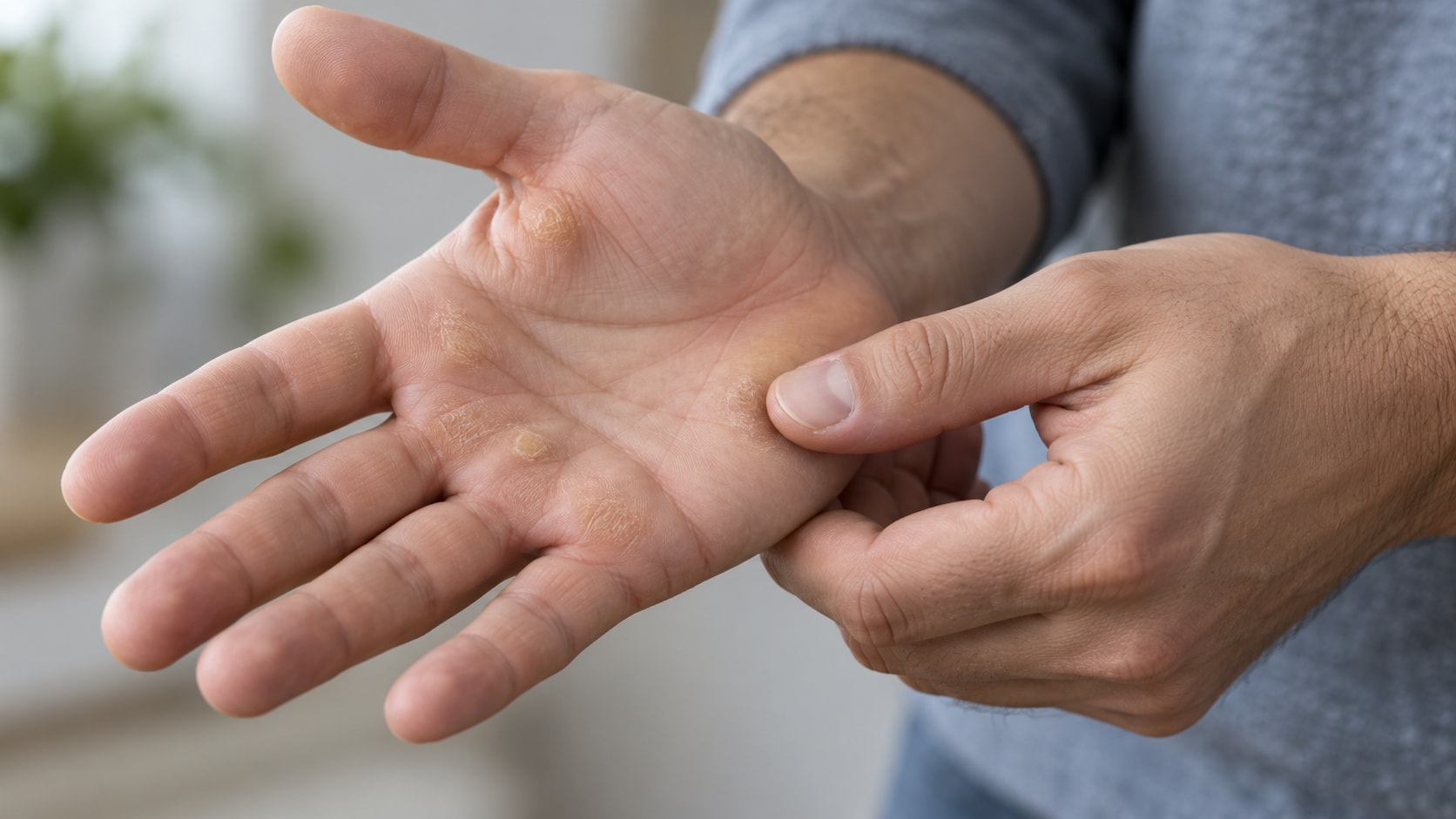
According to Mayo Clinic’s guidance on corns and calluses, otherwise healthy people generally do not need to remove a callus that is not bothersome. The goal is comfortable, intact skin—not perfectly smooth hands at any cost.
What Are Calluses on Hands?
A hand callus is a localized area of thickened skin that forms in response to repeated rubbing or pressure. The buildup is a protective response, helping the skin withstand repeated contact with surfaces or equipment.
Calluses on palms and fingers often feel hard, rough, or less sensitive than nearby skin. They are usually broader and flatter than corns. Although many are painless, excessive thickening or cracks can make them uncomfortable.
What Causes Calluses on Hands?
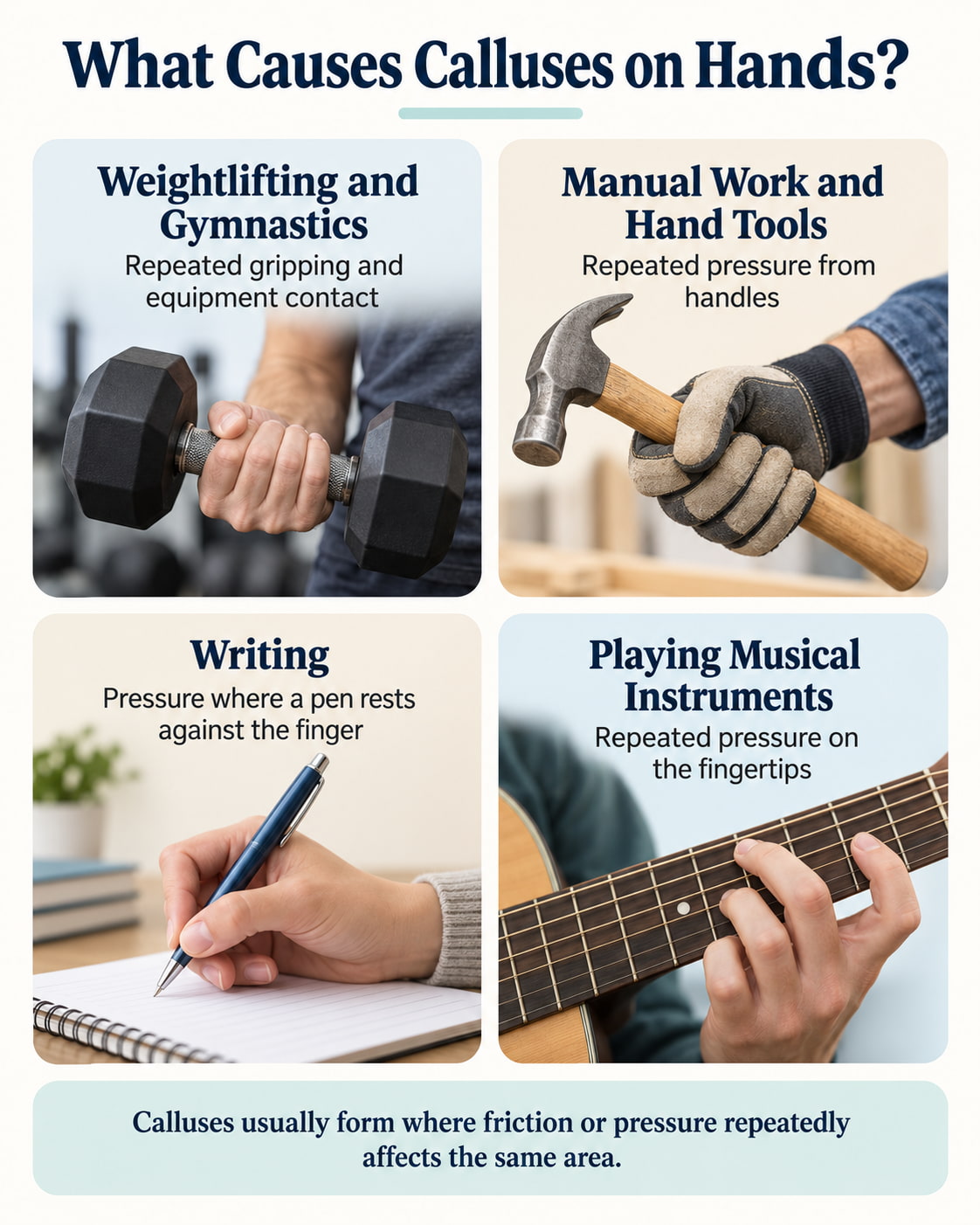
Weightlifting, Gymnastics, and Repeated Gripping
Weightlifters and gymnasts can develop calluses where equipment repeatedly presses or rubs against their hands. The location usually reflects the contact point: ongoing stress on the same patch of skin encourages thickening there.
Manual Work and Hand Tools
Repeatedly holding a hammer, racket, or another handle can create a pressure point on the palm. Calluses may develop when the same area experiences friction during repeated tasks.
Writing and Playing Musical Instruments
A pen pressing against a finger can produce a localized callus, sometimes called a writer’s callus. Musical instruments can also create repeated pressure; guitar players, for example, may develop calluses on their fingertips.
Callus, Wart, or Eczema: What Are the Differences?
Not every rough or thickened patch is an ordinary callus. These features offer clues, but they cannot confirm a diagnosis.
| Possible cause | Features you may notice |
|---|---|
| Friction callus | Thick, hardened skin where repeated rubbing or pressure occurs. The surface may be dry or flaky. |
| Common wart | A rough, sometimes cauliflower-like growth. Tiny red or black dots may be visible; these represent small blood vessels. |
| Hand eczema | Itching, burning, scaling, or recurring blisters. Longer-lasting eczema can also cause thickened skin and cracks. |
Frequent exposure to water, soaps, and detergents can contribute to hand dermatitis. Roughness that comes with itching or widespread irritation should not automatically be managed as a friction callus.
Thickening across much of the palm can also have causes other than a single pressure point. When the pattern or cause is unclear, have it assessed rather than repeatedly exfoliating it.
How to Care for Calluses on Hands Safely
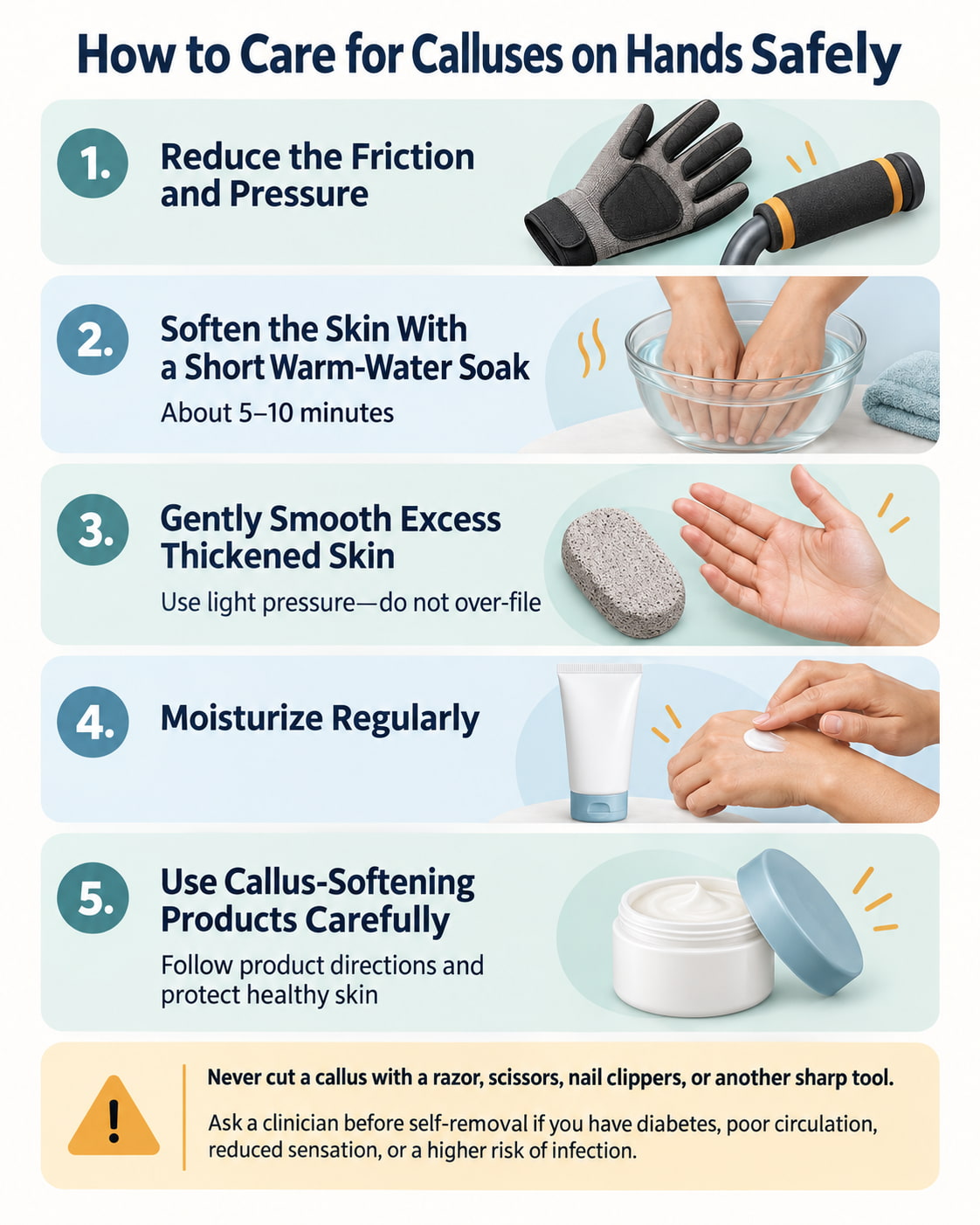
Check with a clinician before filing or using medicated removers if you have diabetes, poor circulation, reduced sensation, a weakened immune system, or fragile skin. These factors can make self-removal riskier. The following care is intended for an uncomplicated callus with intact skin.
1. Reduce the Friction and Pressure
Start by identifying what repeatedly contacts the thickened patch. Reducing that contact is more important than simply removing the buildup. Temporarily modify the activity or use appropriate protection so the same area is not continually irritated.
2. Soften the Skin With a Short Warm-Water Soak
The American Academy of Dermatology’s callus-care guidance recommends soaking an intact callus in warm water for about 5–10 minutes, or until it softens. This makes gentle smoothing easier; soaking alone does not address the underlying friction.
3. Gently Smooth Excess Thickened Skin
After soaking, wet a pumice stone and lightly move it over the callused area. Use gentle circular or sideways motions. Remove only a small amount of excess surface skin rather than trying to eliminate the callus in one session.
Aggressive filing can cause bleeding and infection. Stop rather than continuing into tender skin.
Never cut a callus with a razor, scissors, nail clippers, or another sharp tool. Home cutting can cause injury and infection.
4. Moisturize Regularly
A fragrance-free hand cream or ointment is a practical option for dry skin. Apply it after washing your hands while the skin is still slightly damp, and reapply when your hands feel dry.
The American Academy of Dermatology’s dry-skin recommendations, updated January, 2026, favor creams or ointments over lotions for very dry skin. Products containing ingredients such as glycerin or petrolatum can help retain moisture.
Moisturizing supports softer skin, but it does not replace reducing the pressure that caused the callus.
5. Use Callus-Softening Products Carefully
Some creams contain ingredients that help loosen thickened skin. These are different from a basic moisturizer, so check the active ingredients and directions.
DermNet’s guidance on urea explains that it attracts moisture and helps soften thickened surface skin. Formulations vary in strength. Ask a pharmacist about a suitable hand product rather than assuming a stronger formula is better. Avoid applying urea preparations to cracked, bleeding, infected, or oozing skin.
Salicylic-acid callus removers and medicated pads also require caution. They can irritate surrounding healthy skin, particularly when applied incorrectly. They are not an automatic first step, and people with diabetes or poor circulation should seek professional advice before using them.
What to Do if a Hand Callus Cracks or Tears
Once the skin is open, switch from callus reduction to wound care. Avoid filing the damaged area or applying callus-softening ingredients to it.
For a small, superficial tear, the American Academy of Dermatology’s minor-wound guidance supports this approach:
- Clean gently. Use cool or lukewarm water and mild soap. If there is bleeding, apply steady pressure with clean gauze or a clean cloth.
- Apply plain petroleum jelly. This helps keep the wound moist. Routine antibiotic ointment is not recommended unless a clinician advises it.
- Cover the area. Use a sterile bandage and change it daily to protect the wound from reopening.
A deep injury or bleeding that will not stop needs immediate medical attention. Increasing pain, swelling, redness, or pus also warrants assessment.
How to Prevent Calluses on Hands
MedlinePlus recommends gloves for friction-heavy activities such as gardening and weightlifting. For hand tools, padded gloves or cushioned handles can reduce rubbing. Use protection that still allows safe, secure handling of equipment.
For writing, a cushioned pen grip is one practical application of the same pressure-reduction principle. Consider where the pen rests against your finger rather than focusing only on smoothing the resulting patch.
Also protect your hands from a separate problem: excessive dryness. Wear appropriate gloves for wet work and use a fragrance-free moisturizer after handwashing. This addresses dry skin, even though it cannot eliminate activity-related friction.
When to See a Doctor for Hand Calluses
Arrange an appointment with a primary care clinician or dermatologist when you are unsure what the thickened area is, pain interferes with normal activities, or the problem persists despite gentle care.
The NHS guidance on corns and calluses, reviewed July, 2026, recommends medical review when there is no improvement after three weeks of home care. This is a reassessment point, not a guaranteed recovery deadline. Do not wait that long for worsening symptoms.
Seek prompt care for increasing warmth, redness, swelling, pain, or drainage. These symptoms can indicate infection rather than simple skin thickening.
A clinician can check the diagnosis and, when appropriate, carefully reduce excess thickened skin. Removal with a sharp instrument belongs in professional care—not a home routine.
Frequently Asked Questions
Are Calluses on Hands Bad?
Not necessarily. They are a protective response to repeated pressure. In otherwise healthy people, a painless callus that is not bothersome usually does not need removal. Pain, inflammation, or broken skin changes that assessment.
Do Hand Calluses Go Away on Their Own?
They often gradually diminish when the friction or pressure stops. There is no single timeline for everyone, and continued rubbing can keep the callus present or cause it to return.
Should You Remove Calluses From Weightlifting?
You do not need to remove every painless callus. Focus on reducing excessive friction and maintaining comfortable skin. Protective gloves may help during weightlifting, but a callus that becomes painful or repeatedly breaks needs assessment.
Why Does My Hand Callus Hurt?
A callus may become painful as it thickens or develops cracks. Infection can also cause pain. New or worsening discomfort—especially with swelling, redness, or drainage—should not be dismissed as normal callus formation.
Are Calluses on Hands Contagious?
Friction calluses are not caused by an infection and are not contagious. Warts are different: they result from human papillomavirus and can spread. An uncertain rough growth should be examined before you assume it is a callus.
Can Hand Cream Get Rid of Calluses?
A moisturizer can soften dry skin, while ingredients such as urea may help loosen thickened surface skin. However, creams do not remove the source of repeated pressure. Lasting improvement depends on addressing that trigger.
Conclusion
Calluses on hands usually need less irritation and gentle care—not aggressive removal. Start by identifying the rubbing point, protect the area appropriately, and keep dry skin moisturized. Get professional advice when the cause is unclear or the skin becomes painful or damaged.
This content is for informational purposes only and not medical advice.
References
- Mayo Clinic: Corns and calluses—symptoms and causes and diagnosis and care options.
- MedlinePlus: Corns and calluses.
- Cleveland Clinic: Corns and calluses—causes, symptoms, and care.
- NHS: Corns and calluses—self-care and medical advice.
- DermNet: Corn and callus, viral warts, hand dermatitis, and urea.