
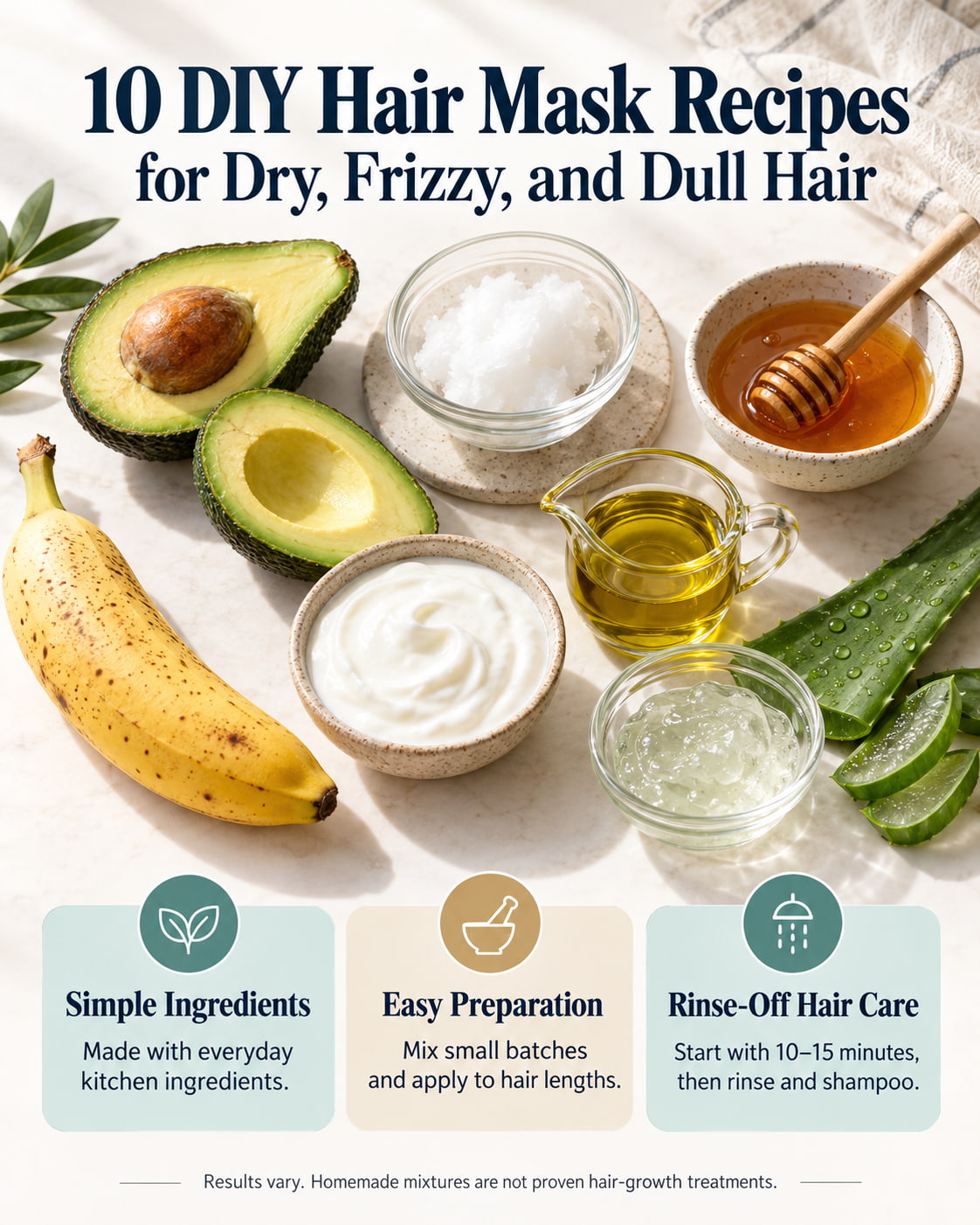
A DIY hair mask is a homemade mixture you apply to your hair and rinse out. Some ingredients, particularly oils, may help dry strands feel softer and look smoother. Results vary, and the kitchen mixtures below have not been clinically tested as finished formulas.
Choose one simple recipe, apply a small amount, and see how your hair feels after washing and drying. The recipes below include measured ingredients and practical tips for avoiding greasy roots and stubborn residue.
Do DIY Hair Masks Actually Work?
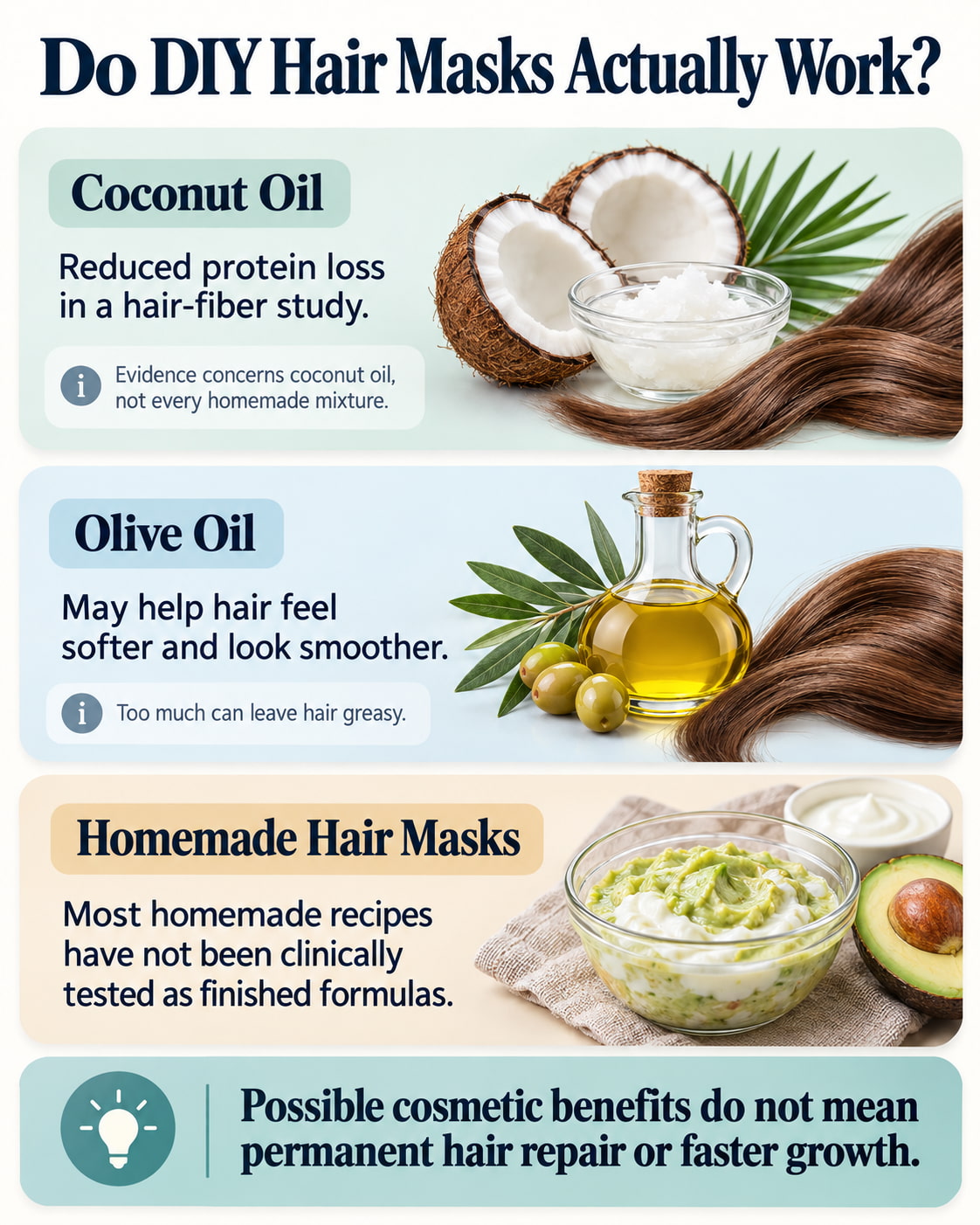
Some ingredients have better evidence than others. In a study of hair fibers, coconut oil reduced protein loss in damaged and undamaged hair when used before or after washing. That finding does not prove that adding honey, aloe, or other foods makes coconut oil work better.
According to Cleveland Clinic guidance, olive oil may help hair feel softer and look smoother by coating strands and slowing moisture loss. It can also leave fine or naturally oily hair looking greasy.
Evidence for the specific banana, avocado, yogurt, honey, and coconut milk mixtures in this article is limited. A food’s nutritional value does not automatically translate into a benefit when you spread it on your hair.
Think of these masks as optional experiments in hair feel and appearance. They cannot permanently mend split ends, and the recipes should not be used to promise faster hair growth.
How to Choose a DIY Hair Mask for Your Hair
Choose based on how your hair behaves, the ingredients you tolerate, and how much preparation you want to do.
| Your hair or preference | A practical starting approach |
|---|---|
| Fine hair that becomes greasy easily | Use a very small amount on the ends. A recipe without added oil may be easier to try, although it can still leave residue. |
| Dry, coarse, or tightly curled lengths | Consider a small amount of an oil-containing mixture, then adjust according to how it washes out. |
| Oily roots with dry ends | Keep the mixture on the dry lengths and ends, away from the roots. |
| You want minimal preparation | Choose a recipe without fruit. Banana and avocado mixtures need thorough blending and straining. |
| You dislike heavy coatings | Start with a hidden section of hair rather than applying a mask everywhere. |
There is no proven “best” homemade mask for every person with frizz or dullness. If a mixture leaves your hair limp, sticky, rough, or harder to detangle, there is little reason to keep using it.
Before You Make a Homemade Hair Mask
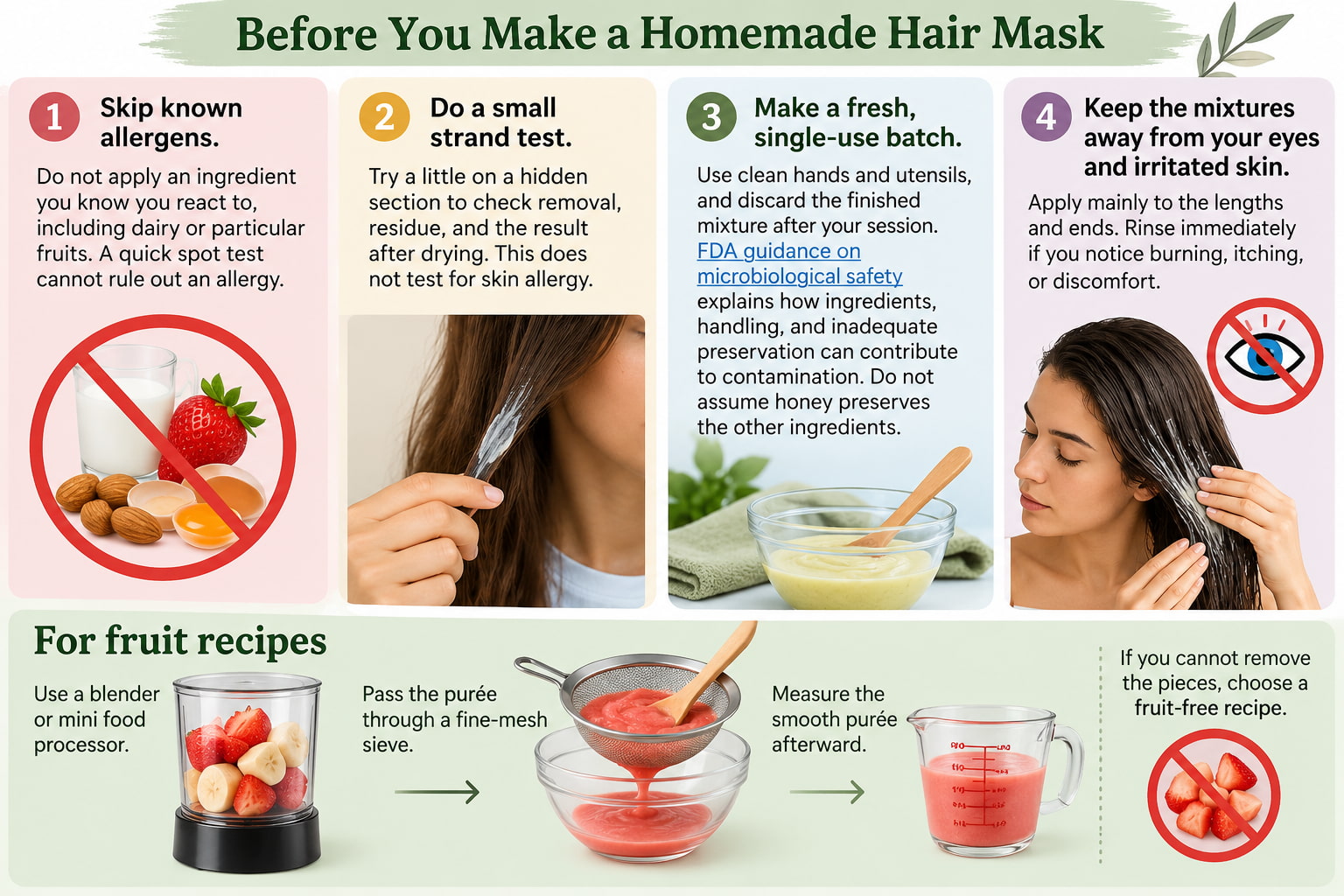
A few precautions make these recipes easier to use:
- Skip known allergens. Do not apply an ingredient you know you react to, including dairy or particular fruits. A quick spot test cannot rule out an allergy.
- Do a small strand test. Try a little on a hidden section to check removal, residue, and the result after drying. This does not test for skin allergy.
- Make a fresh, single-use batch. Use clean hands and utensils, and discard the finished mixture after your session. FDA guidance on microbiological safety explains how ingredients, handling, and inadequate preservation can contribute to contamination. Do not assume honey preserves the other ingredients.
- Keep the mixtures away from your eyes and irritated skin. Apply mainly to the lengths and ends. Rinse immediately if you notice burning, itching, or discomfort.
For fruit recipes, use a blender or mini food processor and pass the purée through a fine-mesh sieve. Measure the smooth purée afterward. If you cannot remove the pieces, choose a fruit-free recipe.
10 DIY Hair Mask Recipes to Try
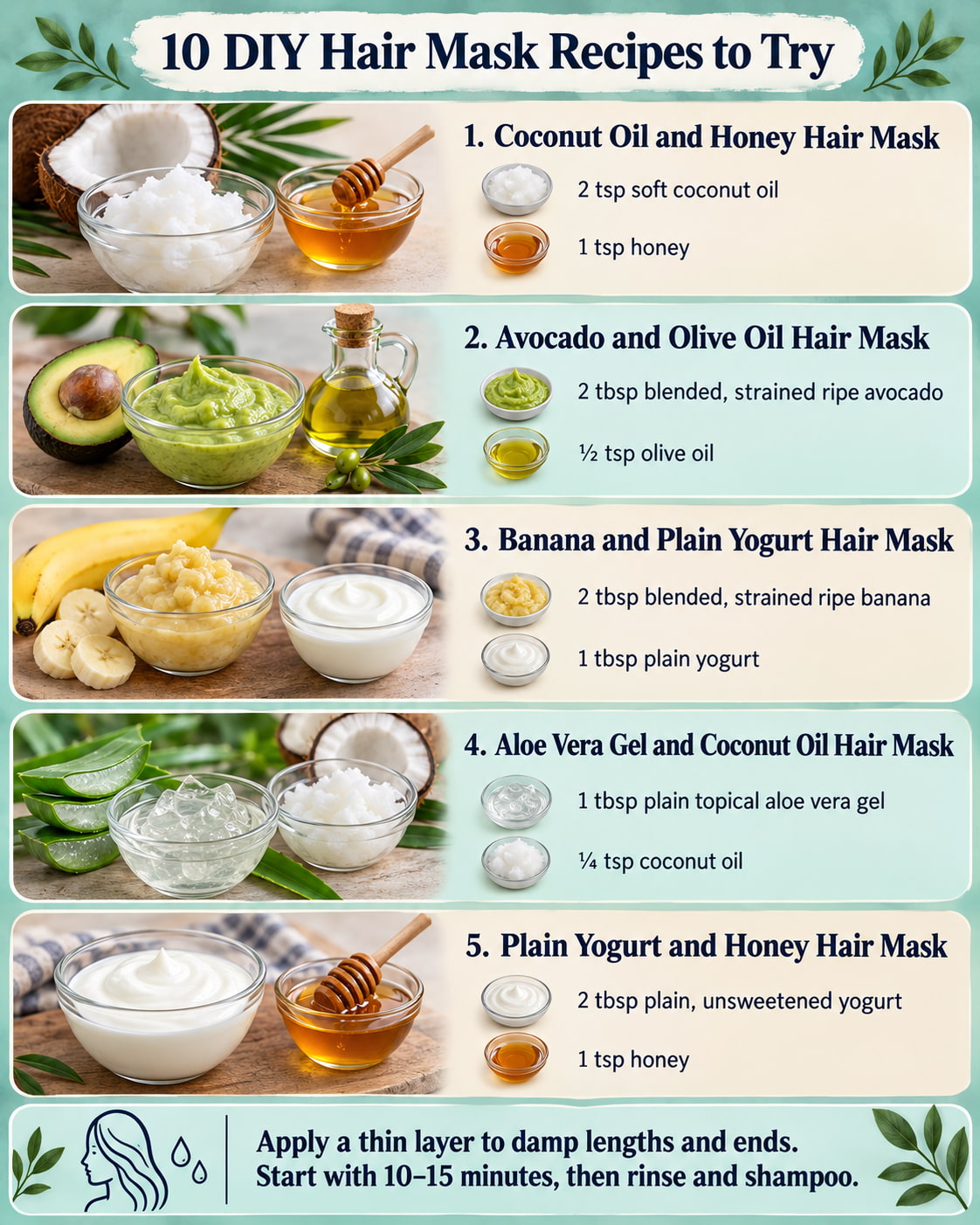
These are small batches for lightly coating selected lengths and ends; they do not guarantee full coverage for a particular hair length. Use less for a strand test and scale up only if needed.
Use a 10–15-minute application as a practical starting point. This is not a scientifically established optimum. Longer application has not been shown to make these particular mixtures more effective.
Apply to damp, towel-blotted hair unless noted otherwise, and use the rinse-and-shampoo method below.
1. Coconut Oil and Honey Hair Mask
This is a concentrated, oil-rich option. Start with a thin coating, especially if coconut oil has left your hair greasy before.
Ingredients
- 2 teaspoons soft coconut oil
- 1 teaspoon honey
Makes: About 1 tablespoon.
How to prepare and use
- Mash the soft coconut oil and honey together until the honey is distributed. If the oil is hard, soften the container in warm water; do not apply hot oil.
- Stir again before applying a small amount to damp lengths and ends. The ingredients may separate.
- Leave on for 10–15 minutes, then rinse and shampoo.
Practical tip: This mixture will not behave like a smooth commercial conditioner. Use only enough to leave a light coating.
2. Avocado and Olive Oil Hair Mask
Choose this if you prefer a thick paste and have the tools to make the avocado completely smooth.
Ingredients
- 2 tablespoons blended, strained ripe avocado
- ½ teaspoon olive oil
Makes: Slightly more than 2 tablespoons.
How to prepare and use
- Stir the olive oil into the smooth avocado purée.
- Spread a thin layer over damp lengths, paying attention to dry ends.
- Leave on for 10–15 minutes. Rinse carefully to remove all visible avocado before shampooing.
Practical tip: Adding extra oil makes removal harder. Keep the measured amount small, even when your hair feels very dry.
3. Banana and Plain Yogurt Hair Mask
This mixture contains no added oil, but it still needs thorough rinsing. The banana’s texture matters more than how ripe it looks.
Ingredients
- 2 tablespoons blended, strained ripe banana
- 1 tablespoon smooth, plain yogurt
Makes: About 3 tablespoons.
How to prepare and use
- Mix the strained banana purée and yogurt until uniform.
- Apply sparingly to damp hair, keeping the mixture away from the roots.
- Leave on for 10–15 minutes, rinse out the food residue, and shampoo.
Practical tip: Fork-mashing often leaves small pieces behind. If you still see banana fibers, strain again before application.
4. Aloe Vera Gel and Coconut Oil Hair Mask
Use plain aloe gel intended for topical use. Choose a fragrance-free product without added drying alcohol, and avoid whole-leaf preparations.
Ingredients
- 1 tablespoon plain topical aloe vera gel
- ¼ teaspoon coconut oil, gently melted and cooled until barely warm
Makes: Slightly more than 1 tablespoon.
How to prepare and use
- Stir the oil into the aloe gel immediately before use. If it hardens into pieces, choose the aloe-and-olive-oil recipe instead.
- Apply a small amount to damp lengths and ends, stirring again if the oil separates.
- Leave on for 10–15 minutes, then rinse and shampoo.
Practical tip: Do not mix this into the original aloe container. Prepare only the portion you will use and discard the remainder.
5. Plain Yogurt and Honey Hair Mask
This is a simple option when you want to avoid adding a separate oil. It should not be treated as a professional protein treatment.
Ingredients
- 2 tablespoons plain, unsweetened yogurt
- 1 teaspoon honey
Makes: About 2 tablespoons plus 1 teaspoon.
How to prepare and use
- Stir until the honey is evenly distributed through the yogurt.
- Apply a light layer to damp lengths and ends.
- Leave on for 10–15 minutes, then rinse thoroughly and shampoo.
Practical tip: Use smooth yogurt without fruit pieces or flavorings. Skip this recipe if you have a dairy allergy.
6. Coconut Milk and Honey Hair Mask
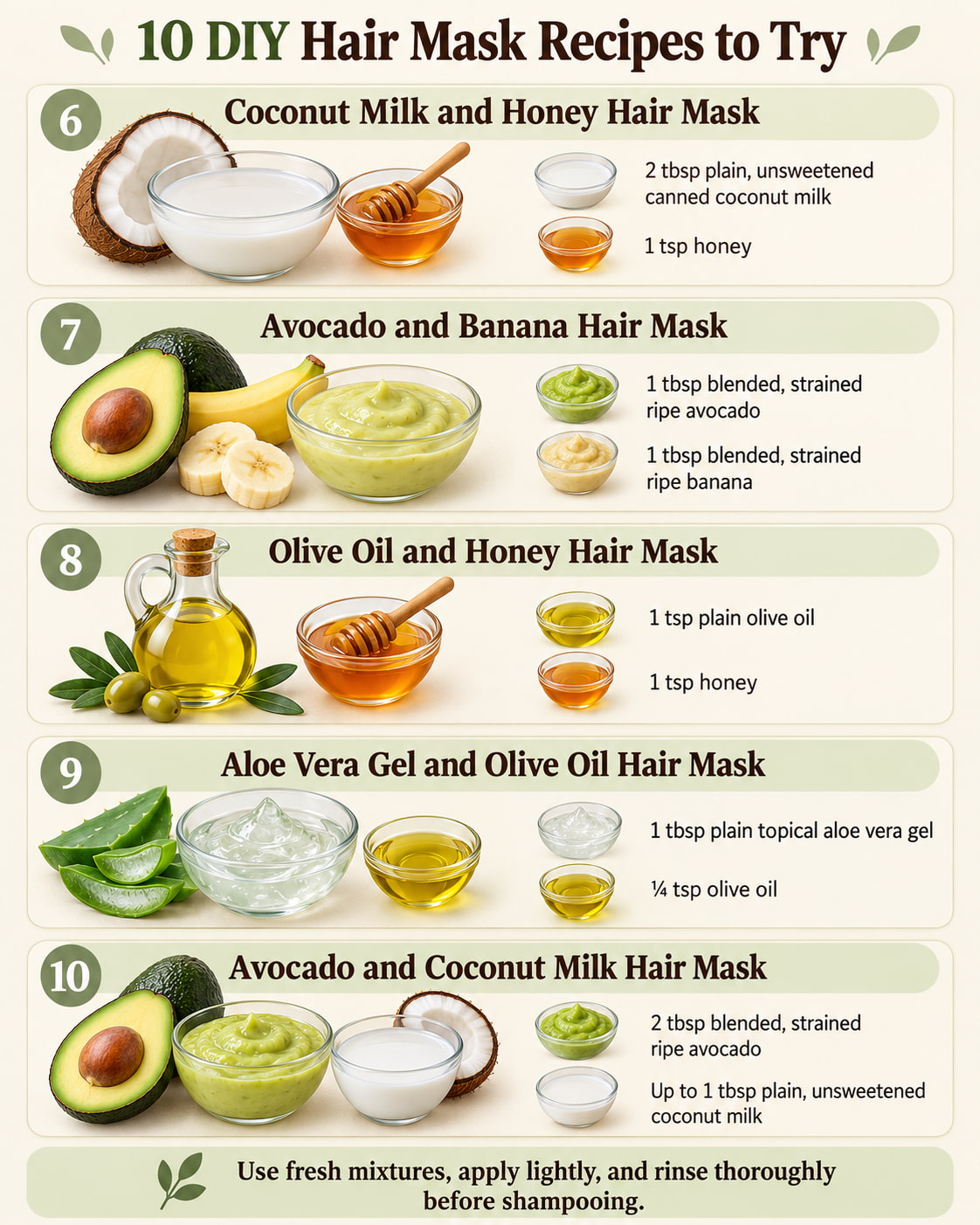
This is one of the thinner mixtures in the list. Apply it in small amounts rather than pouring it over your hair.
Ingredients
- 2 tablespoons plain, unsweetened canned coconut milk
- 1 teaspoon honey
Makes: About 2 tablespoons plus 1 teaspoon.
How to prepare and use
- Stir the coconut milk in its container before measuring, then mix the measured portion with honey.
- Work a small amount through damp lengths in sections. Protect your shoulders with an old towel.
- Leave on for 10–15 minutes, then rinse and shampoo.
Practical tip: Coconut milk is a different ingredient from coconut oil. Research on the oil does not establish that this mixture offers the same effects.
7. Avocado and Banana Hair Mask
This fruit-based mixture has a thick texture. Choose it only if you can blend and strain both ingredients thoroughly.
Ingredients
- 1 tablespoon blended, strained ripe avocado
- 1 tablespoon blended, strained ripe banana
Makes: About 2 tablespoons.
How to prepare and use
- Combine the smooth purées until evenly mixed.
- Spread a thin layer over damp lengths. Do not pack thick clumps into the hair.
- Leave on for 10–15 minutes, keeping the mixture from drying out. Rinse away all residue before shampooing.
Practical tip: A blender may need more fruit than these amounts to run properly. Prepare the purée first, then measure the small portion needed for the mask.
8. Olive Oil and Honey Hair Mask
This pantry option makes a small batch because it is concentrated. It is easy to overapply, particularly on fine hair.
Ingredients
- 1 teaspoon plain olive oil
- 1 teaspoon honey
Makes: About 2 teaspoons.
How to prepare and use
- Whisk the ingredients together. They will not form a stable cream, so stir again during application.
- Spread a very thin coating over damp ends or selected dry sections.
- Leave on for 10–15 minutes, then rinse and shampoo.
Practical tip: Do not add more simply because the mixture looks small in the bowl. Check how the first light coating spreads.
9. Aloe Vera Gel and Olive Oil Hair Mask
This is an alternative to the aloe-and-coconut-oil recipe. The small oil quantity helps keep the experiment manageable.
Ingredients
- 1 tablespoon plain topical aloe vera gel
- ¼ teaspoon olive oil
Makes: Slightly more than 1 tablespoon.
How to prepare and use
- Mix the ingredients in a clean bowl immediately before use.
- Stir again if they separate, then lightly coat damp lengths and ends.
- Leave on for 10–15 minutes, then rinse and shampoo.
Practical tip: Adding oil can change the gel’s consistency. Do not expect it to remain uniform or store the altered mixture for another day.
10. Avocado and Coconut Milk Hair Mask
This combination offers a creamy texture without adding a separate spoonful of oil.
Ingredients
- 2 tablespoons blended, strained ripe avocado
- Up to 1 tablespoon plain, unsweetened coconut milk
Makes: Approximately 2–3 tablespoons.
How to prepare and use
- Add the coconut milk to the avocado a teaspoon at a time.
- Stop when the mixture spreads easily but is not runny. Apply lightly to damp lengths.
- Leave on for 10–15 minutes, then rinse thoroughly and shampoo.
Practical tip: Use unsweetened coconut milk, not sweetened cream of coconut. Adjust the consistency before applying rather than adding more liquid once it is in your hair.
How to Rinse Out a DIY Hair Mask
Removing the mixture properly matters as much as preparing it.
- Rinse with lukewarm water. Gently work through the lengths with your fingers. Do not scrub or pull at tangled sections.
- Remove visible food residue first. If fruit pieces remain, loosen them gently under running water before shampooing.
- Shampoo to remove the remaining mixture. Clean the scalp as usual and gently work shampoo through coated lengths where needed.
- Condition afterward. The American Academy of Dermatology recommends conditioner after washing, with placement adjusted to hair type.
- Assess the result once dry. Notice softness, tangling, residue, and whether your hair feels weighed down.
If you need repeated harsh washing to remove a mask, use less next time or choose a different approach. A hair-care step should not create more work than benefit.
Frequently Asked Questions
Should I apply a DIY hair mask to wet or dry hair?
For the mixtures in this guide, use damp, towel-blotted hair so you can spread a small amount without excessive dripping. Plain-oil routines can use different methods; follow instructions for the specific mixture you choose.
How long should I leave a homemade hair mask on?
Start with 10–15 minutes for these recipes. This is a practical trial period, not a proven ideal treatment time. Rinse sooner if your skin feels irritated or the mixture begins drying into your hair.
How often should I use a DIY hair mask?
There is no established ideal schedule for these homemade formulas. Try one application and assess your hair after washing and drying. If you like the result and have no irritation or buildup, you could try it again at a later wash, such as a week afterward.
Should I shampoo after a homemade hair mask?
Yes, for the food-and-oil mixtures listed here. Rinse away the bulk first, then shampoo and condition. These recipes are not designed to stay in your hair.
Can I leave a DIY hair mask on overnight?
Overnight use is not recommended for these perishable food mixtures. Longer application has not been shown to improve their results, and it makes drying, residue, and contact with your skin harder to control.
Can a homemade hair mask replace conditioner?
Keep your usual conditioner in the routine. These kitchen mixtures have not been shown to provide the same predictable detangling and conditioning performance as a product formulated for your hair.
Can DIY hair masks repair split ends or make hair grow faster?
These recipes cannot permanently mend split ends, and they have not been shown to speed up hair growth. Some oils may improve the feel or appearance of existing strands, but that is different from growing new hair.
Choosing a Simple Hair-Care Routine
Start with one recipe you can prepare smoothly and remove easily. Use a small amount, keep expectations modest, and judge the result after your hair is clean and dry. If the extra step leaves your hair greasy, tangled, or uncomfortable, skip it and return to a conditioner you already tolerate.
If dryness persists despite gentle care, or you notice hair loss, unusual breakage, or other unexplained symptoms, MedlinePlus guidance recommends contacting a health professional.
For your next wash day, choose one small-batch recipe and see whether it leaves your hair easier to manage.
This content is for informational purposes only and not medical advice.