
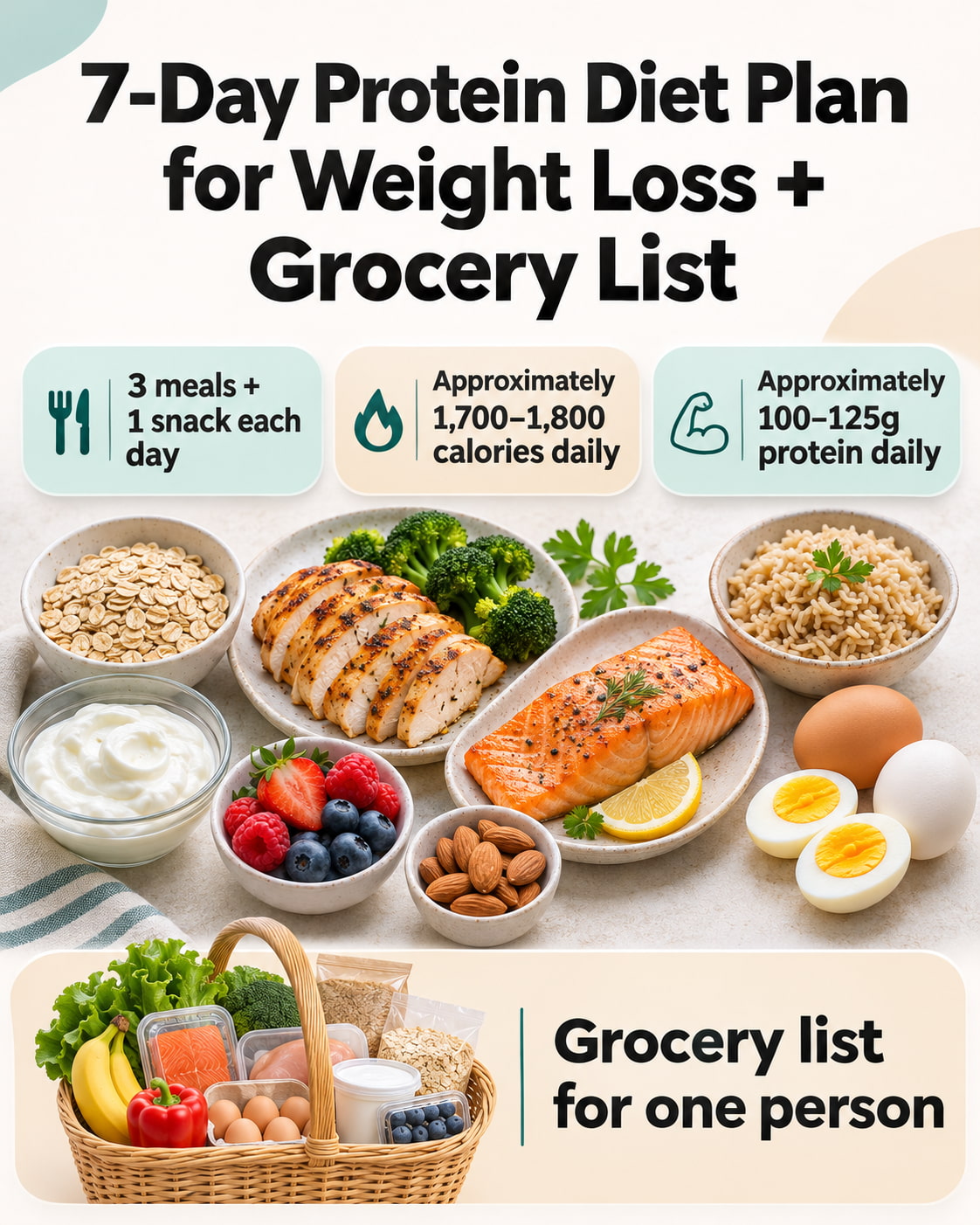
This 7-day protein diet plan for weight loss provides three meals and one snack each day, with approximately 1,700–1,800 calories and 100–125 grams of protein. It includes everyday foods, measured portions, and a grocery list for one person.
Protein may help you feel satisfied and support lean-mass retention during weight loss. Your overall calorie intake and consistency still matter.
Use this week as a starting point. Whether these portions support weight loss depends on your individual calorie needs.
Before You Start This Protein Diet Plan
This sample menu is intended for generally healthy adults who are not pregnant or breastfeeding. Its calorie level may be too low, too high, or close to maintenance for you.
If you have kidney disease, ask your clinician or registered dietitian about your protein target before following this plan. NIDDK guidance explains that protein needs vary with kidney function and dialysis.
How to read the portions:
- Chicken, salmon, rice, lentils, potatoes, and broccoli are measured after cooking.
- Spinach, peppers, tomatoes, carrots, and onions are measured before cooking.
- Oats are measured dry. Cook them in water; added milk would change the nutrition totals.
- Each oil amount is the total for that meal, including cooking and dressing.
- A yogurt serving is ¾ cup, or 170 grams. A cup of cottage cheese is approximately 226 grams.
Nutrition estimates include every listed meal, snack, oil, and spread. They use standard food-composition values and representative labels, including plain nonfat Greek yogurt, 2% cottage cheese, and bread with about 80 calories per slice. Brands, produce sizes, and preparation methods will change the totals.
How Much Protein Do You Need for Weight Loss?
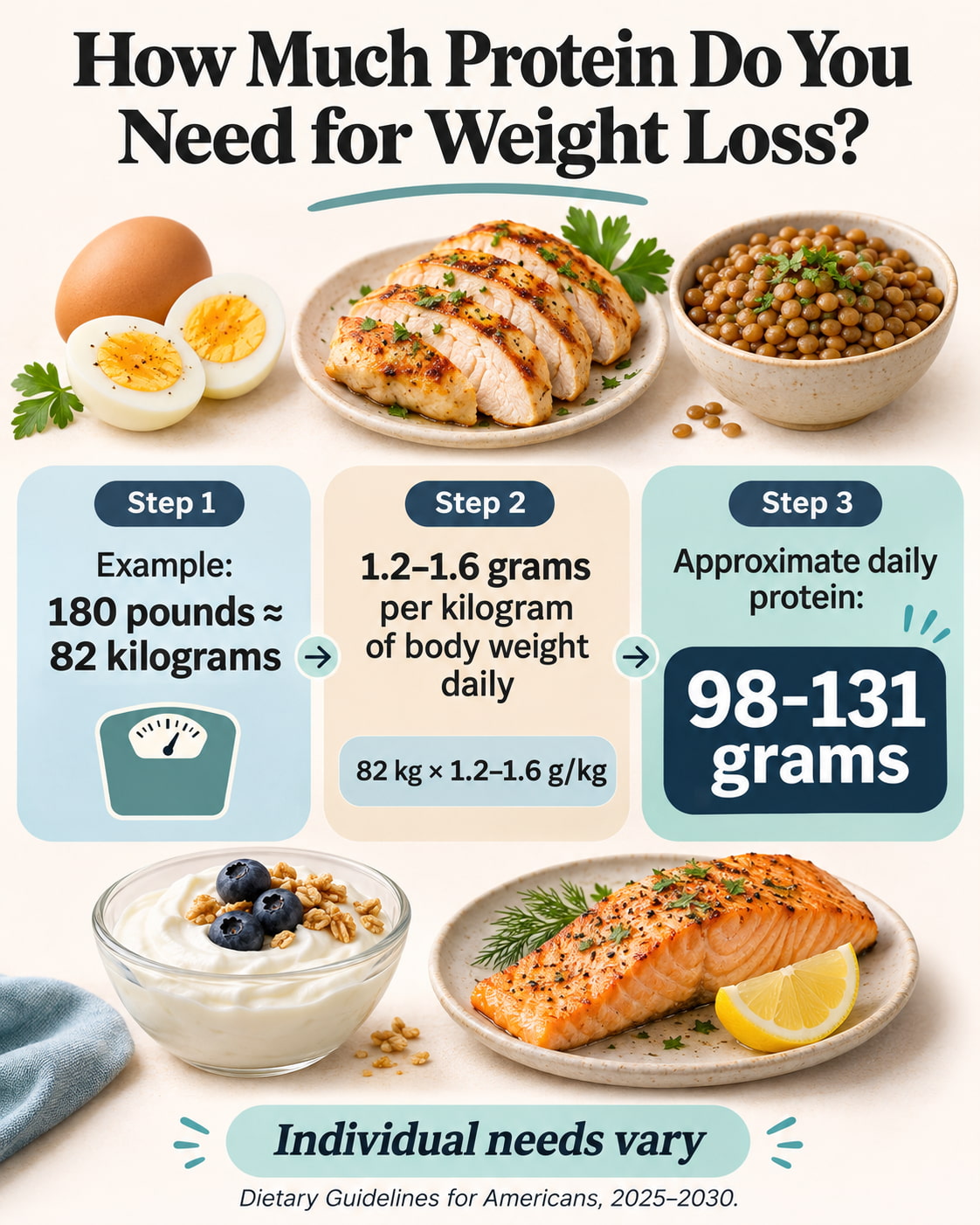
The current dietary guidelines, released in January 2026, give a protein goal of 1.2–1.6 grams per kilogram of body weight per day, adjusted for individual calorie requirements.
For example, an adult weighing 180 pounds weighs about 82 kilograms. Applying that range gives approximately 98–131 grams of protein daily.
The menu below offers one practical example within that range. You do not need to match its protein amount if your individual needs are different.
7-Day Protein Diet Plan for Weight Loss
Several meals repeat to simplify shopping and preparation. Use the portions listed for each day, and see the preparation tips after the menu.
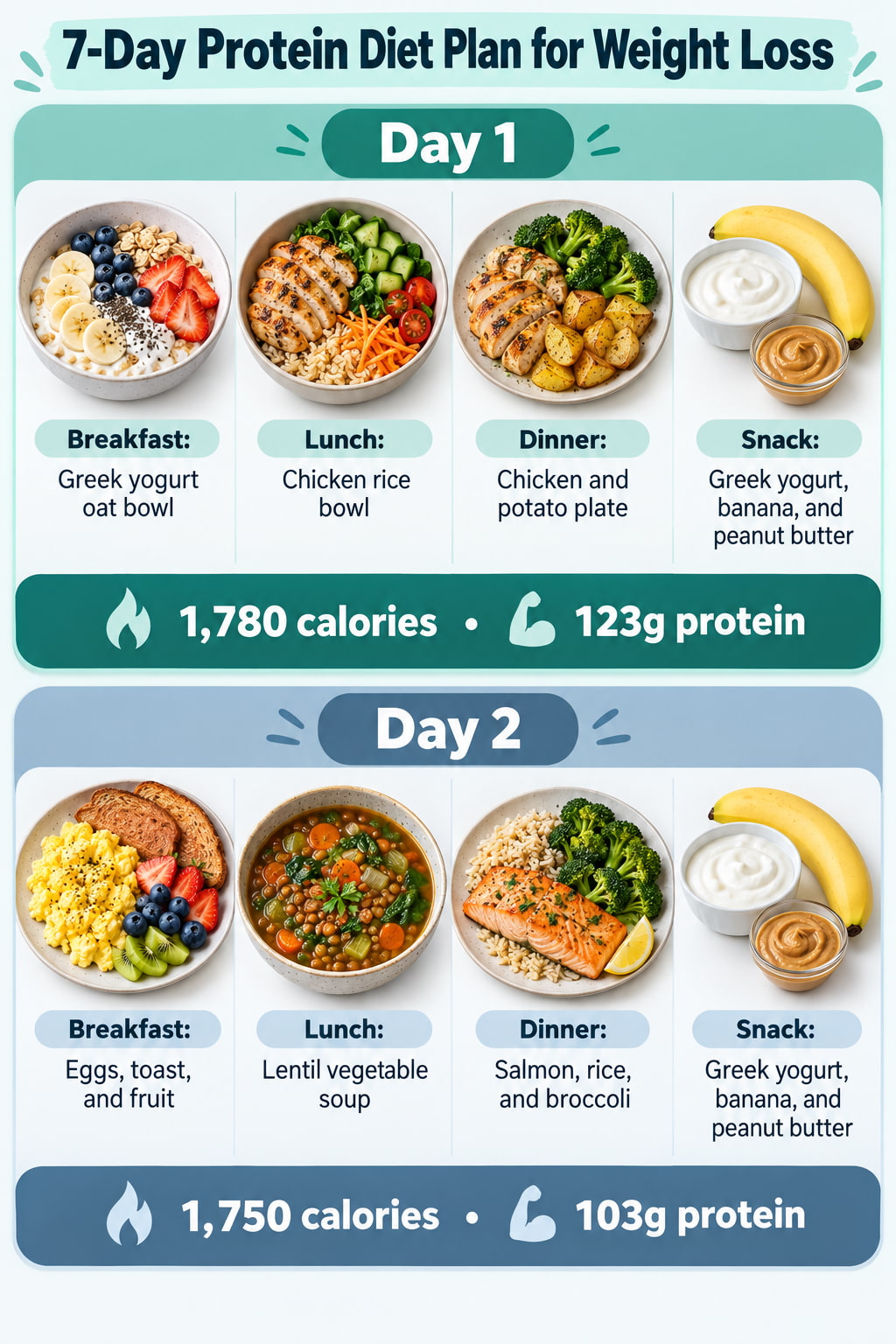
Day 1
- Breakfast — Greek yogurt oat bowl: ¾ cup plain nonfat Greek yogurt, 40 grams dry rolled oats, 1 cup mixed berries, and 1 tablespoon peanut butter.
- Lunch — Chicken rice bowl: 3 ounces cooked chicken breast, 1¼ cups cooked brown rice, 2 cups raw spinach, ½ cup chopped bell pepper, ½ cup chopped tomato, and 2 teaspoons olive oil.
- Dinner — Chicken and potato plate: 3 ounces cooked chicken breast, 250 grams baked potato with skin, 1 cup cooked broccoli, ½ cup chopped carrots, and 2 teaspoons olive oil.
- Snack: ¾ cup plain nonfat Greek yogurt, 1 medium banana, and 1 tablespoon peanut butter.
Approximate daily total: 1,780 calories and 123 grams of protein.
Day 2
- Breakfast — Eggs, toast, and fruit: 2 large eggs, 1 cup raw spinach, 1 teaspoon olive oil, 2 slices whole-grain toast, and 1 medium orange.
- Lunch — Lentil vegetable soup: ¾ cup cooked lentils, ½ cup chopped carrots, ½ cup chopped tomato, ¼ cup chopped onion, and 2 teaspoons olive oil. Add water to your preferred consistency and serve with 2 slices whole-grain bread.
- Dinner — Salmon, rice, and broccoli: 3 ounces cooked salmon, 1 cup cooked brown rice, 1½ cups cooked broccoli, and 2 teaspoons olive oil.
- Snack: ¾ cup plain nonfat Greek yogurt, 1 medium banana, and 1 tablespoon peanut butter.
Approximate daily total: 1,750 calories and 103 grams of protein.
Day 3
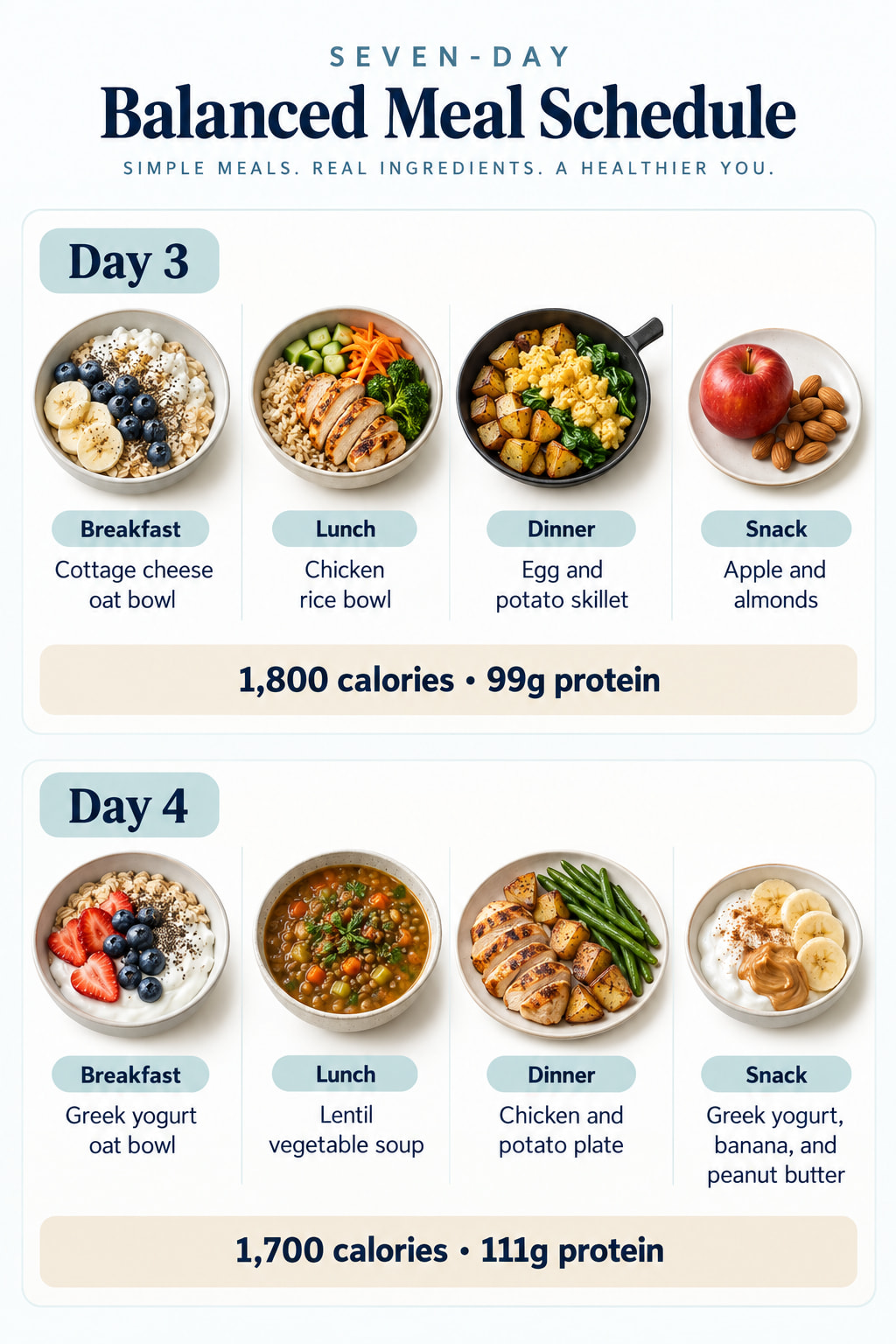
- Breakfast — Cottage cheese oat bowl: 1 cup 2% cottage cheese, 40 grams dry rolled oats, 1 cup mixed berries, and ½ ounce almonds.
- Lunch — Chicken rice bowl: 3 ounces cooked chicken breast, 1¼ cups cooked brown rice, 2 cups raw spinach, ½ cup chopped bell pepper, ½ cup chopped tomato, and 2 teaspoons olive oil.
- Dinner — Egg and potato skillet: 2 large eggs, 250 grams cooked potato with skin, 2 cups raw spinach, ½ cup chopped bell pepper, ½ cup chopped tomato, and 2 teaspoons olive oil.
- Snack: 1 medium apple and 1 ounce almonds.
Approximate daily total: 1,800 calories and 99 grams of protein.
Day 4
- Breakfast — Greek yogurt oat bowl: ¾ cup plain nonfat Greek yogurt, 40 grams dry rolled oats, 1 cup mixed berries, and 1 tablespoon peanut butter.
- Lunch — Lentil vegetable soup: ¾ cup cooked lentils, ½ cup chopped carrots, ½ cup chopped tomato, ¼ cup chopped onion, and 2 teaspoons olive oil. Add water and serve with 2 slices whole-grain bread.
- Dinner — Chicken and potato plate: 3 ounces cooked chicken breast, 250 grams baked potato with skin, 1 cup cooked broccoli, ½ cup chopped carrots, and 2 teaspoons olive oil.
- Snack: ¾ cup plain nonfat Greek yogurt, 1 medium banana, and 1 tablespoon peanut butter.
Approximate daily total: 1,700 calories and 111 grams of protein.
Day 5
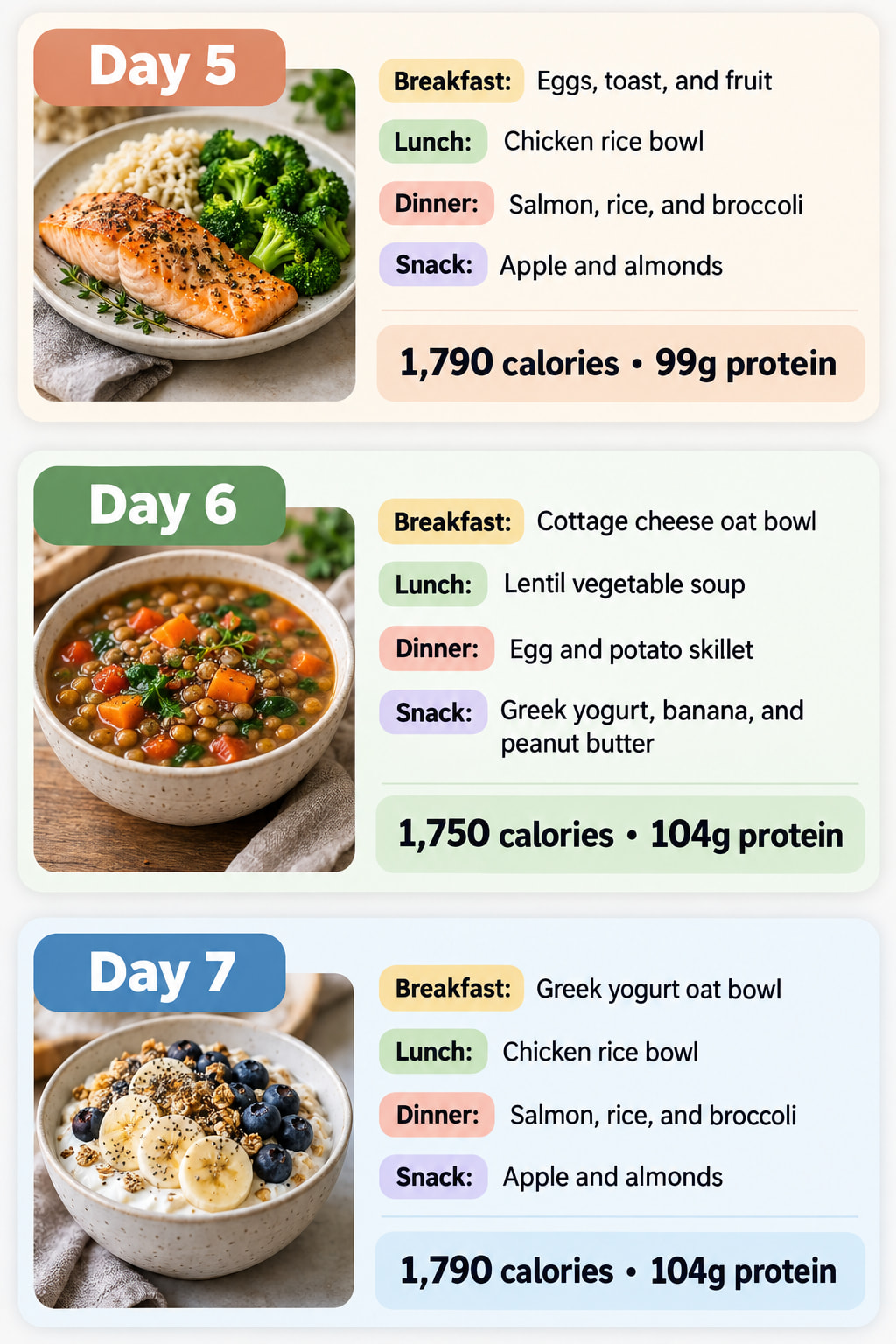
- Breakfast — Eggs, toast, and fruit: 2 large eggs, 1 cup raw spinach, 1 teaspoon olive oil, 2 slices whole-grain toast, and 1 medium orange.
- Lunch — Chicken rice bowl: 3 ounces cooked chicken breast, 1¼ cups cooked brown rice, 2 cups raw spinach, ½ cup chopped bell pepper, ½ cup chopped tomato, and 2 teaspoons olive oil.
- Dinner — Salmon, rice, and broccoli: 3 ounces cooked salmon, 1 cup cooked brown rice, 1½ cups cooked broccoli, and 2 teaspoons olive oil.
- Snack: 1 medium apple and 1 ounce almonds.
Approximate daily total: 1,790 calories and 99 grams of protein.
Day 6
- Breakfast — Cottage cheese oat bowl: 1 cup 2% cottage cheese, 40 grams dry rolled oats, 1 cup mixed berries, and ½ ounce almonds.
- Lunch — Lentil vegetable soup: ¾ cup cooked lentils, ½ cup chopped carrots, ½ cup chopped tomato, ¼ cup chopped onion, and 2 teaspoons olive oil. Add water and serve with 2 slices whole-grain bread.
- Dinner — Egg and potato skillet: 2 large eggs, 250 grams cooked potato with skin, 2 cups raw spinach, ½ cup chopped bell pepper, ½ cup chopped tomato, and 2 teaspoons olive oil.
- Snack: ¾ cup plain nonfat Greek yogurt, 1 medium banana, and 1 tablespoon peanut butter.
Approximate daily total: 1,750 calories and 104 grams of protein.
Day 7
- Breakfast — Greek yogurt oat bowl: ¾ cup plain nonfat Greek yogurt, 40 grams dry rolled oats, 1 cup mixed berries, and 1 tablespoon peanut butter.
- Lunch — Chicken rice bowl: 3 ounces cooked chicken breast, 1¼ cups cooked brown rice, 2 cups raw spinach, ½ cup chopped bell pepper, ½ cup chopped tomato, and 2 teaspoons olive oil.
- Dinner — Salmon, rice, and broccoli: 3 ounces cooked salmon, 1 cup cooked brown rice, 1½ cups cooked broccoli, and 2 teaspoons olive oil.
- Snack: 1 medium apple and 1 ounce almonds.
Approximate daily total: 1,790 calories and 104 grams of protein.
Grocery List for the 7-Day Protein Diet Plan
This list covers one adult following the menu as written. Purchase amounts for meat and produce allow for some preparation loss. Portion the cooked foods as directed, since cooking yields vary.
Protein Foods, Dairy, and Lentils
| Food | Amount needed for the week |
|---|---|
| Boneless, skinless chicken breast | 18 ounces cooked; buy approximately 1¾ pounds raw |
| Salmon | 9 ounces cooked; buy approximately 1 pound raw |
| Large eggs | 8 eggs |
| Plain nonfat Greek yogurt | 1,190 grams total, approximately 42 ounces |
| 2% cottage cheese | 452 grams total, approximately one 16-ounce container |
| Lentils | 2¼ cups cooked; a 1-pound bag of dry lentils provides more than needed |
Grains, Nuts, and Pantry Items
| Food | Amount needed for the week |
|---|---|
| Rolled oats | 200 grams dry |
| Brown rice | 8 cups cooked; start with approximately 3 cups dry and check the package yield |
| Whole-grain bread | 10 slices |
| Almonds | 4 ounces, approximately 112 grams |
| Peanut butter | 7 tablespoons, approximately 112 grams |
| Olive oil | 10 tablespoons, approximately 150 milliliters |
| Seasonings | Garlic powder, paprika, dried herbs, black pepper, and salt as appropriate for your needs |
Vegetables and Fruit
| Food | Amount needed for the week |
|---|---|
| Mixed berries | 5 cups, approximately 700 grams; a 2-pound frozen bag is enough |
| Apples | 3 medium |
| Bananas | 4 medium |
| Oranges | 2 medium |
| Baking potatoes | Four 250-gram cooked portions; buy approximately 3 pounds |
| Broccoli florets | 6½ cups cooked; buy approximately 3 pounds frozen or trimmed |
| Raw spinach | 14 cups, approximately 420 grams; one 16-ounce package |
| Bell peppers | 3 cups chopped; approximately 3–4 peppers |
| Tomatoes | 4½ cups chopped; buy approximately 2 pounds |
| Carrots | 2½ cups chopped; a 1-pound bag is enough |
| Onion | ¾ cup chopped; approximately 1 medium onion |
Check your pantry before shopping. Freeze unused bread, fish, and suitable leftovers, and keep unused dry rice and lentils for another week.
How to Prepare the Meals
Breakfast Bowls and Eggs
Cook each 40-gram oat portion in water according to the package directions. Let it cool slightly before combining it with yogurt or cottage cheese. Add the berries, then the listed peanut butter or almonds.
For the egg breakfast, soften the spinach in the measured teaspoon of oil, add the eggs, and cook thoroughly. Serve with toast and the orange.
Chicken Bowls and Dinner Plates
Cook the chicken, then weigh out 3-ounce portions. Build the rice bowls with the specified rice and vegetables. Use the listed oil for cooking or dressing the bowl.
For chicken dinners, bake the potatoes until tender and steam or roast the vegetables. Divide the meal’s two teaspoons of oil among its components.
For salmon dinners, bake or pan-cook the fish using part of the measured oil. Use the remainder for the broccoli or rice.
Lentil Vegetable Soup
For one serving, soften the onion and carrot in two teaspoons of olive oil. Add the tomato, ¾ cup cooked lentils, seasonings, and enough water to make soup. Simmer until the vegetables are tender.
You can make all three soup portions together by tripling the ingredients. Freeze the portion intended for Day 6 if preparing it at the beginning of the week.
Egg and Potato Skillet
Use an already-cooked potato. Dice the 250-gram portion, warm it in the measured oil, then add the peppers, tomato, and spinach. Add the eggs and cook thoroughly.
Meal-Prep Storage and Food Safety
Plan two preparation sessions: one before Day 1 and another before Day 4. Alternatively, freeze portions that will be eaten later in the week.
Follow food-safety guidance when preparing and storing meals:
- Keep your refrigerator at 40°F or below.
- Refrigerate cooked food in shallow containers within 2 hours, or within 1 hour when temperatures exceed 90°F.
- Use refrigerated cooked meals within 3–4 days. Freeze later portions promptly.
- Reheat leftovers to 165°F.
- Cook chicken to 165°F and egg dishes to 160°F.
These storage rules also matter for cooked rice, potatoes, and vegetables. Freeze raw chicken or fish intended for later in the week promptly, then thaw safely in the refrigerator before cooking.
How to Adjust Portions and Make Substitutions
Keep the menu flexible. If you need more food, increase a starch portion, add another snack, or adjust meal sizes to suit your calorie needs.
If a clinician or dietitian has given you a lower calorie target, review portions of rice, bread, nuts, spreads, and oil while maintaining an appropriate protein intake and food variety.
| Preference or need | Practical adjustment |
|---|---|
| Vegetarian meals | Replace chicken or salmon with tofu, tempeh, eggs, or legumes. Check the replacement’s protein amount and adjust the serving. |
| Dairy-free meals | Choose an unsweetened alternative with a useful amount of protein. Check the label; a same-size serving may not match Greek yogurt or cottage cheese. |
| Peanut allergy | Use a tolerated nut or seed butter, checking allergen labeling and its nutrition information. |
| Different vegetables | Substitute vegetables you enjoy and can prepare easily. Recalculate if the change substantially alters the meal. |
| Lower-cost shopping | Compare unit prices, consider frozen produce, and use the repeated ingredients across the week. |
Substitutions change the nutrition estimates and shopping quantities. A small serving of beans or one egg will not automatically replace the protein in a chicken portion.
How Much Weight Can You Lose in 7 Days?
CDC guidance describes approximately 1–2 pounds per week as a gradual weight-loss pace associated with better long-term maintenance.
That is general guidance, not a promise for your first week. Your starting point, calorie needs, activity, health, and consistency all influence the result.
Use the week to assess whether the meals fit your schedule, satisfy your appetite, and are practical to repeat. One week of scale readings cannot establish how well an eating pattern will work over the long term.
Frequently Asked Questions
How Much Protein Should I Eat Each Day for Weight Loss?
The current federal guideline range is 1.2–1.6 grams per kilogram of body weight daily, with adjustments for individual needs. This menu provides approximately 100–125 grams. Your own target may differ, especially if you have a condition that changes your protein needs.
Do I Need Protein Powder for This Plan?
No. The menu reaches its estimated protein totals using food. Protein powder is not included in the meals or grocery list.
Can I Make This Protein Diet Plan Vegetarian?
Yes, but recalculate the portions. Tofu, tempeh, lentils, beans, eggs, and dairy can provide protein, depending on your eating pattern. Check that your replacements supply an appropriate amount rather than swapping equal food weights automatically.
Can I Eat Rice, Bread, and Fruit While Trying to Lose Weight?
Yes. This menu includes all three. Their portions contribute to the day’s overall calorie intake, so count them along with protein foods, oils, and snacks.
What if I Am Still Hungry After Eating These Meals?
Review whether the example calorie level is appropriate for you. Increase portions or add a balanced snack if you need more food. Persistent hunger, low energy, or difficulty maintaining your usual activities is a reason to reassess the plan with a qualified professional.
Can I Repeat This 7-Day Meal Plan?
You can reuse the structure if its portions suit your needs. Rotate protein foods, vegetables, fruit, and grains for variety, update the grocery quantities, and prepare each week’s food using the same storage precautions.
Conclusion
This 7-day protein diet plan for weight loss gives you a complete week of meals, measured portions, and a matching grocery list. Its value comes from making consistent eating easier.
Start by checking your calorie and protein needs, reviewing what you already have, and scheduling two preparation sessions. Adjust the portions so the plan fits your needs and daily routine.
This content is for informational purposes only and not medical advice.
References
- Dietary Guidelines for Americans, 2025–2030
- Scientific Foundation for the Dietary Guidelines
- CDC: Steps for Losing Weight
- NIDDK: Healthy Eating for Adults With Chronic Kidney Disease
- FoodSafety.gov: Food Preparation and Leftover Safety
- USDA FoodData Central
- FDA: Nutrition Information for Cooked Seafood