
Vaginal itching can result from irritation, yeast infections, hormonal dryness, sexually transmitted infections, or skin conditions. Finding the cause matters because similar symptoms can require different care. Itching alone does not tell you whether you have an infection.
The location is also important. The vagina is the internal canal, while the vulva includes the external skin and labia around its opening. What people call “vaginal itching” often involves the vulva or nearby pubic skin.
Noticing where the itching occurs, whether your discharge has changed, and whether you have a rash, sores, or dryness can help a healthcare professional decide what to check.
9 Possible Causes of Vaginal Itching
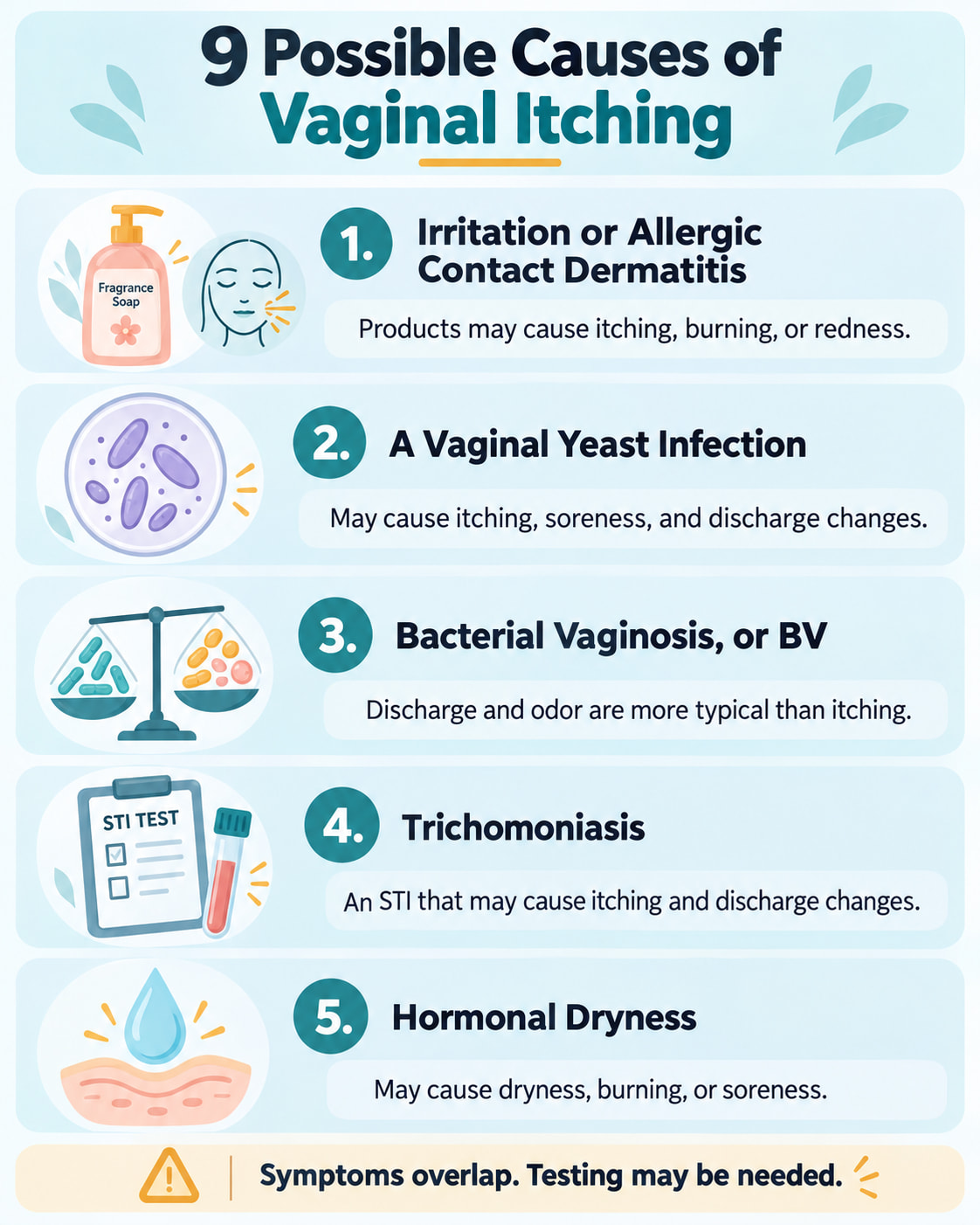
These possibilities affect different areas and have overlapping symptoms. Use them to understand what may be happening and what to discuss at an appointment.
1. Irritation or Allergic Contact Dermatitis
Sensitive vulvar skin can react to products that touch it. Possible triggers include scented soaps, wipes, laundry products, menstrual pads, lubricants, and other personal care products.
Along with itching, you may notice burning, stinging, redness, or a raw feeling. Heat, moisture, and rubbing can make irritated skin feel worse.
Think about recent product changes, including a new detergent or body wash. However, a familiar product can also become a problem because sensitivity may develop over time. Stopping a suspected irritant is useful, but persistent symptoms still need assessment.
2. A Vaginal Yeast Infection
An overgrowth of Candida yeast can cause itching, soreness, swelling, and redness around the vaginal opening. Some people also experience burning when urine touches irritated skin or discomfort during sex.
Thick, white discharge is a possible symptom, but ACOG guidance notes that discharge sometimes does not change.
These symptoms overlap with other conditions. Even if you have had a yeast infection before, a new episode of itching may have a different cause.
3. Bacterial Vaginosis, or BV
BV develops when the balance of bacteria in the vagina changes. Thin white or gray discharge and a fishy odor are characteristic symptoms, although some people have no noticeable symptoms.
Itching or burning can occur, but itching is less typical than discharge and odor. A strong itch by itself is not a reliable sign of BV.
Because discharge changes can also occur with other vaginal conditions, an examination or vaginal-fluid test may be needed to identify the cause.
4. Trichomoniasis
Trichomoniasis, sometimes called “trich,” is a sexually transmitted infection caused by a parasite. It can cause genital itching, burning, redness, discomfort when urinating, and changes in vaginal discharge.
Discharge may become more noticeable or develop an unusual color or smell. However, many people with trichomoniasis have no symptoms.
Testing is necessary to identify this infection. If symptoms develop after sex with a new partner, arrange a medical or sexual health appointment and avoid sex until you have been assessed.
5. Hormonal Dryness
Lower estrogen levels around menopause or during breastfeeding can contribute to vaginal dryness. Dryness may come with itching, burning, soreness, or discomfort during sex.
Some medicines and other health circumstances can also contribute to dryness, so it is worth discussing a persistent change with your clinician.
Depending on the cause, they may discuss vaginal moisturizers, suitable lubricants, or other options. Use products designed for their intended location; ordinary body lotions and creams should not be inserted into the vagina.
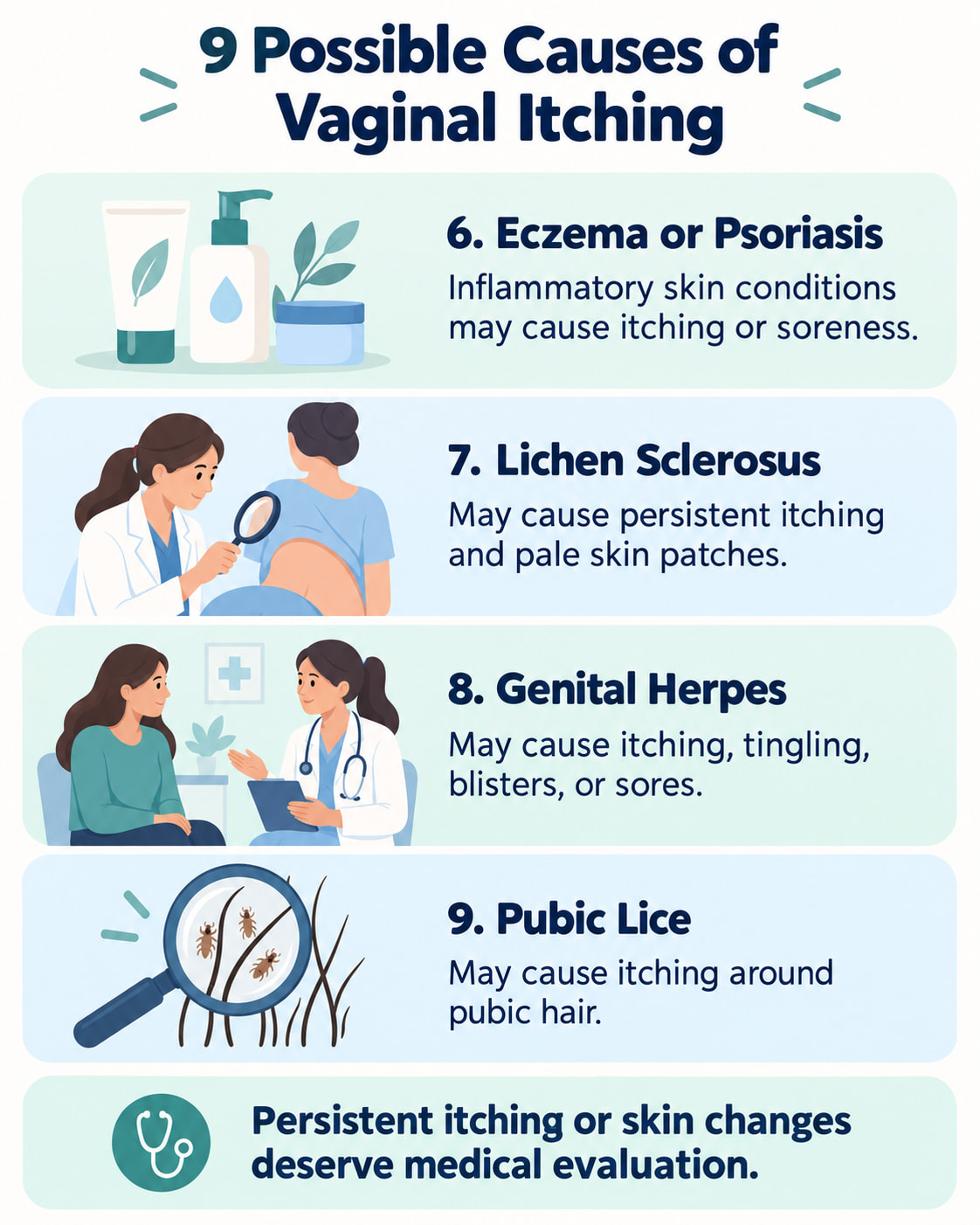
6. Eczema or Psoriasis
Inflammatory skin conditions can affect the vulva as well as other parts of the body. Atopic eczema may cause itchy, irritated skin, while genital psoriasis can produce sore, itchy patches.
Psoriasis in the genital area may have less scaling than psoriasis on the elbows, knees, or scalp. Its appearance can therefore be easy to misinterpret.
A clinician or dermatologist can examine the skin and recommend appropriate care. Genital skin may need different medication choices from other body areas, so ask before reusing a cream prescribed for a rash elsewhere.
7. Lichen Sclerosus
Lichen sclerosus is a skin condition that often affects the vulva and skin around the anus. It can cause persistent itching, white or pale patches, and skin that tears or bleeds easily when rubbed or scratched.
Some people also notice soreness, discomfort during sex, or changes in the shape or tightness of vulvar tissue.
These changes deserve an examination. Ongoing care may be needed, so persistent itching with fragile skin or pale patches should not be assumed to be ordinary dryness.
8. Genital Herpes
Genital herpes can cause itching, tingling, or burning around the genitals. These sensations sometimes occur before an outbreak of blisters or sores.
Symptoms vary. Some people have painful lesions, while others have mild symptoms that are easy to overlook. Itching by itself does not establish that someone has herpes.
Arrange prompt assessment for new genital blisters or sores. A healthcare professional may collect a sample from a lesion to help identify its cause.
9. Pubic Lice
Pubic lice affect pubic hair and the surrounding external skin. They can cause itching in the genital area, and you may notice tiny lice or eggs attached to hairs.
This is an external infestation rather than a problem inside the vaginal canal. It requires different care from a vaginal infection or an inflammatory skin condition.
If you notice possible lice or eggs, seek advice about confirming the cause and choosing an appropriate product.
Relief Tips for Vaginal and Vulvar Itching
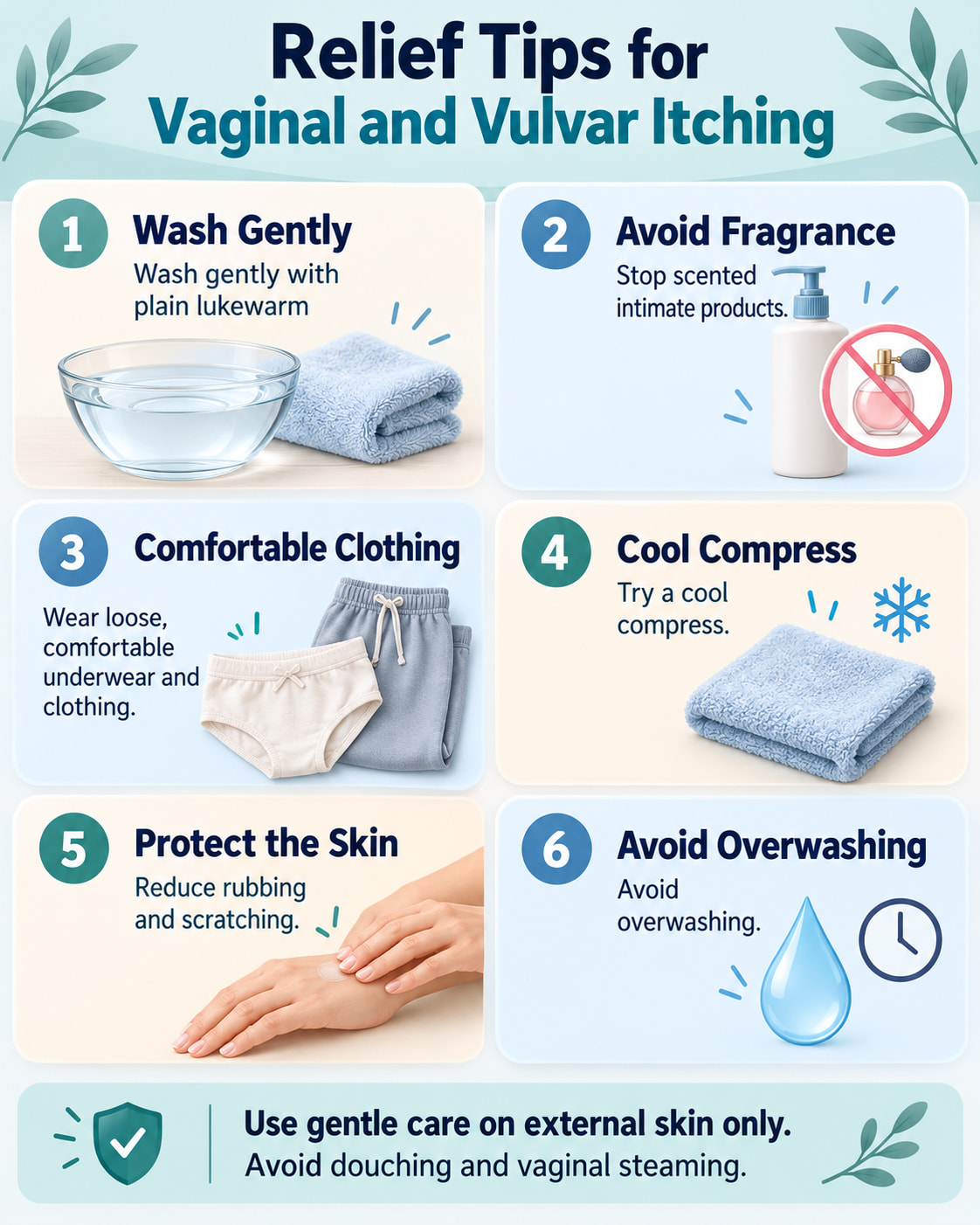
Gentle care may ease irritation while you arrange appropriate assessment. Keep cleansing and compresses on the external vulvar skin.
- Wash gently with plain lukewarm water. Avoid scrubbing, and pat dry with a soft towel.
- Stop scented intimate products. Avoid fragranced washes, sprays, deodorants, and wipes around irritated skin.
- Wear loose, comfortable underwear and clothing. NHS guidance recommends loose cotton underwear and avoiding scented hygiene products.
- Try a cool compress. A clean, cool cloth held against the vulva may soothe itching or burning. Wrap a cool pack before use and never place ice directly on the skin.
- Reduce rubbing and scratching. Scratching can further irritate the skin. Keeping nails short may help limit damage.
- Avoid overwashing. Repeated washing and harsh cleansers can increase dryness and irritation.
Do not douche or use vaginal steaming. These practices can disturb the vaginal environment or worsen symptoms. Temporary comfort from home care also does not establish what caused the itching.
Be Careful With Over-the-Counter Products
Repeatedly using yeast medication without confirming the cause can delay appropriate care.
According to CDC guidance on yeast infections, symptoms that continue after an over-the-counter yeast product—or return within two months after yeast treatment—should be evaluated and tested.
The CDC also reports insufficient evidence supporting probiotics or homeopathic products for vaginal yeast infections. These should not replace an assessment when symptoms persist.
Be cautious about adding several creams or “natural” products at once. Some herbal preparations and over-the-counter products can aggravate irritation or allergies. Ask a clinician or pharmacist which products are appropriate for the area and suspected cause.
When to See a Healthcare Professional
Contact a healthcare professional promptly if itching occurs with fever or pelvic/lower abdominal pain. MedlinePlus identifies these accompanying symptoms as reasons to seek medical advice right away.
Arrange an appointment if:
- This is your first episode of unexplained vaginal or vulvar itching.
- Symptoms are worsening, recurring, or not improving.
- Your discharge has an unusual color, smell, or consistency.
- Symptoms began after sex with a new partner.
- You have pain during urination or sex.
- You have new genital blisters, sores, or significant skin irritation.
Persistent itching with a lump, ulcer, unexplained bleeding, or a lasting change in skin color or texture also needs an examination. These findings have several possible causes, and getting them checked helps establish the appropriate next step.
What to Expect at an Appointment
A clinician may ask when the itching started, where it occurs, and whether you have noticed discharge, odor, sores, or pain. Information about recent products, medicines, menstrual changes, and sexual exposures can help.
Depending on your symptoms, they may examine the external skin, perform a pelvic examination, or collect a swab or fluid sample. CDC diagnostic guidance explains that examination and testing are often needed because symptoms alone cannot reliably distinguish the causes.
You can ask what each part of the examination involves and request a pause if you feel uncomfortable.
Frequently Asked Questions
What causes vaginal itching without discharge?
Possible explanations include irritation, hormonal dryness, or a skin condition. However, a yeast infection can also occur without a noticeable discharge change. The absence of discharge does not reliably identify the cause or exclude an infection.
Why does vaginal itching feel worse at night?
Heat and ongoing skin irritation may make itching more troublesome, and keeping the area cool may improve comfort. Nighttime itching does not identify a particular condition. If symptoms repeatedly interrupt sleep or continue, arrange an assessment.
Can vaginal itching happen after sex without an STI?
Yes. Friction, dryness, or irritation from lubricants, spermicides, or other products can contribute. However, symptoms after sex with a new partner, unusual discharge, or sores warrant assessment for possible infection.
What should I do about vaginal itching during pregnancy?
Contact your prenatal care professional before using medication for vaginal itching. They can help identify the cause and discuss suitable options. CDC guidance advises that oral fluconazole should not be used for vaginal yeast infections during pregnancy.
Can vaginal itching go away on its own?
Mild irritation may improve after you stop contact with the triggering product. Persistent, worsening, or recurring itching needs assessment because infections and skin disorders may require specific care. There is no single recovery timeline that applies to every cause.
Can a home vaginal pH test tell me what is wrong?
A pH result cannot reliably identify the cause by itself. An elevated pH can occur with more than one condition, including BV and trichomoniasis. A normal result does not confirm a yeast infection. A clinician may need other tests to interpret your symptoms.
Conclusion
Understanding what causes vaginal itching starts with noticing the location and accompanying symptoms. Gentle external care and avoiding irritating products may improve comfort, while a first episode, persistent symptoms, or concerning changes deserve medical assessment.
If itching keeps returning, make an appointment and bring a short list of your symptoms and products you use. Identifying the cause gives you a clearer path to appropriate care.
This content is for informational purposes only and not medical advice.
References
- American College of Obstetricians and Gynecologists: Vaginitis
- American College of Obstetricians and Gynecologists: Disorders of the Vulva: Common Causes of Vulvar Pain, Burning, and Itching
- Centers for Disease Control and Prevention: Diseases Characterized by Vulvovaginal Itching, Burning, Irritation, Odor or Discharge
- Centers for Disease Control and Prevention: Vulvovaginal Candidiasis
- Centers for Disease Control and Prevention: About Bacterial Vaginosis
- Centers for Disease Control and Prevention: About Trichomoniasis
- NHS: Vaginal Dryness
- American Academy of Dermatology: 8 Reasons Your Groin Itches and How to Get Relief
- NHS: Lichen Sclerosus
- American College of Obstetricians and Gynecologists: Genital Herpes