
For running on a treadmill, start with a gradual warm-up, choose a speed you can control, keep your stride relaxed, and add incline only when it matches your goal and ability. You do not need a particular running speed or a mandatory 1% incline to get started.
Learning the controls and matching the settings to your effort helps you make sensible adjustments as you go. These seven tips cover the essentials, followed by a pace chart and an adjustable run–walk workout.
7 Tips for Running on a Treadmill
1. Learn the Controls and Use the Safety Clip
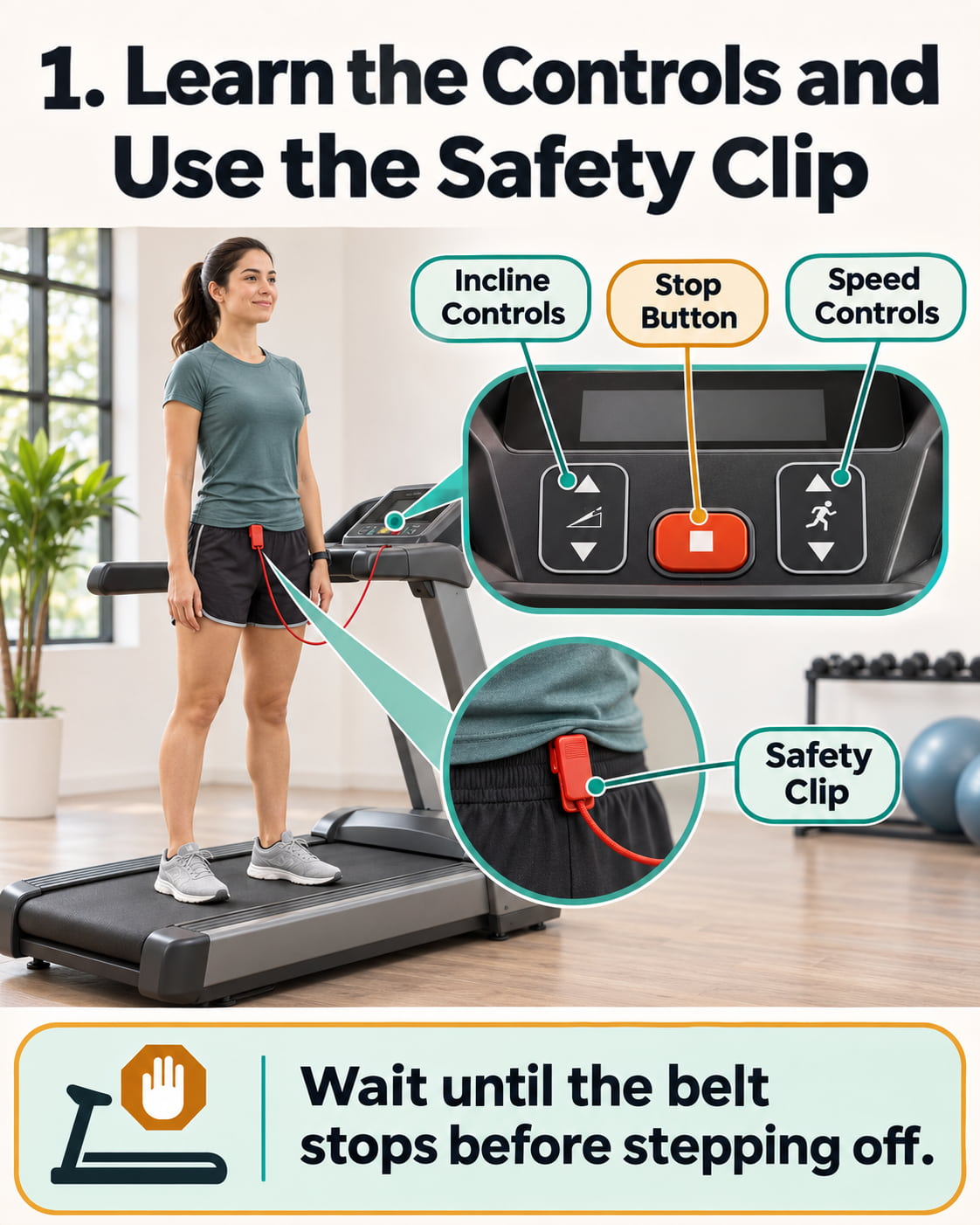
Before starting the belt, find the speed buttons, incline controls, regular stop button, and emergency-stop system. Follow the machine’s startup instructions, since controls and safety features vary.
If the treadmill has a tethered safety key, attach its clip securely to your clothing. The tether is designed to activate the stopping system if you move too far away. Mayo Clinic’s treadmill guidance recommends using the clip and starting at settings that feel manageable.
Before your first session:
- Wear comfortable running shoes and secure your laces.
- Check whether the speed display uses mph or km/h.
- Keep the area around the treadmill clear.
- Ask gym staff to explain unfamiliar controls.
- Have anything you need within reach before starting.
During intervals, change the belt speed rather than jumping onto or off a fast-moving belt. Wait until the belt has stopped before stepping off.
2. Warm Up for 5–10 Minutes
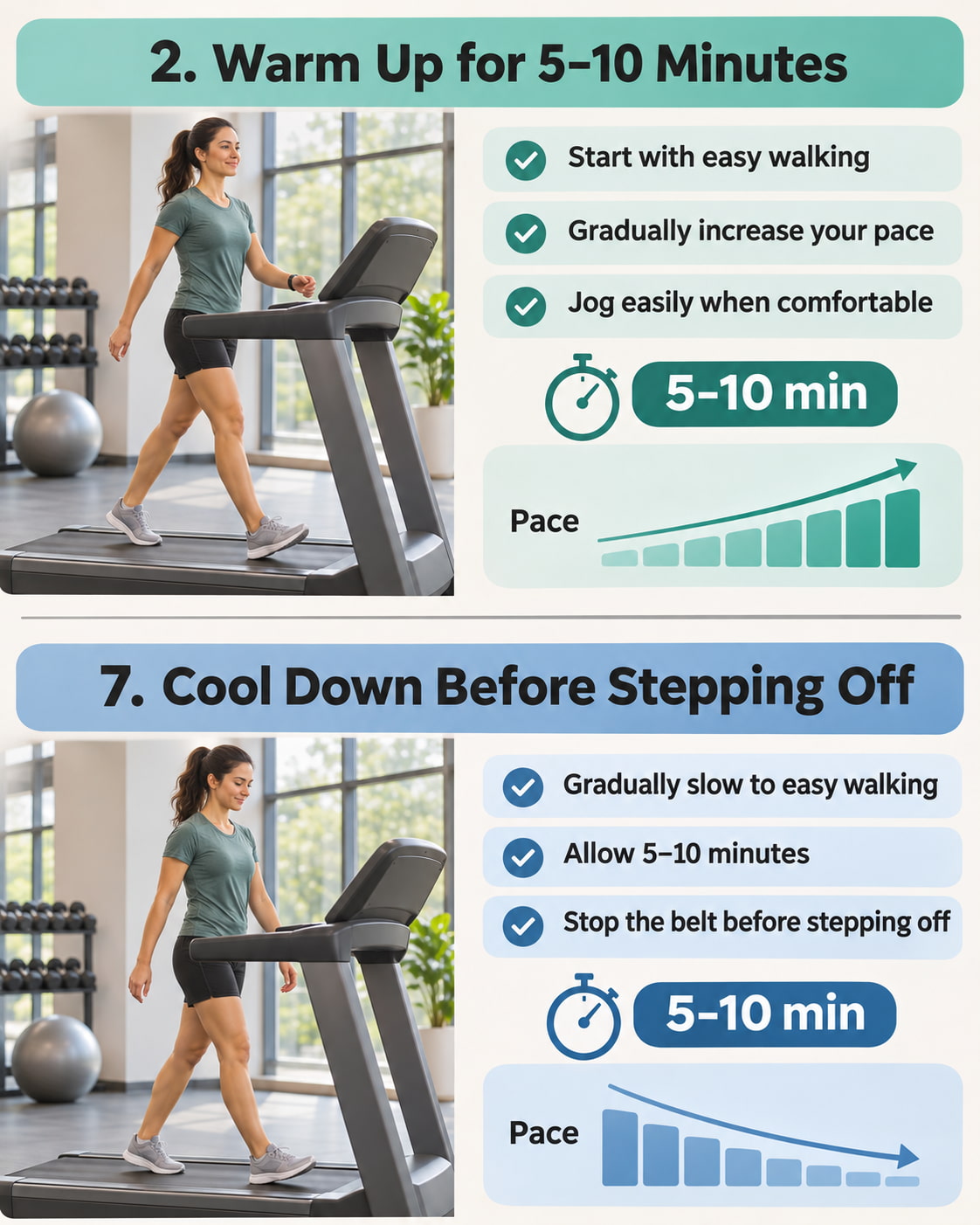
Begin with easy walking, then gradually increase the pace as you feel ready. If you plan to run, include a little easy jogging near the end of the warm-up when comfortable.
The American Heart Association recommends warming up for 5–10 minutes by doing a slower version of the activity ahead. This gives your breathing and heart rate time to increase gradually.
A warm-up should prepare you for the session without exhausting you. Keep the incline low enough that the opening minutes feel easy.
You do not need to rush to a target speed because the timer has started. Take longer to settle in if needed. Warming up is useful preparation, but it cannot guarantee that you will avoid an injury.
3. Keep Your Treadmill Running Form Relaxed
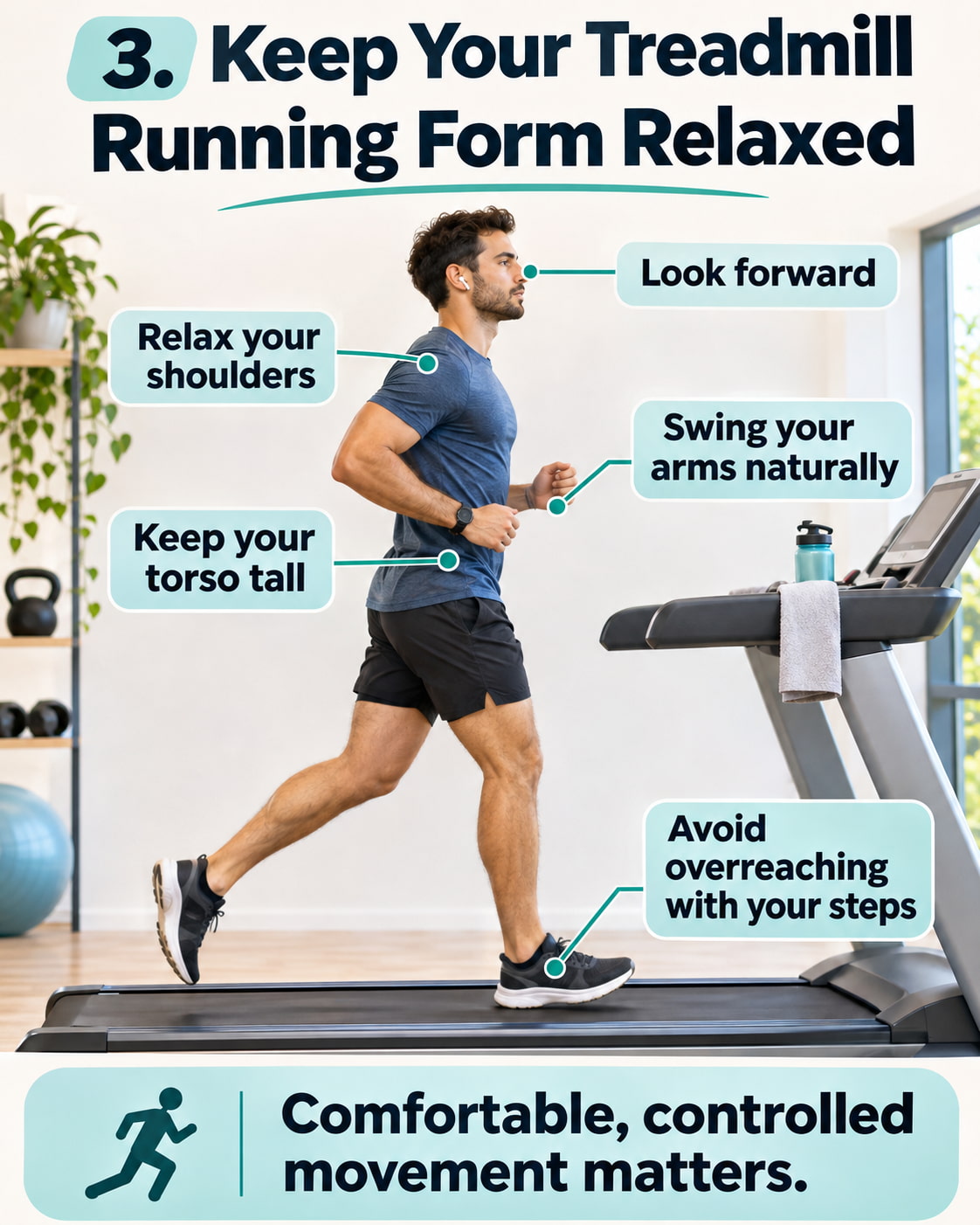
Aim for comfortable, controlled movement. Hospital for Special Surgery emphasizes that runners have different bodies and that there is no single perfect running style for everyone.
Use these simple cues:
| Body area | Form cue |
|---|---|
| Head and eyes | Look forward rather than continuously down at your feet. |
| Shoulders | Keep them relaxed instead of lifting them toward your ears. |
| Arms and hands | Let your arms swing naturally with relaxed hands. |
| Torso | Stay tall without becoming rigid or bending toward the console. |
| Steps | Avoid an exaggerated reach far ahead of your body. |
Do not force a new foot strike or copy another runner’s stride just to look correct.
Avoid leaning on the handrails throughout your run. Briefly using them to steady yourself is different from hanging on to maintain a speed or incline. If you need sustained support, lower the settings. If balance remains difficult, get guidance before attempting unsupported running.
4. Choose Your Treadmill Speed by Effort
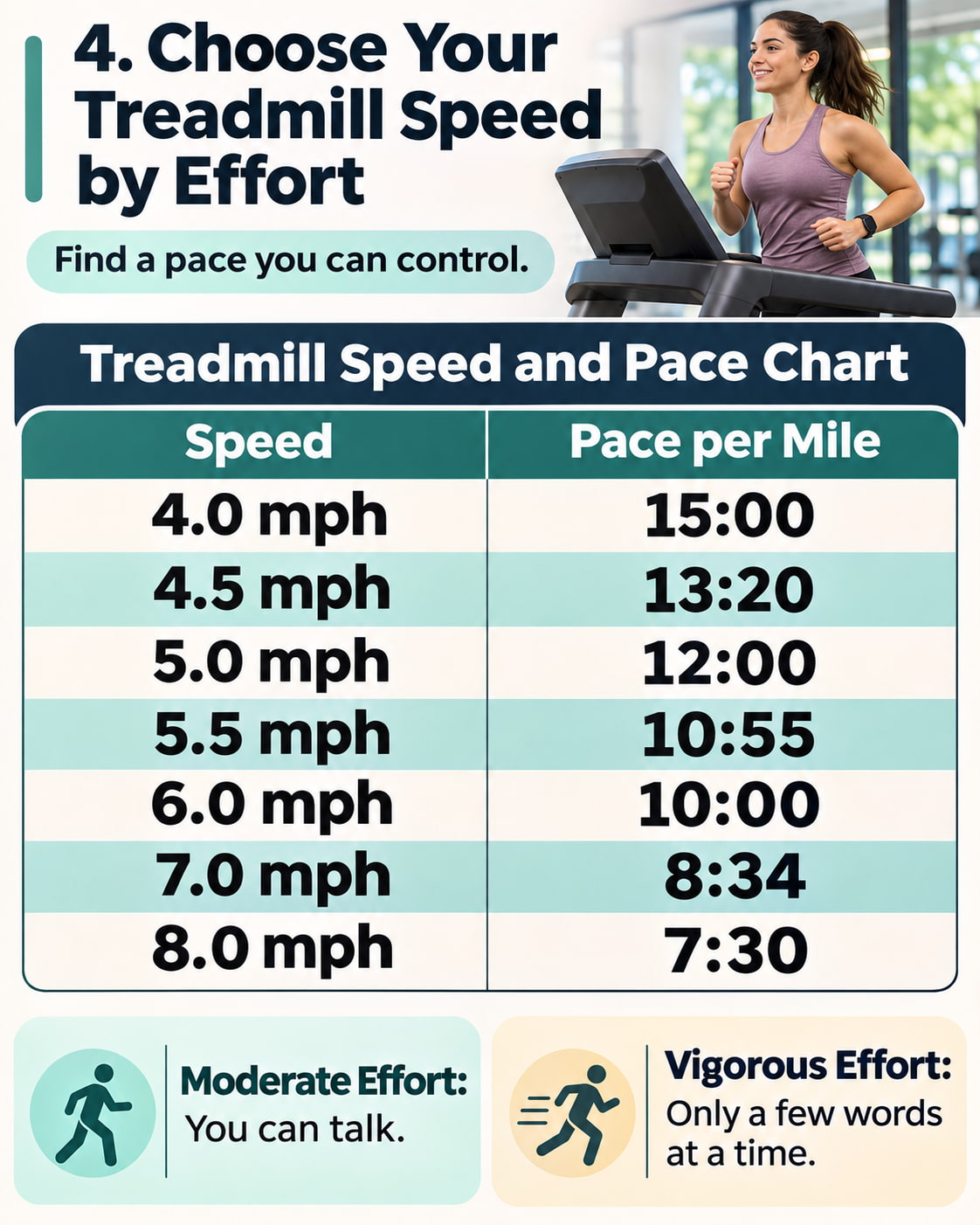
There is no universal beginner treadmill speed. A pace that feels easy to one person may be demanding to another.
The CDC’s intensity guidance, updated December, 2025, uses the talk test to help describe effort:
- Moderate effort: You can speak, but singing is difficult.
- Vigorous effort: You need to pause for breath after a few words.
For an easy introductory session, choose a pace that allows comfortable conversation. If that requires walking between short runs, use walking breaks. Harder breathing during a planned vigorous session is expected; it does not automatically mean the pace is unsafe.
Increase speed in small steps and give yourself time to adjust. If you are struggling to stay comfortably positioned on the belt, reaching for the rails, or working harder than intended, reduce the speed.
Treadmill Speed and Pace Chart
Use this chart to understand the display, not as a list of speeds you must reach.
| Speed | Approximate pace per mile |
|---|---|
| 4.0 mph | 15:00 |
| 4.5 mph | 13:20 |
| 5.0 mph | 12:00 |
| 5.5 mph | 10:55 |
| 6.0 mph | 10:00 |
| 7.0 mph | 8:34 |
| 8.0 mph | 7:30 |
Pace is calculated as 60 divided by mph, with results rounded to the nearest second.
5. Add Incline Gradually
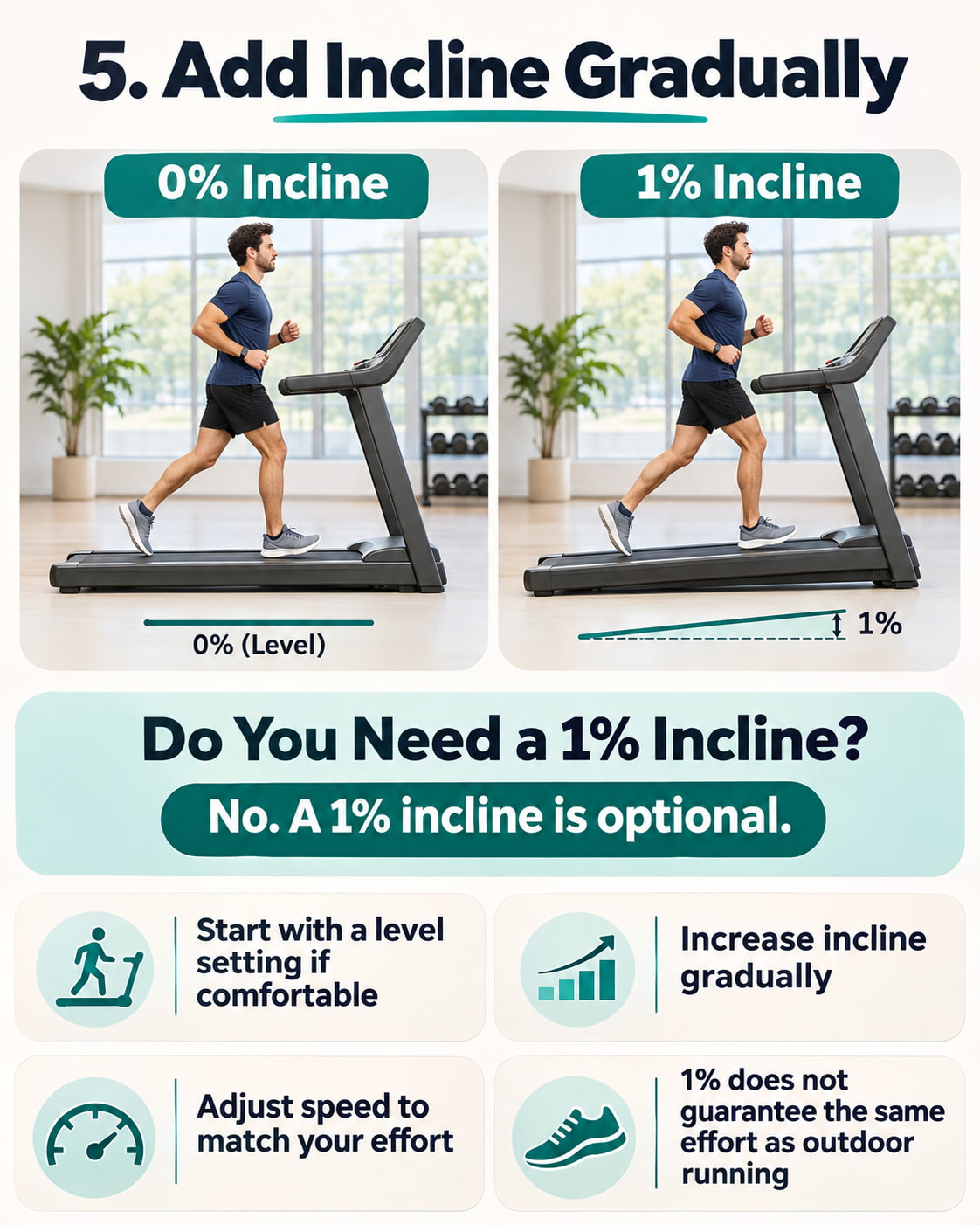
Incline changes the workload, so consider speed and incline together. You may need to slow down when you raise the belt.
A level setting is a practical option while you learn to use the machine. Once you feel comfortable, you can experiment with a small incline while keeping the intended effort manageable.
For example, if your goal is an easy run and raising the incline makes conversation difficult, lower the speed or return to a flatter setting.
Do You Need a 1% Incline?
No. A 1% incline is an optional setting, not a requirement for every treadmill run.
The familiar recommendation comes partly from a 1996 study of nine trained male runners. It found that 1% approximated outdoor energy cost under its tested conditions.
However, a 2026 study in PLOS One found that outdoor running required more energy than treadmill running at 1% in 12 highly trained male runners. The study was small and does not establish a replacement setting for everyone.
These studies examined energy demands. They do not show that a specific incline prevents injuries or protects everyone’s knees.
Choose incline according to your session, comfort, and response rather than treating one number as compulsory.
6. Build Running Time Gradually
Start with a session you can repeat comfortably. Run–walk intervals let you practice running without needing to sustain it continuously.
Beginner programs such as NHS Couch to 5K use three running sessions per week, with days off between them. HSS guidance also recommends waiting until the current routine feels easy before increasing the workload.
A practical way to apply that advice is to change one part of the session at a time. You could lengthen a running interval while keeping the pace and incline unchanged. That makes it easier to judge the effect of the adjustment.
You do not need to progress every week. Repeat a manageable session when you need more time, and reduce the workload if discomfort or fatigue affects your movement.
7. Cool Down Before Stepping Off
After an ordinary workout, gradually reduce the pace to an easy walk for 5–10 minutes. Then stop the belt and step off carefully.
The American Heart Association recommends a gradual cooldown because stopping abruptly can contribute to lightheadedness. Mayo Clinic notes that cooling down does not reliably prevent later muscle soreness.
Use these final minutes to ease out of the session rather than adding an unplanned sprint.
A cooldown is for finishing a normal workout. If you develop concerning symptoms, stop exercising safely and seek help rather than trying to complete the cooldown.
Beginner Workout for Running on a Treadmill
The following session uses the run–walk example in HSS beginner running guidance, published May, 2026. Adjust it to your current ability.
Choose your walking and running speeds by comfort and control. A level belt is a practical introductory option.
| Part of the workout | Duration | What to do |
|---|---|---|
| Warm-up | 5 minutes | Walk easily and gradually increase the pace. |
| Run–walk intervals | 20 minutes | Complete four total rounds of 1 minute of easy running followed by 4 minutes of walking. |
| Cooldown | 5 minutes | Gradually return to easy walking. |
| Total | 30 minutes | Includes 4 minutes of running. |
The interval pattern and five-minute warm-up and cooldown follow the HSS example.
If the session is too demanding, complete fewer rounds, shorten the running portions, or walk throughout. If you need a longer warm-up or cooldown, allow extra time.
Use the speed controls to change between walking and running. Do not jump off the moving belt between intervals.
When to Stop or Get Advice
Stop exercising safely if you develop sudden or severe pain, dizziness, or unusually severe shortness of breath. Pain that changes your stride is also a reason to stop rather than push through.
MedlinePlus exercise guidance advises seeking help when pain, extreme breathlessness, dizziness, or feeling unwell occurs during exercise.
Get immediate medical care for persistent or crushing chest pain, or chest discomfort accompanied by symptoms such as sweating, nausea, dizziness, or shortness of breath. Do not continue walking to finish a planned cooldown.
If you have a health condition, a current injury, or difficulty with balance, ask a qualified healthcare professional what type and amount of activity are appropriate for you.
Frequently Asked Questions About Running on a Treadmill
What Speed Should a Beginner Use on a Treadmill?
Use a speed that lets you move comfortably and stay in control. There is no required beginner running pace. Start with walking, introduce short running intervals if comfortable, and adjust according to effort rather than someone else’s mph setting.
What Incline Should I Use for Treadmill Running?
A level setting is a practical option for learning the machine. Add a small incline when it suits your workout and you can maintain comfortable movement. Reduce speed if the incline makes the effort harder than intended. A 1% incline is optional.
Is It Okay to Hold the Handrails While Running?
Use the rails when needed to steady yourself or stop safely. Avoid leaning on them throughout a run to maintain an otherwise unmanageable speed or incline. Lower the settings if you need continuous support, and get guidance if balance is a persistent concern.
How Long Should a Beginner Run on a Treadmill?
Separate total workout time from actual running time. The 30-minute example above includes only four minutes of running. Begin with an amount you can manage comfortably, even if that means a shorter session or walking only, and build gradually.
Can I Run on a Treadmill Every Day?
Daily running is not necessary to get started. For beginners, spacing out running sessions allows recovery and gives you time to see how you respond. Walking or another comfortable activity may fit between runs, depending on your condition and recovery.
Is Running on a Treadmill the Same as Running Outside?
Both involve running, but the conditions differ. A treadmill controls belt speed and incline, while outdoor running involves changes in surroundings and terrain. Matching the displayed pace does not guarantee identical effort, and a 1% incline does not reproduce outdoor demands for everyone.
Should I Increase Speed or Incline First?
Choose the adjustment that matches your goal. Speed changes help you practice a different pace; incline introduces an uphill challenge. Keep the other setting steady at first so you can judge the change. Beginners can focus on becoming comfortable with their current session before increasing either.
Conclusion
Running on a treadmill becomes more manageable when you understand the controls, move naturally, and choose settings that suit your current fitness. Start with a gradual warm-up, use walking breaks when needed, and increase the challenge only when your current routine feels comfortable.
For your next session, try the adjustable run–walk workout or a shorter version. Record the settings and how the session felt so you have a useful starting point next time.
References
- American Heart Association: Warm Up, Cool Down.
- CDC: How to Measure Physical Activity Intensity.
- Hospital for Special Surgery: Proper Running Form.
- Hospital for Special Surgery: How to Get Into or Back Into Running.
- Mayo Clinic: Aerobic Exercise—How to Warm Up and Cool Down.
- Mayo Clinic DAHLC: It’s Time to Let Go.