
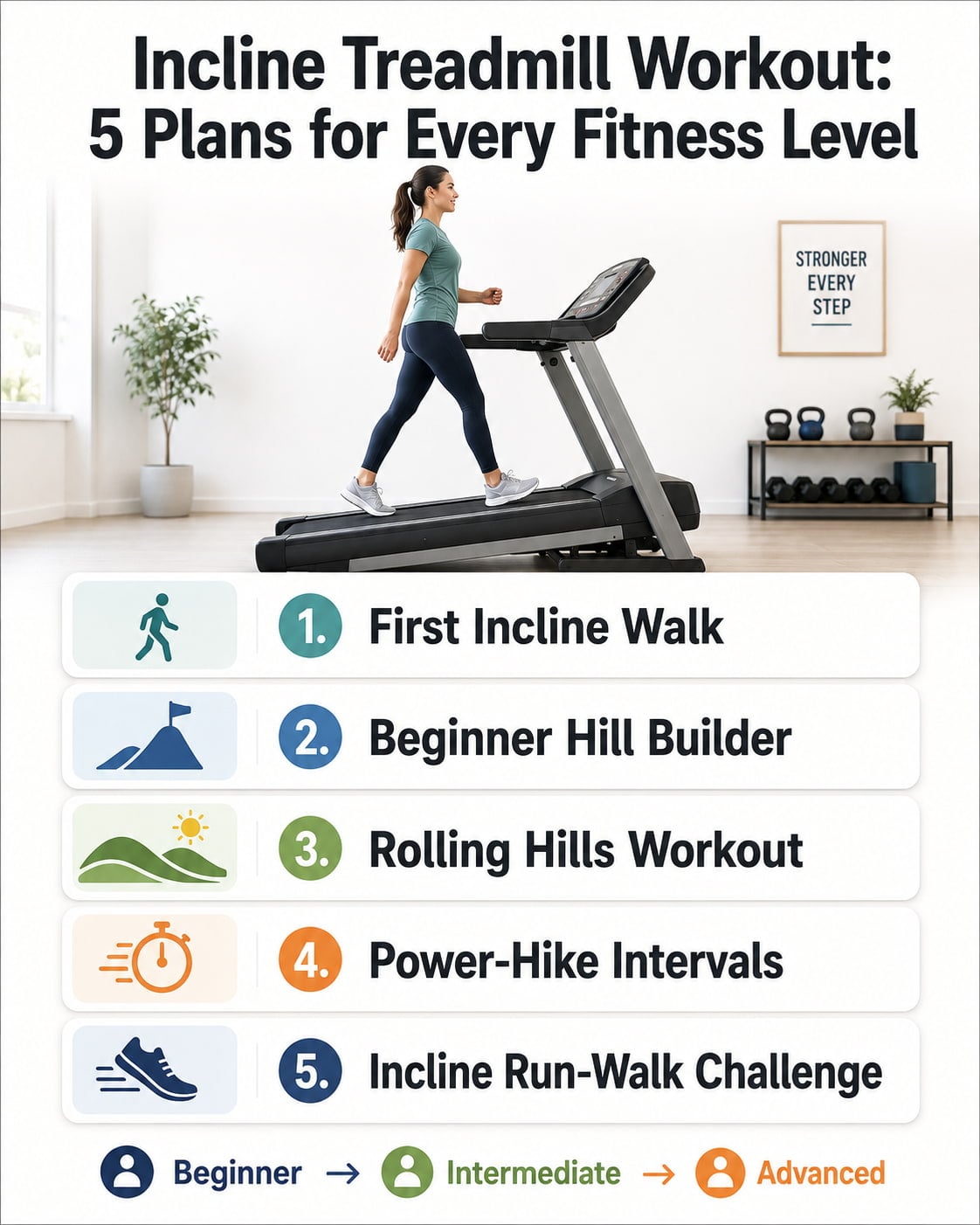
An incline treadmill workout raises the treadmill belt so walking or running requires more effort, helping you build cardiovascular fitness without relying only on faster speeds. The five plans below range from a gentle 20-minute beginner walk to a challenging 40-minute incline run-walk workout.
Use the recommended speeds and inclines as starting points, not fixed requirements. Your breathing, posture, balance, and rating of perceived exertion, or RPE, should determine the right settings for you.
An incline treadmill workout can count toward your weekly aerobic activity when it reaches moderate or vigorous intensity. The current Physical Activity Guidelines for Americans recommend that adults work toward 150–300 minutes of moderate-intensity aerobic activity or 75–150 minutes of vigorous activity per week. Adults should also perform muscle-strengthening activities on at least two days per week.
Incline Treadmill Workouts at a Glance
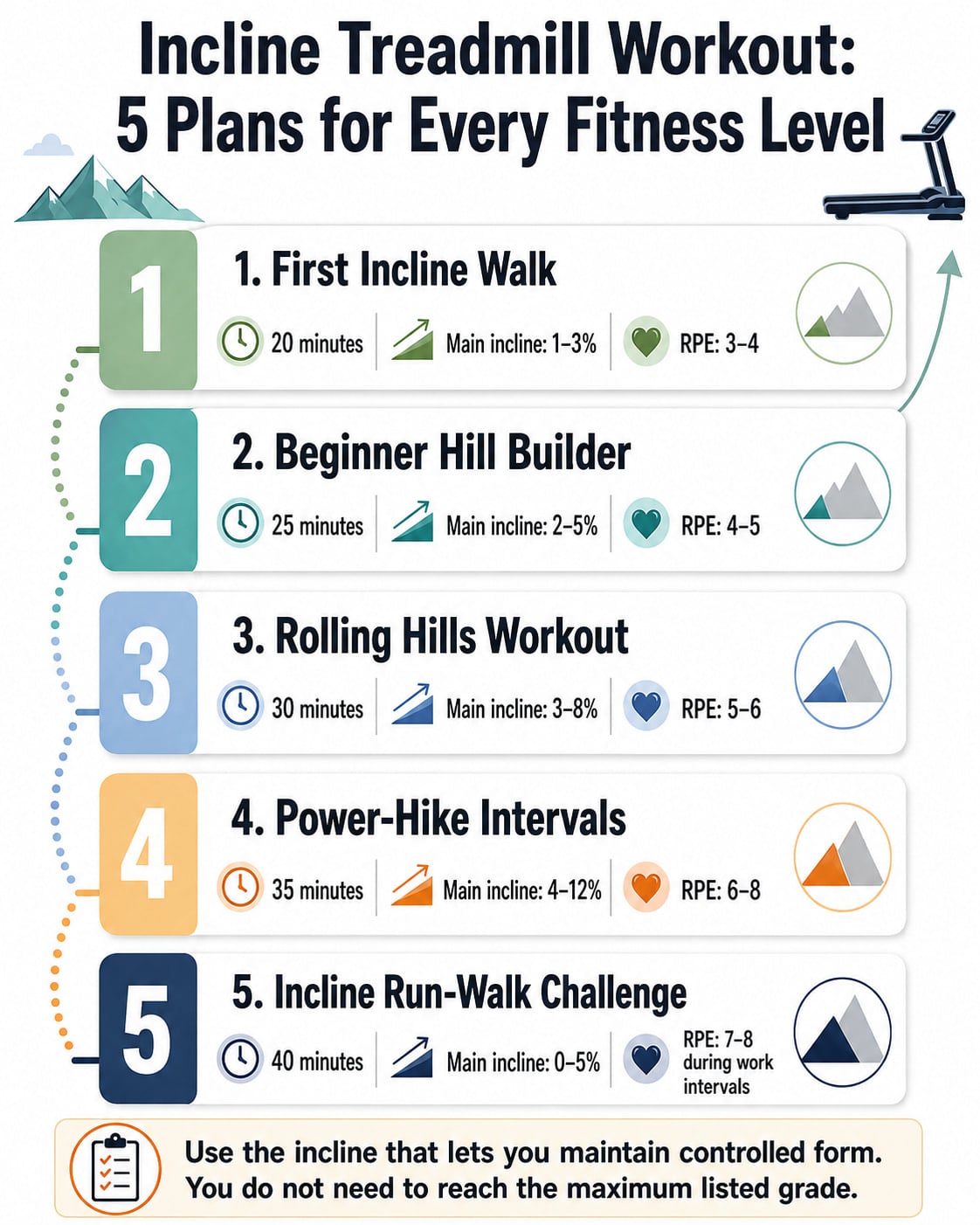
| Plan | Best For | Total Time | Main Working Incline | Target Effort |
|---|---|---|---|---|
| First Incline Walk | New or returning exercisers | 20 minutes | 1–3% | RPE 3–4 |
| Beginner Hill Builder | Beginners | 25 minutes | 2–5% | RPE 4–5 |
| Rolling Hills Workout | Intermediate exercisers | 30 minutes | 3–8% | RPE 5–6 |
| Power-Hike Intervals | Advanced walkers | 35 minutes | 4–12% | RPE 6–8 |
| Incline Run-Walk Challenge | Experienced exercisers | 40 minutes | 0–5% | RPE 7–8 during work intervals |
Important: There is no need to reach the highest listed incline. Select the grade that produces the intended effort while allowing you to walk or run with controlled form.
What Is an Incline Treadmill Workout?
An incline treadmill workout involves walking or running while the front of the treadmill belt is elevated. Most treadmills display incline as a percentage rather than an angle. For example, a 5% grade represents approximately five units of vertical rise for every 100 horizontal units.
Raising the grade usually increases the workout’s cardiovascular and muscular demand, even if your speed stays the same or decreases.
In a small 2021 study involving 24 healthy older adults, walking at self-selected speeds on a 10% incline increased net metabolic energy cost by approximately 22.9% compared with level walking. A 16% incline increased it by approximately 44.2%. The researchers also observed greater activity in several lower-body and trunk muscles. Because the study was small and involved healthy older adults who could already tolerate steep treadmill walking, the exact percentages should not be applied to everyone. You can review the incline treadmill study indexed by PubMed.
Benefits of an Incline Treadmill Workout
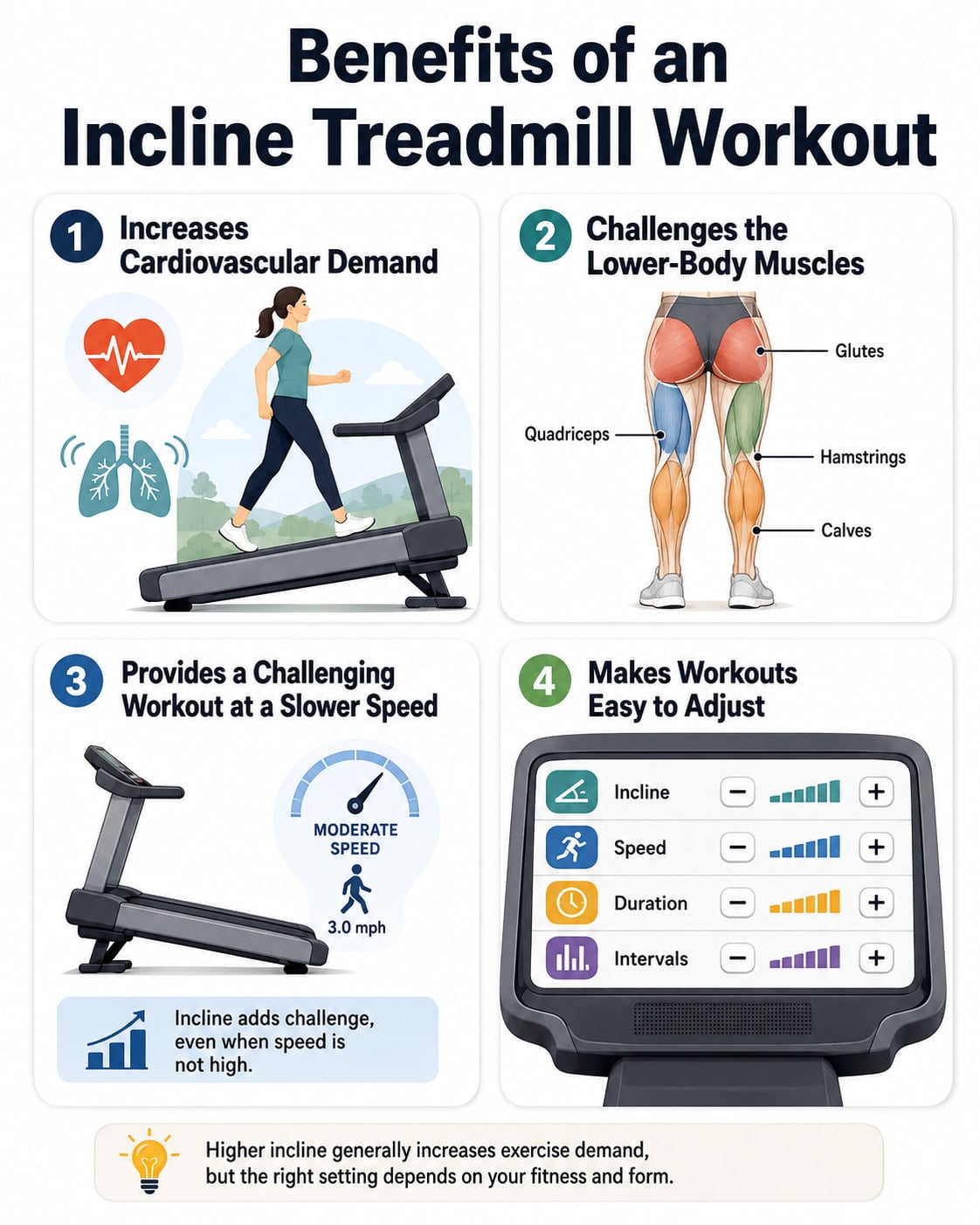
Increases Cardiovascular Demand
Increasing the incline makes your body work against gravity. Your heart rate and breathing may rise even when you continue walking at a manageable speed.
This makes incline walking a useful option for people who want a harder cardiovascular workout but do not want to run. However, a steep incline can still be vigorous exercise, so walking should not automatically be considered easy.
Challenges the Lower-Body Muscles
Incline walking involves several major lower-body muscles, including the:
- Gluteal muscles
- Quadriceps
- Hamstrings
- Calves
- Muscles around the ankles and feet
- Trunk muscles that help stabilize your posture
The exact muscle demand changes with your speed, incline, stride, posture, and whether you support your weight on the handrails.
Incline walking can strengthen muscular endurance, but it should not replace a complete strength-training program. Exercises such as squats, hinges, rows, presses, and resistance-based calf raises allow more direct and progressive muscular loading.
Provides a Challenging Workout at a Slower Speed
Some exercisers find fast treadmill walking uncomfortable because they begin overstriding or feel that they need to jog. Increasing the grade while slightly lowering the speed can produce a challenging effort without requiring very fast belt speeds.
This does not mean uphill walking is automatically appropriate for every joint problem. Higher inclines can place substantial demand on the calves, ankles, and Achilles tendons. Use a lower grade if you experience pain or cannot maintain a natural walking pattern.
Makes Workouts Easy to Adjust
A treadmill allows you to control several variables:
- Incline
- Speed
- Workout duration
- Work interval length
- Recovery interval length
This makes the same treadmill useful for new exercisers, advanced walkers, runners, and people returning after a break.
How to Choose the Right Incline and Speed
The best incline is not a single percentage that works for everyone. Your fitness level, walking mechanics, treadmill model, body size, and workout goal all affect how a setting feels.
Use the RPE Scale
RPE measures how hard the workout feels on a scale from 0 to 10.
| RPE | Effort | How It Should Feel |
|---|---|---|
| 2–3 | Easy | Comfortable breathing; full conversation is easy |
| 4 | Steady | Noticeably active but still comfortable |
| 5–6 | Moderate | Breathing harder; you can talk but not sing |
| 7–8 | Vigorous | Hard effort; only a few words at a time |
| 9–10 | Near maximum | Extremely hard; unnecessary for these workouts |
The CDC guide to measuring physical activity intensity identifies an RPE of 5–6 as moderate intensity and 7–8 as vigorous intensity. It also recommends the talk test: during moderate exercise, you should be able to talk but not sing; during vigorous exercise, you may only be able to say a few words before pausing for breath.
Treat Incline and Speed as a Pair
Incline and speed work together. A 6% grade at 2.5 mph may feel harder than level walking at a much faster speed.
When increasing the incline, you may need to reduce speed to maintain:
- Upright posture
- Comfortable balance
- A natural stride
- The intended RPE
- Minimal handrail support
If a workout becomes too difficult, reduce the incline first. Then lower the speed if necessary.
Warm Up Before Adding Steep Inclines
Begin each workout with easy level or low-incline walking. The American Heart Association’s warm-up and cooldown guidance recommends warming up for 5–10 minutes and using a longer warm-up before more intense exercise. It also recommends gradually reducing your walking speed for 5–10 minutes afterward.
Incline Treadmill Workout: 5 Plans for Every Fitness Level
Choose the plan that matches what you can do now—not the level you think you should be able to complete.
Every plan includes a warm-up and cooldown. Speeds are examples for walking plans. Shorter or taller exercisers may feel more comfortable outside the listed range.
1. First Incline Walk
Best for: New exercisers, people returning after a break, or anyone learning how incline affects walking
Total time: 20 minutes
Main goal: Practice gentle incline changes without becoming overly fatigued
| Time | Incline | Suggested Speed | Target RPE |
|---|---|---|---|
| 0–5 minutes | 0–1% | 1.8–2.5 mph | 2–3 |
| 5–8 minutes | 2% | 2.0–2.7 mph | 3 |
| 8–11 minutes | 3% | 2.0–2.7 mph | 3–4 |
| 11–14 minutes | 1% | 2.0–2.7 mph | 3 |
| 14–16 minutes | 3% | 2.0–2.7 mph | 4 |
| 16–20 minutes | 0–1% | 1.6–2.3 mph | 2 |
How This Workout Should Feel
You should finish feeling as though you could continue for another five minutes. Breathing should remain controlled, and you should be able to speak in full sentences.
Make It Easier
Keep the incline between 0% and 2%, or reduce the working sections from three minutes to two minutes.
Make It Harder
Increase one of the 3% sections to 4%. Do not increase both speed and incline during your first progression.
2. Beginner Hill Builder
Best for: Beginners who can already walk continuously for about 20 minutes
Total time: 25 minutes
Main goal: Introduce repeated hills with short, manageable increases in effort
| Time | Incline | Suggested Speed | Target RPE |
|---|---|---|---|
| 0–5 minutes | 0–1% | 2.0–2.8 mph | 2–3 |
| 5–20 minutes | Repeat the interval below 5 times | — | — |
| 2-minute steady walk | 2–3% | 2.2–3.2 mph | 4 |
| 1-minute hill | 4–5% | 2.2–3.2 mph | 5 |
| 20–25 minutes | 0–1% | 1.8–2.6 mph | 2–3 |
How This Workout Should Feel
The one-minute hills should make you breathe harder, but you should recover during each two-minute steady walk. You should not need to grip or hang from the handrails.
Make It Easier
Complete three or four rounds instead of five, followed by a longer cooldown.
Make It Harder
Increase only the final two hills by 1%. Keep the first three rounds unchanged.
3. Rolling Hills Workout
Best for: Intermediate exercisers with a consistent walking or cardio routine
Total time: 30 minutes
Main goal: Maintain a moderate effort while moving between medium and higher inclines
| Time | Incline | Suggested Speed | Target RPE |
|---|---|---|---|
| 0–5 minutes | 0–2% | 2.2–3.2 mph | 2–3 |
| 5–25 minutes | Repeat the interval below 4 times | — | — |
| 3-minute rolling hill | 3–4% | 2.5–3.6 mph | 5 |
| 2-minute higher hill | 6–8% | 2.4–3.5 mph | 6 |
| 25–30 minutes | Gradually reduce to 0% | 1.8–2.8 mph | 2–3 |
How This Workout Should Feel
You should be able to talk during the lower hills, although singing would be difficult. The higher hills should feel challenging but controlled.
If the 6–8% sections force you to lean backward, shorten your steps excessively, or grip the rails, lower the grade.
Make It Easier
Use 3% for the rolling hills and 5% for the higher hills.
Make It Harder
Add 1% to the final higher hill or extend that hill from two minutes to three minutes.
4. Power-Hike Intervals
Best for: Advanced walkers who can maintain good posture on steeper grades
Total time: 35 minutes
Main goal: Reach a vigorous effort without running
| Time | Incline | Suggested Speed | Target RPE |
|---|---|---|---|
| 0–7 minutes | Progress from 0% to 4% | 2.2–3.3 mph | 2–4 |
| 7–28 minutes | Repeat the interval below 7 times | — | — |
| 1-minute power hike | 8–12% | 2.5–3.5 mph | 7–8 |
| 2-minute controlled hill | 4–6% | 2.4–3.4 mph | 5–6 |
| 28–35 minutes | Gradually reduce from 3% to 0% | 1.8–2.8 mph | 2–3 |
How This Workout Should Feel
The one-minute power hikes should be hard. You may only be able to speak a few words at a time. Your breathing should begin to settle during each two-minute recovery hill.
You do not need to reach 12%. An 8% or 9% grade may already produce the intended effort.
Make It Easier
Complete five rounds or use 6–8% during the power hikes.
Make It Harder
Add one interval, extend the hard section to 75 seconds, or slightly increase the grade. Change only one variable.
5. Incline Run-Walk Challenge
Best for: Experienced exercisers who already tolerate running
Total time: 40 minutes
Main goal: Combine uphill running with controlled walking recoveries
| Time | Incline | Speed | Target RPE |
|---|---|---|---|
| 0–8 minutes | 0–2% | Begin walking and progress to an easy jog | 2–4 |
| 8–32 minutes | Repeat the interval below 6 times | — | — |
| 2-minute incline run | 2–5% | Personalized jogging or running pace | 7–8 |
| 2-minute recovery walk | 0–2% | Approximately 2.5–3.5 mph | 3–4 |
| 32–40 minutes | Gradually reduce to 0% | Easy jog, then walk | 2–3 |
How to Select Your Running Speed
Choose a pace that feels challenging but does not require sprinting. You should finish each two-minute running interval with controlled form and recover enough to repeat the next interval.
If you are new to incline running, start at 1–2%. Higher grades can substantially change running mechanics and increase lower-leg demand.
Make It Easier
Jog for one minute and walk for three minutes, or keep the running incline at 1%.
Make It Harder
Increase the final two running intervals by 1% or add a seventh round. Do not turn the work intervals into all-out sprints.
How to Progress Your Incline Treadmill Workout
Avoid increasing speed, incline, duration, and interval count at the same time.
Complete the same workout several times before progressing. Move to a harder version when you can finish with:
- Stable, upright posture
- Minimal handrail use
- The intended RPE
- Normal control of your stride
- No sharp pain during the session
- No unusual or worsening pain afterward
Choose one progression:
- Add 2–5 minutes to the total workout.
- Increase one or two work intervals by 1% incline.
- Increase speed by approximately 0.1–0.3 mph.
- Add one additional interval.
- Shorten a recovery interval slightly.
You do not need to progress every week. Stay with a workout as long as it continues to feel appropriately challenging.
Incline Treadmill Form and Safety Tips
Keep Your Torso Tall
Look forward rather than down at your feet. Keep your chest lifted and allow a slight whole-body lean from the ankles as the incline rises.
Avoid bending sharply at the waist or leaning backward away from the treadmill belt.
Take Short, Controlled Steps
Do not reach far forward with each foot. A shorter stride usually makes it easier to remain balanced and keep your feet underneath your body.
Let Your Arms Move Naturally
Allow your arms to swing beside your body. This can support rhythm and balance while helping you maintain a natural walking pattern.
Avoid Hanging From the Handrails
Use the rails briefly when starting, stopping, adjusting controls, or regaining balance. Do not continuously pull yourself forward or lean backward while gripping them.
In a small study involving 13 adults, leaning backward while holding the handrails during 10% incline walking significantly reduced metabolic demand. Holding the rails while remaining upright did not produce the same significant reduction. Balance and fall prevention remain more important than calorie expenditure, so lower the incline or speed if you cannot walk safely without substantial support.
Use the Treadmill Safety Features
Attach the emergency stop clip when available. Learn how to reduce the speed and stop the treadmill before beginning a hard interval.
Do not step onto the side rails while the belt is moving quickly unless an emergency requires it.
Wear Supportive Shoes
Use athletic shoes that fit securely and provide enough traction for the treadmill surface. Replace shoes that have badly worn or slippery outsoles.
Know When to Stop
Stop exercising if you experience chest pain, faintness, dizziness, unusual or severe shortness of breath, an irregular heartbeat sensation, or sharp and worsening pain. Seek urgent medical care for severe, persistent, or concerning symptoms.
Moderate activity is safe for most people. However, the CDC recommends discussing appropriate activity with a healthcare professional if you have a chronic condition. People who have been inactive and plan to begin vigorous exercise may also need medical guidance.
Can an Incline Treadmill Workout Support Weight Loss?
An incline treadmill workout can support a weight-management plan by increasing physical activity and energy expenditure. Raising the incline generally increases effort, but the exact number of calories used varies according to:
- Body size
- Fitness level
- Speed
- Incline
- Workout duration
- Walking or running efficiency
- Handrail use
No incline setting specifically targets belly fat or fat from another body area. Changes in body weight and body fat depend on your overall activity, eating pattern, sleep, health, and consistency over time.
For sustainable progress, focus on completing regular workouts and gradually improving your duration or effort rather than chasing the highest calorie number displayed on the treadmill.
Is the 12-3-30 Treadmill Workout Effective?
The 12-3-30 workout involves walking for 30 minutes at:
- A 12% treadmill grade
- A speed of 3 mph
- No scheduled recovery intervals
It can provide a meaningful cardiovascular workout, but it is not automatically beginner-friendly simply because it involves walking.
A small 2024 study of the 12-3-30 workout involved 17 adults with an average age of approximately 28. The participants averaged 5.5 METs and expended approximately 221 calories during the session. Individual results varied, and the small, relatively young sample means those numbers should not be treated as universal.
The 12-3-30 workout may be appropriate for experienced incline walkers who can maintain upright form. Beginners can work toward it by starting with:
- A 4–6% incline
- A comfortable walking speed
- A 15–20-minute duration
- Short lower-incline recovery periods
Increase either the incline or duration gradually. Reaching 12% is not necessary for an effective workout.
How Often Should You Do an Incline Treadmill Workout?
A practical starting schedule depends on the workout’s intensity and your current activity level.
| Fitness Level | Suggested Starting Frequency |
|---|---|
| New or returning exerciser | 2–3 sessions per week |
| Beginner | 2–4 sessions per week |
| Intermediate | 3–4 sessions per week, including no more than 1–2 hard sessions |
| Advanced | 3–5 sessions per week, with easy and hard days alternated |
These are general starting points, not medical prescriptions.
Avoid making every session steep or vigorous. Easier level walks, strength training, mobility work, and rest days can help you manage fatigue.
Your incline treadmill workouts can contribute to the federal weekly aerobic activity target, but adults should also include strength training for all major muscle groups on at least two days per week.
Frequently Asked Questions
What Incline Should a Beginner Use on a Treadmill?
Many beginners can start between 1% and 3%. Some people may need to begin at 0–1%, especially if they are new to treadmills or have balance concerns.
Increase the incline only when you can maintain an upright posture, natural stride, and comfortable breathing.
Is 30 Minutes of Incline Walking Enough?
A 30-minute incline walk can be a useful cardiovascular workout, particularly when it reaches moderate intensity. Its value depends on your effort, weekly activity, fitness level, and consistency.
Several 30-minute sessions can contribute toward the recommended 150 minutes of moderate-intensity aerobic activity per week.
Is Incline Walking Better Than Running?
Neither is universally better.
Incline walking may allow you to reach a challenging effort at a slower speed. Running may expend energy more quickly and provide more sport-specific preparation for runners.
Choose the activity you can perform safely, consistently, and with good form.
What Incline Burns the Most Calories?
There is no single best incline. A steeper grade generally increases energy demand when other factors remain similar, but a setting is too high if it causes you to hang from the rails, lose balance, or shorten the workout substantially.
The most useful incline is one you can sustain at the intended effort with controlled posture.
What Muscles Does Incline Treadmill Walking Work?
Incline treadmill walking primarily involves the glutes, quadriceps, hamstrings, calves, and ankle muscles. Your trunk muscles also help stabilize your posture.
Muscle involvement varies with incline, speed, stride, posture, and individual walking mechanics.
Should You Hold the Handrails While Walking on an Incline?
Use the handrails briefly for balance, control adjustments, starting, or stopping. Avoid continuously supporting your body weight with your arms.
If you cannot maintain balance without gripping the rails, reduce the incline or speed.
Can You Do an Incline Treadmill Workout Every Day?
Some people can perform easy incline walking frequently, but hard or steep workouts may require more recovery. Avoid repeating vigorous hill intervals every day, especially if you develop persistent calf, ankle, foot, or Achilles soreness.
Alternate challenging sessions with easier walks, level cardio, strength training, or rest.
Conclusion
An incline treadmill workout can make walking or running more challenging without requiring extreme speeds. The key is choosing settings that match your current fitness—not copying the highest incline used by someone else.
Start with the plan closest to your ability. Record the incline, speed, duration, and RPE after each session. Once you can complete the workout with controlled breathing and stable posture, progress one variable at a time.
References
- Office of Disease Prevention and Health Promotion: Physical Activity Guidelines for Americans—Top 10 Things to Know, updated November, 2025
- Centers for Disease Control and Prevention: How to Measure Physical Activity Intensity, updated December, 2025
- Centers for Disease Control and Prevention: Adding Physical Activity as an Adult, updated December, 2025
- American Heart Association: Warm Up, Cool Down, reviewed January, 2024
- Kim et al.: Inclined Treadmill Walking, Metabolic Energy Cost, and Muscle Activity, 2021
- Pelino, Diaz, and Dalleck: Physiological Responses of the 12-3-30 Workout, 2024
- Hofmann et al.: Handrail Support During Inclined Treadmill Walking, 2014