
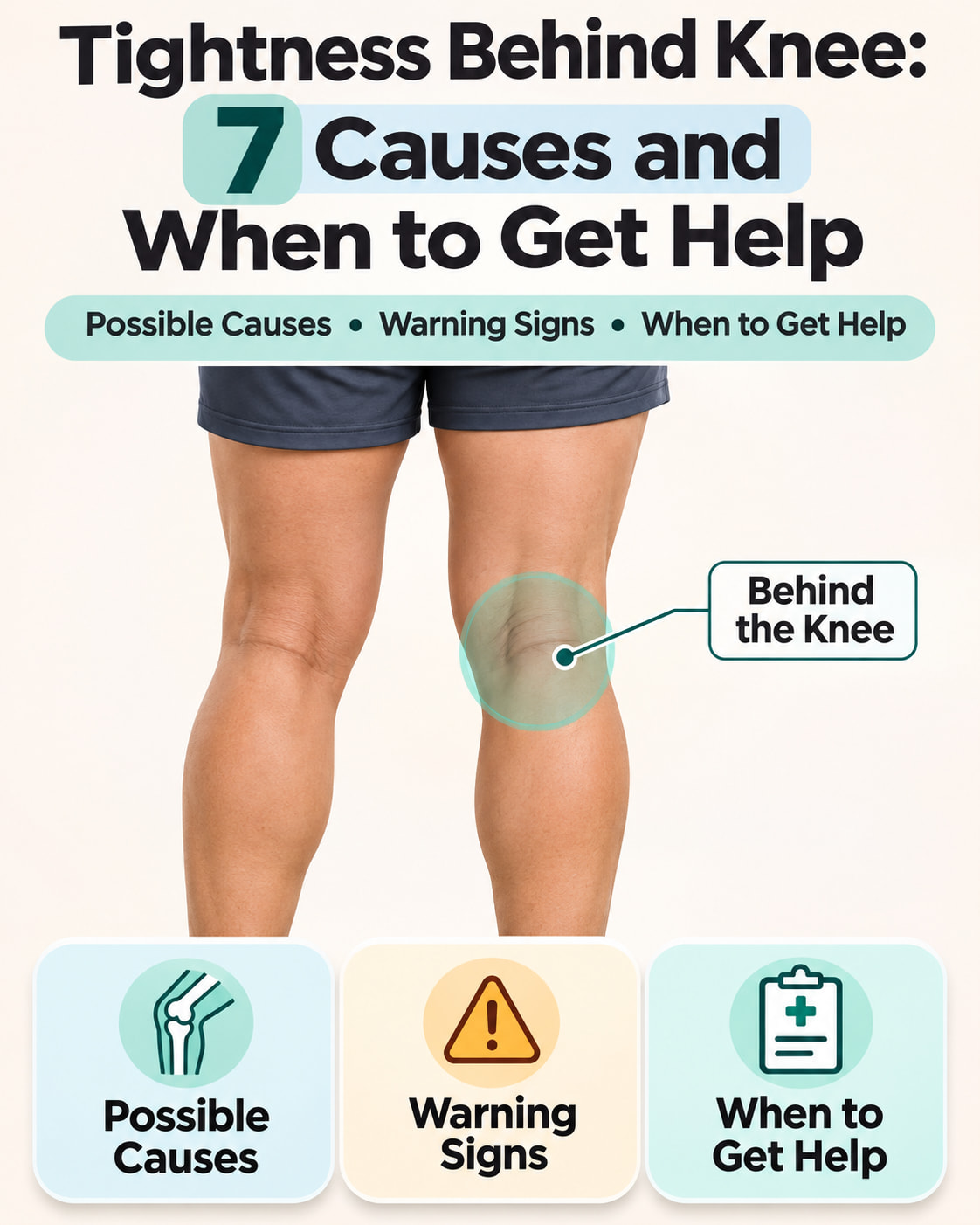
Tightness behind the knee can come from muscle strain, tendon irritation, a Baker’s cyst, arthritis, or an injury inside the knee joint. A blood clot is another possible explanation for concerning leg symptoms, particularly unexplained swelling, pain, warmth, or discoloration.
The next step depends on how the symptoms started and what comes with them. Notice whether there is a lump, swelling, an injury, or difficulty walking. Recognizing these details can help you decide how urgently to get medical advice.
What Does Tightness Behind the Knee Mean?
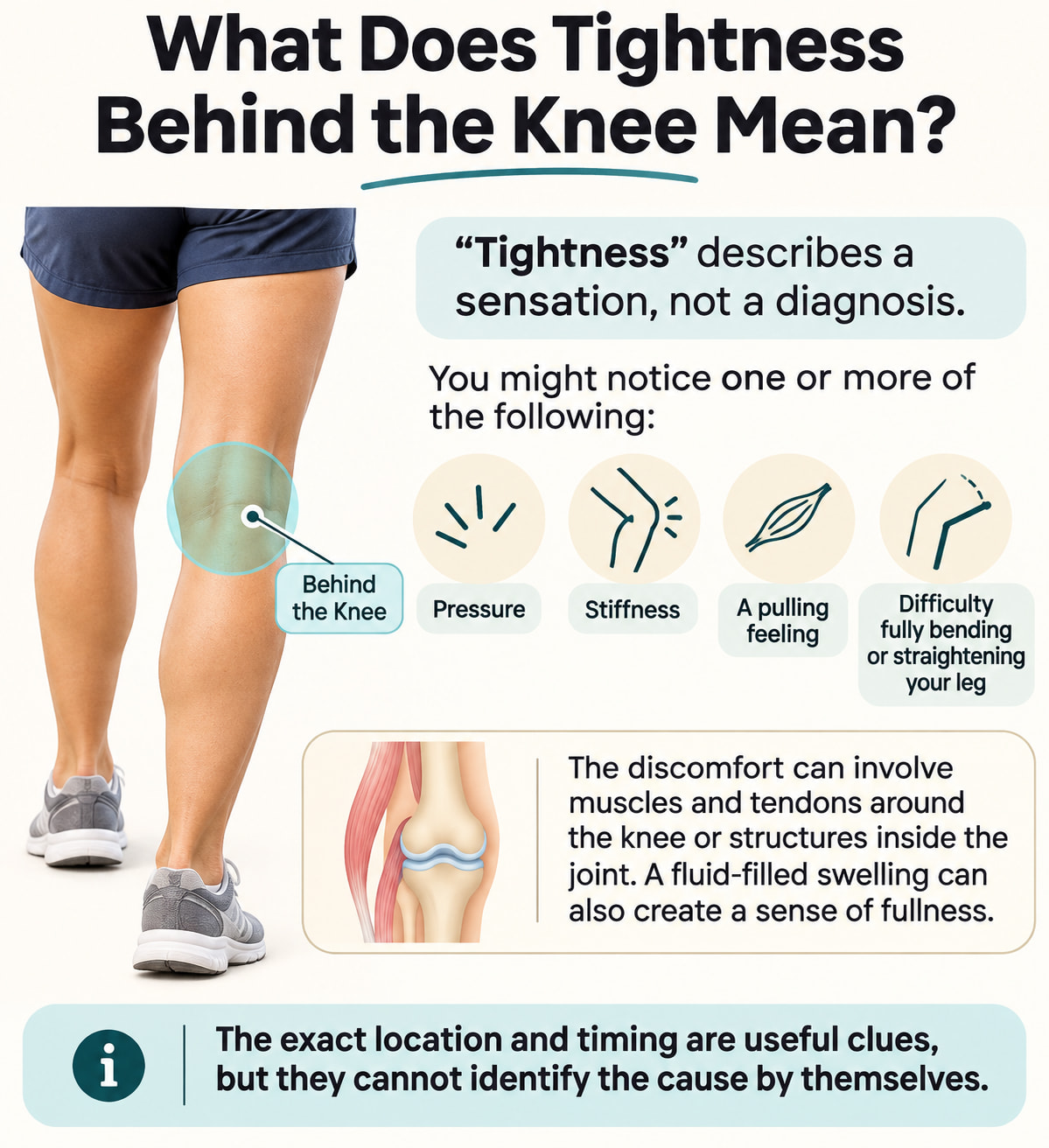
“Tightness” describes a sensation, not a diagnosis. You might notice pressure, stiffness, a pulling feeling, or difficulty fully bending or straightening your leg.
The discomfort can involve muscles and tendons around the knee or structures inside the joint. A fluid-filled swelling can also create a sense of fullness. The exact location and timing are useful clues, but they cannot identify the cause by themselves.
When to Get Help for Tightness Behind Knee
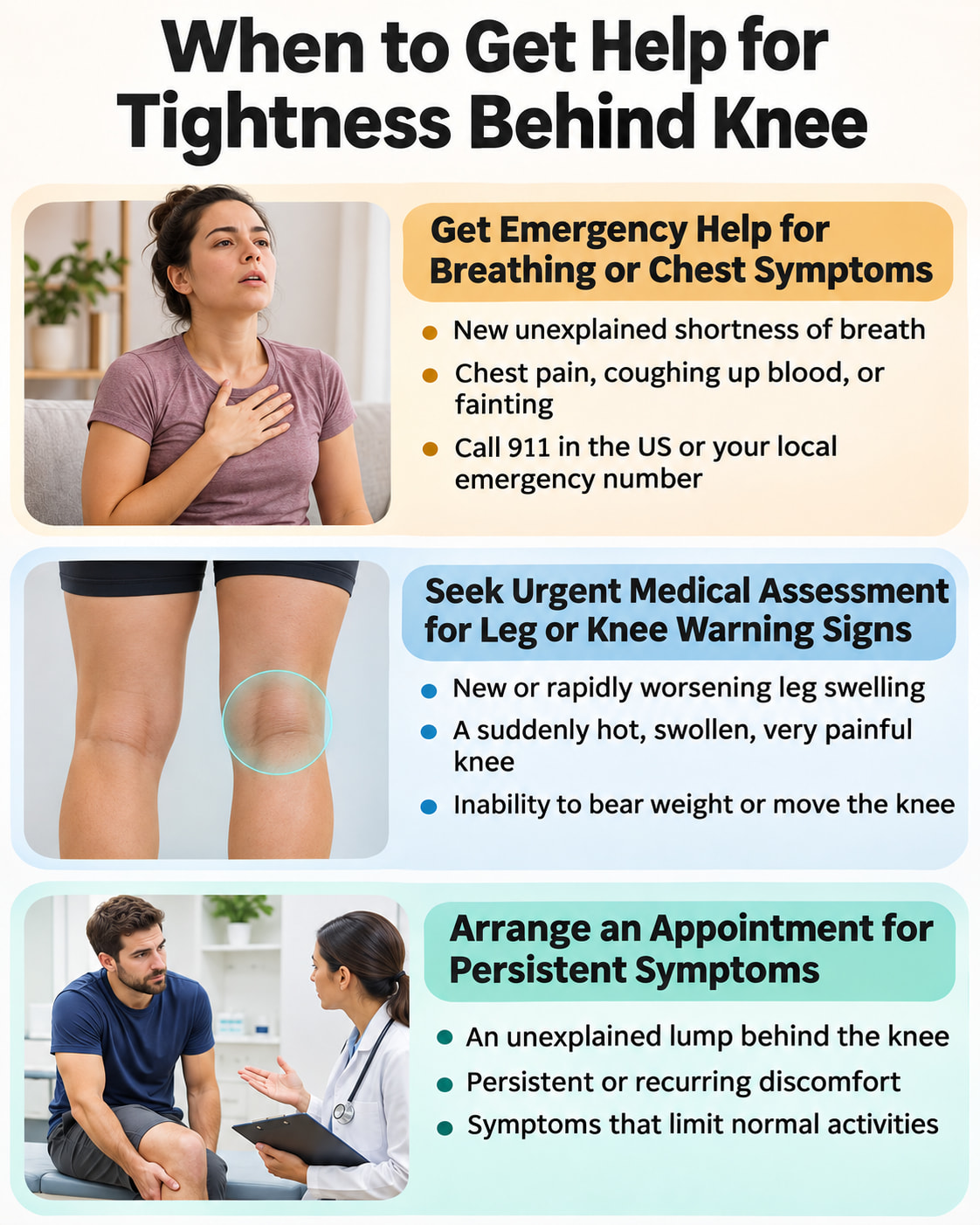
Check for warning signs before assuming the problem is exercise-related.
Get Emergency Help for Breathing or Chest Symptoms
Call 911 in the US or your local emergency number for new unexplained shortness of breath, chest pain, coughing up blood, or fainting.
These can be signs of a pulmonary embolism, which happens when a blood clot reaches the lungs. According to CDC guidance, this can happen without obvious symptoms of a clot in the leg.
Seek Urgent Medical Assessment for Leg or Knee Warning Signs
Get urgent medical help if you develop:
- New or rapidly worsening leg swelling, especially with pain, warmth, or skin discoloration.
- A suddenly very painful, hot, swollen knee.
- Inability to bear weight or move the knee.
- Severe swelling, a changed knee shape, or a knee that locks or gives way.
A suddenly hot, swollen, painful joint needs assessment even without a fever. The NHS guidance on joint infection notes that some people with septic arthritis do not have a fever.
Arrange an Appointment for Persistent Symptoms
Have an unexplained lump behind the knee examined. Also arrange an appointment if discomfort lasts more than a few days, keeps returning, limits movement, or interferes with normal activities.
You do not need to wait several weeks when symptoms are getting worse or affecting your ability to walk.
7 Possible Causes of Tightness Behind Knee
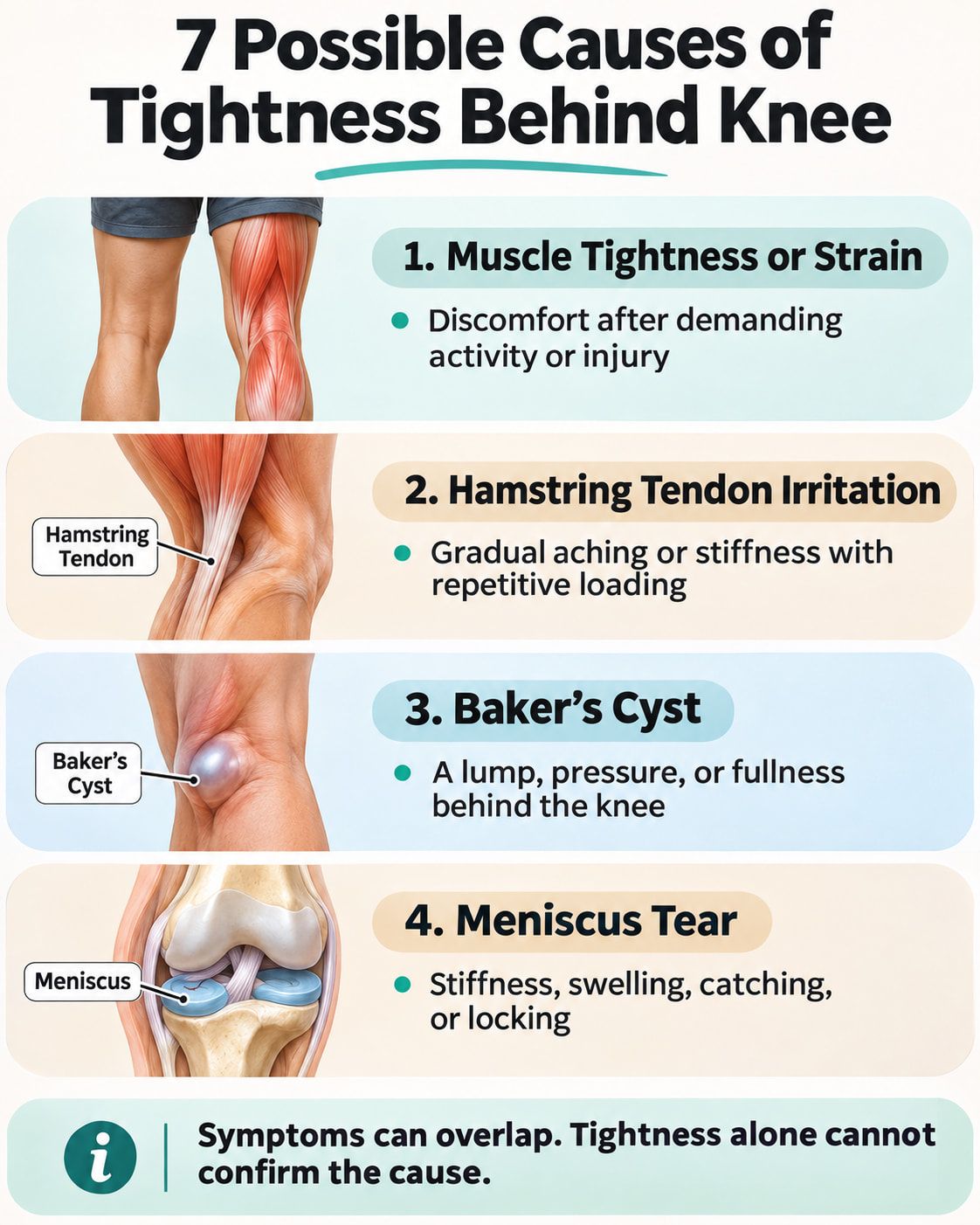
These conditions can produce overlapping symptoms. Some can occur together, such as arthritis and a Baker’s cyst.
1. Muscle Tightness or Strain
The hamstrings at the back of your thigh and the calf muscles can contribute to discomfort behind the knee. Symptoms may appear after demanding activity or an injury.
Muscle tightness and a muscle strain are different. A tight feeling alone does not establish that tissue is damaged. A calf strain, for example, may involve sudden pain, swelling, bruising, or difficulty using the muscle.
Tell a healthcare professional whether symptoms began during a specific movement or developed gradually, and whether the discomfort is mainly in the upper calf, thigh, or directly behind the joint.
2. Hamstring Tendon Irritation
Tendons connect muscles to bones. Hamstring tendon irritation can cause aching near the back of the knee and stiffness when walking or bending the leg.
This problem can develop gradually with repetitive loading or overuse. That differs from an injury that starts suddenly during a sprint, jump, or awkward movement.
Symptoms may include tenderness, aching, or discomfort during activities that repeatedly load the hamstrings. A clinician can assess whether the tendon, muscle, or another nearby structure is involved.
3. Baker’s Cyst
A Baker’s cyst is a fluid-filled swelling behind the knee. It can cause a lump, pressure, stiffness, or difficulty bending the joint. Fullness may become more noticeable when you straighten your leg.
A Baker’s cyst often develops alongside another knee condition, such as arthritis or a meniscus tear.
A new lump needs assessment. Sudden calf pain or swelling should not automatically be blamed on a known cyst. A ruptured cyst and a blood clot can cause similar symptoms. Get urgent assessment if these symptoms develop.
4. Meniscus Tear
The menisci are cartilage structures that cushion and stabilize the knee. A tear may happen during a twist or develop in tissue that has changed over time.
Possible symptoms include:
- Stiffness and swelling.
- Catching or locking.
- Difficulty fully bending or straightening the knee.
- A feeling that the knee may give way.
Swelling and stiffness may increase over two to three days after an injury. Being able to walk immediately afterward does not rule out a tear.
A meniscus problem can contribute to posterior knee discomfort, but tightness alone cannot confirm it.
5. Knee Arthritis
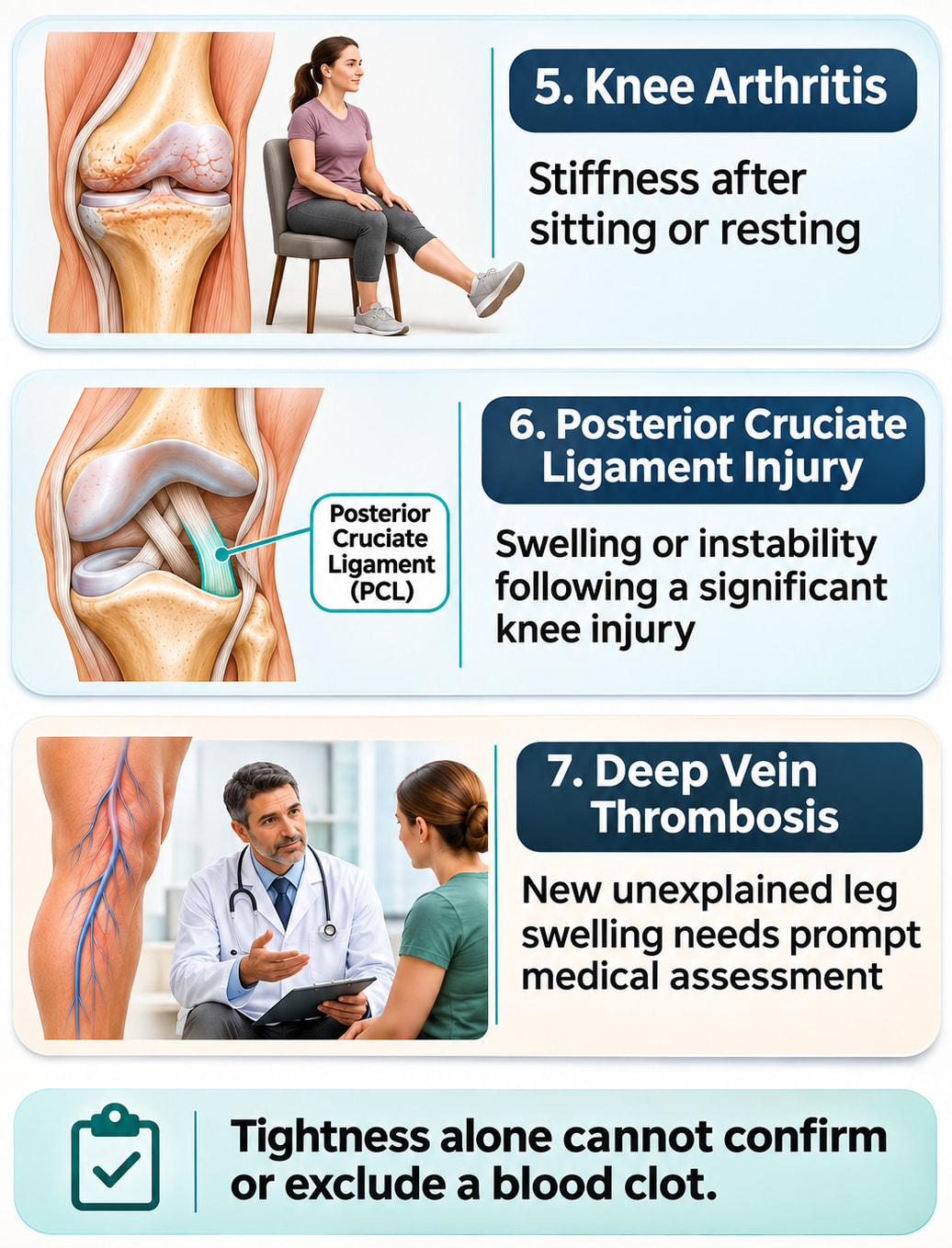
Arthritis can cause swelling, stiffness, and restricted knee movement. Osteoarthritis, rheumatoid arthritis, and arthritis following an injury can all affect the joint.
Symptoms may be more noticeable in the morning or after sitting or resting. You may also notice discomfort with activity or difficulty bending and straightening the knee.
Arthritis can also contribute to extra joint fluid and a Baker’s cyst.
6. Posterior Cruciate Ligament Injury
The posterior cruciate ligament, or PCL, helps stabilize the knee. Injuries typically involve substantial force, such as falling onto a bent knee, a direct impact, or a significant twisting injury.
A PCL injury can cause swelling that makes the knee feel stiff, difficulty walking, and a sense of instability.
This possibility becomes more relevant when symptoms follow a meaningful injury. Ordinary sitting or a mild pulling sensation does not establish ligament damage.
If an injury leaves you unable to bear weight or your knee feels unstable, seek medical assessment.
7. Deep Vein Thrombosis
Deep vein thrombosis, or DVT, is a blood clot in a deep vein, commonly in the leg. Possible symptoms include swelling, pain or tenderness, warmth, and skin discoloration.
Risk factors include recent major surgery, prolonged immobility, a previous clot, cancer, pregnancy or the postpartum period, and estrogen-containing medications.
Tightness alone cannot confirm or exclude DVT. Not everyone with a clot has obvious symptoms, and the absence of a known risk factor does not rule it out.
New unexplained leg swelling or other concerning clot symptoms need prompt medical assessment.
How Healthcare Professionals Find the Cause
A clinician will ask about your symptoms and examine the knee and leg. Useful details to share include:
- When the tightness began and whether there was an injury.
- Whether you have swelling, a lump, warmth, or skin changes.
- Which movements make symptoms worse.
- Whether the knee locks, gives way, or limits walking.
- Recent surgery, prolonged immobility, or a history of blood clots.
Testing depends on what the examination suggests.
| Possible concern | Test that may be useful |
|---|---|
| A Baker’s cyst or another lump | Ultrasound to assess the lump and whether it contains fluid |
| A suspected blood clot | Duplex ultrasound to examine the veins |
| Arthritis or a bone-related problem | X-rays |
| A selected meniscus or ligament injury | MRI to examine soft tissues |
These tests examine different structures and are selected according to the suspected cause.
The CDC’s diagnostic guidance explains that other conditions can resemble DVT. A home stretch, calf squeeze, or ability to walk cannot replace medical evaluation when a clot is suspected.
What to Do Next
For mild discomfort without warning signs, a few general measures may help you stay comfortable while monitoring symptoms. They do not establish the cause or replace an assessment when symptoms persist.
Reduce Activities That Aggravate Symptoms
Temporarily scale back activities that increase discomfort. Avoid pushing through pain or repeatedly testing an uncomfortable movement.
If running, deep bending, or prolonged standing makes the knee feel worse, mention that pattern at your appointment.
Consider Simple Comfort Measures
For uncomplicated knee pain, NHS guidance describes reducing strain and using a cold pack wrapped in fabric for up to 20 minutes at a time.
Keep ice off bare skin. Seek medical assessment promptly if sudden swelling, severe pain, warmth, or other warning signs develop.
Get Advice Before Starting a Stretching Routine
An unexplained tight feeling does not automatically mean the area needs stretching. A muscle problem, a cyst, and an injury inside the joint may need different approaches.
A healthcare professional or physical therapist can help determine which movements are appropriate after the cause has been assessed. Avoid forcing the knee into a position that hurts.
Frequently Asked Questions
Why Does the Back of My Knee Feel Tight When I Straighten My Leg?
A Baker’s cyst can create fullness when the knee is straightened. Muscle, tendon, or joint problems may also limit comfortable movement. If your knee becomes stuck or you cannot straighten it normally, seek medical assessment.
Why Does Tightness Behind the Knee Get Worse After Sitting?
Arthritis can cause stiffness after rest, but this pattern does not identify the cause by itself. Note how long the stiffness lasts and whether it comes with swelling, pain, or restricted movement.
Can Tightness Behind the Knee Happen Without Pain?
Yes. Tightness, pressure, or fullness can occur without significant pain. Some Baker’s cysts cause few symptoms. A new lump, persistent limitation, or unexplained swelling still deserves assessment even if it is not painful.
Is It Okay to Walk With Tightness Behind the Knee?
That depends on the cause and your symptoms. If walking increases pain, causes limping, or makes the knee give way, get advice rather than pushing through. Seek urgent help for inability to bear weight or new unexplained leg swelling.
Should I Stretch a Tight Area Behind My Knee?
There is no single stretch that is appropriate for every cause. Avoid forcing a painful stretch, especially when you have swelling or a recent injury. Ask which movements are suitable once the reason for the tightness is clearer.
How Long Does Tightness Behind the Knee Last?
There is no universal timeline because the possible causes differ. Arrange an appointment if symptoms persist for more than a few days, recur, or limit daily activities. Get help sooner if warning signs develop.
Conclusion
Tightness behind the knee is a symptom with several possible explanations. Pay attention to how it started, whether movement is limited, and any swelling or skin changes.
Book an assessment for persistent or recurring symptoms, and seek urgent help for the warning signs described above. Identifying the cause is the most useful step toward an appropriate plan.
This content is for informational purposes only and not medical advice.
References
- Cleveland Clinic: Back of Knee Pain.
- Cleveland Clinic: Hamstring Tendonitis.
- Cleveland Clinic: Calf Strain.
- AAOS: Baker’s Cyst.
- AAOS: Meniscus Tears.
- AAOS: Arthritis of the Knee.
- AAOS: Posterior Cruciate Ligament Injuries.
- NHS: Baker’s Cyst.
- NHS: Knee Pain.
- NHS: Septic Arthritis.
- CDC: About Venous Thromboembolism.