
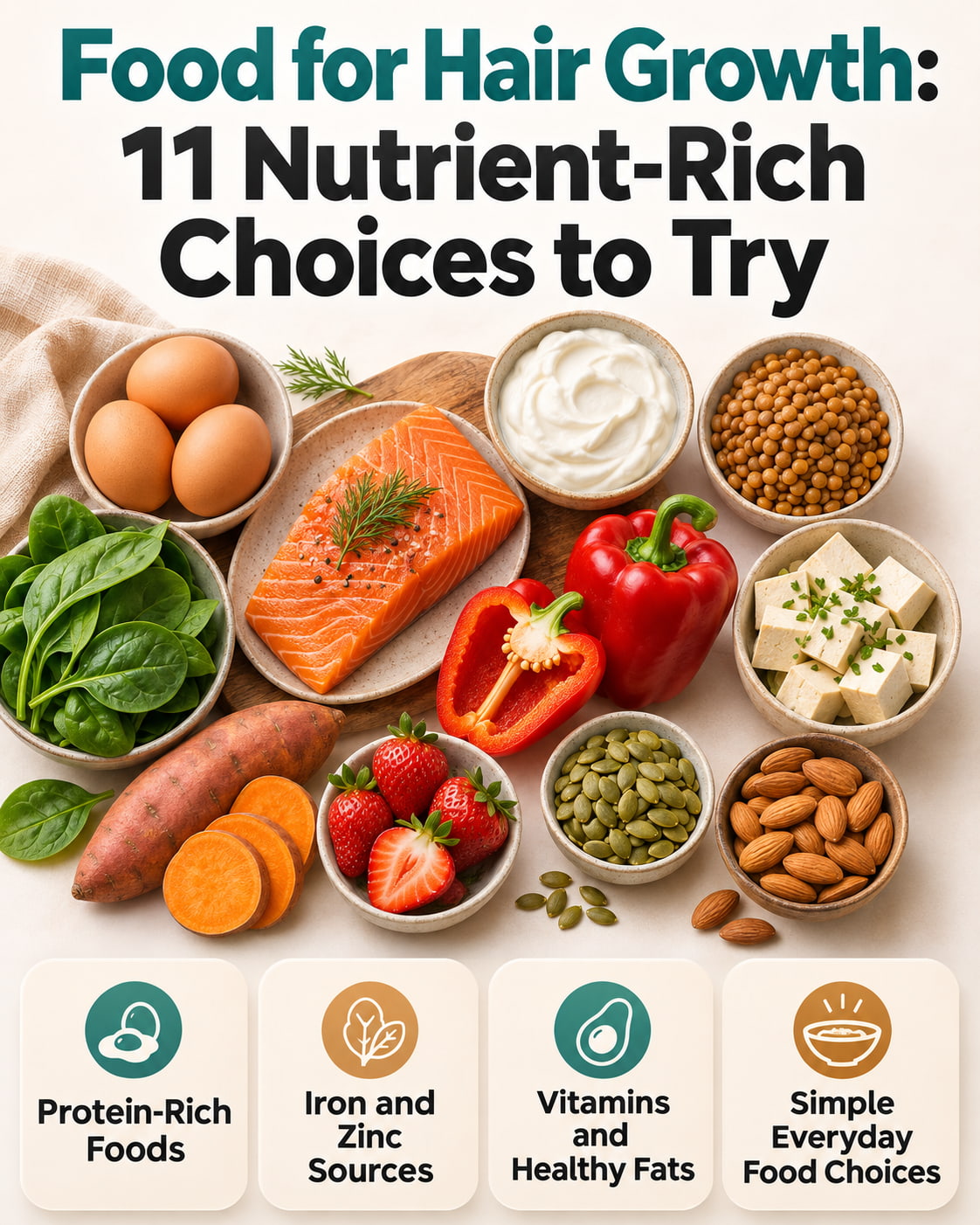
Food for hair growth includes protein foods, legumes, vegetables, fruit, nuts, and seeds that help you meet your nutritional needs. A balanced diet supports normal hair health, but no single food guarantees faster growth or reverses every cause of hair loss.
The most useful approach is to eat enough overall and include a variety of nutrient-rich foods regularly. If a nutritional shortfall contributes to shedding, addressing it may help. Persistent or sudden hair loss also deserves attention because diet is only one possible factor.
Here are 11 practical choices, what they provide, and easy ways to include them in meals.
How Does Food Affect Hair Growth?
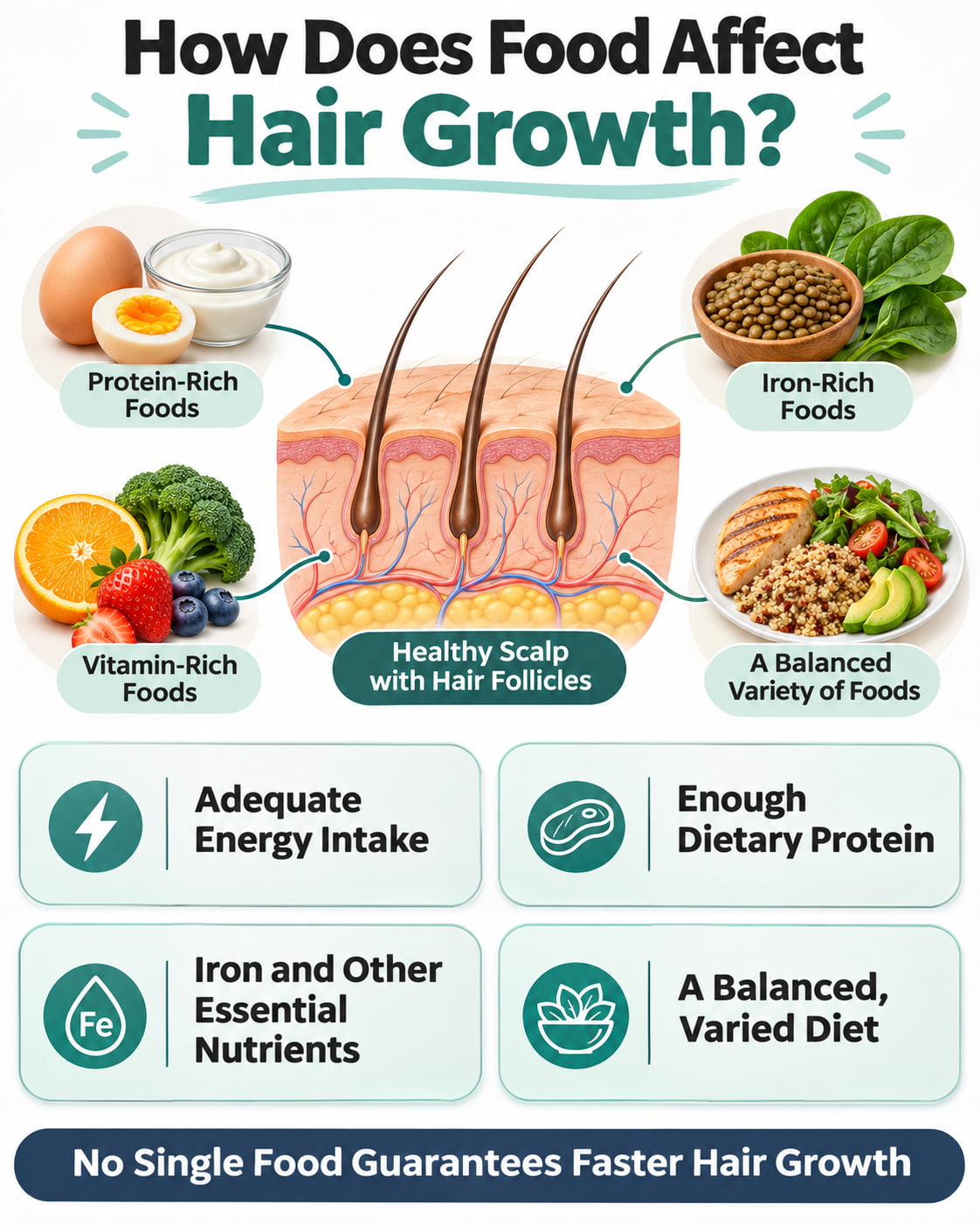
Your body needs adequate energy and nutrients to maintain normal functions, including hair growth. According to the American Academy of Dermatology, getting too little iron or protein, or eating too few calories, can contribute to hair loss.
However, adding extra nutrients when you already get enough does not guarantee better hair growth.
A systematic review published online in August 2025 examined 17 studies involving diet, nutrients, and hair health. Most were observational, and differences between the studies limited the conclusions. The findings do not establish that eating a particular food reliably increases hair length or thickness.
11 Nutrient-Rich Foods for Hair Growth
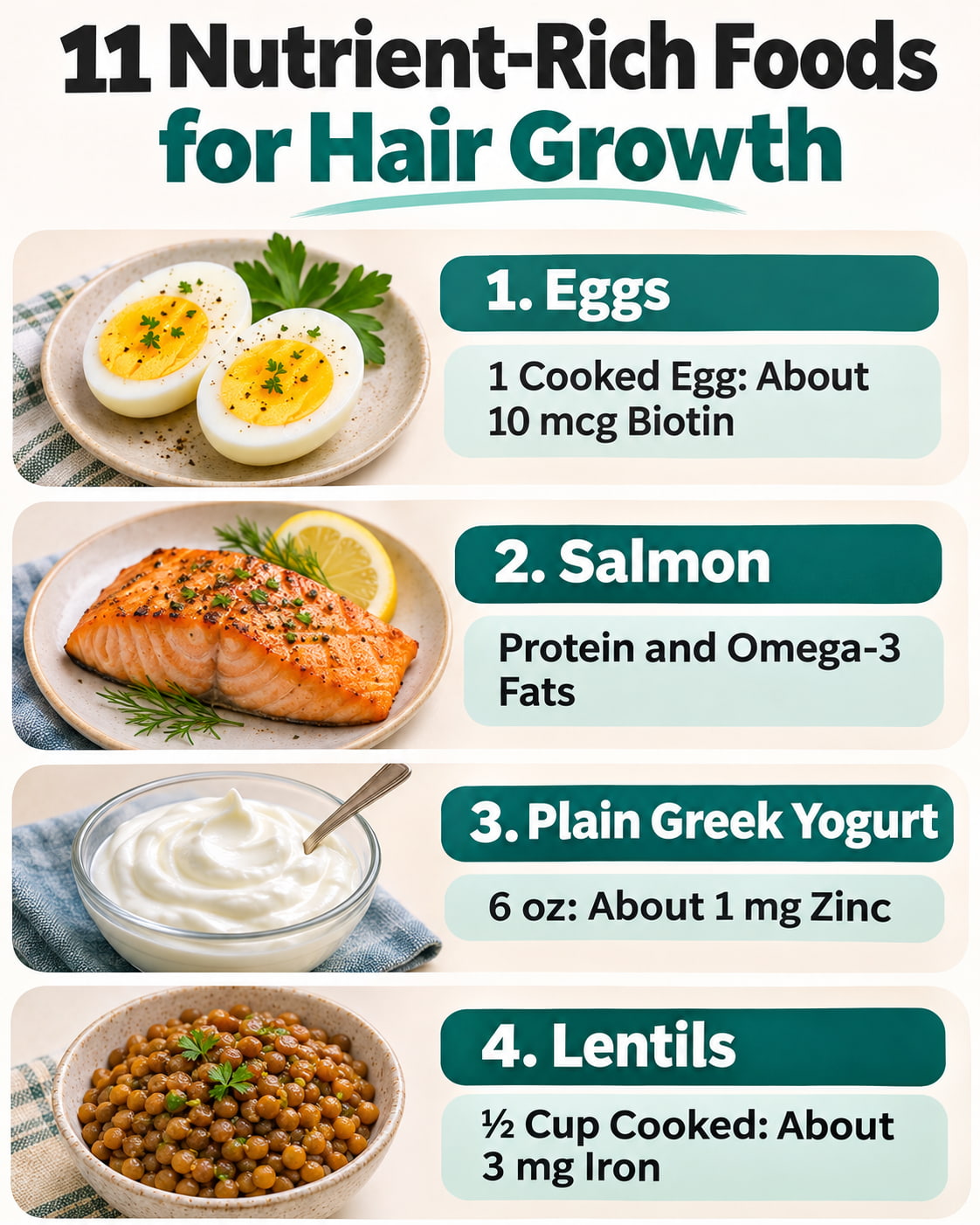
The serving sizes below illustrate nutrient content. They are not daily targets for hair growth, and amounts can vary by food variety, brand, and preparation.
1. Eggs
Eggs provide protein and biotin, a B vitamin involved in normal metabolism. NIH food tables list approximately 10 micrograms of biotin in one cooked whole egg.
Try it: Add a cooked egg to whole-grain toast, or make scrambled eggs with spinach and bell peppers.
2. Salmon
Salmon provides protein and the omega-3 fats EPA and DHA. It offers a convenient way to include both protein and fat in a meal, with nutrient amounts varying by species and preparation.
You can use fresh, frozen, or canned salmon according to your budget and preferences.
Try it: Serve cooked salmon with a baked sweet potato and vegetables, or mix canned salmon into a grain bowl.
3. Plain Greek Yogurt
Plain Greek yogurt is a convenient protein food that works in both sweet and savory meals. It also provides some zinc: NIH lists approximately 1 milligram in a 6-ounce serving.
Check the label when comparing products because protein content varies.
Try it: Combine plain Greek yogurt with strawberries and chopped almonds, or mix it with herbs for a dip to serve with bell pepper slices.
4. Lentils
Lentils provide plant protein and nonheme iron, the form of iron found in plant foods. A ½-cup serving of boiled, drained lentils provides approximately 3 milligrams of iron.
They fit easily into soups, stews, salads, and grain bowls. Lentils are particularly useful when you want a substantial plant-based component in a meal.
Try it: Make a lentil salad with chopped red bell peppers, or serve lentil soup with whole-grain bread.
5. Tofu
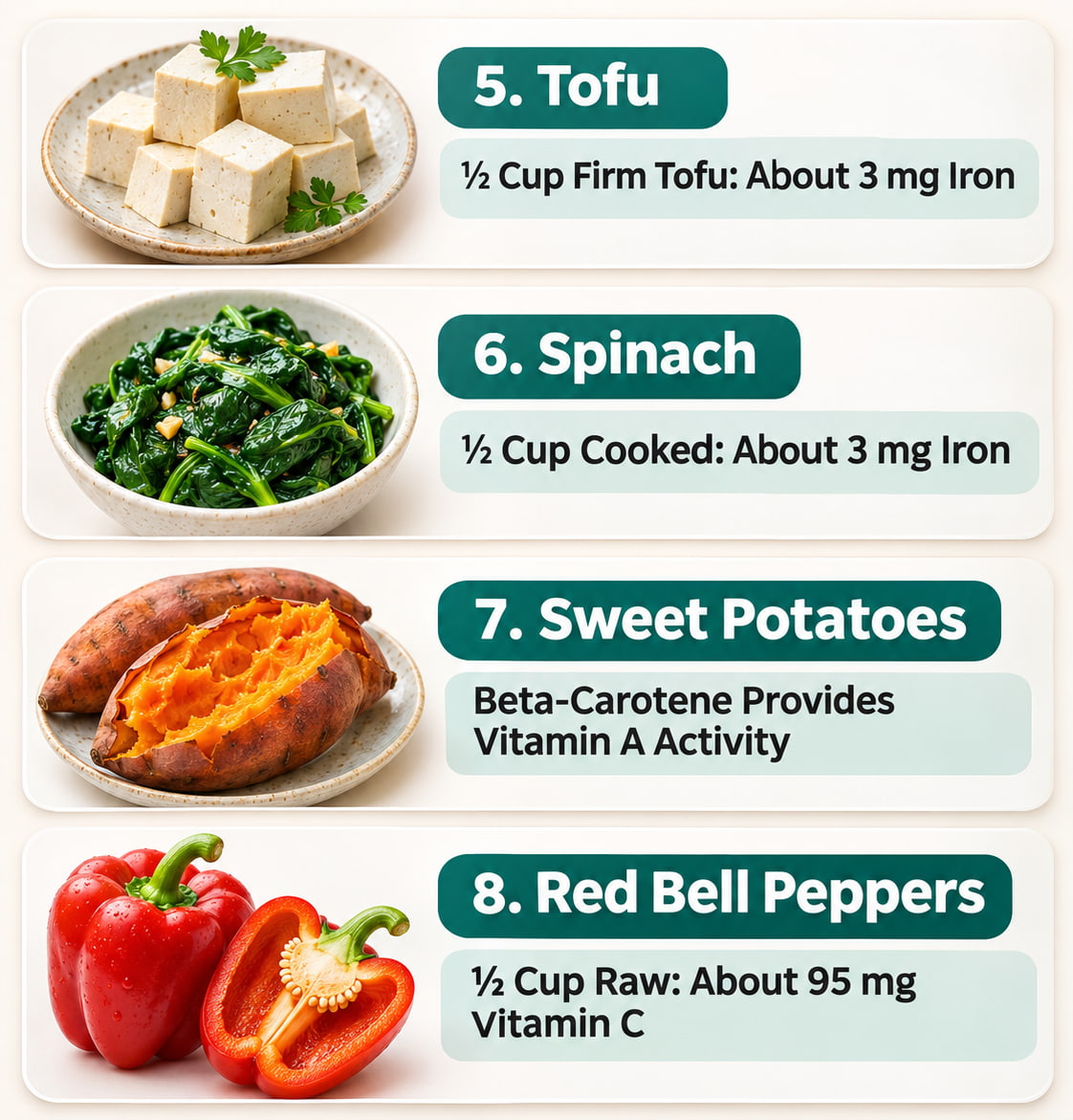
Tofu offers another way to include plant protein in your meals. NIH food tables list approximately 3 milligrams of iron in ½ cup of firm tofu, although the amount varies between products.
Firm tofu holds its shape well in stir-fries and baked dishes. Softer varieties work in sauces and blended recipes, but their nutrient values may differ from those of firm tofu.
Try it: Bake cubed firm tofu and serve it with rice, spinach, and bell peppers.
6. Spinach
Spinach contributes several nutrients, including iron and provitamin A carotenoids. A ½-cup serving of boiled, drained spinach provides approximately 3 milligrams of iron.
The amount listed in a food table is different from the amount your body absorbs. Some compounds in spinach limit iron absorption, so include it alongside a variety of other iron-containing foods.
Try it: Stir cooked spinach into lentil soup, scrambled eggs, or a tofu dish. Add a vitamin C food to the meal to support absorption of plant iron.
7. Sweet Potatoes
Sweet potatoes provide beta-carotene, which your body can convert into vitamin A. Vitamin A plays a role in normal cell growth and differentiation.
Try it: Top a baked sweet potato with lentils and a spoonful of plain yogurt, or serve roasted wedges alongside salmon or tofu.
8. Red Bell Peppers
Red bell peppers are a useful vitamin C food. ½ cup of raw sweet red pepper provides approximately 95 milligrams of vitamin C.
One practical benefit is that vitamin C improves absorption of nonheme iron. This makes peppers a helpful addition to meals containing lentils, tofu, or other plant sources of iron.
Try it: Add raw pepper strips to a lentil bowl, use chopped peppers in a salad, or serve them with a yogurt dip.
9. Strawberries
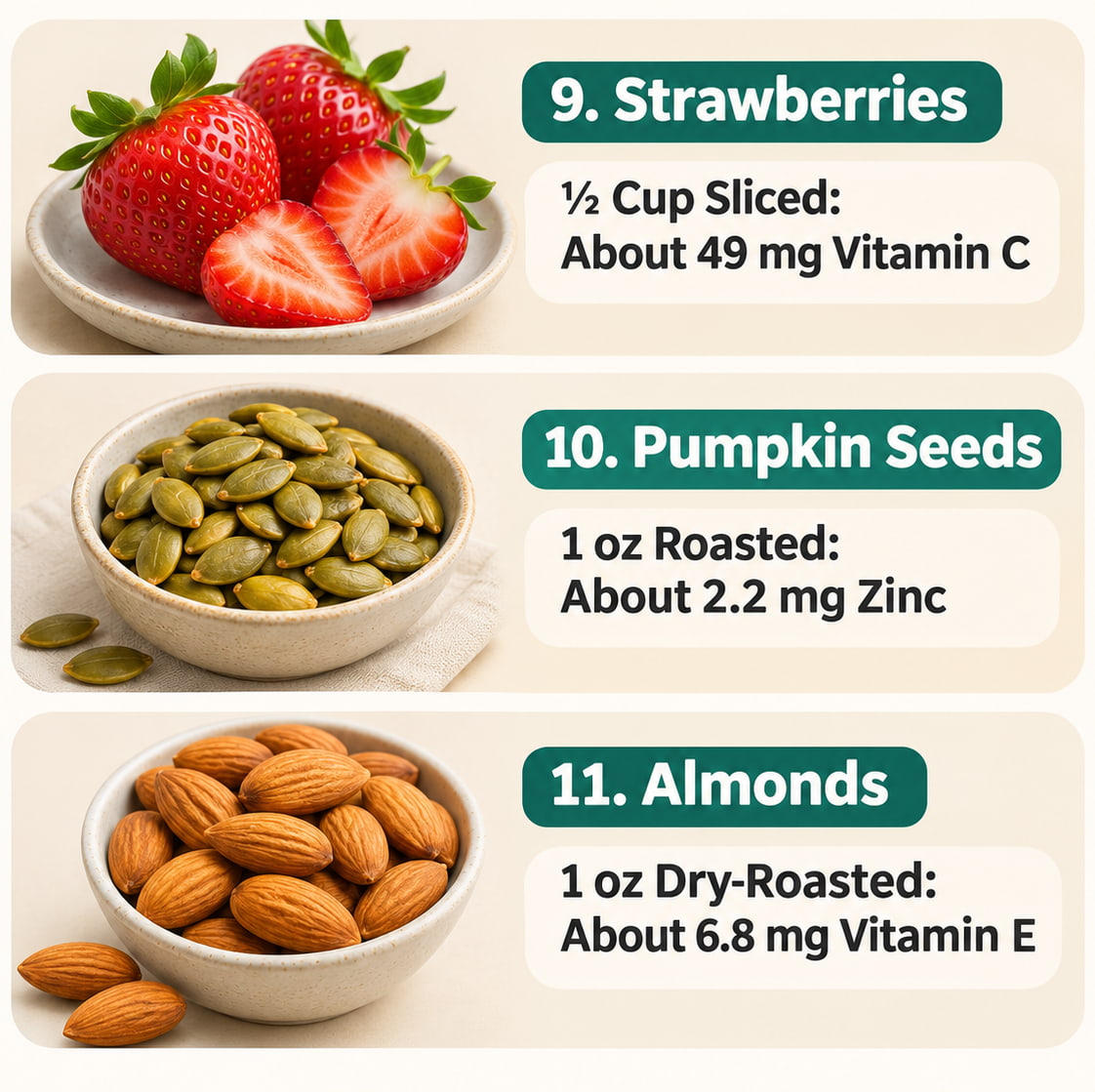
Strawberries provide vitamin C and are easy to add to breakfasts and snacks. NIH lists approximately 49 milligrams of vitamin C in ½ cup of fresh, sliced strawberries.
Try it: Add strawberries to plain Greek yogurt or oatmeal. You can also serve them alongside a meal that includes lentils or other plant sources of iron.
10. Pumpkin Seeds
Pumpkin seeds provide zinc, a mineral involved in protein synthesis and normal cell functions. 1 ounce of roasted pumpkin seeds contains approximately 2.2 milligrams of zinc.
They are easy to use in small amounts across different meals.
Try it: Sprinkle pumpkin seeds over a grain bowl, lentil salad, or yogurt, or combine them with fruit for a snack.
11. Almonds
Almonds provide vitamin E, along with fat and some protein. NIH lists approximately 6.8 milligrams of vitamin E in 1 ounce of dry-roasted almonds.
Try it: Add chopped almonds to oatmeal or yogurt, or pack a small portion with fruit.
How to Build Meals With Food for Hair Growth
You do not need to eat all 11 foods every day. Choose several that suit your preferences and use them across the week.
Include Protein and Enough Overall Food
Build meals around a protein food such as eggs, fish, yogurt, lentils, or tofu. Add vegetables or fruit, grains or another carbohydrate source, and fats that make the meal satisfying.
Adequate overall intake matters. An overly restrictive eating pattern can leave you short of energy and nutrients even if it includes a few nutritious ingredients.
Pair Plant Iron With Vitamin C
NIH guidance on iron explains that vitamin C improves the absorption of iron from plant foods.
Useful combinations include lentils with red bell peppers, tofu with peppers, or a spinach-containing meal with strawberries on the side. These are simple ways to combine foods already on the list.
Use Simple Meal Combinations
| Meal | Example |
|---|---|
| Breakfast | Plain Greek yogurt with strawberries, oats, and chopped almonds |
| Lunch | Lentil salad with red bell peppers and whole-grain bread |
| Dinner | Salmon or tofu with cooked spinach and a baked sweet potato |
| Snack | Fruit with pumpkin seeds or almonds |
Adjust the portions and food choices to your needs and preferences. These are flexible meal ideas.
Do You Need Hair Growth Supplements?
Supplements may be appropriate when a clinician identifies a deficiency, but routine hair vitamins are not a substitute for understanding why your hair is changing.
Biotin is a common example. The NIH biotin fact sheet states that deficiency is rare and that evidence supporting supplements for hair health is limited.
More is not always better. Excessive doses of certain nutrients in supplements, including selenium and vitamins A and E, have been linked to hair loss. High doses of iron can also be harmful.
Biotin supplements can interfere with certain laboratory tests and produce misleading results. Tell your healthcare professional about any hair, skin, or nail supplements you take before blood testing.
Keep nutrient-rich foods in your diet, and discuss supplements with a clinician when you suspect a deficiency or have ongoing hair loss.
When to Get Help for Hair Loss
Arrange an assessment if you notice:
- Sudden hair loss or new bald patches.
- Gradually worsening thinning or a widening part.
- Persistent, unexplained shedding.
- Hair loss with scalp pain, intense itching, redness, or scaling.
The AAD’s guidance on evaluating hair loss explains that a dermatologist considers your history and examines your hair and scalp to identify possible causes. Testing may be appropriate when a deficiency, hormonal problem, infection, or another condition is suspected.
You do not need to wait for dietary changes to work before seeking help. Hair loss alone cannot tell you which nutrient, if any, is missing.
FAQs About Food for Hair Growth
What Is the Best Food for Hair Growth?
There is no single best food for everyone. A useful approach is to combine protein foods with vegetables, fruit, legumes, nuts, and seeds. Which nutrients need attention depends on your usual intake and whether a nutritional shortfall is involved.
Which Fruits Are Good Choices for Hair Health?
Strawberries, oranges, and kiwi provide vitamin C. They can help you meet your nutritional needs and complement plant sources of iron. No particular fruit has been established as a reliable way to make hair grow faster.
Can a Vegetarian Diet Support Healthy Hair?
A varied vegetarian diet can include protein and minerals from lentils, tofu, nuts, seeds, and, if you eat them, eggs and dairy. Paying attention to adequate overall intake and combining plant iron with vitamin C foods can help you plan meals.
Are Biotin-Rich Foods Better Than Hair Growth Gummies?
Foods provide a mix of nutrients and can be part of regular meals. Gummies may supply concentrated amounts of selected ingredients, but extra biotin has limited evidence for improving hair growth when intake is already adequate. A diagnosed deficiency needs individual guidance.
How Long Does It Take to Notice Hair Changes After Improving Your Diet?
There is no reliable timeline that applies to everyone. Any improvement depends on the cause of the hair change and whether inadequate nutrition played a role. A food list cannot predict a result, and ongoing shedding should be assessed.
Can Food Reverse Hereditary Hair Loss?
Diet alone should not be relied on to reverse hereditary hair loss. Adequate nutrition remains useful for overall health, while a dermatologist can assess the pattern of loss and discuss suitable options.
Conclusion
The most useful approach to food for hair growth is a varied eating pattern that provides enough energy, protein, and essential nutrients. Eggs, salmon, yogurt, lentils, tofu, vegetables, fruit, nuts, and seeds offer practical ways to build that pattern.
Start with one or two easy meal changes this week. If shedding persists, thinning progresses, or bald patches appear, arrange an assessment to understand the cause.
This content is for informational purposes only and not medical advice.
References
- American Academy of Dermatology: Hair loss management.
- American Academy of Dermatology: Hair loss diagnosis and assessment.
- American Academy of Dermatology: Hair loss signs and symptoms.
- Gomes and colleagues: Dietary factors and hair health systematic review.
- NIH Office of Dietary Supplements: Biotin.
- NIH Office of Dietary Supplements: Iron.