
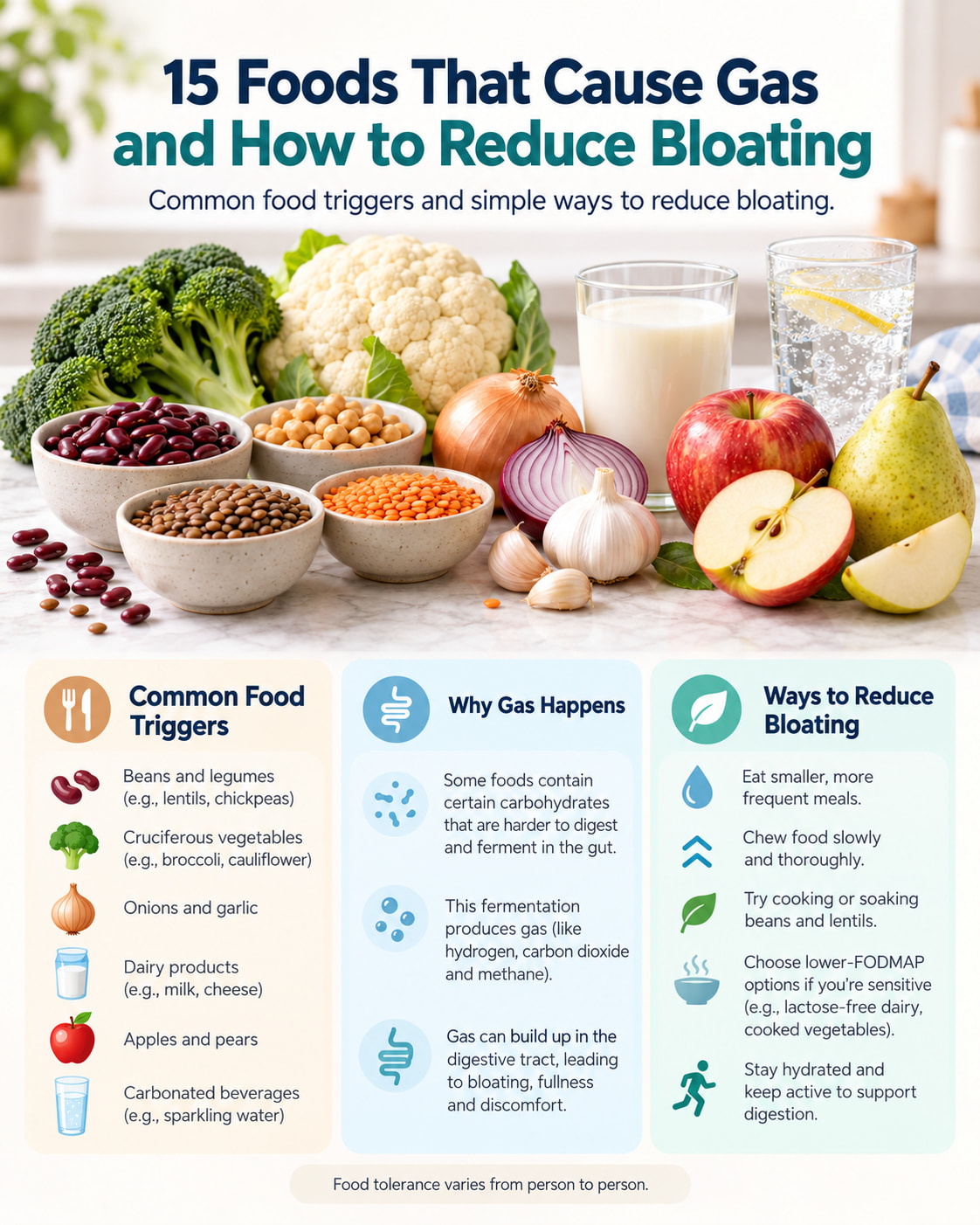
Foods that cause gas include beans, lentils, broccoli, onions, milk, apples, and products containing certain sugar alcohols or added fibers. Carbonated drinks can also contribute to gas and bloating.
Your reaction depends on the food, how much you eat, and how your digestive system handles it. Many common triggers are nutritious foods that you may still tolerate in smaller portions.
Understanding your own pattern can help you make useful changes. Start with portion sizes, eating habits, and ingredient labels, and seek medical advice if symptoms persist or become concerning.
Why Do Some Foods Cause Gas?
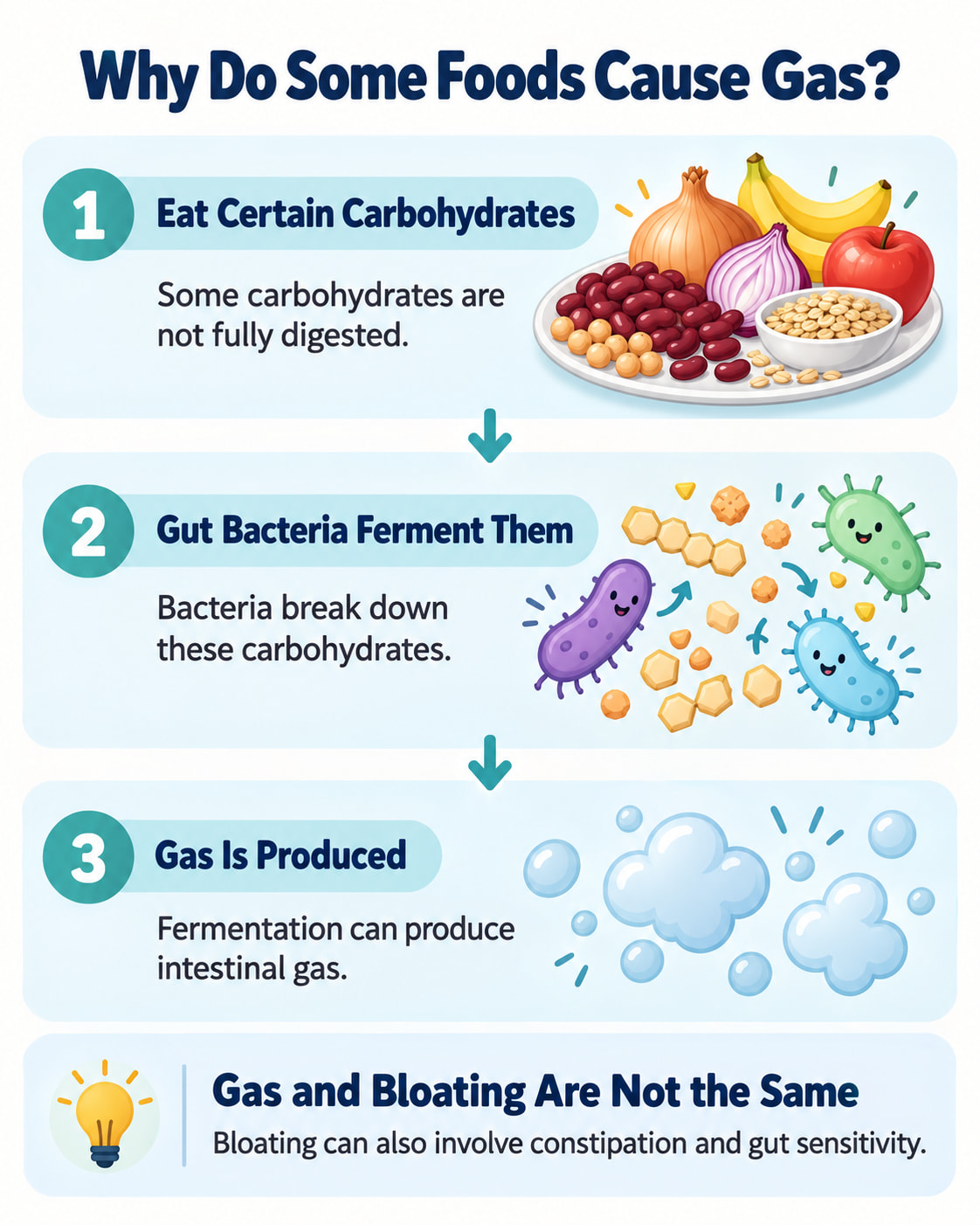
Gas is a normal part of digestion. It develops when bacteria in your large intestine break down carbohydrates that were not fully digested earlier. You also swallow air while eating and drinking.
According to NIDDK’s guidance on food and gas, certain fruits, vegetables, dairy products, grains, and sweeteners can increase symptoms in some people.
Some triggers contain FODMAPs, a group of fermentable carbohydrates. Examples include fructans in onions, lactose in milk, and sorbitol in certain fruits and sugar-free products. People with irritable bowel syndrome, or IBS, may be particularly sensitive to their effects.
Bloating and excess gas are not always the same thing. Bloating is a feeling of fullness or swelling. Constipation, gut sensitivity, and how gas moves through your intestines can also contribute.
15 Foods That Cause Gas
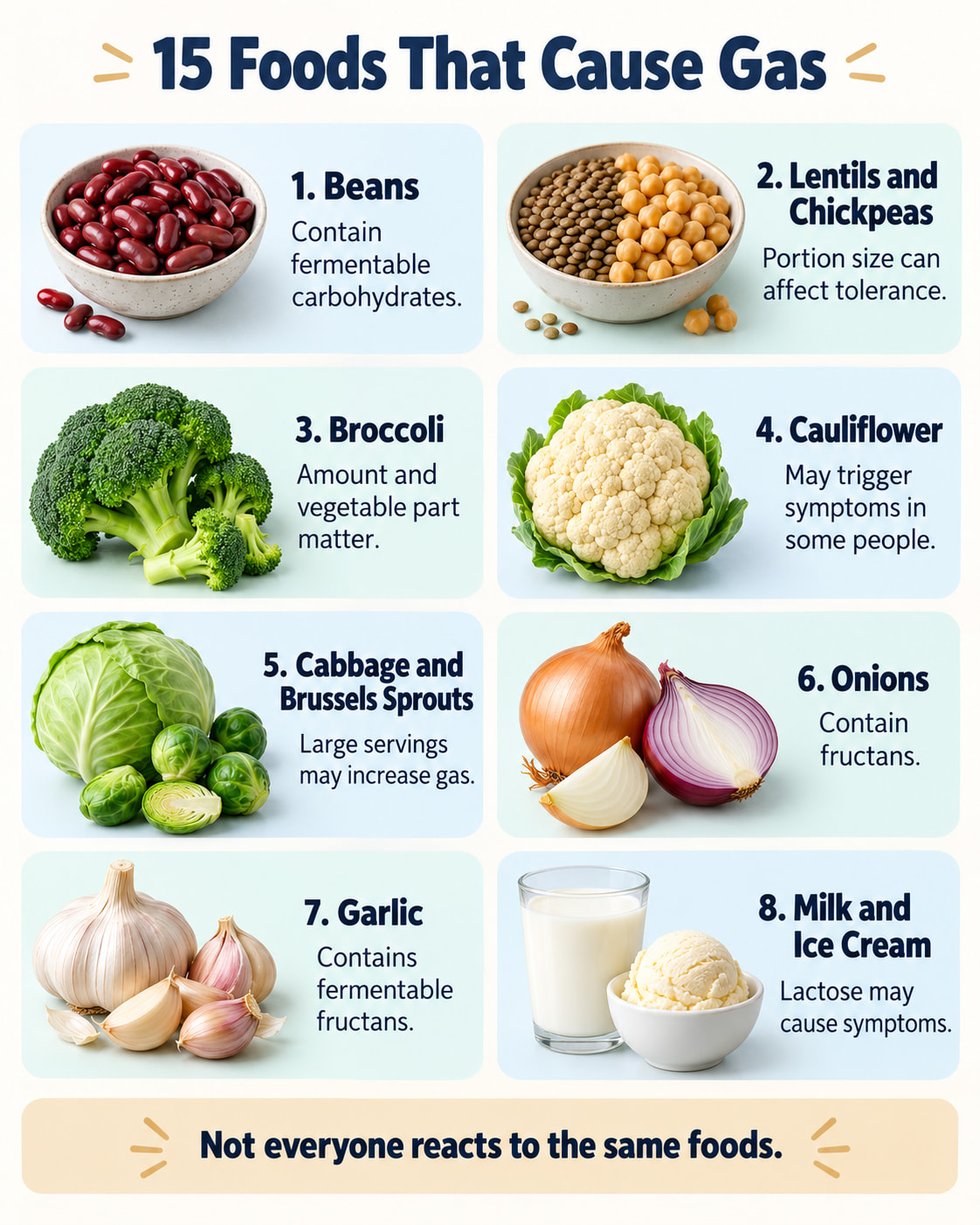
These foods and drinks are possible triggers. You do not need to avoid every item, and the list is not a ranking of which produces the most gas.
1. Beans
Beans contain fermentable carbohydrates that can reach the large intestine and become fuel for gut bacteria. This helps explain why a large serving may leave you gassy.
What may help: Start with a smaller portion. Monash University explains that draining and rinsing canned legumes can remove some carbohydrates that have moved into the liquid. This may improve tolerance, although it does not guarantee symptom-free eating.
2. Lentils and Chickpeas
Lentils and chickpeas contain similar fermentable carbohydrates. A generous bowl of lentil soup or a large serving of hummus may be harder to tolerate than a small amount.
What may help: Try smaller portions of drained, rinsed canned lentils or chickpeas. With hummus, check the other ingredients too; garlic may contribute to symptoms independently of the chickpeas.
3. Broccoli
Broccoli can contribute to gas, but it is not automatically a high-FODMAP food. Monash testing found differences between the florets and stalks, with large stalk-heavy servings containing more excess fructose.
What may help: Experiment with a modest serving of florets. Pay attention to both the amount and the part of the vegetable you eat.
4. Cauliflower
Cauliflower contains carbohydrates that some people tolerate poorly. Portion size is especially worth noticing when cauliflower replaces rice, potatoes, or other meal components.
What may help: Try a smaller side portion. If you notice a consistent pattern, compare it with another vegetable you tolerate, such as carrots. Cooking cauliflower does not reliably remove its FODMAPs.
5. Cabbage and Brussels Sprouts
Cabbage and Brussels sprouts are common gas-producing vegetables. Their effect varies between people, and suddenly eating much larger amounts of fiber-rich vegetables can add to discomfort.
What may help: Introduce them gradually and observe your response to smaller servings. There is no need to remove the whole vegetable group because one meal caused gas.
6. Onions
Onions contain fructans, which can be fermented by gut bacteria. Onion powder also appears in foods such as soups, sauces, seasoning blends, and stock.
What may help: If onions repeatedly trigger symptoms, try chives or the green tops of scallions for flavor. Check labels when a dish causes symptoms despite containing no visible onion.
7. Garlic
Garlic is another source of fructans. It may be present as fresh garlic, garlic powder, or part of a sauce or seasoning mix.
What may help: Garlic-infused oil without garlic pieces can provide flavor with less fructan exposure because fructans do not dissolve in oil. Ordinary cooking does not reliably make garlic low in FODMAPs.
8. Milk and Ice Cream
Milk and ice cream contain lactose, the natural sugar in dairy. When lactose is poorly digested, it can lead to gas, bloating, and sometimes diarrhea.
What may help: Consider lactose-free versions or smaller amounts with meals. Some people tolerate yogurt and hard cheeses better. Lactose intolerance does not necessarily mean you must avoid all dairy, and keeping suitable options can help maintain calcium and vitamin D intake.
9. Wheat, Rye, and Barley Products
Bread, pasta, cereals, and other products made from these grains can contain fructans. Symptoms after eating wheat do not automatically mean gluten is responsible; gluten is a protein, while fructans are carbohydrates.
What may help: Notice whether serving size affects symptoms. Foods such as rice or oats may provide alternatives when appropriate.
If symptoms are persistent and celiac disease is a concern, discuss celiac testing before starting a gluten-free diet. Removing gluten beforehand can affect test results.
10. Apples and Pears
Apples and pears contain excess fructose and sorbitol. These carbohydrates can contribute to gas and other digestive symptoms in susceptible people.
What may help: Try a smaller portion or compare your tolerance with another fruit, such as an orange or kiwifruit. You do not need to eliminate all fruit because one type bothers you.
11. Dried Fruit
Drying removes water and concentrates sugars and FODMAPs into a smaller volume. This makes it easy to eat a substantial amount of fruit in a few handfuls.
What may help: Measure a portion instead of eating directly from the package. The type of dried fruit matters, so a reaction to one does not establish that every variety will cause symptoms.
12. Mushrooms
Some mushroom varieties contain substantial amounts of mannitol, a sugar alcohol that can contribute to symptoms in sensitive people. Different mushrooms and serving sizes should not be treated as equivalent.
What may help: Record the type and amount you eat. If mushrooms consistently bother you, try another vegetable in the same dish and compare your response.
13. Sugar-Free Gum and Candy
Some sugar-free products contain polyols, also called sugar alcohols. Examples include sorbitol, mannitol, maltitol, and xylitol. These can contribute to gas and other digestive symptoms. Chewing gum can also increase swallowed air.
What may help: Check the ingredient list and the amount you consume. “Sugar-free” alone does not tell you which sweetener a product contains, and different sweeteners do not all have the same effects.
14. Foods With Added Inulin or Chicory Root Fiber
Snack bars, cereals, and products promoted for gut health may contain added inulin, chicory root fiber, or fructooligosaccharides, often shortened to FOS.
These prebiotic fibers feed gut bacteria through fermentation. That process may increase gas and bloating in some people, particularly those with IBS.
What may help: Check labels when symptoms appear after introducing a new fiber-enriched product. A smaller portion or a product without the suspected ingredient may be easier to tolerate.
15. Carbonated Drinks
Soda, sparkling water, and other fizzy drinks can contribute to gas-related symptoms, including belching. Carbonation introduces gas rather than relying on bacterial fermentation of food.
What may help: Compare your symptoms when you choose still water. Sweetened or sugar-free fizzy drinks may also contain ingredients that affect your tolerance.
How to Reduce Gas and Bloating
Track Patterns and Change One Thing at a Time
A brief diary can help you identify repeated patterns. Record:
- What you ate and drank, including approximate portions.
- When symptoms occurred and how they affected you.
- Bowel changes, including constipation or diarrhea.
Then adjust one suspected trigger at a time. For example, compare your usual serving with a smaller one before removing several food groups. One uncomfortable meal alone does not establish a food intolerance.
Eat Slowly and Consider Smaller Meals
Eating quickly can increase swallowed air. Sit down, slow your pace, and chew comfortably. If very large meals leave you bloated, try smaller portions spread through the day.
Large, high-fat meals can also worsen bloating in some people. That does not mean fat produces gas through the same fermentation process as certain carbohydrates.
Increase Fiber Gradually
Fiber supports bowel function, but a sudden increase can cause gas. Add fiber-rich foods a little at a time, especially if you are introducing more beans, whole grains, vegetables, or fiber supplements.
If constipation accompanies your bloating, reducing fiber indiscriminately may be unhelpful. A healthcare professional or dietitian can help you choose suitable sources and amounts.
Stay Hydrated and Keep Moving
Drink enough water and include regular physical activity. A comfortable walk after a meal may help with gas symptoms. MedlinePlus suggests walking for 10–15 minutes after eating.
If constipation persists, seek guidance rather than repeatedly removing foods from your diet.
Do You Need to Avoid All Gas-Producing Foods?
Usually, no. Beans, vegetables, fruit, and whole grains provide useful nutrients. The aim is to find the portions and food choices you tolerate while keeping your diet varied.
If frequent symptoms suggest IBS or another digestive problem, get assessed before making broad restrictions. A clinician or registered dietitian can help determine whether a structured dietary approach makes sense.
For appropriate people with IBS, Monash University’s three-step FODMAP approach begins with a short restriction phase, followed by reintroduction and personalization. The long-term goal is to include tolerated foods and limit only what is necessary, ideally with a dietitian’s support.
When to Seek Medical Help
Speak with a healthcare professional if gas or bloating keeps returning, disrupts daily life, changes suddenly, or continues despite reasonable dietary adjustments.
NHS guidance on bloating also recommends medical assessment when bloating occurs with unexplained weight loss or blood in the stool.
Seek urgent medical care if bloating occurs with vomiting, fever, or an inability to pass stool or gas. Sudden severe abdominal pain with a swollen abdomen, vomiting blood, or severe breathing difficulty requires emergency care.
Frequently Asked Questions
Which Foods Cause the Most Gas?
There is no single ranking that applies to everyone. Beans and other legumes are common triggers, but someone with lactose intolerance may react more strongly to milk. Your portion size and digestive tolerance matter more than a universal “worst foods” list.
Why Do Healthy Foods Make Me Gassy?
Some nutritious foods contain fibers and other carbohydrates that gut bacteria ferment. Gas can be a normal result of that process. Gradually increasing your intake and adjusting portions may help you keep these foods in your diet more comfortably.
Can I Eat Beans Without Getting Gas?
You may be able to reduce symptoms with smaller servings and drained, rinsed canned beans. However, no preparation method guarantees that beans will produce no gas. Your tolerance may also differ between types and amounts.
Does Cooking Vegetables Reduce Gas?
Cooking does not reliably lower a food’s FODMAP content. Effects depend on the food and preparation method. Draining and rinsing canned legumes has specific support because some fermentable carbohydrates move into the liquid, but this should not be generalized to all cooked vegetables.
Why Does Milk Cause Gas When Cheese Does Not?
Milk contains more lactose than many hard cheeses. If you have difficulty digesting lactose, you may react to milk while tolerating cheese. The amount eaten matters too. This pattern can suggest lactose sensitivity, but persistent symptoms deserve assessment.
Should I Try a Low-FODMAP Diet for Bloating?
A low-FODMAP diet may be appropriate for some people with IBS, preferably with a trained dietitian. Monash recommends an initial 2–6-week phase, followed by reintroduction if symptoms improve. It is not intended to mean avoiding every high-FODMAP food indefinitely.
Conclusion
Foods that cause gas can still fit into a nutritious diet. Start by checking portions, eating more slowly, and looking for repeated patterns instead of cutting out several food groups at once.
Choose one manageable adjustment at your next meal. If symptoms continue, seek help to identify the cause and build an eating plan that works for you.
This content is for informational purposes only and not medical advice.
References
- NIDDK: Eating, Diet, & Nutrition for Gas in the Digestive Tract
- NIDDK: Symptoms & Causes of Gas in the Digestive Tract
- NIDDK: Eating, Diet, & Nutrition for Irritable Bowel Syndrome
- NIDDK: Eating, Diet, & Nutrition for Lactose Intolerance
- NIDDK: Diagnosis of Celiac Disease
- Monash University: High and Low FODMAP Foods
- Monash University: Including Legumes on a Low FODMAP Diet