
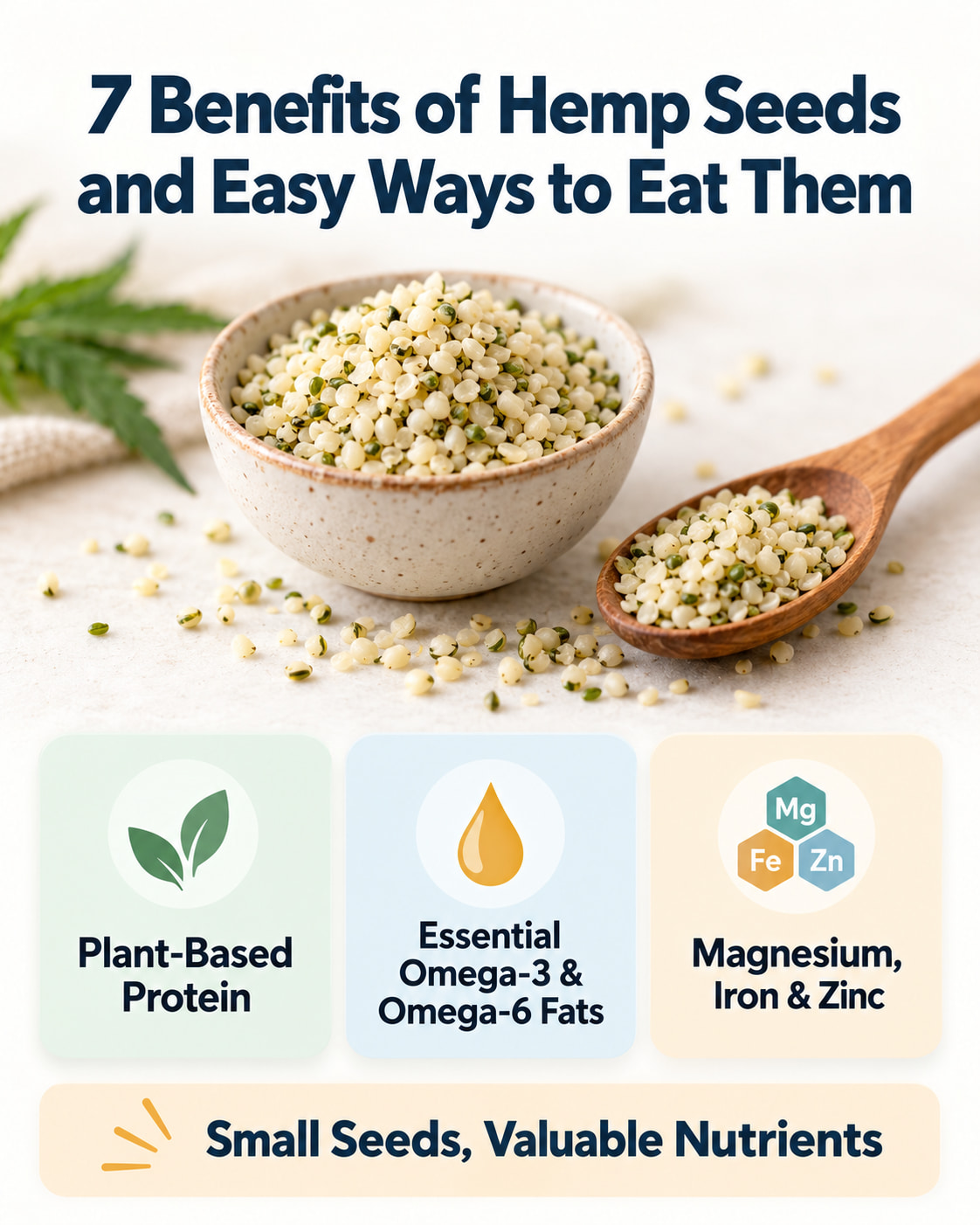
The main benefits of hemp seeds are their plant protein, essential fats, and minerals, including magnesium, iron, zinc, and phosphorus. These nutrients make them a useful addition to everyday meals.
You can sprinkle hemp seeds over breakfast, blend them into a smoothie, or stir them into a sauce. Choosing the right form matters: soft hemp hearts have a different nutritional profile from whole seeds, oil, or protein powder.
Here is what hemp seeds offer, what the research shows, and how to work them into your meals.
What Are Hemp Seeds?
Hemp seeds are the edible seeds of the Cannabis sativa plant. They have a mild, nutty flavor that works in both sweet and savory foods.
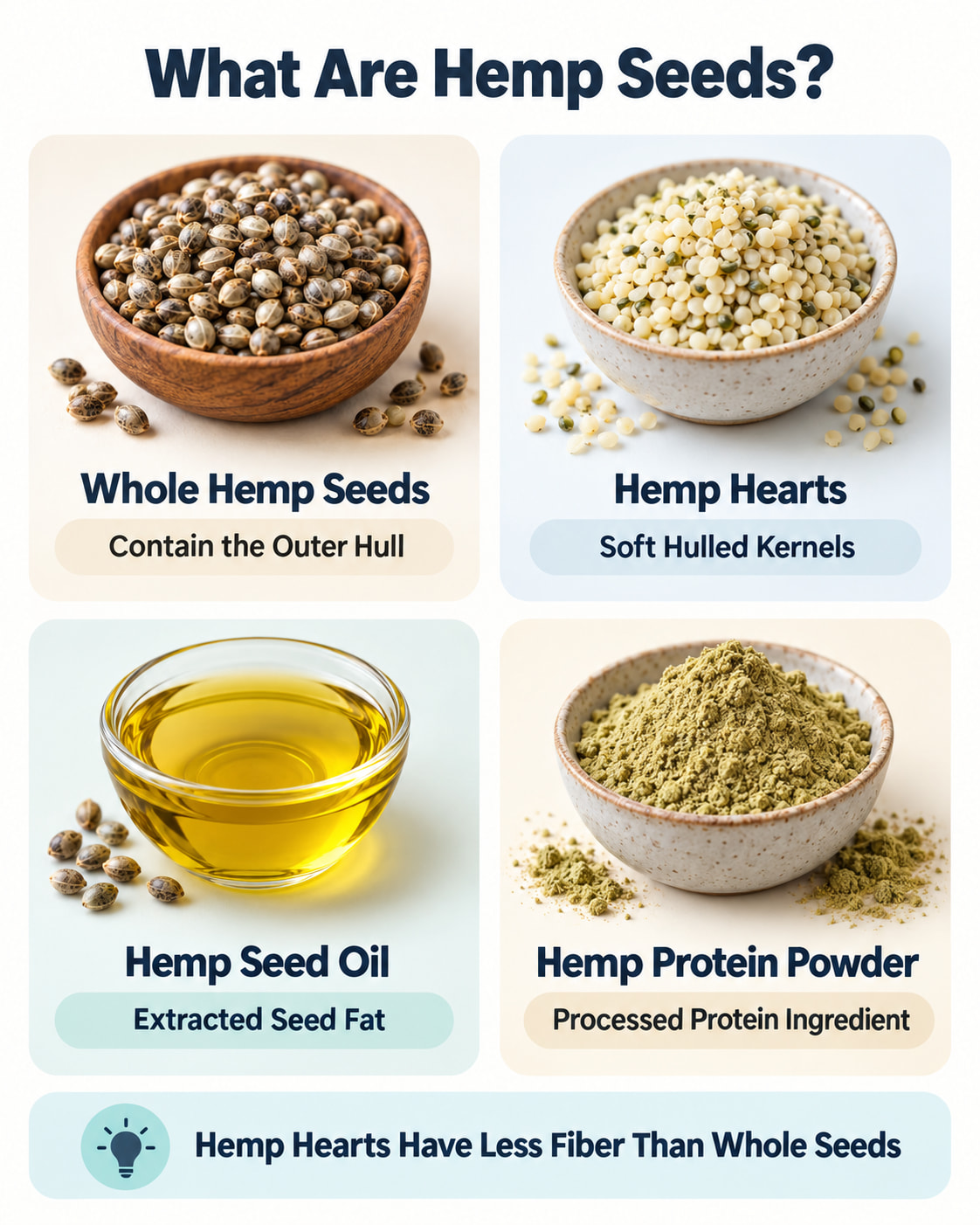
Many packages labeled “hemp seeds” actually contain hulled hemp seeds, also called hemp hearts. These are the soft inner kernels left after removing the outer shell.
| Form | What it provides | Common uses |
|---|---|---|
| Whole hemp seeds | The kernel and outer hull, which contributes much of the fiber | Crunchy toppings and foods made with ground seeds |
| Hemp hearts | Protein, fats, and minerals, with relatively little fiber | Oatmeal, yogurt, salads, and smoothies |
| Hemp seed oil | Extracted fat, without the protein and fiber found in the seeds | Dressings and finishing sauces |
| Hemp protein powder | A processed protein ingredient; fiber and fat amounts vary | Shakes and recipes that call for protein powder |
Most of the serving information and meal ideas below refer to hemp hearts. Research comparing hemp products shows that removing the hull changes their composition and protein digestibility.
Hemp Seed Nutrition
According to the USDA nutrient report for hulled hemp seeds, a 30-gram serving—about 3 tablespoons—provides the following:
| Nutrient | Approximate amount per 30 g |
|---|---|
| Calories | 166 |
| Protein | 9.5 g |
| Total fat | 14.6 g |
| Saturated fat | 1.4 g |
| Carbohydrates | 2.6 g |
| Fiber | 1.2 g |
| ALA omega-3 | 2.6 g |
| Magnesium | 210 mg |
| Iron | 2.4 mg |
| Zinc | 3 mg |
| Phosphorus | 495 mg |
| Calcium | 21 mg |
These are generic USDA composition values. Check your package for the serving size and nutrition of the product you buy.
7 Benefits of Hemp Seeds
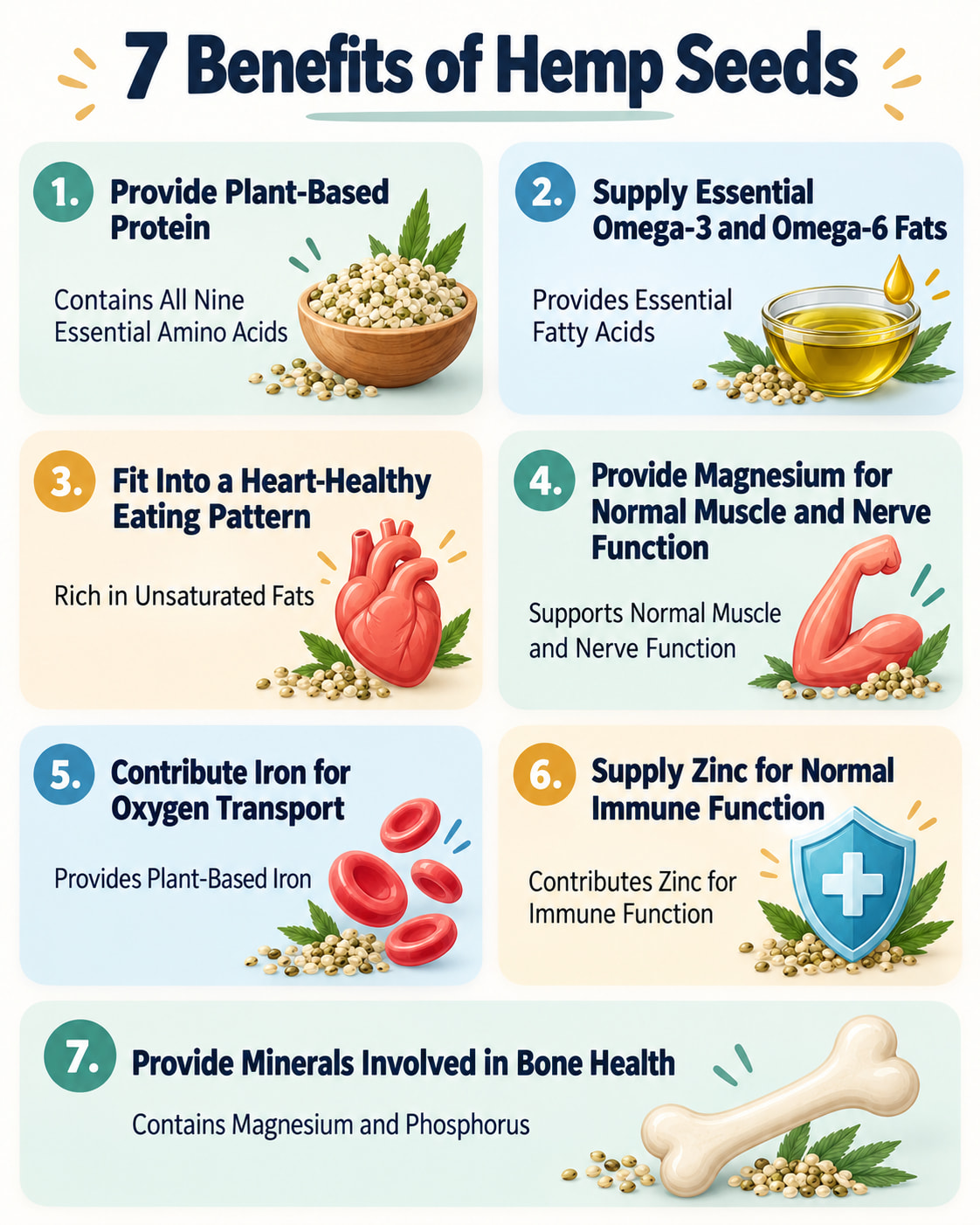
The strongest reasons to eat hemp seeds come from the nutrients they contribute. Their nutritional benefits are better established than claims about changing specific health conditions.
1. Provide Plant-Based Protein
Hemp hearts offer a convenient way to add protein to meals. They also contain all nine essential amino acids—the protein building blocks your body needs to obtain from food.
However, the proportions of those amino acids matter. Research evaluating hemp protein quality identified lysine as its limiting amino acid, meaning its proportion was lowest relative to the reference requirement.
You do not need to track individual amino acids when planning an ordinary meal. Include a variety of protein foods, such as beans, lentils, tofu, dairy foods, eggs, or other options that fit your diet. Hemp hearts can complement those foods.
2. Supply Essential Omega-3 and Omega-6 Fats
Hemp seeds provide alpha-linolenic acid, or ALA, an omega-3 fat. They also contain linoleic acid, an omega-6 fat. Your body cannot make these essential fatty acids, so you need them from food.
The NIH Office of Dietary Supplements explains that the body converts only a limited amount of ALA into EPA and DHA, the longer-chain omega-3s found in fish and some algae products.
Hemp hearts can therefore contribute to your plant omega-3 intake. Keep the type of omega-3 in mind when comparing them with other foods or supplements.
3. Fit Into a Heart-Healthy Eating Pattern
Most of the fat in hemp hearts is unsaturated. The American Heart Association recommends replacing foods high in saturated fat with foods that provide unsaturated fats, including nuts and seeds.
For example, you could use hemp hearts for part of a cheese topping on a grain bowl or blend them into a sauce that replaces some cream. The overall meal and the ingredients being replaced matter.
Direct research on hemp foods remains limited. A randomized trial published in Food & Function in 2026 studied 30 adults during four-week intervention periods. The hemp intervention supplied 60 g of hemp hearts plus 30 g of hemp seed oil daily.
Some blood fatty-acid levels increased, but there were no significant differences from the comparison foods in blood lipids, blood pressure, glucose, insulin, or body composition. The trial was small, short, and tested seeds and oil together, so it could not identify the effects of hemp hearts alone.
4. Provide Magnesium for Normal Muscle and Nerve Function
Magnesium helps your muscles and nerves work normally. It also participates in protein production and many other processes throughout the body.
Hemp hearts can contribute meaningfully to magnesium intake. Other food sources include beans, whole grains, nuts, and leafy green vegetables, giving you several ways to include this mineral across the day.
The established benefit is the contribution to your nutritional needs. A food’s magnesium content does not, by itself, show that eating it improves sleep or relieves muscle cramps.
5. Contribute Iron for Oxygen Transport
Your body uses iron to make hemoglobin, the protein in red blood cells that carries oxygen. Hemp seeds contribute nonheme iron, the form found in plant foods.
Nonheme iron absorption depends partly on what else you eat. Vitamin C can improve its absorption, making these simple pairings useful:
- Hemp hearts with strawberries in oatmeal.
- Hemp hearts over a salad containing bell peppers.
- A bean-and-hemp bowl served with a citrus-based dressing.
These pairings follow the NIH’s guidance on nonheme iron absorption.
Hemp seeds can be one part of meeting your iron needs. If you have a diagnosed iron deficiency, follow your clinician’s plan rather than relying on a single food.
6. Supply Zinc for Normal Immune Function
Zinc is involved in normal immune function, protein production, and making DNA. Hemp seeds offer a way to add some zinc to meals, including meals built around plant foods.
Getting enough zinc helps meet your body’s needs. That is different from evidence that eating extra hemp seeds prevents infections or makes an already healthy immune system work better.
7. Provide Minerals Involved in Bone Health
Hemp seeds contribute phosphorus and magnesium, two minerals involved in bone health. Much of the phosphorus in your body is found in your bones and teeth.
They provide relatively little calcium, however. Use them alongside calcium-rich foods, such as yogurt, rather than considering hemp hearts your main source of calcium.
This makes a yogurt-and-hemp breakfast one practical way to combine foods that provide different nutrients used in maintaining healthy bones.
Easy Ways to Eat Hemp Seeds
Food-grade hemp hearts can be eaten raw, and their soft texture means they do not need grinding before use. They are easy to sprinkle, stir, or blend into foods you already enjoy.
| Meal or food | Easy way to add hemp hearts |
|---|---|
| Oatmeal | Stir into cooked oats or sprinkle over the top with fruit. |
| Yogurt | Add to plain yogurt with berries and cinnamon. |
| Smoothies | Blend with fruit and your usual milk or plant beverage. |
| Salads | Sprinkle over vegetables, beans, and a simple dressing. |
| Grain bowls | Add to a bowl of rice or quinoa, vegetables, and your preferred protein. |
| Toast | Sprinkle over avocado toast with tomato and black pepper. |
| Soup | Add to the finished bowl just before serving. |
| Pesto or dressing | Blend with herbs, lemon, garlic, and other sauce ingredients. |
For a simple breakfast, combine plain yogurt, sliced strawberries, and a spoonful of hemp hearts. You can also add them to an existing recipe without making hemp seeds the main ingredient.
How Much Hemp Seed Should You Eat?
There is no established daily hemp-seed requirement. One tablespoon is a practical place to start, especially when you are trying them for the first time.
You can adjust the amount to suit the meal. Two or three tablespoons may fit some meals, while a smaller sprinkle may be enough for others. These are food portions, not a proven dose for a health benefit.
Because hemp hearts contain substantial fat, they also add calories. Consider the portion as part of the meal, particularly if you are monitoring your overall energy intake.
You do not need to eat hemp seeds every day to have a nutritious diet. Variety gives you access to nutrients from other seeds, nuts, beans, vegetables, and whole grains.
Side Effects and Precautions
Food Allergies
Allergic reactions to hemp seeds have been documented, including serious reactions. Avoid them if you have a known hemp-seed allergy.
If you develop itching, hives, or swelling after eating them, stop eating the product and seek medical advice. Trouble breathing, throat swelling, or faintness can signal a severe allergic reaction and require emergency help. The FDA’s food-allergy guidance explains the signs that need prompt attention.
Start With a Comfortable Portion
Introduce a small amount and see how it fits your meals and digestion. If a product repeatedly causes discomfort, stop using it. Discuss persistent or significant symptoms with a healthcare professional.
Whole seeds and hemp hearts have different fiber contents, so do not assume they will feel the same to eat or digest.
Check the Product Type
Choose products clearly labeled for food use, such as hemp hearts or hulled hemp seeds. Products with added CBD or THC are different from ordinary hemp-seed foods and should not be assumed to have the same safety profile.
How to Choose and Store Hemp Seeds
- Choose the texture you want. Hemp hearts are soft and easy to mix into meals; whole seeds retain a firmer outer hull.
- Read the label. Check the serving size, added ingredients, and any relevant allergen information.
- Reseal the package. An airtight bag or container helps protect the contents after opening.
- Follow storage directions. Refrigeration after opening can help maintain freshness. Manitoba Harvest, for example, recommends refrigerating its hemp hearts once opened.
Use the product’s own storage instructions and best-before information instead of assuming every brand has the same shelf life.
Frequently Asked Questions
Are Hemp Seeds and Hemp Hearts the Same?
Hemp hearts are hemp seeds with the outer hull removed. Whole seeds retain the hull and more of its fiber. Check the label because some products called “hemp seeds” are actually hemp hearts.
Can You Eat Hemp Seeds Raw?
Yes. Food-grade hulled hemp seeds can be eaten directly from the package or added to food without cooking. Follow any preparation instructions on your product.
Do Hemp Seeds Need to Be Soaked or Ground?
Hemp hearts do not need soaking or grinding before eating. Their soft texture works well as a topping or blended ingredient. Whole seeds have a firmer hull and a different texture.
How Much Hemp Seed Should You Eat a Day?
There is no required daily amount. Start with a tablespoon and adjust to your meals and preferences. A three-tablespoon serving is commonly used for nutrition information, but it is not a target everyone needs to reach.
Are Hemp Hearts High in Fiber?
No. Hulled hemp hearts contain relatively little fiber because the outer hull has been removed. Whole hemp seeds retain more fiber, so the two forms should not be described interchangeably.
Can Hemp Seeds Make You High?
Ordinary hemp-seed foods are not intoxicating. The FDA explains that seeds do not naturally contain THC or CBD, although trace amounts can be picked up during processing. This does not describe products with added cannabinoids.
Can Hemp Seeds Help With Weight Loss?
They can fit into meals planned for weight management, but research has not established that hemp seeds alone cause weight loss. Their nutritional value does not remove the need to consider portions and your overall eating pattern.
Conclusion
Hemp seeds offer a convenient combination of plant protein, essential fats, and minerals. Hemp hearts are especially easy to use, although they provide relatively little fiber.
Start with a spoonful in one meal you already enjoy, such as oatmeal, yogurt, or a salad. Choose a portion that fits your needs and keep a variety of nutritious foods in your routine.
This content is for informational purposes only and not medical advice.
References
- USDA: Nutrient report for hulled hemp seeds.
- NIH Office of Dietary Supplements: Omega-3 fatty acids.
- NIH Office of Dietary Supplements: Magnesium, iron, zinc, and phosphorus.
- American Heart Association: Fats in foods.
- Food & Function: Hemp product consumption, blood fatty acids, and cardiovascular risk factors.
- Journal of Agricultural and Food Chemistry: Evaluation of protein quality in hemp-seed products.
- Journal of Allergy and Clinical Immunology: Anaphylaxis following hemp-seed ingestion.