
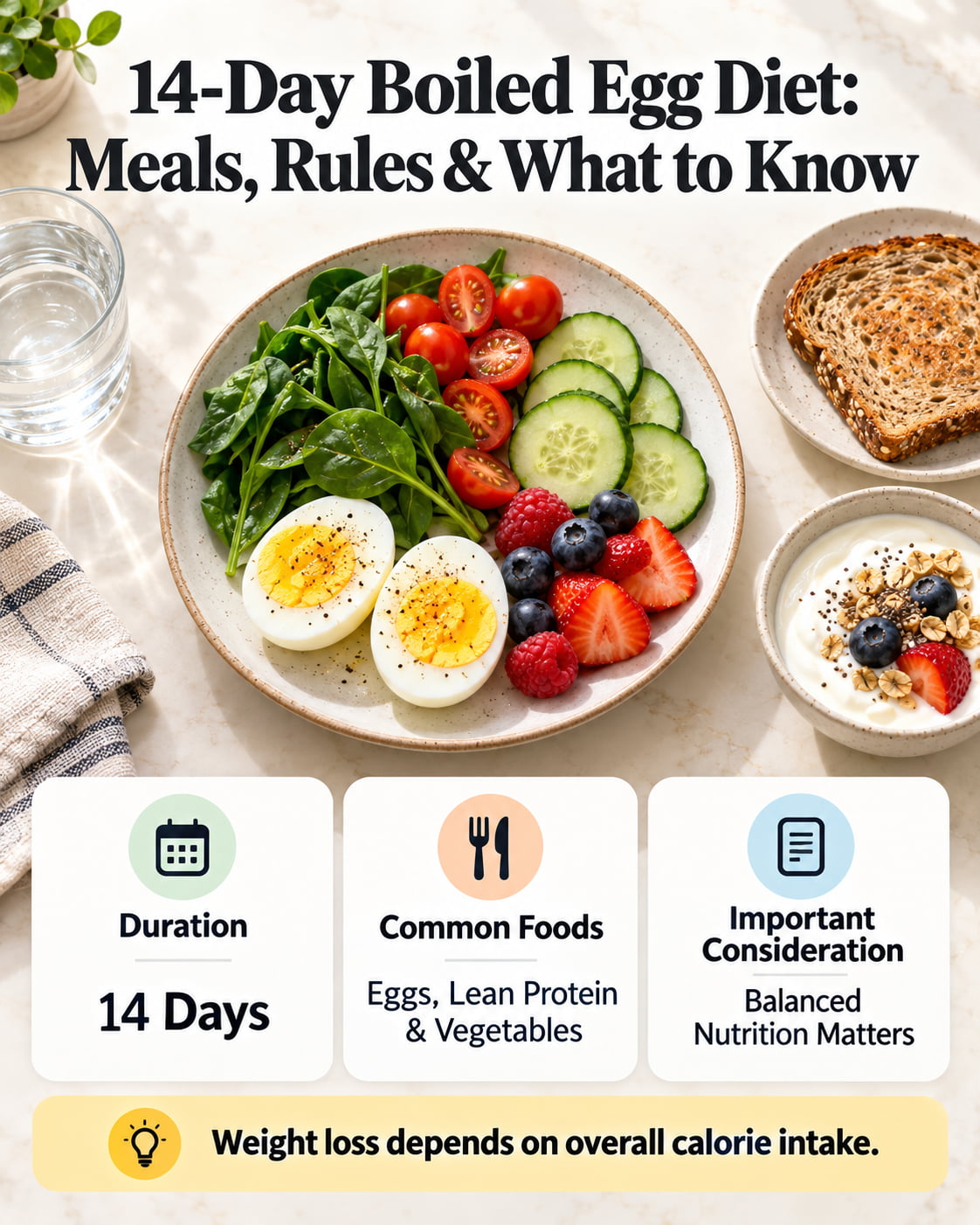
The boiled egg diet is a restrictive eating plan that usually combines eggs, lean protein, vegetables, and selected fruits for two weeks. It may lead to weight loss if it reduces calorie intake, but research has not established a special benefit from following this specific 14-day regimen.
Eggs can be a useful part of everyday meals. The bigger questions are whether you are eating enough, getting a variety of nutrients, and choosing habits you can maintain.
Below, you will find the diet’s common rules, what the evidence shows, and a more balanced 14-day meal example that includes boiled eggs.
What Is the 14-Day Boiled Egg Diet?
Most versions include foods besides eggs, such as chicken, fish, leafy greens, and selected fruit. There is no single standardized menu; egg quantities and food restrictions vary.
A commonly described day looks like this:
| Meal | Typical foods in the popular diet |
|---|---|
| Breakfast | Two or more eggs, fruit, and sometimes non-starchy vegetables |
| Lunch | Eggs or another lean protein with vegetables |
| Dinner | Lean protein and non-starchy vegetables |
| Between meals | Usually no snacks |
These are descriptions of the popular plan. The two-week duration does not establish that it is effective or appropriate for everyone.
What Are the Boiled Egg Diet Rules?
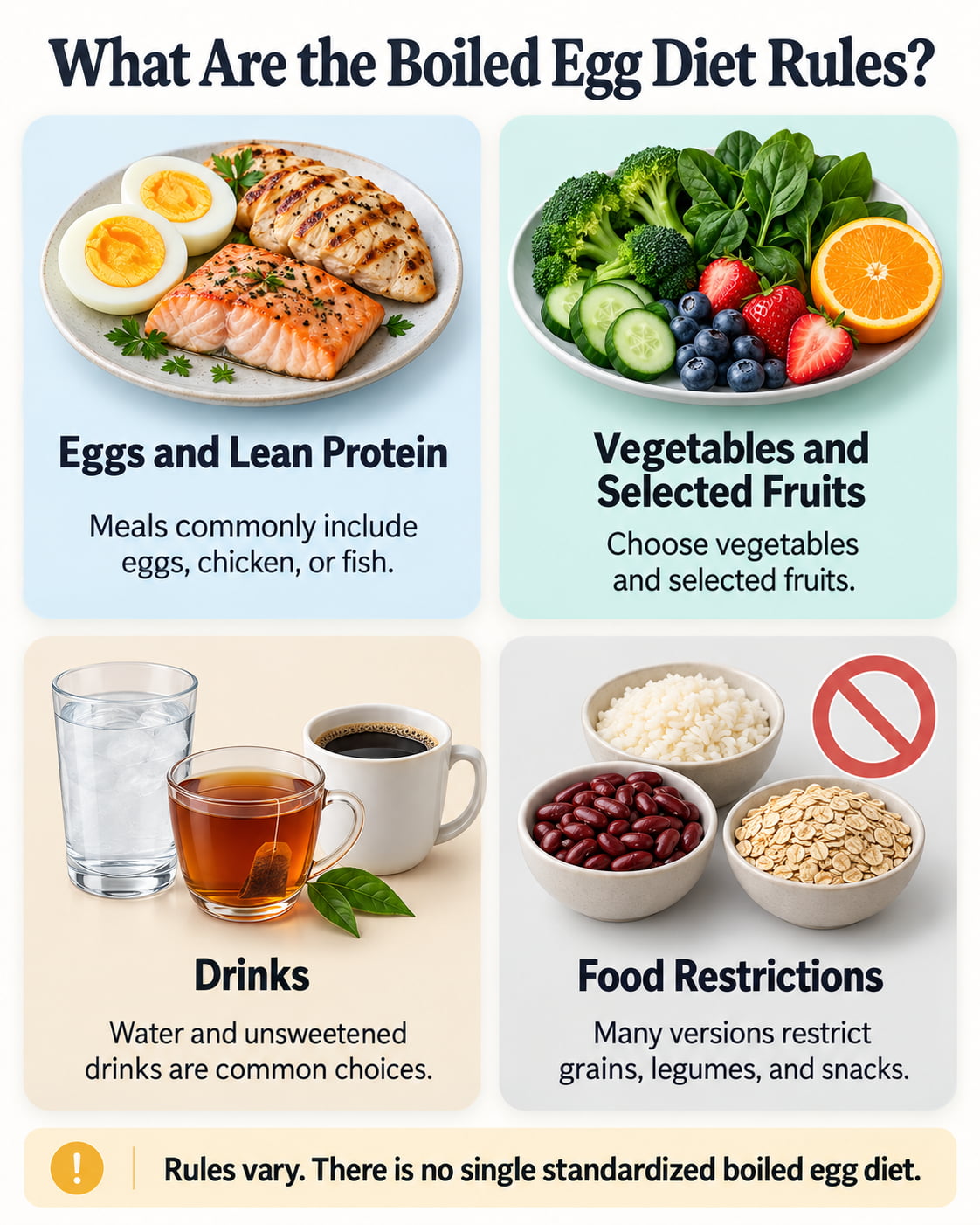
Common rules include:
- Base meals on eggs, lean protein, and non-starchy vegetables.
- Choose selected fruits, often berries or citrus.
- Drink water or unsweetened tea and coffee.
- Skip snacks and limit grains, legumes, and starchy vegetables.
Some versions also limit dairy. These restrictions exclude several nutritious foods: oatmeal, lentils, brown rice, and fruit can all fit into a varied eating pattern.
What Nutrients Do Boiled Eggs Provide?
According to USDA FoodData Central, one large hard-boiled egg, weighing about 50 grams without the shell, provides approximately:
| Nutrient | Amount per large hard-boiled egg |
|---|---|
| Calories | 78 |
| Protein | 6.3 g |
| Total fat | 5.3 g |
| Saturated fat | 1.6 g |
| Carbohydrate | 0.6 g |
| Fiber | 0 g |
| Cholesterol | 187 mg |
Eggs also provide choline, vitamin B12, and selenium. These are reference values; the amount you get depends partly on egg size.
Boiling eggs does not require added cooking fat, which makes preparation simple. However, an egg’s nutritional value does not make an egg-focused diet complete. Other foods supply the fiber and variety that eggs alone cannot provide.
Does the Boiled Egg Diet Help With Weight Loss?
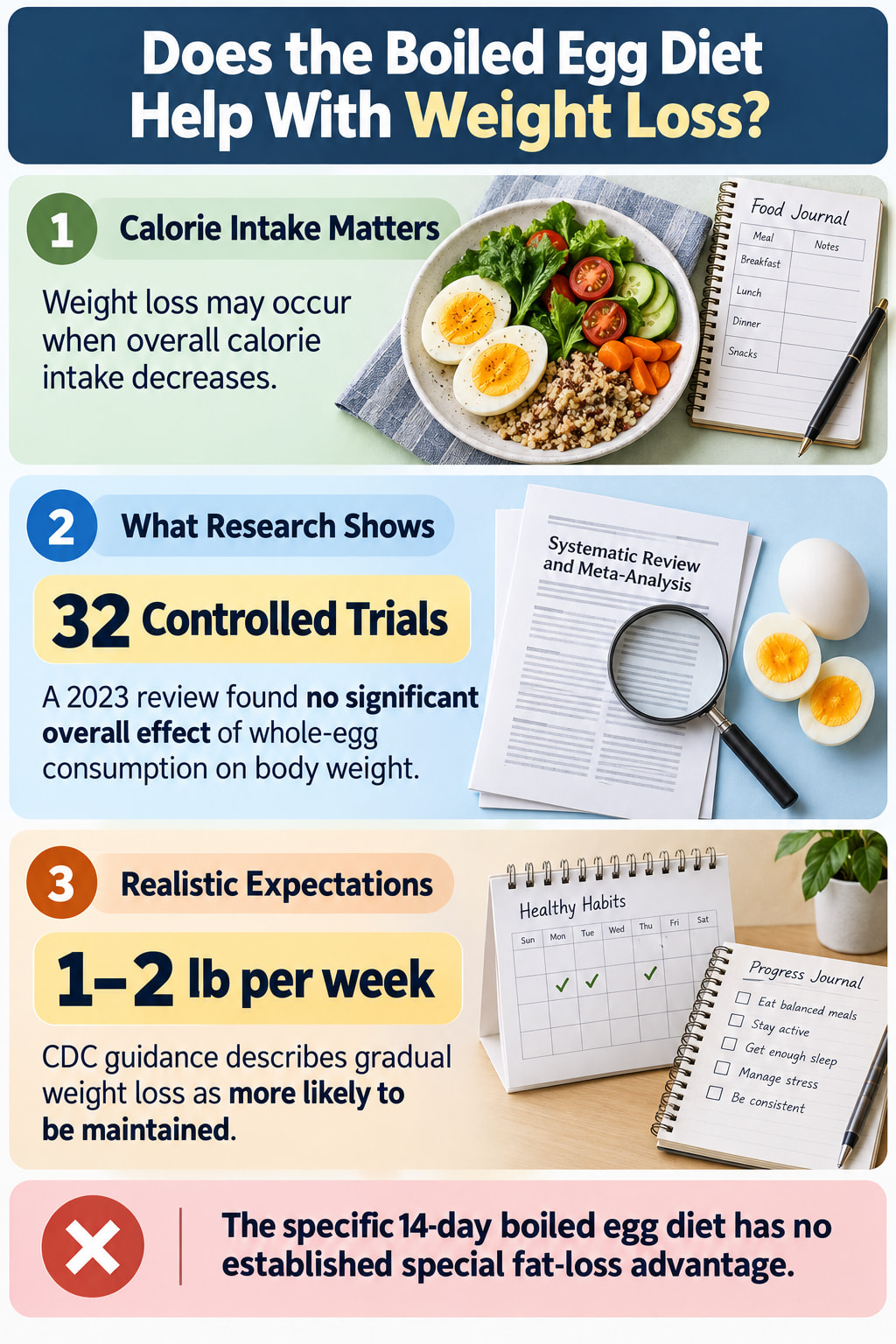
You may lose weight while following a restrictive menu if it causes you to eat fewer calories overall. That does not establish that eggs themselves produce a special fat-loss effect.
A 2023 systematic review included 32 controlled clinical trials of whole-egg consumption. Its overall analyses found no significant effect on body weight, BMI, waist circumference, or fat-free mass. Results differed across some subgroups, so the findings do not support a simple claim that eating more eggs reliably causes weight loss.
The research also needs to match the diet being discussed. Studies of eggs at breakfast within broader eating plans do not validate the exact restrictions or two-week schedule of the boiled egg diet.
How Much Weight Can You Expect to Lose in 14 Days?
There is no reliable number that applies to everyone. Starting weight, food intake, activity, medications, and health conditions can all affect results.
CDC guidance describes gradual weight loss of about 1–2 pounds per week as more likely to be maintained than faster loss. It also identifies losing 20 pounds in two weeks as an unrealistic goal.
That weekly range is general guidance, not a guaranteed two-week result. Rapid changes on the scale can also include water and muscle loss, so pounds lost should not automatically be described as pounds of fat.
A More Balanced 14-Day Meal Plan With Boiled Eggs
The following menu is a more varied alternative to the restrictive boiled egg diet. It includes whole grains, beans, fruit, and other foods commonly excluded from the fad plan.
This is an example of meal combinations, not a prescribed weight-loss diet. Portions and additional food should reflect your appetite, activity, health needs, and any advice from your healthcare professional.
Each day includes one whole boiled egg, with other protein coming from foods such as yogurt, beans, fish, chicken, or tofu. This is a menu choice, not a universal daily egg limit.
Week 1
| Day | Breakfast | Lunch | Dinner |
|---|---|---|---|
| 1 | One boiled egg, whole-grain toast, plain yogurt, and an orange | Chicken salad with whole-grain pita | Salmon, brown rice, and broccoli |
| 2 | Plain yogurt with oats and berries | One boiled egg with chickpea salad and whole-grain bread | Tofu stir-fry with brown rice and mixed vegetables |
| 3 | One boiled egg, oatmeal made with milk or fortified soy milk, and a banana | Lentil soup, whole-grain bread, and cucumber salad | Chicken, a baked potato, and green beans |
| 4 | One boiled egg, avocado toast, plain yogurt, and a pear | White-bean and quinoa salad with tomatoes | Turkey-and-bean chili with brown rice |
| 5 | One boiled egg, a whole-grain English muffin, yogurt, and berries | Canned light tuna sandwich with carrots | Baked fish, quinoa, and roasted zucchini |
| 6 | Oatmeal made with milk or fortified soy milk, plus apple and walnuts | One boiled egg with white-bean salad and whole-grain pita | Chicken, a sweet potato, and broccoli |
| 7 | One boiled egg, whole-grain toast, plain yogurt, and tomatoes | Chickpea wrap with lettuce and cucumber | Lentil stew with brown rice and greens |
Week 2
| Day | Breakfast | Lunch | Dinner |
|---|---|---|---|
| 8 | One boiled egg, oatmeal made with milk or fortified soy milk, and berries | Black-bean rice bowl with peppers and avocado | Turkey meatballs, whole-wheat pasta, and spinach |
| 9 | Plain yogurt with oats, banana, and nuts | One boiled egg with lentil salad and whole-grain bread | Salmon, barley, and green beans |
| 10 | One boiled egg, whole-grain toast, yogurt, and an orange | Chicken wrap with vegetables and hummus | Chickpea curry, brown rice, and cauliflower |
| 11 | One boiled egg, avocado toast, yogurt, and a peach | Lentil soup with whole-grain pita and salad | Tofu, quinoa, and stir-fried vegetables |
| 12 | Oatmeal made with milk or fortified soy milk, plus apple and nuts | One boiled egg with white-bean salad and whole-grain bread | Chicken, brown rice, and roasted zucchini |
| 13 | One boiled egg, a whole-grain English muffin, yogurt, and berries | Mashed chickpea sandwich with salad | Lentil pasta sauce over whole-wheat pasta, with broccoli |
| 14 | One boiled egg, oatmeal made with milk or fortified soy milk, and a pear | Chickpea and quinoa bowl with vegetables | Salmon or tofu, a baked potato, and green beans |
How to Adjust the Meal Example
Choose portions that provide enough food for you. A table of meal ideas should not become a reason to ignore hunger or skip additional food.
If a snack would help, options include:
- Fruit with plain yogurt.
- Whole-grain crackers with hummus.
- Nuts with fruit.
- Vegetables with a bean dip.
Swap chicken or fish for beans, lentils, or tofu according to your preferences. Use suitable alternatives for any food allergies or intolerances.
You can also repeat meals you enjoy. The exact order of these 14 days has no established weight-loss significance.
What Are the Risks and Limitations of the Boiled Egg Diet?
It May Be Difficult to Get Enough Fiber
Eggs contain no fiber. When a diet also limits beans, whole grains, and fruit, getting enough fiber may become harder.
NIDDK identifies these plant foods, along with vegetables and nuts, as useful fiber sources. Whether an egg-focused menu contributes to constipation depends on the overall diet and other factors; eating an egg does not automatically cause constipation.
Small Meals May Provide Too Little Energy
Eggs and vegetables can be nutritious, but very small meals may not provide enough food for your needs. MedlinePlus guidance on rapid weight-loss diets lists fatigue and digestive symptoms among potential concerns.
Feeling persistently weak, dizzy, or unwell is a reason to seek advice rather than continue pushing through a restrictive plan.
The concern is the total intake and degree of restriction. A two-week label does not make an inadequate diet appropriate.
Egg Intake May Need to Be Individualized
The American Heart Association says healthy individuals can include up to one whole egg daily and advises caution for people with abnormal blood lipid levels.
This does not mean that a second egg is automatically harmful. It does mean that a diet calling for several eggs every day should not be presented as suitable for everyone.
If you have high LDL cholesterol or have been given specific dietary advice, discuss regular egg intake with your healthcare professional.
Grapefruit Can Interact With Some Medications
Some versions of the diet include grapefruit. The FDA warns about grapefruit interactions with certain medications, including some statins and blood-pressure medicines.
Check the instructions for your specific medication or ask a pharmacist before adding grapefruit regularly. The meal example above uses other fruits.
The Restrictions Can Be Hard to Maintain
A plan may be simple to describe but difficult to fit around family meals, work, travel, or food preferences. If the rules only work temporarily, they may offer little help with eating after the two weeks end.
NIDDK emphasizes choosing an eating plan that fits your needs and can be maintained over time, along with a plan for maintaining weight changes.
Who Should Get Advice Before Trying the Boiled Egg Diet?
Get individualized guidance before making a major change to your food intake if you have a medical condition or take medication that could be affected by dietary changes.
A restrictive weight-loss plan also needs particular caution for children and teenagers, during pregnancy, and for older adults whose nutrition needs require attention. People with a current or past eating disorder should seek support before adopting rigid food rules.
An egg-centered menu is unsuitable for someone with an egg allergy. A registered dietitian can help adapt meal choices to your health needs and preferences.
How to Prepare and Store Boiled Eggs Safely
Meal preparation is useful, but one refrigerated batch should not be kept for all 14 days.
Follow FDA egg-safety guidance:
- Cook eggs until both the whites and yolks are firm.
- Refrigerate cooked eggs within two hours, or within one hour when the temperature is above 90°F.
- Keep the refrigerator at 40°F or below.
- Use hard-boiled eggs within one week of cooking, whether peeled or unpeeled.
- Label the container with the cooking date and prepare fresh batches as needed.
For mixed cooked egg dishes, FDA guidance gives a shorter refrigerated storage period of three to four days.
What Should You Do After the 14 Days?
Review which meals were convenient, satisfying, and easy to repeat. Keep those combinations and adjust portions and variety to suit your needs.
If you followed a restrictive version, work toward a varied eating pattern that includes foods such as beans, whole grains, fruit, and suitable dairy or alternatives. There is no established boiled-egg-diet transition protocol.
For ongoing weight management, consider your overall eating pattern, activity, sleep, and the support you need. A plan that continues to work during ordinary weeks is more useful than repeatedly restarting a short challenge.
Frequently Asked Questions
Can You Lose 20 Pounds in Two Weeks on the Boiled Egg Diet?
This is not a realistic goal to promise. CDC guidance specifically identifies losing 20 pounds in two weeks as unrealistic. Individual results vary, and rapid scale changes do not represent only body-fat loss.
How Many Boiled Eggs Should You Eat Per Day?
There is no medically established egg quota for the boiled egg diet. Common versions often include at least two at breakfast, but that is a diet rule rather than an individualized recommendation. Your overall eating pattern and health needs matter.
Can You Eat Bread, Rice, or Fruit?
Many strict versions limit grains and allow only selected fruits. However, whole-grain bread, rice, and fruit can be included in a varied eating pattern. The more balanced meal example above includes them.
Can You Eat Only Boiled Eggs for 14 Days?
An egg-only menu is highly restrictive and does not provide a balanced diet. Eggs contain no fiber, and relying on them alone leaves out the variety provided by vegetables, fruit, grains, legumes, and other foods.
Can the Boiled Egg Diet Cause Constipation?
It may contribute if the restrictions lead to low fiber intake. Eggs themselves contain no fiber, so the other foods in your meals matter. Persistent constipation should be discussed with a healthcare professional.
Can You Cook All Your Eggs at the Beginning?
You can prepare eggs ahead, but refrigerated hard-boiled eggs should be used within one week. For a two-week menu, prepare fresh batches during the plan and follow safe refrigeration practices.
Conclusion
The boiled egg diet offers a simple set of rules, but its specific 14-day regimen lacks established advantages. Eggs can still be a convenient part of varied meals that provide enough food, fiber, and different nutrients.
Start by choosing a few balanced meal combinations you enjoy and can repeat. If weight loss is appropriate for you, build an approach that fits your health needs and continues beyond two weeks.
This content is for informational purposes only and not medical advice.
References
- USDA FoodData Central: Hard-boiled egg nutrient record.
- Emrani and colleagues: Whole-egg consumption, weight, and body composition—2023 systematic review.
- CDC: Steps for Losing Weight.
- NIDDK: Choosing a Safe and Successful Weight-Loss Program.
- NIDDK: Eating, Diet, and Nutrition for Constipation.
- American Heart Association: Protein and Heart Health.
- MedlinePlus: Diet for Rapid Weight Loss.
- FDA: Egg Safety.