
Breakfast meal prep ideas are make-ahead breakfasts you can prepare in advance, store safely, and grab quickly on busy mornings. The best options combine protein, fiber-rich carbohydrates, fruits or vegetables, and simple ingredients that hold up well in the fridge or freezer.
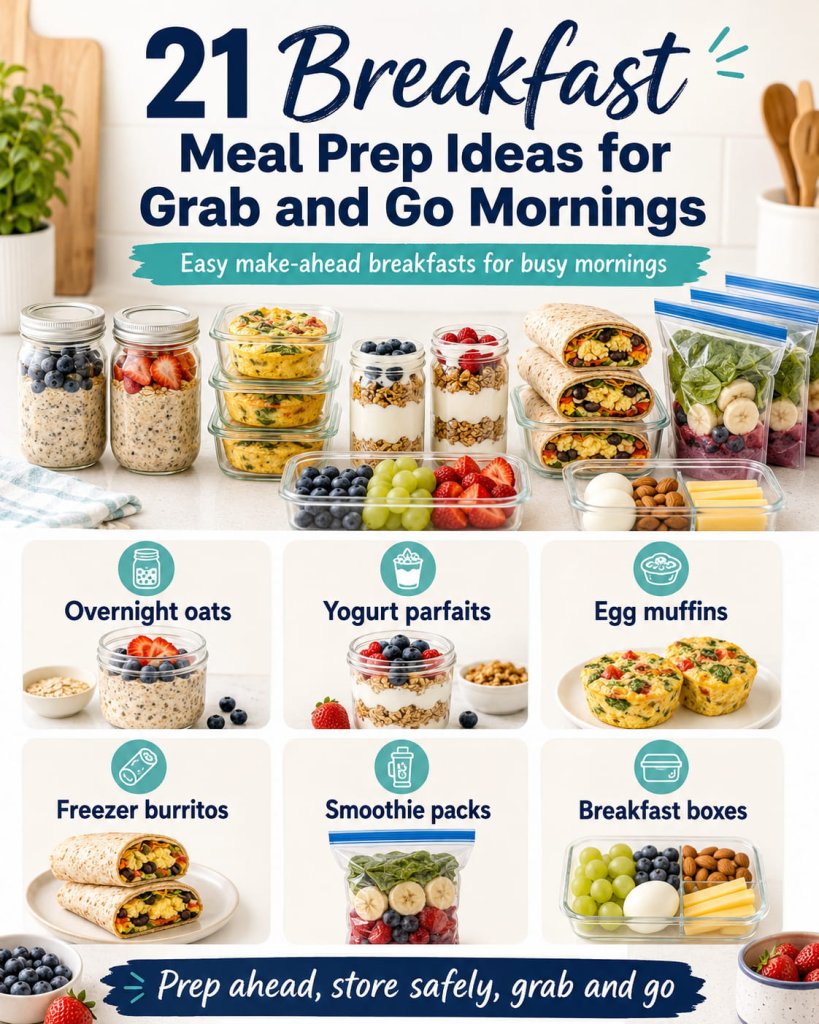
A good breakfast does not need to be complicated. With a few jars, containers, wraps, or freezer bags, you can prepare several days of easy meals that support steady energy and help you avoid skipping breakfast. Current Dietary Guidelines for Americans guidance emphasizes whole, nutritious foods and limiting highly processed foods, added sugars, and refined carbohydrates.
What Makes a Good Breakfast Meal Prep Idea?
A good breakfast meal prep idea should be easy to make, easy to store, and easy to eat when you are short on time. It should also include enough nutrition to feel satisfying.
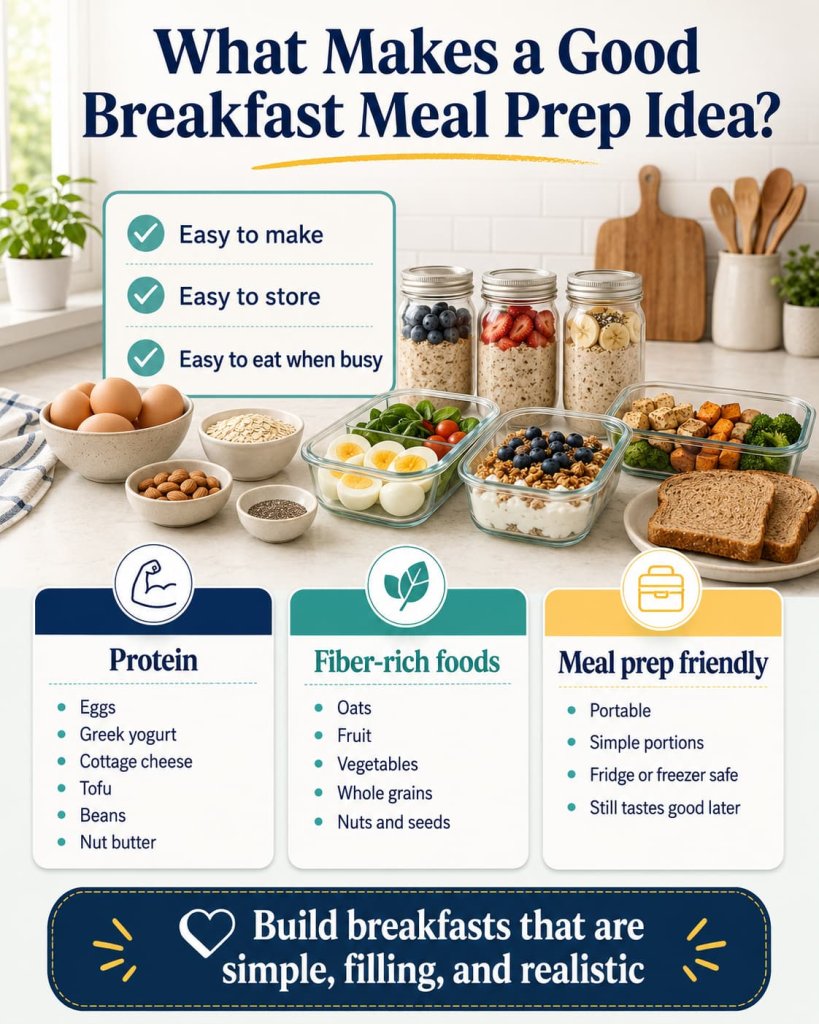
The Academy of Nutrition and Dietetics notes that a protein- and fiber-rich breakfast can help reduce mid-morning hunger and support better blood sugar balance. For practical meal prep, that means pairing foods like eggs, Greek yogurt, cottage cheese, tofu, beans, oats, whole-grain bread, fruit, vegetables, nuts, and seeds.
The American Heart Association also recommends simple grab-and-go options such as make-ahead muffins, oatmeal in a travel mug, homemade smoothies, hard-boiled eggs, whole-grain mini sandwiches, and yogurt parfait jars.
Simple Breakfast Meal Prep Formula
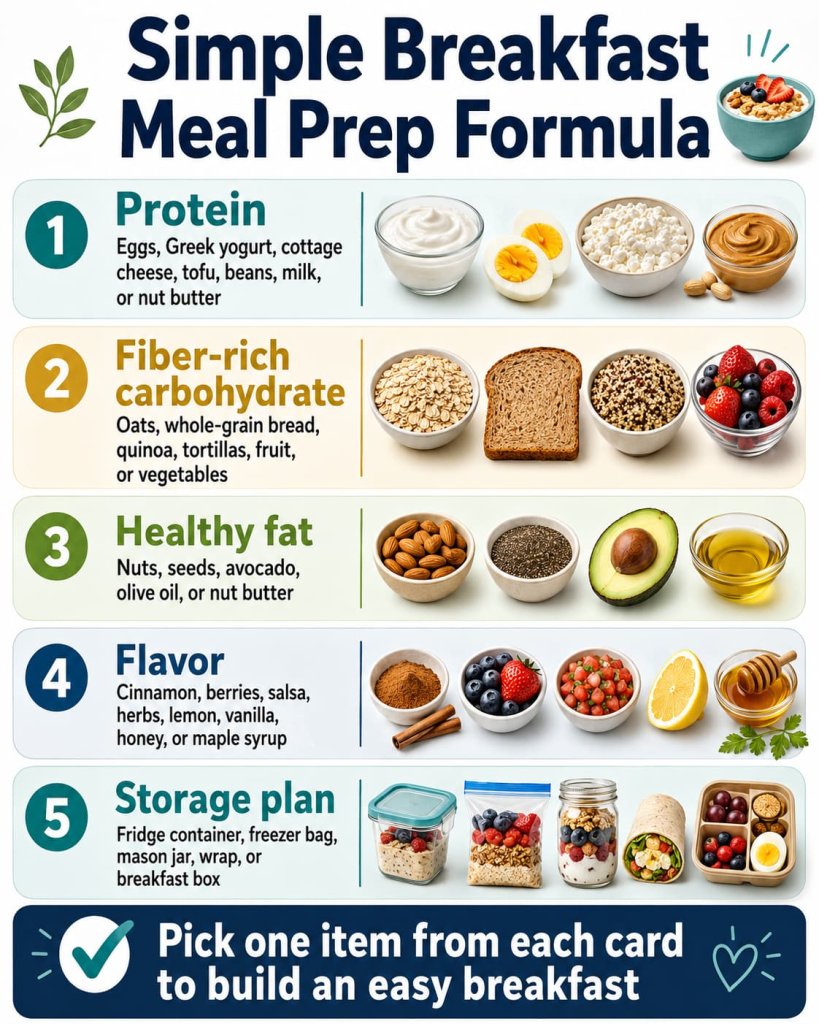
Use this easy formula when building your own breakfast:
- Protein: eggs, Greek yogurt, cottage cheese, tofu, beans, milk, or nut butter.
- Fiber-rich carbohydrate: oats, whole-grain bread, quinoa, whole-wheat tortillas, fruit, or vegetables.
- Healthy fat: nuts, seeds, avocado, olive oil, or nut butter.
- Flavor: cinnamon, berries, salsa, herbs, lemon, vanilla, or a small amount of honey or maple syrup.
- Storage plan: fridge container, freezer bag, mason jar, wrap, or bento-style box.
The FDA’s Nutrition Facts Label guidance says 5% Daily Value or less is considered low and 20% Daily Value or more is considered high. It recommends choosing more foods higher in dietary fiber and lower in saturated fat, sodium, and added sugars.
21 Breakfast Meal Prep Ideas for Grab and Go Mornings
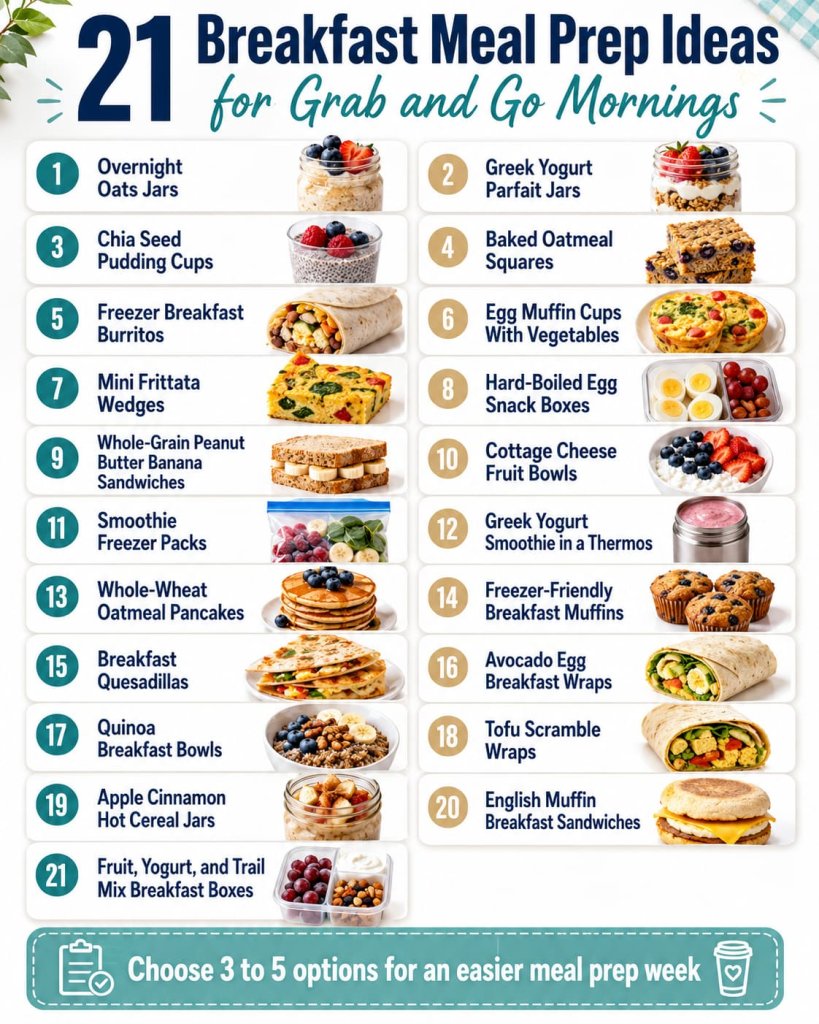
1. Overnight Oats Jars
Overnight oats are one of the easiest breakfast meal prep ideas because they require no cooking. Mix rolled oats with milk or yogurt, then add fruit, chia seeds, nuts, or cinnamon.
For a balanced jar, combine oats, Greek yogurt, milk, berries, and a spoonful of nut butter. Store in sealed jars and grab one in the morning. Add crunchy toppings right before eating if you want better texture.
2. Greek Yogurt Parfait Jars
Greek yogurt parfaits are quick, high-protein, and easy to customize. Layer plain Greek yogurt with berries, chopped fruit, oats, nuts, or seeds.
Keep granola in a separate small container so it does not get soggy. For a lower-added-sugar option, use plain yogurt and sweeten with fruit instead of flavored yogurt.
3. Chia Seed Pudding Cups
Chia pudding works well for no-cook meal prep. Mix chia seeds with milk, stir, wait a few minutes, stir again, and refrigerate overnight.
Add berries, sliced banana, cinnamon, cocoa powder, or a small amount of vanilla. Chia seeds thicken the mixture, making it easy to eat from a small jar or cup.
4. Baked Oatmeal Squares
Baked oatmeal is ideal when you want one big breakfast batch. Mix oats, milk, eggs or mashed banana, fruit, cinnamon, and nuts, then bake in a pan and cut into squares.
This is a good option for families because each person can grab one square and pair it with yogurt, milk, or a boiled egg for more protein.
5. Freezer Breakfast Burritos
Breakfast burritos are filling, portable, and freezer-friendly. Fill whole-wheat tortillas with scrambled eggs, black beans, sautéed vegetables, cheese, or lean protein.
Wrap each burrito tightly, freeze, and reheat when needed. If reheating leftovers or casseroles, the CDC recommends reaching 165°F.
6. Egg Muffin Cups With Vegetables
Egg muffin cups are mini baked omelets made in a muffin tin. Whisk eggs with spinach, peppers, onions, mushrooms, tomatoes, or a little cheese.
Bake until set, cool completely, and store in the fridge. They work well with fruit, whole-grain toast, or a small oatmeal cup.
7. Mini Frittata Wedges
A frittata is a larger baked egg dish that you can slice into wedges. Add vegetables, herbs, and a protein source such as beans, turkey, or cottage cheese.
This is a smart choice when you want a warm breakfast but do not want to cook every morning. Reheat only the portion you plan to eat.
8. Hard-Boiled Egg Snack Boxes
Hard-boiled eggs are simple and budget-friendly. Pair them with whole-grain crackers, fruit, sliced vegetables, cheese, or hummus.
FoodSafety.gov lists hard-cooked eggs as safe in the refrigerator for one week when stored properly. This makes them useful for weekly breakfast boxes.
9. Whole-Grain Peanut Butter Banana Sandwiches
This is one of the fastest grab-and-go breakfasts. Spread peanut butter or almond butter on whole-grain bread, add banana slices, and close it like a sandwich.
For meal prep, make the sandwiches the night before. To reduce sogginess, place nut butter on both bread slices and put banana in the middle.
10. Cottage Cheese Fruit Bowls
Cottage cheese pairs well with berries, pineapple, peaches, apples, cinnamon, nuts, or seeds. It is easy to portion into small containers.
For a savory version, add cherry tomatoes, cucumber, black pepper, and whole-grain toast on the side.
11. Smoothie Freezer Packs
Smoothie freezer packs save time because the chopping is already done. Add frozen fruit, spinach, avocado, or cauliflower rice to freezer bags.
In the morning, blend one pack with milk, yogurt, or a dairy-free alternative. For a more filling smoothie, add Greek yogurt, nut butter, oats, or chia seeds.
12. Greek Yogurt Smoothie in a Thermos
If you need breakfast in the car, at school, or at work, a chilled smoothie can be useful. Blend Greek yogurt, milk, berries, banana, and oats until smooth.
Pour it into an insulated bottle or thermos. Keep it cold and drink it within a safe time window, especially if it contains dairy.
13. Whole-Wheat Oatmeal Pancakes
Make a batch of pancakes using oats, whole-wheat flour, eggs, milk, and mashed banana. Cool them fully, then refrigerate or freeze in layers.
In the morning, reheat and top with fruit, yogurt, or a small amount of nut butter. This gives you a more balanced option than syrup-heavy pancakes.
14. Freezer-Friendly Breakfast Muffins
Breakfast muffins are easy to prep in bulk. Use whole-grain flour or oats, then add fruit, shredded zucchini, carrots, nuts, or seeds.
The American Heart Association suggests making muffins with ingredients such as fruits, vegetables, nuts, and whole-grain flour, then freezing them for grab-and-go mornings.
15. Breakfast Quesadillas
Breakfast quesadillas are simple and portable. Fill a whole-wheat tortilla with scrambled eggs, beans, vegetables, and a little cheese.
Cook until crisp, slice into triangles, and store in containers. Reheat in a skillet, toaster oven, or microwave.
16. Avocado Egg Breakfast Wraps
Avocado egg wraps are filling and easy to carry. Add scrambled egg, avocado, spinach, tomato, and salsa to a whole-wheat tortilla.
For best texture, add avocado the morning you eat it or use mashed avocado with lemon juice to slow browning.
17. Quinoa Breakfast Bowls
Quinoa bowls are a good change from oats. Cook quinoa ahead of time and portion it into containers with fruit, nuts, seeds, yogurt, or milk.
For a savory bowl, use quinoa with eggs, spinach, roasted vegetables, and a little cheese. Quinoa also works well for vegetarian breakfast meal prep.
18. Tofu Scramble Wraps
Tofu scramble wraps are a plant-based option. Crumble firm tofu and cook it with turmeric, garlic, black pepper, spinach, peppers, and onions.
Wrap it in a whole-grain tortilla with salsa or avocado. This is useful for people who want an egg-free breakfast.
19. Apple Cinnamon Hot Cereal Jars
Prepare cooked oats, barley, or another hot cereal in a large batch. Portion it into jars with chopped apples, cinnamon, walnuts, and milk.
Reheat one jar in the morning. Add extra milk after reheating if it becomes too thick.
20. English Muffin Breakfast Sandwiches
Use whole-grain English muffins with egg, cheese, spinach, tomato, or lean protein. Wrap each sandwich and refrigerate or freeze.
These work well for people who like a classic breakfast sandwich but want a homemade version with better ingredient control.
21. Fruit, Yogurt, and Trail Mix Breakfast Boxes
A breakfast box is perfect when you do not want to cook. Add plain yogurt, fresh fruit, nuts, seeds, and a small portion of whole-grain cereal or granola.
Keep dry ingredients separate until eating. This helps preserve crunch and makes the box feel fresher.
Best Ingredients for Breakfast Meal Prep
High-Protein Ingredients
Protein helps make breakfast more satisfying. Good meal prep options include eggs, Greek yogurt, cottage cheese, tofu, beans, milk, cheese, and nut butter.
You do not need to use all of them at once. Pick one main protein source and build the rest of the meal around it.
Fiber-Rich Ingredients
Fiber-rich ingredients make breakfast more filling and support a balanced eating pattern. The Academy of Nutrition and Dietetics says most adults should aim for about 14 grams of fiber per 1,000 calories, or roughly 25 grams daily for women and 38 grams daily for men, although individual needs vary.
Good breakfast-friendly fiber sources include oats, berries, apples, chia seeds, flaxseed, whole-grain bread, beans, quinoa, vegetables, nuts, and seeds.
Lower-Added-Sugar Choices
Many packaged breakfast foods can be high in added sugar. Use plain yogurt, unsweetened oats, whole fruit, cinnamon, vanilla, or nut butter for flavor.
If you use packaged foods, check the Nutrition Facts Label. The FDA lists the Daily Value for added sugars as 50 grams based on a 2,000-calorie diet, but many people benefit from choosing lower-added-sugar foods most of the time.
How to Store Breakfast Meal Prep Safely
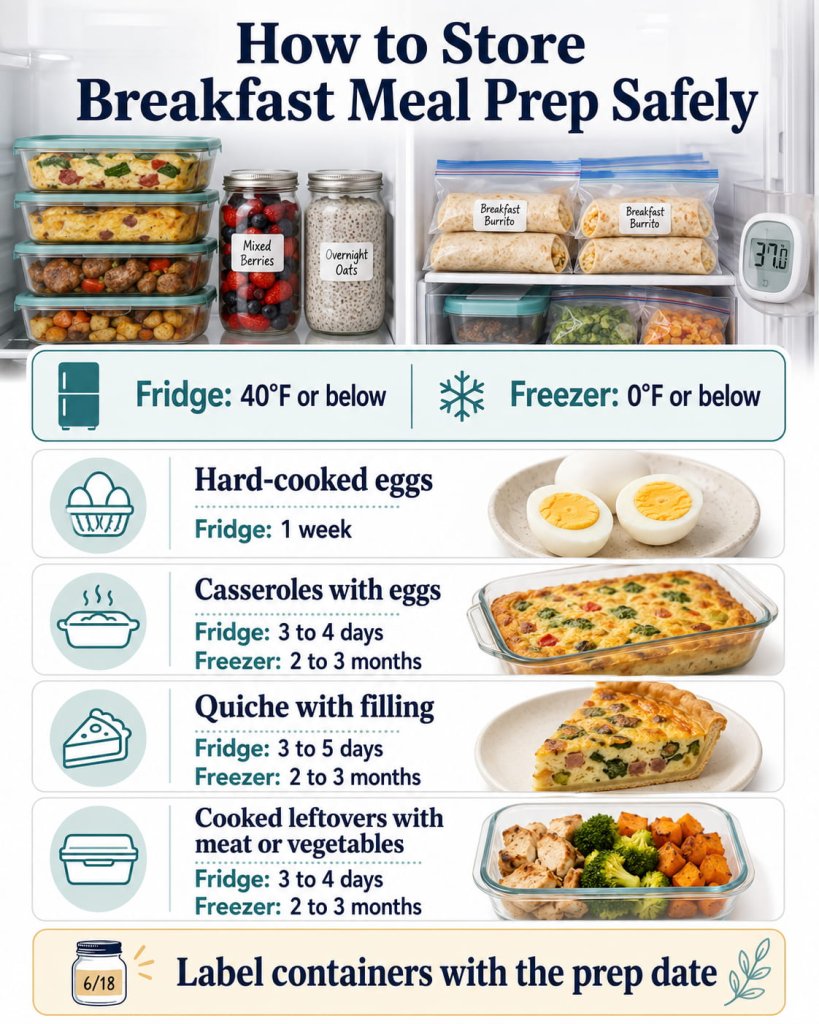
Food safety matters when you prepare breakfast ahead of time. The CDC recommends four basic steps: clean, separate, cook, and chill. It also advises keeping the refrigerator at 40°F or below and the freezer at 0°F or below.
FoodSafety.gov gives these helpful storage guidelines for common breakfast meal prep foods:
| Food | Refrigerator storage | Freezer storage |
|---|---|---|
| Hard-cooked eggs | 1 week | Do not freeze |
| Casseroles with eggs | 3 to 4 days after baking | 2 to 3 months after baking |
| Quiche with filling | 3 to 5 days after baking | 2 to 3 months after baking |
| Cooked leftovers with meat or vegetables | 3 to 4 days | 2 to 3 months |
FoodSafety.gov also notes that freezer times are for quality; food stored continuously at 0°F or below can remain safe indefinitely.
Meal Prep Safety Tips
- Cool cooked foods before storing them in sealed containers.
- Refrigerate perishable foods within 2 hours, or within 1 hour if they are exposed to temperatures above 90°F.
- Use shallow containers so food chills faster.
- Label containers with the prep date.
- Reheat leftovers and casseroles to 165°F.
- Do not thaw frozen breakfast burritos or sandwiches on the counter.
5-Day Breakfast Meal Prep Plan
Use this simple plan if you want breakfast ready for the workweek.
Sunday Prep
- Make one baked option, such as egg muffins or baked oatmeal.
- Prepare two no-cook options, such as overnight oats and yogurt parfaits.
- Boil several eggs for snack boxes.
- Wash and chop fruit.
- Pack dry toppings separately.
Monday
Overnight oats with berries and Greek yogurt.
Tuesday
Egg muffin cups with fruit and whole-grain toast.
Wednesday
Greek yogurt parfait with nuts and oats.
Thursday
Freezer breakfast burrito with salsa.
Friday
- Breakfast box with boiled eggs, fruit, vegetables, and whole-grain crackers.
- This plan gives you variety without requiring a different recipe every day.
Common Breakfast Meal Prep Mistakes to Avoid
Making Every Breakfast Too Sweet
Oats, muffins, smoothies, and yogurt bowls can become sugar-heavy if you add sweetened yogurt, syrup, sweet granola, juice, and dried fruit all at once. Use fruit, cinnamon, and plain dairy when possible.
Forgetting Protein
A breakfast made only from toast, cereal, or fruit may not keep you full for long. Add eggs, yogurt, cottage cheese, tofu, beans, milk, nuts, or seeds.
Prepping Too Many Days at Once
Not every breakfast tastes good after five days. Prep fresh foods for a few days and use the freezer for longer storage.
Storing Hot Food in Large Containers
Large containers cool slowly. Use shallow containers for cooked foods so they chill faster and store more safely.
Ignoring Texture
Keep crunchy foods separate. Add granola, nuts, seeds, and crackers right before eating.
Best Breakfast Meal Prep Ideas by Goal
Best High-Protein Breakfast Meal Prep Ideas
Egg muffin cups, Greek yogurt parfaits, cottage cheese bowls, tofu scramble wraps, freezer breakfast burritos, and breakfast sandwiches are strong options.
Best No-Cook Breakfast Meal Prep Ideas
Overnight oats, chia pudding, yogurt parfaits, cottage cheese fruit bowls, smoothie freezer packs, and breakfast boxes are the easiest no-cook choices.
Best Freezer-Friendly Breakfast Meal Prep Ideas
Breakfast burritos, oatmeal pancakes, muffins, English muffin sandwiches, and baked oatmeal squares freeze well when wrapped properly.
Best Vegetarian Breakfast Meal Prep Ideas
Try overnight oats, chia pudding, Greek yogurt jars, tofu scramble wraps, quinoa bowls, egg muffins, and peanut butter banana sandwiches.
Best Breakfast Meal Prep for Work or School
Choose foods that are easy to pack and not too messy. Good options include parfait jars, breakfast boxes, wraps, muffins, boiled eggs, sandwiches, and smoothies in an insulated bottle.
FAQs About Breakfast Meal Prep Ideas
What breakfasts are good for meal prep?
Good meal prep breakfasts include overnight oats, yogurt parfaits, chia pudding, egg muffins, breakfast burritos, baked oatmeal, hard-boiled eggs, smoothie packs, and breakfast sandwiches. Choose recipes that store well and are easy to portion.
How long does breakfast meal prep last in the fridge?
It depends on the food. FoodSafety.gov lists hard-cooked eggs for up to one week, casseroles with eggs for 3 to 4 days, and quiche for 3 to 5 days in the refrigerator. Always store perishable foods at 40°F or below.
Can you meal prep eggs for breakfast?
Yes. You can prepare hard-boiled eggs, egg muffins, frittatas, breakfast burritos, and breakfast sandwiches. Store them safely in the fridge and reheat cooked egg dishes until hot.
Are overnight oats good for breakfast meal prep?
Yes. Overnight oats are one of the easiest breakfast meal prep ideas because they are no-cook, portable, and easy to customize. Add Greek yogurt, chia seeds, berries, nuts, or nut butter for more protein, fiber, and flavor.
Can you freeze breakfast burritos?
Yes. Breakfast burritos are one of the best freezer-friendly breakfast options. Wrap them tightly, freeze them individually, and reheat until hot. If they contain cooked leftovers, reheating to 165°F is recommended.
What can I meal prep for breakfast without cooking?
No-cook breakfast ideas include overnight oats, chia pudding, yogurt parfait jars, cottage cheese fruit bowls, smoothie freezer packs, peanut butter banana sandwiches, and fruit-and-yogurt breakfast boxes.
How do I make breakfast meal prep healthier?
Start with simple whole foods. Add a protein source, choose a fiber-rich carbohydrate, include fruit or vegetables, and limit added sugars. The American Heart Association recommends fruits, vegetables, whole grains, healthy proteins, minimally processed foods, and less sugar and salt as part of an overall healthy eating pattern.
Conclusion
Breakfast meal prep makes busy mornings easier because your food is already planned, portioned, and ready to grab. Start with two or three simple ideas, such as overnight oats, egg muffins, yogurt parfaits, or freezer burritos. Once the habit feels easy, add more variety with smoothie packs, quinoa bowls, breakfast sandwiches, and no-cook breakfast boxes.
The goal is not perfection. The goal is to make breakfast simple, balanced, safe, and realistic for your schedule.
This content is for informational purposes only and not medical advice.
References
- Dietary Guidelines for Americans, 2025–2030
- American Heart Association: How to Make Breakfast a Healthy Habit
- Academy of Nutrition and Dietetics: Breakfast Key to Growing Healthy
- FDA: How to Understand and Use the Nutrition Facts Label
- FoodSafety.gov: Cold Food Storage Chart
- CDC: Preventing Food Poisoning