
Yes, foods high in iron for women can help support energy if low iron is part of the problem. Iron helps your body make hemoglobin, the protein in red blood cells that carries oxygen, and low iron can lead to tiredness, weakness, dizziness, and lower exercise tolerance. Women are more likely to fall short on iron during the reproductive years, pregnancy, and with heavy menstrual bleeding, so knowing which foods deliver the most iron is genuinely useful, according to the NIH Office of Dietary Supplements iron guide.
This matters because not all iron-rich foods work the same way. Meat and seafood provide heme iron, which is absorbed more easily. Beans, tofu, spinach, potatoes, and fortified cereals provide nonheme iron, which can still help a lot, especially when you pair it with vitamin C-rich foods like citrus, strawberries, tomatoes, broccoli, or sweet peppers.
Why women should pay attention to iron intake
Women have higher iron needs than men during the reproductive years. The NIH notes that many women do not get enough iron, and the risk becomes even more important during pregnancy and in people with heavy menstrual bleeding, frequent blood donation, or conditions that reduce absorption.
Low iron does not always cause symptoms right away, but when iron stores drop far enough, iron-deficiency anemia can develop. Common symptoms include fatigue, weakness, headaches, dizziness, trouble concentrating, shortness of breath with activity, pale skin, and sometimes unusual cravings like ice. That is why food matters, but it is also why ongoing symptoms should not be ignored.
How much iron do women need each day?
For most women, the daily target depends on age and life stage:
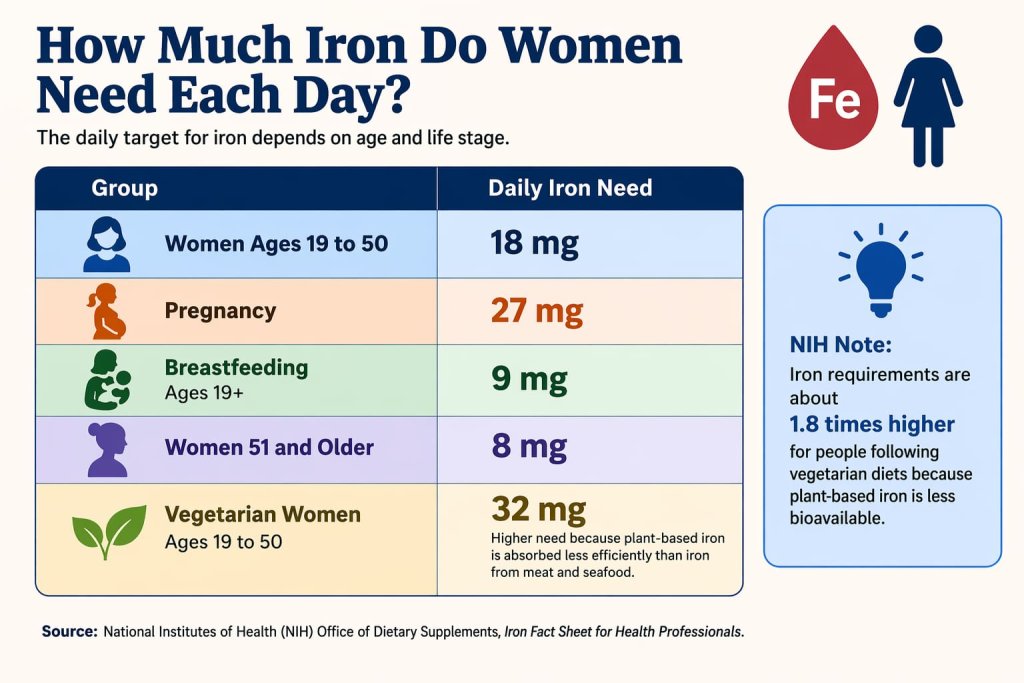
- Women ages 19 to 50: 18 mg
- Pregnancy: 27 mg
- Breastfeeding ages 19+: 9 mg
- Women 51 and older: 8 mg
- Vegetarian women ages 19 to 50: 32 mg, because nonheme iron from plant foods is absorbed less efficiently than iron from meat and seafood
The NIH also notes that iron requirements are about 1.8 times higher for people following vegetarian diets because plant-based iron is less bioavailable.
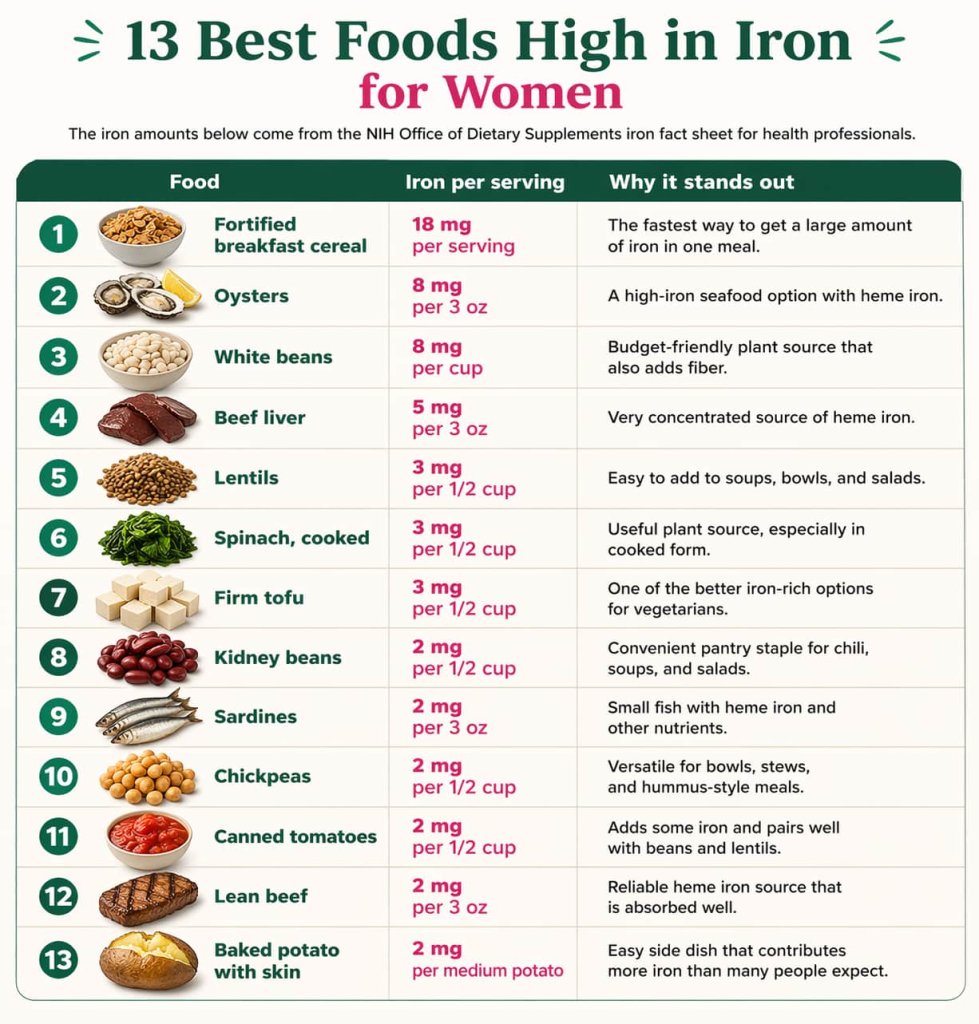
13 best foods high in iron for women
The iron amounts below come from the NIH Office of Dietary Supplements iron fact sheet for health professionals.
| Food | Iron per serving | Why it stands out |
|---|---|---|
| Fortified breakfast cereal | 18 mg per serving | The fastest way to get a large amount of iron in one meal |
| Oysters | 8 mg per 3 oz | A high-iron seafood option with heme iron |
| White beans | 8 mg per cup | Budget-friendly plant source that also adds fiber |
| Beef liver | 5 mg per 3 oz | Very concentrated source of heme iron |
| Lentils | 3 mg per 1/2 cup | Easy to add to soups, bowls, and salads |
| Spinach, cooked | 3 mg per 1/2 cup | Useful plant source, especially in cooked form |
| Firm tofu | 3 mg per 1/2 cup | One of the better iron-rich options for vegetarians |
| Kidney beans | 2 mg per 1/2 cup | Convenient pantry staple for chili, soups, and salads |
| Sardines | 2 mg per 3 oz | Small fish with heme iron and other nutrients |
| Chickpeas | 2 mg per 1/2 cup | Versatile for bowls, stews, and hummus-style meals |
| Canned tomatoes | 2 mg per 1/2 cup | Adds some iron and pairs well with beans and lentils |
| Lean beef | 2 mg per 3 oz | Reliable heme iron source that is absorbed well |
| Baked potato with skin | 2 mg per medium potato | Easy side dish that contributes more iron than many people expect |
One practical note: fortified cereal can be a very effective iron source, but the amount varies by brand and serving size. The FDA Nutrition Facts label guide shows the actual amount of iron in milligrams and the percent Daily Value, and the FDA considers 20% Daily Value or more high. Since the Daily Value for iron is 18 mg, checking the label is the easiest way to compare cereals and other fortified foods accurately.
A few quick takeaways help put this list into context. Fortified cereal gives the biggest iron number per serving, but oysters, beef liver, sardines, and lean beef provide heme iron, which your body generally absorbs more easily. Beans, lentils, tofu, chickpeas, spinach, tomatoes, and potatoes can still be excellent choices, especially when eaten with vitamin C-rich foods.
Beef liver is very high in iron, but it is not the best pick for everyone. Liver is also high in preformed vitamin A, and too much preformed vitamin A during pregnancy can harm fetal development. Women who are pregnant or trying to conceive should be cautious with liver. The NHS pregnancy vitamins guidance advises avoiding liver and liver products during pregnancy because they are high in vitamin A.
Spinach deserves a special note. It does contain iron, but the NIH points out that some plant foods, including spinach, have lower iron bioavailability because they also contain compounds that inhibit absorption. It is still worth eating, but it should not be your only strategy.
Which iron-rich foods are absorbed best?
Heme iron from meat and seafood is more bioavailable than nonheme iron from plant foods. The NIH estimates iron bioavailability at about 14% to 18% from mixed diets that include meat, seafood, and vitamin C, compared with 5% to 12% from vegetarian diets.
That does not mean women need red meat to get enough iron. It means plant-based eaters need to be more intentional. Fortified cereals, beans, lentils, tofu, chickpeas, spinach, canned tomatoes, and potatoes can absolutely help, but meals need to be built in a smarter way.
How to absorb more iron from food
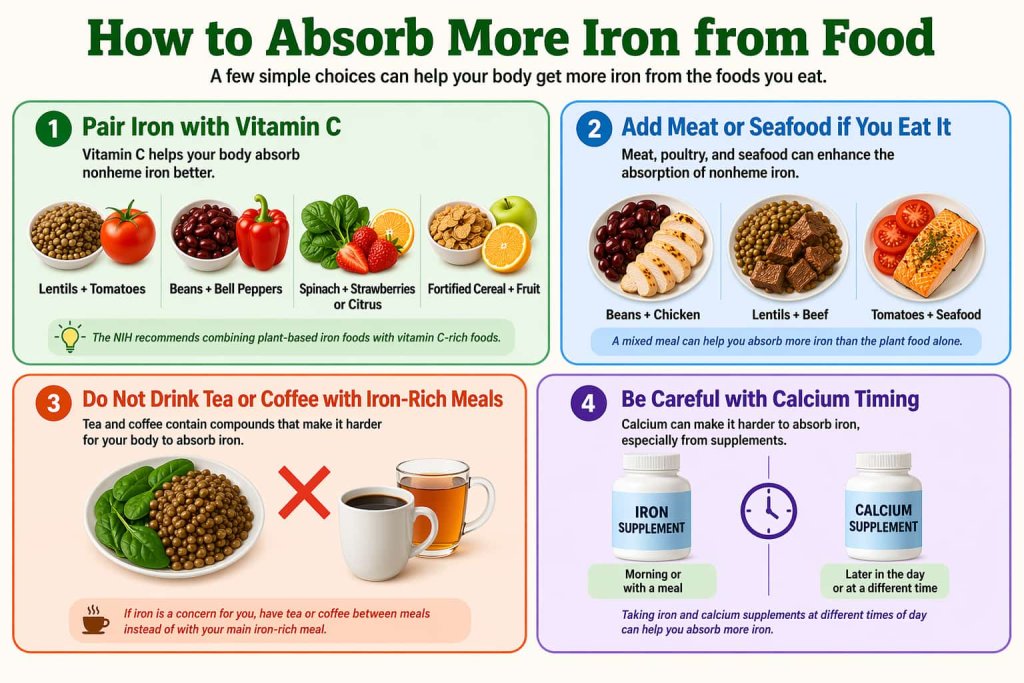
Pair iron with vitamin C
Vitamin C helps your body absorb nonheme iron better. Good pairings include lentils with tomatoes, beans with bell peppers, spinach with strawberries or citrus, and fortified cereal with fruit on the side. The NIH recommends combining plant-based iron foods with vitamin C-rich foods.
Add meat or seafood if you eat it
The NIH notes that meat, poultry, and seafood can enhance the absorption of nonheme iron. So a mixed meal like beans with chicken, lentils with beef, or tomatoes with seafood can help you absorb more iron than the plant food alone.
Do not drink tea or coffee with iron-rich meals
The Office on Women’s Health iron-deficiency anemia guide advises avoiding coffee or tea with meals because these drinks make it harder for your body to absorb iron. If iron is a concern for you, have them between meals instead of with your main iron-rich meal.
Be careful with calcium timing
Calcium can make it harder to absorb iron, especially from supplements. If you take separate calcium and iron supplements, it often makes sense to take them at different times of day.
Simple meal ideas using foods high in iron for women
A practical iron-focused day does not have to be complicated:
- Breakfast: fortified cereal with strawberries or orange slices
- Lunch: lentil soup with tomatoes and a side of broccoli
- Snack: hummus or roasted chickpeas with sweet peppers
- Dinner: lean beef with baked potato and vegetables, or tofu with beans and tomatoes over rice
These combinations work because they bring together iron-rich foods and vitamin C-rich foods, while keeping room to limit coffee or tea right with the meal.
Who may need to pay closer attention to iron?
Women at higher risk of low iron include those who:
- have heavy periods
- are pregnant
- follow a vegetarian or vegan diet
- donate blood often
- have Crohn’s disease, celiac disease, other GI disorders, or a history of poor absorption
- have ongoing fatigue or symptoms that suggest anemia
If heavy periods may be part of the picture, it helps to know what “heavy” can look like. The Office on Women’s Health says menstrual bleeding may be considered heavy if you soak through a pad or tampon every hour or two, bleed for more than 7 days, or pass clots larger than a quarter. Because heavy bleeding is a common cause of iron-deficiency anemia in women of childbearing age, these symptoms are a good reason to bring up iron testing with a clinician.
If you are pregnant, iron needs rise to 27 mg per day, and low iron in pregnancy is linked with a higher risk of anemia and poor pregnancy outcomes. That makes it especially important to follow prenatal care advice and discuss any symptoms with your clinician.
Safety box
Before taking an iron supplement, talk with a clinician. The Office on Women’s Health says not to start iron pills without talking to a doctor or nurse first. High-dose iron supplements can cause nausea, constipation, diarrhea, and stomach upset. For healthy adults, the tolerable upper limit is 45 mg per day from food and supplements combined unless a clinician prescribes more. People with hereditary hemochromatosis are at risk of iron overload, and iron supplements can also interact with medicines such as levothyroxine and levodopa. Proton pump inhibitors may reduce iron absorption as well.
When food may not be enough
Food is the first place to start, but it is not always enough on its own. If you have heavy periods, blood in your stool, digestive problems, pregnancy, or persistent symptoms such as fatigue, weakness, shortness of breath, or dizziness, it is worth asking a clinician about testing.
This matters because tiredness is common, and not every case is caused by low iron. Treatment depends on the cause. Some women need better food choices, some need help with heavy bleeding, and some need medical treatment for an underlying digestive or absorption problem.
Frequently asked questions
What food has the most iron for women?
Among common foods on the NIH list, fortified breakfast cereal is the highest, with 18 mg per serving. But the best choice also depends on absorption. Oysters, beef liver, sardines, and lean beef provide heme iron, which is absorbed more easily than iron from plant foods.
Can women get enough iron without eating red meat?
Yes. Women can build an iron-rich diet around fortified cereal, white beans, lentils, tofu, chickpeas, spinach, tomatoes, and potatoes. Plant-based eaters just need to be more deliberate about total intake and meal pairing, and vegetarian women ages 19 to 50 may need about 32 mg per day from food.
Should I take iron supplements for low energy?
Not automatically. Fatigue can have many causes, and the Office on Women’s Health advises not to start iron pills without talking to a doctor or nurse first. Supplements may be appropriate in some cases, but the right step depends on whether iron deficiency is actually present and what is causing it.
What blocks iron absorption?
Coffee and tea with meals can reduce iron absorption. Calcium may also interfere, and the NIH notes that phytates and certain polyphenols can reduce nonheme iron absorption. That is why timing and food pairing matter.
Final thoughts
The best foods high in iron for women are the ones you will actually eat regularly and combine well. Fortified cereal, oysters, white beans, lentils, tofu, lean beef, sardines, chickpeas, spinach, tomatoes, kidney beans, beef liver, and baked potatoes can all help move your diet in the right direction.
Pair plant-based iron with vitamin C, be smart about coffee, tea, and calcium timing, and get checked if symptoms or heavy bleeding are part of the picture. If you want better energy and stronger day-to-day nutrition, start with one or two iron-rich meals this week, then build from there. When symptoms persist, ask your clinician whether iron testing makes sense for you.
References
- National Institutes of Health Office of Dietary Supplements — Iron Fact Sheet for Consumers
- National Institutes of Health Office of Dietary Supplements — Iron Fact Sheet for Health Professionals
- Office on Women’s Health — Iron-deficiency anemia
- U.S. Food and Drug Administration — How to Understand and Use the Nutrition Facts Label
- NHS — Vitamins and supplements in pregnancy