
Gut healthy foods are usually fiber-rich plant foods and some fermented foods. For most people, the best choices are foods that help support regular bowel movements, stool quality, and overall digestive comfort rather than foods that promise to “fix” the gut. According to NIDDK, foods rich in soluble and insoluble fiber can support digestion, and adults generally need about 22 to 34 grams of fiber per day.
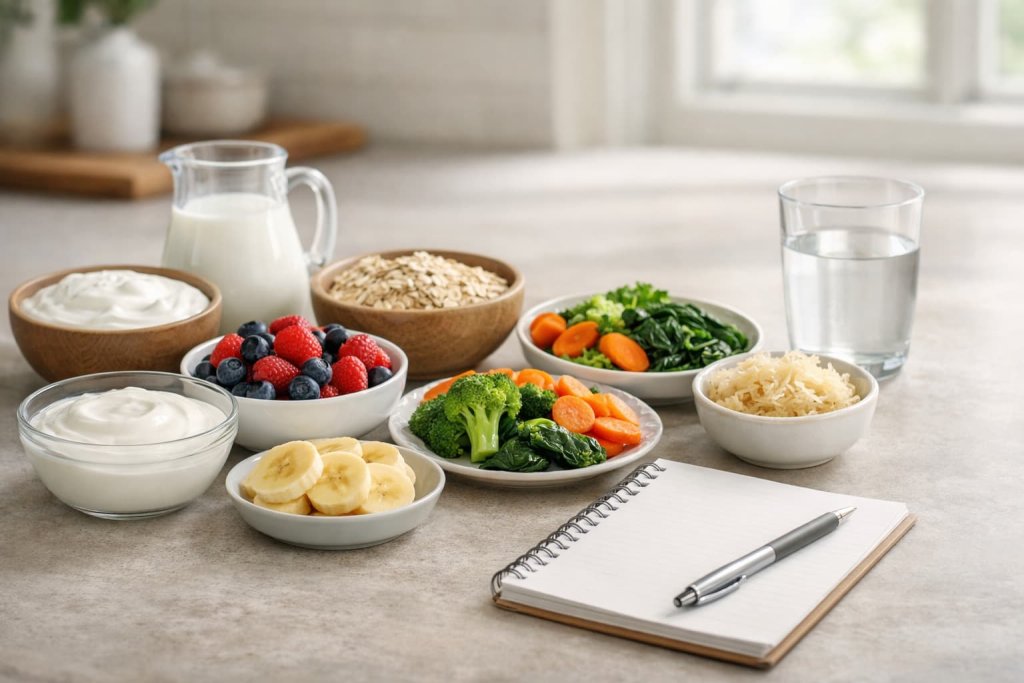
Understanding which gut healthy foods to eat matters because “healthy” foods do not work the same way for everyone. Some foods may help one person feel more regular, while the same foods may trigger bloating, gas, or discomfort in someone with IBS or a sensitive stomach. The safest approach is to build meals around a variety of fiber-rich foods, add new foods gradually, and pay attention to your own symptoms.
What makes a food good for gut health
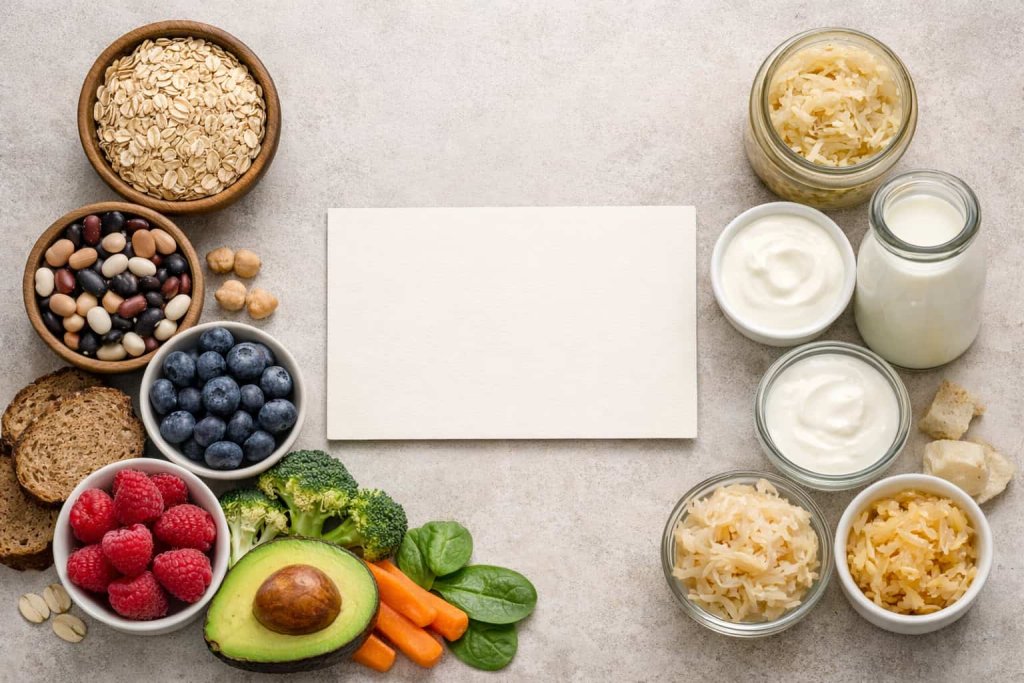
Most gut healthy foods fit into one of two groups.
The first group is fiber-rich foods. Fiber helps add bulk to stool, soften stool, and support more regular bowel movements. NIDDK lists whole grains, legumes, fruits, vegetables, and nuts among the main sources of fiber. Drinking enough fluid also helps fiber work better.
The second group is fermented foods. Some fermented foods contain live microorganisms with probiotic potential, but the effects vary by product and by person. A review in PMC notes that many fermented foods may interact with the gut microbiome, but the evidence is still developing and should not be overstated.
It also helps to know the term prebiotic foods. These are foods that contain types of fiber that help feed beneficial bacteria already living in the gut. In practice, many everyday gut healthy foods are naturally prebiotic foods too, including oats, beans, lentils, fruits, vegetables, and whole grains. This is one reason a varied, fiber-rich eating pattern is usually more helpful than relying on one probiotic product or one fermented food.
9 Gut Healthy Foods
These gut healthy foods can help support digestion, regular bowel movements, and overall gut comfort. The best choices usually include a mix of fiber-rich plant foods and fermented foods, with room to adjust based on your own tolerance.
1. Yogurt with live cultures
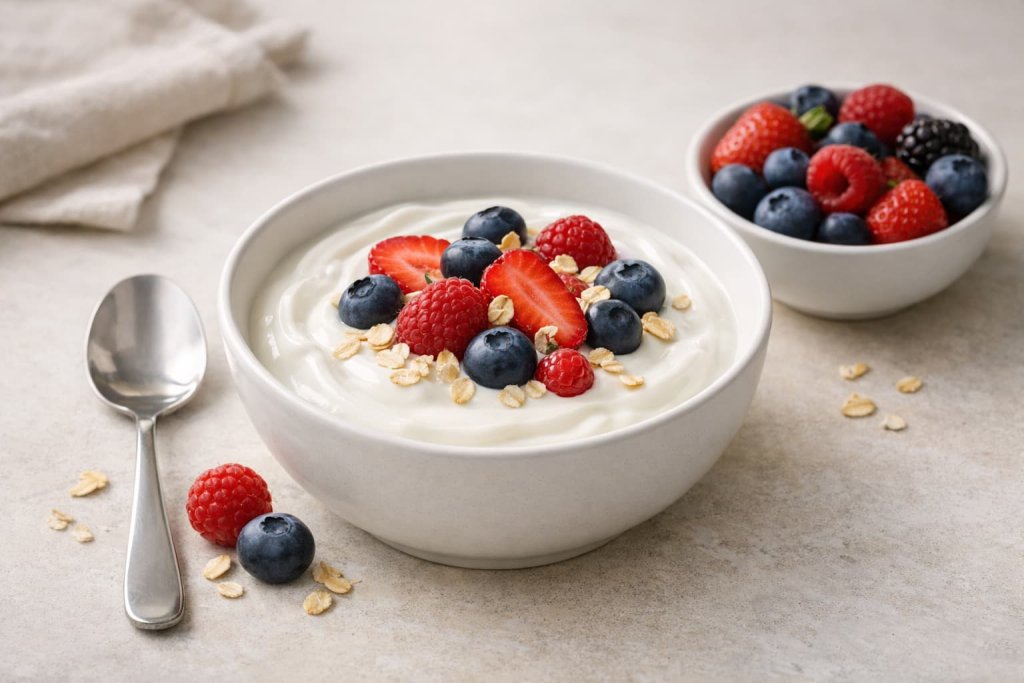
Plain yogurt with live cultures is one of the easiest gut healthy foods to include regularly. It can provide protein, calcium, and live bacteria from fermentation. A review in PMC describes yogurt and fermented milks as nutrition-dense foods made with viable bacteria and notes their potential to support gut health.
Why it may help:
- It is easy to eat consistently
- It combines protein with fermented dairy cultures
- Plain versions are usually lower in added sugar than flavored versions
What to watch:
- Sweetened yogurts can add a lot of sugar
- Some people with lactose intolerance tolerate yogurt better than milk, but not everyone does
- If dairy bothers your stomach, choose another food on this list
A smart pick is plain yogurt with fruit, oats, or seeds instead of dessert-style yogurt with lots of added sugar.
2. Kefir
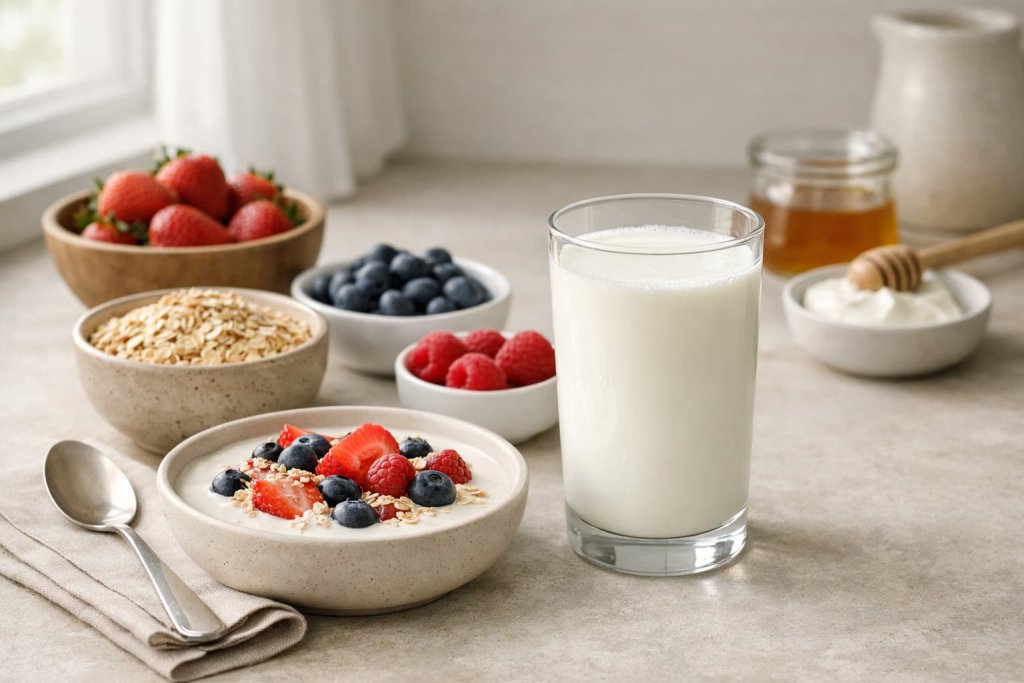
Kefir is a fermented milk drink that fits well into a gut-friendly eating pattern. Like yogurt, it is a fermented dairy food that can contain live cultures. Reviews of fermented foods and fermented milks suggest kefir may be a practical food-based way to add beneficial microbes, though the exact benefits depend on the product and the individual.
Why it may help:
- It is a fermented food that is easy to drink
- It can be used in smoothies or with breakfast
- Some people find it easier to digest than regular milk
What to watch:
- Flavored kefir can be high in added sugar
- It may still bother people who do not tolerate dairy well
- Homemade or unpasteurized versions carry more food-safety risk
Choose pasteurized products and check the label for added sugar.
3. Oats
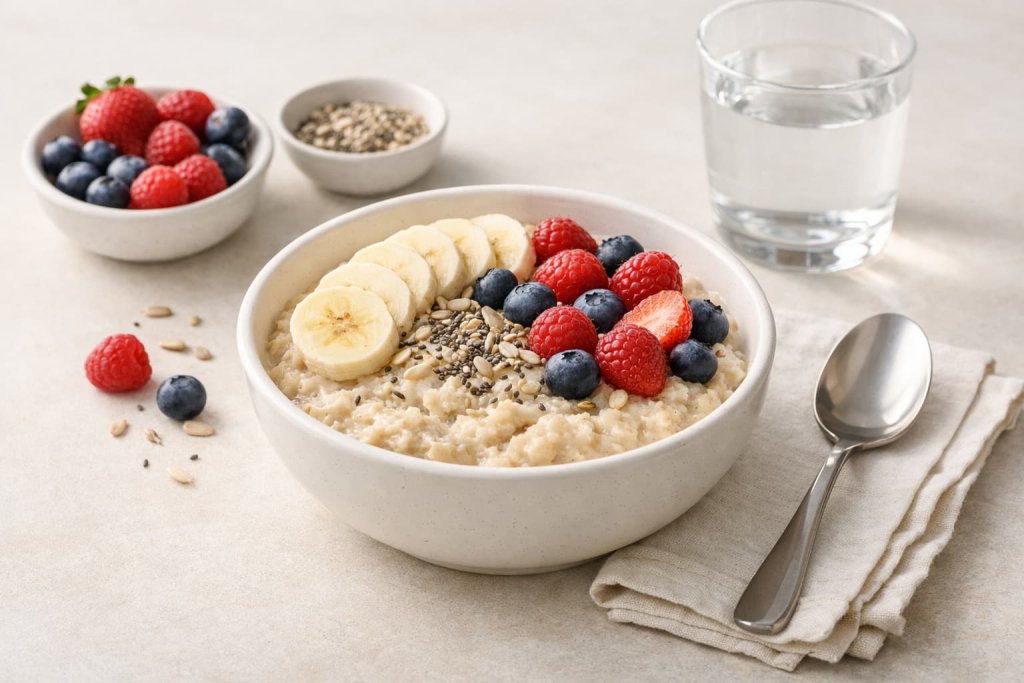
Oats are one of the most practical gut healthy foods because they provide soluble fiber and are often well tolerated. NIDDK lists oat products as a source of soluble fiber, and the NHS specifically suggests eating oats regularly for IBS symptoms.
Why it may help:
- Soluble fiber may help soften stool
- Oats are easy to add at breakfast or in snacks
- They are often gentler than some other high-fiber foods
What to watch:
- Instant flavored oatmeal can be high in sugar
- Very large portions may still cause bloating in sensitive people
A simple bowl of oatmeal with yogurt and berries is an easy gut-supportive meal.
4. Beans, lentils, and chickpeas
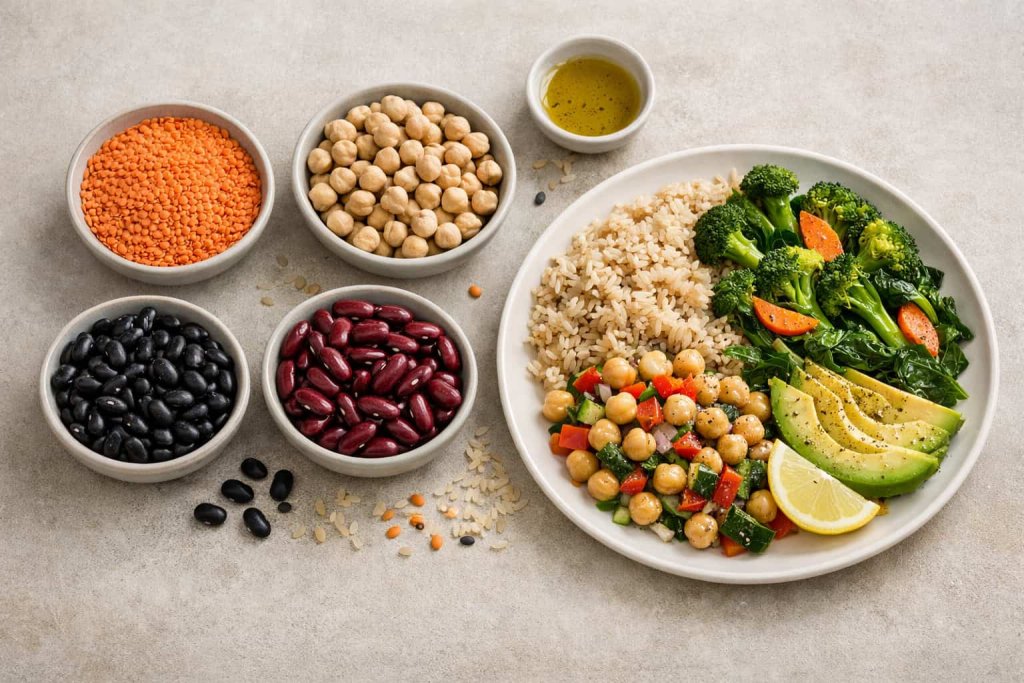
Legumes are some of the best foods for gut health because they bring fiber and plant nutrients in one package. NIDDK lists lentils, black beans, kidney beans, soybeans, and chickpeas as good fiber sources, and its IBS guidance lists beans among the main sources of soluble fiber.
Why they may help:
- They support overall fiber intake
- They are filling and affordable
- They work in soups, salads, bowls, and side dishes
What to watch:
- Beans can trigger gas and bloating
- The NHS notes that beans may be hard to digest for some people with IBS
- Large portions too soon may be uncomfortable if your diet is low in fiber now
A good strategy is to start with small portions and increase slowly.
5. Whole grains
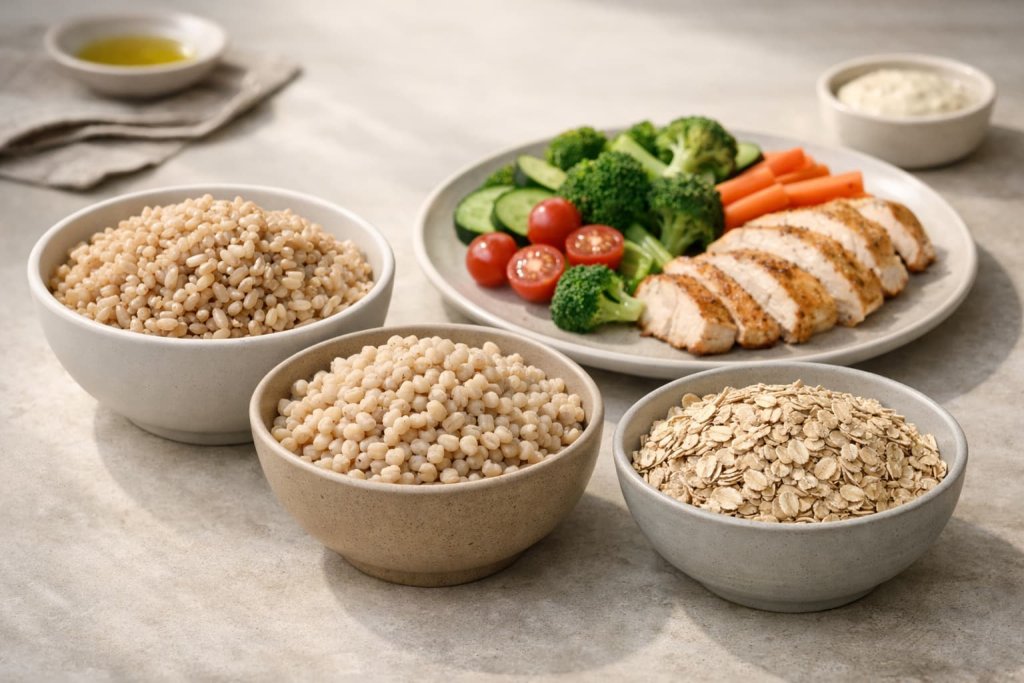
Whole grains such as barley, brown rice, and whole wheat foods can help support digestive regularity because they add fiber. NIDDK lists whole grains among major fiber sources, and its IBS guidance lists whole-grain products as a source of insoluble fiber.
Why they may help:
- They add bulk to the diet
- They can support regular bowel movements
- They are easy to swap in for refined grains
What to watch:
- Some people with IBS do not tolerate certain whole grains well
- The NHS notes that high-fiber foods like wholegrain foods may worsen diarrhea for some people with IBS
Try one change at a time, such as swapping white rice for brown rice or adding barley to soup.
6. Berries, apples, and bananas
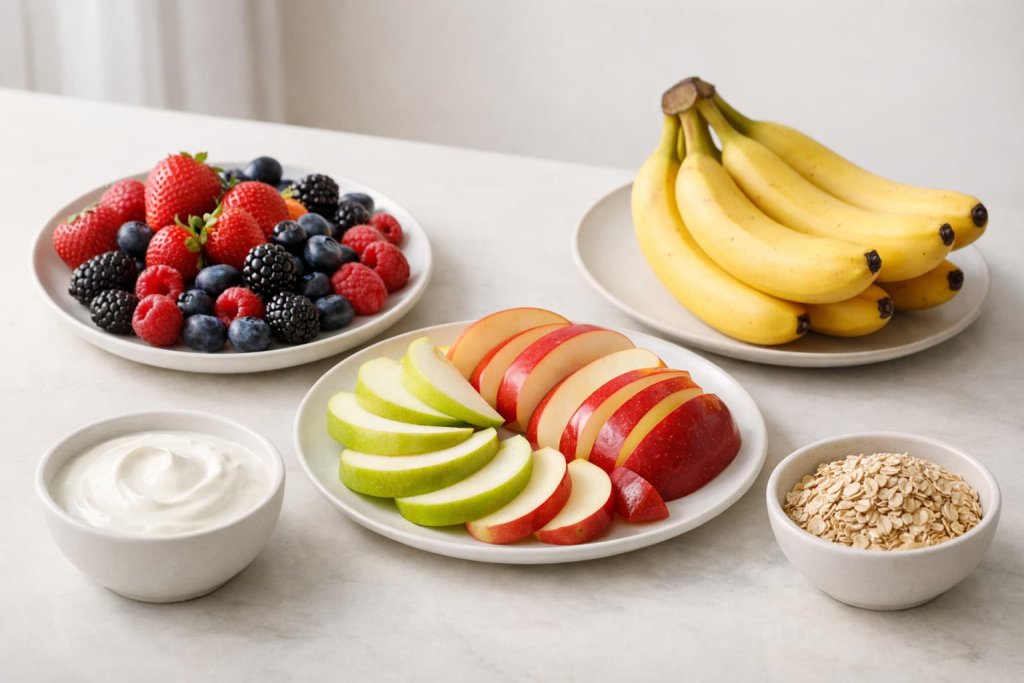
Fruit can be very helpful for gut health because it adds fiber, water, and variety. NIDDK includes berries, apples with skin, oranges, and pears among good fiber sources.
Why they may help:
- They can help raise fiber intake without much effort
- They work as snacks, toppings, or smoothie ingredients
- They add variety, which may support a more diverse diet pattern
What to watch:
- Too much fruit at once may cause bloating for some people
- The NHS advises people with IBS not to eat more than three portions of fresh fruit a day
Bananas, berries, and apples are easy starting points, but tolerance differs from person to person.
7. Vegetables
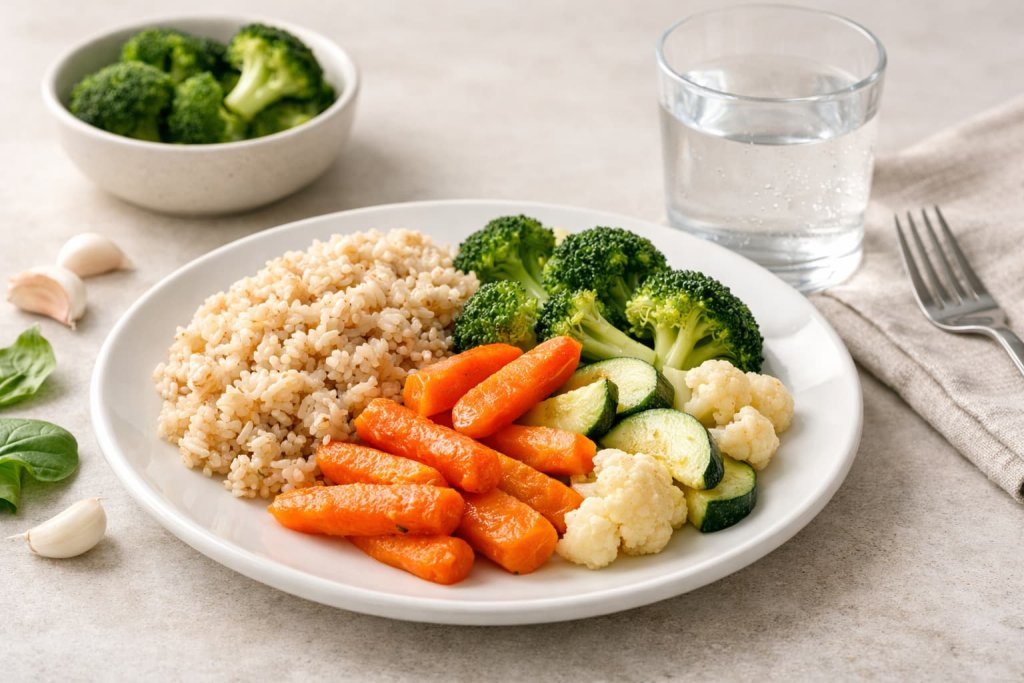
Vegetables are another core group of gut healthy foods because they provide fiber and support overall diet quality. NIDDK lists vegetables such as carrots, broccoli, green peas, and collard greens as good fiber sources.
Why they may help:
- They increase total daily fiber intake
- They support balanced meals
- Cooked vegetables may be easier to tolerate than raw vegetables for some people
What to watch:
- Some vegetables can cause gas and bloating
- The NHS says foods like cabbage, broccoli, cauliflower, beans, and onions may be hard to digest for some people with IBS
If your gut is sensitive, start with cooked carrots, peeled potatoes, or other milder options.
8. Fermented vegetables such as sauerkraut or kimchi
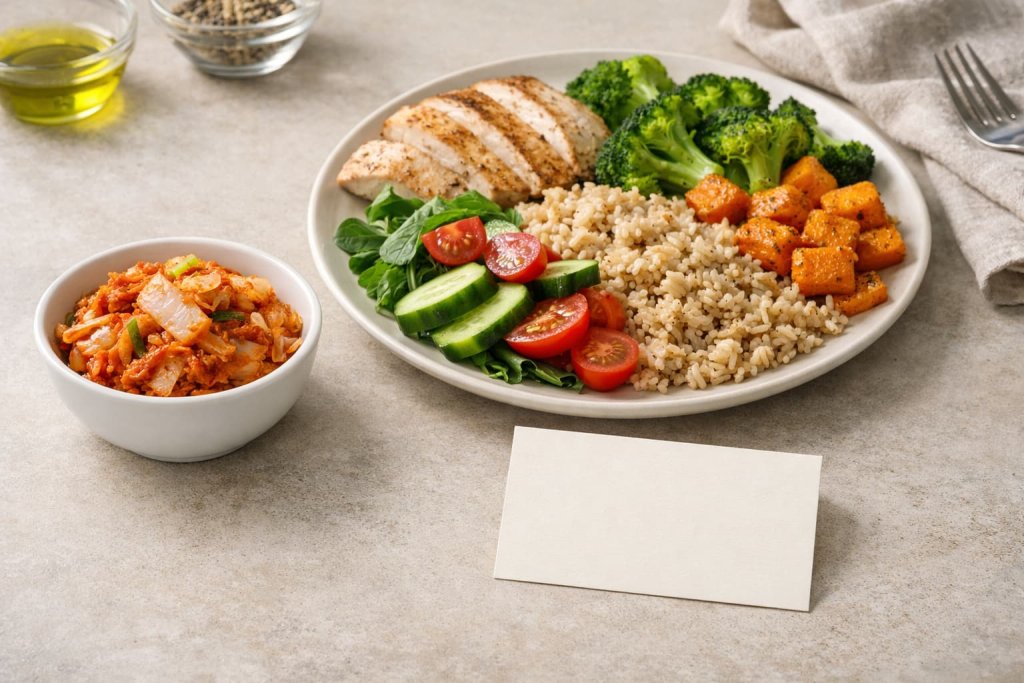
Fermented vegetables are popular gut healthy foods because they may contain live microbes and they add flavor without much prep. The PMC review on fermented foods notes that many fermented foods contain bacteria with probiotic potential, but it also makes clear that research is still evolving.
Why they may help:
- They add variety to meals
- Small portions can be easy to include
- They may provide live microbes, depending on the product
What to watch:
- Many products are high in sodium
- Spicy versions may irritate some people
- Not all fermented vegetables contain meaningful live cultures after processing
Use small portions and check the label, especially if you are watching sodium.
9. Flaxseed and chia seeds
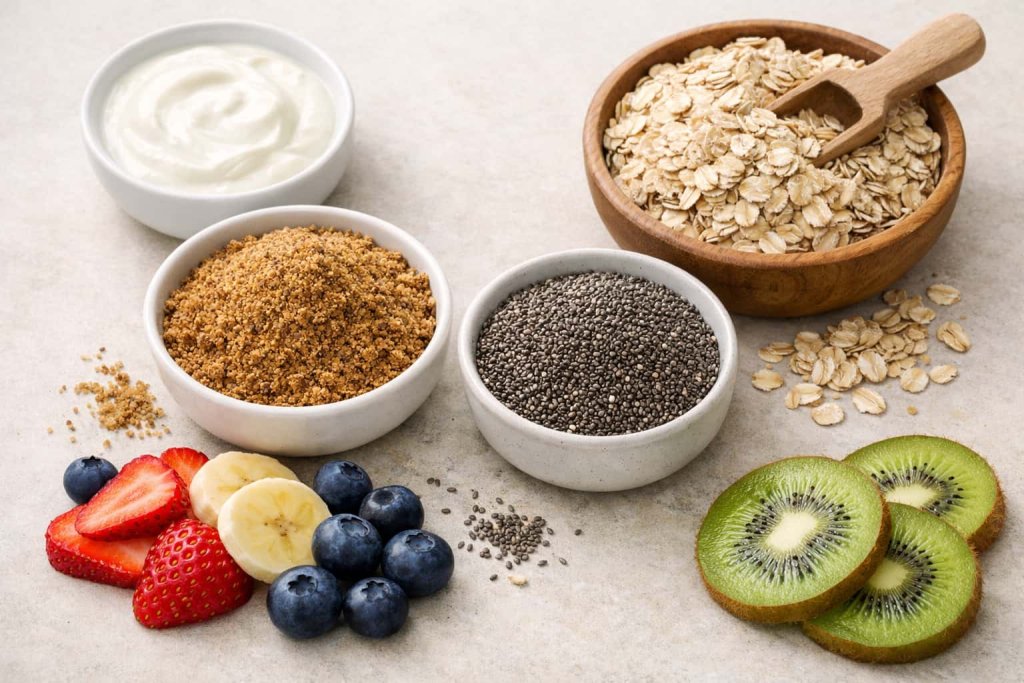
Seeds can help gut health because they add fiber and are easy to use in small amounts. The NHS specifically suggests up to 1 tablespoon of linseeds a day for IBS symptoms and also lists linseeds among foods that may help constipation.
Why they may help:
- They are easy to stir into oatmeal or yogurt
- They support fiber intake without changing meals much
- Small amounts often go a long way
What to watch:
- Too much too fast may cause bloating
- They work best when you also drink enough fluids
Ground flaxseed is often the easiest starting point.
Are gut healthy foods always good for everyone
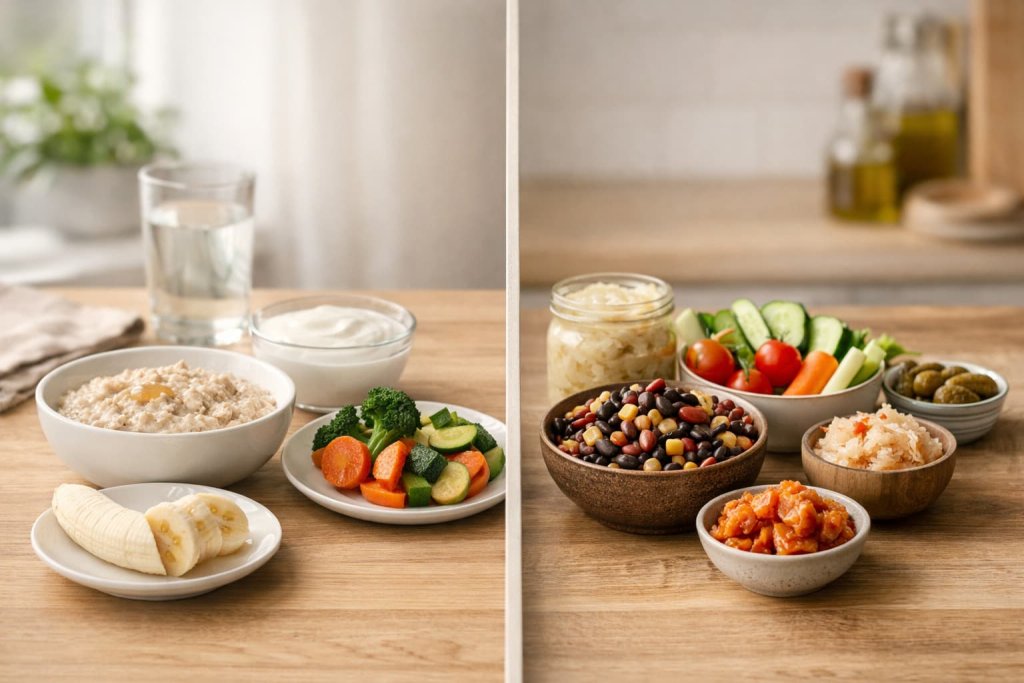
No. This is one of the most important points to understand.
A food can be healthy in general and still be a poor fit for your symptoms. NIDDK says different changes may help different people with IBS, and some people may need to try changes for several weeks to see whether symptoms improve. The same guidance also notes that soluble fiber may be more helpful than insoluble fiber for IBS symptoms.
That means:
- constipation and diarrhea may respond differently to the same food
- raw vegetables may bother one person but cooked vegetables may be fine
- beans may help one person’s fiber intake and trigger another person’s bloating
The best gut-friendly diet is usually the one you can tolerate consistently.
Risks and downsides to know
Adding fiber too quickly
This is the most common mistake. NIDDK advises adding fiber a little at a time, and its IBS guidance says too much fiber at once can cause gas and bloating.
Not drinking enough fluid
Fiber works better when fluid intake is adequate. NIDDK says water and other liquids can help the fiber work better and make stools softer and easier to pass.
Choosing foods with lots of added sugar
Flavored yogurt, sweetened kefir drinks, and heavily sweetened smoothies may sound gut-friendly but can add more sugar than you expect. Food quality still matters.
Sodium in fermented foods
Kimchi, sauerkraut, and other fermented vegetables can be high in sodium. This matters even more if you already eat a lot of packaged or restaurant food.
Food safety with raw or unpasteurized products
Unpasteurized dairy is not a safer gut-health shortcut. The FDA warns that raw milk can carry harmful germs such as Salmonella, E. coli, Listeria, and Campylobacter, with higher risk for pregnant people, children, older adults, and people with weakened immune systems.
Raw sprouts also deserve caution. The CDC warns that raw or undercooked sprouts can raise the risk of food poisoning because the warm, humid conditions used to grow them are also ideal for germs to multiply.
Who should be careful with gut healthy foods
You may need a more personalized plan if you:
- have IBS
- have frequent bloating, diarrhea, or constipation
- are pregnant
- have a weakened immune system
- are trying to manage sodium intake
- do not tolerate dairy well
If many foods seem to trigger symptoms, it is worth speaking with a doctor or dietitian rather than cutting out large groups of foods on your own. NIDDK notes that some people may benefit from guidance from a dietitian.
What to eat for gut health in a normal day
A simple day of gut healthy foods could look like this:
Breakfast: oatmeal topped with plain yogurt, berries, and ground flaxseed
Lunch: brown rice bowl with lentils or chickpeas and cooked vegetables
Snack: banana with plain yogurt or a small kefir drink
Dinner: grilled fish, barley or brown rice, and cooked vegetables with a small side of sauerkraut if tolerated
This kind of pattern helps you get fiber from several sources instead of relying on one “superfood.”
What to limit if you want better gut health
Gut health is not only about adding the right foods. It can also help to cut back on foods that make digestion harder for you personally.
Common foods to watch include:
- heavily processed foods that are low in fiber
- large amounts of sugary foods or drinks
- very large, high-fat meals if they worsen digestive symptoms
- high-sodium fermented foods in oversized portions
- foods that you already know trigger bloating, pain, diarrhea, or constipation
This does not mean you need a perfect diet. It means your overall pattern should include more fiber-rich, minimally processed foods and fewer foods that leave you feeling worse.
How to add gut healthy foods without upsetting your stomach
Start small. This matters more than chasing the perfect list.
Helpful ways to begin:
- add one new high-fiber food at a time
- increase portions slowly over several days
- drink enough water
- choose cooked vegetables before large raw salads if your stomach is sensitive
- use small servings of beans or fermented foods first
- keep a short food and symptom note if you have IBS-type symptoms
This gradual approach matches NIDDK and NHS guidance on fiber, fluids, and symptom awareness.
How to tell if gut healthy foods are helping
You do not need a perfect stomach to know your eating pattern is moving in the right direction. Helpful signs may include:
- more regular bowel movements
- stool that is easier to pass
- less straining
- less bloating after meals
- better overall digestive comfort
Changes are often gradual, not dramatic. If a food seems healthy but consistently causes pain, diarrhea, severe bloating, or ongoing discomfort, it may not be the right fit for you right now.
FAQ
What are the best gut healthy foods to start with
Good starter foods are oats, plain yogurt, berries, bananas, and small amounts of flaxseed. These are usually easy to include and often gentler than very large servings of beans or raw vegetables.
Are fermented foods better than fiber for gut health
Not usually. Fiber-rich foods have stronger, more consistent support for bowel regularity and digestive health. Fermented foods can be useful too, but they should complement a fiber-rich diet, not replace it.
What if healthy foods make me bloated
That can happen, especially if you increase fiber too fast or have IBS. Reduce the portion, choose cooked versions, and add foods more gradually. The NHS notes that some foods, including beans, onions, broccoli, and cabbage, may trigger bloating in some people with IBS.
Is yogurt or kefir better for gut health
Both can fit into a gut-friendly diet. The better choice is the one you tolerate well and can eat regularly, preferably in a plain or lower-sugar form.
Are all fermented foods probiotic foods
Not always. Some fermented foods may contain live microbes, but not every product will provide the same probiotic effect after processing or storage.
How long does it take gut healthy foods to help
It depends on the person, the food, and the symptom. NIDDK notes that dietary changes for IBS may need several weeks before you know whether they help.
Should I eat raw sprouts for gut health
They are not a good choice for everyone. CDC warns that raw or undercooked sprouts can raise the risk of food poisoning, especially for pregnant people, young children, older adults, and people with weakened immune systems.
Conclusion
The best gut healthy foods are not trendy or extreme. They are usually simple foods you can eat often: oats, beans, fruit, vegetables, yogurt, kefir, and small amounts of fermented foods or seeds if they agree with you. Focus on variety, increase fiber slowly, drink enough fluids, and let your own symptoms guide your choices.
Start with one or two foods from this list this week and build from there.