
Plain oatmeal is moderately low in calories for a filling whole-grain food, with the exact number depending on whether you measure it dry or cooked. According to USDA FoodData Central, dry oats are much more calorie-dense than cooked oatmeal because cooking adds water and increases volume without adding calories.
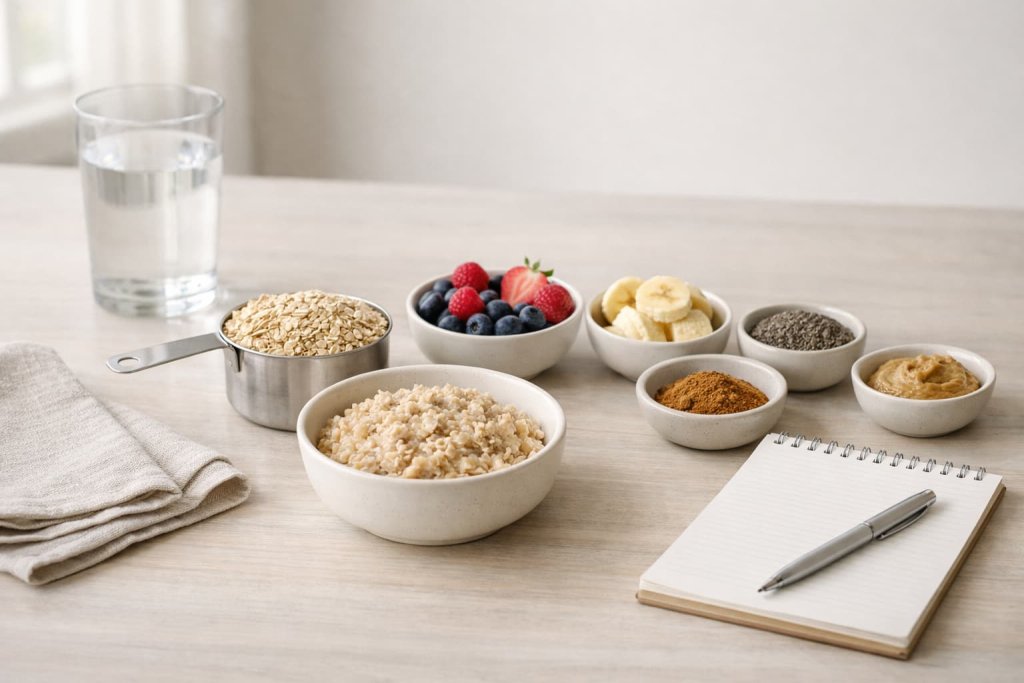
That distinction matters. Many people search for “how many calories in oatmeal” when they really want to know how oatmeal fits into breakfast, weight management, and overall nutrition. The good news is that plain oatmeal can be a smart, satisfying option when you keep portions realistic and watch the extras.
How Many Calories in Oatmeal?
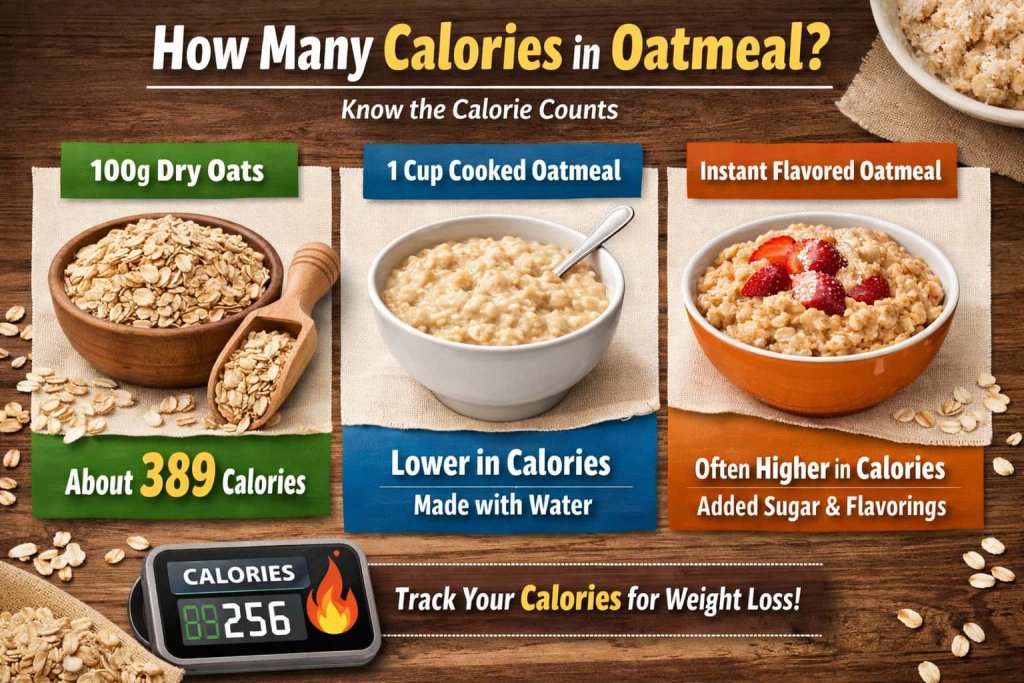
The most useful everyday answer is this:
- 100 grams of dry oats: about 389 calories
- 1 cup cooked plain oatmeal made with water: typically much lower in calories than dry oats because the oats absorb water during cooking
- Instant flavored oatmeal: often higher in calories because it may include added sugar and flavorings
This is why oatmeal calories can look confusing. A small amount of dry oats can turn into a much larger bowl of cooked oatmeal, but the calories come from the oats themselves, not the water.
Quick Calorie Snapshot for Oatmeal
For a practical everyday answer, here is the calorie range most readers need:
- 1/2 cup dry plain oats: about 150 calories
- 1 cup plain cooked oatmeal made with water: about 150 to 170 calories
- 1 cup plain cooked oatmeal made with milk: usually higher, depending on the type of milk used
- 1 packet flavored instant oatmeal: often around 160 to 200 calories or more, depending on added sugar and ingredients
The most important thing to remember is that oatmeal calories stay fairly reasonable when the oats are plain. The total climbs faster when the bowl includes sweeteners, large spoonfuls of nut butter, granola, or dried fruit.
Oatmeal Calories by Type
Different oat products are similar, but the final calorie count depends on serving size and ingredients.
Rolled oats
Rolled oats are one of the most common options. Plain rolled oats usually offer moderate calories, fiber, and some protein, making them a practical breakfast base.
Quick oats
Quick oats are processed to cook faster, but plain versions are still nutritionally similar to regular oats. The biggest calorie difference usually comes from portion size and toppings, not the fact that they are quick oats.
Steel-cut oats
Steel-cut oats are less processed in shape and texture. They are often chosen for their chewy texture and slower-cooking style, but their calories are still mainly determined by how much dry oats you use.
Instant flavored oatmeal
This is where calories can rise more quickly. Many packets include added sugar, flavor blends, or other ingredients. The FDA recommends checking the Nutrition Facts label, especially for serving size and added sugars.
Why Dry vs Cooked Oatmeal Calories Matter
This is one of the most important points for readers.
If you compare:
- 1/2 cup dry oats
- 1 cup cooked oatmeal
you are not always comparing the same amount of oats. Dry oats are concentrated. Cooked oatmeal includes a lot of water. That makes cooked oatmeal feel lighter and more filling per spoonful.
For practical tracking, it is best to:
- measure oats dry before cooking when you want the most accurate calorie count
- note whether the label refers to dry or prepared oatmeal
- count calories from milk, sweeteners, nuts, seeds, peanut butter, or fruit separately
Nutrition Profile of Oatmeal
Plain oatmeal is more than a calorie source. It is a whole grain that can provide:
- carbohydrates for energy
- dietary fiber
- some plant protein
- small amounts of fat
- minerals such as iron, magnesium, phosphorus, and manganese
The American Heart Association notes that whole grains are important sources of fiber and nutrients. Oats fit well into that category when they are minimally processed and not heavily sweetened.
Key Nutrients in Oatmeal
Fiber
Fiber is one of oatmeal’s biggest strengths. It can help make meals feel more satisfying and supports overall healthy eating patterns.
Soluble fiber
Oats are known for a type of soluble fiber called beta-glucan. This is one reason oatmeal is often discussed in relation to heart health.
Iron
Oatmeal can contribute a useful amount of iron, depending on the type and serving size.
Manganese
Oats are a notable source of manganese, a mineral involved in normal metabolism.
Magnesium and phosphorus
These minerals support many basic body functions and are part of oatmeal’s overall nutrient value.
Protein
Oatmeal is not a high-protein food on its own, but it provides more protein than many refined breakfast grains. Pairing it with yogurt, milk, soy milk, eggs, nuts, or seeds can make it more balanced.
Is Oatmeal Good for Weight Management?
Yes, plain oatmeal can be good for weight management.
There are a few reasons for that:
- it is filling for its calories
- it contains fiber
- it can be portioned easily
- it works well with nutrient-dense toppings
- it can replace less filling, more heavily sweetened breakfast foods
The Dietary Guidelines for Americans recommend that at least half of grains be whole grains. Oatmeal can be an easy way to help meet that goal.
That said, oatmeal is not automatically a weight-loss food. A bowl of plain oats is very different from a bowl loaded with brown sugar, syrup, chocolate chips, sweetened dried fruit, and large amounts of nut butter.
Why Oatmeal Can Help You Feel Full
Oatmeal may support fullness because it combines:
- fiber
- water volume when cooked
- a warm, slow-to-eat texture
- the option to pair it with protein-rich foods
For many people, that makes oatmeal more satisfying than pastries, sugary cereal, or refined breakfast bars.
How Oatmeal Calories Add Up Fast
Oatmeal itself is often reasonable in calories. The extras are where the total can jump quickly.
Common add-ins that raise calories include:
- sugar
- honey
- maple syrup
- nut butters
- sweetened granola
- chocolate chips
- large portions of nuts
- sweetened flavored oat packets
A better approach is to keep the base simple and add flavor with:
- berries
- sliced apple
- cinnamon
- unsweetened yogurt
- chia seeds
- a small amount of nuts
- a measured spoonful of nut butter
How Many Calories in Overnight Oats?
Overnight oats can be a healthy option, but they are often more calorie-dense than plain hot oatmeal because they usually include multiple ingredients at once.
A typical overnight oats jar may contain:
- oats
- milk or yogurt
- chia seeds
- fruit
- nut butter
- honey or maple syrup
That combination can turn a simple oatmeal breakfast into a much larger meal. In many cases, overnight oats land closer to a full breakfast calorie range than a plain bowl of oatmeal made with water.
If you want overnight oats to stay lighter, use:
- a measured amount of oats
- unsweetened milk or yogurt
- fruit for sweetness
- a small amount of seeds or nut butter instead of several calorie-dense extras together
Oatmeal and Heart Health
Oats have one of the strongest evidence-backed nutrition benefits among common breakfast grains.
The Food and Drug Administration allows an authorized health claim stating that 3 grams of soluble fiber from oatmeal daily, as part of a diet low in saturated fat and cholesterol, may reduce the risk of heart disease.
That does not mean oatmeal is a treatment. It does mean oats have well-established nutrition value, especially when part of an overall balanced eating pattern.
Is Oatmeal Better Than Sugary Breakfast Foods?
In many cases, yes.
Plain oatmeal is usually a better everyday choice than many highly sweetened breakfast pastries or cereals because it tends to offer:
- more fiber
- less added sugar
- better fullness
- a more flexible nutrition profile
But the comparison changes if your oatmeal is heavily sweetened. A flavored oatmeal bowl with multiple high-calorie toppings can end up closer to dessert than breakfast.
Who Should Be a Little More Careful With Oatmeal?
Oatmeal works well for many people, but a few groups may want to pay closer attention.
People watching blood sugar
Plain oats can fit into a balanced meal plan, but heavily sweetened instant oatmeal may raise total carbs and added sugar quickly. Pairing oatmeal with protein and healthy fat may help make the meal more balanced.
People trying to lose weight
Oatmeal can support weight management, but portion size still matters. Measuring dry oats before cooking is often the easiest way to stay accurate.
People with celiac disease or gluten sensitivity
Oats are often tolerated differently from wheat, barley, and rye, but cross-contact can happen during processing. MedlinePlus notes that naturally gluten-free foods can become contaminated if they are processed on the same production line or handled with gluten-containing foods. Certified gluten-free oats may be the safer choice for some people.
People choosing packaged oatmeal by front-label claims
Not every oatmeal product marketed as wholesome is equally nutritious. The FDA announced an updated final rule for the voluntary “healthy” claim in late 2024, but it is still important to read the Nutrition Facts panel and ingredients list instead of relying only on front-of-pack wording.
Best Ways to Keep Oatmeal Healthy
Start with plain oats
Plain oats give you the most control over sugar, sodium, and calories.
Watch portions
A healthy oatmeal breakfast can still become calorie-heavy if the serving is much larger than intended.
Add protein
Try oatmeal with Greek yogurt, milk, soy milk, cottage cheese on the side, or a few nuts and seeds.
Use fruit for sweetness
Fresh berries, banana slices, or diced apple can add flavor without turning the meal into a sugar-heavy breakfast.
Read instant oatmeal labels
Some packet oatmeals are convenient, but some contain more added sugar and sodium than people expect.
Best Oatmeal Choice Based on Your Goal
If your main goal is lower calories, plain oats cooked with water are usually the simplest option.
If your main goal is better fullness, plain oats with fruit and a protein source such as Greek yogurt, milk, or seeds can make the meal more satisfying.
If your main goal is less added sugar, choose plain rolled oats, quick oats, or steel-cut oats instead of sweetened instant packets.
If your main goal is convenience, instant oatmeal can still work, but it is worth checking the label for serving size, added sugars, and total calories.
Frequently Asked Questions
How many calories are in 1 bowl of oatmeal?
It depends on the bowl size and whether you mean plain cooked oatmeal or oatmeal with toppings. A plain bowl made with water is usually much lower in calories than dry oats measured before cooking plus extras.
Is oatmeal low in calories?
Oatmeal is not extremely low in calories, but it is often calorie-efficient for how filling it is. That makes it useful for many balanced meal plans.
Is oatmeal good for belly fat loss?
No single food targets belly fat. Oatmeal can support an overall calorie-conscious eating pattern because it is filling and fiber-rich, but body fat loss depends on the full diet and lifestyle pattern.
Are instant oats less healthy than regular oats?
Plain instant oats can still be a good choice. The bigger issue is whether the product is flavored or sweetened.
Is oatmeal healthier with milk or water?
Both can work. Water keeps calories lower. Milk can add protein and more nutrients, but it also raises total calories.
Final Thoughts on How Many Calories in Oatmeal
Oatmeal can be a smart, practical breakfast because it offers a good balance of calories, fiber, and whole-grain nutrition. The key is knowing the difference between dry oats and cooked oatmeal, then being realistic about toppings.
If you want oatmeal to support weight management, keep the base simple, measure portions clearly, and build your bowl around fruit, fiber, and protein rather than sugar-heavy extras.
Sources/References
- USDA FoodData Central — FoodData Central
- FDA — Changes to the Nutrition Facts Label
- American Heart Association — 7 Whole-Grain Foods You Should Try
- Dietary Guidelines for Americans — Executive Summary
- Food and Drug Administration — Food Labeling Guide
- MedlinePlus — Celiac disease – nutritional considerations