
Spirulina may modestly support healthier cholesterol, triglyceride, blood pressure, blood sugar, and body-weight measurements, but the effects are generally small and it has not been proven to prevent or reverse disease. The strongest evidence concerns cardiovascular and metabolic risk markers, while claims about detoxification, immunity, allergy relief, and athletic performance remain much less certain.

Product quality is also important. Spirulina and other blue-green algae supplements can be contaminated with microcystins, which may harm the liver and kidneys at significant levels. Choosing a carefully tested product is therefore just as important as understanding its possible benefits.
What Is Spirulina?
Spirulina is a type of cyanobacteria commonly marketed as “blue-green algae.” It is dried and sold as powder, tablets, capsules, beverages, and an ingredient in snack foods.
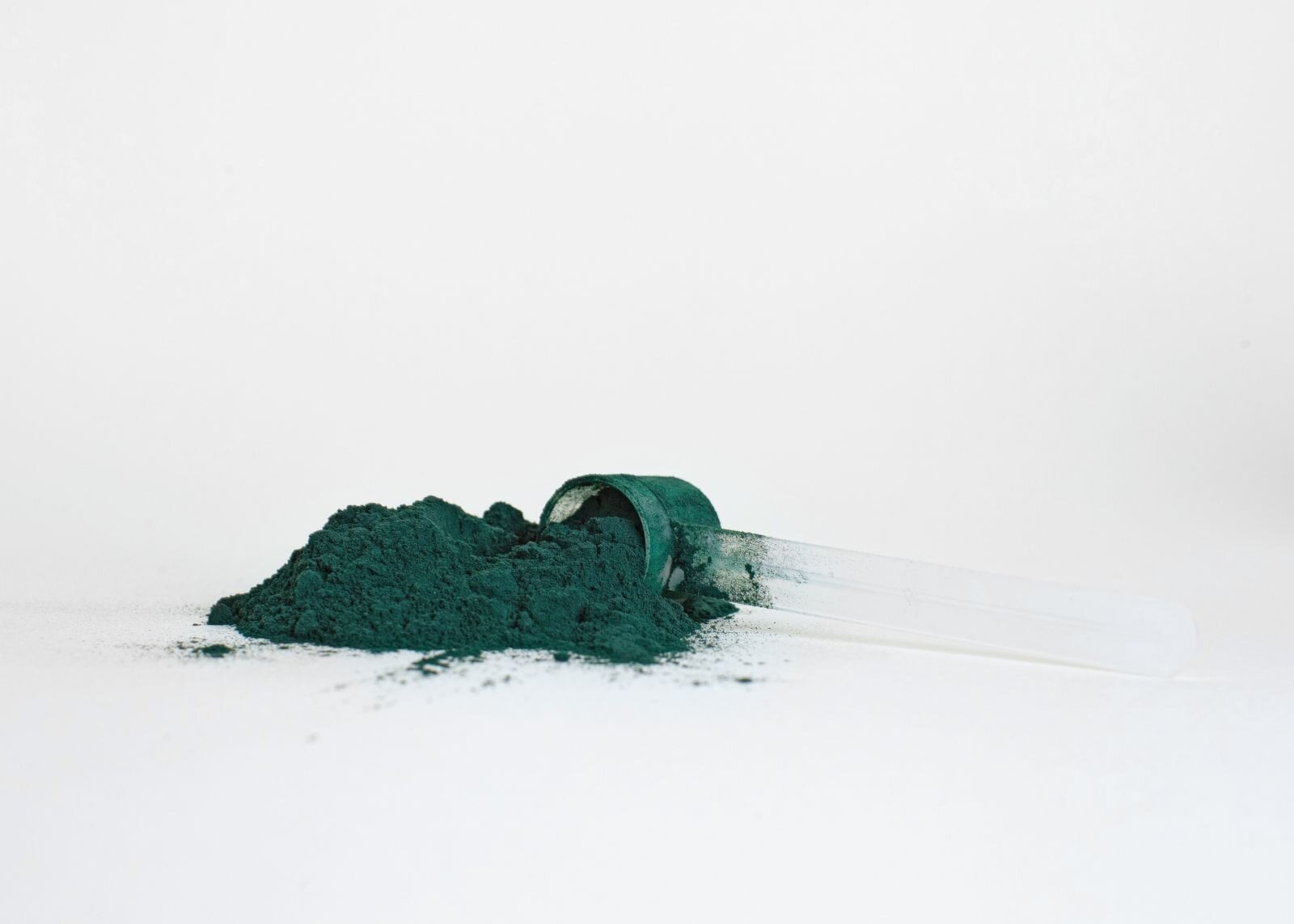
Although spirulina is often called a superfood, that term has no medical definition. Spirulina is rich in protein by dry weight and contains natural pigments and other bioactive compounds. However, most supplement servings contain only a few grams, so they provide much less total nutrition than a normal serving of beans, eggs, fish, dairy, tofu, or another protein-rich food.
It is also important to distinguish pure cultivated spirulina from mixed or wild-harvested blue-green algae products. Cyanobacteria products may be contaminated by toxin-producing organisms during cultivation or harvesting, making sourcing and laboratory testing especially important. (FDA)
Spirulina Health Benefits
Recent randomized-trial reviews support a cautious interpretation of spirulina’s health effects. Most benefits involve relatively small changes in laboratory measurements rather than dramatic or immediately noticeable improvements.
| Potential benefit | What current research suggests | Evidence assessment |
|---|---|---|
| Cholesterol and triglycerides | Some reviews report lower LDL, total cholesterol, and triglycerides, but findings are not consistent across every analysis. | Promising but mixed |
| Blood pressure | Average reductions of several points have been reported, especially in people with elevated blood pressure. | Moderate evidence for a modest effect |
| Blood sugar | Fasting glucose may improve slightly, but evidence for HbA1c and long-term diabetes control is weaker. | Limited |
| Body weight and body fat | Studies report small average reductions in weight, BMI, and body-fat percentage. | Possible small benefit |
| Inflammation | A very small reduction in C-reactive protein has been found, without consistent changes in other inflammatory markers. | Limited |
| Exercise performance | Some findings are encouraging, but results vary by product, dose, activity, and study population. | Emerging |
| Allergy symptoms | A few small studies report possible improvement in allergic rhinitis symptoms. | Preliminary |
1. Spirulina May Support Healthier Cholesterol Levels
Improved blood lipids are among the most frequently studied spirulina health benefits.
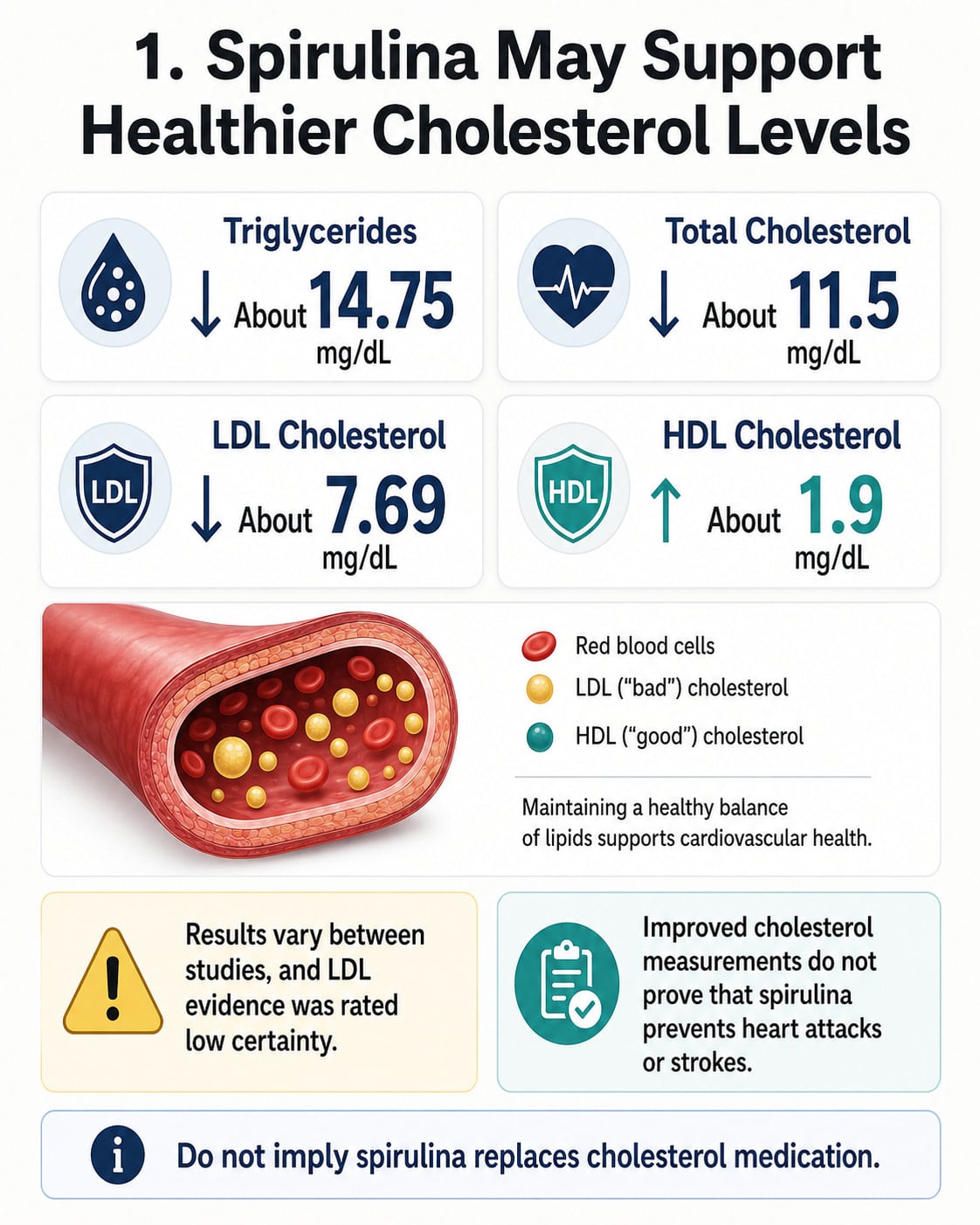
A 2025 meta-analysis of 35 randomized trials reported the following average changes compared with control groups:
- Triglycerides decreased by approximately 14.75 mg/dL
- Total cholesterol decreased by approximately 11.5 mg/dL
- LDL cholesterol decreased by approximately 7.69 mg/dL
- HDL cholesterol increased by approximately 1.9 mg/dL
However, the researchers rated the certainty of the LDL evidence as low. The included trials also varied in dose, duration, participant health, and product formulation.
An earlier analysis of 20 studies involving 1,076 participants also reported improvements in LDL cholesterol, total cholesterol, triglycerides, and HDL cholesterol. In contrast, another 2025 review of nine spirulina trials did not find statistically significant improvements in lipid measurements and described the overall cardiometabolic effects as small and of uncertain clinical importance.
What This Means for You
Spirulina may provide a modest improvement in certain cholesterol measurements, particularly among people who already have metabolic risk factors.
However, these trials mainly measured blood biomarkers. They do not establish that taking spirulina prevents heart attacks, strokes, or other cardiovascular events. Spirulina should not replace cholesterol medication, a heart-healthy eating pattern, exercise, or clinician-directed care.
2. Spirulina May Modestly Lower Blood Pressure
Spirulina supplementation may slightly lower both systolic and diastolic blood pressure.
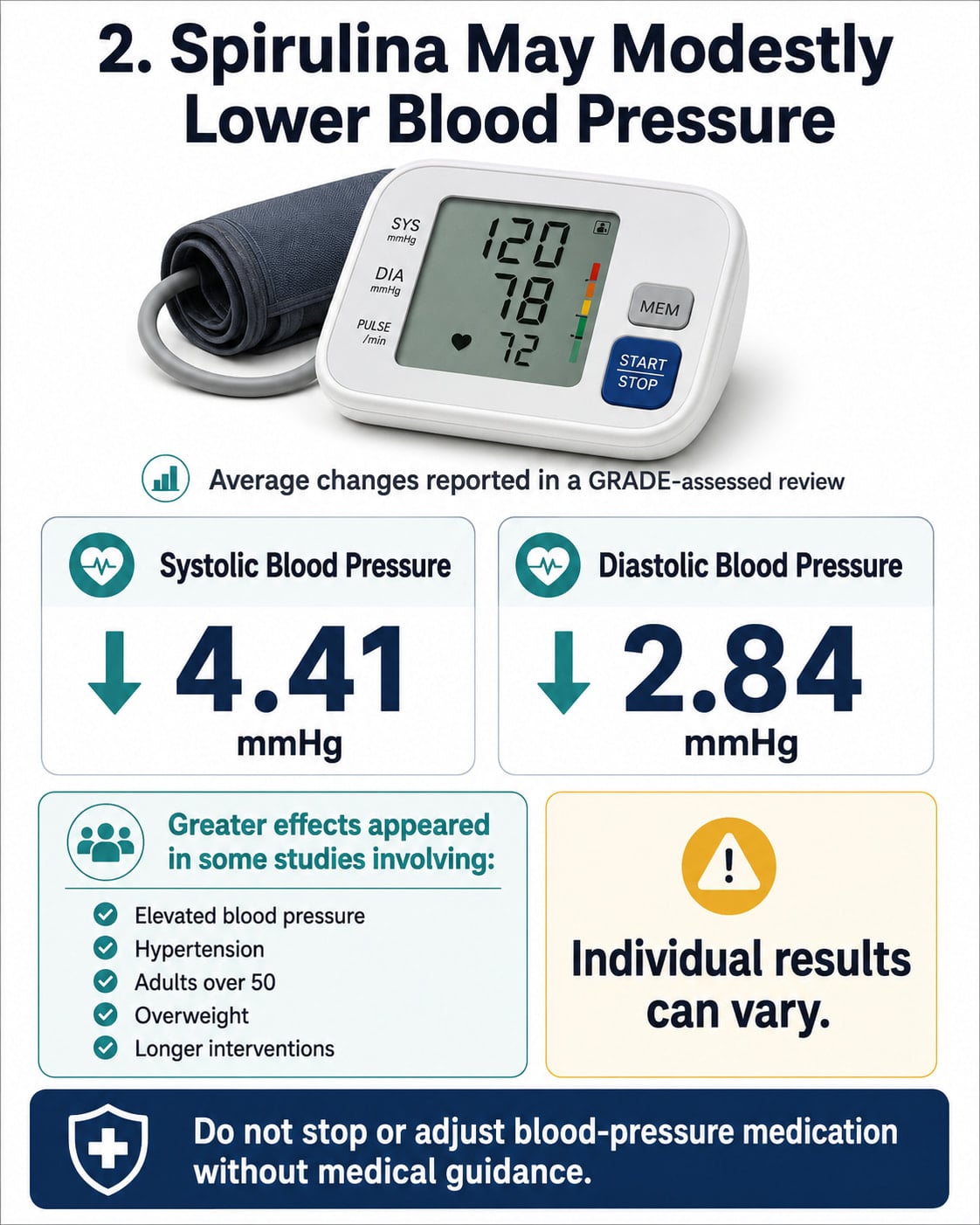
A GRADE-assessed blood-pressure review reported average reductions of:
- 4.41 mmHg in systolic blood pressure
- 2.84 mmHg in diastolic blood pressure
The researchers rated the evidence as moderate quality. Greater effects appeared in some subgroups, including adults with hypertension, elevated starting blood pressure, overweight, age over 50, or interventions lasting longer than eight weeks. However, the review included a limited number of studies and found substantial differences among their results.
A reduction of several points could be meaningful at a population level, but it does not guarantee that an individual user will experience the same result.
Anyone taking blood-pressure medication should speak with a healthcare professional before adding spirulina. As a precaution, blood pressure should be monitored rather than assuming the supplement is harmless or adjusting medication without medical guidance.
3. Spirulina May Affect Certain Blood Sugar Measurements
Spirulina has also been studied for fasting glucose, insulin, insulin resistance, and HbA1c.
The 2025 meta-analysis of 35 randomized trials found an average fasting blood glucose reduction of approximately 5.51 mg/dL. It also reported improvements in insulin and HOMA-IR, a research measurement used to estimate insulin resistance. However, the certainty of the fasting-glucose and HbA1c evidence was rated low.
Other reviews have reached similar cautious conclusions: short-term glucose measurements may improve, but consistent improvements in HbA1c and long-term diabetes outcomes have not been firmly established.
What This Means for People With Diabetes
Spirulina is not a substitute for prescribed diabetes medication, glucose monitoring, medical nutrition therapy, or other clinician-recommended care.
Because spirulina may affect glucose measurements, people using insulin or glucose-lowering medication should discuss supplementation with their clinician. Combining several glucose-lowering strategies could potentially increase the risk of readings becoming lower than intended, even though direct spirulina–medication interaction research remains limited.
4. Spirulina May Produce Small Changes in Body Weight
Spirulina is sometimes promoted as a fat-burning or rapid weight-loss supplement. The research does not support those descriptions.
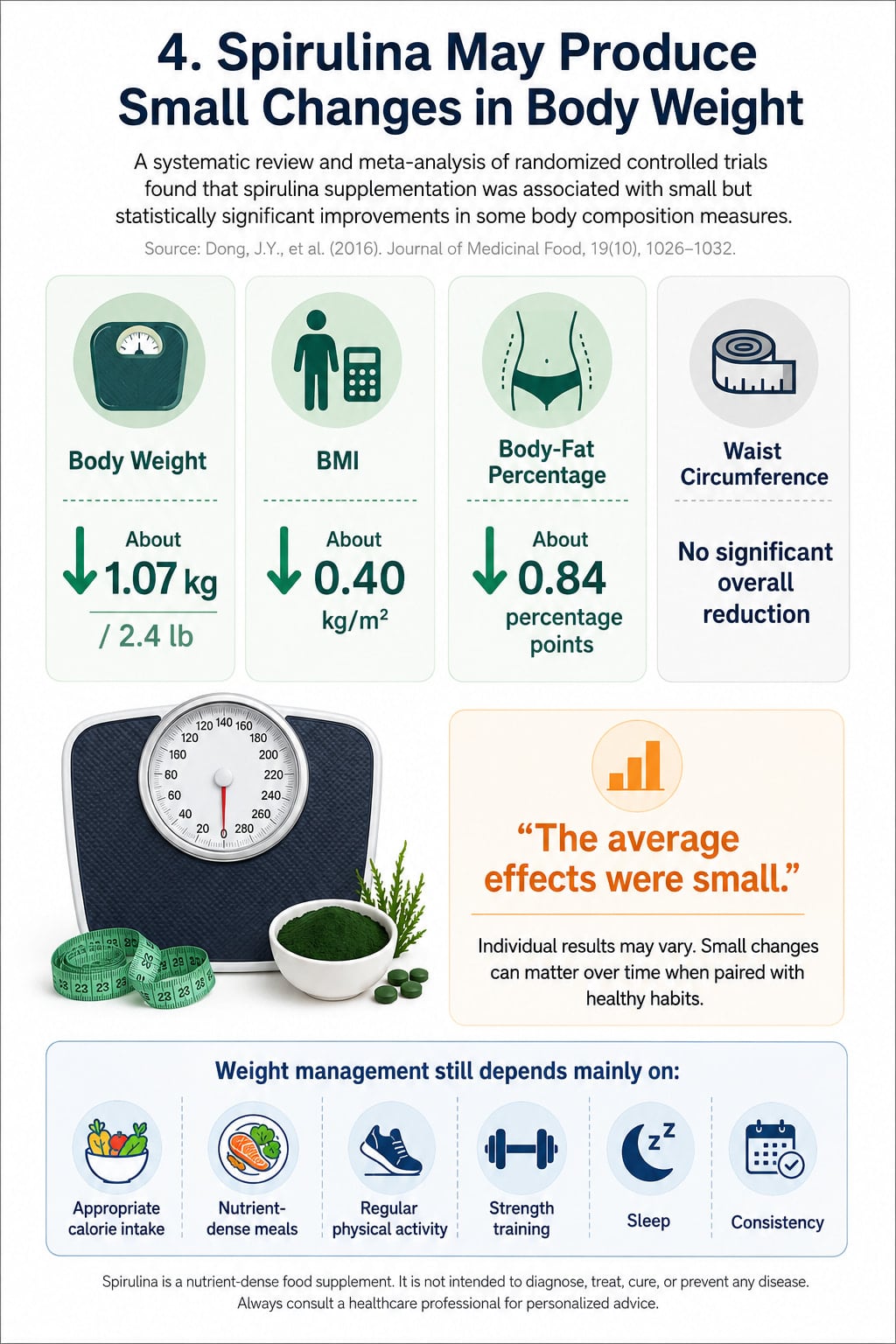
A 2025 body-composition meta-analysis examined 17 randomized controlled trials. Compared with control groups, spirulina supplementation was associated with average changes of:
- 1.07 kilograms, or about 2.4 pounds, less body weight
- 0.40 kg/m² lower BMI
- 0.84 percentage points lower body-fat percentage
The researchers did not find a statistically significant overall reduction in waist circumference.
These figures are pooled averages from different study populations and do not predict how much weight one person will lose. The trials also do not establish that spirulina produces substantial or lasting weight loss when used by itself.
A Realistic Interpretation
Spirulina may make a small contribution to a broader weight-management plan, but it cannot replace:
- An appropriate calorie intake
- Nutrient-dense meals
- Regular physical activity
- Strength training
- Adequate sleep
- Consistent long-term habits
Claims that spirulina “melts belly fat,” rapidly suppresses appetite, or produces major weight loss are not supported by current evidence.
5. Spirulina’s Anti-Inflammatory Effect May Be Very Small
Spirulina contains phycocyanin and other compounds that have been investigated for possible antioxidant and inflammation-related effects. Laboratory findings, however, do not automatically translate into meaningful benefits in people.
A 2026 meta-analysis reviewed eight randomized trials involving 337 adults. Participants generally took between 1 and 8 grams of spirulina per day for 3 to 16 weeks.
The analysis found an average reduction of only 0.09 mg/L in C-reactive protein, or CRP. It did not find statistically significant reductions in interleukin-6 or tumor necrosis factor-alpha, two other commonly measured inflammatory markers. Results also varied substantially among the studies.
Spirulina may influence certain inflammation-related measurements, but current human evidence does not justify describing it as a powerful anti-inflammatory supplement.
6. Exercise and Recovery Benefits Remain Uncertain
Researchers have studied spirulina and other algae-derived supplements for endurance, oxygen use, exercise tolerance, muscle damage, strength, and recovery.
A 2026 meta-analysis of 22 randomized trials involving 822 participants found possible improvements in time to exhaustion and certain recovery measurements. However, the review covered several different algae-derived products, not spirulina alone. The results also depended on the species, dose, exercise type, and study population.
Some smaller spirulina-specific studies have reported better exercise tolerance or oxygen-related measurements during submaximal exercise. Findings for strength, power, endurance, and recovery have not been consistent.
Athletes should therefore view spirulina as an optional food supplement, not a proven performance enhancer. Training quality, sufficient calories, carbohydrates, protein, hydration, and recovery have a much clearer role in performance.
7. Spirulina May Help Some Allergy Symptoms, but Evidence Is Preliminary
Several relatively small studies have investigated spirulina for allergic rhinitis, which can cause sneezing, congestion, itching, and a runny nose.
A systematic review described spirulina’s results as promising but emphasized the limited number of good-quality studies. The available evidence was not strong enough to support firm clinical recommendations.
Spirulina should not replace allergy evaluation, prescribed medication, antihistamines, nasal sprays, or strategies for avoiding known allergens.
What Nutrients Does Spirulina Provide?
Spirulina is concentrated because it is sold in dried form. It contains protein, minerals, carotenoids, and natural pigments, but the amount received depends heavily on the serving size and product.
A tablespoon of spirulina powder may provide several grams of protein, while tablets may provide much less per serving. That can contribute to daily intake, but spirulina is usually not an economical or complete replacement for ordinary protein-rich foods.
It should also not be relied upon as the primary source of iron or other essential nutrients. The mineral content can vary, and some plant-derived minerals may not be absorbed as efficiently as the number on a nutrition label suggests.
Is Spirulina a Reliable Source of Vitamin B12?
No. Spirulina is not considered a dependable source of active vitamin B12.
A laboratory analysis of spirulina supplements found that much of their B12-like content consisted of pseudovitamin B12. This is an inactive analog that cannot reliably meet the body’s vitamin B12 needs.
Vegans, vegetarians, older adults, and people with impaired B12 absorption should use reliable fortified foods or an appropriately dosed vitamin B12 supplement rather than depending on spirulina.
How Much Spirulina Should You Take?
There is no universally established spirulina dose for lowering cholesterol, managing blood pressure, controlling blood sugar, losing weight, reducing inflammation, or improving exercise performance.
Clinical trials have often used approximately 1 to 8 grams per day, generally for several weeks to a few months. A dose used in a research study is not automatically the correct dose for every person or product.
A practical approach is to:
- Follow the serving instructions on the product label.
- Avoid exceeding the labeled amount.
- Do not assume that a larger dose will produce a larger benefit.
- Use only one new supplement at a time so side effects are easier to identify.
- Ask a healthcare professional before use when medications or health conditions are involved.
Taking spirulina with food may be more comfortable for people who experience mild stomach upset.
How Long Does Spirulina Take to Work?
Most clinical studies measure changes after several weeks rather than after a single dose.
Blood-pressure findings may be more noticeable in studies lasting longer than eight weeks, while many cholesterol, glucose, weight, and inflammation trials last approximately 8 to 16 weeks. That does not mean everyone will experience a measurable or noticeable benefit within that period.
Spirulina should not be expected to create an immediate energy boost, rapid weight loss, or an obvious “detox” effect.
Spirulina Side Effects and Safety Risks
Short-term clinical trials generally report that spirulina is reasonably well tolerated. Possible side effects include:
- Nausea
- Diarrhea
- Abdominal discomfort
- Headache
- Fatigue
- Dizziness
- Allergic reactions
Most reported reactions are mild, but rare serious reactions have appeared in individual case reports. Stop using the product and seek medical attention for facial swelling, breathing difficulty, widespread hives, severe vomiting, dark urine, yellowing of the skin, or other concerning symptoms.
Microcystin Contamination
Contamination is one of the most important spirulina safety concerns.
The FDA’s guidance on blue-green algae and microcystins explains that microcystins cannot be detected by looking at, smelling, or tasting a product. At significant concentrations, these toxins can damage the liver and kidneys. The FDA has previously announced recalls involving contaminated blue-green algae products.
A product may also be exposed to:
- Heavy metals
- Harmful bacteria
- Unwanted cyanobacteria
- Other environmental contaminants
This does not mean every spirulina product is unsafe. It means quality cannot be judged by color, taste, marketing language, or price alone.
Dietary Supplements Are Not Preapproved Like Medications
The FDA does not approve dietary supplements for safety or effectiveness before they enter the market. Manufacturers are responsible for meeting applicable safety, manufacturing, and labeling requirements.
Labels stating “natural,” “organic,” “premium,” or “superfood” do not prove that a supplement is effective or free from contamination.
How to Choose a Quality Spirulina Supplement
Before purchasing spirulina, check for the following:
1. A Clearly Identified Manufacturer
The label should provide the manufacturer or distributor’s name, contact details, serving size, and spirulina amount.
Avoid products with unclear sourcing or no way to contact the company.
2. A Batch or Lot Number
A batch number helps the manufacturer trace testing records and respond to quality problems or recalls.
3. Independent Laboratory Testing
Look for evidence that each batch is tested by a qualified independent laboratory. Testing should ideally cover:
- Microcystins
- Heavy metals
- Harmful microorganisms
- Ingredient identity
- Amount of spirulina per serving
4. A Certificate of Analysis
A certificate of analysis should identify the batch and list the actual test results rather than merely saying “lab tested.”
The FDA identifies validated testing methods, qualified laboratories, lot-specific testing, and certificates of analysis as useful practices for controlling microcystin risk.
5. Realistic Marketing Claims
Avoid products claiming that spirulina:
- Reverses diabetes
- Prevents cancer
- Eliminates toxins
- Replaces medication
- Produces rapid fat loss
- Guarantees stronger immunity
Extreme medical claims are a warning sign, not evidence of a better supplement.
6. Current Recall Information
Before using a supplement regularly, check the FDA’s safety alerts and recall database. Stop using a recalled product even when it looks, smells, and tastes normal.
Who Should Be Cautious With Spirulina?
Speak with a qualified healthcare professional before using spirulina when you:
- Are pregnant or breastfeeding
- Plan to give it to a child
- Have chronic liver or kidney disease
- Take prescription medication
- Use blood-pressure or glucose-lowering medicine
- Have an autoimmune condition
- Take immunosuppressive medication
- Have a history of serious allergies
The FDA specifically advises pregnant or breastfeeding people, those with chronic medical conditions, and parents considering blue-green algae products for children to consult an appropriate healthcare professional.
Spirulina and Phenylketonuria
People with phenylketonuria, or PKU, must carefully control phenylalanine intake. Spirulina contains protein and therefore supplies phenylalanine.
The French Agency for Food, Environmental and Occupational Health and Safety has advised people with phenylketonuria against using spirulina supplements without appropriate professional guidance.
What Spirulina Has Not Been Proven to Do
Current human research does not establish that spirulina:
- “Detoxes” the liver or body
- Prevents heart attacks or strokes
- Reverses diabetes
- Produces substantial long-term weight loss
- Eliminates belly fat
- Prevents cancer
- Reliably strengthens immunity
- Replaces prescribed medication
- Provides dependable active vitamin B12
- Makes an unhealthy diet nutritionally complete
Some laboratory or animal experiments may produce interesting results, but they should not be presented as proven human health benefits.
Practical Ways to Use Spirulina
Spirulina powder has a strong earthy or marine flavor. Common ways to use it include:
- Blending a label-directed serving into a smoothie
- Stirring a small amount into yogurt or oatmeal
- Mixing it into a fruit-based drink
- Taking tablets or capsules with a meal
Using spirulina in food does not make the entire meal healthier automatically. Added sugars, total calories, protein, fiber, and overall food quality still matter.
Begin with the amount recommended on the label rather than adding large spoonfuls. Stop using it if you develop persistent digestive discomfort or another unexpected reaction.
Frequently Asked Questions
Is It Safe to Take Spirulina Every Day?
A tested spirulina product may be tolerated when used according to its label, but long-term safety data are more limited than short-term trial data. Daily use is not necessary for everyone, and safety depends partly on product quality, medications, allergies, and medical conditions.
What Is the Best Spirulina Dosage?
There is no single medically established dose. Studies commonly use approximately 1 to 8 grams daily, but doses vary by research goal and product. Follow the label and seek professional guidance rather than copying a study dose.
How Long Does Spirulina Take to Show Results?
Studies commonly assess outcomes after 8 to 16 weeks. Any changes may appear only in blood tests or blood-pressure readings and may not be noticeable. Results are not guaranteed.
Does Spirulina Help With Weight Loss?
It may contribute to a small average reduction in weight or body-fat percentage, but research does not support spirulina as a powerful fat-burning supplement. A sustainable calorie deficit and regular activity remain the main drivers of weight loss.
Can Spirulina Lower Cholesterol or Blood Pressure?
It may produce modest improvements in some people, but research results are mixed. Do not stop or reduce prescribed medication based on supplement use. Discuss it with your healthcare professional and continue appropriate monitoring.
Is Spirulina Safe for the Liver and Kidneys?
Pure spirulina has generally been tolerated in short-term studies, but FDA guidance warns that products contaminated with microcystins may harm the liver or kidneys. Choose a batch-tested product and stop using it if it is recalled.
Can Vegans Use Spirulina for Vitamin B12?
Spirulina can fit into a vegan diet, but it should not be used as the primary vitamin B12 source. A laboratory analysis found that much of its B12-like content is an inactive analog. Use a dependable B12-fortified food or supplement instead.
Conclusion
Spirulina health benefits are promising in several areas, but they should be kept in perspective. Research suggests modest improvements in blood pressure, cholesterol, triglycerides, fasting glucose, body weight, and certain inflammation-related measurements. The results are not consistent across all studies, and most trials have examined short-term biomarkers rather than major health outcomes.
Spirulina works best when viewed as an optional addition to an already balanced diet—not as a shortcut or replacement for medical care. Before purchasing it, check for batch-specific contaminant testing, review the serving amount, and avoid products making dramatic disease or weight-loss claims. People taking medication or managing a health condition should discuss supplementation with a qualified healthcare professional.
This content is for informational purposes only and not medical advice.
References
- 2025 systematic review and meta-analysis of spirulina’s cardiometabolic effects
- GRADE-assessed systematic review of spirulina and blood pressure
- 2025 meta-analysis of spirulina and body composition
- Systematic review and dose-response meta-analysis of blood lipids
- 2025 review reporting limited cardiometabolic effects
- 2026 meta-analysis of spirulina and inflammatory markers