
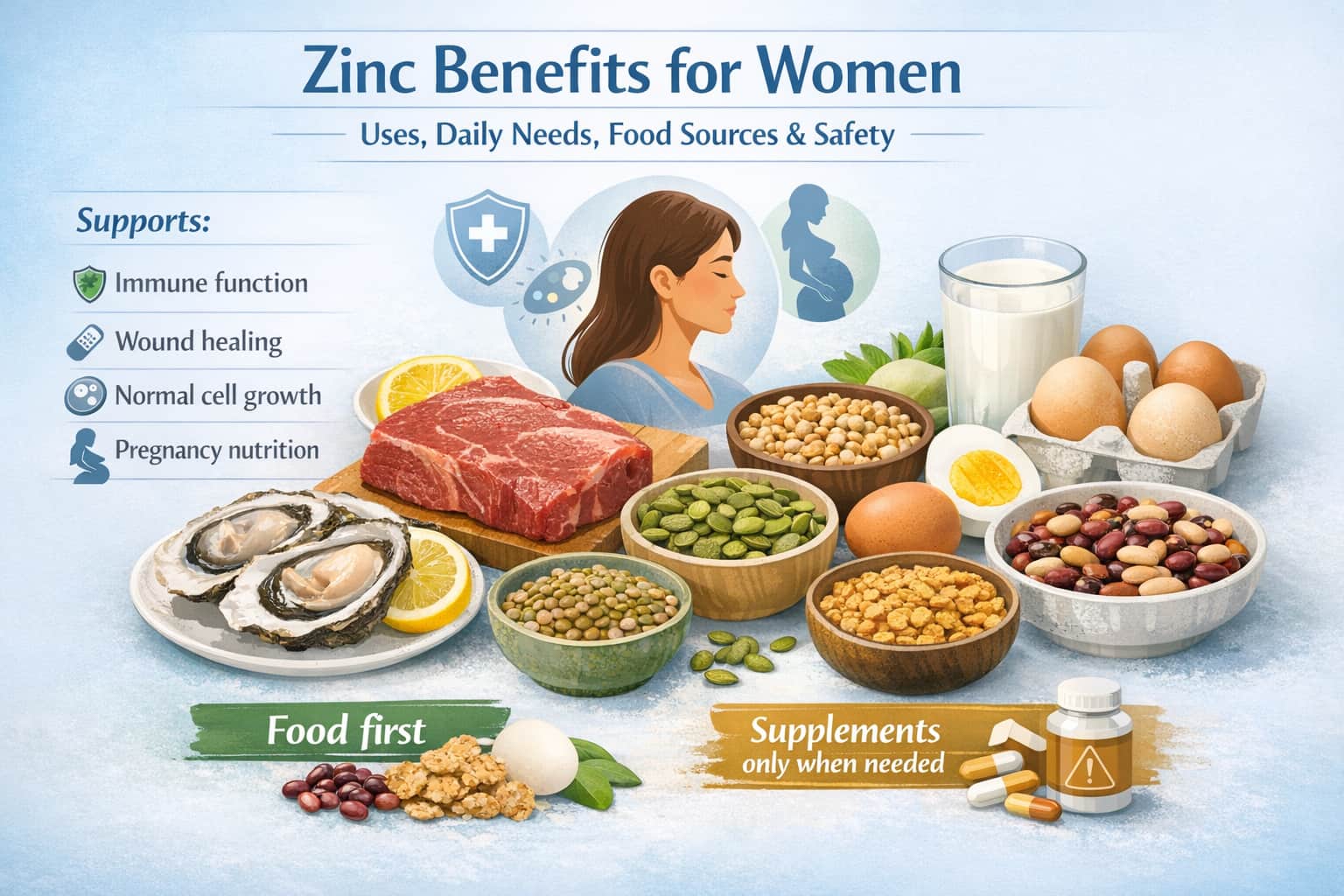
Yes—zinc is important for women because it supports immune function, DNA and protein synthesis, wound healing, normal cell division, taste and smell, and healthy growth and development during pregnancy. That makes it relevant not just for general wellness, but also for pregnancy, breastfeeding, recovery, and meeting everyday nutrient needs. According to the NIH Office of Dietary Supplements zinc fact sheet, most women get enough zinc, but needs rise during pregnancy and breastfeeding, and some women have a higher risk of low intake or low absorption.
If you are wondering whether zinc is good for women, the most accurate answer is this: zinc helps your body do essential jobs every day, but more is not always better. The biggest real-world questions are how much you need, whether your diet covers it, and when a supplement makes sense. The official NIH health professional zinc overview and the NIH pregnancy fact sheet are especially useful for those details.
What zinc does for women
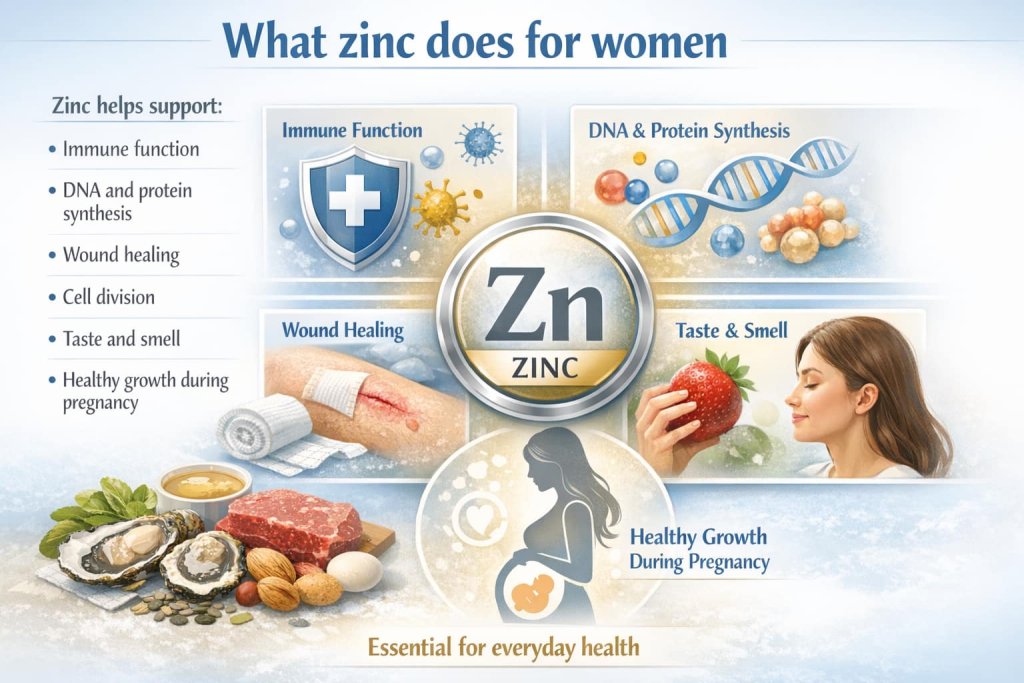
Zinc is an essential mineral found throughout the body. The NIH explains that it helps the immune system work properly, supports protein and DNA synthesis, plays a role in wound healing, cell signaling, and cell division, and supports healthy growth and development during pregnancy, infancy, childhood, and adolescence. It is also involved in your sense of taste.
For women, that means zinc is less about a trendy wellness claim and more about core body functions that matter across life stages. It is especially relevant during pregnancy and breastfeeding, when needs increase, and in situations where intake or absorption may be lower, such as vegetarian or vegan eating patterns, inflammatory bowel disease, celiac disease, or after bariatric surgery.
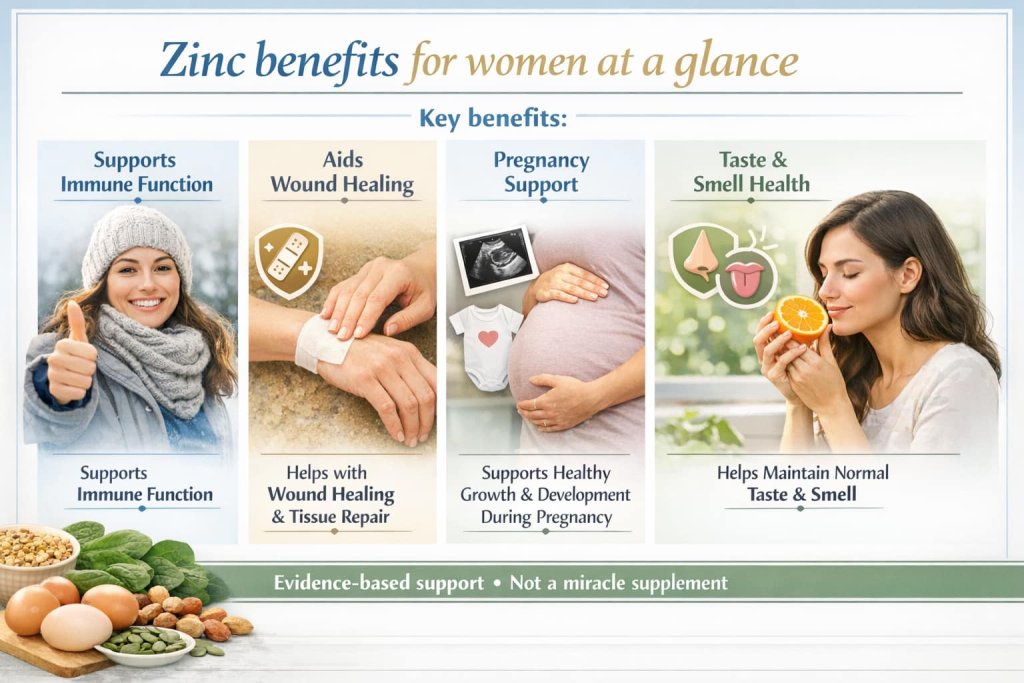
Zinc benefits for women at a glance
Supports normal immune function
Zinc helps immune cells function normally and is one of the minerals your body uses every day to help defend against infection. This is one reason it is considered essential rather than optional.
Helps with wound healing and tissue repair
Because zinc is involved in protein synthesis and cell division, it supports normal tissue repair and wound healing. This benefit is especially relevant during periods of recovery, but it is still part of everyday health, not just after injury.
Supports healthy growth and development during pregnancy
Pregnancy is one of the clearest times when zinc matters more. The NIH notes that adequate zinc status during pregnancy is important for fetal growth and development, and recommended intake rises above the nonpregnant adult level.
Helps maintain normal taste and smell
Low zinc status can interfere with taste and smell, and zinc is officially recognized as important for both senses. That makes it relevant when poor intake or poor absorption is suspected.
How much zinc does a woman need each day?
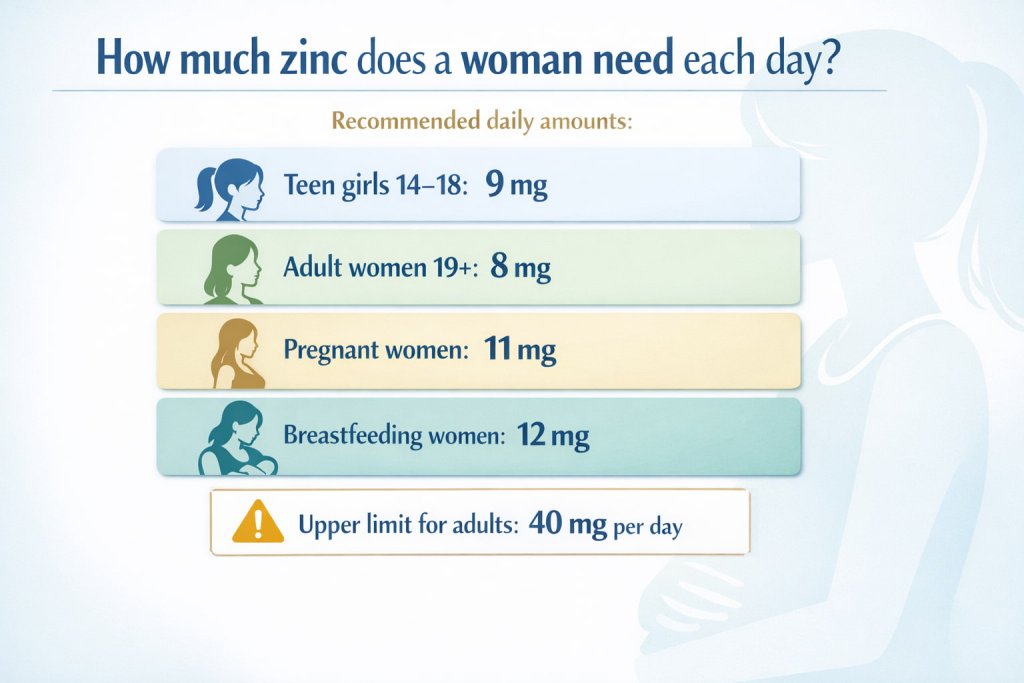
The current NIH recommended amounts for women depend on age and life stage:
| Life stage | Recommended zinc per day |
|---|---|
| Teen girls 14–18 | 9 mg |
| Adult women 19+ | 8 mg |
| Pregnant teens | 12 mg |
| Pregnant women | 11 mg |
| Breastfeeding teens | 13 mg |
| Breastfeeding women | 12 mg |
These are the recommended daily amounts for generally healthy people. The adult upper limit is 40 mg per day from all sources unless a clinician is supervising treatment. For teens ages 14 to 18, the upper limit is 34 mg per day.
Do most women get enough zinc?
Usually, yes. NIH data show that average zinc intake from food is about 9.2 mg per day in women, and average intake from food plus supplements is about 12.6 mg per day. At the same time, NIH reports that about 15% of U.S. adults age 19 and older have intakes below the Estimated Average Requirement, so low intake is not rare.
Pregnancy deserves closer attention. NIH reports that 11% of pregnant women in the United States have total zinc intakes below the Estimated Average Requirement. That does not mean all pregnant women need extra zinc automatically, but it does mean intake is worth checking, especially if diet variety is limited.
Who may benefit most from paying attention to zinc?
Women who are pregnant or breastfeeding
Pregnancy raises zinc needs, and lactation raises them further compared with the nonpregnant adult requirement. Low serum zinc concentrations during pregnancy might increase the risk of preeclampsia and low birth weight, but the NIH also notes that routine zinc supplementation during pregnancy does not clearly reduce low birth weight, stillbirth, or neonatal death, though it might lower the risk of preterm birth. In newer NIH pregnancy guidance, the overall effects of zinc supplementation on pregnancy outcomes are still described as unclear, and WHO does not recommend routine zinc supplementation during pregnancy as part of routine care.
That is why the safest practical advice is to make sure your prenatal plan covers recommended intake rather than assuming a separate high-dose zinc supplement is helpful. Prenatal vitamins often already include zinc, and your obstetric clinician can tell you whether you need anything extra.
Women who follow vegetarian or vegan diets
This is one of the biggest real-world issues for women. The Office on Women’s Health guidance for vegetarian eating says vegetarian or vegan women may need extra steps to get enough zinc, especially during pregnancy or breastfeeding. NIH explains why: legumes and whole grains contain phytates that bind zinc and reduce absorption, and people who follow vegetarian or vegan diets often have lower zinc intake and lower serum zinc levels than people who eat animal foods.
The same NIH guidance also notes that certain food-preparation methods may improve zinc availability from plant foods, including soaking beans, grains, and seeds before cooking and using fermented foods.
Women with digestive disorders or a history of bariatric surgery
Inflammatory bowel disease, celiac disease, and bariatric surgery can all make zinc status harder to maintain because absorption may be reduced and losses may be higher. NIH lists these groups among those at higher risk of zinc inadequacy.
Women taking certain medications
Zinc status or zinc supplements can become more complicated if you take certain medicines. This matters especially with some antibiotics, penicillamine, and thiazide diuretics.
Best food sources of zinc for women
Food first is usually the smartest approach. The NIH consumer fact sheet lists these as good zinc sources: oysters, meat, fish, poultry, crab, lobster, fortified breakfast cereals, beans, nuts, whole grains, eggs, and dairy products. Oysters are especially high in zinc.
A practical way to think about zinc-rich foods is this:
- Highest-zinc options: oysters and other shellfish
- Strong everyday sources: beef, poultry, fish, eggs, dairy, fortified cereals
- Plant-based sources: beans, lentils, chickpeas, nuts, seeds, and whole grains, though absorption is lower because of phytates
What zinc intake can look like in real food
If you are trying to reach the adult target of 8 mg per day, it helps to know which foods make a meaningful dent. According to the NIH Office of Dietary Supplements zinc overview for health professionals, about 3 ounces of roasted beef provides 3.8 mg, 1 ounce of roasted pumpkin seeds provides 2.2 mg, 1/2 cup of cooked lentils provides 1.3 mg, 1 cup of milk provides 1.0 mg, and 1 large egg provides 0.6 mg. Fruits and most vegetables provide very little zinc, so women who do not eat much meat or seafood usually need more intentional planning around beans, lentils, seeds, dairy, eggs, fortified cereals, or supplements when appropriate.
If you eat mostly plant-based foods, combining a variety of zinc-containing foods and using preparation methods like soaking or fermenting can help.
Should women take a zinc supplement?
Not always. Most women do not need a separate zinc supplement if their diet is adequate or if they already take a multivitamin or prenatal that includes zinc. NIH notes that almost all multivitamin-mineral supplements contain zinc, and zinc is also sold alone or in blends with other nutrients. Common forms include zinc sulfate, zinc acetate, and zinc gluconate, and the NIH consumer sheet says it is not clear that one form is generally better than another.
A supplement may make more sense if a clinician believes you are not getting enough zinc, if you have a condition that reduces absorption, or if your diet pattern makes adequacy difficult. For vegetarian or vegan women, the Office on Women’s Health says extra steps may be needed to meet zinc needs, and NIH notes that some people in plant-based diet groups might benefit from supplements.
One practical point that often gets missed: high-dose iron can interfere with zinc absorption when the two are taken at the same time. The NIH notes that supplements containing 25 mg or more of elemental iron can reduce zinc absorption, which is especially relevant for women who take standalone iron or iron-containing prenatals. If you use both, it is worth asking your clinician or pharmacist whether timing them separately makes sense in your situation. See the NIH Office of Dietary Supplements zinc health professional fact sheet and the NIH pregnancy supplements overview for the official guidance.
What is not well supported is the idea that every woman should take high-dose zinc for hormones, fertility, or immunity by default. Official guidance does not support routine high-dose use for general wellness.
How much zinc is too much?
For healthy adults, the tolerable upper intake level is 40 mg per day from food, supplements, beverages, and medications combined. Consistently going above that without medical guidance is not a good idea.
The NIH consumer fact sheet says too much zinc can cause:
- nausea
- dizziness
- headaches
- upset stomach
- vomiting
- loss of appetite
Over time, high zinc intake can also lead to low copper levels, reduced immunity, and lower HDL cholesterol. Very high supplemental doses can also reduce magnesium absorption.
Zinc supplement interactions women should know about
Zinc can interact with several medications. According to NIH:
- Quinolone and tetracycline antibiotics can interact with zinc and reduce absorption of both the mineral and the medicine
- Penicillamine absorption is reduced by zinc
- Thiazide diuretics can increase zinc loss in urine over time
If you use any of these medicines regularly, it is worth asking your clinician or pharmacist before adding zinc on your own. Timing matters in some cases, but personalized advice is best if you take prescription medications.
Signs of low zinc in women
Low zinc is not always obvious, and symptoms can overlap with many other issues. Still, NIH lists several possible signs of deficiency, including reduced taste or smell, slow wound healing, hair loss in some cases, frequent infections in older children, and appetite changes. In pregnancy, low zinc status has been linked with a higher risk of adverse birth outcomes.
It is also important to know that zinc status is not always straightforward to confirm. The NIH explains that serum or plasma zinc levels are often used in clinical practice, but these tests have limitations and can be affected by factors such as age, sex, time of day, infection, steroid hormone changes, and muscle breakdown during weight loss or illness. In real practice, clinicians usually look at the full picture: symptoms, diet pattern, risk factors such as pregnancy or malabsorption, medications, and sometimes lab results together rather than relying on one number alone.
These symptoms are not enough to diagnose zinc deficiency by themselves. If you think your intake is low or your absorption may be reduced, it is better to talk with a qualified healthcare professional than to guess and self-treat with a high-dose supplement.
FAQs
What are the main zinc benefits for women?
The main evidence-based benefits are support for immune function, DNA and protein synthesis, wound healing, normal cell division, taste and smell, and healthy growth and development during pregnancy.
How much zinc should a woman take daily?
Adult women need 8 mg per day. During pregnancy, the recommendation rises to 11 mg per day, and during breastfeeding it rises to 12 mg per day. Teen needs are slightly different.
Is 50 mg of zinc too much for a woman?
For most healthy adult women, 50 mg per day is above the adult upper limit of 40 mg per day. That does not mean a doctor will never recommend it short term, but it should not be your default daily dose without medical guidance.
Do vegetarian women need more zinc?
Not necessarily more by official recommendation, but they may need more planning. Zinc from plant-based diets is often less absorbable because of phytates, and both NIH and the Office on Women’s Health note that vegetarian or vegan women may need extra steps to get enough.
Should pregnant women take extra zinc?
Not automatically. Pregnancy increases zinc needs, but NIH says routine zinc supplementation during pregnancy has unclear benefits overall, and WHO does not recommend routine zinc supplementation as part of routine pregnancy care. A prenatal vitamin may already cover zinc needs, so it is best to follow your obstetric clinician’s advice.
Safety box
Who this is for: women who want a clear, evidence-based overview of zinc for general health, pregnancy, breastfeeding, or plant-based eating.
Who should be careful: women who are pregnant, breastfeeding, taking antibiotics, penicillamine, or thiazide diuretics, and women with IBD, celiac disease, or a history of bariatric surgery should not assume a zinc supplement is harmless just because it is sold over the counter.
Practical takeaway: food first, supplement second, and keep total daily intake within safe limits unless a clinician tells you otherwise.
Conclusion
Zinc is one of those nutrients that quietly supports a long list of important functions, and women’s needs become especially important during pregnancy, breastfeeding, and lower-absorption diet patterns. The most useful next step is to compare your diet or current supplement routine with the official intake targets and make sure you are covering the basics without overshooting into unnecessary high doses. If you are unsure, use that as your cue to review your diet, multivitamin, or prenatal with a healthcare professional.
This content is for informational purposes only and not medical advice.
References
- NIH Office of Dietary Supplements — Zinc Fact Sheet for Consumers
- NIH Office of Dietary Supplements — Zinc Fact Sheet for Health Professionals
- NIH Office of Dietary Supplements — Dietary Supplements and Life Stages: Pregnancy Fact Sheet for Health Professionals
- U.S. Office on Women’s Health — Vegetarian eating