
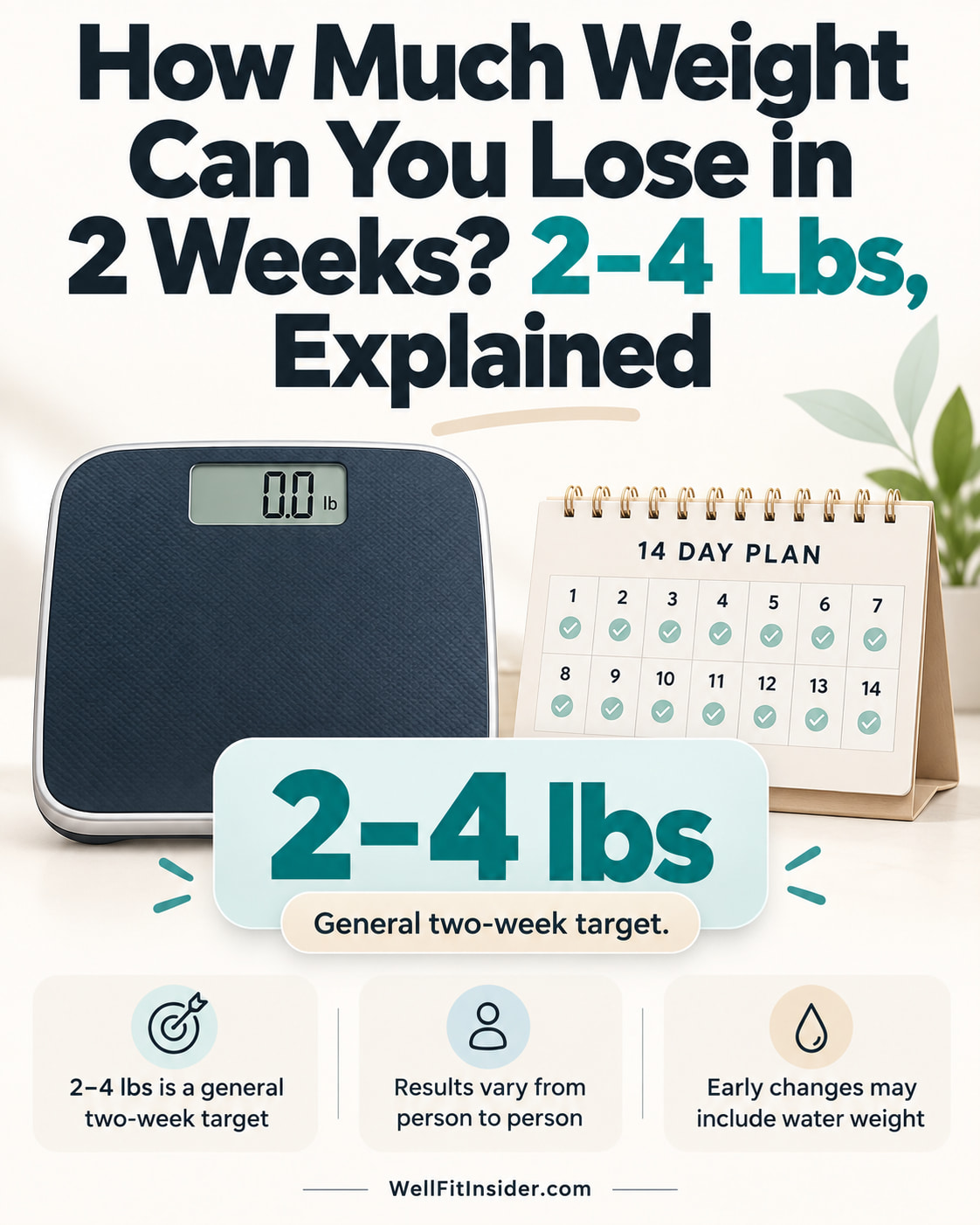
About 2–4 pounds (0.9–1.8 kg) is a reasonable general target over two weeks for many adults for whom weight loss is appropriate. How much weight you can lose in 2 weeks varies, and this range is not a guarantee.
The estimate follows CDC guidance, dated January, 2025, which describes gradual weight loss of about 1–2 pounds per week.
Understanding the difference between weight loss and fat loss helps you interpret your results. Early changes can include water, so a quick drop does not necessarily mean you have lost that much body fat. A useful approach combines manageable eating changes, regular activity, and consistent progress tracking.
How Much Weight Can You Lose in 2 Weeks?
The commonly used two-week estimate comes from multiplying a gradual weekly pace by two:
| Average weekly pace | Calculated loss over two weeks |
|---|---|
| 1 pound per week | 2 pounds |
| 1.5 pounds per week | 3 pounds |
| 2 pounds per week | 4 pounds |
These figures are calculations, not predictions of what your body will do. You may lose less, and an initial scale decrease may be larger because of fluid changes.
There is no requirement to reach four pounds by day 14. Use the first two weeks to assess whether your habits are practical and repeatable, rather than treating the upper end of the range as a deadline.
Weight Loss vs. Fat Loss in the First Two Weeks
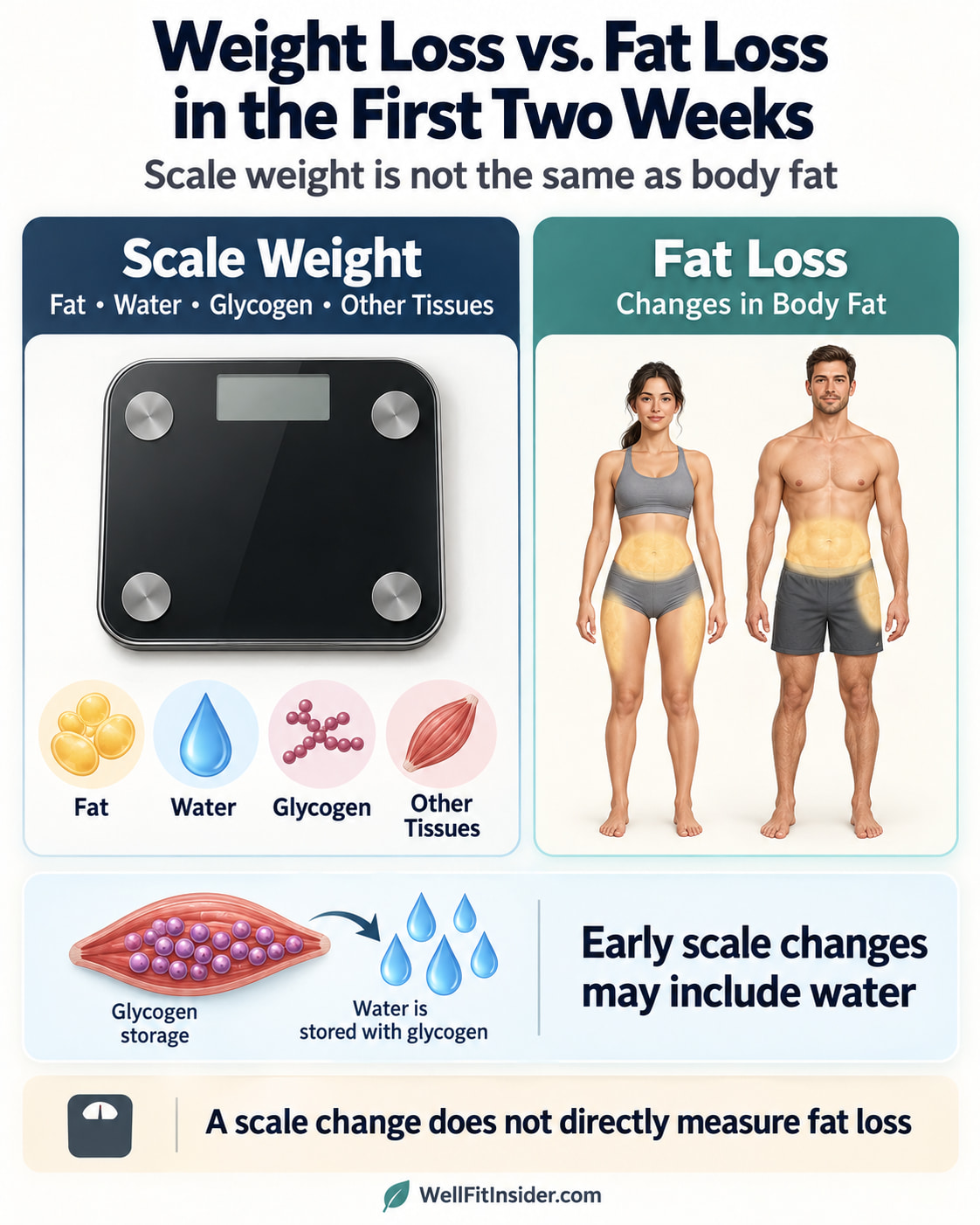
Your scale measures total body weight. It cannot tell you how much of a change comes from fat, stored carbohydrate, water, or other body tissues.
Your body stores carbohydrate as glycogen, which is associated with water. Changes in carbohydrate intake can change glycogen stores and the water associated with them. Sodium changes can also affect fluid balance.
These processes are included in NIH weight-change research, which models what happens during the early weeks of dietary changes.
This explains why:
- A faster initial drop may include water loss.
- Some weight can return when glycogen and fluid levels change again.
- The same weekly rate may not continue after the initial period.
For example, losing three pounds in your first week does not establish that you lost three pounds of fat or that you will lose another three the following week.
A scale change is useful information, but it is not a direct measurement of fat loss.
What Affects How Much Weight You Lose in 2 Weeks?
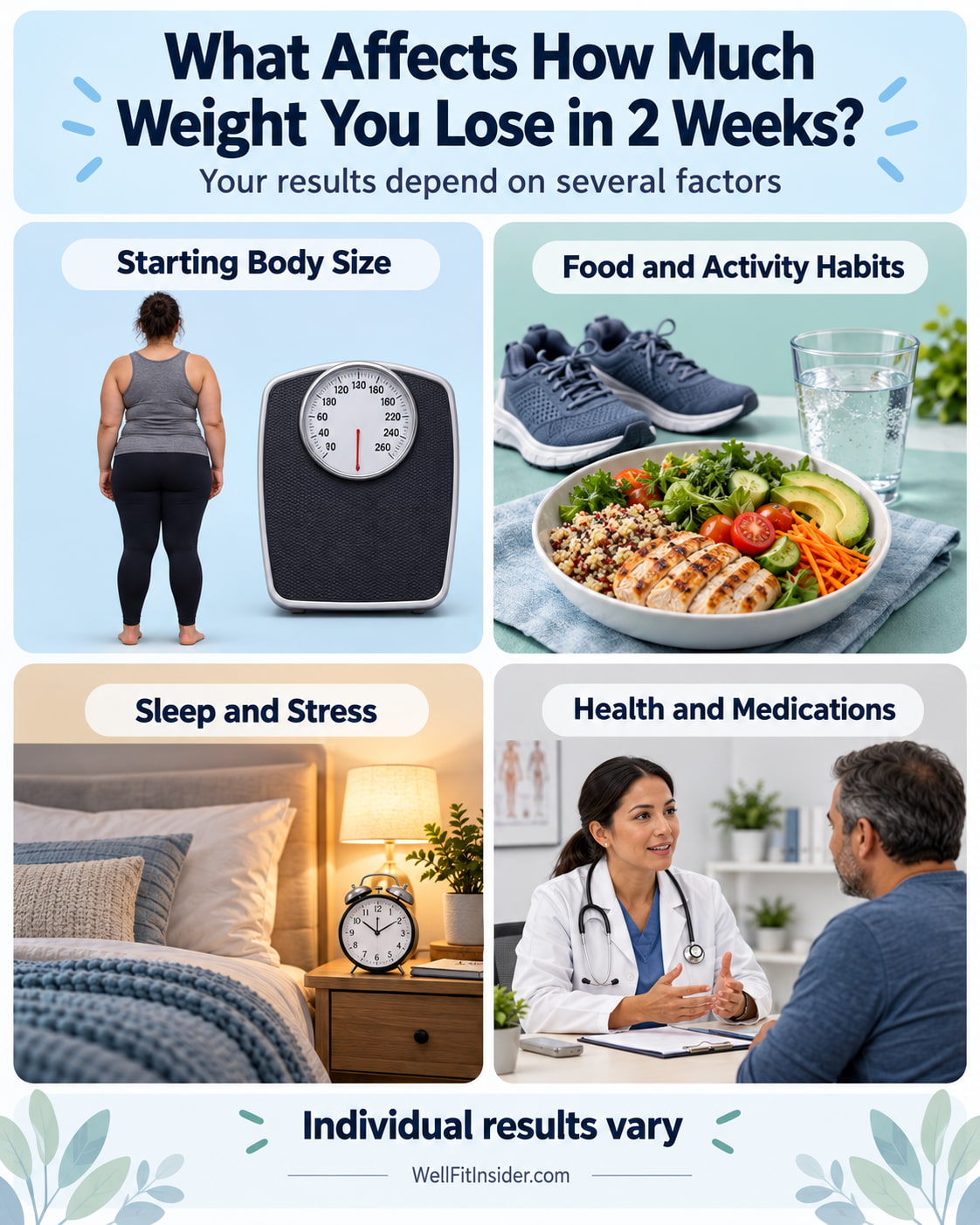
Two people making similar changes can have different results. Several factors help explain why.
Your Starting Point
Starting body size, body composition, and energy needs influence how your body responds to changes in food intake and activity. Someone else’s two-week results are therefore a poor basis for predicting your own.
Your Eating and Activity Patterns
Food portions, drinks, snacks, and daily movement all contribute to energy balance. The same planned change may affect people differently because their starting habits differ.
For example, replacing a daily sugary drink changes intake for someone who regularly drinks one. It makes no difference to someone who already chooses water.
Your Health, Medications, Sleep, and Stress
Medical conditions, medications, hormones, age, stress, and sleep can affect weight management. Practical circumstances also matter, including work schedules and access to food and activity.
If a medication or health condition may be involved, discuss your goals with a healthcare professional. Do not change prescribed medication to influence your weight.
How to Support Steady Weight Loss Over Two Weeks
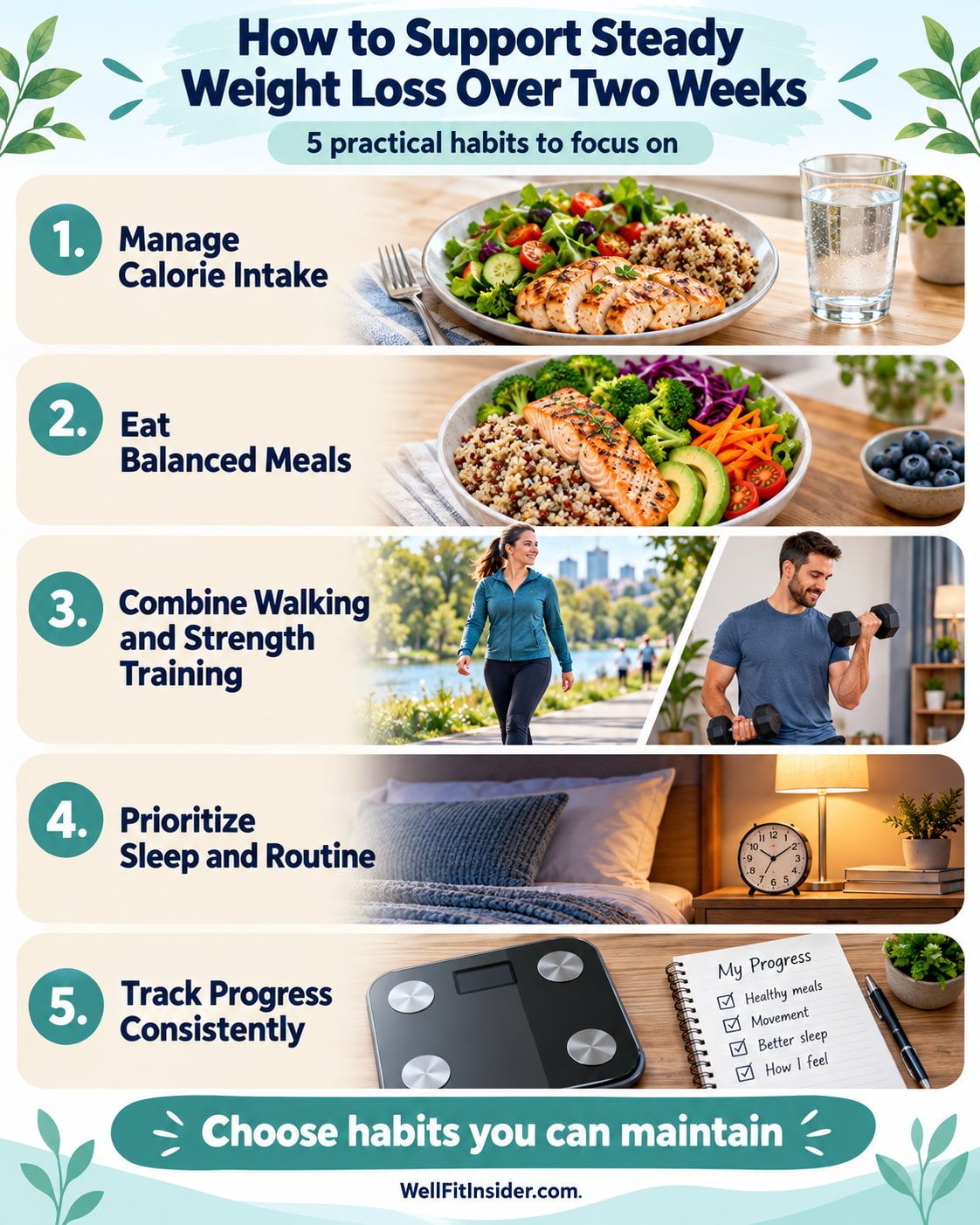
Choose changes you can maintain after the two weeks are over. You do not need to overhaul every meal or start a demanding workout schedule at once.
1. Make Manageable Changes to Your Calorie Intake
An energy deficit means consuming less energy than your body uses. It supports weight loss, but there is no single calorie intake that fits every adult.
Start by reviewing your usual habits. Depending on what you already eat and drink, useful options may include:
- Replacing some sugary drinks with water or unsweetened drinks.
- Checking portion sizes for foods you tend to serve without measuring.
- Planning meals and snacks so your choices are less rushed.
- Noticing calories from drinks, sauces, and extras as well as main meals.
These are options to consider, not a requirement to reduce every item.
Avoid assuming that a particular calorie reduction will produce an exact number of pounds. NIDDK explains that the familiar 3,500-calorie-per-pound rule does not fully account for the body’s changing energy needs and responses over time.
2. Keep Meals Balanced
Reducing intake should still leave room for a variety of nutritious foods. NIDDK’s healthy-eating guidance includes vegetables, whole fruit, whole grains, protein foods, and appropriate dairy or fortified alternatives.
Simple meal combinations might include:
- Oatmeal with plain yogurt and fruit.
- Lentils or beans with rice and vegetables.
- Fish, chicken, or tofu with potatoes and vegetables.
Adjust portions to your needs and preferences. These examples are meal ideas, not a prescribed calorie plan.
Choose a few meals you enjoy and can prepare consistently. Having an easy breakfast or a reliable lunch option can make the next two weeks easier to organize.
3. Combine Aerobic Activity With Strength Training
The CDC activity recommendations, updated April, 2026, advise adults to get at least:
- 150 minutes of moderate-intensity aerobic activity per week, such as brisk walking, or an equivalent amount of vigorous activity.
- Two days of muscle-strengthening activity per week.
These recommendations support general health; they do not guarantee a specific weight change.
Build toward an appropriate routine based on your current abilities. If you are inactive, a manageable starting goal might be a short walk on several days, followed by gradual increases.
People with health conditions or activity limitations may need individualized guidance about the type and amount of exercise.
4. Make Sleep and Routine Part of Your Plan
CDC guidance includes adequate sleep and stress management as parts of a healthy weight-management approach.
Choose one practical routine to work on, such as keeping a more consistent bedtime or setting aside time to plan the next day’s meals.
It also helps to make your goals specific. “Prepare lunch for three workdays” gives you a clearer action than “eat better.”
5. Track Progress Under Similar Conditions
If you choose to weigh yourself, keep the conditions consistent:
- Use the same scale in the same location.
- Place it on a firm, level surface.
- Weigh at a similar time, preferably in the morning.
- Wear similar clothing.
NHS England recommends consistent measurements at regular weekly-to-monthly intervals. For a two-week check-in, you could record your starting weight and compare it with readings after one and two weeks.
Also record whether you followed your planned habits. A single number cannot show whether your routine is practical, enjoyable, or sustainable.
Can You Lose 5 or 10 Pounds in Two Weeks?
A scale decrease of five pounds or more can occur, but it does not necessarily represent that much fat loss. Early fluid changes can contribute.
A 10-pound goal is substantially above the general two-week planning range. It should not become a reason to severely restrict food or pursue rapid weight loss without appropriate guidance.
According to NIDDK guidance on dieting and gallstones, losing weight very quickly can increase the likelihood of gallstones.
Very restrictive diets also require careful consideration. NICE guidance reserves low-energy and very-low-energy diets for specific clinical circumstances with support and supervision. They are not suitable as a general two-week challenge.
An initial loss above four pounds is not automatically dangerous. Its meaning depends on fluid changes, your starting circumstances, and how the loss occurred. A healthcare professional can help assess unusually rapid or concerning changes.
When to Get Personalized Weight-Loss Guidance
Speak with a healthcare professional or registered dietitian if you are unsure whether weight loss is appropriate for you or how to approach it with an existing medical condition.
Individual guidance is especially relevant if you:
- Take medication that may affect weight or require review when your diet changes.
- Have a history of an eating disorder or find weight tracking distressing.
- Are considering a very restrictive eating plan.
General adult weight-loss tools are also not designed for every life stage. The NIH Body Weight Planner, for example, excludes people under 18 and those who are pregnant or breastfeeding.
If you keep losing weight without changing your diet or activity, arrange a medical appointment. The NHS guidance on unintentional weight loss recommends getting ongoing unexplained loss checked, especially when other symptoms are present.
Frequently Asked Questions
Is Losing 2 Pounds in 2 Weeks a Good Result?
It can be a reasonable result when weight loss is appropriate for you. It corresponds to an average of one pound per week. You do not need to reach the upper end of the general range to make progress.
Can You Lose 2 kg in 2 Weeks?
Two kilograms is about 4.4 pounds, slightly above the 2–4 pound planning range. That amount may appear on the scale, particularly with early fluid changes, but it should not be assumed to represent fat alone.
Is Losing 4 Pounds the Same as Losing 4 Pounds of Fat?
No. Changes in total weight can include water, glycogen, and other tissues as well as fat. A standard scale cannot separate these components.
How Many Calories Should You Eat to Lose Weight in 2 Weeks?
There is no universal calorie target. Your needs depend on factors such as body size, age, activity, and health. A registered dietitian can help you choose an appropriate intake without relying on an aggressive short-term goal.
Can You Lose Weight Without Going to the Gym?
Yes. A gym membership is not required to change energy balance. Walking and suitable home exercises can contribute to activity, while food and drink choices also matter. Exercise still provides benefits beyond its effect on the scale.
Why Did You Lose More Weight in the First Week?
Early changes in glycogen and associated water can contribute to a faster initial decrease. A slower second week does not, by itself, show that your efforts have stopped working.
What if You Lose Less Than 2 Pounds in Two Weeks?
A smaller change does not automatically mean your approach has failed. Review whether you measured consistently and whether your planned habits are manageable. Avoid making a drastic restriction based only on one short interval.
Conclusion
About 2–4 pounds is a useful general two-week target for appropriate adults, but individual results vary and scale changes include more than body fat.
Choose two manageable habits to practice over the next 14 days, such as planning balanced lunches and scheduling regular walks. Review your progress, keep what works, and seek personalized guidance when needed.
This content is for informational purposes only and not medical advice.
References
- CDC: Steps for Losing Weight.
- Hall and colleagues: Research Supplement on Early Body-Weight Changes.
- Hall and colleagues: Quantification of the Effect of Energy Imbalance on Bodyweight.
- NIDDK: NIH Body Weight Planner Explanation.
- NIDDK: Eating & Physical Activity to Lose or Maintain Weight.
- CDC: Physical Activity and Your Weight and Health.
- NHS England: How to Record Your Weight.