
A 7-day meal plan for muscle gain and fat loss should be high in protein, built around whole foods, and paired with regular strength training. The goal is not to starve yourself or “bulk” aggressively. The goal is body recomposition: supporting muscle repair while creating enough calorie control to gradually reduce body fat.
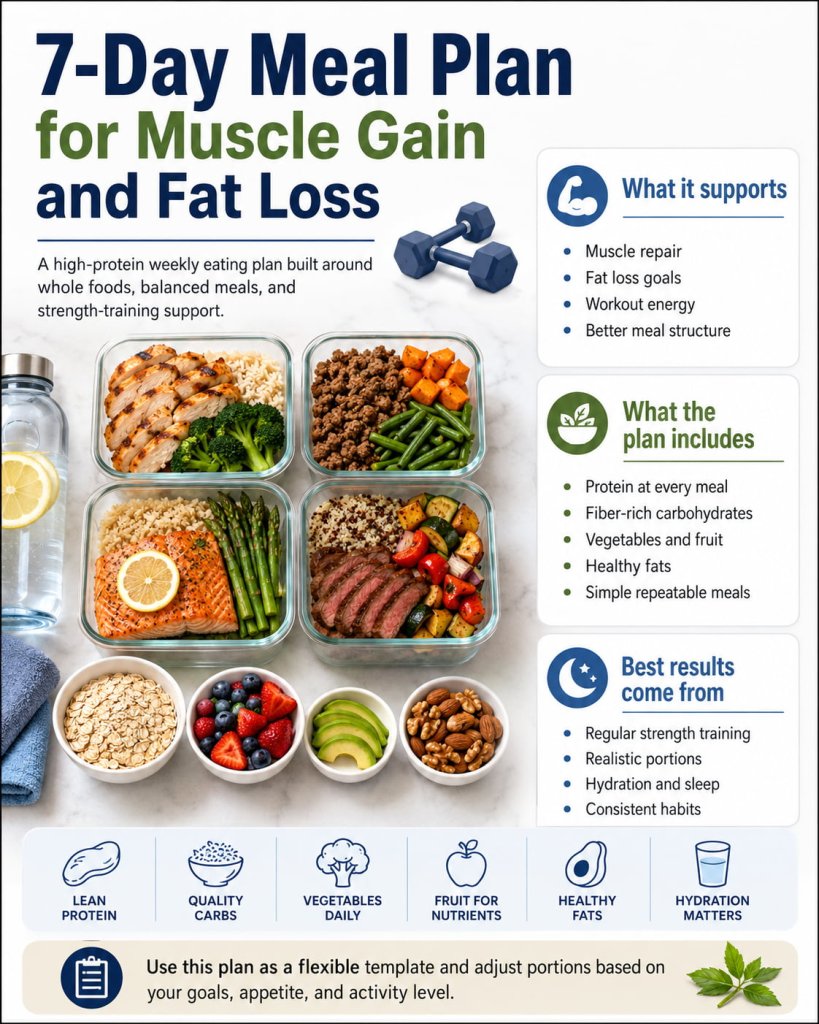
This plan is designed for generally healthy adults who want a practical week of meals with protein, carbs, fats, fiber, and simple portions. For best results, combine it with progressive resistance training. The CDC adult physical activity guidelines recommend at least 150 minutes of moderate-intensity activity per week plus muscle-strengthening activity on 2 or more days per week.
What Is a 7-Day Meal Plan for Muscle Gain and Fat Loss?
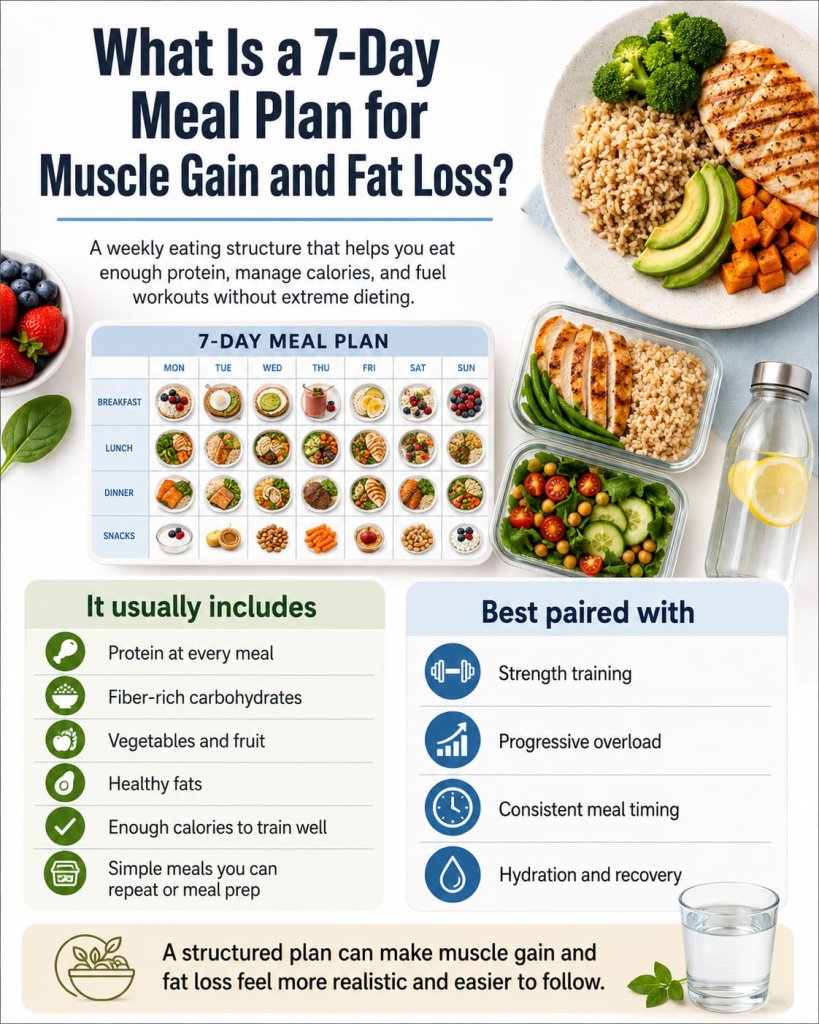
A 7-day meal plan for muscle gain and fat loss is a weekly eating structure that helps you eat enough protein, manage calories, and fuel workouts without relying on extreme dieting.
It usually includes:
- Protein at every meal
- Fiber-rich carbohydrates
- Vegetables and fruit
- Healthy fats
- Enough calories to train well
- Simple meals you can repeat or meal prep
This type of plan works best when your training includes strength exercises such as squats, lunges, presses, rows, deadlifts, push-ups, pull-downs, or machine-based resistance training.
How Muscle Gain and Fat Loss Work Together
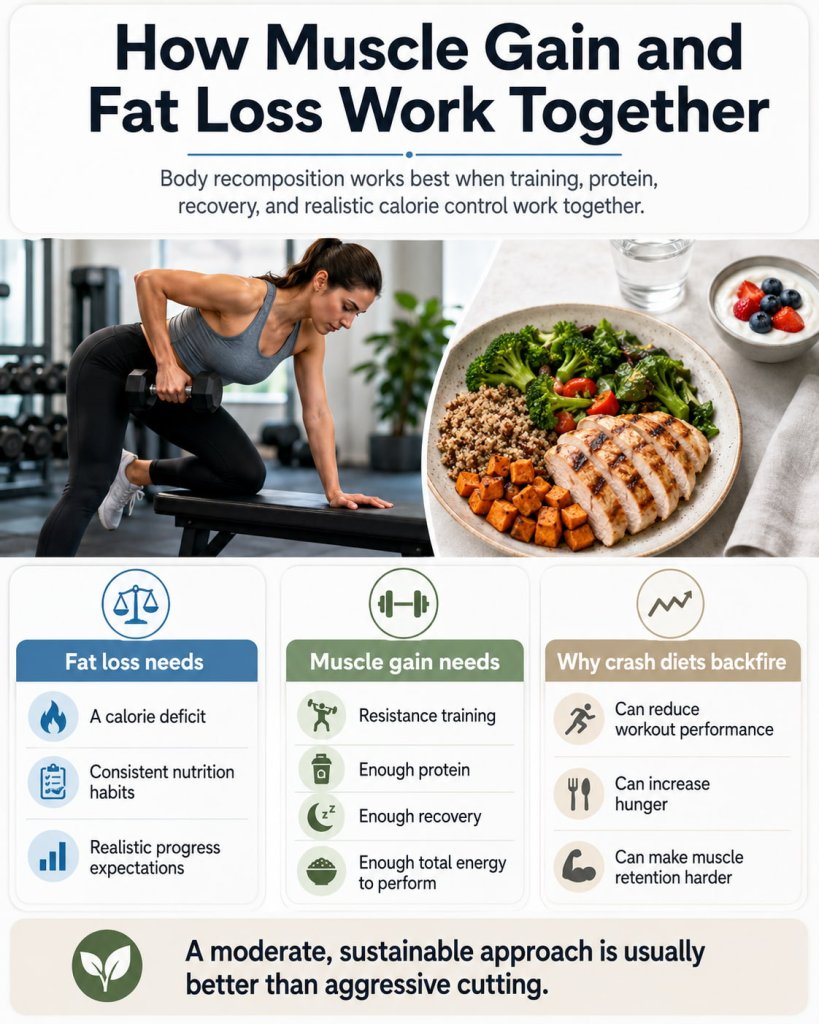
Muscle gain and fat loss can happen at the same time, especially if you are new to strength training, returning after time off, improving your protein intake, or moving from inconsistent eating to a structured plan.
Fat loss usually requires a calorie deficit. The NIDDK recommends realistic weight-loss goals and notes that many safe programs aim for 5% to 10% of starting body weight within 6 months when weight loss is appropriate.
Muscle gain requires enough training stimulus, enough protein, and enough total energy to recover. That is why an aggressive crash diet is usually a poor match for body recomposition. It may reduce scale weight quickly, but it can also make workouts harder, increase hunger, and make it more difficult to maintain lean muscle.
Protein Target for Muscle Gain and Fat Loss
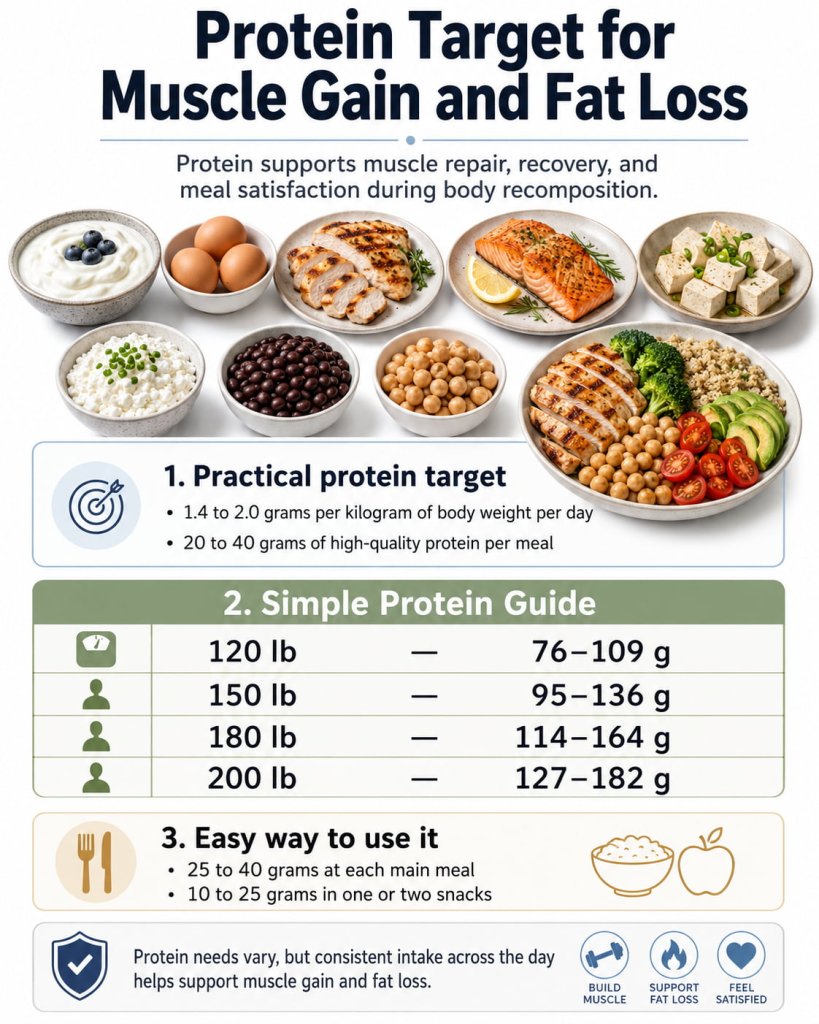
Protein is the most important macro in this plan because it supports muscle repair and helps meals feel filling.
The International Society of Sports Nutrition states that active people generally need about 1.4 to 2.0 grams of protein per kilogram of body weight per day to support muscle building and maintenance, with higher needs sometimes used during calorie restriction. It also gives a practical per-meal range of about 20 to 40 grams of high-quality protein.
Simple Protein Guide
| Body Weight | Daily Protein Range |
|---|---|
| 120 lb | 76–109 g |
| 150 lb | 95–136 g |
| 180 lb | 114–164 g |
| 200 lb | 127–182 g |
You do not need to hit the highest number every day. A practical starting point for many people is to include 25 to 40 grams of protein at each main meal and 10 to 25 grams in one or two snacks.
Best Foods for a 7-Day Meal Plan for Muscle Gain and Fat Loss
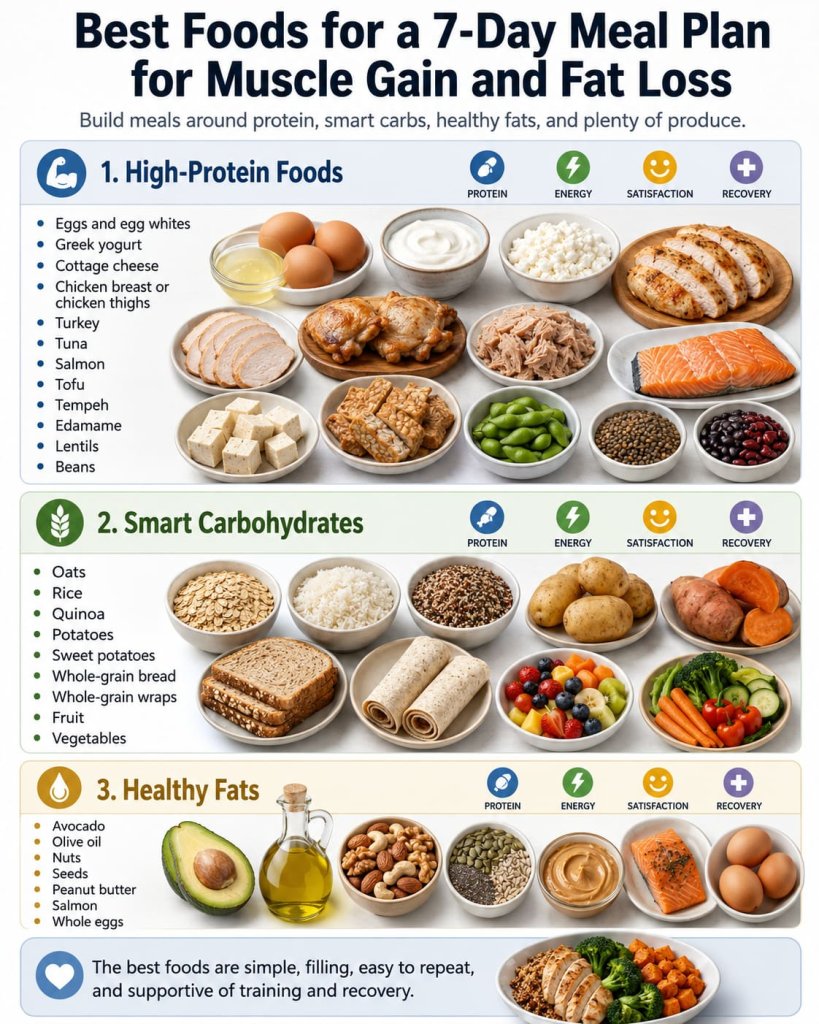
The best foods are simple, filling, and easy to repeat. A strong body recomposition meal plan should include protein, smart carbs, healthy fats, and plenty of produce.
High-Protein Foods
Good options include:
- Eggs and egg whites
- Greek yogurt
- Cottage cheese
- Chicken breast or chicken thighs
- Turkey
- Tuna
- Salmon
- Shrimp
- Lean beef
- Tofu
- Tempeh
- Edamame
- Lentils
- Beans
- Whey or plant protein powder, if needed
Protein powder can be convenient, but it is not required. If you use supplements, remember that the FDA does not approve dietary supplements for safety and effectiveness before they are marketed. Choose third-party tested products when possible.
Smart Carbohydrates
Carbs help fuel lifting, cardio, daily movement, and recovery. Good options include:
- Oats
- Rice
- Quinoa
- Potatoes
- Sweet potatoes
- Whole-grain bread
- Whole-grain wraps
- Beans
- Lentils
- Fruit
- Vegetables
The joint position statement from the Academy of Nutrition and Dietetics, Dietitians of Canada, and ACSM explains that food and fluid choices influence performance and recovery, especially when training demands are higher.
Healthy Fats
Healthy fats support meal satisfaction and help you stay consistent.
Good options include:
- Avocado
- Olive oil
- Nuts
- Seeds
- Peanut butter
- Salmon
- Whole eggs
The National Academies’ macronutrient ranges place adult fat intake at 20% to 35% of calories, carbohydrates at 45% to 65%, and protein at 10% to 35%. These are broad ranges, not strict rules, but they show why a balanced plan usually works better than cutting out an entire macro group.
Easy Substitutions for Different Diets
This meal plan can be adjusted for different eating styles.
For a vegetarian version, replace chicken, turkey, beef, and fish with tofu, tempeh, edamame, eggs, Greek yogurt, cottage cheese, lentils, beans, or seitan. Try to include a clear protein source at each meal rather than relying only on grains or vegetables.
For a dairy-free version, replace Greek yogurt and cottage cheese with fortified soy yogurt, tofu-based options, eggs, lean meats, fish, or a third-party tested plant protein powder if needed.
For a gluten-free version, choose rice, potatoes, quinoa, oats labeled gluten-free, corn tortillas, beans, lentils, fruit, and vegetables instead of wheat-based wraps, pasta, or bread.
How to Use This Meal Plan
This 7-day meal plan gives you a flexible structure. Portion sizes can be adjusted based on your body size, appetite, activity level, and goal. Because calorie needs vary widely, this plan should be adjusted rather than followed as a fixed-calorie prescription.
- If your goal is fat loss while keeping strength, start with portions that keep you satisfied and support training.
- If weight is not changing after 2 to 3 weeks, reduce small extras such as oils, nut butters, cheese, dressings, or large carb portions.
- If workouts feel weak, recovery is poor, or hunger is extreme, add more whole-food carbs or slightly larger protein portions.
Use these simple rules:
- Add more rice, oats, potatoes, fruit, or bread if you are losing energy in workouts.
- Reduce portions of calorie-dense fats if fat loss stalls.
- Keep protein consistent.
- Fill at least half your lunch and dinner plate with vegetables when possible.
- Drink water throughout the day.
- Repeat meals if that makes the plan easier.
The current Dietary Guidelines for Americans emphasize whole, nutritious foods while limiting highly processed foods, added sugars, and refined carbohydrates.
7-Day Meal Plan for Muscle Gain and Fat Loss
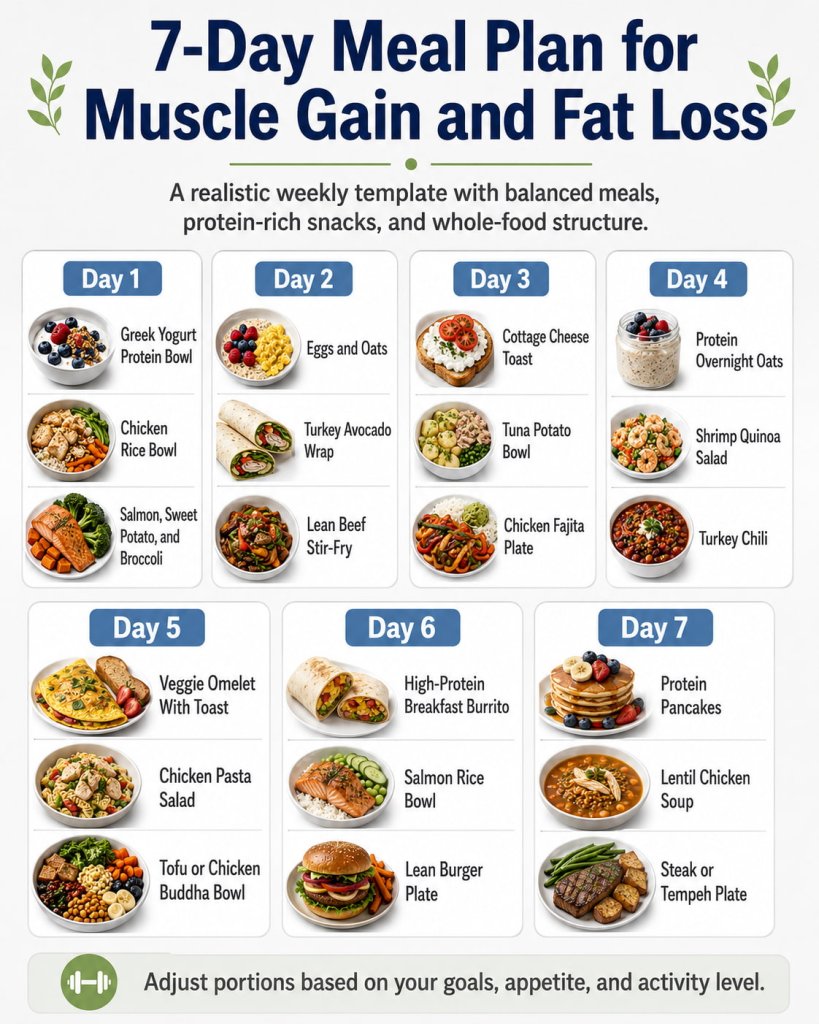
This plan includes breakfast, lunch, dinner, and one to two snacks per day. It is not a strict prescription. Use it as a realistic template.
Day 1
Breakfast: Greek Yogurt Protein Bowl
Combine:
- 1 cup plain Greek yogurt
- ½ cup berries
- ⅓ cup oats
- 1 tablespoon chia seeds
- 1 tablespoon chopped walnuts
This meal gives you protein, fiber, and slow-digesting carbs to start the day.
Snack: Apple With Peanut Butter
Have:
- 1 medium apple
- 1 tablespoon peanut butter
This snack works well when you want something sweet, crunchy, and filling.
Lunch: Chicken Rice Bowl
Build a bowl with:
- 4 to 6 ounces grilled chicken
- ¾ to 1 cup cooked rice
- 1 to 2 cups mixed vegetables
- ¼ avocado
- Salsa or Greek-yogurt-based sauce
This is a simple muscle-building lunch because it combines lean protein with carbs for training energy.
Snack: Cottage Cheese and Pineapple
Have:
- ¾ cup cottage cheese
- ½ cup pineapple or berries
Dinner: Salmon, Sweet Potato, and Broccoli
Serve:
- 4 to 6 ounces baked salmon
- 1 medium sweet potato
- 1 to 2 cups steamed broccoli
- 1 teaspoon olive oil or a squeeze of lemon
Salmon adds protein and healthy fats, while sweet potato supports workout recovery.
Day 2
Breakfast: Eggs and Oats
Have:
- 2 whole eggs
- 2 egg whites
- ½ cup dry oats cooked with water or milk
- ½!– /wp:list-item –>
- Cinnamon
This meal is useful before a morning workout because it provides protein and carbs without feeling too heavy.
Snack: Protein Smoothie
Blend:
- 1 scoop protein powder or ¾ cup Greek yogurt
- 1 cup milk or fortified soy milk
- ½ banana
- 1 handful spinach
- Ice
Lunch: Turkey Avocado Wrap
Use:
- 1 whole-grain wrap
- 4 to 5 ounces turkey breast
- Lettuce
- Tomato
- Cucumber
- ¼ avocado
- Mustard or Greek yogurt spread
Serve with carrots or a side salad.
Snack: Boiled Eggs and Fruit
Have:
- 2 boiled eggs
- 1 orange or 1 cup berries
Dinner: Lean Beef Stir-Fry
Cook:
- 4 to 5 ounces lean beef
- 2 cups stir-fry vegetables
- ¾ cup cooked rice or quinoa
- Garlic, ginger, and low-sodium soy sauce
This dinner is high in protein and easy to meal prep.
Day 3
Breakfast: Cottage Cheese Toast
Have:
- 2 slices whole-grain toast
- ¾ cup cottage cheese
- Sliced tomato or berries
- Black pepper or cinnamon, depending on sweet or savory style
Snack: Greek Yogurt With Granola
Choose:
- ¾ cup plain Greek yogurt
- 2 tablespoons low-sugar granola
- ½ cup berries
Lunch: Tuna Potato Bowl
Build a bowl with:
- 1 can tuna packed in water
- 1 medium baked potato
- Greek yogurt or light olive-oil dressing
- Celery, cucumber, and greens
- Pickles or lemon for flavor
Snack: Edamame
Have:
- 1 cup edamame
- Sea salt or chili flakes
Edamame is a helpful plant protein snack with fiber.
Dinner: Chicken Fajita Plate
Serve:
- 4 to 6 ounces chicken breast or thighs
- Bell peppers and onions
- 2 small corn tortillas or ¾ cup rice
- Salsa
- Lettuce
- 2 tablespoons Greek yogurt instead of sour cream
Day 4
Breakfast: Protein Overnight Oats
Mix the night before:
- ½ cup oats
- ¾ cup Greek yogurt
- ½ cup milk or fortified soy milk
- 1 tablespoon chia seeds
- ½ cup berries
- Cinnamon
This is a convenient meal-prep breakfast for busy mornings.
Snack: Turkey Roll-Ups
Have:
- 3 to 4 slices turkey breast
- Cucumber sticks
- 1 cheese stick or a small handful of nuts
Lunch: Shrimp Quinoa Salad
Combine:
- 4 to 6 ounces shrimp
- ¾ cup cooked quinoa
- Mixed greens
- Cucumber
- Tomato
- Olive oil and lemon dressing
Snack: Protein Shake and Banana
Use this snack after training if your next meal is more than 1 to 2 hours away.
Have:
- 1 protein shake
- 1 banana
Dinner: Turkey Chili
Make chili with:
- Lean ground turkey
- Beans
- Crushed tomatoes
- Onion
- Bell pepper
- Chili spices
Serve with a side salad or a small portion of rice if needed.
Day 5
Breakfast: Veggie Omelet With Toast
Cook:
- 2 whole eggs
- 2 egg whites
- Spinach
- Mushrooms
- Peppers
- 1 slice whole-grain toast
Add fruit if you train in the morning.
Snack: Cottage Cheese With Berries
Have:
- ¾ to 1 cup cottage cheese
- ½ cup berries
- Cinnamon
Lunch: Chicken Pasta Salad
Combine:
- 4 to 6 ounces grilled chicken
- 1 cup cooked whole-grain pasta
- Spinach or arugula
- Cherry tomatoes
- Cucumber
- Light olive oil and vinegar dressing
Snack: Hummus and Vegetables
Have:
- ¼ cup hummus
- Carrots, cucumber, and bell pepper strips
Add a boiled egg or Greek yogurt if you need more protein.
Dinner: Tofu or Chicken Buddha Bowl
Build a bowl with:
- 4 to 6 ounces tofu or chicken
- ¾ cup cooked rice
- Steamed or roasted vegetables
- 1 tablespoon tahini or peanut sauce
- Lime juice and herbs
Day 6
Breakfast: High-Protein Breakfast Burrito
Use:
- 1 whole-grain tortilla
- 2 eggs or egg whites
- Black beans
- Salsa
- Spinach
- Small sprinkle of cheese
This breakfast is filling and works well before an active day.
Snack: Greek Yogurt and Fruit
Have:
- 1 cup plain Greek yogurt
- 1 cup berries or sliced fruit
Lunch: Salmon Rice Bowl
Use:
- 4 to 6 ounces salmon
- ¾ cup cooked rice
- Cucumber
- Carrots
- Edamame
- Seaweed flakes or sesame seeds
- Light soy, ginger, or yogurt-based sauce
Snack: Trail Mix Portion
Have:
- ¼ cup nuts and seeds
- 1 piece of fruit
Keep the portion moderate because nuts are nutritious but calorie-dense.
Dinner: Lean Burger Plate
Serve:
- 1 lean beef, turkey, or bean burger patty
- Whole-grain bun or roasted potatoes
- Large salad
- Tomato, onion, pickles, mustard
- Optional avocado slice
Day 7
Breakfast: Protein Pancakes
Make pancakes with:
- Oats
- Eggs or egg whites
- Cottage cheese or Greek yogurt
- Cinnamon
- Berries on top
Keep syrup light, or use fruit for sweetness.
Snack: Boiled Eggs and Vegetables
Have:
- 2 boiled eggs
- Baby carrots or cucumber slices
Lunch: Lentil Chicken Soup
Make soup with:
- Lentils
- Chicken breast or thighs
- Carrots
- Celery
- Onion
- Spinach
- Herbs and spices
Serve with a slice of whole-grain bread if you need more carbs.
Snack: Smoothie Bowl
Blend:
- Greek yogurt or protein powder
- Frozen berries
- Milk or fortified soy milk
- Ice
Top with a small amount of granola or chia seeds.
Dinner: Steak or Tempeh Plate
Serve:
- 4 to 6 ounces lean steak or tempeh
- Roasted potatoes
- Green beans or asparagus
- Side salad
- Olive oil and vinegar dressing
This final dinner keeps the plan flexible for both meat-based and plant-forward eaters.
Simple Meal Prep Plan for the Week
Meal prep makes this 7-day meal plan easier to follow. You do not need to cook every meal from scratch.
Prep 2 to 3 Proteins
Choose:
- Grilled chicken
- Ground turkey
- Salmon
- Lean beef
- Tofu
- Boiled eggs
- Greek yogurt or cottage cheese
Prep 2 to 3 Carbs
Choose:
- Rice
- Potatoes
- Sweet potatoes
- Oats
- Quinoa
- Whole-grain wraps
Prep Vegetables
Use a mix of raw and cooked vegetables:
- Salad greens
- Broccoli
- Bell peppers
- Cucumbers
- Carrots
- Green beans
- Spinach
- Roasted mixed vegetables
Keep Fast Protein Snacks Ready
Good options include:
- Greek yogurt
- Cottage cheese
- Boiled eggs
- Tuna packets
- Edamame
- Protein powder
- Turkey slices
Simple Grocery List for the 7-Day Meal Plan
Use this list as a starting point and adjust based on your preferred meals.
| Category | Examples |
|---|---|
| Protein | Eggs, Greek yogurt, cottage cheese, chicken, turkey, tuna, salmon, shrimp, lean beef, tofu, tempeh, edamame |
| Carbs | Oats, rice, quinoa, potatoes, sweet potatoes, whole-grain bread, whole-grain wraps, pasta, beans, lentils, fruit |
| Vegetables | Spinach, broccoli, mixed greens, bell peppers, cucumbers, carrots, green beans, asparagus, onions, tomatoes |
| Healthy fats | Avocado, olive oil, nuts, seeds, peanut butter, tahini |
| Flavor boosters | Salsa, mustard, lemon, vinegar, herbs, garlic, ginger, chili flakes, low-sodium soy sauce |
A good rule is to buy 2 to 3 proteins, 2 to 3 carb sources, several vegetables, and 2 healthy fat options each week. This keeps meal prep simple without making the week feel repetitive.
Meal Prep Safety Tips
Meal prep is helpful, but cooked foods still need safe storage. Keep cooked meals refrigerated in sealed containers and use them within a few days. If you cook a large batch, freeze extra portions so they stay fresh longer.
Store sauces and dressings separately when possible. This helps salads, wraps, and bowls keep better texture. Reheat cooked meats, rice, and mixed dishes until steaming hot, and do not leave prepared meals sitting at room temperature for long periods.
Example Daily Macro Targets
Your exact macros depend on body size, training schedule, and calorie needs. Still, this simple range works for many active adults.
| Goal | Practical Target |
|---|---|
| Protein | 25–40 g per main meal |
| Carbs | Include around workouts and at main meals |
| Fat | Add small portions for satisfaction |
| Fiber | Include vegetables, fruit, beans, oats, or whole grains daily |
| Water | Drink regularly throughout the day |
For hydration, the CDC encourages water as a healthy drink choice and notes that replacing sugary drinks with water can help reduce calorie intake.
What to Eat Before and After Workouts
Before a Workout
Eat a meal 2 to 3 hours before training, or a lighter snack 30 to 90 minutes before.
Good options:
- Oats with Greek yogurt
- Banana with protein shake
- Turkey wrap
- Rice bowl with chicken
- Toast with eggs
After a Workout
Aim for protein plus carbs, especially if you trained hard.
Good options:
- Chicken and rice
- Greek yogurt with fruit
- Protein smoothie with banana
- Salmon and potatoes
- Cottage cheese with berries
You do not need a perfect “anabolic window” meal immediately after every workout. What matters most is your total daily protein, total calories, and consistency.
Training Day vs Rest Day Adjustments
You do not need two completely different meal plans for training days and rest days. Keep protein about the same every day, then adjust carbs and fats based on activity.
On training days, place more of your carbs around workouts. Good choices include oats, rice, potatoes, fruit, whole-grain bread, or quinoa. This can help you train harder and recover better.
On rest days, keep meals similar but slightly reduce carb portions if you are less active. For example, use ½ cup rice instead of 1 cup, choose extra vegetables instead of a second slice of bread, or skip the post-workout snack if you are not hungry.
Common Mistakes to Avoid
Cutting Calories Too Low
Very low calories can make you tired, hungry, and less consistent with training. If your lifts are dropping quickly, your sleep is poor, and your hunger is intense, your deficit may be too aggressive.
Eating Protein Only at Dinner
Spread protein across the day. Most people do better with protein at breakfast, lunch, dinner, and one snack.
Avoiding Carbs Completely
Carbs are not required at every meal, but cutting them too low can hurt workout performance for many people.
Forgetting Fiber
Fiber-rich foods help meals feel more filling. Include vegetables, fruit, oats, beans, lentils, and whole grains.
Depending Too Much on Supplements
Protein powder can help, but it should not replace a balanced diet. Build your routine around real meals first.
Who Should Be Careful With This Meal Plan?
This plan is for generally healthy adults. It is not a medical diet.
Speak with a healthcare professional or registered dietitian before using a high-protein fat-loss plan if you:
- Have kidney disease
- Have diabetes or use blood sugar medication
- Are pregnant or breastfeeding
- Have a history of eating disorders
- Have a medical condition that affects your diet
- Are underweight or losing weight unintentionally
The National Kidney Foundation notes that people with chronic kidney disease may need individualized protein guidance, especially depending on disease stage and dialysis status.
Recovery Habits That Support Muscle Gain and Fat Loss
Food matters, but recovery matters too.
The CDC sleep guidance says adults should get at least 7 hours of sleep per day. Poor sleep can make appetite harder to manage and training harder to recover from.
To support this plan:
- Sleep 7 or more hours when possible
- Train with progressive overload
- Walk or stay active on non-lifting days
- Drink water regularly
- Keep meals repeatable
- Track progress with strength, measurements, photos, and how clothes fit, not only scale weight
FAQs About a 7-Day Meal Plan for Muscle Gain and Fat Loss
Can I gain muscle and lose fat at the same time?
Yes, it is possible, especially if you are new to lifting, returning to training, improving your protein intake, or starting from a higher body-fat level. The key is consistent strength training, enough protein, and a modest calorie deficit or maintenance-style intake.
How much protein do I need for muscle gain and fat loss?
Many active adults do well with about 1.4 to 2.0 grams of protein per kilogram of body weight per day. A simpler approach is to eat 25 to 40 grams of protein at each main meal and include a protein-rich snack if needed.
Should I eat carbs if I want fat loss?
Yes, carbs can fit into a fat-loss plan. Choose mostly whole-food carbs such as oats, rice, potatoes, fruit, beans, lentils, and whole grains. Carbs can be especially useful before and after workouts.
Do I need protein powder?
No. Protein powder is optional. It can help if you struggle to meet your protein target through food, but meals like Greek yogurt, eggs, chicken, fish, tofu, beans, cottage cheese, and lean meats can cover your needs.
How many calories should I eat?
Your calorie needs depend on your body size, age, sex, training, daily movement, and goal. For fat loss with muscle retention, a modest deficit is usually better than a severe cut. If your performance drops sharply or hunger becomes hard to manage, you may need more calories.
Is this meal plan good for beginners?
Yes. This plan is beginner-friendly because it uses simple meals and repeatable foods. Start with the structure first, then adjust portions based on your progress.
Conclusion
A 7-day meal plan for muscle gain and fat loss should help you eat enough protein, fuel your workouts, and stay consistent without extreme restriction. Focus on lean protein, whole-food carbs, vegetables, fruit, healthy fats, water, and regular strength training.
Start with the plan as written, repeat the meals you enjoy, and adjust portions based on your energy, progress, and training performance. The best plan is the one you can follow long enough to see real changes.
This content is for informational purposes only and is not medical advice. For personal nutrition guidance, especially if you have a medical condition or take medication, speak with a healthcare professional or registered dietitian.
References
- NIDDK — Choosing a Safe & Successful Weight-loss Program
- USDA Food and Nutrition Service — Dietary Guidelines for Americans
- Academy of Nutrition and Dietetics, Dietitians of Canada, and ACSM — Nutrition and Athletic Performance
- National Academies — Dietary Reference Intakes: Macronutrients
- FDA — Questions and Answers on Dietary Supplements
- National Kidney Foundation — CKD Diet: How Much Protein Is the Right Amount?
- CDC — Water and Healthier Drinks
- CDC — Sleep in Adults