
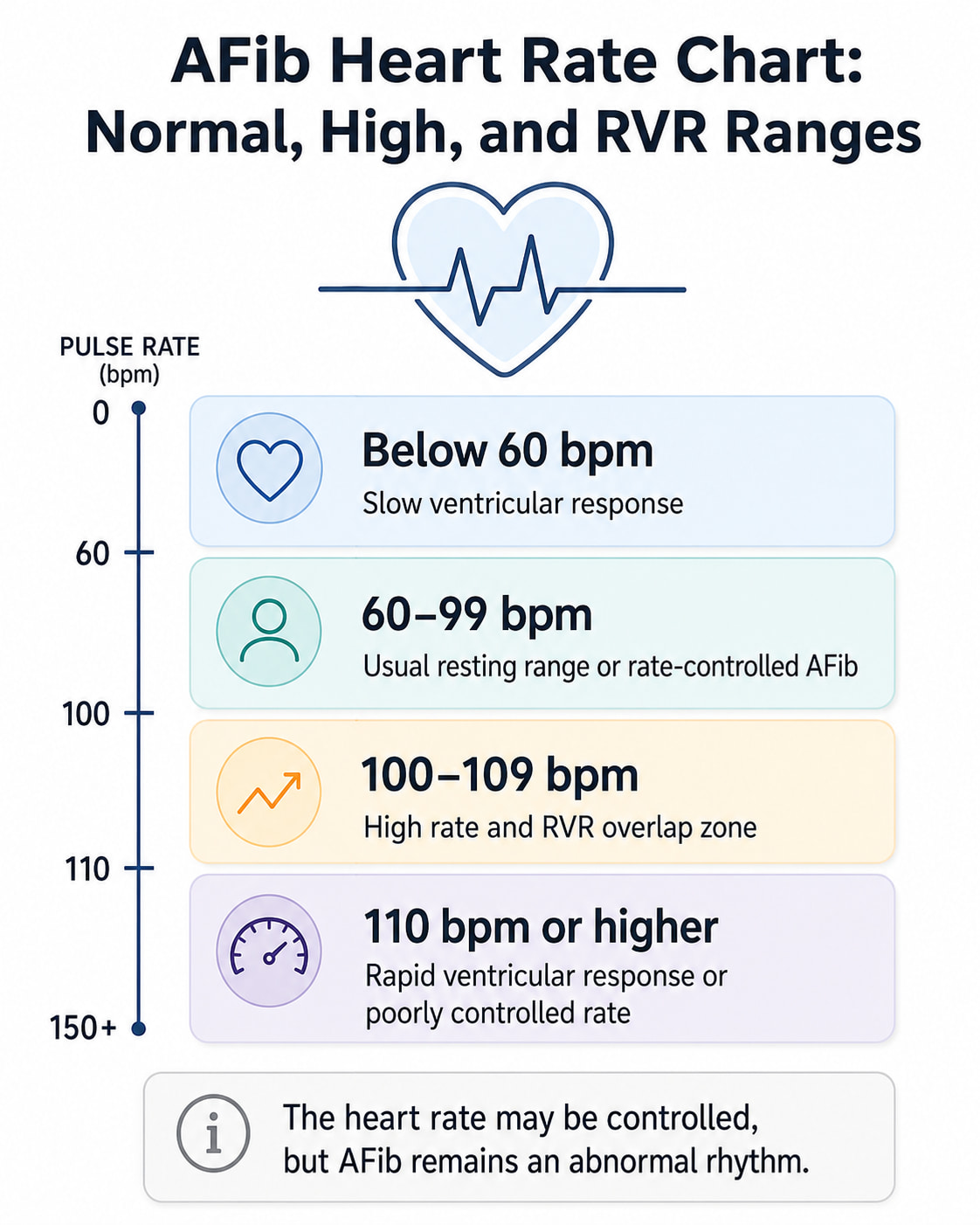
For many adults with atrial fibrillation, the usual resting heart-rate goal is below 100–110 beats per minute, while AFib with rapid ventricular response commonly starts around 100–110 bpm or higher. However, there is no single safe or dangerous number for everyone.
Your symptoms, blood pressure, heart function, medications, and personal treatment plan all affect how a heart-rate reading should be interpreted. A rate that is acceptable for one person may require prompt treatment in another.
This AFib heart rate chart explains slow, controlled, high, and rapid ventricular response ranges for adults at rest. It is educational and should not replace the target provided by your cardiologist.
AFib Heart Rate Chart
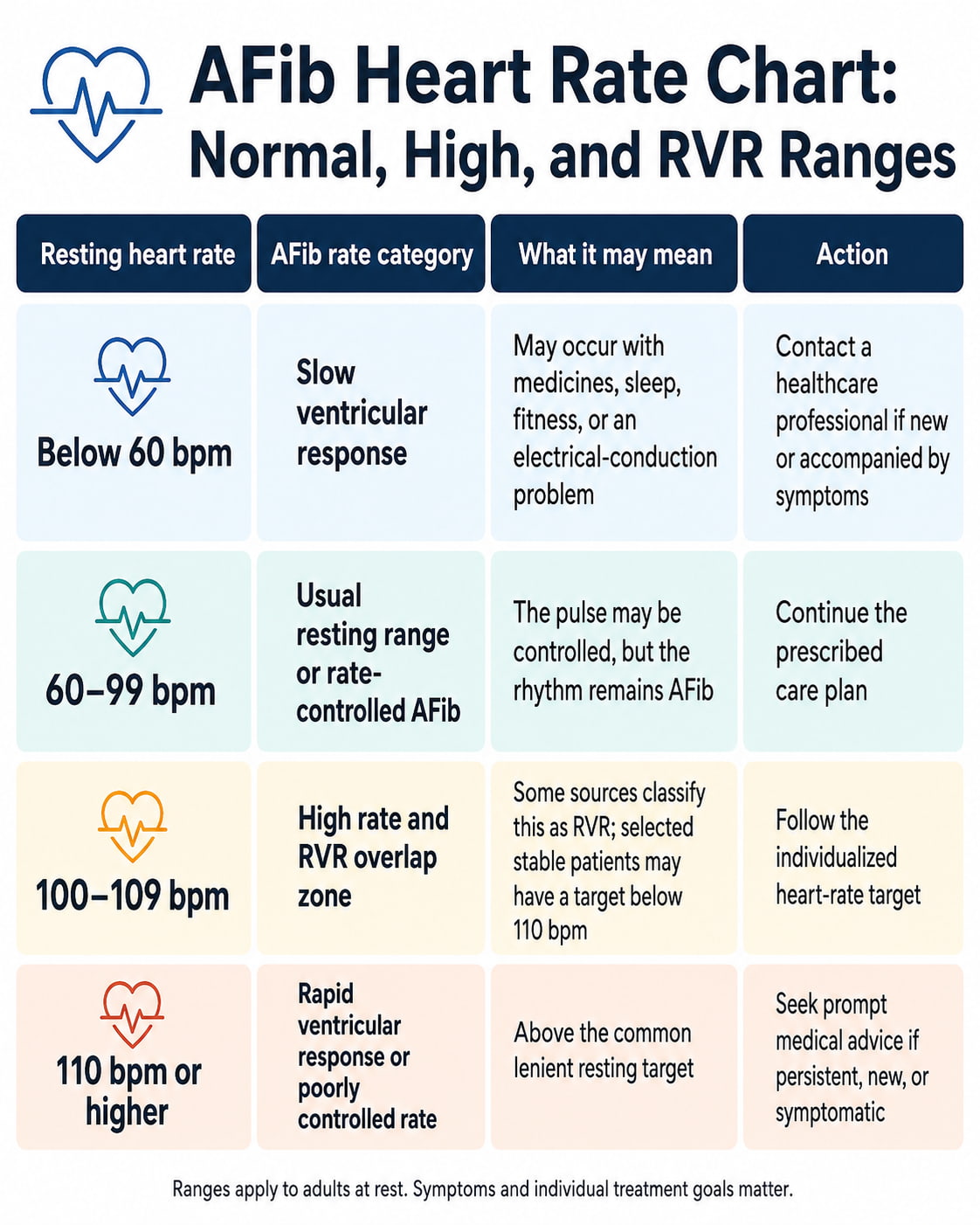
The following ranges apply to an adult who is resting, calm, and not exercising.
| Resting heart rate | AFib rate category | What it may mean |
|---|---|---|
| Below 60 bpm | Slow ventricular response | The ventricles are beating slowly. This can occur because of medications, sleep, physical fitness, or a problem with the heart’s electrical system. Symptoms such as fainting, confusion, weakness, or severe dizziness need prompt medical attention. |
| 60–99 bpm | Usual resting range or rate-controlled AFib | The measured heart rate falls within the usual adult resting range. However, AFib is still an abnormal rhythm, and stroke prevention or other treatment may still be necessary. |
| 100–109 bpm | High rate and RVR overlap zone | The rate is above the usual resting range. Some medical sources classify 100 bpm or higher as RVR, while major AFib guidelines may accept a resting rate below 110 bpm in selected stable patients. |
| 110 bpm or higher | Rapid ventricular response or poorly controlled rate | This is above the common lenient rate-control target and is frequently considered clear RVR. A persistent rate in this range deserves medical advice, especially when it is new or causing symptoms. |
These numbers are not rigid diagnostic boundaries. A person with a heart rate of 108 bpm can be seriously unwell, while another person with a temporary reading of 112 bpm may remain stable. Symptoms and circulation matter as much as the rate itself.
What Is a Normal Heart Rate With AFib?
A typical adult resting heart rate is approximately 60–100 bpm. With AFib, a heart rate within this range may be described as controlled or within the usual resting range.
It should not be described as a “normal AFib rhythm.”
AFib remains an abnormal heart rhythm even when the pulse is 70, 80, or 90 bpm. The rate may be controlled, but irregular electrical activity continues in the heart’s upper chambers.
The key distinction is:
- Heart rate describes how many times the ventricles pump each minute.
- Heart rhythm describes the electrical pattern controlling those beats.
A person can therefore have an acceptable heart rate while remaining in AFib.
What Is a Good Resting Heart Rate for Someone With AFib?
A commonly used resting target is below 100–110 bpm, but the best target depends on the individual.
The American Heart Association’s 2023 U.S. AFib guideline recommends using symptoms to guide rate control. For selected people with AFib who do not have heart failure, the general resting target is below 100–110 bpm.
The European Society of Cardiology similarly supports a lenient initial target below 110 bpm at rest. Doctors may pursue stricter control when symptoms continue, heart function declines, or a prolonged fast rate may be weakening the heart.
A clinician may recommend a lower target when someone has:
- Continuing palpitations or shortness of breath
- Reduced heart-pumping function
- Heart failure
- Suspected tachycardia-induced cardiomyopathy
- Difficulty tolerating physical activity
- An implanted pacemaker or cardiac resynchronization device
- Other heart or circulation problems
Do not change your medication to reach a certain number unless your healthcare professional has given you specific instructions.
What Heart Rate Is Considered AFib With RVR?
AFib with RVR means atrial fibrillation with rapid ventricular response. It occurs when too many irregular electrical signals pass from the atria to the ventricles, causing the lower chambers to beat rapidly and irregularly.
RVR commonly refers to a resting ventricular rate of approximately 100–110 bpm or higher.
There is no universal cutoff:
- Some clinical references use 100 bpm or higher.
- Some hospitals and studies use more than 110 bpm.
- Guidelines often use below 100–110 bpm as a general rate-control goal.
Cleveland Clinic, for example, defines AFib with RVR as AFib accompanied by a heart rate of at least 100 bpm.
Because definitions vary, a rate of 100–109 bpm is best viewed as an overlap zone. It is high for a resting adult and may meet some definitions of RVR, but it may remain within a lenient treatment target for a carefully selected, stable patient.
An electrocardiogram, or ECG, is needed to confirm that the fast pulse is caused by AFib rather than another rhythm.
Why Is a Heart Rate of 100–109 BPM an Overlap Zone?
A resting heart rate above 100 bpm is generally considered tachycardia. However, AFib treatment guidelines do not require every patient’s resting rate to remain below 100 bpm at all times.
This creates an important overlap:
- A general heart-rate reference may label 101 bpm as tachycardia.
- An RVR reference may label 101 bpm as AFib with RVR.
- A clinician may accept a resting rate below 110 bpm in a stable patient whose symptoms and heart function are controlled.
This does not mean that 109 bpm is ideal or automatically safe. It means doctors interpret the rate within the person’s complete clinical situation.
Contact your healthcare team when your resting rate remains above your prescribed target, even when it is below 110 bpm.
Can AFib Cause a Slow Heart Rate?
Yes. AFib can occur with a heart rate below 60 bpm. This is sometimes called AFib with a slow ventricular response.
The National Heart, Lung, and Blood Institute notes that AFib may produce rates below 60 bpm or above 180 bpm.
Possible reasons for a slow rate include:
- Beta-blockers, calcium channel blockers, digoxin, or other heart medicines
- Natural slowing during sleep
- High levels of physical fitness
- Problems with the atrioventricular node
- Sick sinus syndrome
- Tachy-brady syndrome
- Electrolyte or metabolic problems
A heart rate below 60 bpm is not automatically dangerous. Some healthy people naturally have a slow resting pulse. However, a new slow rate should be assessed when it causes fainting, confusion, chest discomfort, unusual weakness, severe fatigue, or shortness of breath.
Do not skip or reduce prescribed medication without medical guidance, even when your pulse seems low.
What Is a Dangerous Heart Rate With AFib?
There is no single AFib heart rate that is dangerous for every person.
Risk depends on:
- How high or low the rate is
- How long it remains abnormal
- Whether blood pressure is falling
- Whether the brain and other organs are receiving enough blood
- Whether heart failure or heart disease is present
- Whether the person has chest pain, breathing difficulty, fainting, or neurological symptoms
A persistent resting rate above 110 bpm is generally above the common lenient treatment target. It deserves prompt medical advice when it is new, worsening, or accompanied by symptoms.
Very rapid AFib can prevent the ventricles from filling effectively between beats. Over time, an uncontrolled rate may contribute to worsening heart failure or tachycardia-induced cardiomyopathy, a weakening of the heart muscle associated with a prolonged fast rhythm.
A rate below 110 bpm is not automatically safe. Serious symptoms can occur at lower rates, particularly when blood pressure is low or significant heart disease is present.
When to Call 911 for AFib Symptoms
Call 911 or your local emergency number when AFib occurs with:
- Chest pain, pressure, squeezing, or discomfort
- Severe or rapidly worsening shortness of breath
- Fainting or loss of consciousness
- New confusion or difficulty staying alert
- Cold, clammy skin with extreme weakness
- Signs of severely low blood pressure or shock
- Sudden facial drooping
- New weakness or numbness on one side
- Trouble speaking or understanding speech
- Sudden vision loss, loss of balance, or a severe unexplained headache
The American Heart Association identifies chest pain or pressure as a medical emergency and lists faintness, confusion, shortness of breath, dizziness, and weakness among possible AFib symptoms.
Do not drive yourself to the hospital when you have signs of a heart attack, stroke, shock, or severe instability. Emergency medical personnel can begin assessment and treatment during transport.
When to Contact Your Doctor Promptly
Contact your healthcare professional promptly when:
- Your resting heart rate repeatedly exceeds your prescribed target.
- Your pulse remains above 110 bpm at rest.
- A fast or irregular rhythm is new.
- Episodes are becoming longer or more frequent.
- Your medicine no longer appears to control the rate.
- You develop new dizziness, fatigue, breathlessness, swelling, or reduced exercise tolerance.
- Your heart rate is unusually slow and causes symptoms.
- A wearable repeatedly reports possible AFib.
- You have AFib and become ill with fever, vomiting, dehydration, or infection.
Your care team may advise home monitoring, medication adjustment, an office visit, or urgent evaluation depending on your symptoms and medical history.
Why AFib Heart Rate Changes
The ventricular rate during AFib can change from minute to minute. Physical activity, stress, illness, medication timing, and the heart’s electrical conduction all affect the measured pulse.
Common factors that can increase the rate include:
- Exercise or physical exertion
- Fever or infection
- Dehydration
- Pain or emotional stress
- Anemia or blood loss
- Overactive thyroid
- Alcohol
- Stimulants
- Certain cold medicines or other drugs
- Lung disease
- Worsening heart failure
- Missed rate-control medication
Doctors may look for and address these triggers rather than only trying to lower the pulse number.
How to Check Your Heart Rate During AFib
Because AFib produces an irregular pulse, count your heart rate for a full 60 seconds rather than relying on a very short count.
Measuring Your Wrist Pulse
- Sit or lie quietly for several minutes.
- Place your index and middle fingers on the thumb side of your opposite wrist.
- Press gently until you feel the pulse.
- Count every beat for 60 seconds.
- Note whether the pulse feels regular or irregular.
- Record the rate, time, symptoms, activity, and medication timing.
Do not press both sides of your neck at the same time when checking a neck pulse.
A single reading provides only a snapshot. Several readings taken under similar resting conditions may show a more useful pattern.
Can a Smartwatch Measure AFib Heart Rate Accurately?
A smartwatch can help track heart-rate trends and may identify an irregular rhythm, but it has limitations.
Some devices use light-based pulse sensors, while others can record a single-lead ECG. Movement, poor skin contact, irregular beats, and very fast or slow rates may affect results.
The American College of Cardiology reports that consumer wearables can perform well when detecting AFib, but clinicians still need to interpret device-generated rhythm information within the medical context.
A wearable alert does not by itself confirm:
- AFib
- RVR
- The cause of a fast heart rate
- Whether emergency treatment is necessary
- Whether medication should be changed
Save an ECG tracing when your device allows it, and show the result to your healthcare professional. Seek emergency help based on serious symptoms rather than waiting for a device to confirm the rhythm.
How Doctors Control a High AFib Heart Rate
AFib treatment may address three separate goals:
- Controlling the ventricular rate
- Restoring or maintaining a regular rhythm
- Reducing the risk of stroke and blood clots
Rate-Control Treatment
Doctors may use medicines such as:
- Beta-blockers
- Nondihydropyridine calcium channel blockers
- Digoxin
The right medicine depends on blood pressure, heart function, activity level, other health conditions, and whether the episode is stable or urgent. Some rate-control drugs are not suitable for certain people with reduced heart-pumping function.
Rhythm-Control Treatment
Rhythm-control options may include:
- Electrical cardioversion
- Antiarrhythmic medication
- Catheter ablation
The decision depends on symptoms, AFib duration, previous treatment, heart structure, stroke risk, and personal preferences.
Treating the Underlying Trigger
Treatment may also address:
- Infection
- Dehydration
- Thyroid disease
- Sleep apnea
- High blood pressure
- Heart failure
- Alcohol use
- Obesity or physical inactivity
Managing contributing conditions can improve overall AFib control, but it does not replace prescribed heart or stroke-prevention treatment.
Does a Controlled Heart Rate Remove Stroke Risk?
No. A controlled pulse does not eliminate the blood-clot and stroke risk associated with AFib.
A heart rate of 75 bpm may show that rate-control treatment is working, but the atria may still be fibrillating. Blood can pool in the atria and form clots even when the ventricular rate appears normal.
Stroke-prevention decisions depend on factors such as:
- Age
- Previous stroke or transient ischemic attack
- High blood pressure
- Diabetes
- Heart failure
- Vascular disease
- Other individual risks
Do not stop an anticoagulant because:
- Your pulse is within the usual range.
- You feel better.
- AFib episodes seem less frequent.
- A smartwatch has stopped showing alerts.
- Cardioversion or ablation restored a regular rhythm.
Only the clinician managing your AFib should advise whether anticoagulation can be changed or stopped.
Practical Examples
Example 1: AFib at 82 BPM Without Symptoms
A resting rate of 82 bpm falls within the usual adult range and may represent rate-controlled AFib. The rhythm is still abnormal, so the person should continue their prescribed treatment and follow-up plan.
Example 2: AFib at 105 BPM
A rate of 105 bpm falls in the overlap zone. Some clinicians or references may call it RVR, while it may remain below a lenient target of 110 bpm for certain stable patients.
The person should follow their individual target and seek advice when the rate persists, exceeds their usual pattern, or causes symptoms.
Example 3: AFib at 135 BPM With Dizziness
A resting rate of 135 bpm is clearly rapid and above common rate-control targets. Dizziness may indicate that circulation is being affected. Prompt medical assessment is appropriate.
Example 4: AFib at 55 BPM With Fainting
The rate is slow, but the symptom is the greater concern. Fainting during an abnormal rhythm requires urgent assessment even though the heart rate is not high.
Frequently Asked Questions
Can You Have AFib With a Normal Heart Rate?
Yes. You can have AFib with a ventricular rate between 60 and 100 bpm. The heart rate may be controlled, but the rhythm remains irregular and abnormal.
Is a Heart Rate of 110 Dangerous With AFib?
A resting rate of 110 bpm is above the usual adult range and at or above a common RVR threshold. It is not automatically an emergency, but a persistent reading requires medical advice, especially when it is new or accompanied by dizziness, breathlessness, weakness, or chest discomfort.
Is a Heart Rate of 120 Considered RVR?
A resting rate of 120 bpm during confirmed AFib would generally be considered rapid ventricular response because it exceeds both the 100 bpm and 110 bpm cutoffs commonly used by medical sources.
Can AFib Cause a Heart Rate Below 60?
Yes. AFib may occur with a slow ventricular response, particularly because of medication or electrical-conduction problems. A low rate that causes fainting, confusion, severe weakness, or breathing difficulty requires prompt evaluation.
Should I Go to the Hospital Every Time My Heart Rate Exceeds 100?
Not necessarily. A reading slightly above 100 bpm is not automatically an emergency. Follow the plan provided by your healthcare professional. Call emergency services for chest pain, fainting, severe shortness of breath, stroke symptoms, confusion, or signs of shock.
Can I Lower an AFib Heart Rate at Home?
Take prescribed medication exactly as directed and avoid known personal triggers. Do not take an extra dose, borrow medication, perform unapproved maneuvers, or attempt to force the rate down without medical instructions. Seek advice when the rate remains above your target.
Does a Normal Pulse Mean AFib Is Gone?
No. A normal-range pulse can occur while AFib continues. An ECG or another clinician-reviewed rhythm recording is needed to determine whether normal sinus rhythm has returned.
Conclusion
An AFib heart rate chart can help you understand a reading, but the number is only one part of the picture. A resting rate below 100–110 bpm is a common treatment goal, while RVR generally begins around 100–110 bpm or higher. The exact cutoff and ideal target depend on symptoms, heart function, medications, and your clinician’s instructions.
Track your resting pulse, record related symptoms, and discuss repeated high or low readings with your healthcare team. Call emergency services immediately for chest pain, severe breathing difficulty, fainting, stroke symptoms, confusion, or signs of shock.
This content is for informational purposes only and not medical advice.
References
- American College of Cardiology, American Heart Association, American College of Clinical Pharmacy, and Heart Rhythm Society, 2023 Guideline for the Diagnosis and Management of Atrial Fibrillation
- European Society of Cardiology, 2024 ESC Guidelines for the Management of Atrial Fibrillation
- American Heart Association, What Are the Symptoms of Atrial Fibrillation?
- American Heart Association, All About Heart Rate, reviewed May, 2024
- American Heart Association, How Are Atrial Fibrillation Treatment Options Determined?
- National Heart, Lung, and Blood Institute, Atrial Fibrillation Causes and Risk Factors
- Cleveland Clinic, Atrial Fibrillation With Rapid Ventricular Response, medically reviewed January, 2023
- American College of Cardiology, Smartwatches and Atrial Fibrillation: What Works and What Needs Improvement?