
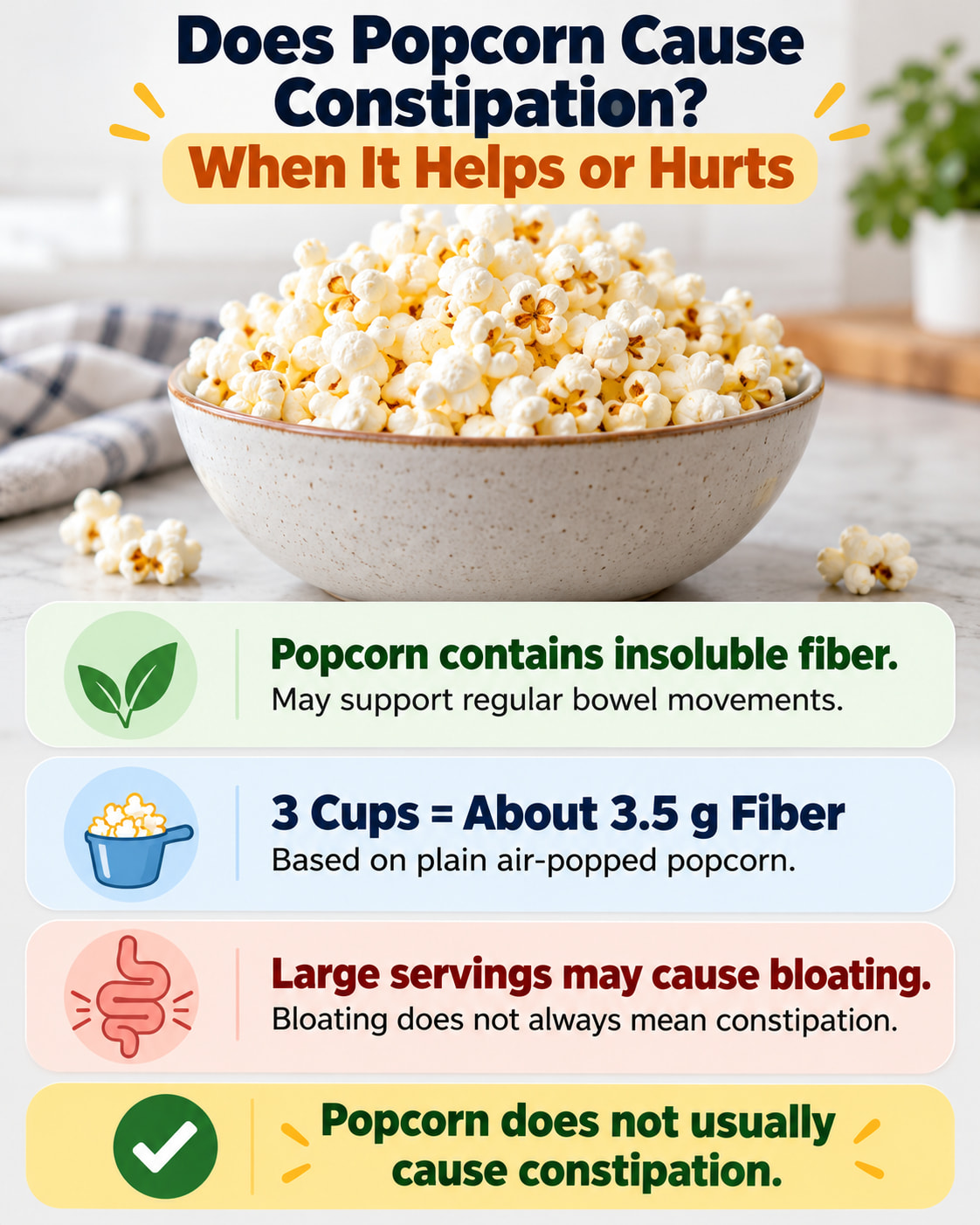
Popcorn does not usually cause constipation. Plain popcorn provides fiber that may support regular bowel movements, and MedlinePlus includes it among snack options for people who are constipated.
However, eating a large amount of fiber at once can leave you gassy, bloated, or uncomfortable. Your usual diet, fluid intake, portion size, and any digestive conditions also matter. Feeling worse after popcorn does not necessarily mean the popcorn caused constipation.
How Popcorn’s Fiber May Help With Constipation
Popcorn is a whole grain that contains insoluble fiber. This type of fiber adds bulk to stool, and Johns Hopkins Medicine lists popcorn among foods that supply it.
If your usual snacks contain little fiber, plain popcorn can make a useful contribution to your overall intake. It should complement other fiber sources, such as vegetables, fruit, beans, and oats.
Using USDA nutrient data, plain air-popped popcorn provides approximately:
| Amount of popped popcorn | Weight | Dietary fiber |
|---|---|---|
| 1 cup | 8 grams | 1.2 grams |
| 3 cups | 24 grams | 3.5 grams |
These figures apply to plain air-popped popcorn. Packaged products and other preparations may have different serving weights and nutrition values.
Three cups is a useful serving example, not a proven amount to relieve constipation. Popcorn can contribute fiber, but it cannot address every reason someone has difficulty passing stool.
Why Popcorn May Seem to Make Constipation Worse
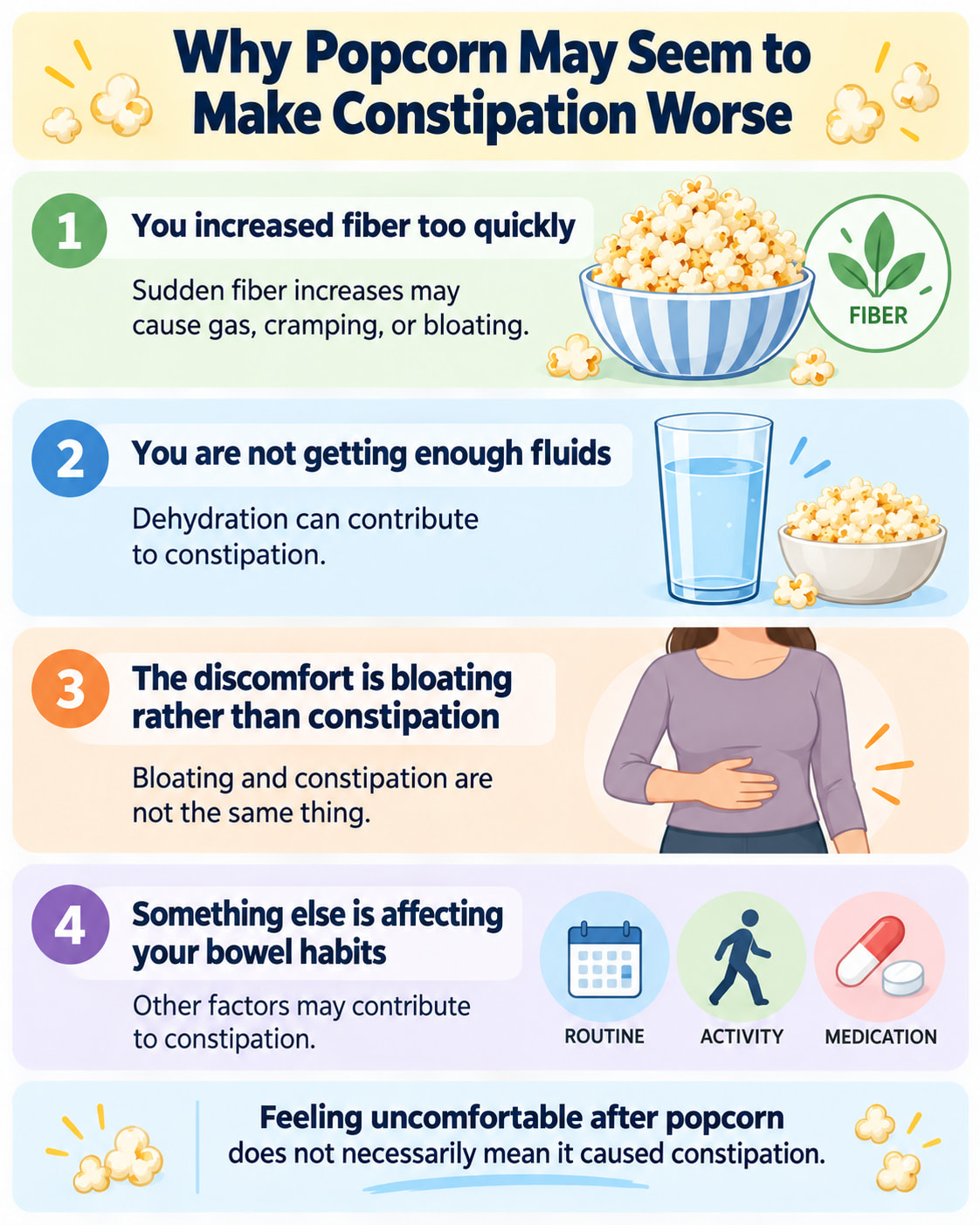
You increased fiber too quickly
A large bowl can represent a noticeable change if you usually eat little fiber. Increasing fiber suddenly may cause gas, cramping, or bloating while your digestive system adjusts.
For example, adding a large popcorn serving on the same day you start eating bran cereal and extra beans changes your overall fiber intake substantially. Introduce changes gradually so you can judge what feels comfortable.
You are not getting enough fluids
Dehydration can contribute to constipation. Eating a fiber-containing snack does not make up for consistently drinking too little.
The National Institute of Diabetes and Digestive and Kidney Diseases recommends getting enough fiber, increasing it gradually, and drinking enough liquids to help it work.
Fluid needs vary. Drink regularly throughout the day, and follow any fluid limits your clinician has prescribed. There is no need to force excessive amounts of water simply because you ate popcorn.
The discomfort is bloating rather than constipation
Bloating is a feeling of fullness or swelling in the abdomen. Constipation involves changes such as hard or lumpy stools, straining, difficulty passing stool, or feeling that you have not emptied completely. Less frequent bowel movements can also be a sign.
You can have bloating without constipation, and the two can occur together. Pay attention to stool consistency and how easily you pass it, rather than judging constipation only by how full your stomach feels.
Something else is affecting your bowel habits
Constipation can have more than one cause. A recent change in routine, reduced activity, certain medicines or supplements, and digestive conditions may all contribute.
If symptoms began around the same time you started eating popcorn, consider what else changed. Do not stop a prescribed medicine on your own; ask a clinician or pharmacist if you think it may be contributing.
Do Butter, Microwave Popcorn, and Other Types Matter?
Preparation changes the ingredients and portion you eat. It does not automatically determine whether popcorn will cause constipation.
Adding butter or oil does not remove the fiber already in the popcorn. However, rich preparations or particular flavorings may be uncomfortable for some people. Monash University notes that high-fat foods can trigger IBS symptoms in some individuals and that flavored popcorn may contain ingredients such as onion or garlic powder that matter for people following a low-FODMAP diet.
| Popcorn type | What to consider |
|---|---|
| Plain air-popped | Provides fiber with few added ingredients, making it easier to judge your tolerance. |
| Lightly oil-popped or stovetop | Still contains fiber. Consider the amount of oil and any seasonings you add. |
| Packaged microwave | Products vary. Check the ingredients, fiber per serving, and servings per bag. |
| Movie theater | Portions can be large, and added oil or toppings may make a serving richer than your usual snack. |
| Caramel, kettle, or cheese-flavored | Coatings change the nutrition profile and may introduce ingredients you do not tolerate well. Check the specific product. |
A symptom after a heavily flavored product does not establish that plain popcorn will have the same effect. Likewise, a package labeled “microwave popcorn” is not automatically constipating.
How to Eat Popcorn More Comfortably
If popcorn generally agrees with you, these habits can make it easier to fit into your diet:
- Portion it into a bowl. This helps you notice how much you eat instead of finishing an oversized bag or tub.
- Make fiber changes gradually. Avoid increasing several fiber-rich foods substantially at the same time.
- Keep fluids consistent. Regular drinking is more useful than trying to compensate after a snack.
- Include a variety of foods. Popcorn can be one fiber source alongside fruit, vegetables, legumes, and other whole grains.
- Notice repeatable patterns. If you have mild discomfort, note the amount, ingredients, and whether you also had hard stools or difficulty passing them.
You do not need to keep increasing the portion to get more fiber. If popcorn repeatedly makes you uncomfortable, choose a different food and discuss ongoing symptoms with a healthcare professional.
Who May Need Different Advice?
People with IBS
People with irritable bowel syndrome can respond differently to the same food. Some tolerate popcorn, while others find larger portions or certain toppings uncomfortable.
NIDDK’s IBS guidance notes that soluble fiber is generally more helpful for IBS symptoms than insoluble fiber. Oats are one food source of soluble fiber.
This does not mean everyone with IBS needs to avoid popcorn. Your symptoms, portion tolerance, and existing dietary plan should guide your choices. A registered dietitian can help if you are restricting many foods or struggling to get enough fiber comfortably.
People prescribed a low-fiber diet
Popcorn may be unsuitable when a clinician has prescribed a low-fiber diet, such as in certain situations involving bowel narrowing or recovery from intestinal surgery.
MedlinePlus guidance on low-fiber diets specifically lists popcorn among foods to avoid on that diet. Follow the instructions you were given instead of adding popcorn to try to improve bowel movements.
When to Get Medical Advice
Arrange medical advice if constipation persists despite self-care, keeps returning, or represents an unexplained change in your usual bowel habits.
According to NIDDK’s constipation guidance, you should seek medical care right away if constipation occurs with:
- Blood in your stool or rectal bleeding
- Constant abdominal pain
- Vomiting
- An inability to pass gas
- Fever
- Unintentional weight loss
Do not try to manage these warning signs by eating more popcorn or increasing fiber.
Frequently Asked Questions
Is popcorn good for constipation?
Plain popcorn can contribute fiber to a diet that supports regular bowel movements. It may be useful when your usual diet is low in fiber, but it is not a guaranteed remedy and does not replace evaluation of persistent symptoms.
How much popcorn should you eat for constipation?
There is no established popcorn dose for constipation. Three cups of plain air-popped popcorn provides about 3.5 grams of fiber, but a smaller portion may be more comfortable if you are not used to eating much fiber.
Does microwave popcorn cause constipation?
Microwaving alone does not establish that a food causes constipation. Microwave popcorn still contains fiber, but ingredients and serving sizes differ. Check the label and consider how the particular product affects you.
Can buttered popcorn make constipation worse?
Butter changes the fat content without removing the popcorn’s fiber. Rich foods may worsen digestive symptoms in some people, especially those with IBS, but that does not mean a small amount of butter inevitably causes constipation.
How quickly does popcorn help you poop?
There is no reliable timetable. Popcorn is a food, and its fiber contributes to your overall diet. Do not keep eating larger amounts to try to produce an immediate bowel movement.
What can you eat if popcorn upsets your stomach?
You can get fiber from other foods, including oatmeal, fruit, vegetables, and legumes. Choose options you tolerate and introduce changes gradually. If you have IBS or a prescribed medical diet, a dietitian can help you select appropriate alternatives.
Conclusion
Plain popcorn can be a useful source of fiber for many people. The amount you eat, your overall diet, and your individual tolerance matter more than simply labeling popcorn “good” or “bad” for constipation.
Start with a portion that feels comfortable, keep your fiber sources varied, and pay attention to persistent changes in bowel habits. If constipation continues, seek advice rather than relying on one snack to solve it.
This content is for informational purposes only and not medical advice.