
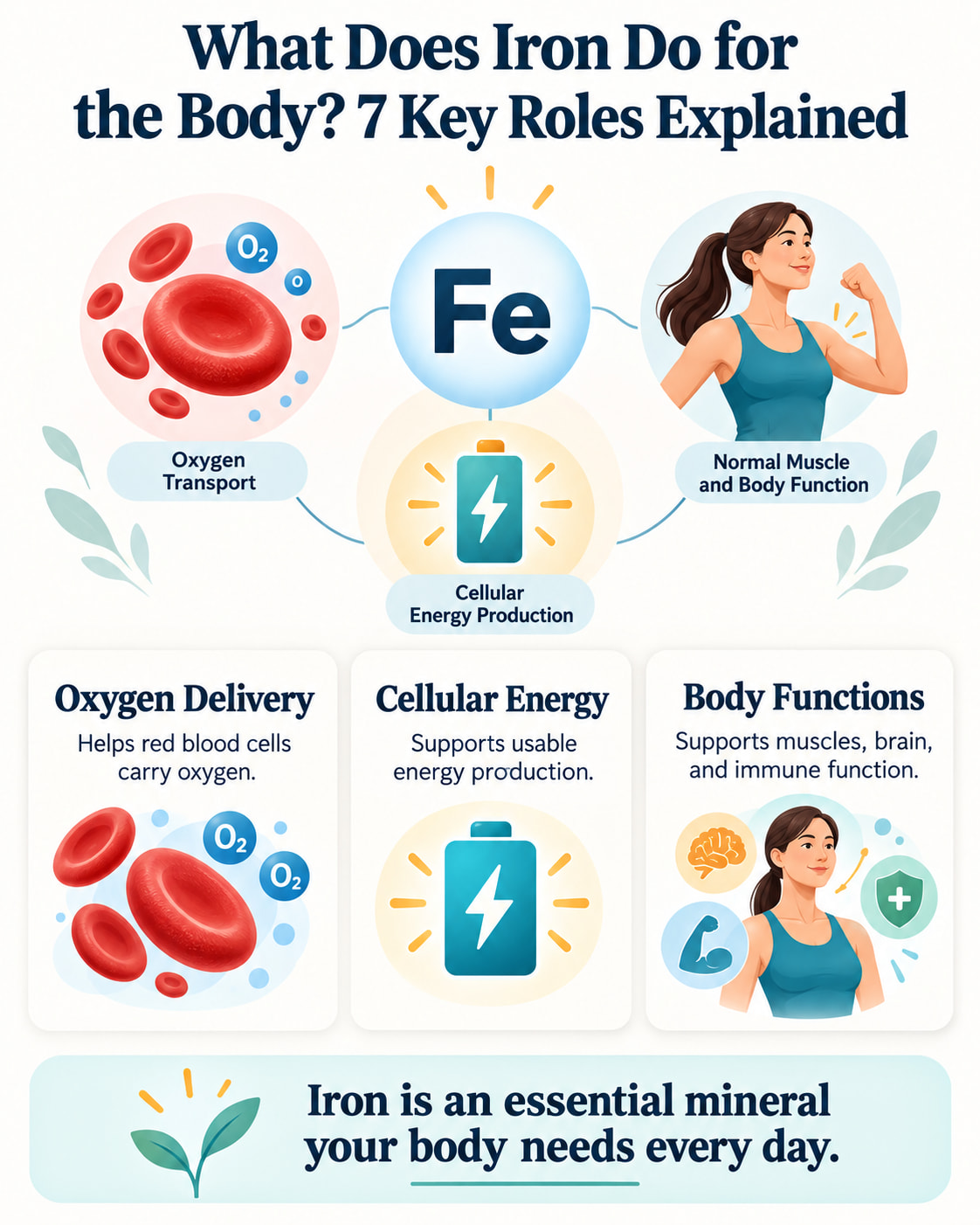
Iron helps your body carry oxygen, produce usable energy, and support normal muscle, brain, and immune function. It also contributes to cell growth and the production of certain hormones.
This essential mineral comes from food and, when needed, supplements. Your requirements change with age and life stage, so getting enough starts with understanding your own needs.
Here is what iron does, where to find it in everyday foods, and when concerns about low iron deserve a closer look.
What Does Iron Do for the Body? 7 Key Roles
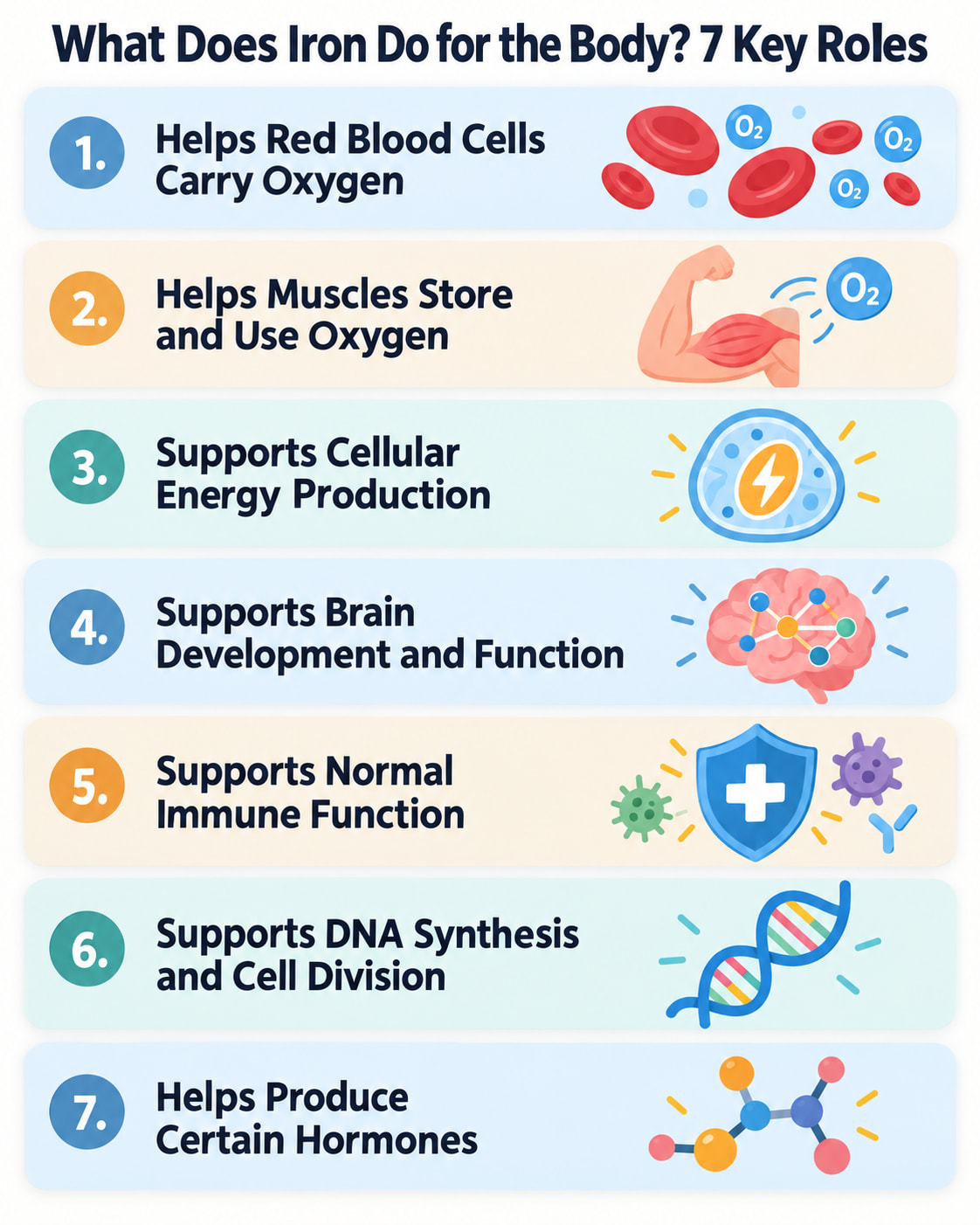
1. Helps Red Blood Cells Carry Oxygen
Iron is part of hemoglobin, the protein in red blood cells that picks up oxygen in your lungs and delivers it throughout your body.
Your organs and tissues depend on that oxygen to function. If iron deficiency progresses to iron-deficiency anemia, your blood has less capacity to carry oxygen. This helps explain why anemia can make ordinary activities feel more tiring.
2. Helps Muscles Store and Use Oxygen
Your muscles contain another iron-containing protein called myoglobin. It holds a small supply of oxygen and helps make it available inside muscle cells.
Hemoglobin transports oxygen through the bloodstream, while myoglobin helps manage oxygen within muscles. Together, these processes support movement, from climbing stairs to exercising.
3. Supports Cellular Energy Production
Iron also works inside cells. Iron-containing proteins help produce ATP, a molecule cells use to power their activities.
The Linus Pauling Institute explains that these proteins participate in energy-producing reactions in mitochondria, the structures that supply much of a cell’s usable energy. This gives iron a role in energy production beyond its involvement in oxygen transport.
4. Supports Brain Development and Function
Iron is necessary for normal neurological development. Getting enough is especially important during periods of rapid growth, including infancy and childhood.
Iron-deficiency anemia can also affect concentration and memory. However, these effects do not establish that taking extra iron improves thinking or attention in someone who already has adequate iron.
5. Supports Normal Immune Function
Immune cells need iron to grow and function properly. Iron is one of several nutrients involved in maintaining normal immune defenses.
Harvard’s Nutrition Source identifies iron alongside nutrients such as zinc, vitamin C, and protein as important for immune-cell growth and function. A varied diet helps supply this combination; taking more of one mineral does not guarantee protection from illness.
6. Supports DNA Synthesis and Cell Division
Cells need to copy their DNA before dividing. Iron-dependent enzymes help make the building blocks used in that process.
This connects iron to normal growth and the ongoing production of new cells. It is one reason iron matters throughout the body, including in tissues that regularly replace cells.
7. Helps Produce Certain Hormones
Iron helps enzymes involved in making some hormones do their jobs. For example, an iron-containing enzyme called thyroid peroxidase participates in thyroid hormone production.
This is a specific biological role. It does not mean iron supplements are a general solution for hormone-related symptoms or thyroid conditions.
How Much Iron Do You Need Each Day?
The NIH Office of Dietary Supplements lists the following recommended daily amounts for adults:
| Adult group | Recommended iron per day |
|---|---|
| Men ages 19–50 | 8 mg |
| Women ages 19–50 | 18 mg |
| Adults ages 51 and older | 8 mg |
| Pregnancy, ages 19–50 | 27 mg |
| Breastfeeding, ages 19–50 | 9 mg |
These are total daily intake recommendations, not instructions for how much supplemental iron to take. Children and teenagers have different requirements.
Menstrual blood loss contributes to the higher recommendation for younger adult women. Individual needs may differ with ongoing heavy bleeding, medical conditions, and other factors.
People following vegetarian diets need particular attention to intake because nonheme iron is less readily absorbed. US guidance uses a requirement of 1.8 times the usual recommended intake for vegetarian diets. A registered dietitian can help translate that into meals.
Which Foods Provide Iron?
Iron in food comes in two forms:
- Heme iron: Found in meat, poultry, and seafood and generally absorbed more readily.
- Nonheme iron: Found in plant foods and iron-fortified foods. Animal foods also contain some nonheme iron.
The NIH food-source table gives these examples:
| Food | Serving | Approximate iron |
|---|---|---|
| Canned white beans | 1 cup | 8 mg |
| Cooked eastern oysters | 3 ounces | 8 mg |
| Cooked lentils | ½ cup | 3 mg |
| Firm tofu | ½ cup | 3 mg |
| Cooked spinach | ½ cup | 3 mg |
| Canned kidney beans | ½ cup | 2 mg |
Amounts vary with the product and preparation. Fortified breakfast cereals can also contribute substantial iron; check the label because brands differ.
The amount listed for a food is not the amount your body absorbs. For example, the iron in spinach is less readily absorbed than heme iron, so it helps to use a variety of sources.
Make Plant Iron Easier to Absorb
Vitamin C improves the absorption of nonheme iron when eaten at the same meal. The MedlinePlus nutrition guide describes this useful pairing.
Try one of these combinations:
- Lentil soup with tomatoes.
- Beans with bell peppers.
- Iron-fortified cereal with strawberries.
- Tofu with broccoli.
For an easy starting point, add an iron-containing food to a meal you already eat, then include a vitamin C-rich fruit or vegetable.
What Happens If You Do Not Get Enough Iron?
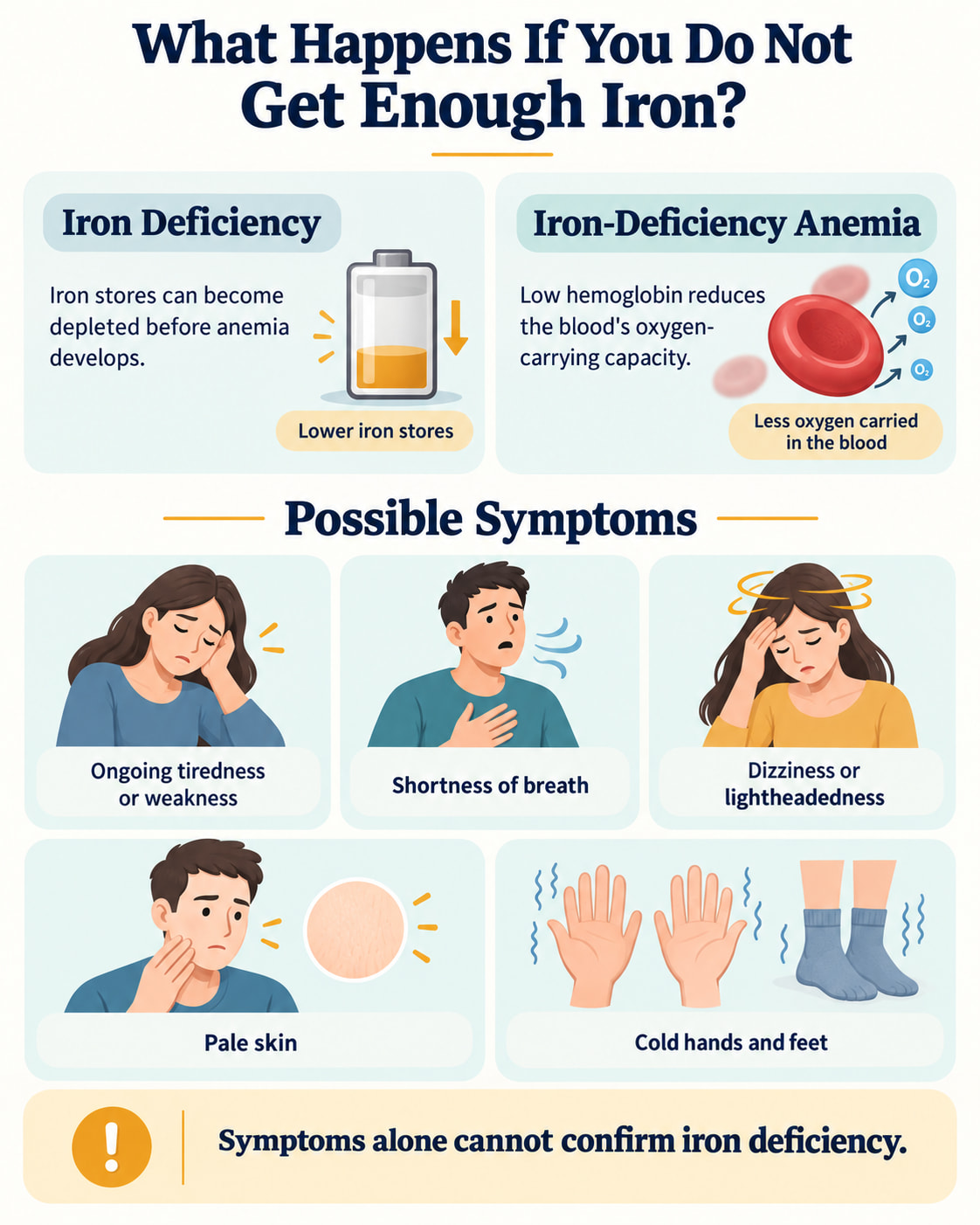
Your body stores some iron for later use. Those stores can become depleted before hemoglobin falls enough for anemia to develop.
Iron deficiency and iron-deficiency anemia are related, but they are not the same condition. Someone can have low iron stores while their hemoglobin remains within the usual range.
Iron-deficiency anemia may cause:
- Ongoing tiredness or weakness.
- Shortness of breath.
- Dizziness or lightheadedness.
- Pale skin.
- Cold hands and feet.
The National Heart, Lung, and Blood Institute notes that mild cases may have no symptoms. These symptoms can also have other causes, so they cannot confirm an iron problem on their own.
Who Is More Likely to Develop Low Iron?
Reasons to discuss iron needs with a healthcare professional include:
- Heavy menstrual bleeding.
- Pregnancy or recent childbirth.
- Frequent blood donation.
- Digestive conditions that reduce nutrient absorption.
- Gastrointestinal surgery, including some weight-loss procedures.
- Ongoing blood loss or a diet that consistently provides too little iron.
Finding the cause matters. Increasing dietary iron alone may not address continued blood loss or an absorption problem.
How Is Low Iron Checked?
A clinician may order a complete blood count and iron-related tests. Hemoglobin helps assess anemia, while ferritin helps assess iron reserves.
As MedlinePlus explains, ferritin is a protein that stores iron. Infection and inflammation can raise ferritin, so the result needs to be interpreted alongside your symptoms, history, and other tests.
Arrange an appointment for persistent unexplained fatigue, unusual breathlessness with everyday activity, or heavy periods. Avoid choosing a supplement dose based only on how you feel.
Do You Need an Iron Supplement?
An iron supplement may be appropriate when a clinician identifies deficiency, increased needs, or difficulty meeting requirements. Food remains useful, but a confirmed deficiency may require more than dietary changes.
MedlinePlus supplement guidance recommends checking the amount and timing with your healthcare professional. Iron can cause constipation, nausea, abdominal discomfort, or diarrhea, and it can interact with certain medicines.
If you already take a multivitamin or prenatal supplement, check whether it contains iron before adding another product. A pharmacist can also help review medication interactions and dosing instructions.
The general adult upper intake level is 45 mg daily from food, beverages, and supplements combined. This is a safety limit, not a daily goal. A clinician may prescribe more for a specific need and monitor the response.
Keep iron supplements out of children’s reach. An accidental overdose can be life-threatening.
Frequently Asked Questions
Does Iron Give You Energy?
Iron supports the processes that produce usable energy. Addressing a confirmed deficiency may help when low iron contributes to fatigue, including in some people without anemia. Extra iron is not a general energy booster, and persistent tiredness deserves an assessment.
Can You Get Enough Iron Without Eating Meat?
Yes. Beans, lentils, tofu, and fortified foods can supply iron. Plan for the higher intake recommended for vegetarian diets, include several sources regularly, and pair them with vitamin C-containing foods.
Why Do Iron Needs Increase During Pregnancy?
Blood volume increases during pregnancy, and iron also supports the developing baby. These changes raise daily needs. Your prenatal care professional can assess whether your diet and prenatal supplement provide an appropriate amount.
Is All Anemia Caused by Low Iron?
No. NHLBI guidance on anemia lists other causes, including vitamin B12 or folate deficiency, inherited conditions, kidney disease, and inflammation. Identifying the cause is essential because additional iron will not address every form of anemia.
What Does “Elemental Iron” Mean on a Supplement Label?
Elemental iron is the amount of iron itself, separate from the total weight of a compound such as ferrous sulfate. Harvard’s iron guide explains why these numbers differ. Use the Supplement Facts panel and ask a pharmacist if a label or prescription is unclear.
Conclusion
Iron supports oxygen delivery and several processes your cells rely on every day. Getting enough starts with knowing your needs and including varied iron-containing foods.
Choose one practical change, such as adding beans to lunch or pairing lentils with tomatoes. If you have persistent symptoms or a reason to suspect low iron, ask about assessment before starting a supplement.
This content is for informational purposes only and not medical advice.