
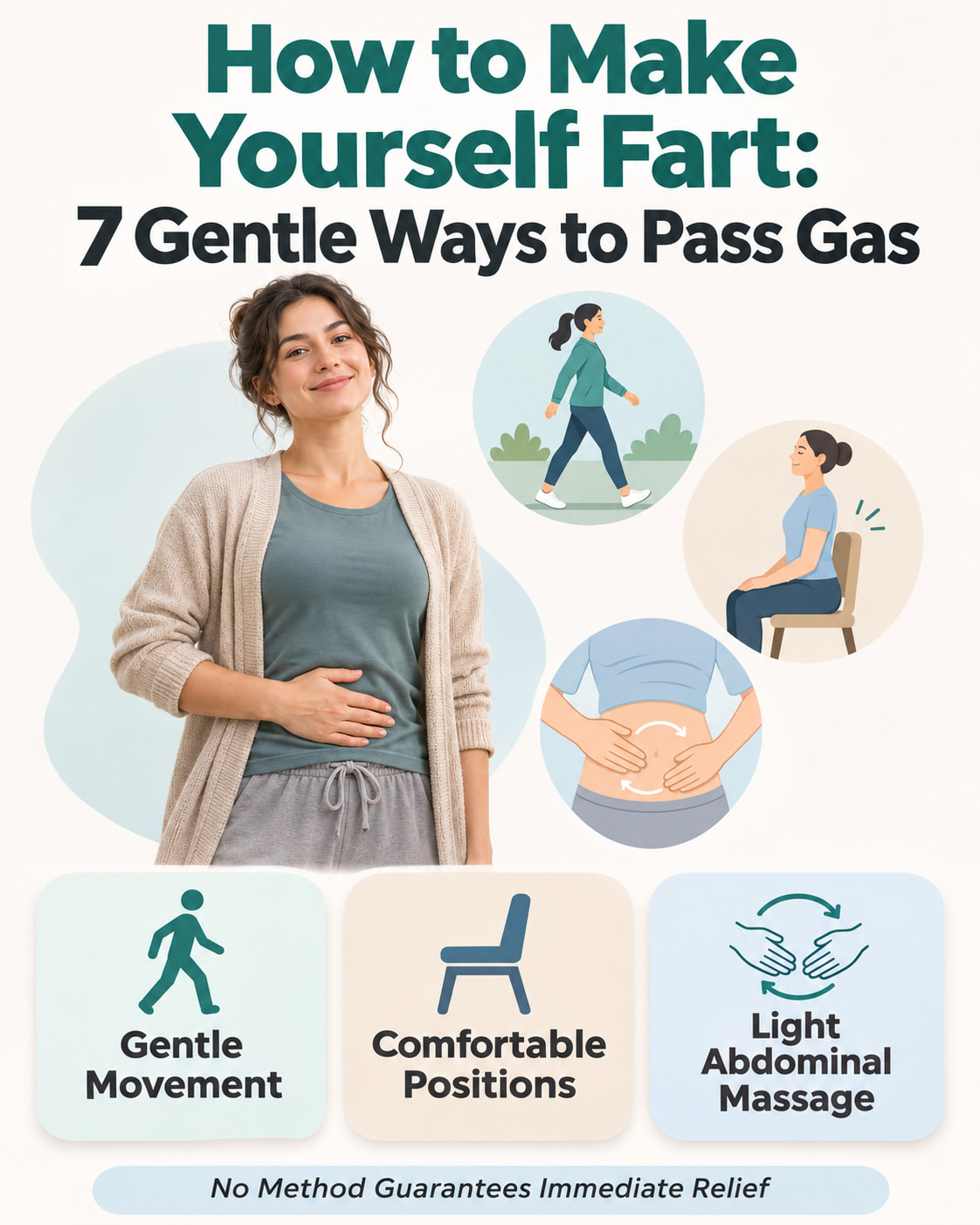
If you’re wondering how to make yourself fart, gentle walking, sitting upright, and light abdominal massage may help gas move, but no method guarantees immediate relief. Comfortable movement, relaxed breathing, and warmth may also make mild bloating easier to manage.
Knowing when to try self-care—and when to get help—matters because abdominal discomfort is not always caused by gas. The suggestions below are for adults with mild, occasional symptoms. You do not need to force a fart or try every technique.
When to Get Medical Help for Trapped Gas
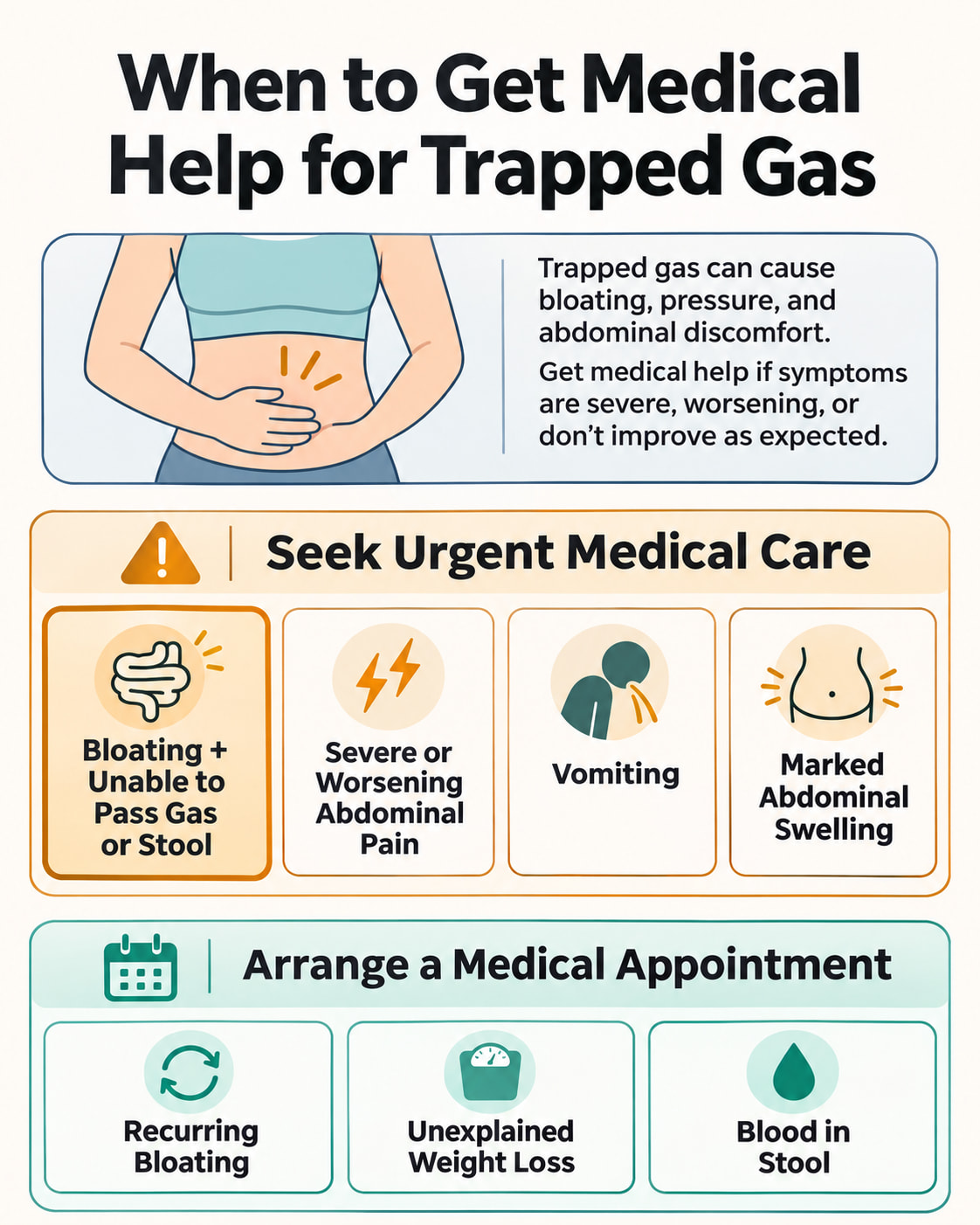
Seek urgent medical care if you develop bloating and cannot pass gas or stool. Go to an emergency department if this comes with severe or worsening abdominal pain, vomiting, or a markedly swollen abdomen.
These symptoms can occur with a bowel obstruction. MedlinePlus guidance explains that a complete intestinal obstruction is a medical emergency. Do not keep trying massage, stretches, or home remedies when these warning signs are present.
Sudden severe abdominal pain, vomiting blood, or severe difficulty breathing also requires emergency care.
Arrange a medical appointment if bloating keeps returning, does not improve, or occurs with unexplained weight loss, blood in your stool, or a persistent change in bowel habits.
What Causes Trapped Gas?
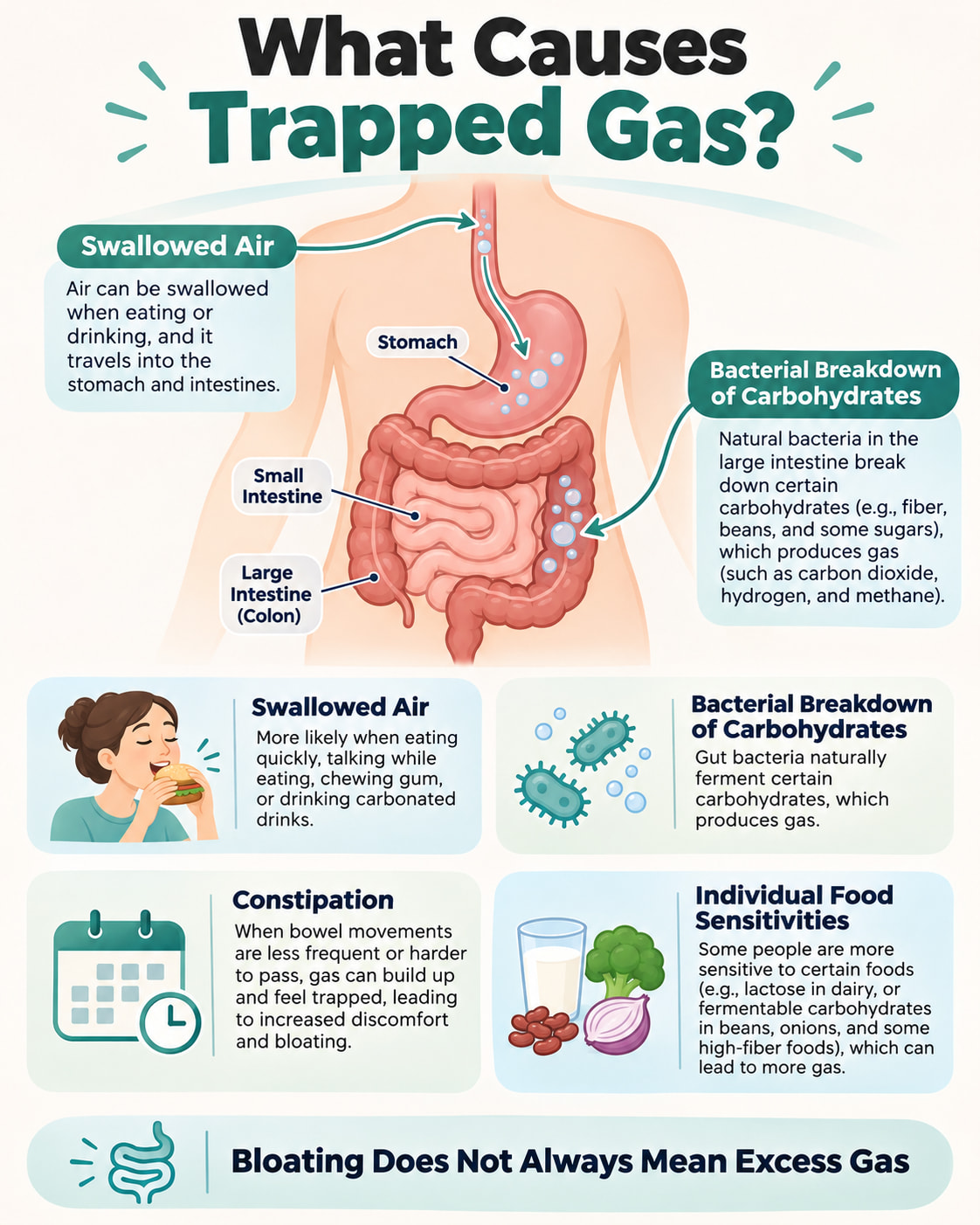
Gas enters your digestive tract when you swallow air. It also forms when bacteria in your large intestine break down carbohydrates that were not fully digested.
Eating quickly, chewing gum, and drinking carbonated beverages can increase swallowed air. Certain foods may produce more gas during digestion, particularly if you have difficulty digesting lactose or other carbohydrates.
Constipation can contribute to gas discomfort. Conditions such as irritable bowel syndrome (IBS) may also affect how gas moves or how strongly you feel normal intestinal sensations.
Gas-related discomfort can include pressure, fullness, and cramping. However, feeling bloated does not necessarily mean you have excessive gas. Passing gas may help some discomfort without resolving every cause of bloating.
How to Make Yourself Fart: 7 Gentle Ways to Try
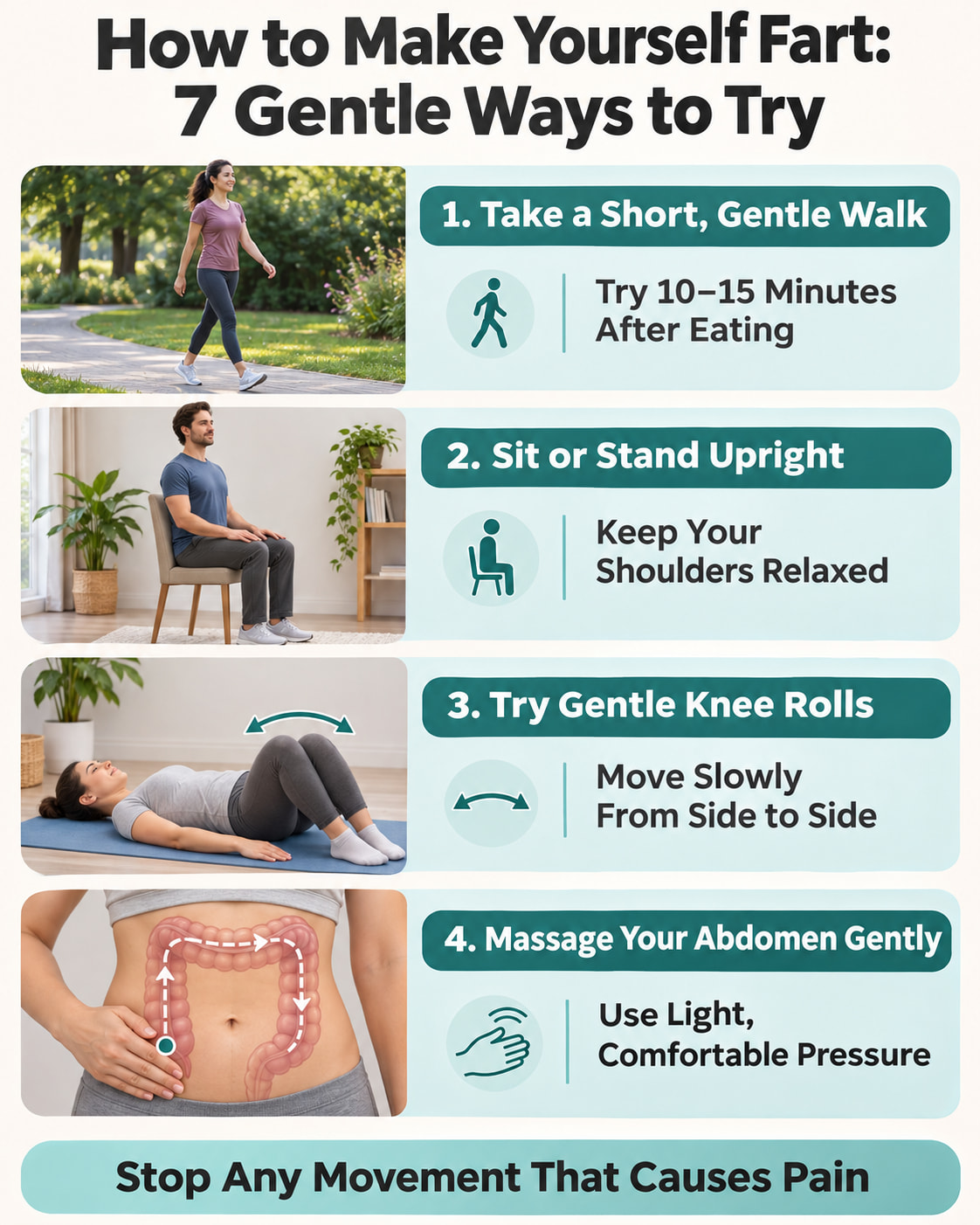
Start with an option that feels comfortable. Stop any movement or pressure that increases pain. Warmth and relaxation mainly support comfort; they should not be expected to make you pass gas on demand.
1. Take a Short, Gentle Walk
An easy walk is a practical first step if you have been sitting for a long time or feel mildly bloated after a meal.
MedlinePlus gas guidance, reviewed in April 2026, suggests walking for 10–15 minutes after eating. You can walk around your home, along a hallway, or outside at a comfortable pace.
Keep the effort easy enough to talk normally. You do not need to run, jump, or perform a strenuous workout to encourage gas movement.
A short walk may help, but there is no set number of minutes after which everyone will pass gas. Stop if your discomfort becomes painful or worsens.
2. Sit or Stand Upright
If you have been lying flat, try sitting upright in a comfortable chair or standing for a short while.
Keep your shoulders relaxed and avoid folding tightly over your abdomen. Change position if sitting or standing becomes uncomfortable.
A small 2003 study involving eight healthy adults found that intestinal gas moved through more quickly when participants were upright than when they were lying flat. Because this was a small laboratory study, it does not establish one perfect position for everyone.
Think of upright posture as a comfortable option to try, without expecting an immediate result.
3. Try Gentle Knee Rolls
A slow knee roll offers another way to change position without a strenuous workout.
To try it:
- Lie on your back on a comfortable surface.
- Bend your knees and keep your feet supported.
- Keeping your knees together, let them move a small, comfortable distance toward one side.
- Return to the center, then move gently toward the other side.
- Breathe normally and stop if the movement causes pain.
Cambridge University Hospitals includes knee rolls in postoperative physiotherapy guidance for trapped wind. That is practical patient guidance, not proof that the movement reliably releases gas in everyone.
If you are pregnant, have recently had abdominal surgery, or have movement restrictions, ask your care team which positions are appropriate.
4. Massage Your Abdomen Gently
A light abdominal massage may help some people with gas-related discomfort.
Use your own right and left sides as the reference:
- Place a hand on the lower right side of your abdomen.
- Gently move upward toward the right ribs.
- Continue across the upper abdomen.
- Move downward along the left side.
Use light, comfortable pressure. Avoid deep pushing or trying to force gas through a painful area.
Cambridge University Hospitals guidance advises against abdominal massage during pregnancy, after recent abdominal surgery or scarring, and with certain bowel conditions, including Crohn’s disease and ulcerative colitis. Ask your clinician first if you have a hernia or another abdominal condition.
Do not massage a painful, swollen abdomen when you cannot pass gas or stool; seek medical care instead.
5. Relax and Breathe Slowly
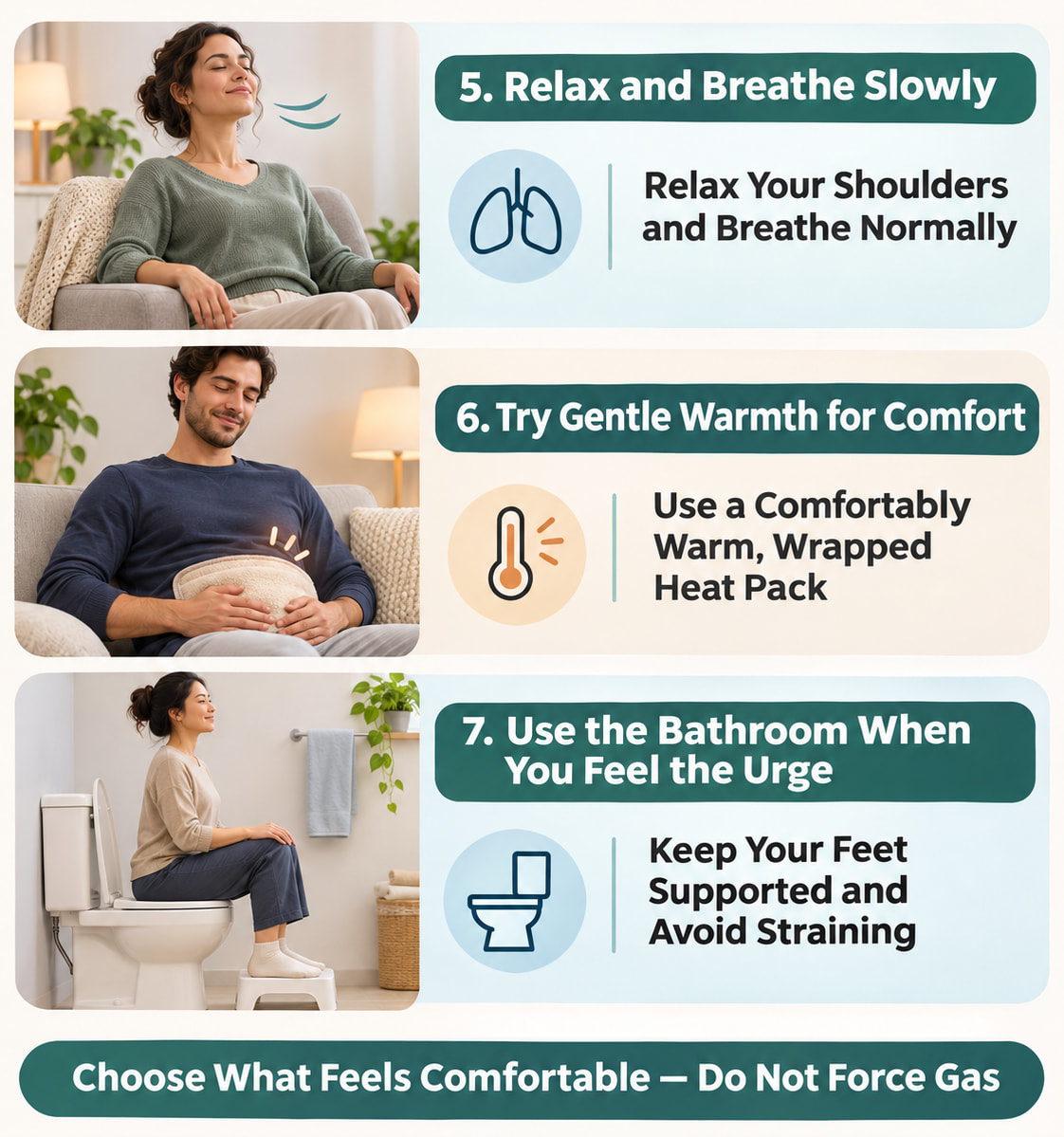
When you feel uncomfortable, you may tense your abdomen or hold your breath. A few relaxed breaths can help you stop bracing and focus on comfort.
Try this:
- Sit in a comfortable position.
- Relax your shoulders and jaw.
- Breathe in gently, allowing your abdomen to move naturally.
- Breathe out slowly without pushing down or holding your breath.
East Cheshire NHS guidance includes calm breathing and relaxation for IBS-related wind and bloating. This does not mean breathing physically pushes gas out. Use it as a comfort measure while allowing your body time.
6. Try Gentle Warmth for Comfort
A comfortably warm heat pack may help soothe mild abdominal discomfort. East Cheshire NHS includes warmth among its suggestions for trapped wind.
Use it carefully:
- Wrap the pack in a towel and follow its instructions.
- Check your skin and stop if it feels too hot or becomes irritated.
- Stay awake while using it.
- Avoid applying heat over broken skin or areas with reduced sensation or poor circulation.
Warmth may make you feel more comfortable, but it is not a proven way to make gas pass immediately.
7. Use the Bathroom When You Feel the Urge
If you also feel the urge to have a bowel movement, give yourself an unhurried opportunity to use the bathroom.
Sit with your feet supported. A small footstool may help position your knees slightly above your hips. Relax your shoulders and breathe normally.
Avoid straining, holding your breath, or sitting for a long time trying to force something to happen. If the urge passes without a bowel movement, get up and try again when you feel a definite urge.
This approach supports bowel habits when constipation contributes to discomfort. A bowel movement does not guarantee that trapped gas will immediately pass.
What Can Make Gas and Bloating Worse?
Trying to produce more gas can leave you more uncomfortable. Avoid drinking soda, swallowing air, or eating a large serving of gas-producing foods specifically to make yourself fart.
Other habits that may add to symptoms include:
- Eating quickly or gulping drinks.
- Chewing gum or frequently sucking hard candy.
- Drinking through a straw.
- Eating very large meals.
- Suddenly increasing your fiber intake.
- Eating foods you already know cause symptoms.
Beans, lentils, vegetables, and other nutritious foods do not need to be removed automatically. Pay attention to your own tolerance and portion sizes.
Do Common Gas Remedies Help?
Peppermint Tea and Peppermint Oil
Some people find peppermint tea soothing, but evidence that it makes you pass gas is limited.
NCCIH guidance, updated in May 2025, distinguishes peppermint leaf from enteric-coated peppermint-oil capsules. Some research supports the capsules for overall IBS symptoms; that does not prove that tea provides the same effects.
Peppermint oil can cause heartburn or reflux. Ask a pharmacist or clinician before using a medicinal peppermint product, particularly if you already have reflux or take other medicines.
Simethicone
Simethicone is available over the counter for gas-related pressure, fullness, and bloating. Some people find it helpful, but it does not guarantee relief.
A 2025 European consensus found insufficient evidence to recommend simethicone specifically for functional bloating and abdominal distension. This does not mean it never helps any gas symptoms.
If you are considering it, follow the product label and ask a pharmacist if it is suitable for you. Do not use it to delay assessment of warning signs.
How to Reduce Frequent Gas and Bloating
If the problem keeps returning, look for patterns rather than repeatedly trying to force gas out.
Slow down at meals. Eat without rushing, chew thoroughly, and consider smaller meals if large portions leave you uncomfortable.
Notice individual triggers. Keep a simple record of meals, bowel movements, and symptoms. For example, note whether symptoms repeatedly follow a particular food or an unusually large portion.
Support bowel regularity. Stay adequately hydrated and increase fiber gradually if appropriate for you. A sudden large increase can worsen gas.
Get advice for ongoing symptoms. A clinician or registered dietitian can help assess persistent bloating, constipation, or suspected food intolerance. Avoid cutting out several food groups without guidance.
Frequently Asked Questions
How Quickly Can You Make Yourself Fart?
There is no reliable timetable. Gentle movement or a position change may help, but you may not pass gas immediately. If you cannot pass gas or stool and have increasing swelling, pain, or vomiting, seek medical care instead of waiting for a home technique to work.
What Position Is Best for Passing Gas?
No single position is proven best for everyone. Sitting or standing upright is a reasonable option, supported by a small study. Gentle position changes may also feel comfortable. Avoid forcing your knees tightly against your abdomen or staying in a position that hurts.
Does Warm Water Help Release Trapped Gas?
Warm water may feel soothing, and adequate fluids support bowel function. However, there is no established evidence that warm water is better than other comfortable-temperature water for making you pass gas immediately. Choose a noncarbonated drink and sip normally.
Should You Push to Make Yourself Fart?
Avoid forceful pushing or prolonged straining. Try comfortable movement and normal breathing instead. If you feel an urge to have a bowel movement, use the bathroom without rushing or holding your breath.
How Often Is It Normal to Fart?
NIDDK reports an average of 8–14 times daily and notes that up to 25 times a day can be normal. These are general reference figures, not targets. A sudden change, pain, or other accompanying symptoms matters more than counting every episode.
Why Do You Still Feel Bloated After Passing Gas?
Bloating is not always caused by excess gas. Constipation, food intolerance, IBS, and other factors can contribute. If passing gas does not help and the bloating persists or keeps returning, arrange a medical assessment.
Conclusion
For mild, occasional discomfort, start with a gentle walk or an upright position. Comfortable knee rolls, light massage when appropriate, relaxed breathing, warmth, and responding to a bowel urge may also help you feel more comfortable.
Choose one gentle step and notice how you feel. If symptoms persist, keep returning, or come with warning signs, contact a healthcare professional.
This content is for informational purposes only and not medical advice.
References
- NIDDK: Symptoms and Causes of Gas in the Digestive Tract.
- NIDDK: Managing Gas Symptoms.
- MedlinePlus: Gas—Flatulence.
- MedlinePlus: Intestinal Obstruction.
- NHS: Bloating.
- Dainese and colleagues: Influence of Body Posture on Intestinal Transit of Gas.
- Cambridge University Hospitals: Advice Following Abdominal Surgery.
- Cambridge University Hospitals: Improving Bowel Function in Constipation.