

If you’re wondering, “Do cherries make you poop?” yes, cherries can lead to softer or more frequent stools in some people. Their fiber and naturally occurring sorbitol help explain why.
Larger portions may also cause gas, bloating, or diarrhea, particularly if you are sensitive to certain fruit sugars. Understanding the amount you eat and your own tolerance can help you enjoy cherries more comfortably.
Why Do Cherries Make You Poop?
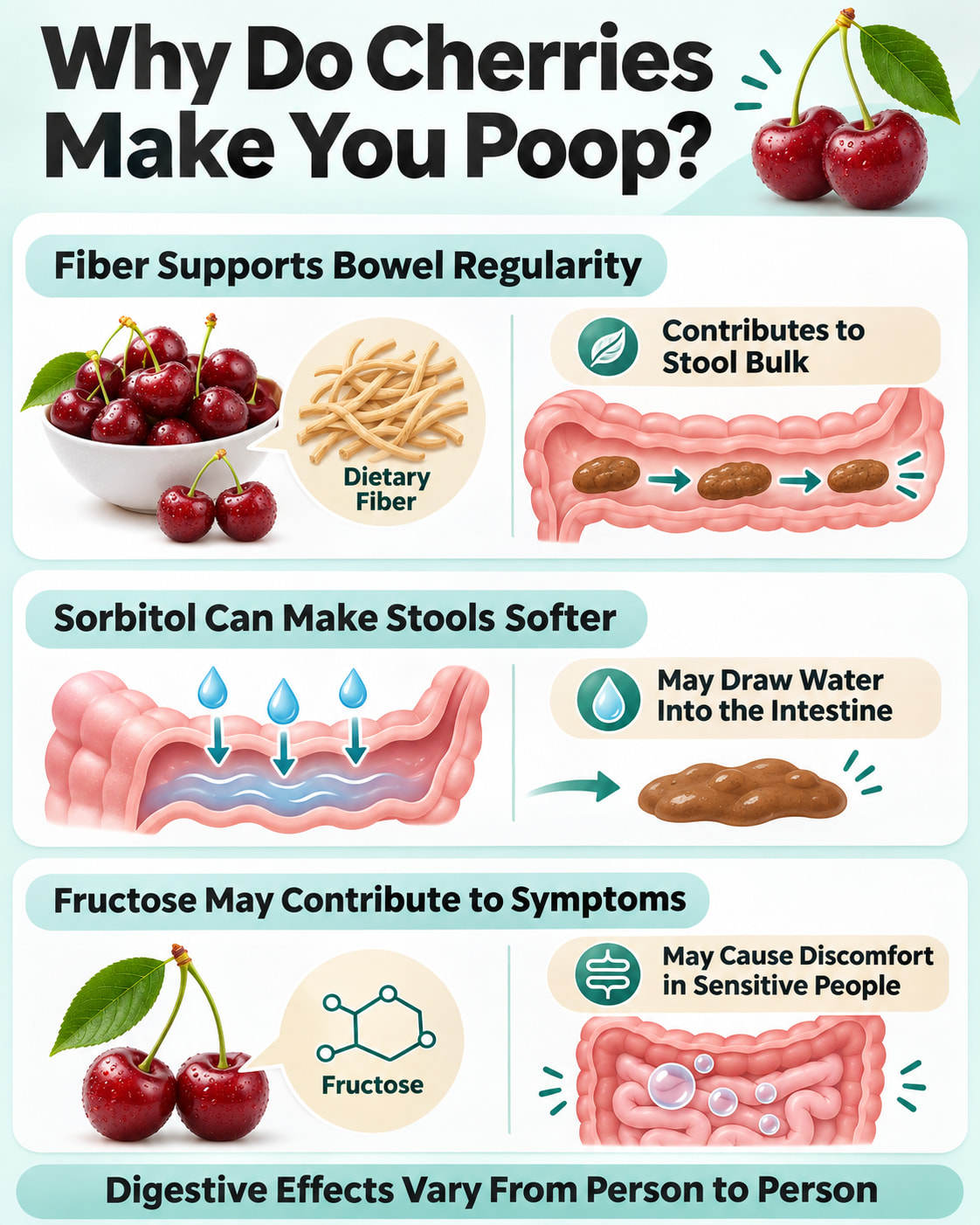
Cherries contain several components that can affect digestion. Fiber contributes to stool formation, while poorly absorbed carbohydrates can change how much water and gas are in your intestines.
Fiber Supports Bowel Regularity
Dietary fiber contributes bulk to stool and can support regular bowel movements. Cherries provide some fiber, although a serving supplies only part of your daily needs.
According to NIDDK guidance, adults generally need 22–34 grams of fiber daily, depending on age and sex. Adding fiber gradually and drinking enough fluids helps your digestive system adjust.
Sorbitol Can Make Stools Softer
Sorbitol is a sugar alcohol found naturally in cherries and some other fruits. Your small intestine may not absorb all of it.
Sorbitol that remains in the intestine can draw in water, potentially making stools softer or looser. Gut bacteria can also ferment unabsorbed carbohydrates, producing gas.
This helps explain why the same fruit may cause little noticeable change for one person and urgency or bloating for another.
Fructose May Contribute to Symptoms
Monash University’s food guide identifies cherries as a source of sorbitol and excess fructose.
These belong to a group of fermentable carbohydrates called FODMAPs. In people who are sensitive to them, incomplete absorption can contribute to digestive discomfort. This is particularly relevant if you have irritable bowel syndrome, or IBS.
How Much Fiber Is in Cherries?
The USDA nutrient database lists about 3.2 grams of fiber in one cup of pitted raw sweet cherries.
| Portion of raw sweet cherries | Edible weight | Dietary fiber |
|---|---|---|
| ½ cup, without pits | About 77 g | About 1.6 g |
| 1 cup, without pits | 154 g | About 3.2 g |
The half-cup figure is calculated from USDA reference values. The cup measurements refer to cherries with the pits removed.
These values should not be applied to cherry juice, dried cherries, or cherries packed in syrup. Their composition and serving sizes differ.
How Many Cherries Should You Eat?
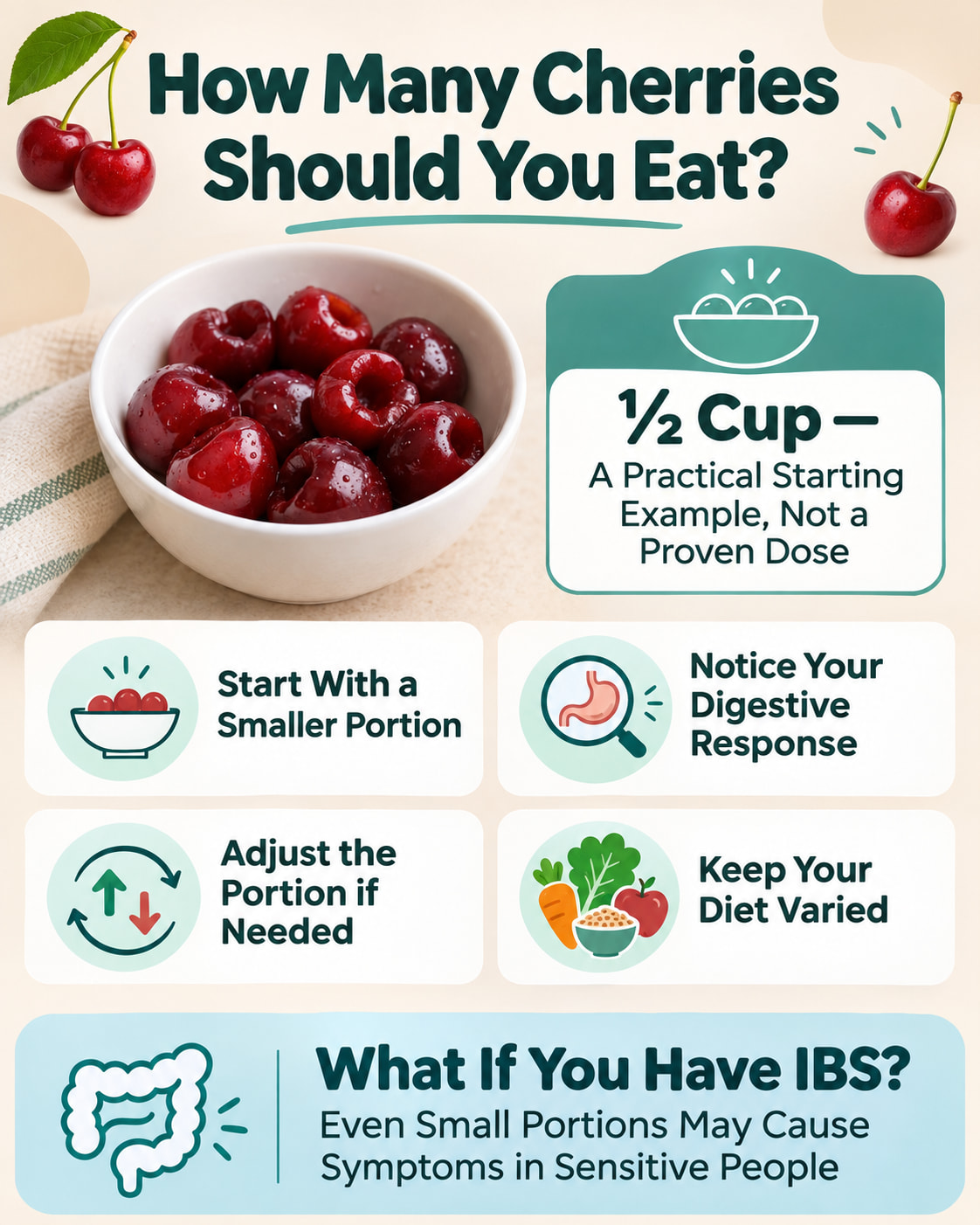
There is no established cherry serving for constipation relief. Your response may differ from someone else’s, even when you eat the same amount.
If you generally tolerate cherries, a smaller portion, such as ½ cup, can be a practical starting point. This is a portion example, not a tested dose or a guarantee that you will avoid symptoms.
A few simple habits can help you judge your tolerance:
- Measure a portion first. Put cherries in a small bowl so you can keep track of how much you eat.
- Pay attention to repeated patterns. Note whether discomfort tends to follow a particular amount.
- Adjust the portion if needed. If cherries repeatedly cause gas or loose stools, try less or leave them out.
- Keep your overall diet varied. Include other fiber-containing foods and drink enough fluids to support bowel regularity.
For example, you could add a small portion of pitted cherries to your usual breakfast and note the amount and any symptoms. This can make a recurring pattern easier to recognize.
What If You Have IBS?
A typical bowl of cherries may be difficult to tolerate because of its FODMAP content. Even the half-cup example above may be too much for someone with IBS or known sorbitol or fructose sensitivity.
If you follow a low-FODMAP eating plan, use your dietitian’s guidance and current portion information. The goal is to identify amounts you tolerate while maintaining a varied diet.
Can Cherries Cause Diarrhea, Gas, or Bloating?
Yes. The sorbitol and other fermentable carbohydrates in cherries can contribute to loose stools, gas, bloating, and cramps. Eating more may increase the chance of symptoms, although individual tolerance varies.
A pilot study published in September 2025 followed 27 adults who ate 280 grams of sweet cherries daily for 42 days. Five participants reported occasional digestive symptoms, including diarrhea, bloating, or flatulence.
The study had no comparison group and focused on metabolic health. It did not establish whether cherries relieve constipation or identify a recommended daily amount. The amount used in the study should not be treated as a serving recommendation.
Aim for comfortable bowel movements with formed stools. Repeated diarrhea or significant discomfort is a reason to reassess what you are eating and seek advice when needed.
Whole Cherries vs. Cherry Juice and Dried Cherries
The form of cherries you choose matters. A cup of fresh fruit, a glass of juice, and a cup of dried fruit provide different amounts of fiber, water, and sugars.
| Form | What to know | Practical consideration |
|---|---|---|
| Whole cherries | Supply the fruit’s dietary fiber. | Use a measured portion and remove the pits before eating. |
| Cherry juice, including tart cherry juice | Juicing reduces fiber, and products vary. | Check the Nutrition Facts label for fiber, serving size, and added sugars. |
| Dried cherries | Drying removes water and concentrates sugars and FODMAPs into a smaller volume. | Measure portions; do not use the fresh-fruit serving size as an equivalent. |
These differences are especially relevant when choosing between whole fruit and processed forms.
Cherry juice may still cause digestive symptoms in sensitive people, even when it contains little fiber. However, there is no established evidence that tart cherry juice produces faster or more dependable constipation relief than whole cherries.
For a snack that contributes fiber, whole cherries are the more straightforward choice.
When to Get Medical Advice
A change in bowel habits should not automatically be attributed to cherries. Constipation and diarrhea can have other causes.
Constipation Warning Signs
According to NIDDK’s constipation guidance, seek medical attention right away if constipation occurs with:
- Constant abdominal pain.
- An inability to pass gas.
- Vomiting.
- Blood in your stool or rectal bleeding.
- Fever.
- Unexplained weight loss.
Also arrange a medical review if constipation does not improve with self-care.
Diarrhea Warning Signs
Contact a healthcare professional promptly if you have:
- Diarrhea lasting more than two days as an adult.
- Severe abdominal or rectal pain.
- Bloody or black, tarry stools.
- High fever.
- Six or more loose stools in a day.
- Signs of dehydration, such as urinating much less, a very dry mouth, or dizziness.
Do not wait two days if warning symptoms are already present.
Frequently Asked Questions
Do Cherries Make You Poop Right Away?
There is no established timetable. You may notice a change after eating cherries, or you may notice none. Research does not support promising a bowel movement within a specific number of minutes or hours.
How Many Cherries Can Cause Diarrhea?
There is no universal threshold. Your tolerance depends on the amount eaten and how your digestive system handles the fruit’s carbohydrates. A portion that causes symptoms for one person may be comfortable for another.
Are Cherries Good for Constipation?
Cherries can contribute fiber to your diet, but their specific effectiveness for constipation has not been established. A varied eating pattern and adequate fluids support bowel regularity.
Does Tart Cherry Juice Make You Poop?
It may cause looser stools in some people, but its effect is unpredictable. Juice has less fiber than whole cherries, and there is no established tart cherry juice dose for constipation relief.
Do Dried Cherries Have the Same Effect as Fresh Cherries?
They may also affect digestion, but portions are not interchangeable. Dried cherries contain less water, and drying concentrates sugars and FODMAPs. Check the package serving size and pay attention to your tolerance.
Can You Eat Cherries If You Have IBS?
Some people with IBS can tolerate small amounts, while others develop symptoms. Cherries contain sorbitol and excess fructose, so use individualized guidance if you are following a low-FODMAP plan.
Conclusion
Cherries may help some people pass softer stools, but larger portions can bring unwanted digestive symptoms. Their fiber and sorbitol help explain the effects, while individual tolerance determines how comfortable a serving feels.
Enjoy a portion you tolerate, notice any recurring symptoms, and keep a variety of fiber-containing foods in your diet. If bowel problems persist, contact a healthcare professional.
This content is for informational purposes only and not medical advice.
References
- USDA Agricultural Research Service: National Nutrient Database, Release 28 — Fruits and Fruit Juices.
- NIDDK: Eating, Diet, & Nutrition for Constipation.
- Monash University: High and Low FODMAP Foods.
- Monash University: Food Additives and FODMAPs.
- Monash University: FODMAP Frequently Asked Questions.
- Carvalho and colleagues: Effects of Cherry Consumption on Metabolic Health: A Pilot Clinical Study on Healthy Adults.