
Bed exercises are gentle movements you can perform without getting out of bed—and yes, they can help support mobility, strength, and flexibility safely and effectively. These low-impact exercises may help activate stiff joints, improve circulation, and maintain muscle function, especially if getting to the floor is difficult.
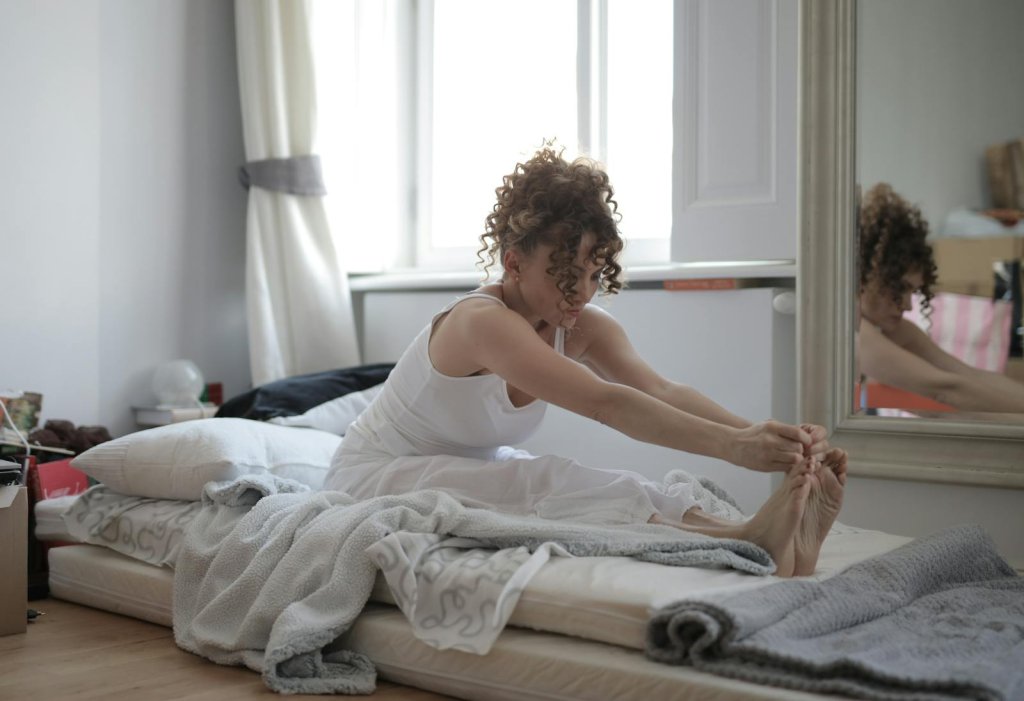
Understanding how bed exercises work is important because they’re used widely in physiotherapy, rehabilitation, and senior fitness to promote safe movement. This guide explains 10 of the most beneficial exercises, who they’re for, how to do them correctly, and safety tips, with up-to-date references from reputable medical and rehab sources.
What Are Bed Exercises?
Bed exercises are simple strengthening, stretching, and mobility movements performed lying or sitting on a bed. They are commonly recommended for:
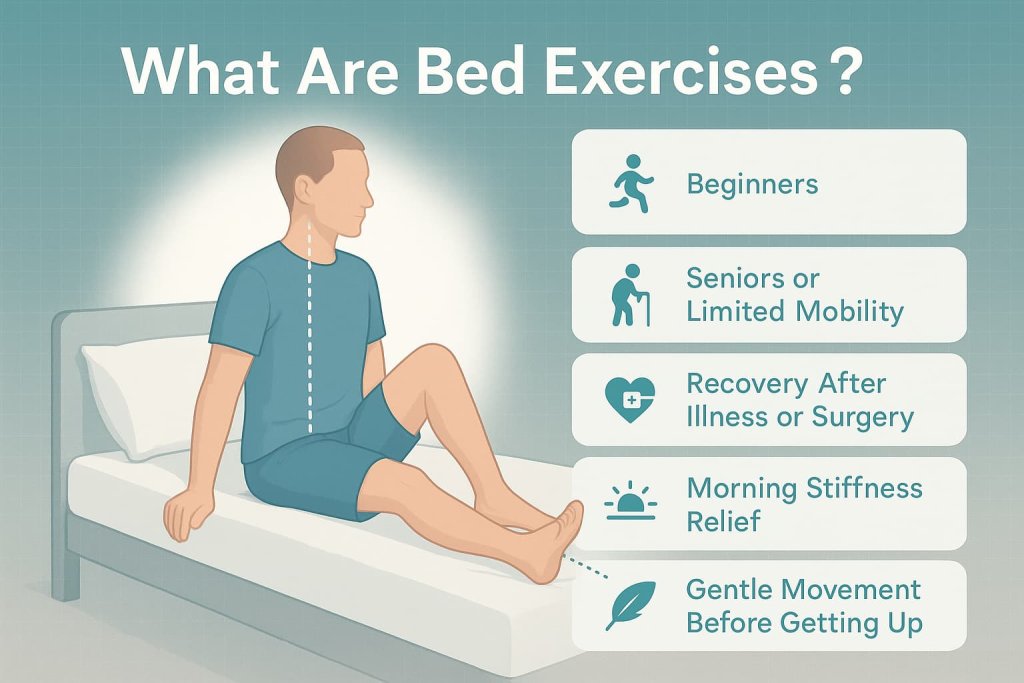
- Beginners who find floor exercises difficult
- Seniors or people with limited mobility
- Individuals recovering from illness, surgery, or injury
- Anyone who wakes up with stiffness or discomfort
- People wanting gentle movement before getting up
These exercises may help maintain muscle strength, support circulation, reduce stiffness, and improve overall mobility using only your body weight.
Health Benefits of Bed Exercises
Bed exercises may support:
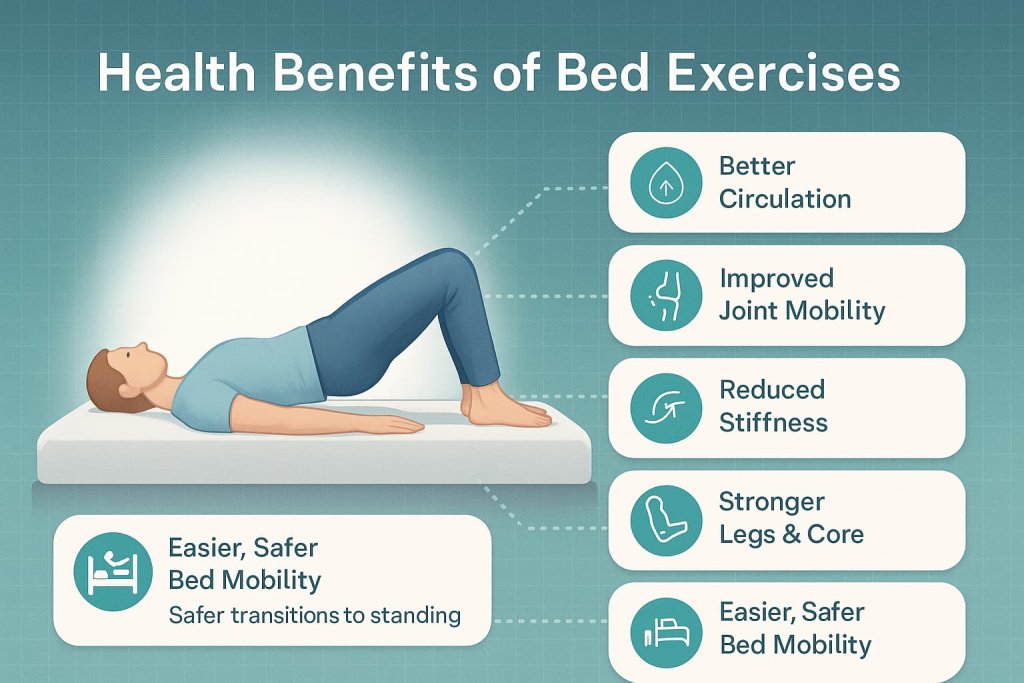
- Better circulation through ankle and leg movements
- Improved joint mobility
- Reduced stiffness in the back, hips, and knees
- Stronger leg and core muscles needed for standing and walking
- Easier bed mobility (turning, sitting up, repositioning)
- Safer transitions from lying to standing in the morning
Evidence-based physiotherapy guidelines emphasize gentle repetition, gradual progression, and pain-free movement for improving mobility and function.
The 10 Best Bed Exercises You Can Do Without Getting Up
Below are the top bed exercises based on physiotherapy research, beginner suitability, and safety. Each includes clear steps and purpose.
1. Ankle Pumps
Why it works
This simple movement promotes blood flow through the lower legs, which may help reduce morning stiffness and support circulation. It gently mobilizes the ankle joint and prepares the calves and shins for standing and walking.
Muscles worked
- Calves (gastrocnemius, soleus)
- Tibialis anterior
- Small stabilizers around the ankle joint
How to do it
- Lie on your back with legs straight.
- Point your toes away from you as far as comfortable.
- Then pull your toes toward your shins.
- Repeat 10–20 times with smooth, controlled motion.
Trainer Tip
Move through your full comfortable range, not forcefully. Slow, steady motions improve circulation more effectively than fast movements.
2. Ankle Circles
Why it works
Rotating the ankle helps maintain joint mobility, reduce stiffness, and warm up ligaments and tendons—especially helpful after long periods lying in bed.
Muscles worked
- Ankle stabilizers
- Calves
- Tibialis anterior
- Peroneal muscles
How to do it
- Lift one foot slightly off the bed.
- Rotate your ankle to draw slow circles with your toes.
- Complete 10 circles each direction per foot.
Trainer Tip
Lead the movement from the ankle—not the knee. Keep your leg relaxed to isolate the joint.
3. Heel Slides (Knee Bends)
Why it works
Heel slides help maintain knee and hip range of motion, gently stretching the front of the thigh and activating muscles needed for standing and walking.
Muscles worked
- Quadriceps
- Hamstrings
- Hip flexors
- Glute stabilizers
How to do it
- Lie on your back.
- Bend one knee and slide your heel toward your hips.
- Slowly straighten your leg again.
- Perform 8–12 repetitions per leg.
Trainer Tip
If your heel catches on the bed, wear socks or place a towel under your foot for smoother sliding.
4. Hip Abduction (Side Leg Slides)
Why it works
Sliding your leg outward strengthens the hip muscles that help with balance, walking, and side-to-side stability. It also maintains hip joint mobility.
Muscles worked
- Gluteus medius and minimus
- Inner thigh muscles (adductors)
- Hip stabilizers
How to do it
- Keep both legs straight.
- Slide one leg out to the side as far as comfortable.
- Bring it back in slowly.
- Perform 10 repetitions per leg.
Trainer Tip
Keep your toes pointed up toward the ceiling to ensure the hip—not the lower back—is driving the movement.
5. Glute Squeezes
Why it works
This gentle isometric exercise activates the glutes, which are essential for standing, walking, and stabilizing the lower back. It’s safe even for beginners or those with limited mobility.
Muscles worked
- Gluteus maximus
- Deep hip stabilizers
How to do it
- Lie comfortably on your back.
- Squeeze your glute muscles together.
- Hold for 3–5 seconds, then relax.
- Repeat 10–15 times.
Trainer Tip
Avoid tightening your lower back—focus on squeezing only the glutes for best activation.
6. Mini Bridge
Why it works
Mini bridges strengthen the glutes and lower back while also helping with bed mobility, such as rolling or repositioning. They gently activate the core without high strain.
Muscles worked
- Gluteus maximus
- Hamstrings
- Lower back muscles (erector spinae)
- Core stabilizers
How to do it
- Bend your knees with feet flat on the bed.
- Press through your heels and lift your hips slightly.
- Hold 2–3 seconds, then slowly lower.
- Do 8–12 repetitions.
Trainer Tip
Lift only to a comfortable height—this is a mini bridge, not a full one. Keep your ribs down and avoid overarching your back.
7. Single-Knee-to-Chest Stretch
Why it works
This gentle stretch lengthens the lower-back and hip muscles, reducing stiffness and improving mobility before standing up.
Muscles worked
- Lower back (erector spinae)
- Glutes
- Hip muscles
How to do it
- Bring one knee toward your chest.
- Hold behind the thigh, not the knee.
- Hold for 15–20 seconds.
- Switch sides.
Trainer Tip
If pulling the leg is difficult, use a towel behind your thigh for support.
8. Supine Lumbar Rotation
Why it works
This gentle twisting movement helps ease tension in the lower back and hips, improving spinal mobility and reducing morning tightness.
Muscles worked
- Lower back muscles
- Obliques
- Hip stabilizers
How to do it
- Bend both knees with feet flat.
- Slowly lower your knees to one side.
- Hold 3–5 seconds, then return to center.
- Switch sides.
- Repeat 8–10 times.
Trainer Tip
Move only as far as comfortable. Keep your shoulders relaxed on the bed for a safe, controlled stretch.
9. Arm Raises (Shoulder Flexion)
Why it works
This exercise improves shoulder mobility, supports posture, and maintains upper-body range of motion—especially useful after long periods lying down.
Muscles worked
- Deltoids
- Upper back stabilizers
- Rotator cuff
- Chest muscles (light engagement)
How to do it
- Lie on your back with arms by your sides.
- Raise both arms overhead in a smooth arc.
- Lower them gently.
- Repeat 10–12 times.
Trainer Tip
If your shoulders feel tight, limit the range and gradually increase it as mobility improves.
10. Core Bracing
Why it works
Core bracing activates the deep abdominal muscles that stabilize your spine and protect your lower back during daily movements.
Muscles worked
- Transverse abdominis (deep core)
- Pelvic floor
- Lower-back stabilizers
How to do it
- Lie on your back with knees bent.
- Gently tighten your abdominal muscles as if preparing for a small cough.
- Hold for 5 seconds, then relax.
- Repeat 8–12 times.
Trainer Tip
Your stomach should tighten without bulging upward. Keep breathing naturally—never hold your breath.
Warm-Up Before Bed Exercises
A brief warm-up increases circulation and loosens stiff joints so your exercises feel smoother and safer.
Quick 1–2 Minute Warm-Up
- Ankle Pumps: Point toes away and pull them back (10–15 reps).
- Heel Slides: Bend one knee at a time to warm up hips and knees (6–8 reps).
- Arm Reaches: Lift arms overhead and lower slowly (8–10 reps).
- Pelvic Tilts: Gently rock pelvis forward and back (6–8 reps).
- Deep Breaths: 3–4 slow cycles to relax muscles.
Keep movements gentle and stop if anything feels painful.
Tips for Safe Progression
- Start with 5–10 reps and increase gradually.
- Move slowly and avoid jerky motions.
- Use a firmer mattress or place a board under the sheet if too soft.
- Maintain normal breathing—don’t hold your breath.
- If something feels too easy, slow the tempo or add more reps.
Safety Guidelines for Bed Exercises
Follow these safety points to ensure comfortable, appropriate movement—especially if you have medical conditions or limited mobility.
General Safety
- Move only within a comfortable, pain-free range.
- Avoid holding your breath; breathe steadily.
- Keep motions slow and controlled—no fast swinging.
Environment
- Make sure your mattress feels stable; adjust to smaller movements if it’s too soft.
- Use a pillow under knees or head if needed for comfort.
When to Stop
- Sharp pain, dizziness, chest discomfort, numbness, or unusual shortness of breath.
Who Should Get Medical Clearance
- Recent hip, spine, knee, or abdominal surgery
- Unstable fractures or severe osteoporosis
- Neurological or cardiac conditions
- New or unexplained pain
These guidelines help you exercise safely and comfortably.
Who Should Avoid or Modify Bed Exercises
Short, essential safety notes:
Some people may need medical clearance or modified routines, including those with:
- Recent surgery (hip, spine, abdominal)
- Unstable fractures or severe osteoporosis
- Severe cardiac or respiratory illness
- Neurological conditions limiting safe movement
- Unexplained severe back or leg pain
- Doctor instructions limiting leg or hip movement
Always stay within a comfortable range. Stop if dizziness, chest pain, or sharp pain occurs. Follow guidance from a qualified medical professional.
Common Questions About Bed Exercises
1. Do bed exercises actually work?
Yes. Physiotherapy guidelines show that bed-based movements may help maintain muscle strength, joint flexibility, and circulation when standing or floor exercise is difficult.
2. Are bed exercises good for seniors?
Yes. They are widely used in senior rehabilitation because they are low impact and require no standing balance.
3. Can bed exercises help with morning stiffness?
Gentle stretches and mobility movements often help reduce stiffness before standing.
4. Can I do bed exercises every day?
Yes—most are safe for daily practice unless your doctor advises otherwise.
5. Do I need equipment?
No equipment is needed, though a pillow or towel can help with comfort.
6. Are these exercises safe after surgery?
Only if approved by a surgeon or physiotherapist. Certain movements must be restricted depending on your procedure.
Conclusion
Bed exercises are a simple, accessible, and low-impact way to support mobility, strength, and morning comfort—without leaving your mattress. Start with just a few movements, stay consistent, and increase gradually as you feel stronger. If you have medical conditions, always follow professional guidance.
This content is for informational purposes only and not medical advice.