
Bed exercises for seniors are simple, low-impact movements done while lying or sitting on the bed to help improve mobility, circulation, and strength. These exercises are especially helpful for older adults who experience stiffness, limited mobility, balance difficulties, or discomfort when standing.
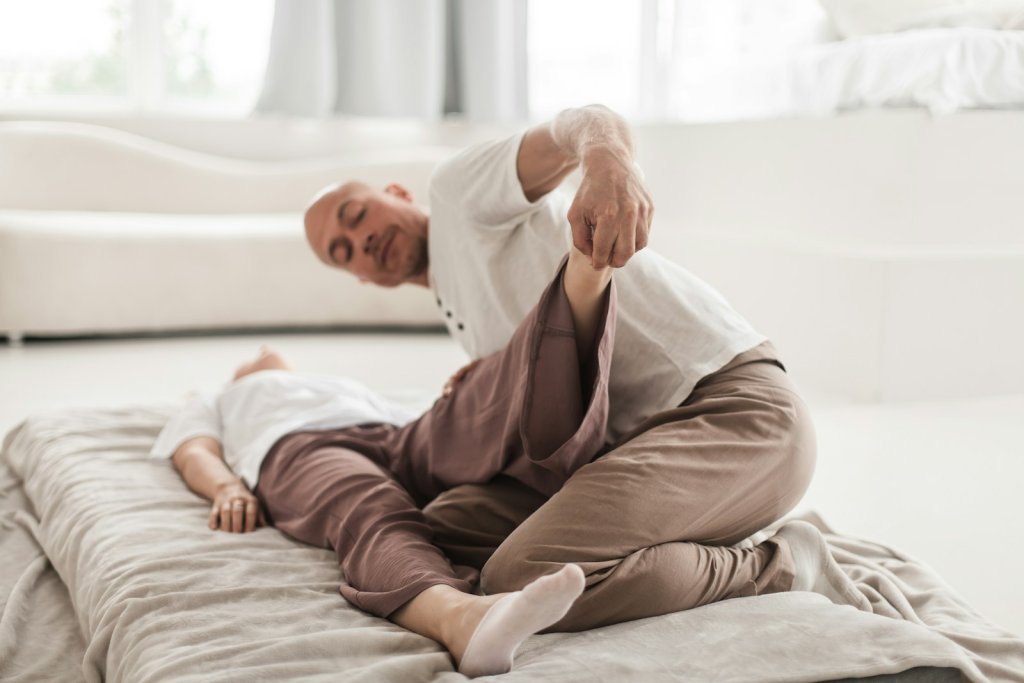
Bed-based workouts matter because they allow seniors to stay active safely, even with arthritis, low energy, or recovery from illness. They support smoother transitions—such as turning in bed, sitting up, and standing—and may help maintain independence.
In this guide, you’ll find 10 easy, physiotherapy-inspired bed exercises, along with safety tips, benefits, and FAQs.
What Are Bed Exercises for Seniors?
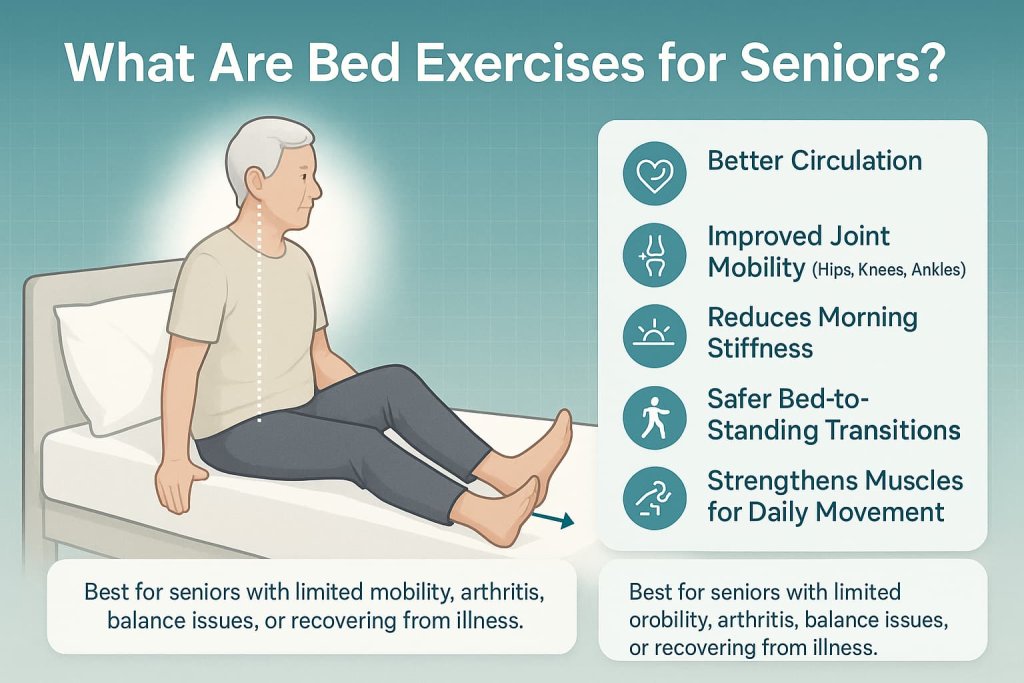
Bed exercises are gentle strengthening and mobility movements performed directly on the bed. They target the legs, hips, core, and upper body without requiring equipment.
These exercises may help support:
- Better circulation for the feet and legs
- Improved joint mobility (hips, knees, ankles)
- Reduced morning stiffness
- Safer bed-to-standing transitions
- Stronger muscles needed for daily movement
Best for: seniors with limited mobility, arthritis, balance issues, recovering from illness, or those who feel safer exercising on the bed.
Benefits of Bed Exercises for Seniors
Bed exercises may support:
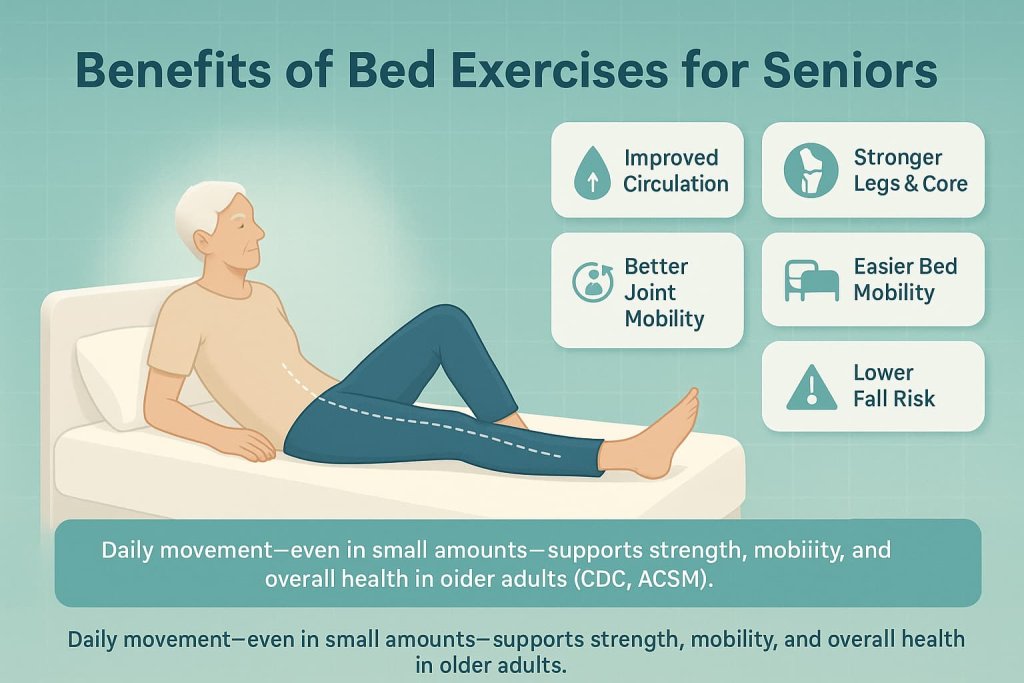
- Improved circulation to lower legs and feet
- Better joint mobility in ankles, knees, and hips
- Reduced stiffness, especially in the morning
- Stronger legs and core, aiding safe standing
- Easier bed mobility (turning, sitting up, repositioning)
- Lower fall risk, by maintaining functional strength
- Gentle rehabilitation during illness or recovery
According to the CDC and ACSM, even small amounts of daily movement significantly support mobility, strength, and overall health in older adults.
10 Best Bed Exercises for Seniors
Below are ten safe, beginner-friendly exercises recommended across physiotherapy and senior-care programs.
1. Ankle Pumps
Why it works:
Ankle pumps help activate the calf muscles, which support healthy blood flow from the lower legs back toward the heart. This gentle motion may reduce stiffness, morning swelling, and discomfort caused by prolonged sitting or lying. It also keeps the ankle joint mobile, which is important for balance and walking.
Muscles worked:
- Calves (gastrocnemius, soleus)
- Tibialis anterior
- Foot stabilizers
How to do it:
- Lie on your back with legs extended and relaxed.
- Point your toes away from you slowly.
- Then pull your toes back toward your shins.
- Move through a smooth, comfortable range of motion.
- Perform 15–20 repetitions.
Trainer Tip:
If your feet feel tight, start with smaller movements and gradually increase the range. This exercise pairs well with deep breathing to encourage relaxation.
2. Ankle Circles
Why it works:
This exercise helps maintain ankle mobility, which is essential for balance and safe walking. Circular movement nourishes the joint, loosens stiff tissues, and supports better control of the foot during daily activities.
Muscles worked:
- Tibialis anterior and posterior
- Peroneals
- Small intrinsic foot muscles
How to do it:
- Lift one foot slightly off the bed while keeping your leg relaxed.
- Slowly draw circles with your toes—clockwise, then counterclockwise.
- Perform 8–10 circles each direction.
- Switch sides.
Trainer Tip:
Move from the ankle, not the toes. If your leg shakes, rest your heel on the bed and perform smaller circles.
3. Heel Slides
Why it works:
Heel slides help maintain or restore knee and hip mobility—critical for walking, standing up, and climbing into and out of bed. This movement keeps joints lubricated and helps reduce stiffness, especially in the morning.
Muscles worked:
- Hamstrings
- Hip flexors
- Quadriceps
- Glutes (light activation)
How to do it:
- Lie comfortably on your back with both legs straight.
- Slide one heel toward your hips, bending your knee slowly.
- Straighten your leg again with control.
- Perform 10–12 repetitions per side.
Trainer Tip:
Place a pillowcase or small towel under your heel to make sliding easier if friction is uncomfortable.
4. Hip Abduction Slides
Why it works:
Sliding the leg outward strengthens the muscles that stabilize the pelvis during walking and standing. This may support better balance, reduce fall risk, and make everyday movements—like stepping sideways—feel easier.
Muscles worked:
- Hip abductors (gluteus medius, gluteus minimus)
- Outer thigh muscles
- Hip stabilizers
How to do it:
- Keep both legs straight and relaxed on the bed.
- Slide one leg out to the side as far as comfortable.
- Bring the leg back to the starting position.
- Perform 10–12 repetitions per side.
Trainer Tip:
Try to keep your toes pointed upward to ensure proper alignment and true hip movement.
5. Glute Squeezes
Why it works:
Glute squeezes gently activate the hip extensor muscles without needing to lift the body. Strong glutes improve hip stability, support good posture, and play a key role in standing up safely.
Muscles worked:
- Gluteus maximus
- Gluteus medius (light activation)
- Pelvic stabilizers
How to do it:
- Lie on your back with legs relaxed.
- Tighten your buttock muscles as if drawing them together.
- Hold for 3–5 seconds.
- Relax and repeat 10–15 times.
Trainer Tip:
Avoid holding your breath. Exhale as you squeeze to keep your core relaxed and stable.
6. Quad Sets
Why it works:
Quad sets strengthen the thigh muscles that help straighten the knee—key for standing, walking, and preventing knee instability. This is also a common rehabilitation exercise after knee discomfort or surgery.
Muscles worked:
- Quadriceps (vastus medialis, vastus lateralis, rectus femoris)
- Knee stabilizers
How to do it:
- Straighten one leg fully on the bed.
- Gently press the back of your knee downward toward the mattress.
- Hold 3–5 seconds, then relax.
- Complete 10–15 repetitions.
Trainer Tip:
For a better muscle contraction, place a rolled towel under your knee and press down into it.
7. Bent-Knee Marching (In Bed)
Why it works:
This exercise strengthens the hip flexors and core while improving coordination. It helps seniors practice controlled leg lifting, which supports walking and stabilizing the pelvis.
Muscles worked:
- Hip flexors
- Lower abdominals
- Pelvic stabilizers
How to do it:
- Bend both knees with feet flat on the bed.
- Lift one knee a few inches toward your chest.
- Lower slowly and switch sides.
- Alternate for 10–20 repetitions.
Trainer Tip:
Keep your movements slow and controlled—avoid swinging your leg. Focus on gentle core engagement.
8. Gentle Bridge (If Able)
Why it works:
A small bridge strengthens the glutes, hamstrings, and lower back. These muscles help with standing up, walking, and maintaining upright posture. It also lightly stretches the front of the hips.
Muscles worked:
- Glutes
- Hamstrings
- Lower back extensors
- Core stabilizers
How to do it:
- Lie on your back with knees bent and feet flat.
- Press your feet into the bed and lift your hips slightly.
- Hold 2–3 seconds, then lower slowly.
- Perform 8–10 repetitions.
Trainer Tip:
If lifting feels difficult, start with just hip tucks (tilting your pelvis gently upward) before progressing to full lifts.
9. Arm Raises (Bed-Based Mobility)
Why it works:
Arm raises promote shoulder mobility and help reduce stiffness from long periods of lying down. They also support daily tasks like reaching shelves, dressing, and grooming.
Muscles worked:
- Deltoids
- Upper back muscles
- Chest (light stretch)
- Shoulder stabilizers
How to do it:
- Lie on your back with arms resting at your sides.
- Slowly lift both arms overhead toward the pillow or wall.
- Bring them back down with control.
- Perform 8–12 repetitions.
Trainer Tip:
Move within a pain-free range. If shoulders are stiff, raise one arm at a time.
10. Seated Bed Scoots
Why it works:
Scooting strengthens the core, hips, and arms while improving functional mobility. It trains the movement pattern needed for shifting positions in bed and preparing for bed-to-chair transfers.
Muscles worked:
- Core muscles
- Hip flexors
- Shoulders and arms
- Postural stabilizers
How to do it:
- Sit on the bed with feet on the mattress.
- Place your hands beside your hips.
- Press down and gently scoot forward, then backward.
- Repeat 6–8 times.
Trainer Tip:
Engage your core lightly to avoid rounding the lower back. Small movements are enough—avoid forcing large scoots.
How Often Should Seniors Do Bed Exercises?
A practical routine is:
- Daily: Mobility exercises (ankle pumps, circles, heel slides, arm raises)
- 3–5 days per week: Strength-focused moves (quad sets, glute squeezes, gentle bridges)
- Progress gradually: Add reps and slow, controlled movement over time
Even 5–10 minutes a day may support meaningful mobility improvements.
Safety Tips Before Starting Bed Exercises
- Check with a healthcare professional if you have chronic conditions, recent surgery, dizziness, or severe joint pain.
- Move slowly and stop if anything feels sharp or uncomfortable.
- Breathe normally—avoid holding your breath.
- Stay in the center of the bed to prevent slipping.
- Use pillows or caregiver support if you need extra stability.
When to Stop and Seek Professional Help
Stop immediately if you feel:
- Sharp or increasing pain
- Dizziness, nausea, or shortness of breath
- Chest discomfort or irregular heartbeat
- New swelling, numbness, or weakness
Seek medical guidance if symptoms persist or if you’re unsure whether it’s safe to continue.
FAQ
1. Are bed exercises safe for seniors with arthritis?
Yes—most bed exercises are gentle and low impact. Stick to slow, pain-free movements and avoid forcing stiff joints.
2. Can bed exercises help with morning stiffness?
Yes, light movements like ankle pumps and heel slides often help loosen stiff muscles and joints.
3. How long should seniors exercise in bed?
Most routines take 5–10 minutes, but seniors can go longer if they feel comfortable.
4. Can bed exercises improve circulation?
Yes—ankle pumps and leg movements may help promote blood flow in the lower legs.
5. Should seniors do these exercises before getting out of bed?
Absolutely. Many seniors find moving gently before standing reduces stiffness and improves balance.
6. Can these exercises replace walking?
No—walking (if safe) is still recommended. Bed exercises are a supportive option when standing or walking is difficult.
7. Who should avoid certain bed exercises?
Seniors with severe osteoporosis, heart issues, or post-surgery restrictions should consult a healthcare provider first.
Conclusion
Bed exercises for seniors offer a safe and simple way to maintain mobility, reduce stiffness, and strengthen essential muscles—all without standing or using equipment. With just a few minutes a day, these gentle movements can support better balance, independence, and everyday function.
If you or a loved one wants to stay more active at home, start with these 10 easy bed exercises today.